

A search for ppr plumbing fittings names looks like a vocabulary question, and every list on the internet treats it that way. Socket, elbow, tee, union, cap — names recited, nothing ordered. But the person typing those words is usually about to place a first fittings order, and names alone never decided anything. The real question hiding behind the query is which of those names deserve your money first.
This page answers with an order instead of a glossary. It lays out twenty SKU lines in three tiers, all drawn from IFANULTRA‘s published 95-SKU catalogue. Each line carries its size range, stock depth logic and published piece weight. Fitting SKUs outnumber pipe SKUs by roughly eight to fifteen times in a distributor range, so the selection decision is worth more here than anywhere else in a first container.

One rule of candour before the list. IFANULTRA publishes no per-SKU turnover data. Every quantity, ratio and cash figure below is an estimate and is labelled as one, paired in the same paragraph with a verified fact. The catalogue figures — sizes, weights, series counts — were read off the live product tables on 16 August 2026.
Key Takeaways
- IFANULTRA’s live catalogue holds 95 SKUs in total: five pipe lines plus 90 fitting, valve and accessory SKUs (63 of them in the Global Series, 27 in the Quality Series). The opening range below cuts that to 20 lines.
- The cut is three tiers: nine socket-fusion lines stocked deep, seven margin and transition lines stocked standard, four completeness lines stocked token.
- Threaded transition fittings run DN20-DN32 in the live catalogue, with one DN50 transition-tee variant, which is why the residential fixture band anchors the whole range.
- Published piece weights run from 9 g for a DN20 coupling to 2,672 g for a DN125 tee. Small deep stock costs grams; cash concentrates in the brass-carrying lines.
- First orders are priced at 1 FCL MOQ; fittings ride in the same container as pipe, and LCL is possible at higher cost.
- Reorder triggers should sit against the published 15-25 day production window, not a calendar date.
- Quantities and ratios here are labelled estimates; sizes, weights and terms are verified catalogue and published figures.
Fitting Names Are an Inventory Question
Walk through the families of pipe fittings in any PPR system and the shapes repeat everywhere. Couplings join straight runs, elbows turn them, tees branch them, caps close them. Threaded adapters hand the system over to metal. The shapes are universal. What changes from one distributor to the next is how many of each shape sit on the shelf, and at which diameters.
The stakes are asymmetric. A single bathroom pulls one or two pipe lengths but a dozen or more fittings. Fitting SKUs outnumber pipe SKUs by roughly eight to fifteen times once the fast-mover diameters are covered. That is the published reading from our companion guide on which pipe SKUs to stock first, which handles the pipe half of this decision. More lines means more places to park cash that stops moving.
So read this list as an ordering document. Each entry names the fitting, fixes its diameter, and says how deep to go and why. That is the difference between this page and the usual ppr plumbing fittings names list. The full taxonomy of the 90 fitting, valve and accessory line items lives in the PPR fittings types guide; this page is about which twenty of them earn a place in an opening range.
Five Rules Behind the 20-SKU Cut
The twenty lines below were not drawn out of a hat. Five rules did the cutting, and each rule is checkable against the catalogue itself.
Rule 1: The Fixture Band Comes First
Daily consumption happens where water meets fixtures — taps, mixers, water heaters, meters. In the live IFANULTRA catalogue, threaded transition fittings run DN20, DN25 and DN32, with one DN50 transition-tee variant. The catalogue itself draws the band: that is where installers fuse every day, so that is where the opening range goes deep. Sizes are the DN nominal diameter in millimetres; the site’s PPR pipe sizes guide maps them to inch equivalents.
Rule 2: Equal Before Reducing, Never Skip the Step-Downs
Equal fittings carry the base volume, but real installations step down constantly. A missing DN25×DN20 reducing tee sends a plumber to another supplier for the whole basket. The moulded reducing-tee family runs DN20-DN125 in the live catalogue, so the step-down combinations exist — the question is only which ones to shelve.
Rule 3: A First Order Lives in Socket Fusion Territory
Moulded socket-fusion fittings — coupling, elbows, tees, caps — run DN20 to DN125 in the catalogue and need only the standard welding iron. Above that, construction shifts to segmented and butt-fusion pieces that belong to project work and bigger machines. An opening range stays where the tooling is cheap and the picks are frequent.
Rule 4: Margin Lives in Metal
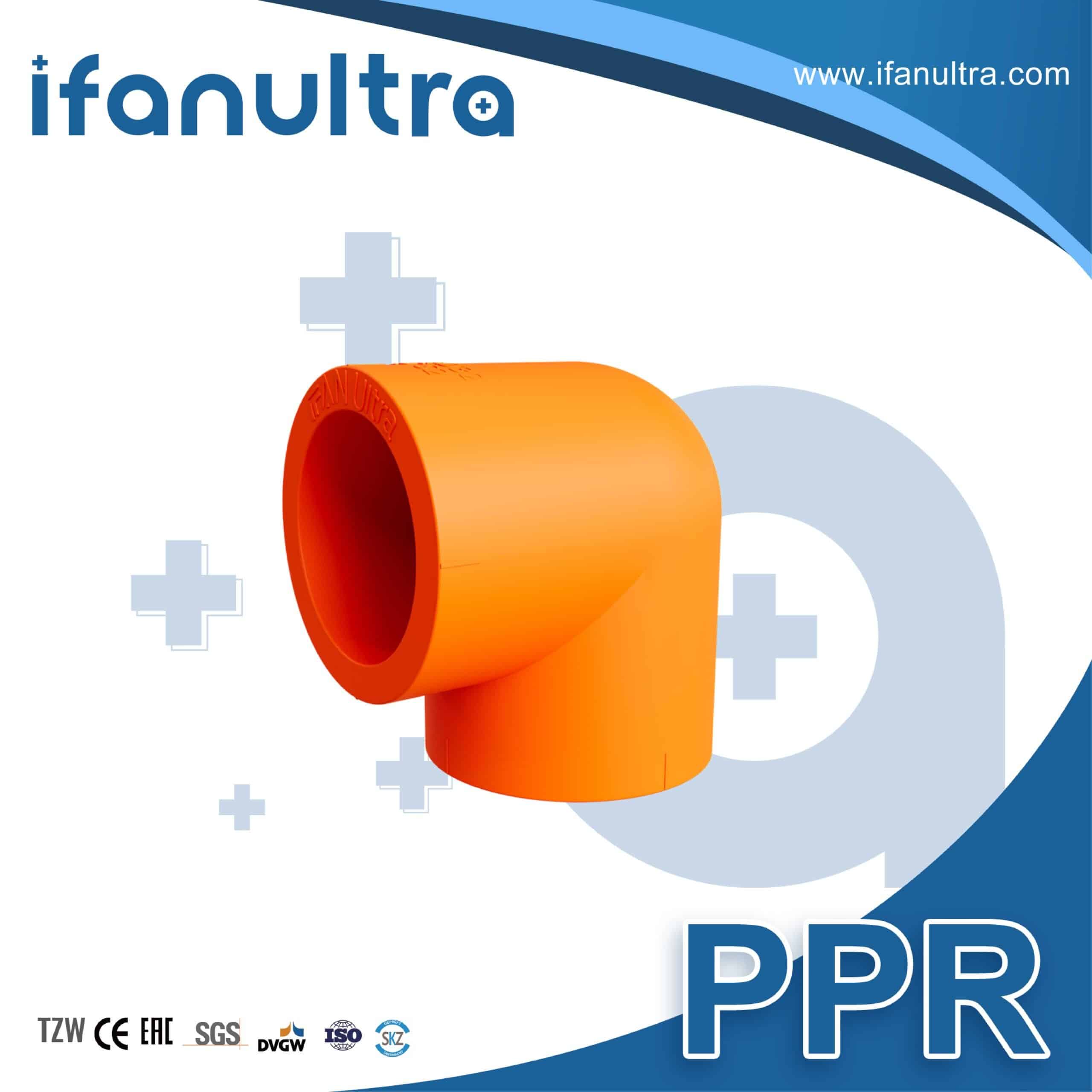
The weight tables say it plainly. A plain DN20 coupling weighs 0.02 lb; a DN20 male threaded adapter with brass insert weighs 0.19 lb, and a DN63 union with brass nut 3.3 lb. Metal-carrying fittings cost more, finish every job that touches a fixture, and get comparison-shopped far less than plain pipe. Pipe is volume; fittings are the margin and the reorder trigger.
Rule 5: Fittings Spend Cash, Not Cubic Metres
A 20ft container holds about 33 m³ and a 40HQ about 76 m³, and a PPR load cubes out before it weighs out. Pipe spends that volume; dense little fittings ride in the space the bundles leave. The binding constraint on a fittings range is line count and cash, not cubic metres — which is exactly why the wrong forty SKUs hurt more than the right twenty.
Nine Socket Fusion SKUs to Stock Deep
Tier 1 is the working heart of the range: plain socket-fusion shapes in the fixture band. As a starting proportion (estimated; no turnover data is published), weight the DN20:DN25:DN32 split roughly 3:4:3. Tilt toward DN25, where branch work concentrates. The catalogue fact that bounds this band: threaded transitions stop at DN32, apart from one DN50 transition-tee variant. As a starting depth (estimated), hold sockets and 90-degree elbows at roughly twice the piece count of tees, and tees at twice the caps. The published weights below show why that costs little. Every piece in this tier is 9-54 g.

1. Equal Coupling, DN20
The most-picked fitting in the range, because every pipe join and extension needs one. Published weight 0.02 lb, about 9 g. Deep means deep here: this is the line that is never allowed to show an empty shelf.
2. Equal Coupling, DN25
Same duty as the DN20, heavier traffic in most residential branches. Published weight 0.03 lb, about 14 g. Give it the largest single allocation of the tier under the 3:4:3 split (estimated).
3. Equal Coupling, DN32
The step-up size where branches gather into small mains. Published weight 0.06 lb, about 27 g. Depth can sit a notch under DN25 because each installer picks fewer per job.
4. 90-Degree Elbow, DN20
Corners are everywhere in fixture work, and equal 90-degree elbows turn almost as fast as sockets. Published weight 0.04 lb, about 18 g. Stock it to the same discipline as the DN20 coupling.
5. 90-Degree Elbow, DN25
The pair of the previous line. Published weight 0.05 lb, about 23 g. If shelf space forces a choice between a 45-degree and a 90-degree in this size, the 90 goes first; offsets get served later.
6. 90-Degree Elbow, DN32
Completes the corner coverage into the small-main band. Published weight 0.09 lb, about 41 g — still light enough that depth costs almost nothing in grams.
7. Equal Tee, DN20
Every branch off a run is a tee. Published weight 0.05 lb, about 23 g. Tees pick slower than couplings and elbows, so run them at roughly half the piece count (estimated) — but never at zero.
8. Equal Tee, DN25
The branch workhorse of the DN25 band. Published weight 0.07 lb, about 32 g. Watch this line’s pick rate in the first quarter; it tells you whether your market branches in DN25 or steps down to DN20.
9. Reducing Tee, DN25×DN20
The step-down rule in one fitting: mains run DN25, branches drop to DN20, and the reducing tee does it in one fusion instead of two fittings and two joints. The moulded reducing-tee family is published across DN20-DN125; start with the 25×20 and add 32×25 when the pick rate asks for it.
Seven Margin and Transition SKUs
Tier 2 is where the money hides. These lines carry brass inserts or moving parts, they finish nearly every job that touches a fixture, and buyers rarely price them line by line. One sourcing decision first. The live tables publish both an NPT zero-lead brass column and an ISO stainless column on the same SKU. Sibling SKUs carry R / DIN 2999 designations. Match the thread standard to your market before you order, because the wrong thread is unsellable stock.

10. Male Threaded Adapter, DN20×1/2
The fixture connector: PPR run in, male thread out to taps, valves and meters. Published weight 0.19 lb, about 86 g, brass insert included. Standard depth — enough to say yes to every counter job, not enough to sleep on.
11. Female Threaded Adapter, DN20×1/2
The counterpart that receives a male fixture thread. Published weight 0.14 lb, about 64 g. Stock it alongside the male in roughly matching depth (estimated); jobs take them in pairs more often than not.
12. Female Threaded Adapter, DN25×3/4
The step-up connection for bigger fixtures and heater lines. Published weight 0.19 lb, about 86 g. Where your local thread convention is BSP rather than NPT, this is the line to verify first against the catalogue columns.
13. Transition Elbow Female, DN20×1/2
Turns a fusion run onto a fixture thread in one body, saving a elbow-plus-adapter stack. Published weight 0.17 lb, about 77 g. Installers recognise the convenience quickly; expect repeat picks once the first jobs use it.
14. Transition Tee Female, DN20×1/2
Branches straight onto a thread — the shape for meter and heater take-offs. Published weight 0.19 lb, about 86 g. The family reaches DN50 in the catalogue, but the opening range stays in the fixture band.
15. Polypropylene Ball Valve, DN20
Isolation at every branch protects the rest of the system when one fixture needs service. Published weight 0.26 lb, about 118 g; the valve family runs DN20-DN75 in the catalogue. DN25 follows as soon as the first reorder data arrives.
16. Union With Brass Nut, DN32
The serviceable joint on small mains — the piece that lets a section come apart without cutting. Published weight 1.06 lb, about 481 g, the heaviest line in the opening twenty. At this weight per piece, depth discipline matters; keep it standard, not deep.
Build the Opening Range Against a Real Catalogue
Send your market’s size mix and thread standard, and the IFANULTRA export desk answers with the Global and Quality series spec tables, per-SKU weights and a container plan.
95-SKU published catalogue | NPT and BSP-thread options | 15-25 day production window
Four Completeness SKUs to Stock Token
Tier 3 earns its place by preventing basket loss. None of these lines turns fast — that is exactly why the allocation stays token — but each one closes a gap that would otherwise send a whole job to a competitor.
17. Equal Tee, DN32
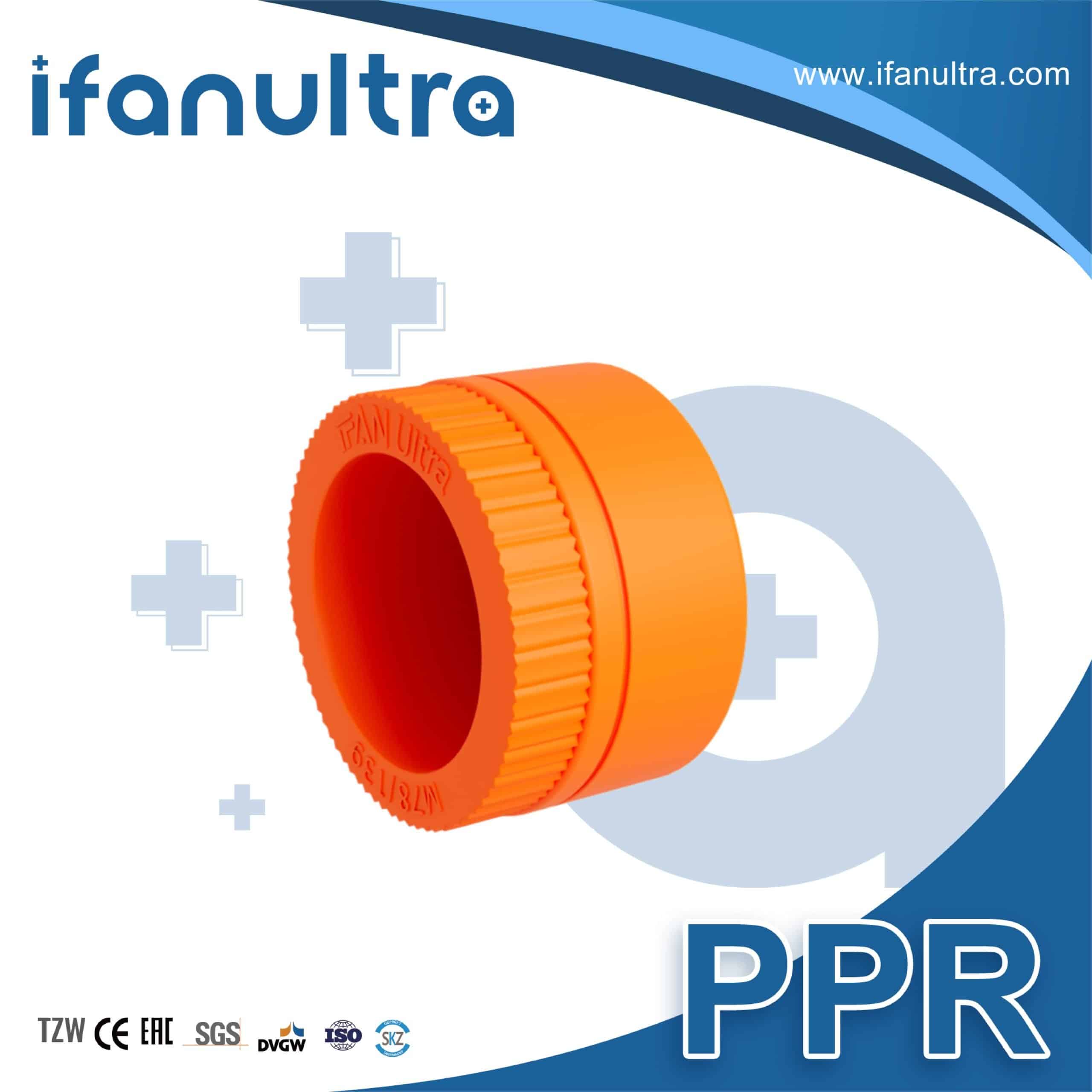
Completes the tee trio so a DN32 main can branch without improvisation. Published weight 0.12 lb, about 54 g. Token depth is enough; the DN20 and DN25 tees carry the family’s volume.
18. End Cap, DN20
Closes dead ends and seals lines for pressure testing before fixtures arrive. Published weight 0.02 lb, about 9 g — the cheapest insurance in the range. The socket end-cap family runs to DN125 if bigger test caps become necessary.
19. Bushing, DN32×DN25
The cheapest way to cover a size gap: one bushing instead of a new line. Published weight 0.03 lb, about 14 g. Its sibling 25×20 costs the same; add it when step-downs show up in the pick data.
20. Coupling, DN40
The first step beyond the fixture band, keeping small mains continuous in socket fusion. Published weight 0.1 lb, about 45 g. If this line starts moving, it is the signal to deepen DN40-DN63 deliberately rather than by accident.
| # | SKU Line | Tier | Size | Piece Weight (published) |
|---|---|---|---|---|
| 1 | Equal coupling | Deep | DN20 | 9 g |
| 2 | Equal coupling | Deep | DN25 | 14 g |
| 3 | Equal coupling | Deep | DN32 | 27 g |
| 4 | 90-degree elbow | Deep | DN20 | 18 g |
| 5 | 90-degree elbow | Deep | DN25 | 23 g |
| 6 | 90-degree elbow | Deep | DN32 | 41 g |
| 7 | Equal tee | Deep | DN20 | 23 g |
| 8 | Equal tee | Deep | DN25 | 32 g |
| 9 | Reducing tee | Deep | DN25×DN20 | see family table |
| 10 | Male threaded adapter | Standard | DN20×1/2 | 86 g |
| 11 | Female threaded adapter | Standard | DN20×1/2 | 64 g |
| 12 | Female threaded adapter | Standard | DN25×3/4 | 86 g |
| 13 | Transition elbow female | Standard | DN20×1/2 | 77 g |
| 14 | Transition tee female | Standard | DN20×1/2 | 86 g |
| 15 | PP ball valve | Standard | DN20 | 118 g |
| 16 | Union, brass nut | Standard | DN32 | 481 g |
| 17 | Equal tee | Token | DN32 | 54 g |
| 18 | End cap | Token | DN20 | 9 g |
| 19 | Bushing | Token | DN32×DN25 | 14 g |
| 20 | Coupling | Token | DN40 | 45 g |
Fittings That Sink First Orders
Every naming glossary lists these, which is exactly how they sneak into first orders. They are legitimate fittings — several of them sit in the IFANULTRA catalogue — but they turn slowly enough to become a trap at opening-range quantities.
Large Diameters Are Project Business
Socket fittings run to DN125 and the pipe system to DN160, but demand above DN63 arrives as projects, not counter picks. Segmented and butt-fusion construction takes over at the big diameters, which means bigger tooling too. Both constructions sit under ISO 15874-3, the fittings part of the PP-R system standard. Order DN75 and above against confirmed jobs, not shelf forecasts.
Specialty Shapes Belong on the Quote Sheet
Crosses, S-bends, herringbone tees, flow-meter wells — the catalogue names them, and searchers find those names and ask for them. The pick rate rarely justifies shelf space. Keep the names visible in your catalogue, keep the stock at zero, and quote them when a job actually asks.
Electrofusion Needs Its Own Machine
The electrofusion coupling is a genuine SKU with a live range of DN20-DN250. It also demands an electrofusion controller your installers may not own. Do not stock it without a fusion plan; the PPR welding machine guide covers how the equipment decision runs.
Flanges Multiply Inventory Quietly
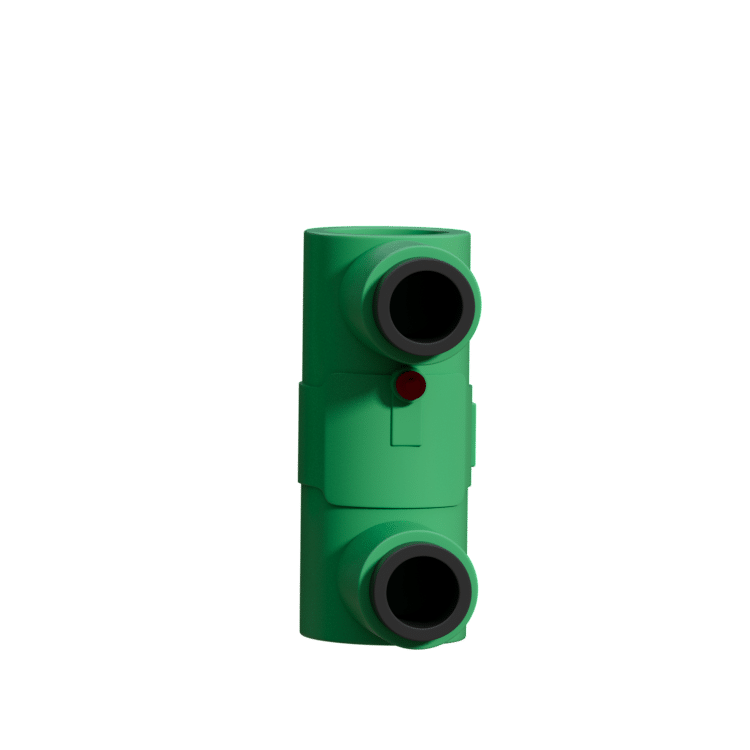
A flange adapter is not one SKU in practice — it is a size, plus a ring, plus a bolt-hole pattern that differs by standard and diameter. That multiplication is invisible until the shelf is full of rings nobody asks for. Flange work belongs on project quotes as well.
Cash, Cube and the MOQ
First orders are priced at one full container load — 1 FCL — and smaller LCL orders are possible at higher cost, as the site’s wholesale and MOQ guide sets out. Fittings ride inside that container with the pipe, and whether the factory offers a fittings-only LCL top-up later is a question to put on the table before the deposit. It is not answered anywhere public, so ask.

The cash arithmetic surprises people. At the published weights, one thousand DN20 couplings weigh about 9 kg. PP-R resin runs roughly USD 780-1,150 per ton. It represents 70-85% of manufacturing cost. So the raw-material content of that box sits near USD 7-10 (estimated; unit prices are not published). Grams, not kilograms. Deep stock of small socket fittings is cheap to carry — the cash in a fittings order concentrates elsewhere.
It concentrates in the metal-carrying lines. One DN63 union with brass nut weighs 1,497 g — the weight of about 166 DN20 couplings, by simple arithmetic on the published tables. Valve and union lines deserve the tightest depth discipline in the range (estimated allocation logic), because each unsold piece holds real money.
Cube works in your favour. A 20ft box gives you about 33 m³, and PPR cubes out before it weighs out. Fittings occupy only a small slice of the volume budget. In a mixed load, of the order of a tenth to a fifth of the cube (estimated; no stowage plan is published). The first-container planning guide works the pipe side of that budget. Use the space the bundles leave; that is where the margin travels.
The whole 95-SKU picture — both series, every spec table — is open for inspection in the PPR product series overview. Walk the Global Series first; it carries the socket-fusion families this range is built from.
Reorder Triggers for DN20 and DN25
The two sizes that move are the two sizes you cannot afford to run out of, and a fusion-dependent market stops buying when the shelf shows gaps. Production takes 15-25 days for one container before ocean transit even starts, so reorder triggers belong on that window, not on a calendar.

A practical starting trigger (estimated): reorder the DN20 and DN25 couplings and 90-degree elbows when on-hand cover drops to about six weeks. That is the production window plus ocean transit, customs and shelf time. Tees and transition fittings can run on a shorter fuse because they pick slower.
Measure pick rate, not dates. One quarter of real counter data beats any published ratio, including the estimates on this page. Keep one series per line — the catalogue splits into the 67-SKU Global Series and the 28-SKU Quality Series — so each shelf position has a single identity. Review the ratios quarterly, and treat this twenty-SKU list as an opening position to be argued with, not a monument.
Conclusion
The ppr plumbing fittings names search ends here with an order instead of a glossary. Nine deep socket-fusion lines in the DN20-DN32 fixture band. Seven standard margin and transition lines. And four token completeness lines. Each one carries a verified size range and a published piece weight from the live 95-SKU catalogue.
- The fixture band is structural, not fashion: threaded transitions run DN20-DN32 apart from one DN50 transition-tee variant, so that band anchors an opening range.
- Cash concentrates in the brass-carrying lines — one DN63 union weighs as much as about 166 DN20 couplings.
- Crosses, S-bends, herringbone tees and big butt-fusion diameters belong on quote sheets, not shelves.
- Reorder DN20/DN25 against the 15-25 day production window — six weeks of cover is the working starting point.
The risk is not ordering too little. It is ordering forty lines that look complete on paper and sit still for a year while the two fast sizes stock out. If you are placing a first or second fittings order, send the size mix and thread standard your market actually uses. Get the quote built against the real spec tables.
Frequently Asked Questions
What are all the names of PPR fittings?
The core socket-fusion names are coupling (socket), 90-degree elbow, 45-degree elbow, equal tee, reducing tee, reducing coupling, end cap and bushing. The transition family adds male and female threaded adapters, transition elbows and tees, unions and valves. IFANULTRA’s published catalogue lists 95 SKUs in total — five pipe lines plus 90 fitting, valve and accessory SKUs across its Global and Quality series.
How many PPR fitting SKUs does a new distributor need?
About twenty SKU lines work as an opening range: nine socket-fusion core lines stocked deep in DN20-DN32, seven transition and valve lines stocked standard, and four completeness lines stocked token. The wrong forty SKUs tie up more cash than the right twenty.
Can I order fittings without a full container of pipe?
Factories typically price first orders at a 1 FCL MOQ, with LCL possible at higher cost. Whether a fittings-only LCL top-up is offered varies by factory and is not published, so confirm before planning. Fittings ride efficiently in a mixed container because they cube small.
Which PPR fittings carry the best margin?
Brass-insert threaded transitions — male and female adapters, transition elbows and tees — plus valves and brass-nut unions. They carry metal content, buyers rarely comparison-shop them line by line, and every job that touches a fixture needs at least one.
What sizes of PPR fittings sell fastest?
DN20 and DN25, the residential fixture band. Sockets and 90-degree elbows in those sizes are the fastest picks, with DN32 as the step-up. Diameters of DN75 and above are project business and are better ordered against confirmed jobs than stocked.









 English
 Español
 Français
 Português do Brasil