
Every new ppr pipe distributor makes the same first mistake: they buy the catalog. They order two of everything from DN20 to DN160, in three PN classes, plus every fitting the factory lists — and six months later most of that money is sitting on a shelf as dead stock while the DN25 socket bin is empty by Tuesday. The smart starter range is small, deliberate, and stocked by how fast each SKU actually turns.
The direct answer: stock DN20, DN25, and DN32 pipe in PN20 deep, carry DN40–DN63 shallow for mains, keep sockets, elbows, and tees in a roughly 8–15:1 ratio to your pipe SKUs, and treat brass-threaded transition fittings as your margin line. Get those decisions right and a few dozen SKUs will cover most residential demand in your market. This guide sits under the complete PPR pipe guide and complements the wholesale mechanics in our MOQ and container-loading guide.
Key Takeaways
- DN20, DN25, and DN32 in PN20 carry the large majority of residential PPR demand; stock these three deep.
- DN40 through DN63 serve mains and risers — stock shallow; DN75 and above is usually made-to-order.
- Fittings outnumber pipe SKUs heavily: sockets, 90° elbows, and equal tees dominate the pick list.
- Brass-threaded transition fittings (male/female adapters) are low-volume but high-margin — never skip them.
- Hot-water markets skew PN20 (DN25 wall ≈ 4.2 mm); cold-only markets can carry PN16 (DN25 wall ≈ 3.4 mm).
- A focused new-distributor starter range can be under 60 SKUs and still cover most jobs on the truck.
The distributor’s real problem: cash tied up in the wrong SKUs
Inventory is frozen cash. Every SKU on your shelf is money you paid the factory that you cannot use again until a customer buys it. A huge catalog feels safe — you can say yes to any order — but it quietly kills a new PPR business. The DN110 pipe you stocked “just in case” ties up capital for a year while your bread-and-butter DN25 sells out and sends walk-in buyers to your competitor.
The pattern in residential PPR is lopsided, and it works in your favor. A small handful of sizes moves constantly; everything else moves slowly or not at all. A plumber renovating a two-bathroom apartment runs DN20 to the faucets, DN25 for branches, and maybe DN32 for the incoming line. That single job pulls dozens of small fittings and a few pipe lengths — all from the fast-mover shelf. Stock those deep and shallow-stock the rest, and you serve most customers while keeping the least cash locked up.
One warning before you build the range: depth only pays off if the product is real. Thin-wall pipe sold as premium, filler-loaded resin, or certificates that don’t match the batch will cost you more than any dead stock — a rejected shipment or a leaking installation destroys the reputation you’re trying to build. Vet the factory before you commit to volume; our manufacturer vetting checklist covers what to confirm. IFANULTRA runs virgin Nordic polypropylene on German automated lines, so wall thickness and batch consistency hold across a full container.
Pipe: the fast-movers to stock deep
These are the sizes that pay your rent. In residential plumbing, DN20, DN25, and DN32 handle faucet drops, bathroom and kitchen branches, and the main feed into most apartments and houses. When buyers ask which PPR sizes to stock, this is the honest answer: these three in PN20 are where the volume lives, so they get the deepest shelf.
| Size (DN) | PN class | Stock depth | Why it moves |
|---|---|---|---|
| DN20 (wall 3.4 mm) | PN20 | Deepest | Faucet and fixture drops; the highest-frequency size on almost every residential job. |
| DN25 (wall 4.2 mm) | PN20 | Deepest | Bathroom and kitchen branch lines; the workhorse diameter, often your #1 seller. |
| DN32 (wall 5.4 mm) | PN20 | Deep | Apartment/house main feed and manifold runs; whole-unit supply. |
A useful rule of thumb: keep enough of each fast-mover to cover your longest reorder cycle plus a safety buffer, because these are the SKUs where a stockout directly sends a customer elsewhere. If your container from Asia takes eight to ten weeks door-to-door, your DN20 and DN25 depth has to survive that whole window without running dry. Slow-movers can flirt with zero; fast-movers cannot.
Pipe: the long-tail to stock shallow
Above DN32 the demand curve drops fast. DN40, DN50, and DN63 show up on risers, apartment-block mains, small commercial runs, and pump lines — real orders, but occasional. Carry a modest quantity so you can say yes without waiting for a container, and let the shelf run thin between orders. These sizes justify presence, not depth.
- DN40 (wall 6.7 mm) and DN50 (wall 8.4 mm): vertical risers and mid-size branch mains in multi-unit buildings. Stock a few lengths.
- DN63 (wall 10.5 mm): building supply mains and light commercial. Low turnover; keep a token quantity.
- DN75, DN90, DN110, DN160: large-diameter mains and industrial risers. These are best treated as made-to-order — quote the lead time and pull them in with your next container rather than shelving them.
The trap here is ego. It’s tempting to stock DN110 deep so you look like a serious supplier, but a DN110 pipe that sells twice a year is a capital anchor. Be honest about your market: if you serve residential contractors, large diameters are a made-to-order line item, not shelf stock. Reserve your working capital for the sizes that turn.
Fittings: the ratio to pipe, and where the margin hides
Here’s what surprises most new distributors: fittings, not pipe, dominate your SKU count and your pick frequency. A single bathroom pulls one or two pipe lengths but a dozen or more fittings — couplings to join runs, elbows at every corner, tees at every branch, and adapters wherever PPR meets a tap, valve, or metal fixture. Expect your fitting SKUs to outnumber pipe SKUs by roughly 8 to 15 times once you cover the fast-mover diameters.
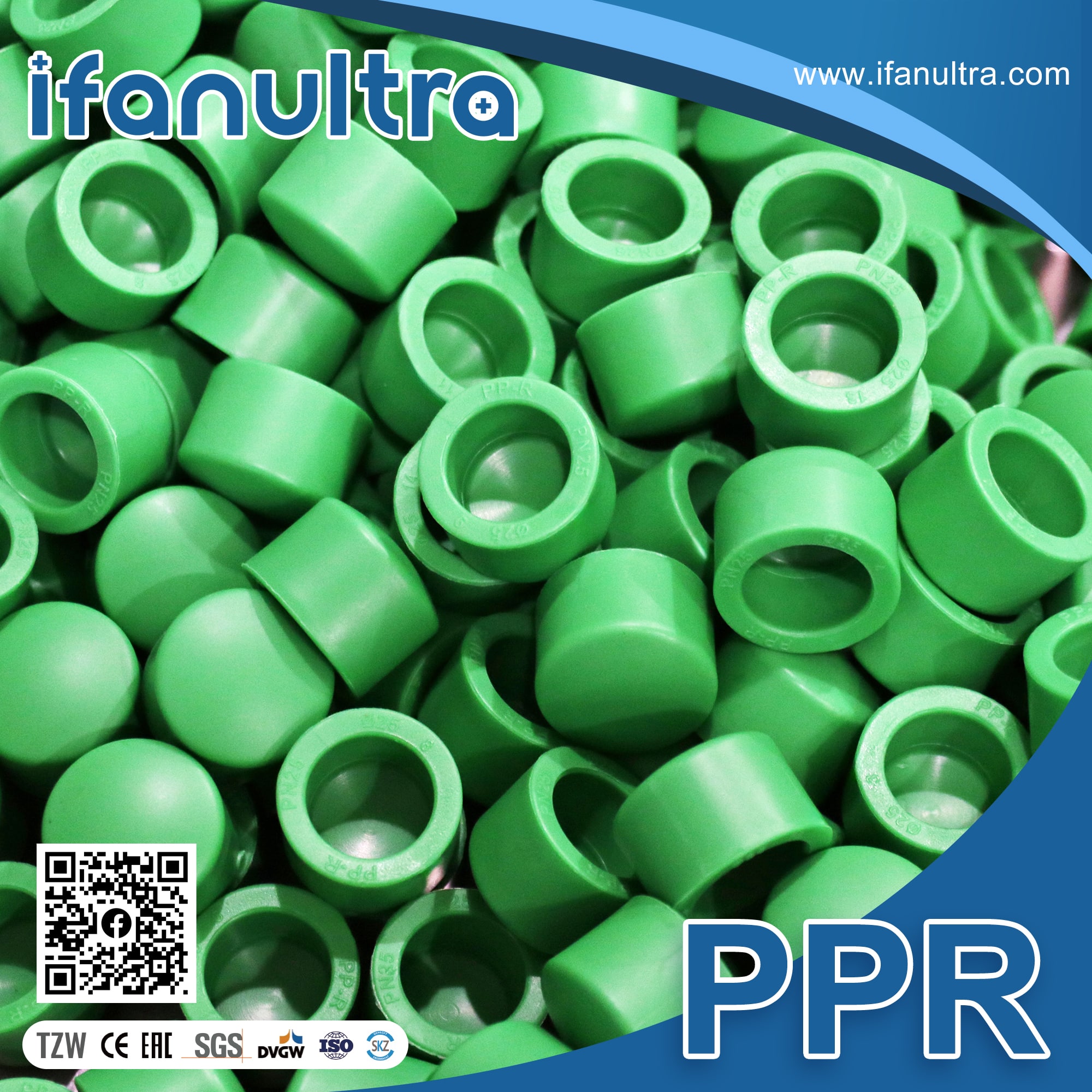
The volume fittings are cheap and predictable. The money is in the transition parts.
The high-volume fittings (stock deep in DN20–DN32)
- Sockets / couplings: the most-picked fitting — every pipe join and extension needs one. Equal sockets in DN20, DN25, DN32 are non-negotiable depth.
- 90° elbows: corners are everywhere. Equal 90° elbows in the fast-mover sizes turn nearly as fast as sockets; 45° elbows move too but at lower volume.
- Equal and reducing tees: every branch off a main is a tee. Reducing tees (e.g., DN25×DN20) are just as important as equal tees because branches usually step down.
- Reducers and end caps: lower volume than the three above but constant enough to keep on the shelf in fast-mover sizes.
The margin fittings (stock the common types, price for value)
Transition fittings — male-thread and female-thread adapters with brass inserts, plus flange and union adapters — connect PPR to taps, mixers, water heaters, meters, and metal valves. They cost more, they carry the metal insert, and buyers rarely comparison-shop them line by line the way they do plain pipe. That makes them your best per-unit margin. Every job that touches a fixture needs at least one, so demand is steady even though unit volume is lower than plain sockets. Stock male and female threaded adapters in DN20 and DN25 with the common thread sizes for your market, and don’t undersell them.
Which PN classes to stock for your market
PN class sets the wall thickness for a given diameter under ISO 15874, and it’s the second axis of your inventory decision after size. Stocking every diameter in every PN class multiplies your SKU count needlessly. Pick the class your market actually installs and standardize on it.
| PN class | Wall at DN25 | Best for your shelf |
|---|---|---|
| PN20 (S2.5 / SDR6) | ≈ 4.2 mm | The default. Hot and cold water, one class covers everything. Stock this as your core range. |
| PN16 (S3.2 / SDR7.4) | ≈ 3.4 mm | Cold-only markets and pressurized cold mains. Lower cost per length; add only if local demand is genuinely cold-water. |
| PN10 (S5 / SDR11) | ≈ 2.3 mm | Low-pressure cold water only. Niche; usually skip unless a specific customer needs it. |
The position to take: if your market installs hot water at all — and most residential markets do — standardize your core range on PN20 and let it do double duty for cold. A PN20 line covers hot and cold with one set of SKUs, which simplifies fusion for the installer and stocking for you. Add PN16 only where you have real cold-only volume, such as pressurized cold-water mains. Confirm any local plumbing-code or potable-water requirements with the relevant authority for your market, since some jurisdictions mandate a minimum class or specific certification for drinking water.
Specialty lines: stock light, not never
Beyond the plain PPR core, a few specialty lines round out your range. Stock them light — enough to answer a request, not enough to anchor capital. They differentiate you from a bare-bones competitor without draining your working cash.
- Fiber-composite pipe: the glass-fiber middle layer cuts linear thermal expansion by roughly 75% — from about 0.15 mm/(m·°C) for plain PPR down to around 0.03–0.05. That matters on long hot-water mains where plain PPR would sag or snake. Stock a shallow range in DN25–DN63 for hot-main jobs.
- UV-resistant pipe: plain PPR degrades in direct sunlight, so outdoor and rooftop runs need the UV-stabilized grade. Carry a token quantity in the fast-mover sizes for exposed installations.
- Valves: PPR ball and stop valves in DN20–DN32 finish an isolation point without a threaded transition. Steady but modest demand — stock the common sizes shallow.
Building a starter range: a concrete SKU list
Here’s a focused starter range for a new distributor serving a hot-water residential market. It stays under about 60 SKUs and still covers the vast majority of jobs. Scale the quantities to your capital and your reorder cycle; the SKU selection is the point.
- Pipe (PN20, deep): DN20, DN25, DN32.
- Pipe (PN20, shallow): DN40, DN50, DN63. DN75+ made-to-order.
- Sockets/couplings: equal DN20, DN25, DN32; reducing DN25×20, DN32×25, DN32×20.
- Elbows: 90° equal DN20, DN25, DN32; 45° equal DN20, DN25; a few reducing 90° elbows.
- Tees: equal DN20, DN25, DN32; reducing DN25×20, DN32×25, DN32×20.
- Reducers and end caps: DN25×20, DN32×25, DN32×20 reducers; end caps DN20, DN25, DN32.
- Transition (margin) fittings: male and female threaded adapters with brass insert in DN20 and DN25, common local thread sizes; a few flange/union adapters in DN25–DN50.
- Valves: ball/stop valves DN20, DN25, DN32.
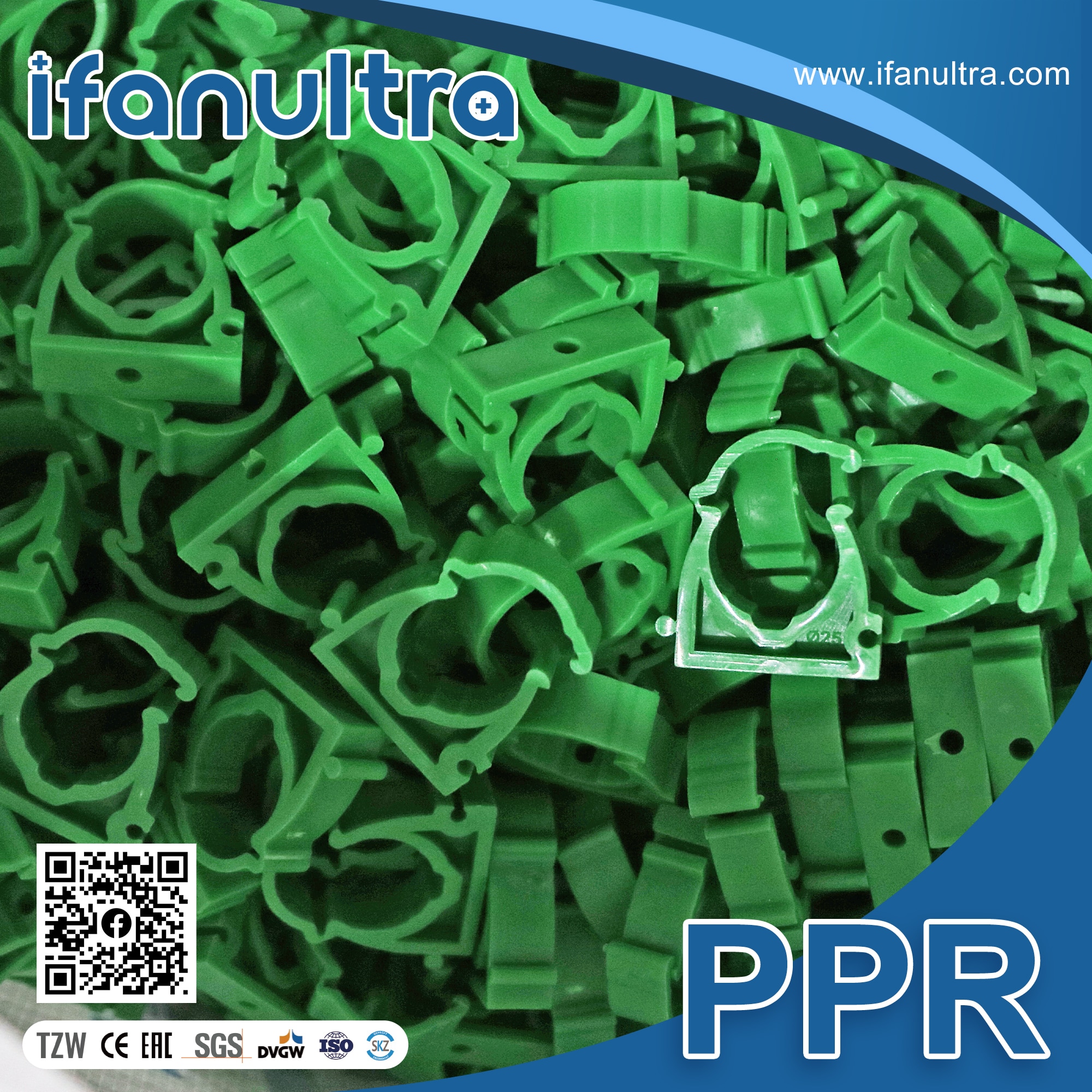
- Specialty (token): fiber-composite DN25–DN40 for hot mains; UV-resistant DN25 for outdoor; pipe clips and accessories.
Two SKU decisions carry the most weight. First, don’t skimp on reducing fittings — real installations step down constantly, and a missing DN25×20 tee sends a plumber to another supplier for the whole basket. Second, always carry the brass-insert transition adapters even at low volume; they finish nearly every job and they protect your margin.
Reorder discipline: turnover beats catalog size
A starter range is a starting point, not a fixed plan. The discipline that separates a growing distributor from a struggling one is reading your own sell-through and reordering by turnover, not by habit. Track which SKUs empty fastest and reorder those deeper; flag SKUs that haven’t moved in a quarter and stop reordering them.
- Watch the fast-movers weekly. DN20/DN25 pipe, sockets, elbows, and tees are the SKUs where a stockout costs you a whole order. Set reorder triggers on these first.
- Kill dead stock deliberately. A SKU with zero movement in three to six months is a capital leak. Discount it, bundle it, or drop it from the next container — don’t reorder on autopilot.
- Balance MOQ against turnover. Factory minimum order quantities can push you to over-buy a slow SKU just to hit the MOQ. Consolidate slow items across a full container order so you meet MOQ without shelving a year of dead DN110.
- Size safety stock to your lead time. Sea freight from Asia typically runs several weeks; your fast-mover buffer has to survive the gap between placing and receiving a container.
The MOQ-versus-turnover tension is where a good factory partner earns their place. A supplier that lets you mix sizes and fittings within one container order — instead of forcing a full pallet of a single slow SKU — lets you meet minimums without dead stock. Batch consistency matters here too: when your DN25 always arrives at the same true wall thickness from the same virgin resin, your reorders stay predictable and your customers stop second-guessing the product. For the full mechanics of MOQ, FOB pricing, and container loading, see our PPR wholesale guide.
Conclusion
A profitable PPR range is built on turnover, not breadth. Stock DN20, DN25, and DN32 in PN20 deep, keep DN40–DN63 shallow, run large diameters made-to-order, and carry fittings in heavy multiples of your pipe SKUs — with the brass-insert transition parts as your margin line. That focused range, under 60 SKUs, serves most of your market while keeping your cash working instead of sitting on a shelf.
The one thing a smart range can’t fix is a bad product. Depth on a thin-wall or filler-loaded pipe just multiplies your risk. If you’re building a range you can resell with confidence — verified wall thickness, virgin resin, and certificates that hold at customs — the IFANULTRA team can send specs and a catalog to help you plan your first order.
Frequently Asked Questions
Which PPR pipe sizes should a new distributor stock first?
Stock DN20, DN25, and DN32 in PN20 deep — they carry most residential demand. Add DN40–DN63 shallow for mains, and treat DN75 and larger as made-to-order rather than shelf stock.
What are the best-selling PPR fittings to keep in stock?
Sockets/couplings, 90° elbows, and equal and reducing tees dominate the pick list, in DN20–DN32. Brass-threaded transition adapters sell in lower volume but carry the best margin, so always stock them.
How many fitting SKUs should I carry per pipe size?
Fittings outnumber pipe SKUs roughly 8 to 15 times once you cover the fast-mover diameters, because each job pulls many more fittings than pipe lengths. Prioritize sockets, elbows, and tees.
Should I stock PN16 or PN20 PPR pipe?
Standardize on PN20 (DN25 wall ≈ 4.2 mm) — it handles hot and cold with one range. Add PN16 (DN25 wall ≈ 3.4 mm) only where you have real cold-only volume. Confirm local potable-water rules with the relevant authority.
How do I avoid dead stock when starting a PPR distribution business?
Track sell-through, reorder fast-movers deep, and stop reordering any SKU with no movement in three to six months. Consolidate slow items across a full container so you meet factory MOQ without shelving dead stock.
Written by the IFANULTRA team — a PPR pipe and fittings brand of IFAN Group, drawing on 30+ years of manufacturing experience, German automated production lines, and ISO 9001, SKZ and NSF certified PPR product lines.









 English
 Español
 Français
 Português do Brasil