

PPR pipe wholesale means buying polypropylene random copolymer pipe by the container, not the coil — so the price on your quote is only half the story. The trade term decides who pays ocean freight and who carries the risk, the MOQ decides whether you can mix sizes on a first order, and how tightly a factory packs a container decides your real landed cost per meter. Get those three right and a green PN20 pipe from Southeast Asia lands in your warehouse for a number you can resell against. Get them wrong and freight quietly eats your margin.
This guide is written for importers and distributors sourcing PPR in bulk: the Incoterms that matter (EXW, FOB, CIF, DDP), realistic MOQ per SKU versus per order, how wholesale PPR is priced, and the container-loading math that separates a well-planned order from an expensive one. For the material fundamentals — pressure classes, wall thickness, heat fusion — start with our complete PPR pipe guide. Before you commit to any factory, run it through our PPR manufacturer vetting checklist.
Key Takeaways
- FOB is the default wholesale term: the seller loads the pipe on board and covers costs to that point; you pay ocean freight, insurance and import customs.
- Most factories price a first order at one full container load (1 FCL) MOQ; smaller LCL orders are possible but cost more per meter.
- Wholesale PPR is resin-driven — polypropylene resin often runs roughly US$780–1,150 per ton, and a higher PN class means thicker walls, more grams per meter, and a higher price.
- A 20ft container holds about 33 m³ and a 40HQ about 76 m³; PPR pipe fills volume long before it hits the ~26-ton weight limit, so freight per meter drives landed cost.
- Payment is commonly a 30% deposit with 70% balance before shipment, or an LC — terms vary, so confirm with your bank and supplier.
- Lead time typically runs 15–25 days for one container from a factory with multiple extrusion lines, before ocean transit.
What buying PPR wholesale actually involves: the trade terms
Before you compare factory prices, agree on the Incoterm — the international rule that fixes who pays which cost and where the risk passes from seller to buyer. Two quotes at the same number can land at wildly different costs depending on the term behind them. Four terms cover almost every PPR wholesale deal.

- EXW (Ex Works): the cheapest headline price and the most work for you. The seller makes the pipe available at the factory gate, and you take on every cost and risk from there — inland trucking, port handling, export clearance, freight, everything.
- FOB (Free On Board): the wholesale default. The seller delivers the pipe loaded on board the vessel at the export port and covers all costs and export clearance up to that point. You pay ocean freight, insurance, and destination customs. Risk passes when the goods are loaded.
- CIF (Cost, Insurance, Freight): the seller pays freight and minimum insurance to your destination port. Simpler to quote against, but you absorb the freight rate and insurance the supplier chose. Note the split: under CIF the seller pays freight to destination, but risk still transfers to you when the pipe is loaded at origin.
- DDP (Delivered Duty Paid): the seller carries nearly everything — freight, import clearance, duties — to your door. The highest headline number, the least hassle. Read the fine print on who is legally the importer of record.
For a distributor with a freight forwarder and a customs broker, FOB usually gives the most control: you shop the ocean rate yourself and you are not paying the factory’s markup on freight. If you are new to importing or lack a broker, CIF or DDP shifts the logistics burden to the seller for a price. Duty rates and import rules depend on the market and your role in the transaction — confirm current requirements with a customs broker or the relevant authority before you commit.
MOQ realities: per-SKU, per-order, and mixed first orders
MOQ is where wholesale buyers get surprised. A PPR MOQ can mean two different things, and both often apply at once. There is a per-order minimum (frequently one full container load) and a per-SKU minimum (how many meters of one specific size and PN class the line will run before a setup is worth it).
Per-order vs per-SKU minimums
Standard PPR MOQ is typically 1 FCL — a full 20ft or 40HQ container of stock product. Factories build to volume, and a full container amortizes machine setup, packing, and export paperwork across enough meters to be worth quoting. Some suppliers will accept a less-than-container-load (LCL) order for a special requirement, but LCL pricing runs higher per meter because you are paying container and handling costs that a full load spreads thinly.
Per-SKU, the minimum climbs the moment you customize. Stock green PN20 pipe in DN20 or DN25 usually has a low per-size minimum because the factory runs it constantly. Ask for a custom color, printed logo, a private-label sleeve, or an uncommon PN class, and the line has to change resin masterbatch or tooling — so the per-SKU MOQ jumps to cover that changeover.
How to negotiate a mixed first order
- Fill the container with stock SKUs first. Green PN20 DN20–DN32 in standard packaging carries the lowest per-SKU minimums and lets you hit the 1 FCL order minimum without custom-run penalties.
- Keep customization to the outer packaging on a first order. A private-label carton or sleeve is far cheaper to run than custom-color extrusion, and it still puts your brand on the shelf.
- Bundle fittings with pipe. Elbows, tees, sockets and adapters are small and dense — they fill gaps in a pipe container and let you round out a full plumbing offer without a second shipment.
- Ask the factory for its stock SKU list before you design the order. Building around what the line already runs is the fastest path to a mixed container at wholesale pricing.
How PPR is priced at wholesale: per meter vs per ton
Wholesale PPR is quoted two ways, and knowing which one you are looking at prevents apples-to-oranges mistakes. Resin and bulk material tends to be priced per ton; finished pipe is usually quoted per meter or per length. Both trace back to the same driver — the polypropylene resin inside the pipe.
PPR is a resin-driven product. Polypropylene random copolymer resin commonly trades in the range of roughly US$780 to US$1,150 per ton depending on grade and market conditions, and that resin cost is the biggest line in a pipe’s price. This is exactly why raw-material honesty matters at customs and on the shelf. Virgin Nordic polypropylene — the material IFANULTRA uses — costs more than recycled or filled resin, and a quote that looks too cheap is often a thin-wall pipe or a filled compound sold as premium. That gap is invisible until the pipe fails a pressure test or a customs lab check.
Why PN class and wall thickness change the number
The outside diameter (DN) is fixed across compliant factories — a DN25 pipe is 25 mm outside diameter whether it is PN10 or PN25. What changes with the pressure class is the wall. A higher PN means a thicker wall, which means more grams of resin per meter, which means a higher price. At DN25 the wall grows from about 2.3 mm at PN10 to about 4.2 mm at PN20 to about 5.0 mm at PN25. You are quite literally buying resin by weight, so a PN20 hot-water pipe costs more per meter than a PN10 cold-water pipe of the same diameter.
| PN class | Series / SDR | Wall at DN25 | Typical use |
|---|---|---|---|
| PN10 | S5 / SDR11 | ~2.3 mm | Cold water |
| PN16 | S3.2 / SDR7.4 | ~3.4 mm | Higher-pressure cold/warm |
| PN20 | S2.5 / SDR6 | ~4.2 mm | Standard hot water (most common) |
| PN25 | S2 / SDR5 | ~5.0 mm | High-pressure / fiber-composite |
The practical lesson: when you compare a PPR pipe wholesale price between two suppliers, confirm the DN, the PN class, and the actual wall in millimeters are identical. A cheaper number on the same DN often just means a thinner wall — the same trick that lets a filled-resin pipe undercut a virgin-resin one. Ask for the wall spec against ISO 15874 and, for potable lines, an NSF listing.
Container loading math: how many PPR pipes fit in a container
Here is the point most first-time PPR importers miss: pipe is bulky and light. A container fills up with volume long before it reaches its weight limit, so your freight cost per meter — not the factory price alone — often decides landed cost. A 20ft container holds roughly 33 m³ of internal volume and a 40HQ holds roughly 76 m³, while the practical weight ceiling for a loaded box sits near 26 tons. PPR pipe fills the cubic space first and leaves most of that weight allowance unused.
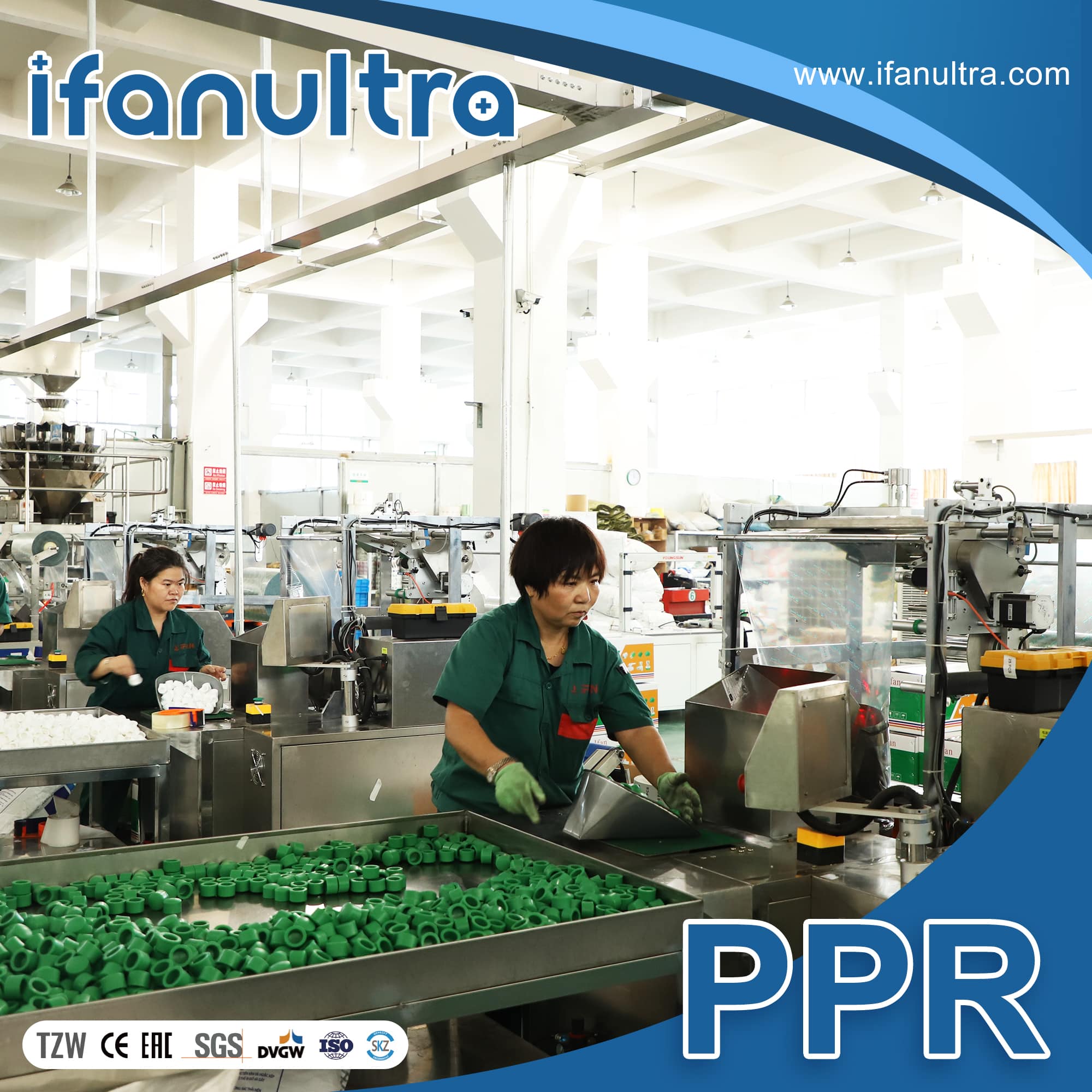
That volume-limited reality is why the loading plan matters. Two factories can quote the same FOB price, but the one that packs the container tighter — nesting sizes, filling the crown of the load, protecting the bottom layer from ovality — ships more meters in the same box and lowers your cost per meter. What we check before a batch ships includes UV-resistant woven bags on straight pipe and reinforced export cartons on fittings, with the stack arranged so the bottom pipes do not deform (go oval) during weeks at sea.
| Container | Approx. volume | Typical use for PPR | What limits the load |
|---|---|---|---|
| 20ft GP | ~33 m³ | Smaller first order or single-market test; mixed SKUs | Volume — the box fills before the ~26 t weight cap |
| 40HQ | ~76 m³ | Standard full wholesale order; best freight cost per meter | Volume — extra height and length take more meters, not more tons |
For most distributors, the 40HQ is the right box. Its extra height and length hold far more meters than a 20ft, and because pipe is volume-limited, that translates almost directly into a lower freight cost per meter. The 20ft earns its place for a market test, a first mixed order, or a buyer who wants to move stock before committing to a bigger container.
Mixed-SKU container strategy: how to stack a smart load
A mixed container is standard for distributors who sell a full plumbing range. The strategy is simple once you know that small diameters move fastest and large diameters are dead weight on your shelf if you over-order. Weight your container toward your fast-movers and keep the big pipe shallow.
- Go deep on DN20–DN32. These sizes carry most residential and small-commercial plumbing and turn over the fastest. Make them the backbone of the load — the bulk of your meters.
- Keep large diameters shallow. DN63 and up sell in lower volume and eat container space fast. Order a modest quantity to complete your range, not a wall of it.
- Nest sizes to save volume. Because the box is volume-limited, a factory that nests smaller pipe inside or beside larger bundles ships more meters per container — ask how they plan the stack.
- Use fittings as filler. Elbows, tees, sockets, and thread/flange adapters are dense and small. They round out your offer and fill gaps the pipe bundles leave behind.
- Match PN class to the market. If your market plumbs hot water, weight toward PN20; a cold-water-heavy market can carry more PN10 or PN16 and free up budget.
Payment terms for PPR wholesale orders
Payment structure protects both sides on a container-scale order. The common arrangement is a deposit to start production and a balance before the goods leave — frequently a 30% deposit with the 70% balance paid before shipment or against the bill of lading. On larger or repeat orders, a letter of credit (LC) through your bank can replace the balance transfer and give both parties documentary protection.
Terms vary by supplier, by order size, and by how long you have worked together. A first order from a new factory usually carries a firmer deposit; an established relationship may relax it. LC mechanics, banking fees, and acceptable documents differ by country and bank — confirm the exact structure with your bank and your supplier before you sign, and never wire a full balance to an unverified factory sight-unseen.
Worked example: a mixed 20ft container for a Southeast Asian market
Picture a distributor opening a new line in a Southeast Asian market where hot-water plumbing is standard and the buyer wants to test demand before scaling. A single mixed 20ft container is the sensible first move — enough range to stock a shelf, small enough to sell through without tying up cash.
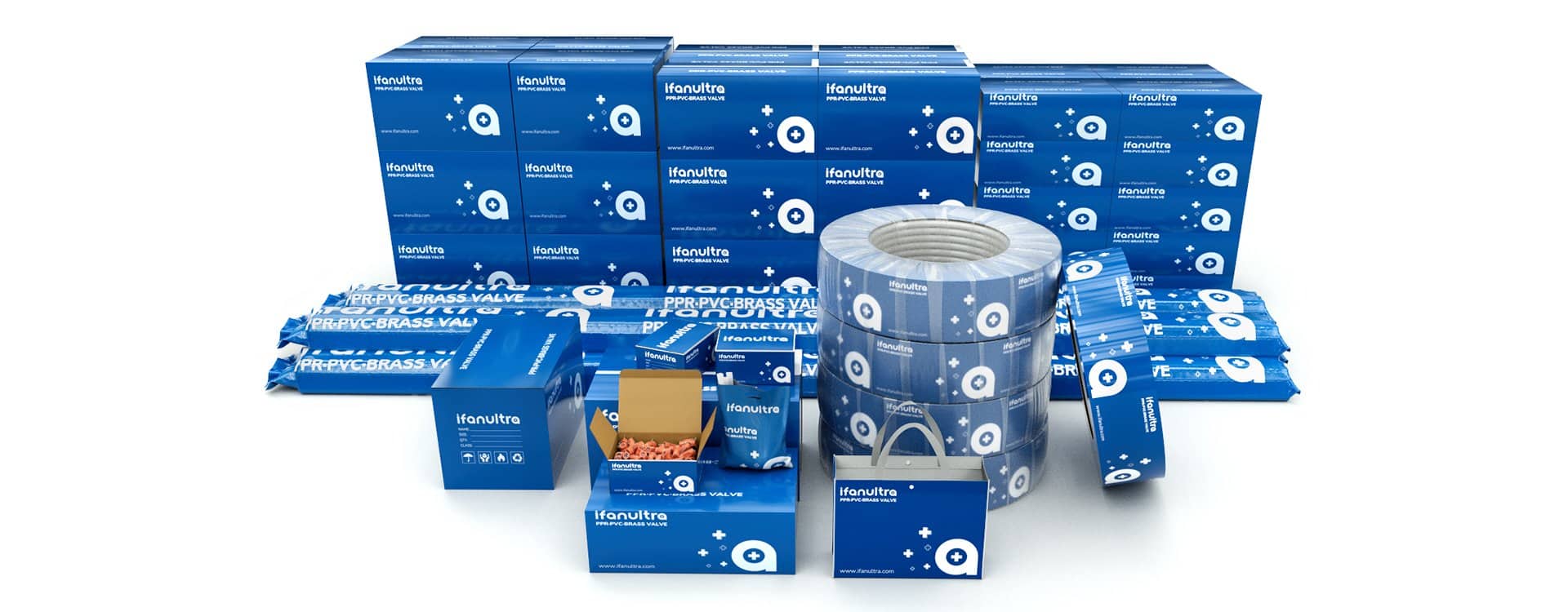
Because the market runs hot water, the load leans PN20. The distributor makes DN20, DN25, and DN32 the backbone — the sizes that move fastest — and fills the deep layers of the container with them. DN40 and DN50 go in as a modest mid-range for larger jobs. A small quantity of DN63 rounds out the top of the range without dominating the box. Fittings — elbows, tees, sockets, and adapters — pack into the gaps and complete a system a plumber can buy in one place.
The buyer quotes FOB so the freight rate is theirs to shop, holds all custom work to a private-label carton to avoid custom-extrusion MOQs on a first order, and agrees a 30% deposit with the balance before shipment. Every SKU is spec’d at a confirmed wall thickness against ISO 15874, with an NSF listing on the potable lines so the certificates hold up if a customs lab checks. That is a first container a distributor can resell against with confidence — and a template for scaling to a 40HQ once the market proves out. Duty treatment on plastic pipe varies by destination, so the buyer confirms the tariff line with a local customs broker before shipping.
Lead time and what delays it
Production lead time for one container typically runs 15 to 25 days at a factory with multiple extrusion lines, before you add ocean transit. That is the manufacturing window — the clock from confirmed order and deposit to a packed, ready-to-ship container. Ocean transit to your port sits on top of it and depends entirely on the route.
- Customization. Custom colors, printed logos, or private-label extrusion add a tooling or masterbatch changeover and stretch the timeline beyond stock production.
- Order mix and volume. A tidy load of stock fast-movers runs faster than a container of many small custom SKUs, each needing its own setup.
- Deposit timing. Production often starts only after the deposit clears. A slow wire is a slow start — the factory’s clock does not begin until the money lands.
- Certificate and document prep. If your market needs specific test reports or certificates for customs, line them up at order time so they are not the thing holding your container at the port.
- Peak-season capacity and freight. Busy periods stretch both factory queues and vessel space. Book early when you know demand is coming.
Conclusion
Buying PPR in bulk comes down to three levers working together: the trade term that fixes who pays freight and carries risk, the MOQ that shapes how you build a first mixed order, and the container plan that turns a good factory price into a good landed cost. Price the pipe on its real wall thickness and virgin resin, not the headline number, and you protect both your margin and your reputation on the shelf.
If you are ready to spec a container — verified walls, virgin Nordic polypropylene, and certificates that hold up at customs — the IFANULTRA team can send a catalog and a quote built around your market. Reach out through the contact page when you want the numbers for your first load.
Frequently Asked Questions
What is the MOQ for PPR pipe wholesale?
Standard PPR MOQ is typically one full container load (1 FCL). Smaller LCL orders are sometimes possible for special needs but cost more per meter. Custom colors or private-label runs raise the per-SKU minimum.
How many PPR pipes fit in a container?
PPR pipe is volume-limited, not weight-limited. A 20ft container holds about 33 m³ and a 40HQ about 76 m³, filling up long before the roughly 26-ton weight cap. Exact meters depend on the DN and PN mix.
What is the difference between FOB and CIF for PPR?
Under FOB the seller loads the pipe on board and you pay ocean freight, insurance, and import customs. Under CIF the seller pays freight and insurance to your port, though risk still passes to you when the goods are loaded at origin.
Why does PPR wholesale price change with PN class?
A higher PN class means a thicker wall. At DN25 the wall grows from about 2.3 mm at PN10 to 4.2 mm at PN20. Thicker walls use more resin per meter, and since PPR is resin-driven, the price rises.
What are typical payment terms for a PPR container?
A common structure is a 30% deposit to start production with the 70% balance before shipment, or a letter of credit on larger orders. Terms vary by supplier and order size, so confirm with your bank and supplier.
Written by the IFANULTRA team — a PPR pipe and fittings brand of IFAN Group, drawing on 30+ years of manufacturing experience, German automated production lines, and ISO 9001, SKZ and NSF certified PPR product lines.









 English
 Español
 Français
 Português do Brasil