
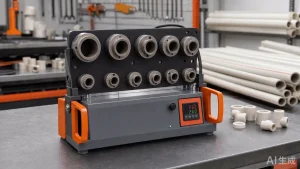
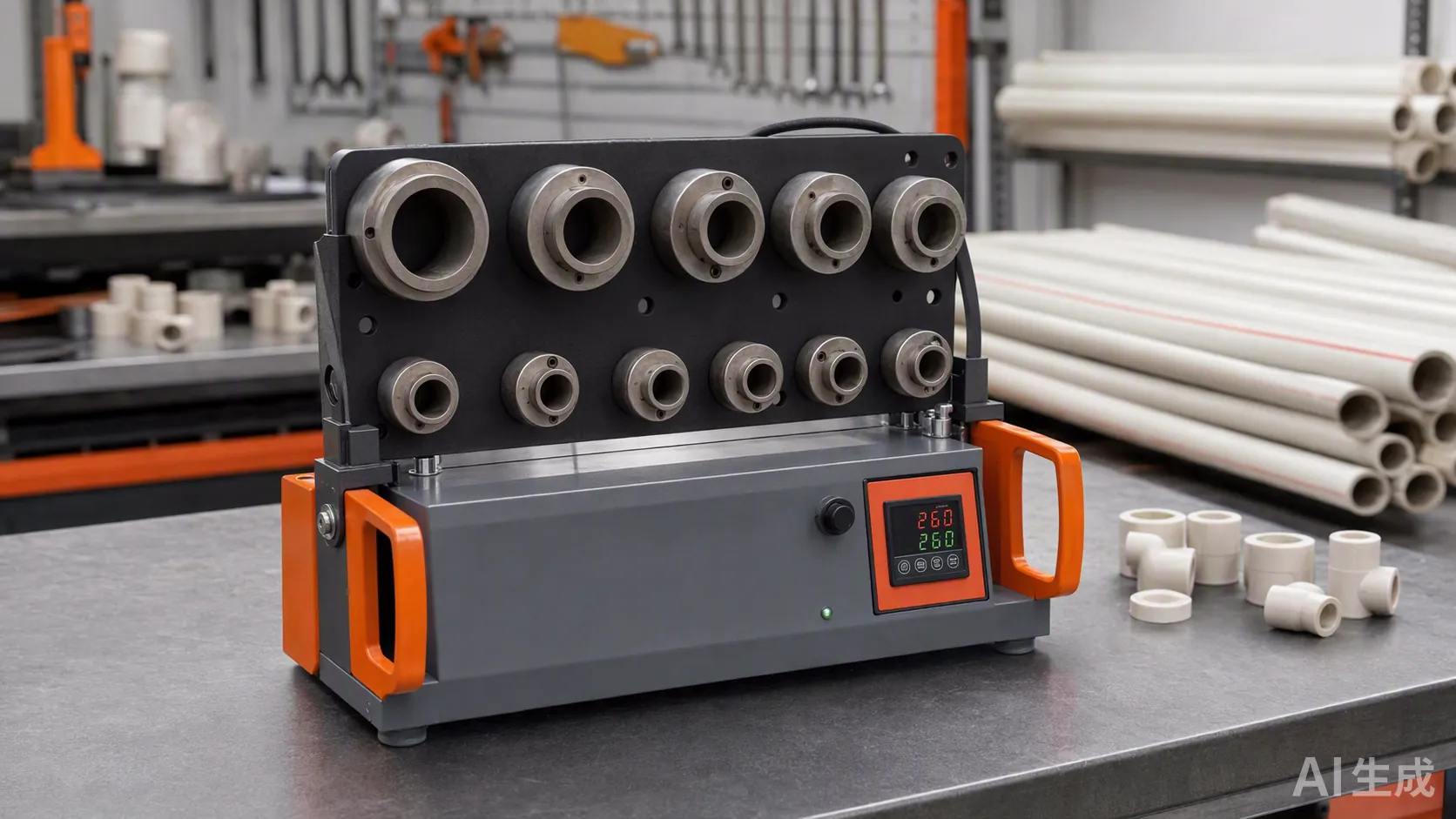
A PPR welding machine is the tool that melts pipe and fitting together at roughly 260°C, and it decides more about your installation than most buyers expect. The same PPR pipe welded by a machine that holds temperature produces joints that outlast the building. Welded on a unit that drifts, the same pipe weeps at a pressure test or fails months later behind a finished wall. A large share of field failures trace back to fusion temperature, heating time and operator technique rather than the pipe itself.
This guide covers the buying side of that equation. You will find the machine types by pipe range, the fusion parameters a unit must hold, the specs worth comparing, and a run-before-you-pay verification sequence. The price bands are honest market estimates, not a quote. The goal is one decision: which PPR welding machine fits your diameters and duty, and how you prove it works before money moves.
Key takeaways
- Set the plate at roughly 260°C. PP-R socket fusion runs at about 260°C, within roughly ±5–10°C (about 250–270°C). A machine that holds that window is the difference between a sound joint and a cold one.
- Match machine to your largest pipe. Handheld units cover DN20–DN63, bench socket machines DN75–DN160, and full-range units do 20–160mm.
- Time follows diameter. Heating runs from about 5 seconds at DN20 to about 24 seconds at DN63 on our chart; larger diameters follow the machine’s fusion card. Cooling scales with diameter: about 2–6 minutes for DN20–DN63 joints, and large-diameter joints can require 20–30 minutes per manufacturer guidance.
- Standard grounding matters. DVS 2208-1 governs the machine equipment, DVS 2207-11 the PP weld parameters, and ASTM F3722-24 codifies heat-fusion joining for PP in the US.
- Verify before you pay. Check plate flatness, test the real temperature with a probe, and weld scrap pipe first.
- The machine welds a system. Dies must match ISO 15874 pipe OD; pair the tool with a pipe and fittings line verified to the same standard.
On this page
How a PPR Welding Machine Works
Socket fusion is the standard joining method for PP-R pipe. The machine heats a Teflon-coated plate to the fusion window. You press the pipe end into one die and the fitting socket into the other. The molten faces become one piece when pushed together. No glue, no thread, no sealant.
The temperature is the whole trick. PP-R is a polypropylene random copolymer, and it fuses around 260°C, within roughly ±5–10°C (about 250–270°C). Below that window the surfaces do not melt deep enough and you get a cold joint that can pass an initial pressure test. Excessive temperature or heating time can over-soften the material, distort the socket and reduce the effective bore. Always follow the pipe-system manufacturer’s fusion table.
That is why the machine matters more than the pipe. A heating plate that drifts 30°C mid-weld changes the joint you are making. The pipe manufacturer controls the material; the machine controls the heat, and the heat is what makes the joint.

Two other fusion families exist, and it pays to name them so they stay out of the decision. Butt fusion melts the flat ends of two pipes and presses them together; it appears on large-diameter or industrial runs. Electrofusion wraps a fitting with an embedded heating coil around the pipe and powers the coil. Both are separate tooling investments. For the DN20–DN160 range that dominates PPR plumbing, socket fusion is the everyday machine.
Machine Types by Pipe Range and Duty
Machine classes follow pipe diameter, not brand. A unit that welds DN63 happily will not heat a DN110 fitting evenly, and a bench machine on a DN20 riser is wasted weight. Match the class to the largest diameter you actually run.
Handheld socket machines for DN20–DN63
Handheld units are the plumber’s default. The heating plate carries two or three interchangeable die pairs, covers DN20–DN63 in the common configuration, and weighs little enough to work on a ladder. Power commonly falls in the 800–1200W range on product listings, but it is machine-dependent; a typical 20–63mm portable unit is rated 1000W. These machines dominate domestic and light commercial work, and they are what most install crews buy first.
Bench and stationary socket machines for DN75–DN160
Above DN63 the joint surfaces get large and the push forces get high. Bench-mounted socket machines clamp the pipe, hold the fitting in a guide, and keep the alignment straight while you press. They cover DN75–DN160. Power commonly falls in the 1500–2000W range on product listings, but it is machine-dependent; a typical 75–110mm unit is rated 1600W. A distributor equipping crews for commercial projects usually needs at least one of these alongside the handheld units.
Full-range 20–160mm machines
Combination units bridge both worlds. A 20–160mm socket fusion machine covers the common socket-fusion sizes from 20 to 160 mm; confirm the machine’s supported diameters against your pipe range. These are usually rated 1800–2200W with a 1.6kW-plus heating plate, and they are the workhorses for installers who take on varied projects and for importers who equip subcontractor crews.
| Machine class | Typical pipe range | Power band | Best fit |
|---|---|---|---|
| Handheld socket | DN20–DN63 | ~800–1200W (examples) | Domestic and light commercial installs |
| Bench socket | DN75–DN160 | ~1500–2000W (examples) | Large-diameter commercial and industrial lines |
| Full-range combination | 20–160mm | ~1800–2200W (examples) | Varied projects; crew and importer programs |
| Butt fusion / electrofusion | Large or industrial runs | Separate tooling | Dedicated projects; not the everyday PPR machine |
Power bands are product-page examples, not a fixed spec; check the machine nameplate before ordering.

One material warning belongs here. PP-R fuses at roughly 260°C; PE and HDPE fuse around 200–220°C. A machine that accepts both materials is useful, but PPR, PE and HDPE use different fusion parameters — do not reuse PPR settings on PE pipe. Welding HDPE at PPR temperature over-heats the joint, and vice versa the PE joint stays cold. Set the plate for the material on the table.
Fusion Parameters the Machine Must Hold
Fusion works on three numbers: temperature, heating time, and cooling time. The machine holds the temperature; you hold the clock. Most published charts give approximate values, so treat them as a starting point and confirm the chart your pipe supplier prints on the box.
| Pipe DN | Heating time | Joining time | Cooling time |
|---|---|---|---|
| DN20 | ~5 s | ~4 s | ~2 min |
| DN25 | ~7 s | ~4 s | ~2 min |
| DN32 | ~8 s | ~6 s | ~4 min |
| DN40 | ~12 s | ~6 s | ~4 min |
| DN50 | ~18 s | ~8 s | ~4–6 min |
| DN63 | ~24 s | ~8 s | ~6 min |
| DN75–DN160: values vary by machine and manufacturer; request the machine’s specific fusion-time card. | |||
These DN20–DN63 values match the table our own fusion-time guide publishes; the chart stops at DN63 because larger diameters move to bench machines. For DN75–DN160, values vary by machine and manufacturer, so request the machine’s specific fusion-time card. Read any chart as a starting point: the machine manual and the pipe supplier’s chart are the binding documents on your site.
The standards behind these numbers are worth naming, because suppliers blur them. DVS 2208-1 covers the machines and equipment for heated tool welding of pipes. DVS 2207-11 covers heated element welding of pipes made of PP — the parameter guidance itself. Note the number: DVS 2207-1 is the polyethylene version, so a machine brochure citing DVS 2207-1 for PPR is citing the wrong material. ISO 15874 sets the pipe system requirements. The new ASTM F3722-24, published in November 2024, is the first US standard practice for heat fusion joining of PP pipe and fittings. It was built on DVS 2207-11 and covers butt, socket, sidewall and electrofusion with quality-assurance appendix photos.
One correction saves you from a bad citation. Some pages credit “EN 1043-1” with setting fusion heating times. The actual ISO 1043-1 is the symbols standard: it defines what PP-R means. It sets no heating time. Ask for the welding parameter chart instead of a standards acronym.
Power, Dies and Temperature Control Specs
Four specs separate a machine that welds from a machine that only heats. Compare them before you compare prices.
Wattage against your pipe range
Wattage is recovery speed. A low-powered plate on a cold site, or in continuous use, drops below the fusion window between joints. The 260°C target is a floor for the weld, not an average. If your jobs run DN50 and above, or you work outdoors in winter, buy the next power class up. An under-powered machine is how a crew gets cold joints that pass today’s test and fail at 2am.
Die fit to the pipe standard
Dies are sized to the pipe’s outside diameter, and the OD is set by the standard the pipe is made to. ISO 15874 pipe, which covers DN20–DN160 in the metric series, must seat cleanly in the machine’s dies. A die that is loose rocks the pipe during heating and breaks the melt. Check that the die set matches the diameters you run, and prefer machines with replaceable Teflon-coated dies so worn surfaces are cheap to swap.
Temperature control type
Digital controllers with a probe hold the set point tighter than bimetal thermostats, and they show you the live plate temperature. On a professional machine expect a stated deviation around ±5°C and a maximum plate temperature near 270°C. A machine without any temperature read-out is harder to verify; many pro units use LED indicators, thermostats or contact thermometers. Confirm how the unit displays its set point before buying.
Voltage and export compatibility
Export machines commonly come in 110V or 220V versions at 50/60Hz. Check the plug standard for your market before ordering. A distributor buying for several crews should standardize on one voltage. Keep spare heating plates too, because the plate is the part that wears and the part that changes the weld.
How to Verify a Machine Before You Pay
A brochure says “260°C ±5°C”. Your money should move after you see it, not after you read it. Five checks take under an hour and they are the same checks a quality inspector would run.
- Inspect the plate. The heating face must be flat and the Teflon coating intact. Scratches, pits or peeling coating create uneven heat transfer and weak spots in every joint.
- Probe the real temperature. Let the machine reach temperature, then read the plate with an independent probe or thermometer. Compare it to the display. A 10°C gap between display and plate is a machine that will fail you on the first cold morning.
- Check die alignment and depth marks. The dies must grip the pipe square, and the pipe must seat to the socket depth marked on the fitting. A depth gauge on the machine makes that check repeatable.
- Weld scrap pipe. Cut two short pieces of the pipe you will install, fuse them, and let them cool fully. A sound weld shows a uniform melt bead all around; a lopsided or weeping joint sends the machine back.
- Read the actual specs on the nameplate. Voltage, wattage, max temperature and stated deviation live on the plate. If the nameplate and the listing disagree, the listing is marketing.
Put the same checks in the RFQ when you buy at volume. Ask the supplier for a test-weld video on the pipe size you run, the real measured temperature, and the die list. A supplier who ships without answering those three questions is selling you a surprise.
Procurement checklist: ask the supplier for
- Machine model — the exact model and serial number you are quoted, not a range or a catalogue photo.
- Temperature deviation test method — how the supplier measures the real plate temperature and what deviation they accept.
- Continuous working time — how long the unit holds its set point under repeated joints.
- Die material and coating — the die base material and the non-stick coating, and how the coating is applied.
- Spare die supply — which die sizes are kept in stock and the lead time for replacements.
- Warranty period — what is covered and how claims are handled on an export order.
- Voltage and plug options — the voltage, frequency and plug standard for your market.
- Packaging and container loading — the packing spec and how many units fit per container for volume orders.
What Machine Choice Costs a Project
Machine prices are a market range, not a quote, and they change with brand, die count and control type. As rough guidance from current listings: handheld 20–63mm units run about USD 20–60, mid-range 75–110mm machines about USD 100–250, and full 20–160mm bench machines several hundred USD. Pay the range for the class you need; the cheap outlier in any class is where the plate steel gets thin.
The bigger cost sits in the rework, and it shows up after the machine is long paid for. A failed joint on finished work means cutting a wall, draining a line, and redoing a section that a $40 saving on the tool cannot cover. For a contractor the practical trade-off is clear. The machine is typically one of the lower-cost parts of the installation, and the weld is the part that either holds or leaks.
Rent versus own follows frequency. A crew welding weekly buys; a project team welding once rents and puts the money into pipe. Distributors equipping subcontractors usually buy a small fleet of handheld units plus one bench machine, and standardize on one die set so spares and training are shared.
Pairing the Machine With the Pipe System
The machine welds a system, not just a pipe. The dies seat on the pipe’s outside diameter, and that OD is a dimensional promise made by the pipe standard. ISO 15874 sets the OD and wall for PP-R pipe; ASTM F2389 is the US pressure-rated PP piping specification with the same role. If the pipe is off-spec, the machine cannot fix it — the die wobbles, the depth mark misses, and the 260°C parameter was correct for a pipe that was not.
The fitting matters just as much. Socket fusion joins pipe to fitting, and both faces must melt at the same rate. A fitting with a wall that runs thin or a socket that is undersized changes the joint even on a perfect machine. That is why the incoming inspection on pipe and fittings matters to the same buyer who picks the machine.

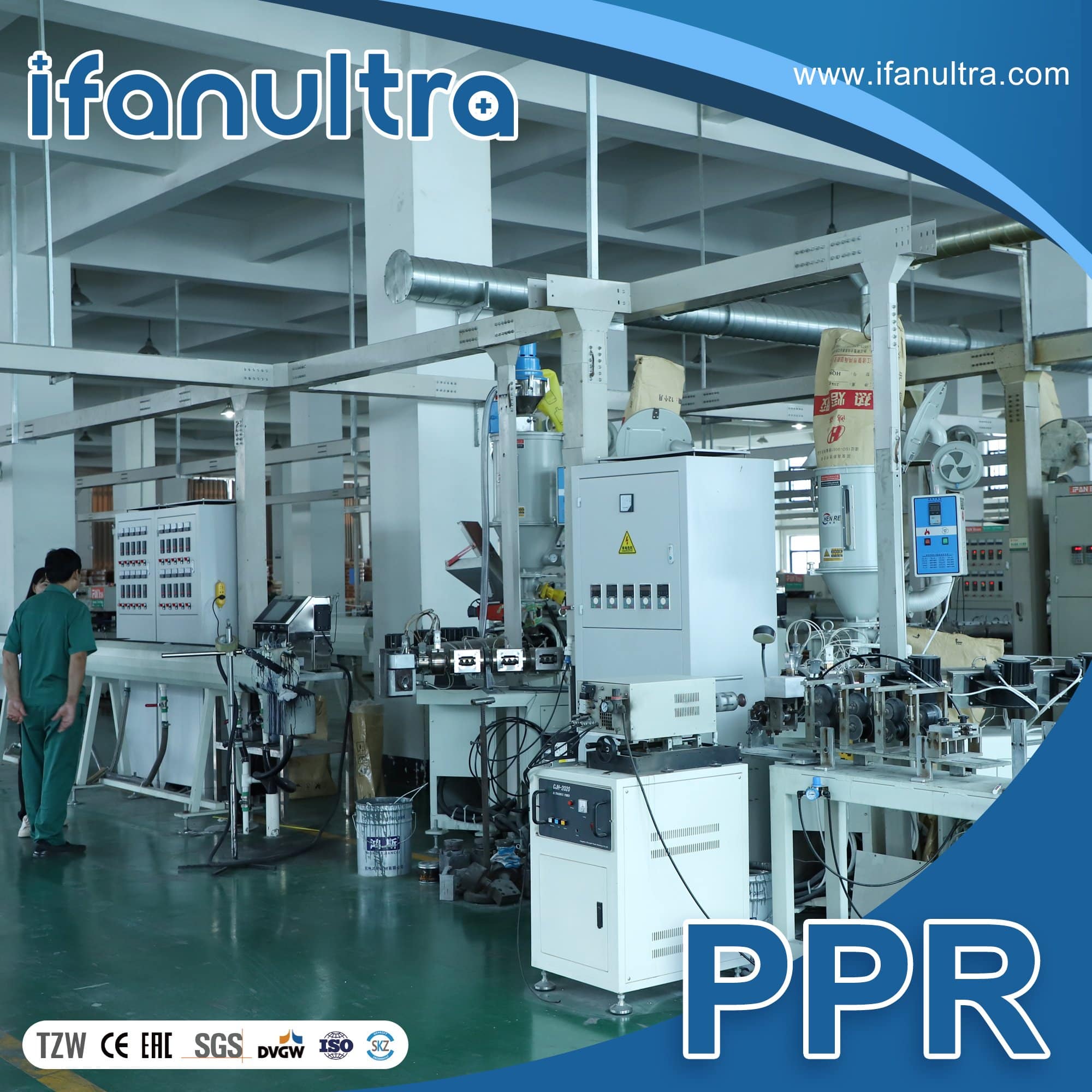
IFAN ULTRA‘s position is worth stating plainly. We make PP-R pipe and fittings, not welding machines, and this page is a buying guide, not a machine catalogue. The DN20–DN160 range we produce is checked to ISO 15874 and DIN 8077. Caliper wall samples are pulled across pallets, and pressure tests run to the rated class. Those incoming checks keep the OD honest for your dies. When the machine decision is done, the pipe system is the other half of the same joint.
If you are a distributor building a crew program, the practical sequence is short. Fix your diameter mix first. Match the machine class, then order pipe and fittings against the same standard. The dies, the depth marks and the pressure class all line up when the standard is shared. Our PPR Global Series covers the DN20–DN160 range in PN10/PN16/PN20/PN25 across 67 SKUs, with a one-container minimum and 15–25 days production before ocean transit.
Conclusion
A PPR welding machine earns its keep at 260°C. Match the class to your largest diameter. Compare wattage, dies and temperature control, and verify the plate with a probe and a scrap weld. Treat the price bands as ranges, not quotes. The machine that holds temperature and fits your pipe range is the machine that keeps the pressure test green.
When you are ready to pair the tool with the pipe system, the heat-fusion installation guide walks the full process, and the PPR Global Series covers the product side. Send the diameter mix and the project type for a written spec position before the PO.
Frequently Asked Questions
What temperature do you weld PPR pipe at?
Set the heating plate to roughly 260°C, within about ±5–10°C (250–270°C). Hold the plate steady during the weld; a machine that drifts outside that window makes cold or burnt joints.
Which PPR welding machine size do I need?
Match the machine to your largest pipe. Handheld units cover DN20–DN63, bench socket machines cover DN75–DN160, and 20–160mm combination machines do the full range. Confirm the die set includes the diameters you run.
How long do you heat PPR pipe before joining?
Heating time grows with diameter: about 5 seconds at DN20 and about 24 seconds at DN63 on our published chart. Larger diameters follow the machine’s own fusion card. Cooling scales with diameter too: about 2–6 minutes for DN20–DN63 joints, and large-diameter joints can require 20–30 minutes per manufacturer guidance. Treat published values as approximate and follow the machine manual and pipe chart.
Can a PPR welding machine weld PE or HDPE pipe?
Some units accept both materials, but the temperatures differ. PP-R fuses at about 260°C while PE and HDPE fuse around 200–220°C. Do not reuse PPR settings on PE pipe — each material has its own fusion parameters.
How much does a PPR welding machine cost?
As rough market ranges: handheld 20–63mm units about USD 20–60, mid-range 75–110mm machines USD 100–250, and full 20–160mm bench machines several hundred USD. These are estimates, not quotes; brand, die count and control type move the price.
Why do my PPR welds leak or fail?
A large share of joint failures trace to the machine or the process: temperature outside the 260°C ±5–10°C window, short heating time, rotation during insertion, or dirty dies. A cold joint can pass the initial pressure test and fail months later, so verify the plate temperature and weld scrap before production joints.









 English
 Español
 Français
 Português do Brasil