
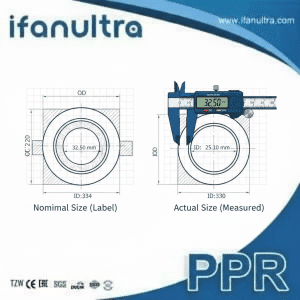
Early in my career, I saw a project halted because ordered pipes wouldn’t fit the specified fittings. The confusion came from a basic misunderstanding between nominal and actual size.
The difference is this: “Nominal Pipe Size” (NPS) is a standardized label for identification and ordering, not a direct physical measurement. “Actual size” refers to the real, measurable outer and inner diameters of the pipe. For historic reasons related to old manufacturing methods, the NPS number roughly corresponds to a pipe’s interior capacity but rarely matches its exact dimensions.
This distinction is fundamental to plumbing and engineering. Let’s explore why this system exists and how to work with it confidently.
Why Does “Nominal” Pipe Size Not Match the Exact Physical Dimensions?
This mismatch frustrates many people. The reason is not a mistake, but a legacy of how we built things over a century ago.
“Nominal” pipe size does not match exact dimensions because the naming system originated with old steel pipe standards. A “1-inch” pipe originally referred to a pipe that had a roughly 1-inch inner diameter (ID). As wall thicknesses standardized for pressure ratings, the outer diameter (OD) became fixed, making the ID vary. The NPS label stayed as a convenient identifier for the pipe’s class o capacity, not its physical measurement.
The Historical Origin: It’s All About Capacity
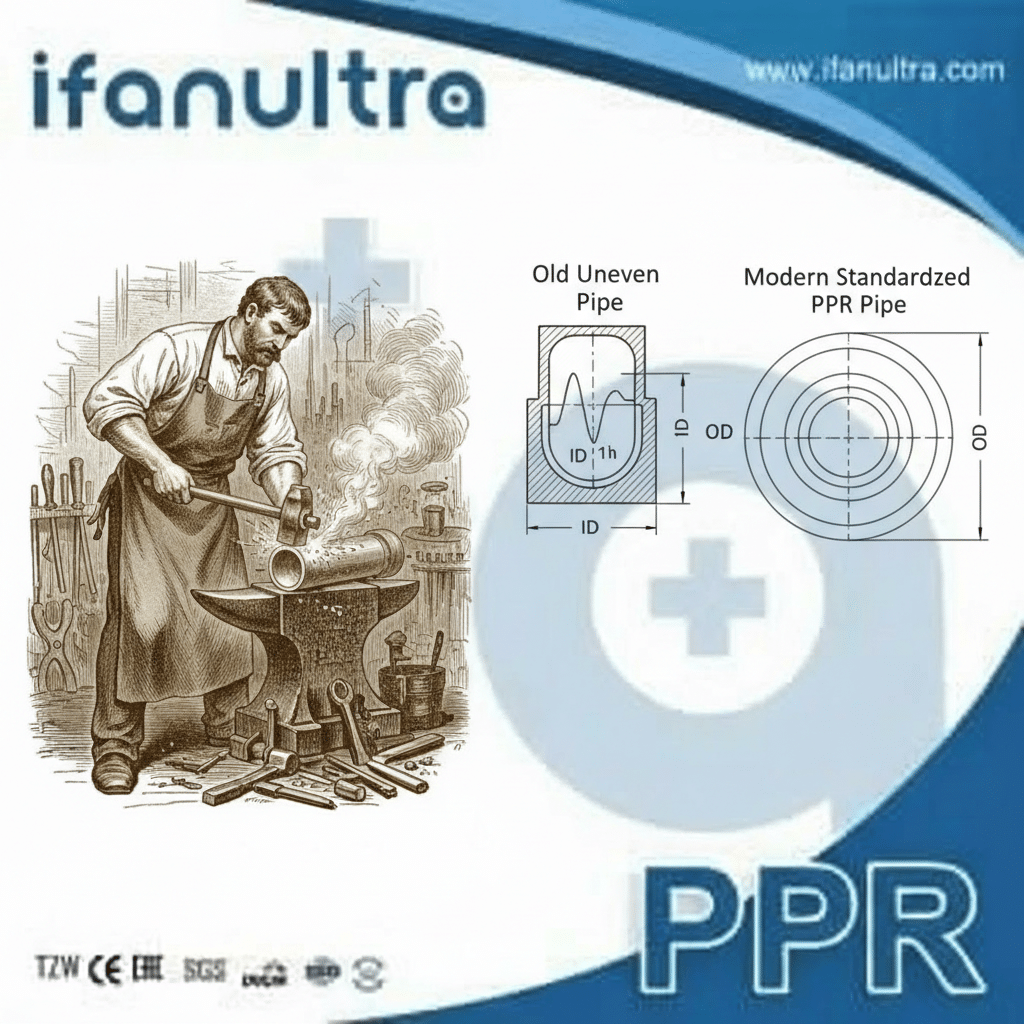
To understand this, we need to go back in time. Before modern standardization, a blacksmith would make a pipe by bending and welding a flat piece of iron. The important thing for the plumber was how much water or gas the pipe could carry—its internal capacity. So, they named the pipe based on its approximate inside diameter. A pipe that could carry a similar flow to a tube with a 1-inch hole was called a “1-inch pipe.
The problem was wall thickness. Early pipes had inconsistent walls. To make pipes stronger for higher pressure, manufacturers simply added more metal, making the walls thicker. This thickened wall reduced the actual inside diameter, but the pipe still needed to connect to other “1-inch” fittings. The solution? They kept the outside diameter the same for all “1-inch” pipes, regardless of wall thickness. This way, all 1-inch pipes could thread into the same 1-inch fittings.
The Modern Standard: Fixed Outer Diameters
This practice evolved into our current standard. For a given Nominal Pipe Size (like NPS 1, NPS 2), the Outside Diameter (OD) is fixed and standardized. This is the most critical point. Whether it’s a thin-walled schedule 5 pipe or a thick-walled schedule 80 pipe, a 1-inch NPS pipe will have the same OD (approximately 1.315 inches). What changes with the schedule (wall thickness) is the Inside Diameter (ID).
| Nominal Pipe Size (NPS) | Standardized Outer Diameter (OD) in inches | Why the Name is Misleading |
|---|---|---|
| 1/2 inch | 0.840 in | The OD is much larger than 0.5″. The name hints at its old, approximate flow capacity. |
| 1 inch | 1.315 in | The OD is not 1″. The ID of a standard Schedule 40 pipe is about 1.049. |
| 2 inch | 2.375 in | The OD is over 2.375″. The name is just a legacy label for this size class. |
| 4 inch | 4.500 in | From NPS 4 upward, the NPS number is simply the rounded OD in inches. |
So, the “nominal” size is a name tag, not a ruler measurement. It identifies a family of pipes that share a common outer diameter, allowing them to use the same fittings. The takeaway? Never assume a pipe’s dimensions from its name. Always refer to a standard dimension table.
How Do You Find the Actual Outside and Inside Diameters from a Nominal Size?
You cannot guess the dimensions; you must look them up. This is a non-negotiable step in professional design.
You find the actual diameters by consulting industry-standard dimension tables (like ASTM or ISO standards) that match the Nominal Pipe Size (NPS) with the pipe’s “schedule” or pressure rating. The Outer Diameter (OD) is fixed per NPS. The Inside Diameter (ID) is calculated by subtracting twice the wall thickness (found in the schedule table) from the OD: ID = OD – 2*(Wall Thickness).
The Essential Tool: The Pipe Schedule Chart
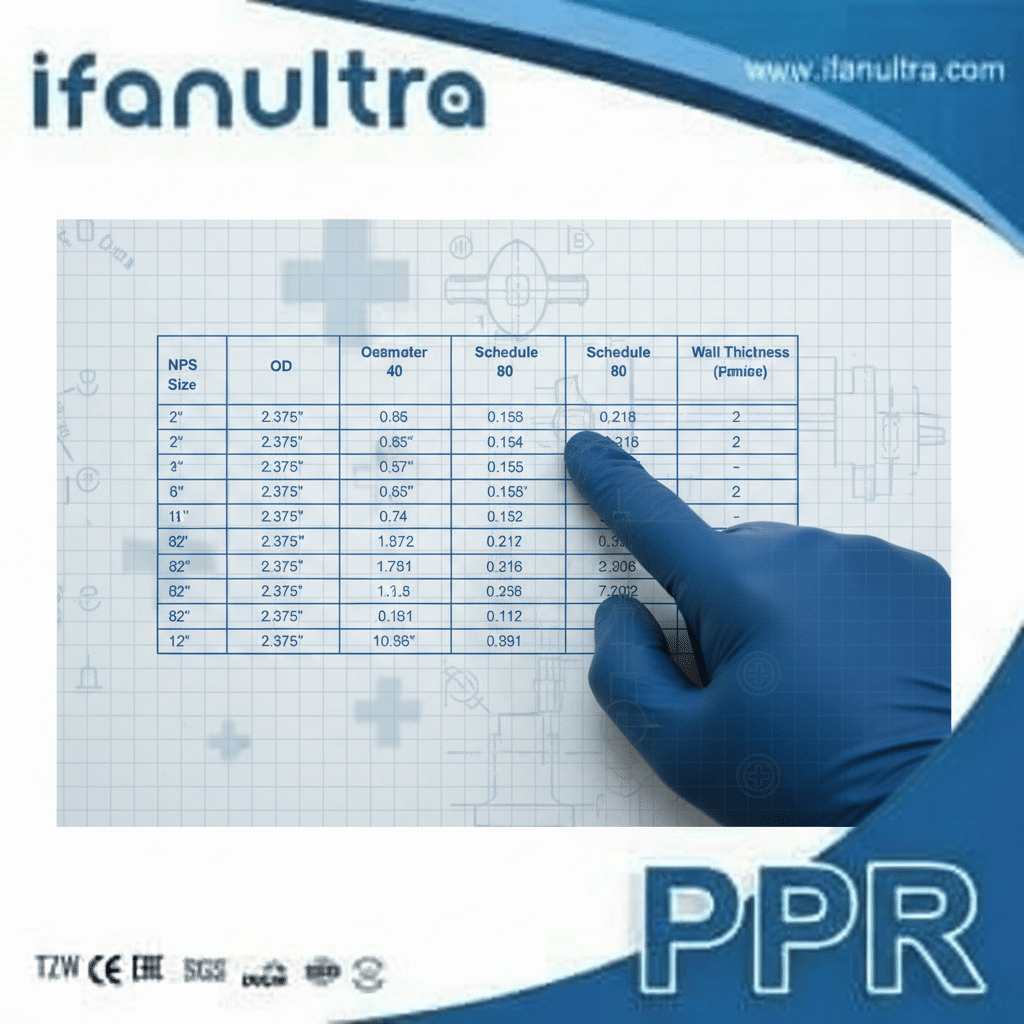
The key to unlocking real dimensions is the pipe “schedule.” The schedule number (e.g., Schedule 40, Schedule 80) indicates the wall thickness for a given NPS and material. Higher schedule numbers mean thicker walls, higher presiones nominales, and smaller inside diameters.
Here is the practical process:
- Identify the Nominal Size (NPS): This is the name given, e.g., “2-inch pipe.”
- Identify the Schedule: This is critical. You must know if it’s Schedule 5, 10, 20, 40, 80, 120, or 160. This is often specified in project drawings or material requests.
- Consult a Dimension Table: Find a reliable chart for your material de la tubería (steel, PVC, etc.). Locate your NPS and Schedule.
- Read the Dimensions: The table will list:
- The standardized Outside Diameter (OD) for that NPS.
- The wall thickness for that NPS and Schedule.
- Sometimes the Inside Diameter (ID) is already calculated for you.
Practical Example and Common Pitfalls
Let’s take a very common example: NPS 2, Schedule 40, PVC pipe.
- Step 1: NPS = 2 inch.
- Step 2: Schedule = 40.
- Step 3: Check a PVC dimension table.
- Step 4: You will find:
- OD = 2.375 inches (This is fixed for all NPS 2 pipes).
- Wall Thickness = 0.154 inches (This is specific to Sch 40 PVC).
- ID = OD – (2 * Wall Thickness) = 2.375 – (2*0.154) = 2.067 inches.
Common Client Pitfall: A client orders “2-inch pipe” expecting it to have a 2-inch hole (ID). They receive Schedule 40 pipe with a 2.067″ ID. They then try to connect it to a 2-inch actual hose barb fitting (which measures 2.000″ OD), and it doesn’t fit because the pipe’s ID is slightly larger. The confusion stems from mixing nominal and actual measurements. The hose barb is using a true 2-inch measurement, while the pipe is using the nominal “2-inch” label which has a different, larger OD and ID.
The table below shows how the ID changes for the same NPS with different schedules:
| Nominal Size (NPS) | Schedule | Outer Diameter (OD) – Fixed | Espesor de pared | Calculated Inside Diameter (ID) |
|---|---|---|---|---|
| 2 inch | Schedule 40 | 2.375 in | 0.154 in | 2.067 in |
| 2 inch | Schedule 80 | 2.375 in | 0.218 in | 1.939 in |
| 2 inch | Schedule 120 | 2.375 in | 0.281 in | 1.813 in |
Always use a chart. Memorizing a few common sizes is helpful, but for reliable work, keeping a dimension table on hand or using a reliable supplier’s specifications is essential.
Why is This Distinction Vital for Proper Fitting Selection and System Design?
Ignoring this difference is the fastest way to cause project delays, leaks, and budget overruns. The distinction is the foundation of compatibility.
This distinction is vital because plumbing and piping systems rely on precise connections. Fittings are designed to match the standardized Outside Diameter of a nominal pipe size. If you confuse nominal with actual ID, you will select the wrong fittings, leading to assembly failures, leaks, or restricted flow that cripples system performance.
The Golden Rule: Fittings Match Pipe OD
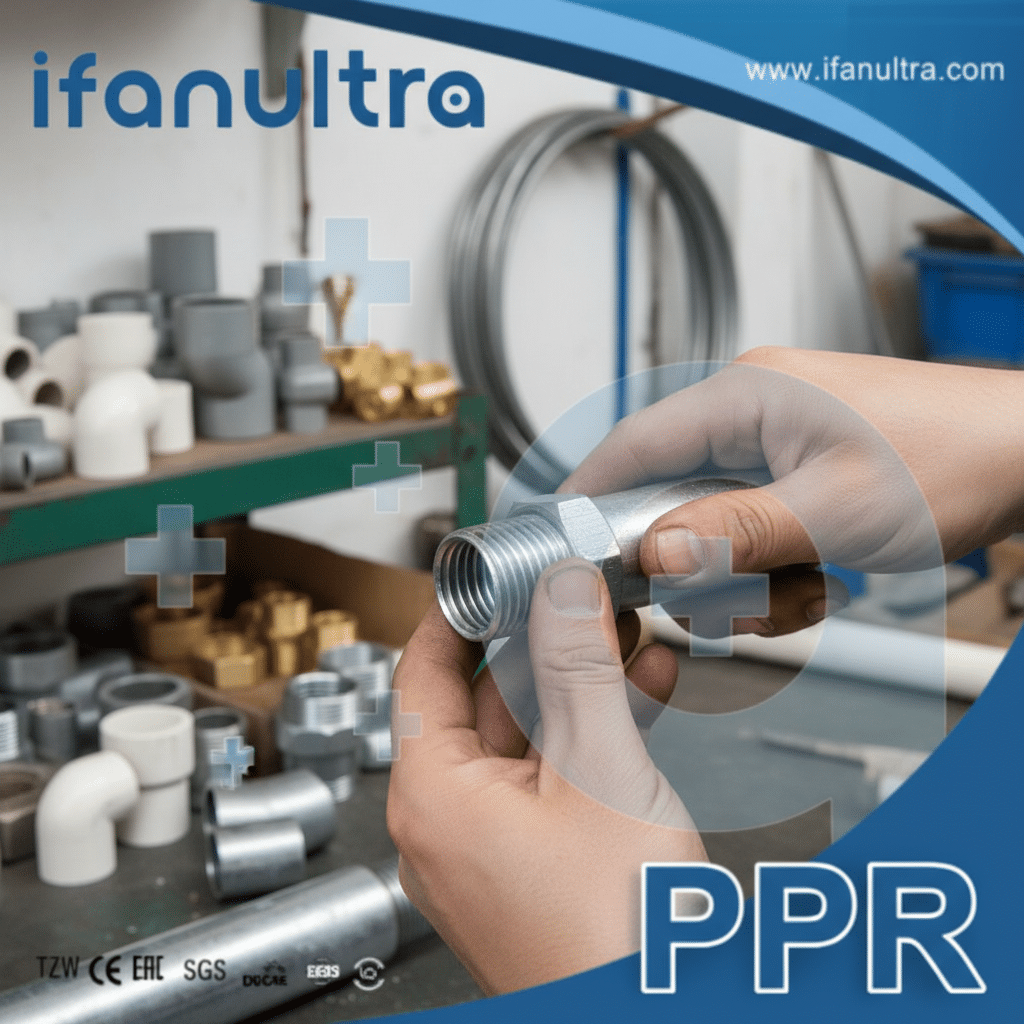
The most important practical rule in piping is this: Mechanical fittings connect to a pipe’s Outside Diameter. Whether it’s a socket for solvent welding (PVC), a compression ring, or threads, the fitting is manufactured to grip or seal onto the specific, standardized OD of a given NPS.
- Scenario A (Correct): You need to join two NPS 1, Schedule 40 Tubos de PVC. You know NPS 1 has a standardized OD of 1.315 inches. You select a PVC coupling labeled “1 inch.” Its socket is manufactured to be exactly the right size to accept a pipe with a 1.315-inch OD. It fits perfectly.
- Scenario B (Costly Mistake): You have a pipe with an actual Inside Diameter of 1.0 inch (perhaps a custom hose). You see it’s ~1 inch inside and mistakenly order “1-inch” fittings. The fittings arrive, designed for an OD of 1.315 inches. Your pipe with a ~1.0 inch ID likely has a much smaller OD and will rattle inside the fitting, completely failing to seal.
Impact on System Design and Performance
This distinction affects every part of system design:
- Flow Calculations: Engineers calculate pressure drop and flow rates using the actual Inside Diameter (ID). Using the nominal size (e.g., “2-inch”) in these calculations will give wildly inaccurate results. A Schedule 80 pipe has a smaller ID than a Schedule 40 of the same NPS, resulting in higher fluid velocity and greater pressure loss.
- Support and Spacing: Hangers and supports are often designed for specific pipe ODs. The correct NPS ensures proper fit.
- Thermal Insulation: Insulation must fit snugly over the pipe’s OD. Ordering insulation for a “2-inch pipe” means you get insulation sized for a 2.375-inch OD.
- System Integration: Connecting a nominal pipe system to equipment with actual-size ports (like pumps or tanks) requires specific adapters. You cannot simply thread a “1-inch NPT” pipe directly into a 1-inch actual hole without understanding the adapter needed.
A Summary of Critical Checks
To avoid errors, make these checks habit:
- For Compatibility: Match the NPS and Schedule of the pipe and fitting. This ensures the ODs align.
- For Performance: Use the actual ID from the dimension table for all fluid flow and volume calculations.
- For Ordering: Always specify both NPS and Schedule (e.g., “3-inch NPS, Schedule 40”).
Does the Difference Apply Equally to Metal, PVC, and PEX Piping Systems?
The principle of nominal sizing is universal, but its application varies slightly between materials. Yes, the difference applies, but you must use the correct chart for each material.
Yes, the distinction between nominal and actual size applies to all major systems, but the actual dimensions for a given NPS and Schedule can differ between metal, PVC, and PEX. While steel and PVC often share identical ODs for compatibility, PEX and copper tubing (CTS) use a completely different sizing system based on the Outside Diameter, adding another layer of attention needed.
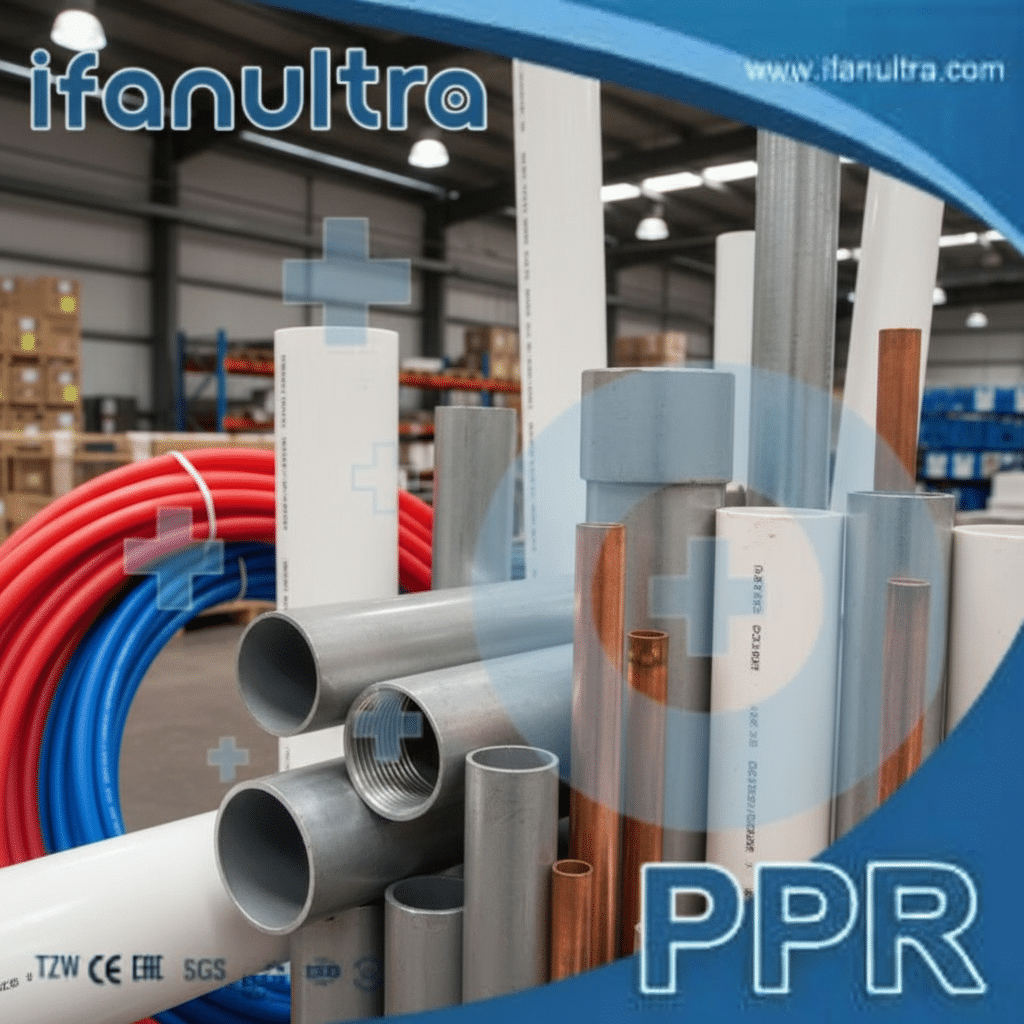
Metal Pipe (Steel, Stainless Steel)
This is where the NPS system originated. It is the reference point. Standards like ANSI/ASME B36.10M define the dimensions. The OD is fixed per NPS, and wall thickness is defined by schedule (Sch 40, 80, etc.). The system is consistent and well-documented.
PVC/CPVC Pipe
PVC largely adopted the metal pipe sizing system to allow for easier substitution and use of similar valves. For NPS 1/8 inch through NPS 12 inch, the ODs for Schedule 40 and 80 PVC are identical to those of steel pipe. This is a huge advantage for interoperability. However, the wall thickness for the same schedule might differ slightly due to different material strengths, which affects the ID. You must use a PVC-specific chart to get the exact ID and wall thickness.
PEX and Copper Tubing (CTS)
This is where confusion peaks. PEX and copper (like Type L, K) often use the Copper Tube Size (CTS) system, not the NPS system. In CTS, the nominal size approximates the Outside Diameter (not the old ID).
- For example, “1/2-inch CTS” tubing has an OD of about 0.625 inches.
- “3/4-inch CTS” tubing has an OD of about 0.875 inches.
The wall thickness is defined by a “type” (e.g., PEX Type A, Copper Type L). Therefore, when you order “1/2-inch PEX,” you are talking about tubing with a ~0.625″ OD, which is completely different from a “1/2-inch NPS” pipe with a 0.840″ OD. They require different fittings.
Comparison Table: Material Differences
This table highlights the key differences to watch for:
| Material SystemSizing StandardKey Reference DimensionCommon Pitfall | |||
|---|---|---|---|
| Steel / Iron Pipe | NPS (Nominal Pipe Size) | Outside Diameter is fixed per NPS. | Assuming NPS equals ID or OD. |
| PVC / CPVC Pipe | NPS (Adopted from Steel) | OD matches steel NPS ODs for compatibility. | Assuming wall thickness (and thus ID) is the same as steel for the same schedule. |
| PEX / Copper Tubing | CTS (Copper Tube Size) | Nominal size ~ Outside Diameter. | Mistaking “1/2-inch PEX” for “1/2-inch NPS”; they are not interchangeable. |
| Metric Pipes (Europe/Asia) | DN (Diameter Nominal) | DN number is roughly the ID in mm (e.g., DN25 ≈ 25mm ID). | Confusing DN with NPS; they require conversion charts. |
Practical Advice: Always know what sizing system your project uses. When integrating different materials (e.g., connecting a steel main to a PEX branch), you will need a transition fitting that specifically converts from one OD standard (NPS) to the other (CTS). Labeling a pipe as just “1 inch” is insufficient. You must specify: “1-inch NPS, Schedule 40, PVC” or “1-inch CTS, Type L Copper.”
Conclusión
Understanding that “nominal” is a label, not a measurement, is key to avoiding costly errors. For precise dimensions and compatible fittings, always consult specification charts and rely on trusted suppliers like IFAN, which provides clear technical data for all our pipe and fitting systems.









 English
 Español
 Français
 Português do Brasil