
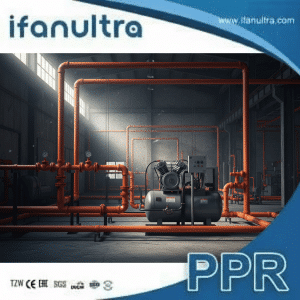
A client once called us in a panic after a plastic air line failed. This experience taught me that the answer to this question isn’t simple and depends entirely on strict, safe conditions.
CPVC pipes are generally not recommended for standard compressed air systems. While they can handle the pressure in theory, compressed air presents unique dangers like drying effects, oil contamination, and impact risks that CPVC is not well-suited to handle, making metal piping a much safer and more reliable choice for most applications.
However, we know some projects consider CPVC for cost reasons. Let’s examine the specific facts, standards, and risks so you can make an informed decision.
What Are the Specific Pressure Ratings for CPVC Pipe in Air Service?
Clients often quote a pipe’s “water pressure rating” for air. This is the first and most dangerous mistake. The ratings are not the same.
There is no standard pressure rating for CPVC pipe in compressed air service. Manufacturers design and test CPVC for use with water. Using its water pressure rating for air is incorrect and unsafe because compressed air contains much more stored energy and behaves differently than water, creating a higher risk of sudden, violent failure.
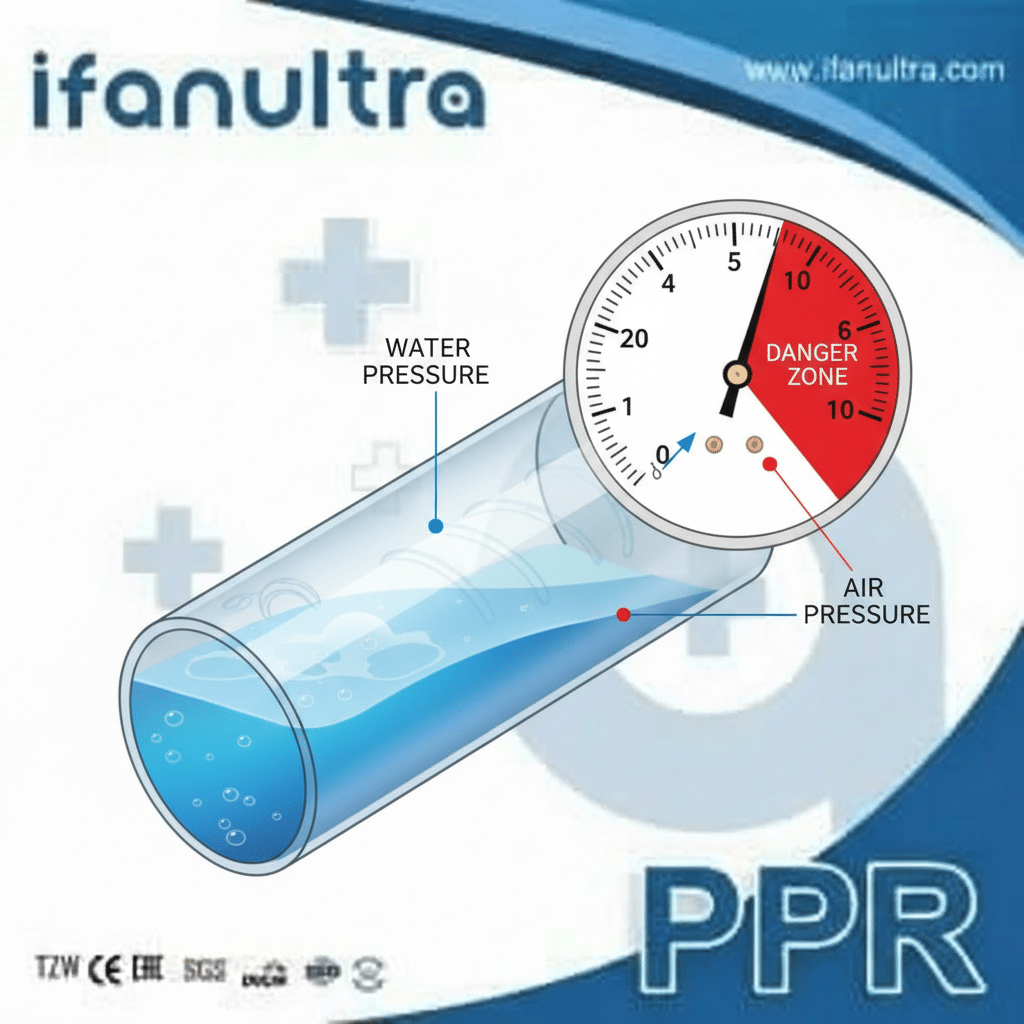
Why Water Ratings Do Not Apply to Air
You must understand a key difference between water and air. Water is barely compressible. Air is highly compressible. This means a pipe carrying compressed air stores a large amount of explosive energy.
A CPVC pipe rated for 100 PSI of water is tested with a relatively inert liquid. If it fails, it might leak. The same pipe at 100 PSI of air stores explosive energy. If it cracks or shatters, it can explode with tremendous force, sending sharp plastic shrapnel flying. This is why the working medium changes the safety equation completely.
Temperature and Pressure: A Critical Link
Furthermore, CPVC’s pressure capacity drops significantly as temperature rises. Compressed air gets hot during compression. Even after cooling in the tank, the air in the pipes can be warmer than ambient temperature, especially in mechanical rooms or if the compressor runs constantly.
Consider this typical derating table for Schedule 80 CPVC pipe:
| Fluid Service | Rated Pressure at 73°F (23°C) | Effective Pressure at 100°F (38°C) | Effective Pressure at 120°F (49°C) |
|---|---|---|---|
| Water | 400 PSI | ~320 PSI | ~250 PSI |
| Compressed Air | Not Rated | Not Rated | Not Rated |
Important: The table shows water ratings for illustration. There is no equivalent safe rating published for air. Running a system at 100 PSI air because the pipe is “rated for 400 PSI water” is a grave error. The safety factors and material behavior are not validated for that service.
The Bottom Line on Pressure
Never look at a CPVC pipe’s water pressure rating and assume it is safe for the same pressure of air. Without a manufacturer’s explicit, written approval for compressed air service at a specific pressure, you must assume the rating is zero.
How Does CPVC Handle the Drying Effect and Oil Contamination in Compressed Air?
Two invisible threats in air systems cause plastic pipes to fail over time: dry air and oil. I’ve seen CPVC become brittle and crack in these conditions.
CPVC handles dry compressed air and oil contamination poorly. The dry air can slowly extract plasticizers from the CPVC, making it brittle and prone to sudden cracking. Oil mist, common in compressor systems, can act as a solvent and severely degrade CPVC, weakening the material and leading to catastrophic failure at normal pressures.
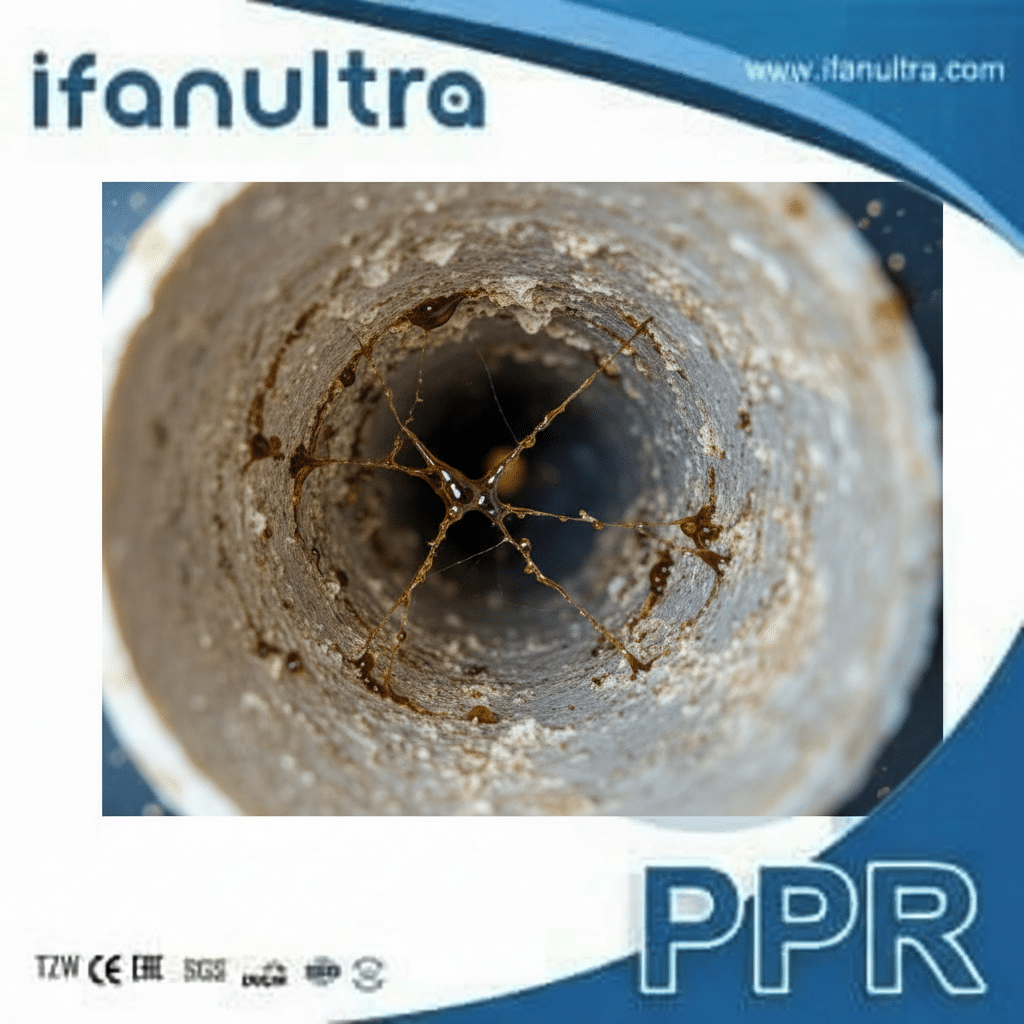
The Problem of Dry, Moisture-Free Air
People think dry air is “clean” and safe. For metals, it is. For many plastics, including CPVC, it’s a problem. CPVC contains compounds that give it flexibility and impact resistance. Over years of exposure to extremely dry air, these compounds can slowly migrate out of the plastic.
This process is called “drying out” or “loss of plasticizers.” The result is a pipe that looks perfectly normal on the outside but has become brittle on the inside. A small impact, a pressure surge, or even normal vibration can then cause a sudden, jagged crack. The failure is unpredictable and dangerous.
The Accelerating Threat of Oil Contamination
Most industrial air compressors introduce tiny amounts of lubricating oil into the air stream. Even with filters, an oil mist often remains. Oil is a hydrocarbon. CPVC is a hydrocarbon-based plastic. In simple terms, oil can act like a solvent on CPVC.
This oil exposure can cause two main issues:
- Chemical Degradation: The oil can attack the polymer chains of the CPVC, reducing its tensile strength. The pipe wall becomes weaker.
- Environmental Stress Cracking: Oil residue, combined with the constant stress from internal pressure, can cause tiny cracks to initiate and grow. This leads to failure at pressures far below the pipe’s original rating.
A Real-World Failure Scenario
Imagine a typical shop: The compressor runs, producing hot, oily, humid air. It goes through a dryer, removing the water. Now, the CPVC pipes carry dry, oily air. The oil slowly weakens the pipe. The dryness makes it brittle. One day, a technician drops a tool nearby. The vibration, or a small pressure spike from a valve, causes the degraded pipe to shatter. This is a sequence we have seen in failure analyses.
What Safety Standards Explicitly Approve or Restrict CPVC for Compressed Air?
Never guess about safety. Always check the written rules. The standards are clear and conservative for a reason.
Major international safety and plumbing codes either explicitly restrict or do not approve CPVC pipe for compressed air systems. Key standards like OSHA (Occupational Safety and Health Administration) in the US and the ASME B31.3 code for process piping strongly discourage or prohibit plastic pipes for compressed air due to the risk of brittle failure and shrapnel.
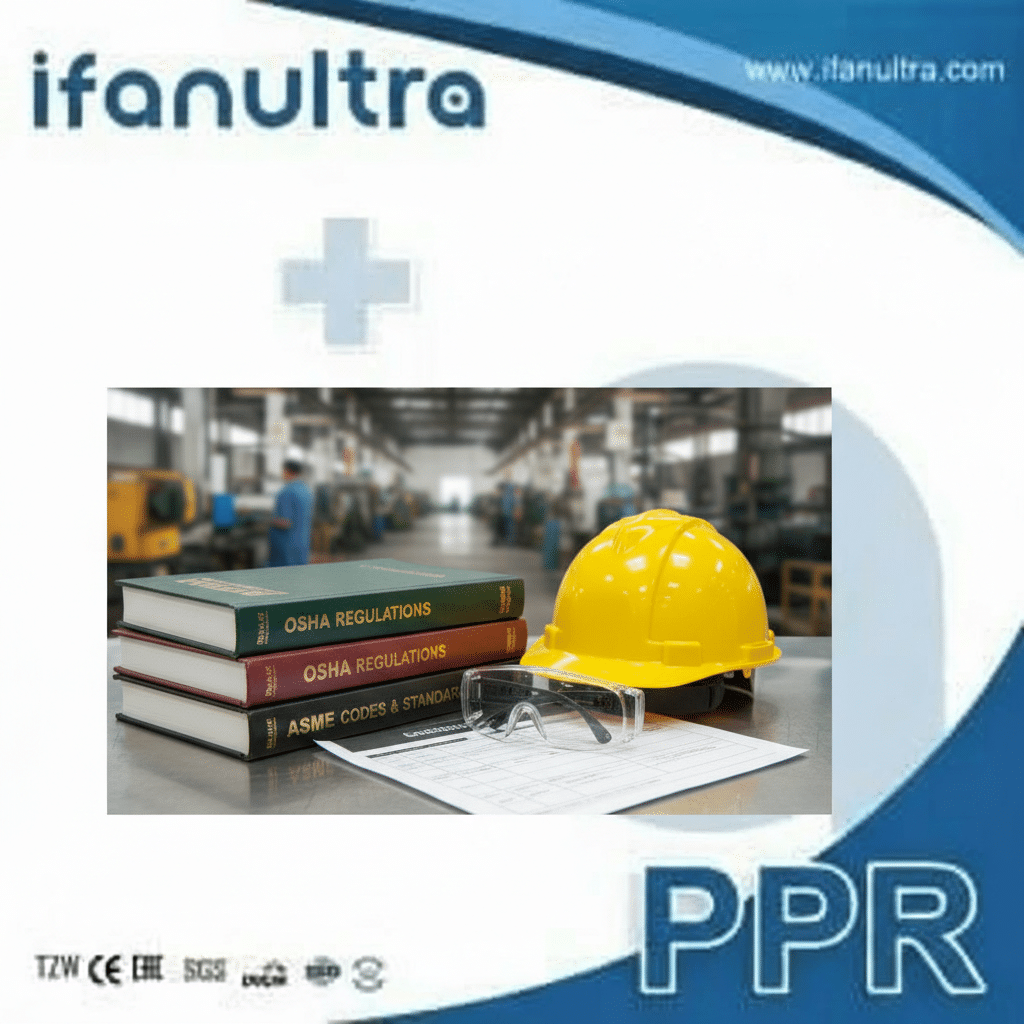
The Authority of OSHA
In the United States, OSHA regulation 29 CFR 1910.242(b) governs the use of compressed air for cleaning. While it focuses on nozzle pressure, its underlying principle is critical: compressed air is dangerous and requires specific controls. OSHA’s general duty clause would likely cite the use of an unapproved material like CPVC for plant air lines as a hazard, as it exposes workers to unnecessary risk of explosive failure.
Plumbing and Mechanical Codes
Model codes that govern building installations are also restrictive:
- International Plumbing Code (IPC): Lists approved materials for specific services. CPVC is approved for water, not for compressed air.
- ASME B31.3 – Process Piping: This is the key code for industrial piping. It states that thermoplastic pipes (like CPVC) may be used for compressed air or gas only if specifically listed for such service by the manufacturer and if all potential hazards (like static electricity discharge) are addressed. Most CPVC manufacturers do not provide this listing.
Manufacturer Instructions: The Final Word
Perhaps the most direct evidence comes from the CPVC manufacturers themselves. In their installation guides and material safety data sheets, they specify the intended fluids. You will consistently find “potable water,” “hot and cold water distribution,” or “industrial liquid handling.” You will almost never find “compressed air” or “compressed gases” as an approved service.
Using a product outside its listed and intended service immediately voids any warranty and assumes all liability. In the event of an accident, this would be a major point of negligence.
What Are the Key Advantages and Risks Compared to Metal Air Piping?
Let’s compare directly. The short-term appeal of CPVC is cost, but the long-term picture reveals a different story.
The key advantage of CPVC is lower initial material cost and easier installation compared to metal. The key risks are its potential for sudden brittle failure, degradation from oil and dry air, lack of approved safety ratings, and the severe shrapnel hazard it creates if it ruptures, making it fundamentally less safe than metal piping for compressed air.
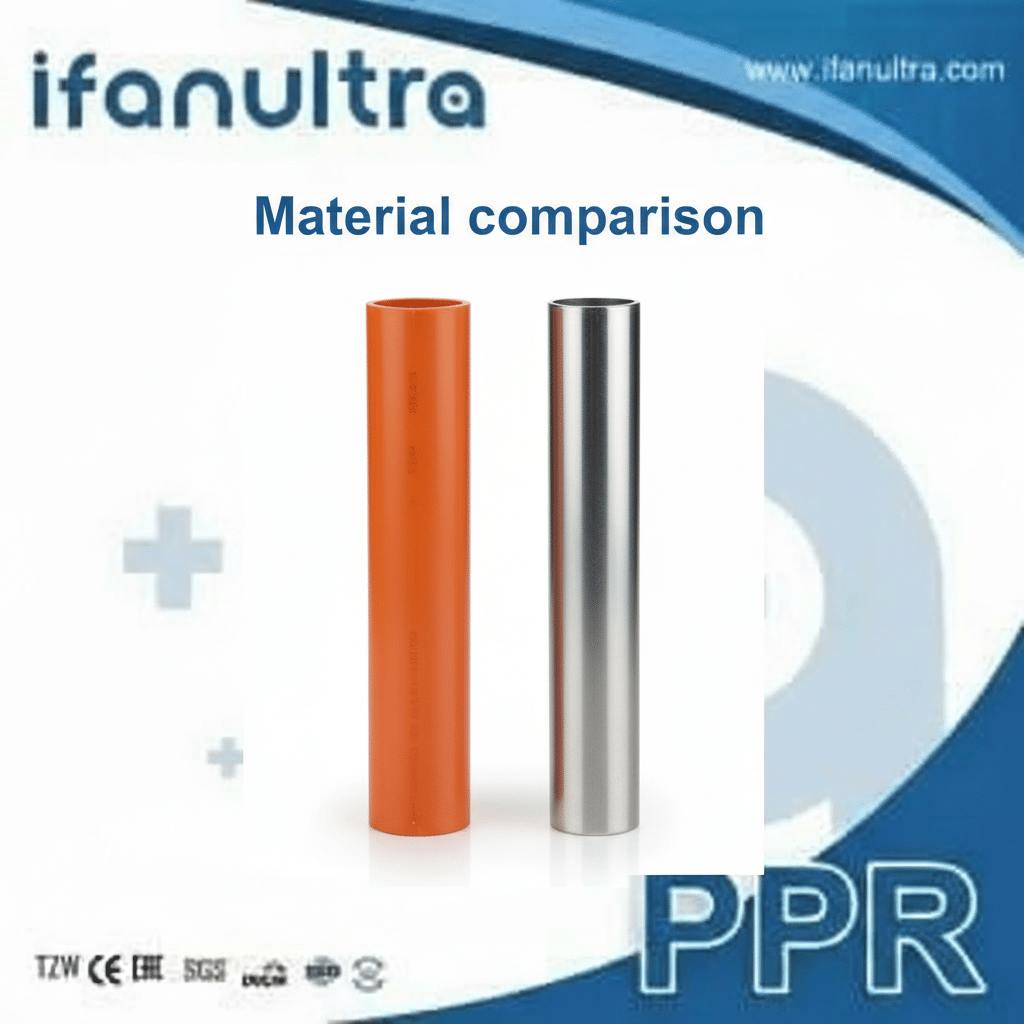
Side-by-Side Comparison
This table clearly outlines the trade-offs:
| Característica | CPVC Piping | Metal Piping (e.g., Aluminum, Black Iron) |
|---|---|---|
| Initial Material Cost | Lower | Higher |
| Velocidad de instalación | Faster (glue joints) | Slower (threading, welding) |
| Resistencia a la corrosión | Excellent (to internal moisture) | Varies; requires coating or use of stainless/aluminum |
| Presión nominal for Air | Not Officially Rated / High Risk | Clearly Rated and Safe |
| Impact & Fire Resistance | Poor | Excelente |
| Oil & Dry Air Resistance | Poor (degrades over time) | Excellent (no effect) |
| Failure Mode | Catastrophic (brittle shatter) | Generally ductile (leak first) |
| Compliance with Codes | Typically not approved | Fully approved (e.g., ASME, OSHA) |
| Long-Term Cost | High (risk of failure, replacement) | Low (durable, long-lasting) |
Analyzing the True Cost and Risk
The lower upfront cost of CPVC is tempting. However, you must factor in the total cost of ownership, which includes safety, downtime, and future repairs.
- Safety Cost: This is paramount. A metal pipe might corrode and leak, giving a warning. A CPVC pipe can fail explosively without warning, causing injury. The cost of an accident is infinitely higher than the savings on pipe.
- Downtime Cost: A sudden pipe rupture stops all production that relies on air. Repairing a shattered plastic system is more complex and time-consuming than fixing a threaded metal leak.
- Maintenance Cost: A properly installed metal system lasts for decades. A CPVC system is a ticking clock due to degradation from oil and dryness, guaranteeing premature replacement.
Our Practical Advice Based on Experience
For any standard workshop, factory, or commercial compressed air system:
- Use Approved Metal Piping. Aluminum piping systems are lightweight, corrosion-proof, easy to install with push-to-connect fittings, and are explicitly designed and rated for compressed air. They are the modern, safe standard.
- If Cost is the Primary Driver, use schedule 40 black iron pipe. It is code-approved, durable, and safe. It requires more labor to install but is a known, reliable entity.
- Reserve CPVC for its intended purpose: carrying water. The small savings on materials are never worth the enormous risk you introduce to your facility and personnel.
Conclusión
While CPVC has its place in plumbing, the risks far outweigh the benefits for compressed air. For a safe, reliable, and code-compliant air system, choose materials designed for the job, like IFAN’s range of robust metal piping solutions and fittings.









 English
 Español
 Français
 Português do Brasil