
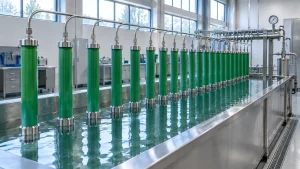
An Indian distributor opens a quotation for PP-R pipe from a Chinese plant. The folder holds ISO 15874 and DIN 8077 test reports, an ISO 9001 certificate and a German lab report. The purchase manager asks one question before he signs: does any of that satisfy BIS, and will the container clear without an ISI mark?
As of 20 September 2026, PP-R pipe sits under no Quality Control Order. IS 15801 does not appear on the list of products under compulsory certification that BIS publishes. The one order that touched this supply chain, the Polypropylene (PP) Materials for Moulding and Extrusion (Quality Control) Order, 2024, was rescinded with immediate effect on 12 November 2025. Customs is not the gate. Your buyer’s specification is. What follows is where IS 15801:2008 asks for something ISO 15874 never tests, and what a BIS licence forces a factory to run every week.
Key Takeaways
- IS 15801 is absent from the BIS compulsory-certification list, read 20 September 2026. The Standard Mark on PP-R pipe is voluntary and specification-driven.
- S.O. 5138(E) of 12 November 2025 rescinded the PP moulding and extrusion QCO. Even in force it bound the resin, never the finished pipe.
- IS 15801:2008 takes its pressure tables from DIN 8077:1999-07 at 25 years of service. ISO 15874-2:2013 routes the same question through ISO 9080 instead.
- IS 15801 adds opacity at 0.2 %, carbon black at 2.5 ± 0.5 % and a finished-pipe impact criterion. An ISO 15874 report answers none of the three.
- A Scheme-I licence means 95 °C hydrostatic testing weekly at 22 h, monthly at 165 h and quarterly at 1,000 h, in the supplier’s own laboratory.
Before the detail, here is the regulator’s own account of the route. In two minutes the Bureau of Indian Standards walks through applying for a Scheme-I licence and the ISI mark that comes out of it — the same scheme IS 15801 is operated under, described by the body that grants it rather than by a consultancy selling the application.

Is BIS Certification Mandatory for PP-R Pipe Imported Into India?
No. A full-text read of the BIS Scheme-I compulsory-certification page on 20 September 2026 returns zero occurrences of IS 15801. The plastic-pipe entries there are other products, ductile iron and centrifugally cast iron pressure pipes among them, and IS 15801 is absent from the upcoming-QCO schedule as well.
The order people confuse this with sat one step upstream. S.O. 921(E) of 26 February 2024 covered IS 10951:2020, the resin standard, and bound the polymer rather than the pipe extruded from it. A 26 tonne load of finished PP-R never came under it. The Ministry of Chemicals and Fertilizers rescinded it by S.O. 5138(E) dated 12 November 2025 under section 16 of the BIS Act, 2016.
So no customs line turns on a Standard Mark for PP-R pipe today, which is not the same as saying the mark is worthless. A consultant’s tender clause or a public procurement schedule can call for ISI-marked pipe to IS 15801, and an unmarked container then loses the order whatever the law says. Quality Control Orders move by gazette notification in both directions, so open the BIS page, search it for 15801, and check the upcoming schedule before you quote. Two minutes there is cheaper than a certificate scope mismatch found at the port.
IS 15801 vs ISO 15874: The Clauses That Actually Differ
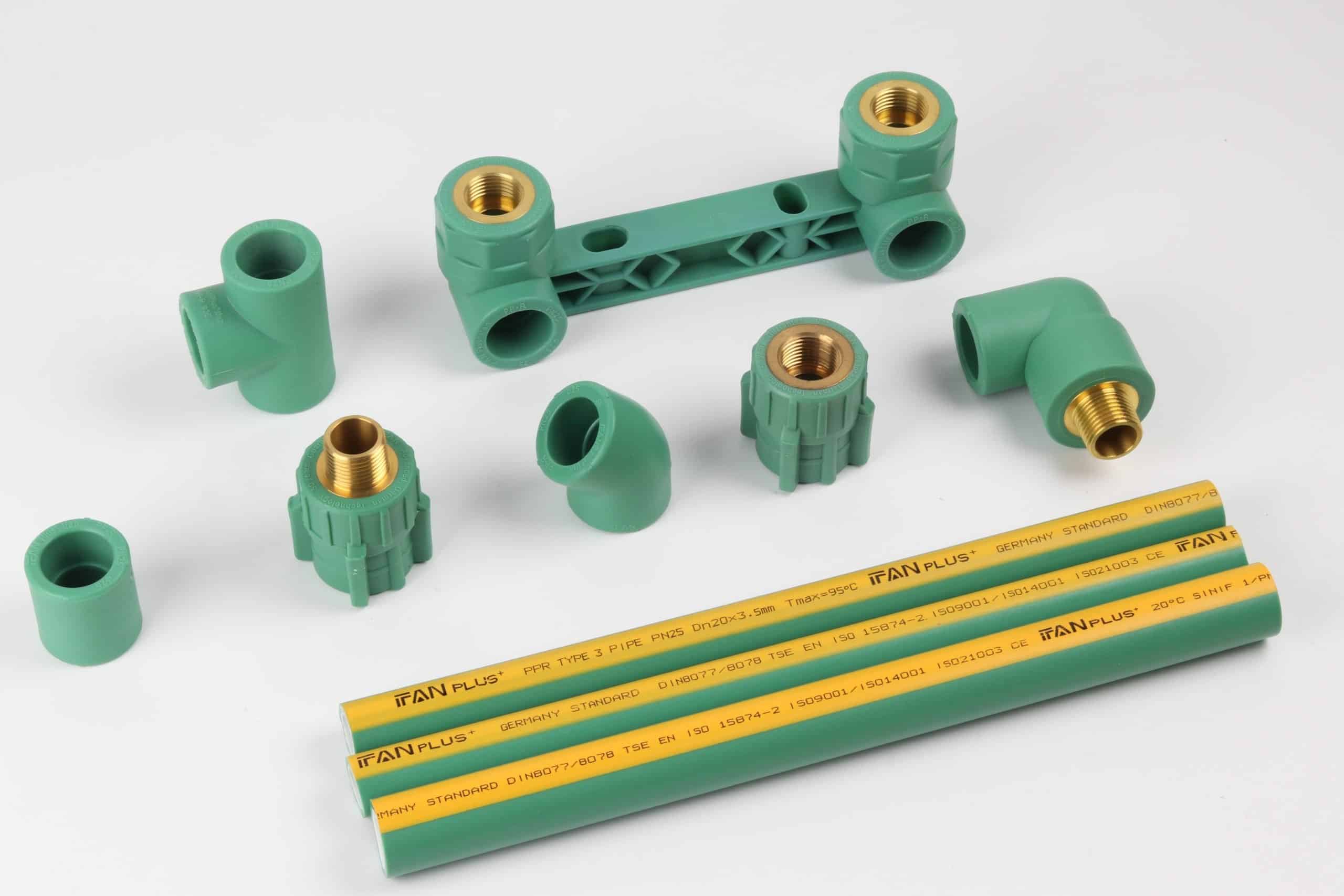
Start with shape. ISO 15874 is a system standard in five documents: Part 1 General, Part 2 Pipes, Part 3 Fittings, Part 5 Fitness for purpose of the system, and the technical specification ISO/TS 15874-7. IS 15801:2008 is one document covering pipes only, 16 to 200 mm in SDR 11, 7.4, 6 and 5. No Indian companion standard for PP-R fittings exists, and that gap is the first thing a submittal reviewer finds.
The design basis is where two certificates stop meaning the same thing. The foreword of IS 15801:2008 states that its allowable maximum operating pressures were derived from DIN 8077:1999-07 by considering 25 years of service. ISO 15874-2:2013 publishes no table of that kind. It requires the material to be evaluated to ISO 9080 against reference curves, demonstrated at 20 °C, 60 to 70 °C and 95 °C, with at least three failure times in each interval out past 8,760 h. At least 97.5 % of the plotted points must sit on or above the line. Our walk-through of ISO 15874 and DIN 8077 covers that route in detail.
One more date matters. IS 15801 was drafted off the 2003 first editions of ISO 15874-1 and 15874-2, which ISO cancelled and replaced in February 2013. The 2013 revision brought PP-RCT into the material table, and a 2022 amendment to Part 1 added a material Charpy figure of 4 kJ/m² at 0 °C. IS 15801 still carries one editorial amendment, from June 2009.
| Requisito | IS 15801:2008 | ISO 15874 (2013 editions) | Verdict for importers |
|---|---|---|---|
| Scope of the document | Pipes only, DN 16 to 200 | Five parts, including fittings and system | ISO paperwork covers fittings; IS 15801 does not |
| Pressure basis | DIN 8077:1999-07, 25 years of service | ISO 9080 evaluation against reference curves | Different routes; neither report replaces the other |
| Long-term strength proof | Creep rupture testing, cl. 9.1 | 97.5 % of points on or above the line, cl. 4.2 | Ask for the ISO 9080 report by name |
| Opacity | Max 0.2 % light transmission, cl. 9.9 | Clause 5.2, method to ISO 7686 | Confirm the Indian limit, not just the method |
| Carbon black | 2.5 ± 0.5 % on black pipe, cl. 9.7 | No equivalent content window | A supplier COA rarely reports this at all |
| Impact | Finished pipe, max 10 % failures, cl. 9.4 | Material, 4 kJ/m² at 0 °C, Amd 1:2022 | Two different specimens; order both if specified |
| Thermal stability | 110 °C, 8,760 h, 1.9 MPa hoop, cl. 9.8 | Part 2 performance requirement | Same family of test; cite the clause on the PO |
| Potable water | Overall migration to IS 9845 and IS 10910 | Defers to national regulation | NSF or WRAS does not answer the Indian clause |
What a BIS Licence Forces a Factory to Do Every Week
An ISI mark is not a one-off test certificate, and that is the part worth buying. BIS operates IS 15801 under Scheme-I of the BIS (Conformity Assessment) Regulations, 2018, and its Product Manual of April 2020 writes the scope of a licence as product, material grade, SDR class and nominal diameter. The grades are narrow: PP-R-P-H-N-10-35-003/006 or PP-R-P-H-C-10-35-003/006. Sizes fall into three bands and a licence is granted per grade and per SDR, so a plant licensed for SDR 6 up to DN 110 is not licensed for your DN 160 PN20 line.
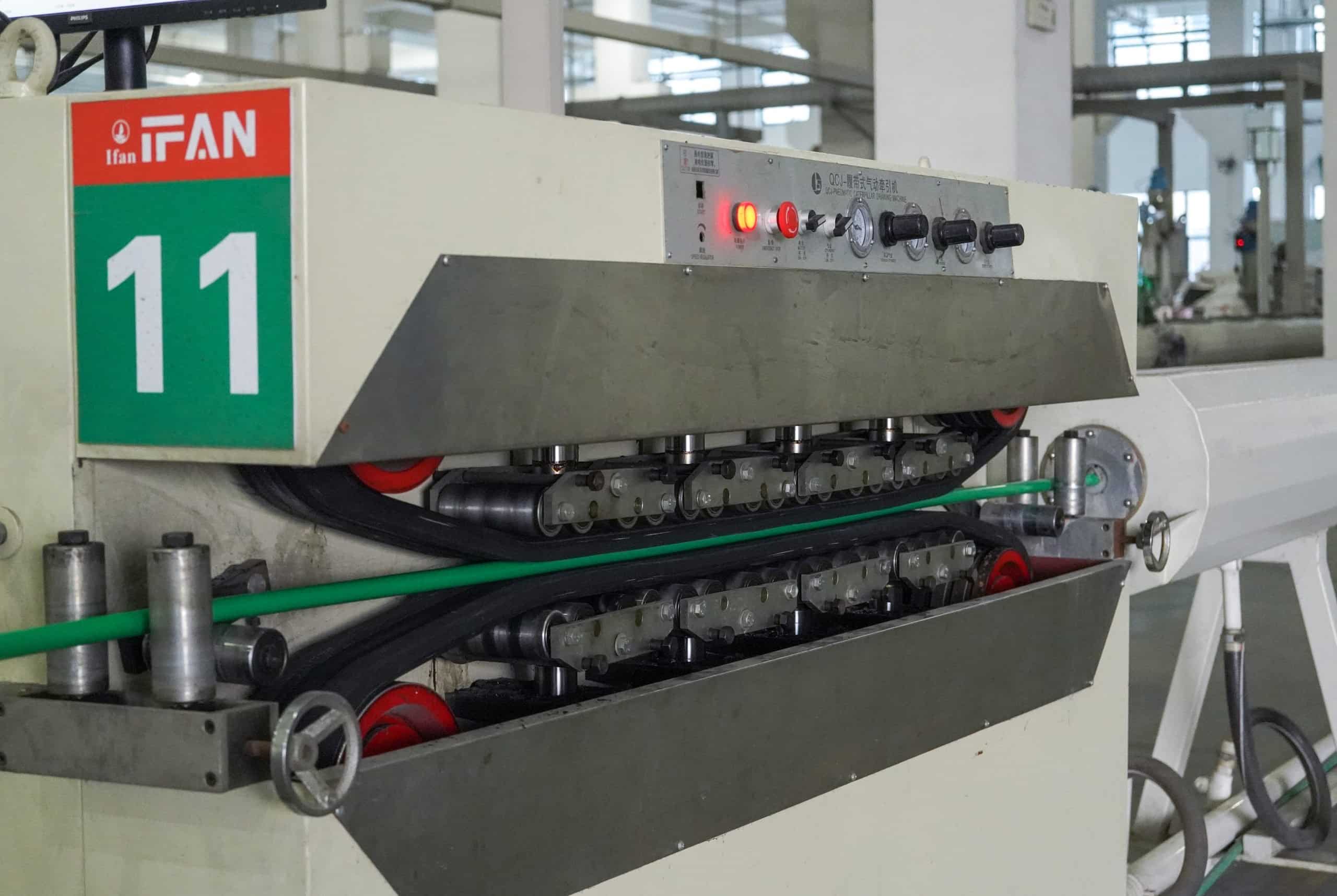
Underneath sits a testing cadence the factory runs itself. A control unit is all pipe of one diameter and SDR, from one compound, extruded continuously under similar conditions in a day. Each control unit gives up ten pipes for outside diameter, wall thickness, ovality and length, plus reversion and impact. The pressure ladder then runs on the clock.
| Test | Condition | Frequency | What it catches |
|---|---|---|---|
| Hydrostatic acceptance | 20 °C for 1 h | Every control unit | Gross extrusion defects |
| Hydrostatic acceptance | 95 °C for 22 h | Once a week | Short-term hot-water weakness |
| Hydrostatic type test | 95 °C for 165 h | Once a month | Drift in the compound or the melt |
| Hydrostatic type test | 95 °C for 1,000 h | Once in three months | Slow crack growth from filler or regrind |
| Thermal stability | 110 °C, 8,760 h, 1.9 MPa | Once in three years | Antioxidant package failure |
| Opacity | Per IS 12235 (Part 3) | Once in three months | Thin or translucent wall sections |
| Overall migration | Per IS 9845 and IS 10910 | Once in six months | Masterbatch or additive changes |
Read that as a purchasing instrument. A plant that cannot show a 1,000 hour vessel occupied quarterly, or an 8,760 hour thermal-stability run at 110 °C once in three years, is not running the regime whatever certificate it holds. Clause 10.1.1 adds a type test at least once in two years, on the highest size of each rating and grade. Ask for those records by date, the same way you would at incoming inspection on a container.
FMCS: What It Costs a Non-Indian Factory to Carry the ISI Mark
A factory outside India reaches the Standard Mark through the Foreign Manufacturers Certification Scheme. BIS grants FMCS licences for any product with an Indian Standard amenable to certification, except electronics and IT products under the Compulsory Registration Scheme. PP-R pipe is inside that door.
The eligibility bar is physical rather than documentary. The applicant must hold all manufacturing machinery at the applied premises, keep equipment there to test the product against every clause of the Indian Standard, and staff a laboratory with people competent to run it. A separate application goes in for each Indian Standard and each factory location. For a plant already running a 1,000 hour hydrostatic bank and a 135 °C reversion oven, the missing pieces are usually the 0.2 % opacity test and carbon black, not pressure.
Then there is the Authorized Indian Representative, and importers should read that clause twice. The AIR is nominated in Form VI of Scheme-I, must be resident in India, is endorsed on the licence, and must facilitate the drawl of market samples from consignments arriving under the Standard Mark. Non-cooperation by the AIR can lead to suspension or cancellation. If you are the importer being asked to sign as AIR, you are accepting statutory exposure on somebody else’s production discipline.
The published fees are modest and misleading: INR 1,000 to apply, INR 1,000 as the annual licence fee, INR 5,000 to add each new variety or grouped set, INR 7,000 per man-day of audit time and a INR 10,000 contingency payment. Every FMCS visit counts as a special visit, so airfare, visa and insurance for the BIS officers are billed on top. Applicants outside the SAARC countries pay in US dollars, and testing and marking fees sit outside that list entirely.
| Fee line as published by BIS | Published fee (INR) |
|---|---|
| Aplicación | 1000 |
| Annual licence | 1000 |
| Renewal application | 1000 |
| Late renewal | 5000 |
| New variety | 5000 |
| Special visit (per man-day) | 7000 |
| Contingency fund | 10000 |
What We Check Before the Container Leaves
None of this needs a licence to act on. Four checks close most of the risk in an Indian shipment, and a distributor can run all four from a desk in a morning.
- Read the scope of licence, not the certificate cover. A Scheme-I licence names material grade, SDR class and nominal diameter. Match all three against your order; a licence that stops at DN 110 does not cover a DN 160 PN20 item.
- Look the plant up on the BIS list. BIS publishes its FMCS licensees country-wise and standard-wise. A plant claiming an ISI licence for IS 15801 should be findable there under its own name and address.
- Caliper the wall across the load, then reconcile the print line. Sample wall thickness from several pallets rather than the top layer: PN20 reads 3.4 mm at DN20, 10.5 mm at DN63 and 26.6 mm at DN160. Match the marking string on those same pipes to the certificate numbers in the folder.
- Fix the standard on the paperwork. Write IS 15801:2008 into the purchase order where the Indian buyer requires it, and declare the goods at ITC(HS) 3917 22 00. Read the duty rate off the tariff in force for the year of import rather than off any blog, including this one.
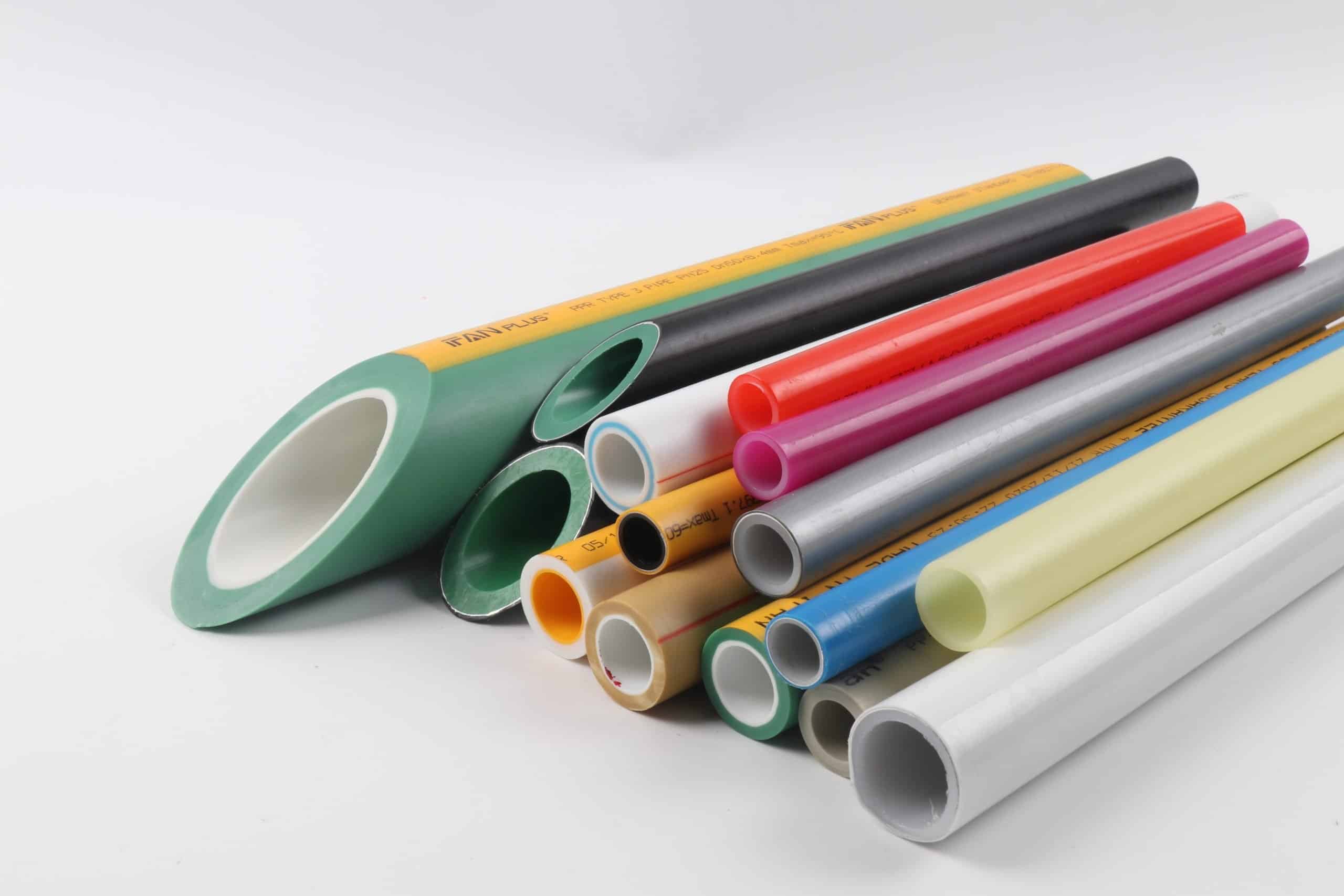
One honest note on our own position. IFAN ULTRA extrudes DN20 to DN160 across PN10, PN16, PN20 and PN25, which are the four SDR classes IS 15801 recognises. The PPR Global Series range sits inside the Indian envelope without reaching its DN 16, DN 180 and DN 200 ends. Our declared certifications are ISO 9001, SAI Global, SKZ, HY and NSF. None of those is a BIS licence, and no third-party mark substitutes for one. Where an Indian tender demands the Standard Mark, say so early and price the licence route rather than sending a folder that answers a different question.
Conclusión
Work it in order. Confirm on the BIS compulsory-certification page that IS 15801 is still absent, which it was on 20 September 2026. Ask your buyer whether their specification calls for the Standard Mark, because that decides the job, not customs. Put the clauses your supplier cannot skip onto the purchase order: opacity, carbon black, the finished-pipe impact criterion, the thermal-stability run. If ISI marking turns out to be required, the route is FMCS and the first real cost is auditor travel, so decide it before you quote.
Frequently Asked Questions
Can I import PPR pipe into India without a BIS certificate?
Yes, as of 20 September 2026. IS 15801 is absent from the BIS list of products under compulsory certification, and the related PP resin Quality Control Order was rescinded on 12 November 2025. Re-check the BIS page before each new programme.
Is an ISO 15874 certificate accepted in India instead of IS 15801?
Not as an equivalent. BIS recognises no substitution, and ISO 15874-2:2013 states that national regulations on water intended for human consumption remain in force. Where a specification names IS 15801, the clauses have to be tested against IS 15801.
Which Indian standard covers PPR pipe?
IS 15801:2008, Polypropylene-Random Copolymer Pipes for Hot and Cold Water Supplies, published April 2008 with one amendment in June 2009. It covers pipes from 16 to 200 mm in SDR 11, 7.4, 6 and 5. Fittings are not covered.
How do I check whether a supplier’s BIS licence is real?
Read the scope of licence, which names material grade, SDR class and nominal diameter, and match all three to your order. Then look the plant up on the BIS lists of FMCS licensees, published country-wise and standard-wise.
How much does BIS FMCS certification cost?
BIS publishes INR 1,000 to apply, INR 1,000 as the annual licence fee and INR 7,000 per auditor man-day, plus a INR 10,000 contingency payment. Airfare, visas, insurance, testing and marking fees are billed separately, and non-SAARC applicants pay in US dollars.
What is the HSN code for PPR pipe in India?
Rigid tubes and pipes of polymers of propylene classify at ITC(HS) 3917 22 00, with quantity declared in kilograms. The duty rate attached to that line changes with the Finance Act in force, so read it from the current tariff schedule.









 English
 Español
 Français
 Português do Brasil