
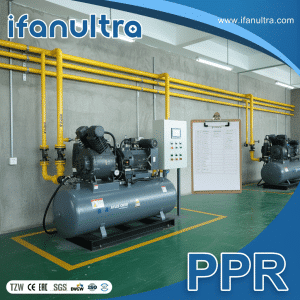
I recently visited a factory where corroded metal pipes were contaminating their compressed air lines. This experience confirmed why more industries are switching to PPR solutions.
Tubos PPR are suitable for compressed air systems because they handle typical industrial pressures (up to 20-25 bar), resist corrosion completely, prevent rust contamination, and offer leak-free joints through thermal fusion. Their smooth interior maintains consistent airflow while reducing installation and maintenance costs compared to metal alternatives.
If you’re considering PPR for your factory’s compressed air system, this guide covers the essential technical and practical aspects you need to know.
What Pressure Ratings Can Industrial PPR Pipes Handle in Compressed Air Systems?
Many factory managers worry about pipe bursts. I’ve tested PPR pipes under various pressure conditions and can share concrete data.
Industrial-grade PPR pipes typically handle working pressures of 10-16 bar at 20°C, with some premium grades rated for 20-25 bar. Their pressure capacity varies with temperature – at 60°C, capacity reduces by approximately 30-40%. Always select PN16, PN20, or PN25 rated pipes specifically designed for compressed air applications.
Understanding Pressure Ratings and Temperature Effects
Pressure rating is the first consideration for compressed air systems. PPR pipes are classified by Pressure Nominal (PN) ratings, which indicate their maximum continuous working pressure at 20°C.
For industrial compressed air systems, you should consider these standard classifications:
- PN10: 10 bar pressure rating (suitable for low-pressure applications)
- PN16: 16 bar pressure rating (common for general factory air)
- PN20: 20 bar pressure rating (for higher pressure requirements)
- PN25: 25 bar pressure rating (for specialized high-pressure systems)
The relationship between temperature and pressure capacity is crucial. As compressed air temperature increases, the pressure rating of PPR decreases. This isn’t usually a problem since factory compressed air systems typically operate at ambient temperatures, but it’s vital to account for potential temperature variations.
Pressure Rating Comparison Table
| PPR Class | Working Pressure at 20°C | Maximum Pressure at 60°C | Recommended Air System Type |
|---|---|---|---|
| PN10 | 10 bar | 6-7 bar | Low-pressure tools, ventilation |
| PN16 | 16 bar | 10-11 bar | General manufacturing, assembly |
| PN20 | 20 bar | 13-14 bar | Automotive, machinery |
| PN25 | 25 bar | 16-17 bar | Heavy machinery, special applications |
Real-World Application Guidelines
From our experience at IFAN, most manufacturing facilities find PN16 pipes sufficient for their needs. However, facilities with specialized equipment or longer distribution runs should consider PN20 or PN25. Always include a safety margin of at least 25% above your compressor’s maximum output pressure.
The fusion-welded joint system maintains the pipe’s pressure rating throughout the system, unlike threaded connections that create weak points. This homogeneous connection method ensures no pressure drops at joints and eliminates potential failure points that are common in metal piping systems.
How Does PPR’s Corrosion Resistance Benefit Industrial Compressed Air Applications?
I’ve seen compressed air quality issues ruin expensive equipment. PPR’s corrosion resistance solves this problem completely.
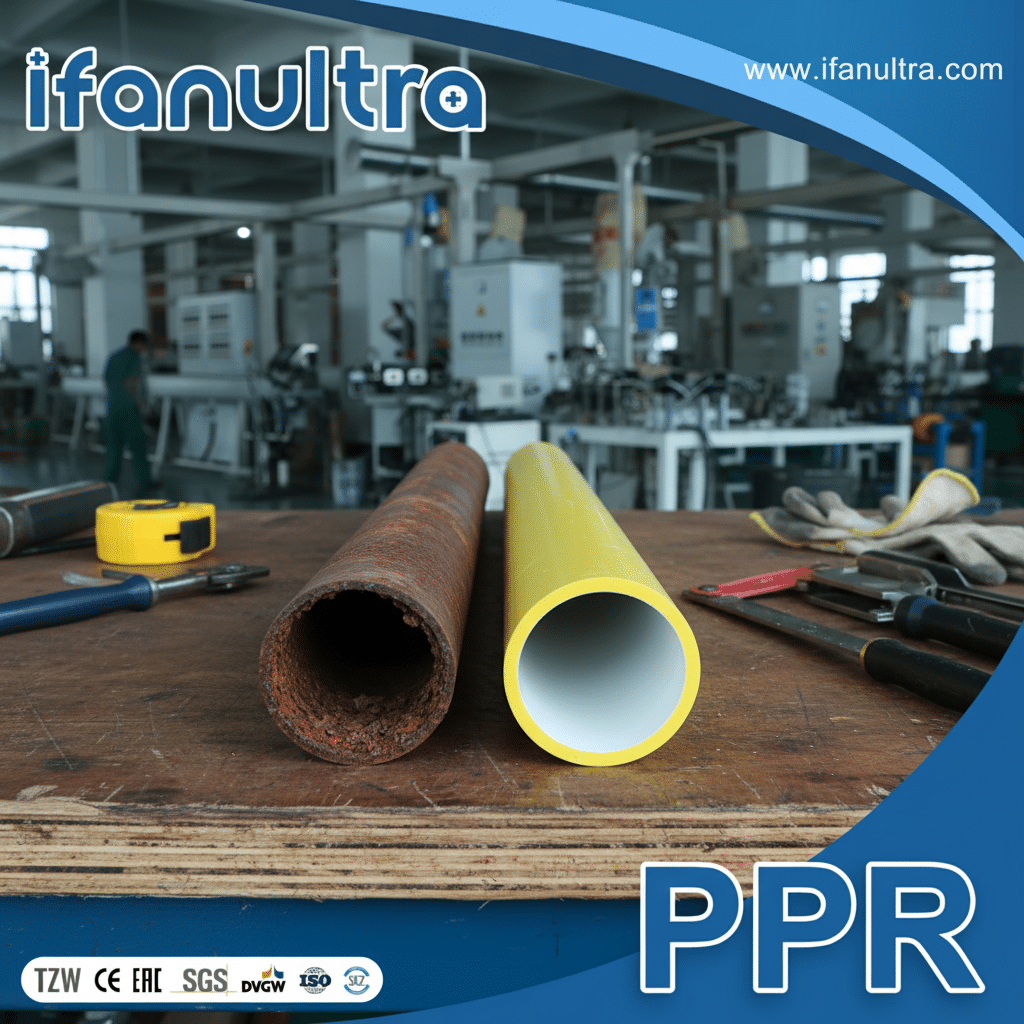
PPR’s complete corrosion resistance eliminates rust contamination in compressed air lines, protecting sensitive equipment and production processes. Unlike metal pipes, PPR won’t corrode from internal moisture or external environmental factors, ensuring consistent air quality and eliminating pipe replacement due to corrosion damage.
The Moisture Problem in Compressed Air
Compressed air naturally contains moisture – from atmospheric humidity that gets concentrated during compression. This moisture is the primary enemy of metal air pipes, causing internal corrosion that creates multiple problems:
- Rust particles travel through air lines, damaging pneumatic tools, cylinders, and valves
- Corrosion buildup reduces pipe diameter, increasing pressure drops and energy costs
- Rust contamination affects product quality in painting, food processing, and electronics manufacturing
PPR pipes are chemically inert and immune to these moisture-related issues. They won’t rust, pit, or corrode internally, regardless of the moisture content in your compressed air system.
Comparative Analysis: PPR vs Traditional Materials
Let’s examine how different pipe materials handle compressed air moisture:
| Tipo de material | Resistencia a la corrosión | Maintenance Impact | Air Quality Effect |
|---|---|---|---|
| PPR | Excelente | No corrosion maintenance | No contamination |
| Galvanized Steel | Fair to Poor | Regular replacement needed | Rust particles |
| Copper | Bien | Higher initial cost | Generally clean |
| Black Iron | Poor | Frequent replacement | Severe contamination |
Cost Implications of Corrosion Resistance
The non-corroding nature of PPR creates significant operational advantages. Factories no longer need:
- Regular pipe flushing to remove rust particles
- Downstream filters to catch corrosion debris
- Premature replacement of pneumatic equipment damaged by rust
- Production stoppages for pipe system repairs
In one automotive plant we worked with, switching to PPR reduced their filter replacement frequency by 70% and eliminated annual pipe cleaning costs. The maintenance savings alone justified the system upgrade within two years.
What Installation Standards Ensure Reliable PPR Piping for Factory Air Systems?
Proper installation makes all the difference. I’ve supervised PPR installations in dozens of factories and seen what works.
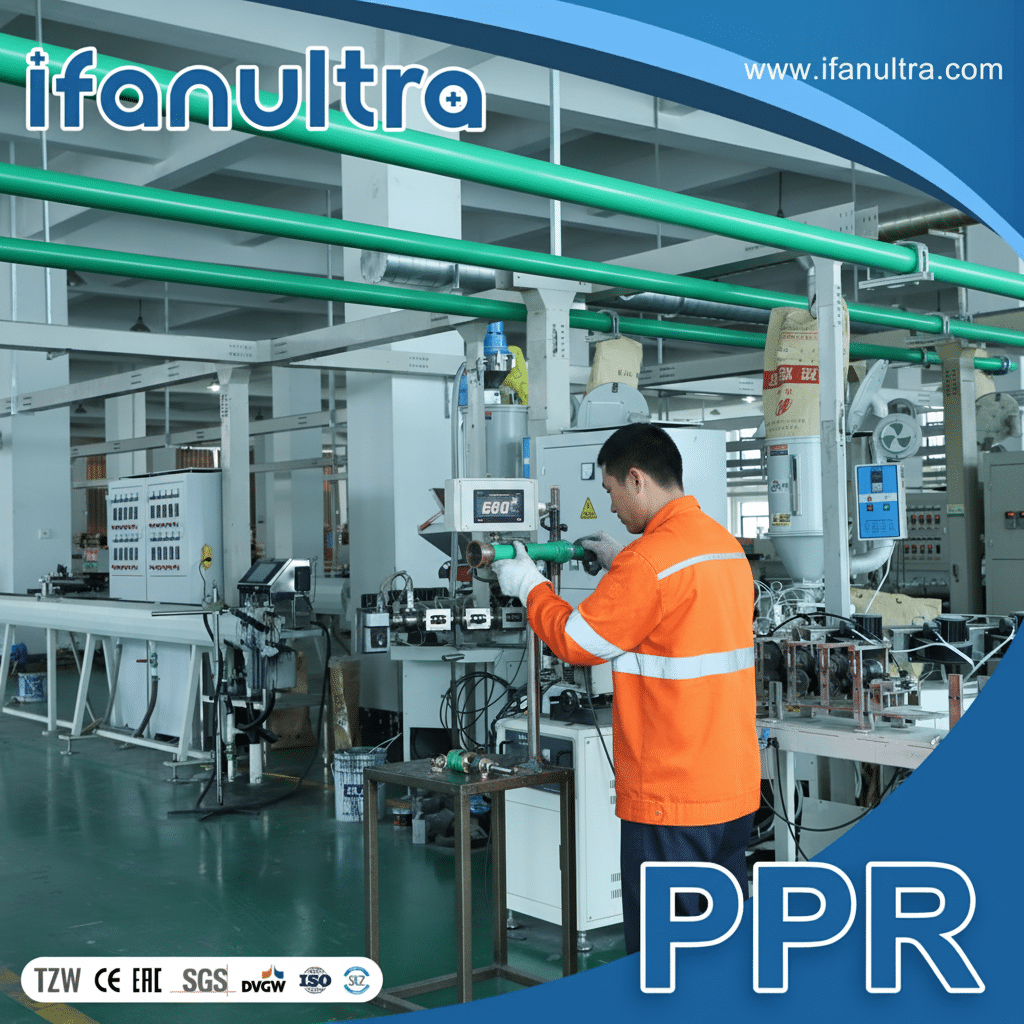
Reliable PPR installation for compressed air requires proper pipe support every 1-1.5 meters, thermal expansion compensation through loops or offsets, correct fusion welding temperatures (260±5°C), and adequate drainage points. Following DIN 8077/8078 standards ensures a leak-free system capable of handling vibration and pressure surges common in industrial environments.
Critical Installation Steps for Industrial Applications
Industrial compressed air systems demand higher standards than residential plumbing. The installation process must account for vibration, thermal changes, and mechanical protection.
Pipe Support and Fixing
Proper support is non-negotiable. Use galvanized or stainless steel clamps with rubber cushions every 1-1.5 meters on horizontal runs and 1.5-2 meters on vertical lines. This prevents sagging and reduces stress on joints. In areas with high vibration (near compressors or machinery), use vibration-damping brackets.
Thermal Expansion Management
PPR expands when temperatures change. For every 10°C temperature increase and 10 meters of pipe length, PPR expands approximately 1.2 cm. You must accommodate this through:
- Expansion loops in long straight runs
- Direction changes that naturally absorb movement
- Piston-type expansion joints where space is limited
Fusion Welding Quality Control
The fusion process creates the system’s strength. Follow these parameters strictly:
- Heating temperature: 260±5°C
- Heating time: As per pipe diameter specifications
- Alignment: Perfectly straight connections
- Cooling time: No movement until completely cool
Installation Checklist for Industrial Grade Systems
| Installation Aspect | Standard Requirement | Industrial Best Practice |
|---|---|---|
| Pipe Support Spacing | 1.5 meters maximum | 1.0-1.2 meters for air systems |
| Fusion Temperature | 255-265°C | 260±2°C with calibrated equipment |
| Pruebas de presión | 1.5 x working pressure | 2.0 x working pressure for 2 hours |
| Drainage Points | At low points | Every 15-20 meters with automatic drains |
Professional Installation Recommendations
Based on our project experience, I recommend hiring installers certified in PPR fusion techniques. The small additional cost for certified professionals pays back in system reliability. Always conduct a pressure test at 1.5-2 times the working pressure for at least 2 hours before putting the system into operation.
Include service outlets and future connection points during initial installation. The modular nature of PPR makes system expansions straightforward, but planning ahead saves significant time and costs later.
What Maintenance Advantages Does PPR Offer for Industrial Compressed Air Networks?
Maintenance costs can make or break an operating budget. PPR systems deliver remarkable savings.
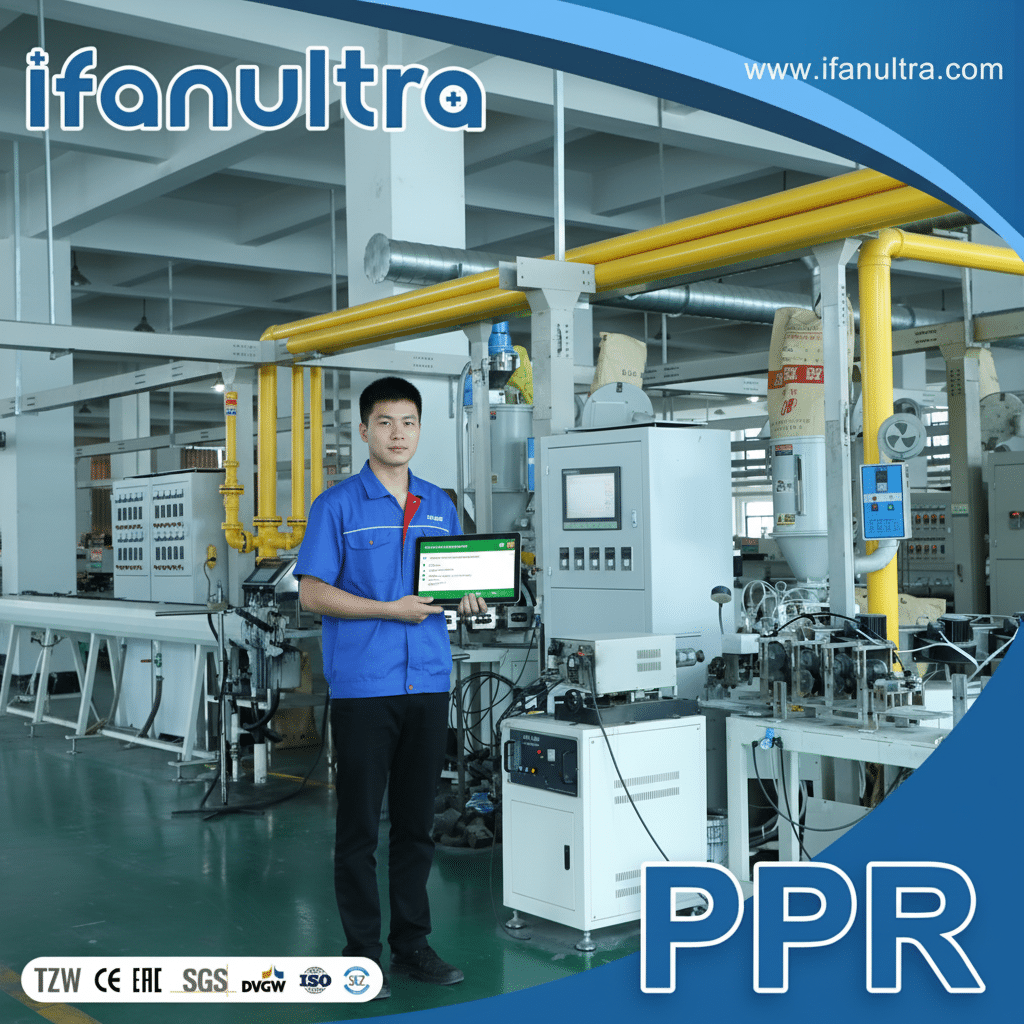
PPR requires minimal maintenance compared to metal pipes – no internal corrosion removal, no joint tightening, and no wall thickness monitoring. The smooth interior resists scale buildup, and the leak-free fused joints eliminate routine joint maintenance. This reduces maintenance labor by 60-80% and eliminates corrosion-related downtime.
Quantifying Maintenance Reduction
Industrial maintenance managers appreciate measurable benefits. Here’s what our clients typically experience after switching to PPR:
Eliminated Maintenance Tasks:
- No internal pipe cleaning or descaling
- No joint tightening or seal replacement
- No corrosion monitoring or wall thickness testing
- No painting or external corrosion protection
Reduced Operational Costs:
- Lower energy consumption due to consistent internal diameter
- Reduced filter replacement frequency
- Extended tool and equipment life
- Lower spare parts inventory
Maintenance Comparison: 5-Year Cycle
| Maintenance Activity | Galvanized Steel | PPR System |
|---|---|---|
| Internal Cleaning | 2-3 times | Not needed |
| Joint Repairs | 15-20% of joints | None |
| Section Replacement | 10-15% of system | None |
| Filter Changes | Quarterly | Annual |
| Energy Cost Impact | 15-20% increase | Stable |
Long-Term Reliability and Inspection
PPR systems maintain their performance characteristics throughout their service life. The material doesn’t degrade, and the wall thickness remains constant. Routine inspections are simplified to:
- Visual checks for external damage
- Pressure gauge monitoring
- Air quality testing (if required for processes)
The non-corroding nature means the system’s pressure capacity remains unchanged year after year. You won’t experience the gradual pressure drop common in metal systems as corrosion reduces the internal diameter.
For facilities with critical air requirements, PPR provides peace of mind. There’s no risk of sudden pipe failure or contamination events that can shutdown production lines. The material’s fatigue resistance handles pressure cycling effectively, making it ideal for applications with frequent compressor cycling.
Conclusión
Tubos PPR offer industrial compressed air systems superior corrosion resistance, minimal maintenance, and reliable performance. For your next project, choose IFAN’s industrial-grade PPR pipes – specifically engineered for demanding compressed air applications.









 English
 Español
 Français
 Português do Brasil