
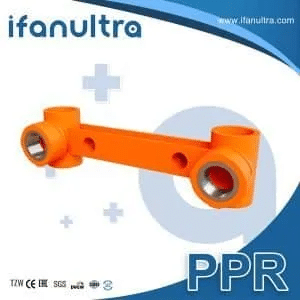
A client once faced a major system redesign because a cheap metal tee corroded and split. This painful experience taught me that a simple fitting like a double tee is a critical component, not an afterthought.
PPR double tee fittings are crucial junction points in plumbing systems, allowing one pipeline to split into two directions. They are valued for their durability, leak-proof fused joints, and smooth flow characteristics, making them essential for creating reliable and efficient water distribution networks in both residential and commercial buildings.
Understanding the specifics of these fittings can save you from future headaches and system failures. Let’s examine what makes them a superior choice.
What are the Material Advantages of PPR Double Tee Fittings for Plumbing?
I often see fittings fail first. The material of a double tee determines the lifespan of the entire junction.
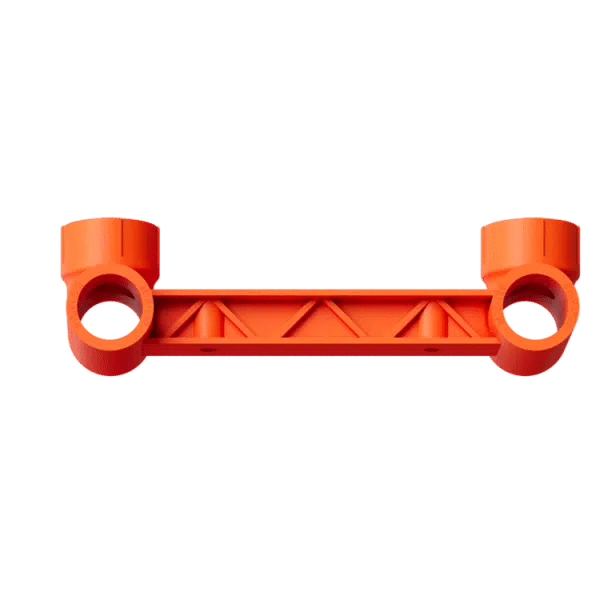
The material advantages of PPR double tee fittings include excellent corrosion and chemical resistance, a smooth inner surface that prevents scaling, and non-toxic properties that keep drinking water safe. Made from Polypropylene Random Copolymer, they are lightweight yet robust, ensuring long-term reliability without degradation.
Core Material Properties
PPR double tee fittings are made from a specific type of plastic called Polypropylene Random Copolymer. This material is chosen for plumbing because it performs very well under constant pressure and temperature. First, it is completely immune to corrosion. Unlike brass or iron tees that can rust or develop pin-hole leaks from electrochemical reactions, PPR remains stable. This is true even with aggressive water or soil conditions.
Second, the interior wall of a PPR tee is extremely smooth. This smoothness serves two key purposes. It minimizes friction, so water flows freely without a significant pressure drop at the junction. More importantly, it prevents limescale and mineral deposits from sticking to the inside. In areas with hard water, metal fittings can become clogged with scale over years, drastically reducing pipe diameter. PPR fittings maintain their full bore size for decades.
Safety and Health Benefits
For drinking water systems, material safety is non-negotiable. PPR is an inert material. It does not react with water or the chlorine used in municipal water treatment. This means it will not leach harmful chemicals, metals, or plasticizers into your water supply. The fittings are certified by international standards like NSF/ANSI 61 for potable water safety. When you use a PPR double tee, you can be sure it is protecting water quality, not contaminating it.
Durability and Practical Handling
From a practical standpoint, PPR fittings are lightweight, which makes handling and installation much easier than heavy metal alternatives. However, don’t let the light weight fool you. The material is very tough and has good impact resistance, reducing the risk of damage during transport or installation. Their resistance to chemical damage also means they can be used for a variety of fluids beyond just hot and cold water, including certain industrial applications.
Comparison of Tee Fitting Materials:
| Material | Ventajas clave | Main Weakness | Best For |
|---|---|---|---|
| PPR | Corrosion-proof, non-toxic, leak-proof joints | Cannot withstand very high temps (>95°C) | Residential & commercial potable water systems |
| Brass | Durable, good temperature tolerance | Expensive, can corrode (dezincify) | High-temperature, small-bore applications |
| Carbon Steel | Very high pressure rating | Prone to rust, requires threading | Industrial non-potable systems |
| PVC | Low cost, chemical resistant | Brittle with heat, glued joints can fail | Cold water and drainage |
Choosing PPR material for your double tee fittings means investing in a junction that will last as long as the pipes themselves, without introducing risks of contamination or blockage.
How Do You Correctly Weld PPR Double Tee Fittings into a Pipeline System?
I’ve audited installations where leaks occurred simply because of rushed welding. The process is simple but demands precision.
To correctly weld a PPR double tee fitting, you must cleanly cut the pipe, use a dedicated welding machine to heat the pipe ends and the tee sockets simultaneously to the correct temperature (260°C), and then join them swiftly and squarely without twisting. Holding the connection steady during the cooling period is critical to forming a perfect, monolithic seal.
Step-by-Step Welding Guide
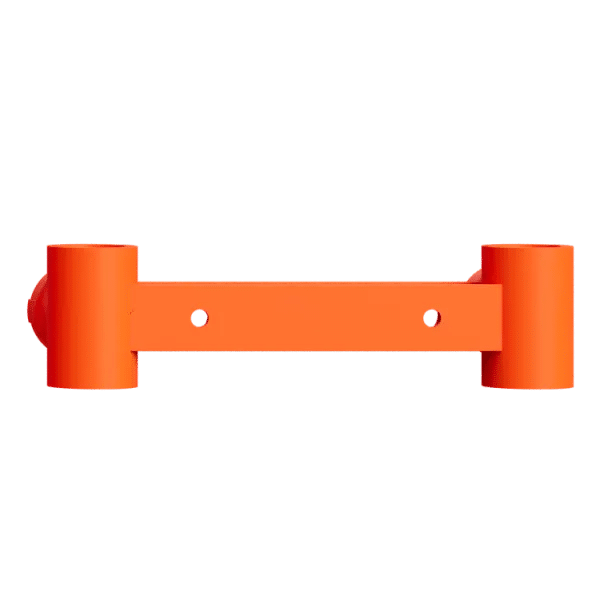
The strength of a PPR system lies entirely in its heat-fused joints. A correctly welded double tee is stronger than the pipe around it. Here is the precise procedure:
- Cut and Prepare: Use a dedicated PPR pipe cutter to get a perfectly square, clean cut. Any angled cut will cause an uneven weld and a weak joint. Deburr the outside of the cut pipe end lightly and clean both the pipe end and the inside of the tee sockets with a clean, dry cloth to remove any dust.
- Set Up the Welder: Set your electrofusion welder to the correct temperature, typically 260°C (500°F). The welder will have heating elements (copper sleeves) that match the exact diameters of your pipe and fitting.
- Heat the Components: Insert the pipe end and the tee socket onto the corresponding heating elements simultaneously. Do not rotate them. Heat them for the time specified in the welding chart, which depends on the pipe diameter (e.g., 20mm pipe takes about 5 seconds of heating).
- Remove and Connect: Quickly remove both the pipe and the tee from the welder. Immediately insert the pipe straight into the tee socket in one smooth motion, all the way to the depth mark. Do not twist or turn them. Misalignment at this stage is a common cause of flow restriction and weakness.
- Hold and Cool: Hold the pipe and tee together firmly and perfectly still for the specified cooling time (usually equal to the heating time). Any movement before the plastic has solidified will create stress points and cause a leak. Let the joint cool naturally; do not spray it with water.
Common Mistakes and Quality Control
The most common failures happen when steps are skipped. Underheating results in a weak, incomplete fusion. Overheating degrades the plastic. Pushing the pipe in at an angle or twisting it creates uneven seams. Not holding the joint steady is perhaps the most frequent on-site error.
Visual Inspection Checklist After Welding:
A good weld has a uniform, small bead of melted material (the “roll”) around the joint. An uneven or missing bead indicates a cold weld. The pipe should be straight and aligned with the run of the tee. At IFAN, we train installers to follow this protocol religiously and recommend a simple pressure test after completing a section of work to verify every joint, including every double tee.
What Pressure and Temperature Ratings Do PPR Double Tee Fittings Typically Have?
Clients often ask if a fitting can handle their system’s demand. Knowing the ratings prevents catastrophic over-specification.
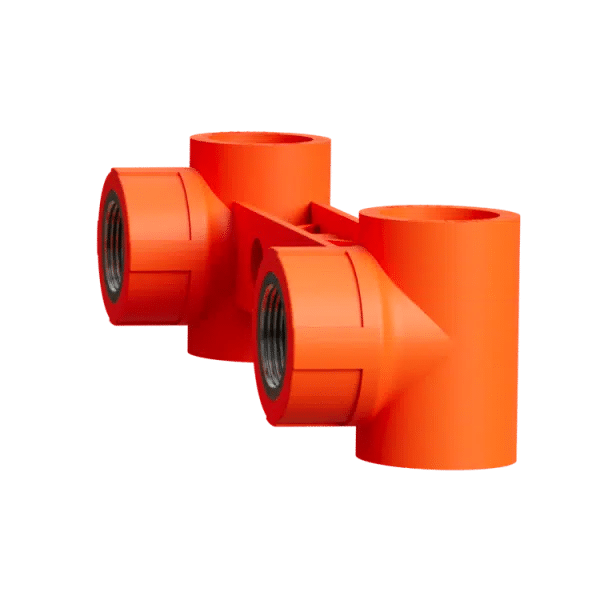
PPR double tee fittings typically have a pressure rating of PN20 or PN25 at 20°C, meaning they can continuously handle 20 or 25 bar of pressure. Their maximum operating temperature is usually 70°C for continuous flow, with short-term tolerance up to 95°C. These ratings ensure reliable performance in standard hot and cold water systems.
Understanding the Pressure Rating (PN)
The Pressure Nominal (PN) number is the most important rating. A PN20 fitting is designed for a maximum continuous working pressure of 20 bar (approximately 290 psi) at a water temperature of 20°C (68°F). This is more than sufficient for almost all residential and commercial building water systems, where pressure rarely exceeds 4-6 bar.
However, this rating changes with temperature. Plastic becomes slightly less strong as it gets hotter. Therefore, the maximum allowable continuous pressure decreases as the water temperature increases. Manufacturers provide derating tables. For example, a PN20 fitting at 70°C might only be rated for 8-10 bar of continuous pressure. This is still perfectly adequate for domestic hot water systems.
Understanding Temperature Limits
PPR fittings have two key temperature limits:
- Maximum Continuous Operating Temperature: This is usually 70°C (158°F). This covers the output temperature of most domestic water heaters.
- Short-Term Peak Temperature: They can typically withstand water up to 95°C (203°F) for short periods, which provides a safety margin against boiler malfunctions.
It is critical to understand that PPR is not suitable for high-temperature steam systems or directly connecting to certain high-output boilers without a mixing valve. Exceeding the temperature rating will cause the material to soften, leading to joint failure under pressure.
Selecting the Correct Rating for Your Project
For most apartment buildings, hotels, and hospitals with central hot water systems (60-70°C), PN20 fittings are the standard and cost-effective choice. For industrial applications or systems with higher static pressure, PN25 fittings offer an extra margin of safety. Always cross-reference the system’s design pressure and temperature with the manufacturer’s derating chart.
PPR Double Tee Pressure-Temperature Chart (Example for PN20):
| Temperatura del agua | Maximum Allowable Continuous Pressure (Bar) | Common Application Suitability |
|---|---|---|
| 20°C (Cold Water) | 20 bar | Main cold water supply lines. |
| 40°C | ~16 bar | Warm water circulation. |
| 60°C | ~12 bar | Standard domestic hot water. |
| 70°C | ~9 bar | High-temperature domestic hot water. |
| 95°C (Short-term) | ~6 bar | Safety margin for fault conditions. |
Choosing a fitting with the correct PN rating for your system’s highest expected temperature ensures a lifetime of safe, reliable service.
Where are PPR Double Tee Fittings Most Commonly Used in Plumbing Systems?
In my projects, double tees are the unsung heroes of system layout. Their placement defines the efficiency of the entire network.
PPR double tee fittings are most commonly used at the main distribution points in plumbing systems. Key locations include branching off a main supply line to serve different floors or wings of a building, splitting supply to fixtures like sinks and toilets in apartment units, and connecting recirculation lines in hot water systems to ensure quick hot water delivery.
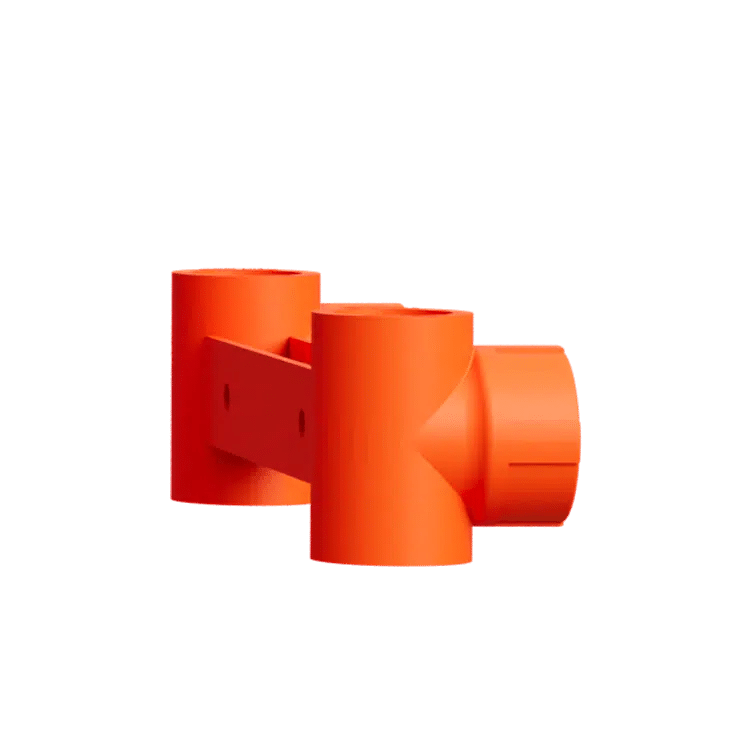
Central Distribution in Multi-Unit Buildings
The most frequent and critical use is in the riser, or vertical main line, of apartment blocks, hotels, and office buildings. Here, a double tee is used on each floor to branch off the high-pressure main riser pipe to feed the horizontal distribution pipes for that specific floor. The reliability of this tee is paramount, as a failure here would cut off water to an entire floor. The corrosion resistance and fused joint of PPR make it ideal for this embedded, hard-to-access application.
Internal Fixture Distribution
Inside a single residential unit or commercial space, double tees are used extensively within walls and ceilings. For example, after the water line enters a bathroom, a double tee might split the cold line: one branch goes to the toilet fill valve and the other goes to feed the cold supply for the sink and bathtub. Another tee might split the hot line between the sink and the tub. Using PPR here ensures quiet, leak-free performance inside finished walls where repairs are extremely costly.
Hot Water Recirculation Systems
In larger homes or commercial buildings where instant hot water is desired at every tap, a hot water recirculation system is used. This system has a dedicated return pipe that brings cooled water from the far end of the network back to the heater. PPR double tees are used to tee off the main hot water line to supply a fixture and also to tee in the return line back into the system. Their smooth bore and reliable joints are perfect for this continuous circulation.
Other Common Applications
- Solar Water Heating Systems: They connect collectors to storage tanks.
- Underfloor Heating Manifolds: They help distribute flow to different heating loops.
- Industrial Fluid Transfer: In factories for low-temperature, non-aggressive chemical or process water lines.
Application Summary Table:
| System Type | Location of Double Tee | Purpose of the Tee | Why PPR is a Good Fit |
|---|---|---|---|
| Building Main Riser | At each floor level | To branch supply from riser to floor | Leak-proof joints prevent catastrophic flooding inside walls. |
| Apartment/Unit Plumbing | Inside wall cavities | To split supply to multiple fixtures | Non-corrosive, no scaling, ensuring consistent water pressure for years. |
| Hot Water Recirculation | Near fixtures and near pump | To connect supply and return lines | Handles continuous hot water temperature, smooth bore minimizes pump load. |
| Solar Thermal | Between panels and tank | To split/join flow from multiple panels | UV-stabilized grades available, excellent for outdoor temperature cycles. |
Understanding these common applications helps in planning the quantity and specifications needed for a project, ensuring you have the right fittings to build an efficient and robust system.
Conclusión
PPR double tee fittings are vital for creating durable, safe, and efficient plumbing networks. For a full range of reliable, certified PN20 and PN25 PPR double tees and expert technical support, contact IFAN for your next project.









 English
 Español
 Français
 Português do Brasil