
I once had a client who repiped his entire home with the wrong material and faced costly repairs within five years. That mistake taught me how vital the right choice is.
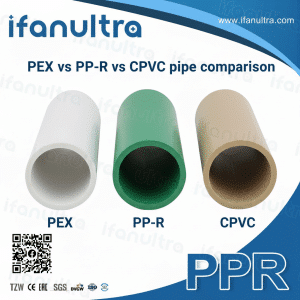
PEX, PP-R, and CPVC are all suitable for residential repiping, but the best choice depends on your priorities. PEX offers flexibility and easy installation. PP-R provides superior durability and welded leak-proof joints. CPVC is a low-cost option with good chemical resistance but can become brittle. Your decision should balance budget, local code, and long-term performance.
Choosing the right material can feel overwhelming. Let’s compare them side by side to help you make an informed decision.
How Do the Temperature and Pressure Ratings of PEX, PP-R, and CPVC Compare?
I’ve seen systems fail because installers ignored the temperature limits of the pipe. Understanding these ratings is the first step to a reliable system.
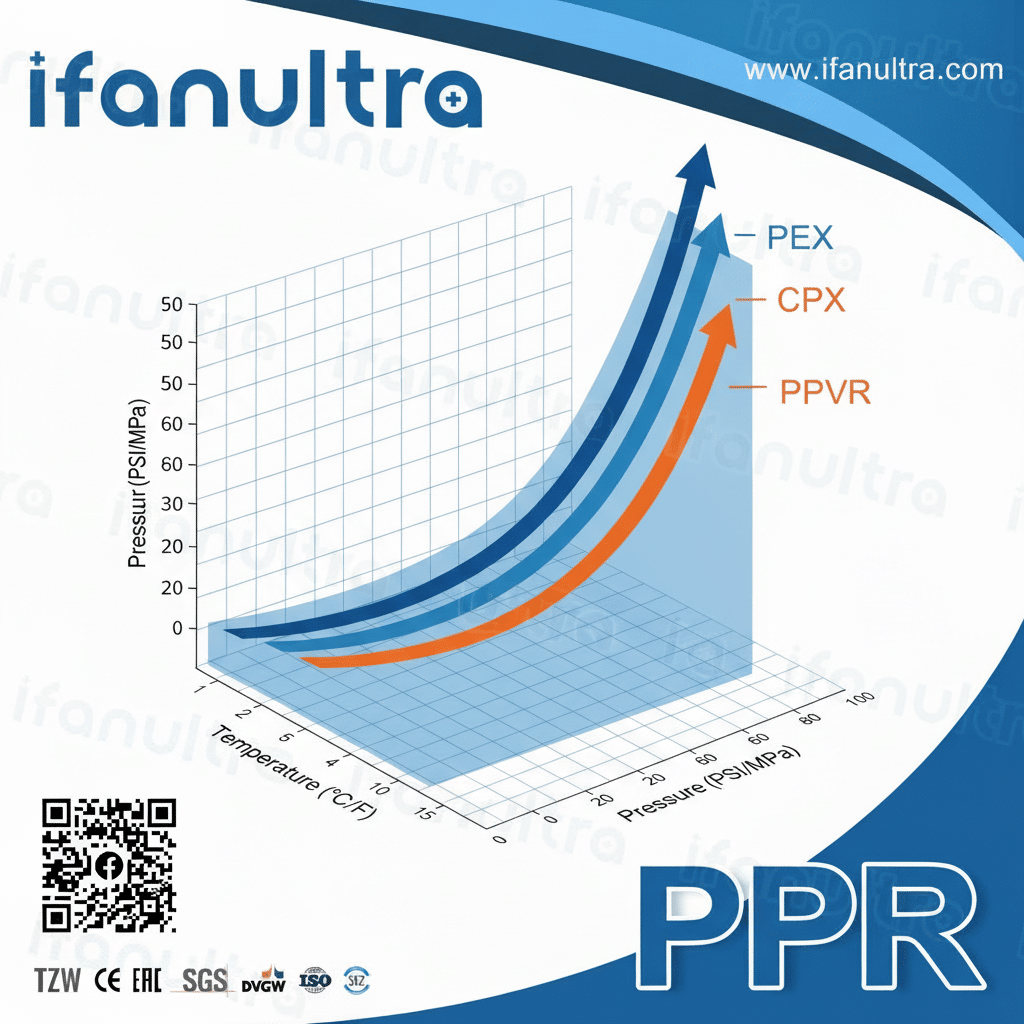
PEX typically handles temperatures up to 200°F (93°C) at pressures around 100 psi, though ratings vary by type. PP-R handles continuous temperatures up to 180°F (82°C) at 145 psi, with good surge resistance. CPVC handles up to 200°F (93°C) at lower pressures (around 100 psi) but becomes brittle at high temperatures over time.
Breaking Down the Numbers
Each material has a different chemical makeup that affects how it performs under heat and pressure. Let’s look at the details.
PEX (Cross-linked Polyethylene) comes in three types: PEX-A, PEX-B, and PEX-C. All can handle hot water up to 200°F, but the pressure rating drops as temperature rises. At 73°F, PEX can handle 160 psi; at 180°F, it drops to 100 psi. PEX is flexible, so it expands slightly under pressure, reducing the risk of bursting in freezing conditions.
PP-R (Polypropylene Random Copolymer) has a higher molecular weight, making it stiffer. It can handle continuous operating temperatures of 180°F at pressures up to 145 psi. It also withstands pressure surges (water hammer) very well. However, PP-R has a lower maximum temperature than PEX or CPVC; it shouldn’t be used for sustained temperatures above 200°F.
CPVC (Chlorinated Polyvinyl Chloride) is a modified version of PVC that can handle higher temperatures. It typically rates for 200°F at 100 psi. However, CPVC becomes brittle with age and can crack if exposed to high temperatures for long periods. It also requires special solvent cement that must cure properly.
Practical Implications for Homeowners
From our experience at IFAN, here’s what these ratings mean for your home:
| Material | Max Continuous Temp | Typical Working Pressure | Freeze Resistance |
|---|---|---|---|
| PEX | 200°F (93°C) | 100 psi at 180°F | Good (expands) |
| PP-R | 180°F (82°C) | 145 psi at 180°F | Fair (may crack if frozen) |
| CPVC | 200°F (93°C) | 100 psi at 180°F | Poor (becomes brittle) |
If you live in a cold climate, PEX’s ability to expand without bursting is a big advantage. For high-pressure systems, PP-R offers the highest pressure rating at elevated temperatures. CPVC works well for standard applications but requires careful installation to avoid future brittleness.
Which Material Offers the Easiest Installation for Retrofitting Existing Homes?
Retrofitting is where the rubber meets the road. I’ve watched plumbers struggle with rigid pipes in tight spaces, and it’s not pretty.
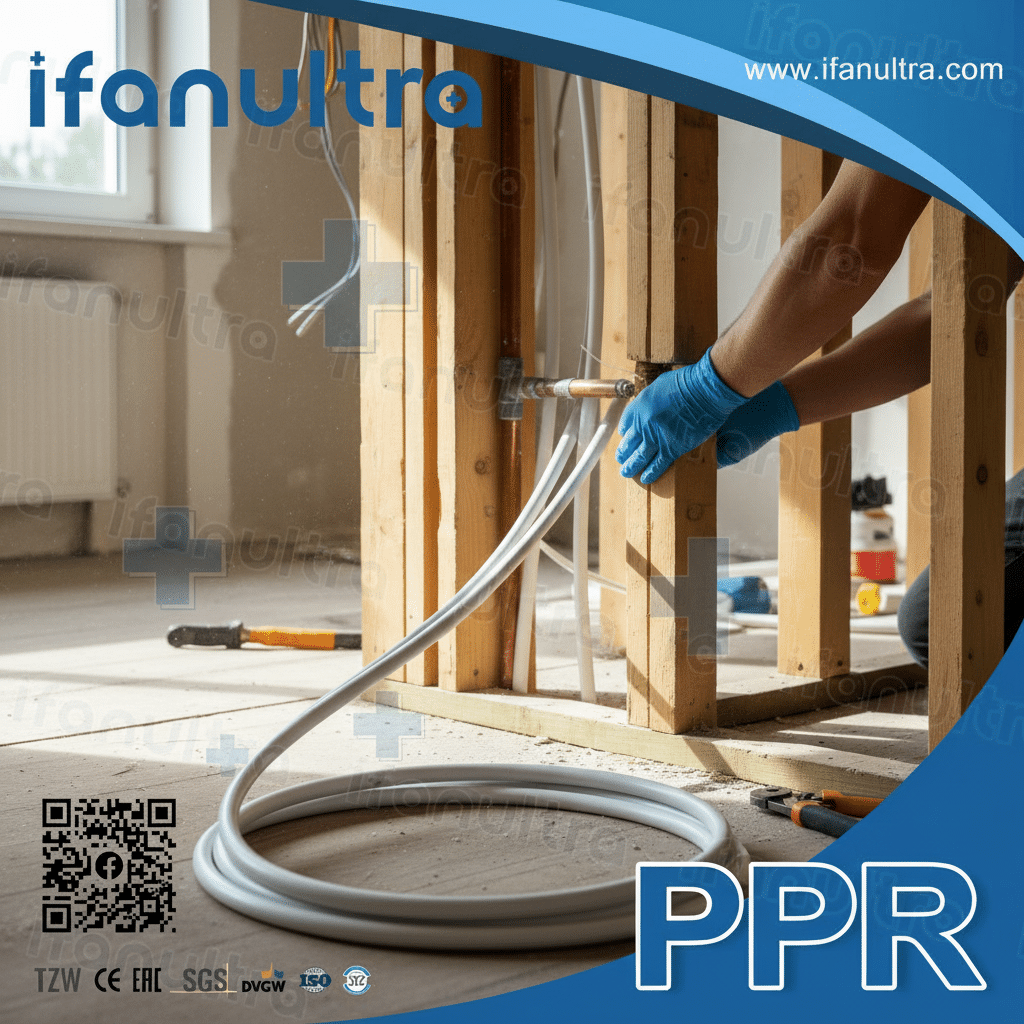
PEX is by far the easiest material for retrofits due to its flexibility and long coils that can be snaked through walls with minimal joints. PP-R requires heat-fusion tools and is rigid, so it’s better for accessible areas. CPVC is rigid and requires solvent welding, which can be messy and time-consuming in tight spaces.
Installation Methods Compared
The installation process differs greatly among these materials, affecting labor time and complexity.
PEX uses crimp rings, clamp systems, or push-fit fittings. It can bend around obstacles without elbows, reducing the number of joints. You can run long lengths from a manifold, which minimizes connections inside walls. This makes it ideal for retrofits because you can often fish the pipe through existing cavities.
PP-R requires a heat-fusion welding machine. The plumber heats the pipe and fitting, then joins them to create a monolithic bond. The pipe is rigid, so you need elbows for every turn. This means more joints and more space to work. PP-R is best when you have open walls or a basement with easy access.
CPVC uses solvent cement. You cut the pipe, apply primer and cement, and push the pieces together. It’s rigid like PP-R but lighter. However, the solvent fumes are strong, and you must wait for the cement to cure before pressurizing. In a retrofit, CPVC can be tricky because you need to measure precisely and have good ventilation.
Practical Tips for Retrofits
Based on common client pain points, here are some recommendations:
- For tight spaces and long runs: Choose PEX. Its flexibility reduces joints and makes threading through stud bays possible.
- For exposed basements or crawlspaces: PP-R is a great choice. The fusion welds are permanent and leak-proof, and the installation is clean once you have the right tool.
- For budget-conscious projects with open access: CPVC can work, but be careful with solvent fumes in occupied homes.
The table below summarizes installation factors:
| Material | Tools Required | Joints Needed | Best Retrofit Scenario |
|---|---|---|---|
| PEX | Crimp tool, cutter | Few (manifold system) | Existing walls, difficult access |
| PP-R | Fusion welder, cutter | Many (elbows for turns) | Open basements, new construction |
| CPVC | Solvent cement, saw | Many (elbows) | Open areas, low budget |
What Are the Total Cost Differences Including Materials, Fittings, and Labor?
Cost is often the deciding factor. But beware: the cheapest material upfront can cost more in the long run.
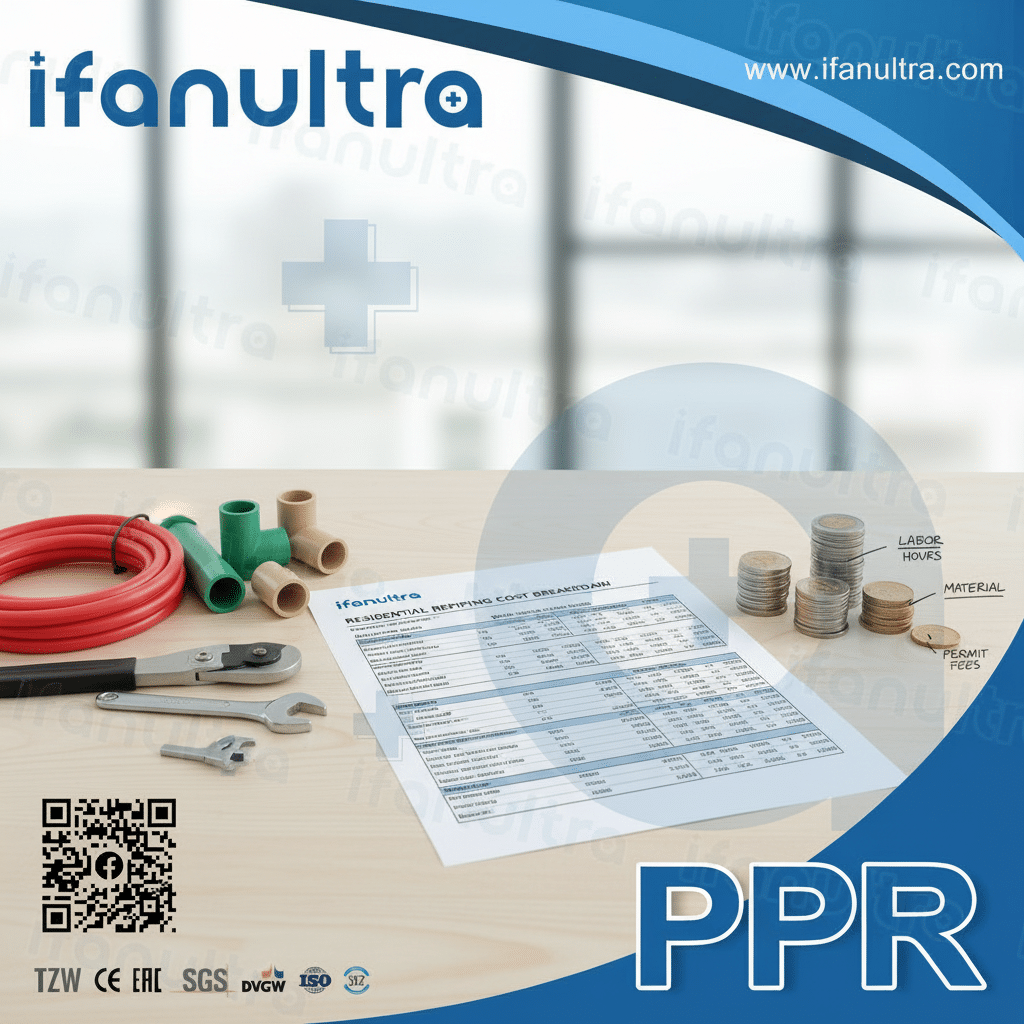
PEX has moderate material cost but lower labor due to fast installation, making total cost competitive. PP-R has slightly higher material cost, but labor is moderate; the system’s longevity often offsets initial expense. CPVC has the lowest material cost, but labor can be higher due to more joints and careful handling.
Breaking Down the Costs
Let’s look at each component of total cost for a typical 2,000 sq ft home repipe.
Material Costs:
- PEX: $0.50 – $1.50 per foot for tubing. Fittings (brass or plastic) add cost.
- PP-R: $0.80 – $2.00 per foot. Fittings are similar in cost to PEX.
- CPVC: $0.30 – $0.80 per foot. Fittings are cheap but numerous.
Labor Costs:
Labor varies by region, but installation speed matters.
- PEX installation: Fast – can be done in 1-2 days for a whole house.
- PP-R installation: Moderate – welding takes time but fewer joints than CPVC.
- CPVC installation: Slower – measuring, cutting, cementing, and curing add time.
Total Cost Estimate (for a 2,000 sq ft home):
| Material | Material Cost | Fittings Cost | Labor Cost (approx) | Total Estimated Cost |
|---|---|---|---|---|
| PEX | $400 – $800 | $200 – $400 | $2,000 – $3,500 | $2,600 – $4,700 |
| PP-R | $600 – $1,200 | $200 – $400 | $2,500 – $4,000 | $3,300 – $5,600 |
| CPVC | $200 – $500 | $150 – $300 | $3,000 – $4,500 | $3,350 – $5,300 |
Note: These are rough estimates and can vary widely.
Hidden Costs and Long-Term Value
From our experience with clients, the initial price tag isn’t everything. Here are some hidden factors:
- PEX may require special tools and fittings that add cost, but the labor savings often offset this.
- PP-R offers the longest lifespan (50+ years) with minimal maintenance, reducing future replacement costs.
- CPVC may need replacement sooner due to brittleness, especially if exposed to UV or high temperatures.
We often advise clients: if you plan to stay in your home for decades, investing in PP-R can pay off through durability and peace of mind.
How Does Each Material Perform Regarding Water Quality and Long-Term Durability?
Water quality is about health, not just performance. I always tell clients: the pipe should not contaminate your drinking water.
All three materials are approved for potable water and do not leach harmful chemicals when properly manufactured. PP-R and PEX have smooth surfaces that resist scaling and biofilm. CPVC can leach vinyl chloride if overheated during installation. Long-term, PP-R and PEX are more resistant to chlorine degradation than CPVC.
Chemical Resistance and Water Purity
Each material interacts differently with water and common disinfectants like chlorine.
PEX is cross-linked, which makes it very resistant to chlorine. It doesn’t corrode or scale. However, some early PEX brands had issues with leaching, but modern certified PEX meets NSF/ANSI 61 standards for safe drinking water. The smooth inner wall prevents biofilm growth.
PP-R is also highly chlorine-resistant and inert. It won’t corrode or release metals. The fusion welding eliminates the need for solvents or adhesives, so no chemicals enter the water stream. Its smooth surface stays clean over decades. At IFAN, we ensure our PP-R meets international potable water certifications.
CPVC contains chlorine in its structure, which makes it resistant to many chemicals. However, if the pipe is overheated during installation (e.g., from a torch nearby), it can degrade and leach vinyl chloride. Also, CPVC can become brittle over time, leading to cracks and potential contamination from external sources.
Long-Term Durability Factors
Durability means the pipe maintains its integrity for decades.
- PEX can last 40-50 years. It resists freezing bursts well but can be damaged by UV light and rodents.
- PP-R lasts 50+ years. It’s UV-sensitive too but very robust against pressure surges and chemical attack. It doesn’t become brittle with age.
- CPVC lifespan is typically 40-50 years, but it can fail earlier if exposed to high temperatures or UV. It’s also prone to impact damage.
Certification Matters
To ensure safety, always look for these certifications:
| Material | Potable Water Certifications | Chlorine Resistance | Scale Resistance |
|---|---|---|---|
| PEX | NSF/ANSI 61, NSF/ANSI 14 | Excelente | Excelente |
| PP-R | NSF/ANSI 61, WRAS, KIWA | Excelente | Excelente |
| CPVC | NSF/ANSI 61 | Bien | Good (but can pit) |
From our experience, clients who value long-term peace of mind often choose PP-R for its proven track record in European and Asian markets.
Conclusión
PEX offers flexibility and easy installation, PP-R provides unmatched durability and leak-proof joints, and CPVC is a budget option. For a reliable, long-lasting repiping solution, consider IFAN’s high-quality PP-R pipes and fittings, engineered for safety and performance.









 English
 Español
 Français
 Português do Brasil