
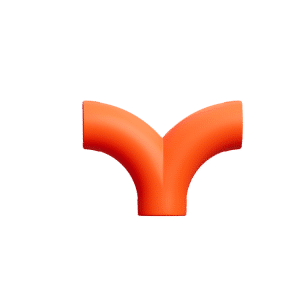
Customizing a PPR herringbone tee can help streamline your plumbing system and meet unique project needs. Whether you’re managing a residential build or an industrial installation, understanding the customization process is essential for efficiency, compatibility, and long-term performance.
What Is a PPR Herringbone Tee?
A PPR herringbone tee is a type of pipe fitting that distributes fluid in a “Y” or angled branch pattern, often used in heating, water supply, and central air systems. It combines the pressure resistance of PPR (Polypropylene Random Copolymer) with the space-saving design of a herringbone layout.
Why Customization Matters
Standard fittings may not always meet your specific installation angles, flow rates, or material needs. Customization ensures:
- Perfect dimensional fit
- Improved installation speed
- Optimized flow direction and volume
- Support for unusual building layouts
- Compatibility with multi-size or multi-material systems
Step-by-Step: How to Customize a PPR Herringbone Tee
1. Define Application Requirements
Before customization, determine the pipe system’s purpose—cold water, hot water, chemical transport, etc. This affects pressure rating, wall thickness, and joint design.
2. Provide Accurate Dimensions
Measure inlet and outlet diameters, spacing angles (usually 45° or 60°), and overall fitting length. Tolerance accuracy is critical for a leak-free connection.
3. Select PPR Grade
Choose the appropriate PPR grade—Type 3 is commonly used for its high thermal stability and pressure endurance.
4. Choose Connection Type
Decide whether the customized tee should have socket fusion ends, threaded inserts, or metal-reinforced connections depending on the joint method.

5. Add Special Features
Customization may include:
- Reinforced branches
- Color coding for cold/hot identification
- Printed markings (e.g., flow direction or installation guide)
- UV or chemical-resistant coating
How to Order a Customized Tee
- Prepare technical drawings or CAD files
Include all measurements, angles, and functional needs. - Contact the factory’s customization team
You can reach out through platforms like ifanultra.com to discuss requirements. - Request a sample
Always test a prototype before full-scale production. - Finalize specifications and confirm production timeline
When Should You Consider Customization?
- The standard tee causes awkward pipe routing
- You’re working on a high-end or space-limited project
- You require specific branding or color codes
- You’re combining different pipe materials or standards
Reflexiones finales
Customizing a PPR herringbone tee saves time, reduces waste, and improves the durability of your plumbing system. With a reliable manufacturing partner and precise specifications, custom fittings can solve complex installation problems efficiently.
Need help with your design? Our team at ifanultra.com can guide you through the process and deliver solutions tailored to your project.









 English
 Español
 Français
 Português do Brasil