
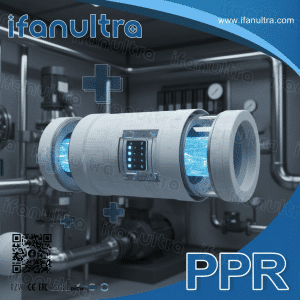
I remember a client who discovered a major underground leak only after receiving an astronomical water bill. That costly delay made me realize how transformative real-time monitoring could be for plumbing systems.
Smart pipe fittings integrate with IoT monitoring systems by embedding sensors directly into the fitting body to measure parameters like flow rate, pressure, and temperature. These sensors connect to a small transmitter that sends data wirelessly to a cloud platform using standard communication protocols. Users can then access this data through dashboards or mobile apps to monitor system health in real time.
This integration represents a significant leap forward from traditional “fit and forget” plumbing. Let’s explore exactly how these intelligent components work.
What Types of Sensors Are Embedded into Smart Fittings to Collect Data?
Traditional fittings are passive components. They simply direct water flow. Smart fittings, however, actively gather information about what’s happening inside the pipes.
Smart fittings typically embed three main sensor types: flow sensors (using ultrasonic or hall-effect technology) to measure water velocity, pressure sensors (often piezoelectric or MEMS-based) to monitor system pressure, and temperature sensors (usually thermistors or RTDs) to track water temperature. Some advanced fittings may also include sensors for water quality, such as turbidity or conductivity sensors.
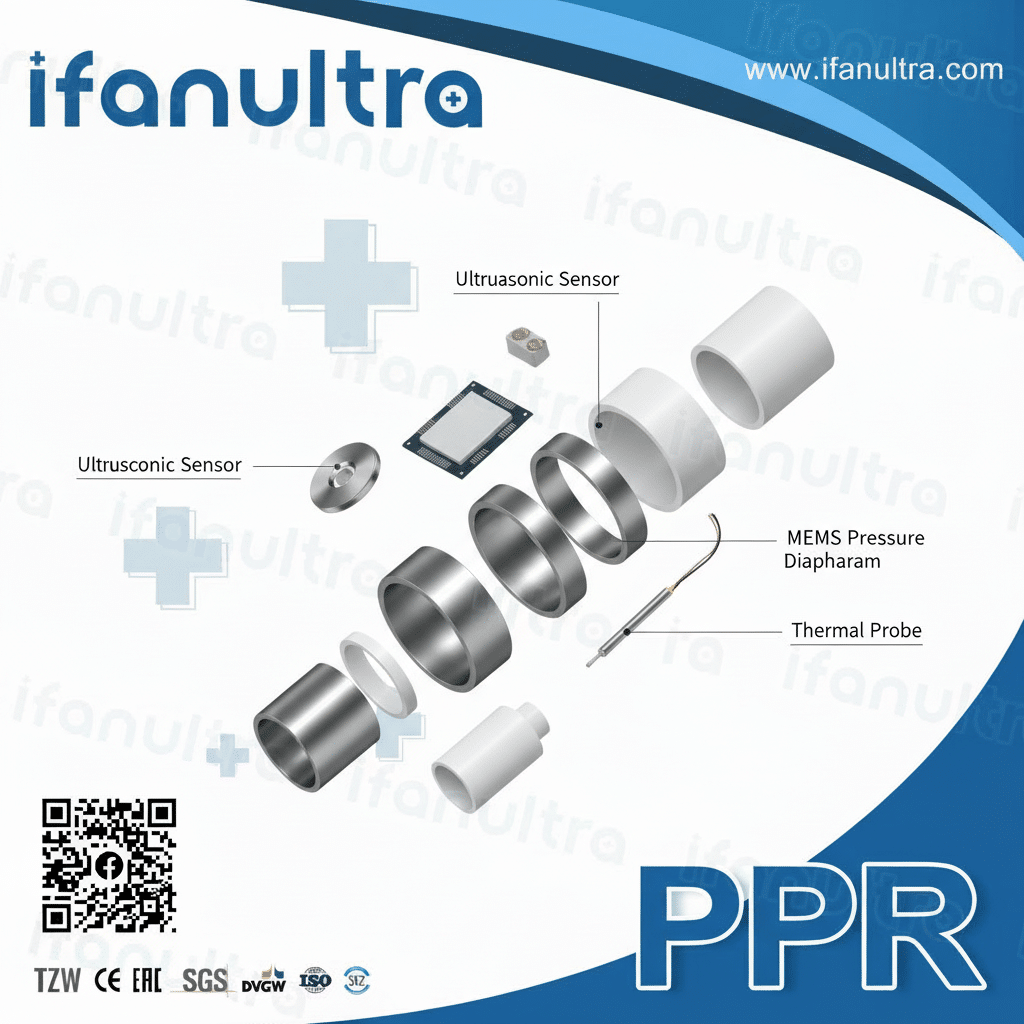
The Core Sensor Trio
Let’s look at each primary sensor type and how it functions within a fitting.
1. Flow Sensors:
Flow measurement is crucial for understanding consumption patterns and detecting leaks. Two common technologies appear in smart fittings:
- Ultrasonic Flow Sensors: These use sound waves to measure velocity. They send ultrasonic pulses through the water, both with and against the flow. The time difference reveals the flow speed. These sensors are highly accurate and don’t obstruct flow, so they cause no pressure drop.
- Hall-Effect Flow Sensors: These use a small turbine or impeller inside the flow path. As water spins the turbine, a magnet attached to it passes a hall-effect sensor, generating electrical pulses. The pulse frequency directly correlates to flow rate. These are cost-effective but do create some flow resistance.
2. Pressure Sensors:
Pressure monitoring helps identify blockages, pump failures, or system leaks. Most smart fittings use:
- MEMS Pressure Sensors: These are tiny micro-electromechanical systems with a flexible diaphragm. Water pressure deflects the diaphragm, changing its electrical properties (capacitance or resistance). The change converts to a pressure reading. They are small, reliable, and perfect for embedding.
- Piezoresistive Sensors: These also use a diaphragm, but strain gauges bonded to it change resistance under pressure. They offer excellent accuracy for industrial applications.
3. Temperature Sensors:
Temperature monitoring is essential for safety and energy efficiency. Common types include:
- Thermistors: These change resistance predictably with temperature. They are inexpensive, sensitive, and respond quickly to changes.
- RTDs (Resistance Temperature Detectors): More accurate and stable than thermistors, these use the principle that metal resistance increases predictably with temperature. They are ideal for precise temperature control systems.
Summary Table: Sensor Types and Applications
| Sensor Type | Measurement | Common Technology | Primary Application |
|---|---|---|---|
| Flow Sensor | Water velocity/volume | Ultrasonic, Hall-effect | Leak detection, usage monitoring |
| Pressure Sensor | System pressure | MEMS, Piezoresistive | Blockage detection, pump control |
| Temperature Sensor | Water temperature | Thermistor, RTD | Scalding prevention, energy monitoring |
| Water Quality (Advanced) | Turbidity, conductivity | Optical, Electrochemical | Contamination detection |
These sensors work together to create a complete picture of your plumbing system’s health and performance.
How Is Flow, Pressure, and Temperature Data Transmitted from the Fitting?
Collecting data at the fitting is only half the battle. That information must travel somewhere useful for analysis.
Data transmits from the fitting through a built-in or attached transmitter module that converts raw sensor signals into digital data. This module sends the information via wired connections (like RS-485 or Modbus) or, more commonly, through wireless protocols (such as LoRaWAN, NB-IoT, or Wi-Fi) to a local gateway or directly to the cloud. The gateway then forwards data to central servers for processing and storage.
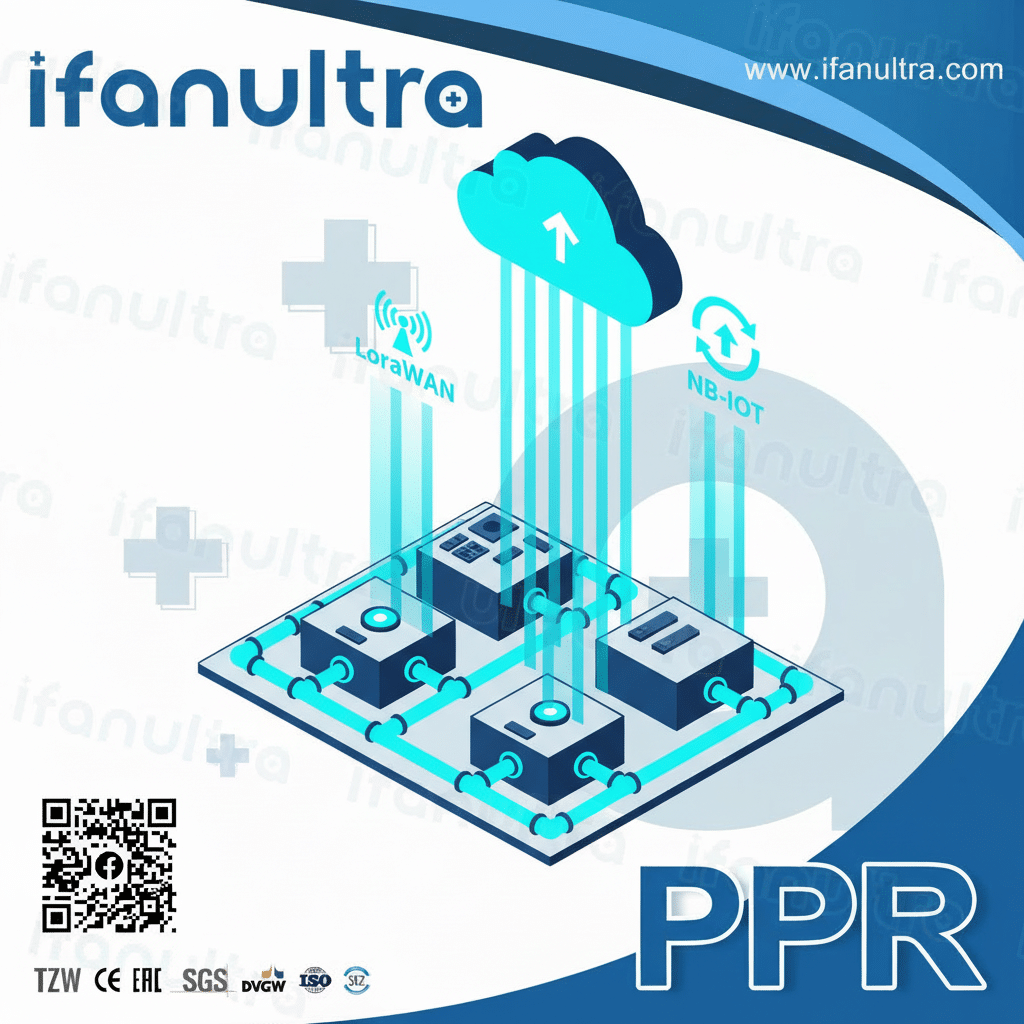
From Analog Signal to Digital Data
Sensors produce analog signals—continuous variations in voltage, current, or resistance. The transmitter module contains a microcontroller with an analog-to-digital converter (ADC). This component samples the analog signal at regular intervals and converts it into a digital number the system can understand.
For example, a pressure sensor might output 0.5V at 0 PSI and 4.5V at 100 PSI. The ADC reads the voltage, converts it to a digital value, and the microcontroller calculates the actual pressure using a calibration formula stored in its memory.
Transmission Pathways
Once the data is digital, it needs to travel. Two main pathways exist:
1. Wired Transmission:
Some industrial applications still use wired connections for reliability and power availability.
- RS-485: A robust serial communication standard that allows multiple devices on the same bus over long distances (up to 1200 meters).
- Modbus: A widely used protocol that runs on top of RS-485, defining how devices request and send data.
- Wired Ethernet: Direct connection to a local network using standard CAT5/6 cables.
Ventajas: Extremely reliable, no battery concerns, immune to wireless interference.
Disadvantages: Installation cost is high, cables can be damaged, not practical for retrofits.
2. Wireless Transmission:
This is the dominant method for modern IoT applications due to its flexibility and lower installation costs.
- Short-Range Wireless:
- Wi-Fi: Direct connection to a local router. High bandwidth but high power consumption, limiting battery life.
- Bluetooth/BLE: Very short range, often used for local configuration or connection to a nearby smartphone.
- Zigbee/Z-Wave: Mesh networking protocols common in home automation. Devices relay data through each other to reach a hub.
- Low-Power Wide-Area Network (LPWAN):
- LoRaWAN: Excellent for battery-powered sensors. It offers long range (kilometers) and low power, but with very low data rates—perfect for periodic sensor readings.
- NB-IoT (Narrowband IoT): Uses cellular networks, offering good building penetration and reliability. Requires a SIM card and cellular subscription.
Data Transmission Steps Overview
| Step | Description | Technology Involved |
|---|---|---|
| 1. Sensing | Sensor detects physical parameter (flow, pressure, temp). | Ultrasonic sensor, MEMS sensor, thermistor |
| 2. Conversion | Analog signal converts to digital value. | Microcontroller with ADC |
| 3. Local Processing | Basic calculations (averaging, scaling) performed. | Firmware on microcontroller |
| 4. Transmission | Digital data sent via wired or wireless link. | Wi-Fi, LoRaWAN, NB-IoT, RS-485 |
| 5. Gateway Reception | Data received by local hub or base station (for wireless). | IoT gateway, cellular tower |
| 6. Cloud Upload | Gateway forwards data to cloud servers. | Internet connection, MQTT/HTTP protocols |
The choice of transmission method depends on the specific application, available infrastructure, and power constraints.
What Communication Protocols Enable Fittings to Talk to Central IoT Platforms?
Raw data transmission means nothing without a common language. Communication protocols ensure that fittings and central platforms understand each other.
Communication protocols enable smart fittings to talk to IoT platforms by defining standardized rules for data formatting, message structure, and exchange sequences. Common protocols include MQTT for lightweight publish/subscribe messaging, HTTP/HTTPS for web-based API communication, and CoAP for constrained device environments. These protocols ensure that data from various manufacturers’ fittings can integrate seamlessly into a single monitoring platform.

The Role of Protocols in IoT Communication
Think of communication protocols as languages. If your fitting speaks French and your central platform only understands English, they cannot communicate. Standard protocols ensure everyone speaks the same language.
Protocols operate at different layers of the communication stack. For smart fittings, we focus primarily on application layer protocols—the ones that define the actual content and structure of messages.
Common Application Layer Protocols
1. MQTT (Message Queuing Telemetry Transport):
MQTT is the most popular protocol for IoT sensor data. It uses a publish/subscribe model.
- How it works: A central broker manages all messages. Fittings (clients) publish data to specific topics (e.g., “building1/floor2/fitting3/temperature”). Other clients (like dashboards or databases) subscribe to those topics to receive updates.
- Ventajas: Very lightweight, minimal bandwidth usage, excellent for unreliable networks, built-in quality of service levels.
- Typical Use: Almost ideal for smart fitting data transmission.
2. HTTP/HTTPS (Hypertext Transfer Protocol):
This is the protocol of the web. Fittings send data by making HTTP requests to a web server’s API endpoint.
- How it works: The fitting formats data as JSON or XML and sends it in a POST request to a specific URL. The server processes it and returns a response.
- Ventajas: Universally supported, firewall-friendly, uses standard web infrastructure.
- Disadvantages: Higher overhead than MQTT, request/response model less efficient for frequent small messages.
3. CoAP (Constrained Application Protocol):
CoAP is designed specifically for constrained devices and networks. It’s similar to HTTP but optimized for low-power, lossy networks.
- How it works: It uses UDP instead of TCP for transport, reducing overhead. It supports RESTful methods (GET, POST, PUT, DELETE) like HTTP.
- Ventajas: Very efficient for battery-powered devices, built-in discovery features.
- Disadvantages: Less widely supported than MQTT or HTTP.
4. Modbus TCP/RTU:
While older, Modbus remains common in industrial settings.
- How it works: A master-slave protocol where a central controller polls fittings for data. Modbus RTU runs over serial connections, while Modbus TCP runs over Ethernet.
- Ventajas: Extremely simple, widely understood by industrial engineers.
- Disadvantages: Less efficient for large-scale IoT deployments, polling model wastes bandwidth.
Protocol Comparison Table
| Protocol | Architecture | Best For | Strengths | Weaknesses |
|---|---|---|---|---|
| MQTT | Publish/Subscribe | General IoT sensor data | Lightweight, reliable, scalable | Requires broker |
| HTTP/HTTPS | Request/Response | Web integration, APIs | Universal support, simple | Higher overhead |
| CoAP | Request/Response (UDP) | Severely constrained devices | Extremely efficient | Limited ecosystem |
| Modbus | Master/Slave | Industrial retrofits | Simple, robust | Not cloud-native, polling inefficiency |
Ensuring Interoperability
For a smart fitting ecosystem to work, all components must support compatible protocols. This is why industry standards matter. Many IoT platforms support multiple protocols, acting as translators. A fitting might speak MQTT to a gateway, which then uses HTTP to forward aggregated data to a cloud platform. This flexibility allows integration of devices from different manufacturers.
Security also matters at the protocol level. MQTT can use TLS/SSL encryption (similar to HTTPS) to protect data in transit. Many systems also implement authentication, ensuring only authorized fittings can publish data.
How Does Real-Time Data from Fittings Enable Predictive Maintenance and Leak Detection?
Collecting data is interesting. Acting on it is valuable. Real-time monitoring transforms raw numbers into actionable intelligence.
Real-time data from fittings enables predictive maintenance by establishing baseline operating patterns and triggering alerts when parameters deviate from normal ranges. For leak detection, continuous flow monitoring can identify even small, continuous flows that indicate hidden leaks. Pressure drops outside normal usage patterns can signal pipe failures. Temperature anomalies might predict scaling or equipment malfunctions before catastrophic failure occurs.
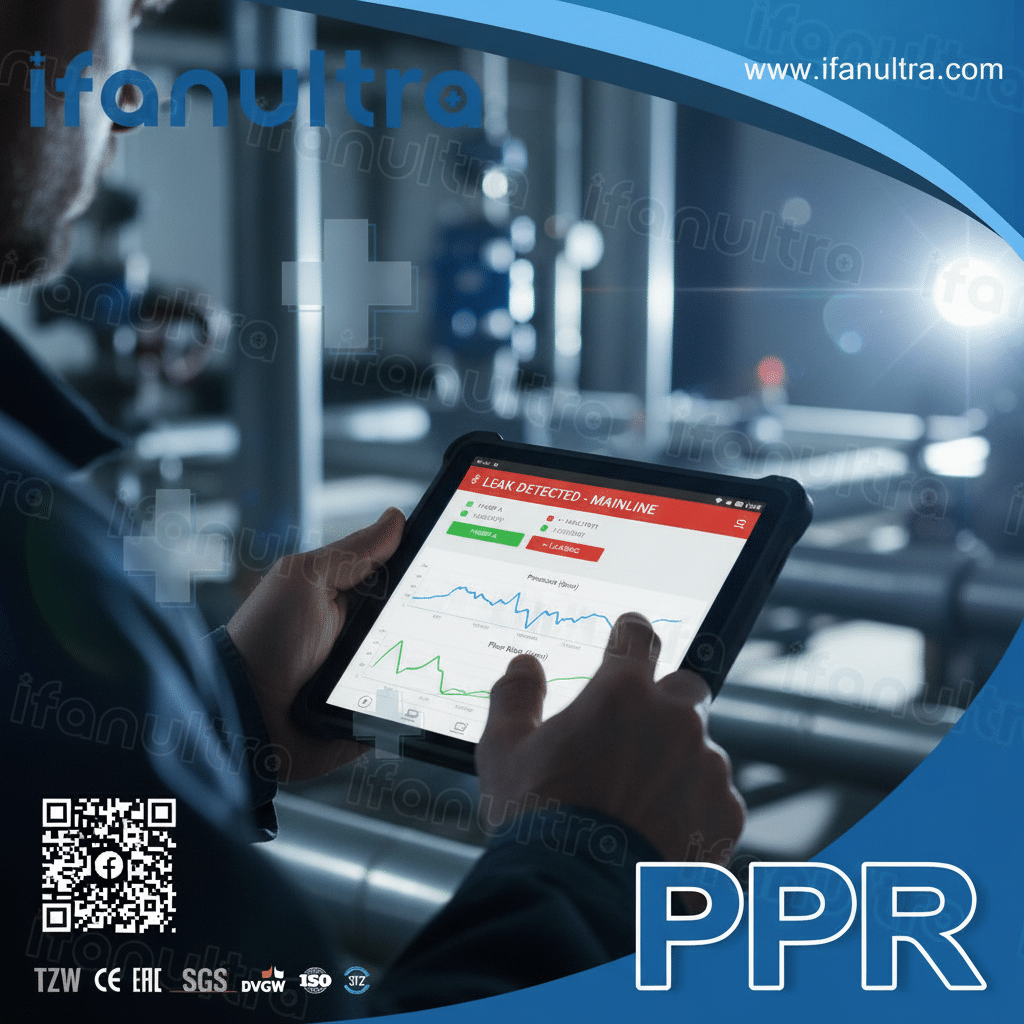
From Data to Decisions: The Analytics Pipeline
Raw sensor data becomes valuable through analysis. The system applies algorithms to identify meaningful patterns.
1. Establishing Baselines:
Before detecting anomalies, the system must learn what “normal” looks like. During an initial learning period, the IoT platform records typical flow patterns—nighttime minimums, morning usage spikes, pressure variations during normal operation. These become the baseline against which future data compares.
2. Anomaly Detection Algorithms:
Once baselines exist, the system continuously compares incoming data against expected values.
- Rule-Based Detection: Simple thresholds trigger alerts. “If flow exceeds X liters per minute for Y minutes, send alert.” This works for obvious problems but misses subtle issues.
- Statistical Methods: The system calculates standard deviations from the mean. A reading three standard deviations from normal triggers investigation.
- Machine Learning: Advanced systems use ML models trained on historical data. These can identify complex patterns humans might miss, like gradual pressure degradation indicating a slow leak or impending pump failure.
Leak Detection in Practice
Leaks waste water and cause damage. Smart fittings detect them in several ways:
Continuous Flow Monitoring: In a properly shut building, water flow should drop to near zero at night. If flow continues (e.g., 0.5 liters per minute), something is using water—possibly a leaking toilet or a hidden pipe leak. The system alerts the facility manager.
Pressure Drop Analysis: A sudden pressure drop during non-usage periods suggests a burst pipe. The system can immediately shut off an automated valve to minimize damage.
Flow vs. Pressure Correlation: Certain leak types create specific signatures. A pinhole leak might show minimal flow change but a gradual pressure decline over days. Machine learning models can identify these signatures.
Predictive Maintenance Applications
Beyond leaks, smart fittings predict equipment problems:
| Data Pattern | Indication | Predicted Issue | Action |
|---|---|---|---|
| Gradually decreasing flow at same pressure | Pipe internal diameter shrinking | Scale buildup, sedimentation | Schedule pipe cleaning or treatment |
| Increasing pressure fluctuations | System instability | Failing pressure regulator or pump issues | Inspect pressure regulation equipment |
| Temperature not reaching setpoint | Heat loss | Insulation failure or recirculation pump problem | Check insulation, service pump |
| Unusual vibration patterns (from advanced sensors) | Mechanical stress | Loose mounting or water hammer issues | Inspect pipe supports, add arrestors |
Business Impact: The Value Proposition
For facility managers, these capabilities translate directly to bottom-line benefits:
- Reduced Water Waste: Early leak detection stops small leaks from becoming costly bills.
- Minimized Downtime: Predictive maintenance schedules repairs during planned outages, not emergency shutdowns.
- Extended Equipment Life: Operating within optimal parameters reduces wear on pumps, valves, and fixtures.
- Lower Insurance Premiums: Some insurers offer discounts for active leak detection systems.
- Sustainability Reporting: Accurate usage data supports water conservation initiatives and ESG reporting.
A commercial building I worked with installed smart fittings throughout its plumbing system. Within six months, the system detected a small but continuous leak in a concealed ceiling pipe. The repair cost $500. Without detection, that leak would have continued for months, potentially causing structural damage and costing over $15,000 in water bills and remediation.
Conclusión
Smart pipe fittings transform passive plumbing into an intelligent, communicative network. For projects requiring advanced monitoring capabilities, consider IFAN’s smart fitting solutions, which integrate seamlessly with leading IoT platforms for comprehensive system management.









 English
 Español
 Français
 Português do Brasil