
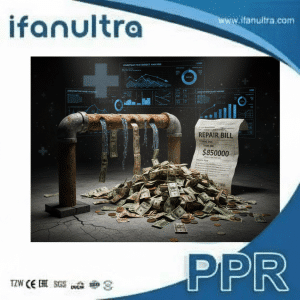
I once reviewed a client’s budget where emergency pipe repairs cost more than the original installation. This shock made the long-term value of the right fitting crystal clear.
Yes, selecting the right plumbing fitting can dramatically reduce long-term maintenance costs. High-quality, corrosion-resistant fittings made from materials like PP-R prevent leaks, eliminate frequent replacement cycles, and withstand operational wear, which collectively minimizes downtime, inspection frequency, and emergency repair expenses over decades of service.
While cheaper fittings save money upfront, they create a hidden cost iceberg. Let’s dive into how the right fitting becomes a strategic investment that pays you back year after year.
How Do Corrosion-Resistant Materials Eliminate Replacement Cycles and Downtime?
We replaced an entire galvanized steel system in an apartment building, a costly and disruptive project that modern materials would have prevented.
Corrosion-resistant materials like PP-R plastic eliminate replacement cycles because they cannot rust or corrode in water and soil. This inherent stability removes the primary cause of pipe system failure, ensuring a lifespan of 50+ years without degradation, which directly prevents the costly downtime and labor associated with tearing out and replacing corroded metal pipes.
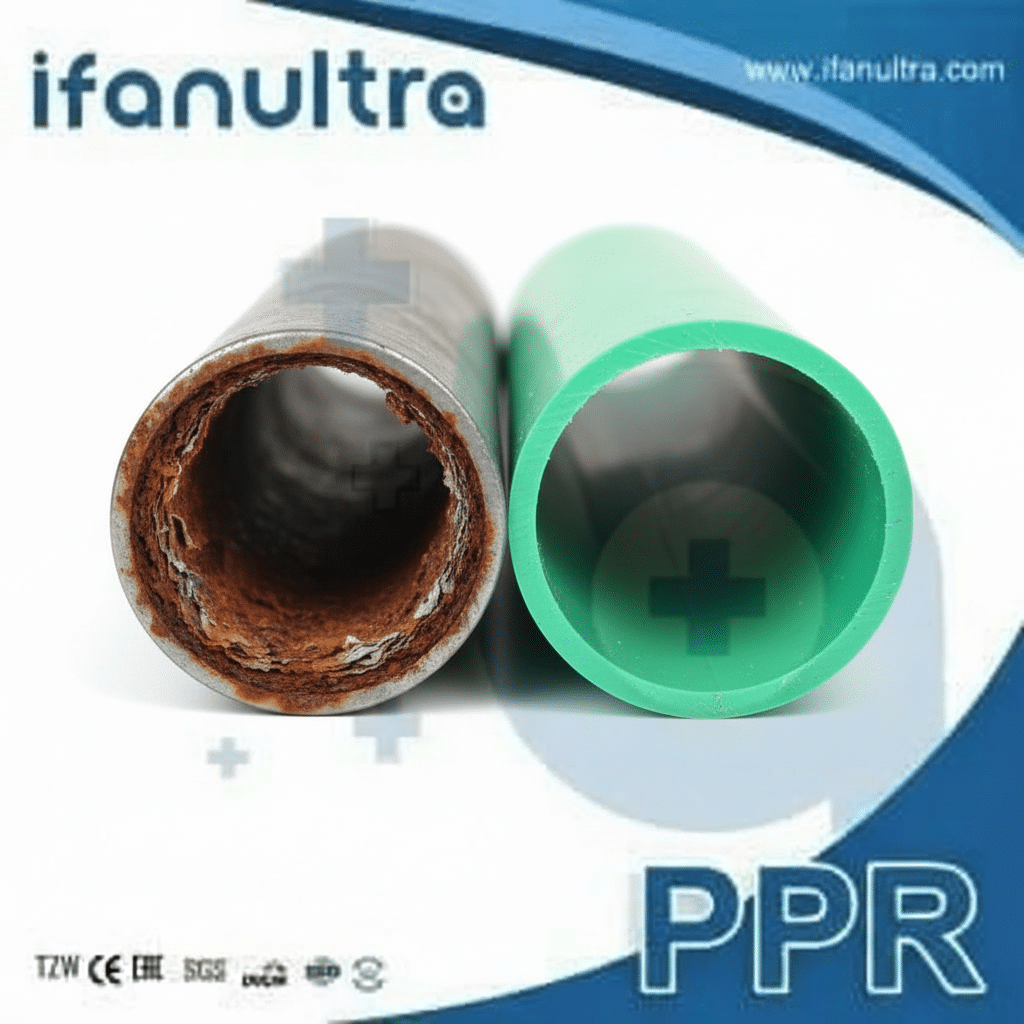
The High Cost of Corrosion
Corrosion is the silent killer of plumbing systems. It doesn’t just cause leaks; it destroys the entire pipe from the inside out. When a pipe corrodes, you can’t just patch it. You must shut down the water, cut out the damaged section, and replace it. In many cases, the corrosion is widespread, forcing a full system replacement.
This process creates two major costs:
- Direct Costs: New materials, skilled labor for removal and installation, and disposal fees for old pipes.
- Downtime Costs: For a factory, downtime means halted production. For an apartment building, it means displacing residents. For any business, it means lost revenue and productivity.
How the Right Material Solves the Problem
Materials like PP-R (Polypropylene Random) are inert. They do not electrochemically react with water or soil. This means the process that destroys iron and copper pipes simply does not start.
Think of it this way: A metal pipe is in a constant, slow battle with its environment, and it always loses. A PP-R pipe ignores that battle entirely. It remains stable. This stability translates directly into predictable performance and zero budget for corrosion-related replacements.
The Lifetime Cost Comparison
The financial impact becomes clear when you compare systems over 30 years.
| Cost Factor | Traditional Metal (e.g., Galvanized Steel) | Corrosion-Resistant PP-R |
|---|---|---|
| Expected System Lifespan | 20-30 años | Más de 50 años |
| Major Replacement Cycles | At least 1 full replacement | 0 |
| Typical Downtime Events | Multiple for leaks and full replacement | Very rare, only for expansion |
| Total Maintenance Labor Cost | Very High | Very Low |
By choosing a corrosion-resistant material from the start, you are not buying a pipe; you are buying decades of uninterrupted service. You eliminate entire line items from your future maintenance budget. This is the most powerful way a fitting reduces long-term cost.
Why Does Initial Quality Prevent Leaks and Associated Repair Costs?
A small leak under a slab can cost tens of thousands to fix. I’ve seen it happen, and the root cause is almost always a fitting that failed prematurely.
Superior initial quality prevents leaks by ensuring precise manufacturing tolerances, using robust sealing mechanisms, and employing high-grade materials. This results in perfect, reliable joints from the start, eliminating the minor failures that escalate into major repairs involving water damage, mold remediation, and structural repairs.
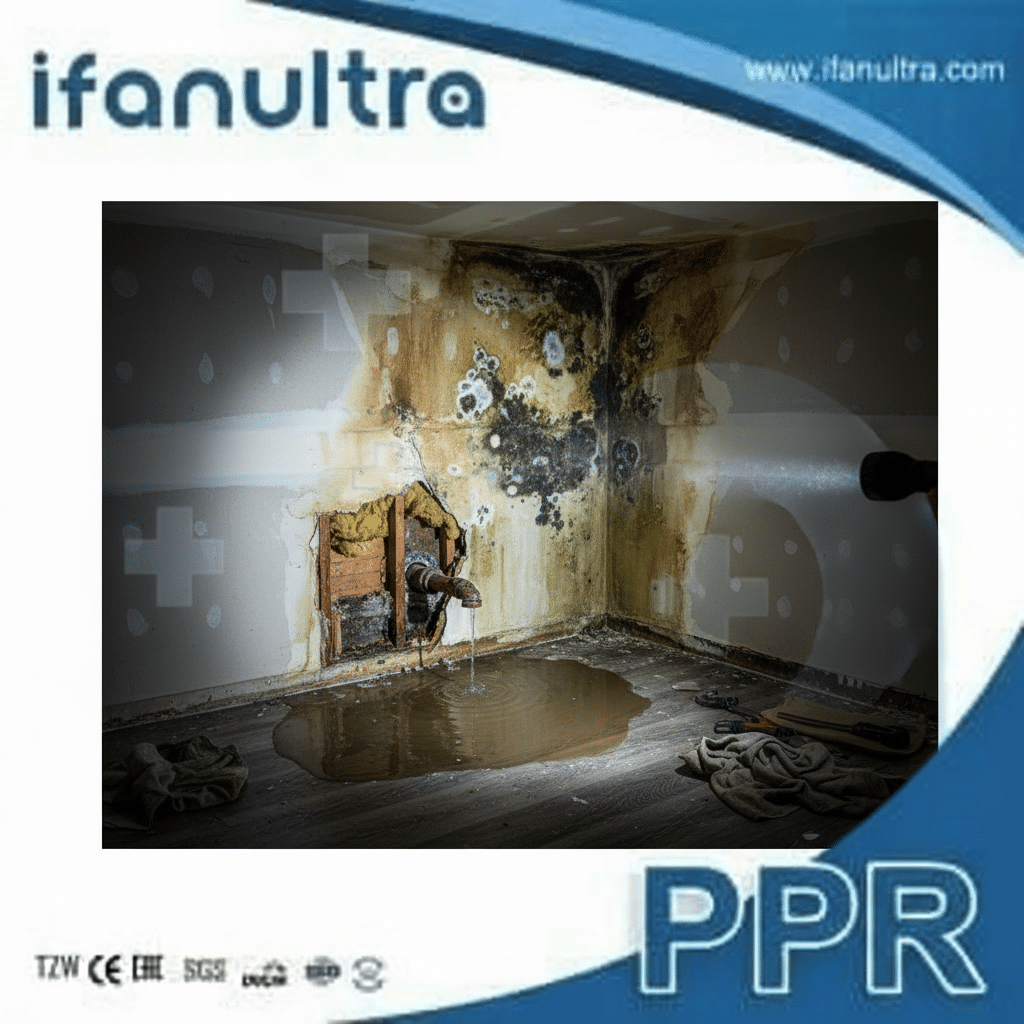
The Domino Effect of a Small Leak
A leak is rarely just a plumbing problem. It starts a chain reaction of damage and cost.
- The Leak Itself: Requires a plumber to locate and fix it.
- Water Damage: Can ruin drywall, insulation, flooring, and ceilings.
- Mold Growth: Creates a health hazard and requires professional remediation.
- Structural Damage: Can weaken wooden frames or concrete over time.
The repair bill for a single leak hidden in a wall can easily exceed $10,000. Now, compare that to the cost difference between a cheap fitting and a high-quality one. The savings on the cheap fitting might be $2. The potential risk it introduces is 5,000 times greater.
How Quality Builds in Leak Prevention
A high-quality fitting addresses leak risks at every point:
1. Material Integrity: It uses virgin, certified materials that are consistent and free of weak spots or impurities that can crack under pressure.
2. Manufacturing Precision: Its dimensions are exact. This means when a pipe is inserted into a socket for fusion, the fit is perfect. A poor-quality fitting with uneven walls will create a weak spot in the joint.
3. Sealing Design: As discussed in our previous article, quality fittings use engineered seals (like EPDM O-rings) and precision-machined seating surfaces. This guarantees a perfect, lasting seal every time.
The Practical Economics of Prevention
Consider this simple equation for a commercial building:
- Cost of Prevention: Spending an extra $1,000 on higher-quality fittings and professional installation for the entire system.
- Cost of Failure: One major leak causing $15,000 in repairs and business interruption.
The choice is clear. Initial quality is not an expense; it is a form of insurance with a guaranteed return. It is the most effective strategy to avoid the catastrophic, unpredictable repair costs that destroy maintenance budgets.
How Do Durable Fittings Withstand Wear, Reducing Frequency of Inspection?
One of our clients switched to durable fittings and cut their annual inspection rounds in half, saving significant labor costs.
Durable fittings withstand physical wear, pressure surges, and thermal cycling without degrading. This consistent performance means they do not develop the small, progressive failures that require close monitoring. As a result, maintenance teams can adopt less frequent, predictive inspection schedules instead of constant reactive checks, drastically reducing labor hours.
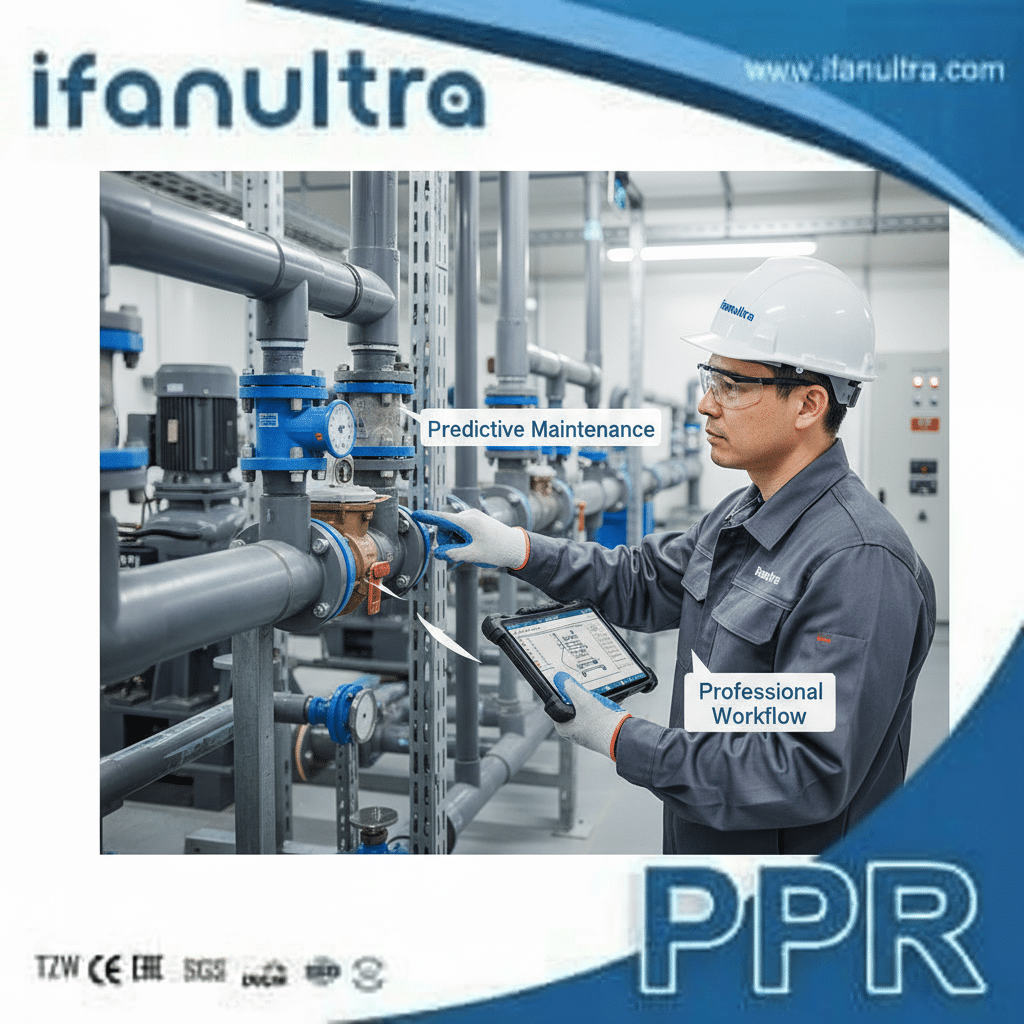
The Hidden Cost of Frequent Inspections
Inspections are not free. They require skilled technicians’ time. In large facilities like hospitals, campuses, or industrial plants, checking every valve and joint is a major operational expense.
Systems with unreliable fittings need frequent inspections because small problems—a slight weep, a bit of corrosion, a loose joint—are common. The goal is to catch these issues before they become big. This is a reactive, fear-driven cost.
How Durability Changes the Maintenance Model
A fitting built for durability changes the game. Let’s break down the types of wear it resists:
Pressure Surges (Water Hammer): Durable fittings have a higher pressure rating and better impact resistance. They absorb the shock instead of cracking.
Thermal Cycling: Hot water lines expand and contract. Cheap fittings can stress-crack over time. Quality PP-R fittings have a high thermal stability, flexing slightly without fatigue.
Physical Wear and Tear: They are resistant to scratches and abrasion during service or incidental contact.
Because they don’t develop these “early warning” failures, their condition remains stable. You no longer need to inspect them every month or quarter. You can move to a condition-based or annual inspection schedule with confidence.
Impact on Maintenance Labor Budget
This shift from frequent to infrequent inspection frees up valuable resources.
| Inspection Strategy | Typical Frequency | Labor Cost Implication |
|---|---|---|
| Reactive (for weak systems) | Monthly or Quarterly | Very High. Constant labor expenditure to find problems. |
| Preventive (for standard systems) | Bi-Annually | Moderate. Regular cost to ensure nothing is developing. |
| Predictive/Condition-Based (for durable systems) | Annually or Longer | Low. Labor is deployed efficiently only as needed. |
The savings here are direct labor costs. Your technicians spend less time looking for problems and more time on value-added tasks. The durability of the fitting itself creates this operational efficiency.
What is the True Cost-Saving Equation When Evaluating Fitting Options?
Most buyers compare price per piece. Smart buyers calculate the total cost of ownership, where the right fitting always wins.
The true cost-saving equation is Total Cost of Ownership (TCO). TCO = Initial Purchase Price + Installation Labor + (Annual Maintenance Cost x System Lifespan) + Cost of Downtime/Failures. While quality fittings have a higher initial price, their near-zero maintenance and failure costs over a 50+ year lifespan make their TCO far lower than cheap alternatives.
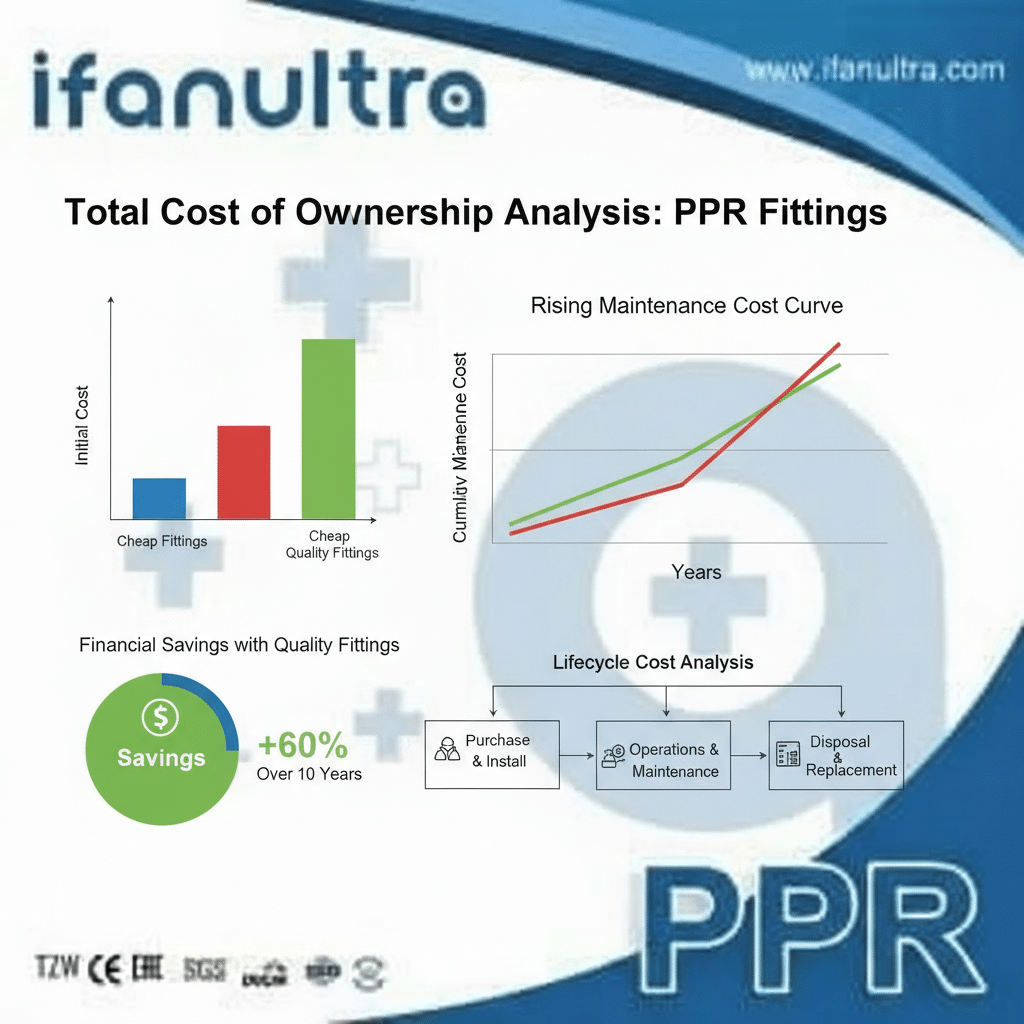
Breaking Down the Total Cost of Ownership (TCO)
To make the right decision, you must look beyond the invoice. Here are all the factors in the true equation:
1. Initial Purchase Price (P): The price you pay for the fittings.
2. Installation Labor (L): Labor cost to install. Better fittings often install faster, reducing (L).
3. Annual Maintenance & Repair Cost (M): This includes routine inspections, minor fixes, and parts. For quality fittings, (M) is very low.
4. Cost of Failures (F): The price of emergency leaks, water damage, and business interruption. For quality fittings, (F) approaches zero.
5. System Lifespan in Years (Y): How long the system lasts before replacement.
The Formula: TCO = P + L + (M x Y) + F
A Real-World TCO Comparison
Let’s model two options for a small commercial building:
Option A: Cheap Fittings
- P = $2,000
- L = $3,000 (standard)
- M = $500/year (for frequent inspections and small fixes)
- F = $5,000 (probability of one major leak event)
- Y = 25 years (before replacement needed)
- TCO = $2,000 + $3,000 + ($500 x 25) + $5,000 = $22,500
Option B: High-Quality IFAN PP-R Fittings
- P = $3,500 (higher initial cost)
- L = $2,500 (faster, easier installation)
- M = $100/year (minimal inspection)
- F = $500 (very low probability of failure)
- Y = 50 years (longer lifespan)
- TCO = $3,500 + $2,500 + ($100 x 50) + $500 = $11,500
The Result and Strategic Insight
Despite a 75% higher initial price, the quality fittings save $11,000 over the long term—a 49% reduction in total cost.
The key insight is that the longest-lasting, most reliable product is almost always the cheapest over its full life cycle. Evaluating fittings through the TCO lens flips the decision-making process. It turns the higher upfront cost into a recognizable investment with a clear, calculable return.
This is why at IFAN, we encourage our B2B clients to evaluate based on project lifetime value, not just unit price.
Conclusión
The right fitting is a powerful tool for cutting long-term costs by preventing corrosion, leaks, and frequent inspections. For maximum lifetime value, choose durable, high-performance IFAN pipe fittings for your next project.









 English
 Español
 Français
 Português do Brasil