
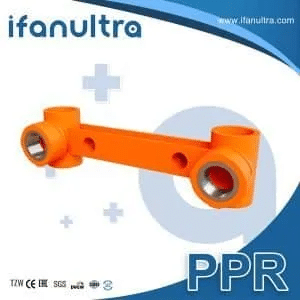
In my years at IFAN, I’ve seen too many projects stalled by one simple mistake: the wrong tee fitting size. A mismatched double tee can derail an entire installation.
The standard PPR double tee sizes typically match the common PPR pipe diameters, ranging from 20mm (¾”) to 110mm (4″). The most frequently used sizes in residential and commercial plumbing are 20mm, 25mm (1″), 32mm (1¼”), 40mm (1½”), and 50mm (2″). Choosing the correct size is critical for maintaining system pressure, ensuring proper flow, and achieving a leak-proof installation.
Understanding these sizes is not just about matching numbers; it’s about ensuring your entire piping system works as one efficient unit. Let’s break down what you need to know.
What Are the Standard PPR Double Tee Sizes for Plumbing Systems?
Clients often ask for a “standard tee,” but the truth is, the standard depends entirely on your pipe system’s main diameter. I always start by checking the main pipeline size.
Standard PPR double tee sizes are defined by the diameter of the three connection ports. They are universally categorized by the outer diameter (OD) of the PPR pipe they connect to. The standard series follows metric dimensions, with 20mm, 25mm, 32mm, 40mm, 50mm, 63mm, 75mm, 90mm, and 110mm being the most common. The “double” in double tee often means all three ports are the same size (e.g., 25mm x 25mm x 25mm), or it can indicate a reducing tee with different port sizes.
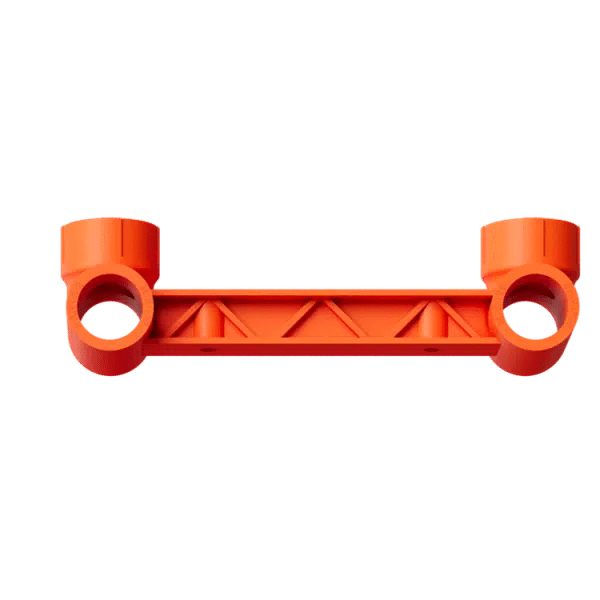
The Foundation: Metric Sizing
PPR systems use metric measurements for a good reason: it ensures global compatibility and precision. When we talk about a 25mm double tee, we are referring to the outer diameter of the pipe it is designed to weld onto. This standardization means a fitting from a reputable manufacturer like IFAN will perfectly match pipes from other quality producers, creating a seamless joint.
The most common sizes serve different parts of a plumbing system:
- 20mm & 25mm: These are the workhorses for internal branch lines. You will find them supplying water to sinks, toilets, and washbasins within a house or apartment.
- 32mm & 40mm: These sizes are typically used for main distribution lines within a building, such as the pipes running from the riser to different apartments or floors.
- 50mm, 63mm, and above: These larger sizes are used for main building risers y primary external supply lines that require higher volume capacity.
Understanding Tee Configuration
A “double tee” can refer to two configurations, which is a common source of confusion.
- Equal Tee (Straight Tee): This is the most common type. All three outlets—the run (two opposite ends) and the branch (the side outlet)—are the same diameter (e.g., 32mm x 32mm x 32mm). It is used to create a branch line of the same size as the main line.
- Reducing Tee: This type has one or two ports that are a different size. For example, a 40mm x 40mm x 25mm tee has a main run of 40mm but a branch outlet of 25mm. This is used to tap a smaller branch line off a larger main line.
Standard PPR Double Tee Size Chart
The table below outlines the common standard sizes and their typical applications.
| Tee Size (Outer Diameter) | Common Imperial Reference | Primary Application Area |
|---|---|---|
| 20 mm | ¾ inch | Branch lines to individual fixtures (sinks, hand basins). |
| 25 mm | 1 inch | Main supply lines to bathrooms/apartments; branch lines. |
| 32 mm | 1¼ inches | Building distribution lines, larger supply runs. |
| 40 mm | 1½ inches | Main horizontal distribution lines, solar water systems. |
| 50 mm | 2 inches | Building risers, main supply lines for larger buildings. |
| 63 mm | 2½ inches | Primary underground supply, industrial applications. |
| 75 mm & Above | 3 inches + | Municipal connections, large industrial main lines. |
Knowing these standard sizes is the first step. Next, you must understand how the physical dimensions of the fitting itself impact your project on a practical level.
How Do PPR Double Tee Dimensions Affect Installation and System Design?
A project manager once showed me a cramped pipe shaft. His design failed because he only considered pipe length, not the space the fittings would occupy. The dimensions of the tee itself are crucial.
The physical dimensions of a PPR double tee—specifically its center-to-end length and branch height—directly affect installation spacing, support requirements, and system layout. A larger tee requires more physical space, influences where hangers or clips must be placed, and can determine if a design is feasible in tight areas like ceiling voids or wall chases.
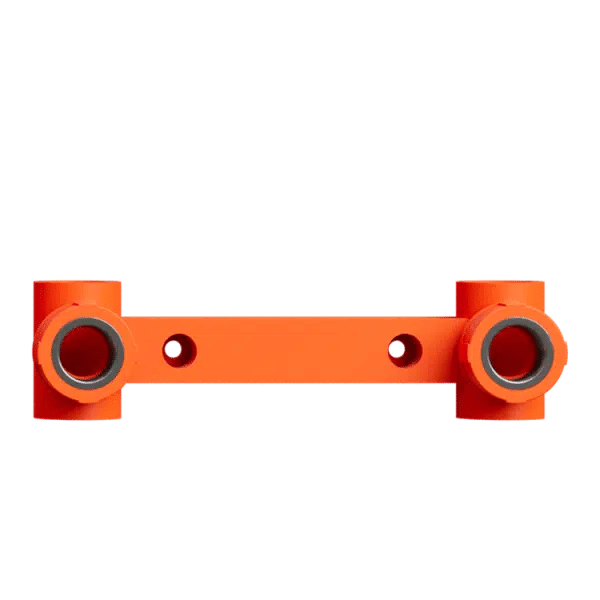
The Critical Measurements
When you look at a technical drawing for a double tee, two key dimensions matter more than just the port diameter:
- Center-to-End (C x E) or Run Length: This is the length from the center point of the tee (where all three axes meet) to the end of one of the run ports. For an equal tee, this length is the same on both sides. This dimension tells you how much straight pipe you will lose when you install the fitting.
- Center-to-Branch (C x B) or Outlet Height: This is the length from the center point to the end of the branch outlet. This dimension is critical for calculating how far the branch line will protrude from the main line.
If you do not account for these dimensions, you can end up with pipes that don’t align with planned holes in walls or joists, or a system that simply doesn’t fit in the allocated space.
Impact on System Design and Planning
Ignoring fitting dimensions leads to three major problems on site:
- Clashing with Structural Elements: In a pre-planned layout, a 50mm tee has a much larger “footprint” than a 25mm tee. If your design software only shows a single line for pipes, the physical fitting might collide with a steel beam, another pipe, or the edge of a wall chase. This forces last-minute redesigns and costly on-the-spot changes.
- Incorrect Support Placement: Pipe supports (clips or hangers) must not be placed too close to a fitting, as this can stress the joint. The dimensions of the tee dictate where the nearest supports for the adjoining pipes can be located. A rule of thumb is to place the first support at a distance equal to at least the C x E dimension from the fitting.
- Pre-Fabrication Errors: Many modern installations use pre-fabricated modules. If the CAD model or manual calculation uses incorrect fitting dimensions, the entire pre-fab unit will be the wrong size, making it unusable on site.
Design Consideration Table
Here is how tee size influences practical design decisions:
| Tee Size | Typical Center-to-End Length (Approx.) | Key Design Consideration |
|---|---|---|
| 25mm | ~39 mm | Can easily fit within standard wall thicknesses for concealed installation. |
| 40mm | ~52 mm | Requires verification of space in ceiling voids; may affect support spacing. |
| 63mm | ~70 mm | Significant space requirement; often dictates the minimum width of a pipe shaft or riser closet. |
| 110mm | ~105 mm | Major structural planning needed; often requires dedicated, accessible service ducts. |
Therefore, always obtain the manufacturer’s specific dimensional drawing for the fittings you plan to use—like those available from IFAN—and integrate these real measurements into your system design from the very beginning.
What Role Do PPR Double Tee Sizes Play in Flow and Pressure?
I recall a factory complaint about low water pressure at the end of a long line. The issue wasn’t the pump; it was a series of undersized tees creating excessive resistance in the system.
The size of a PPR double tee plays a critical role in maintaining system flow and pressure. An undersized tee, especially on the branch or run, creates a bottleneck that increases fluid resistance (pressure drop). This leads to reduced water flow at fixtures, uneven pressure distribution, and requires the pump to work harder, increasing energy costs and strain on the system.
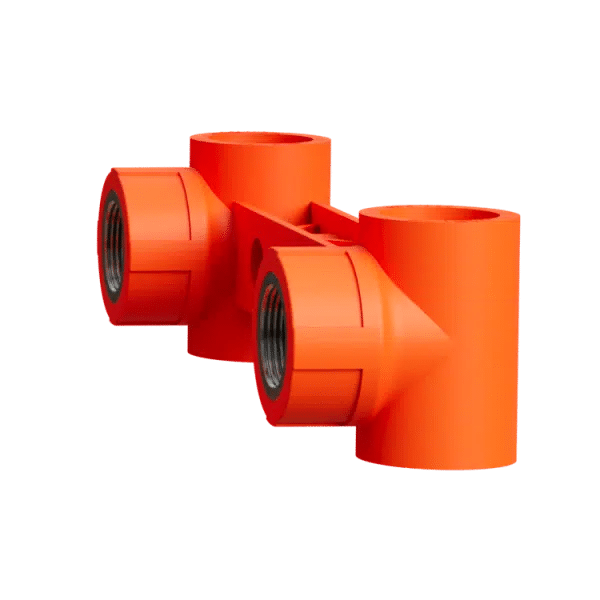
The Principle of Flow Dynamics
Water flowing through a pipe is subject to friction. The larger the pipe’s inner diameter, the lower the friction and the easier it is for water to pass through. A double tee is a point where flow is redirected; its internal geometry and size are crucial for minimizing disruption.
When water in a main line hits a double tee and part of it diverts into the branch, two things happen:
- Turbulence: The water flow is disturbed, which naturally causes a small, localized pressure drop.
- Restriction: If the branch outlet or the main run is smaller than the incoming pipe, it acts as a physical restriction, much like pinching a garden hose.
The combined effect of turbulence and restriction is called pressure drop. A significant pressure drop across multiple fittings can leave little usable pressure at the final faucet or appliance.
Consequences of Incorrect Sizing
Choosing the wrong tee size has direct, measurable impacts:
- Reduced Flow Rate at Fixtures: This is the most common symptom. Showers become weak, and filling a bathtub takes forever. The problem often traces back to branch lines teed off with fittings that are too small.
- Pressure Imbalance: If one branch line uses a correctly sized tee and another uses an undersized one, the fixtures on the undersized line will have noticeably lower pressure. This makes balancing the system very difficult.
- Increased Pump Load and Energy Use: To overcome the excessive pressure drop caused by undersized fittings, a circulation or booster pump must run longer and work harder. This leads to higher electricity consumption and can shorten the pump’s lifespan.
How to Minimize Pressure Drop
The goal is to maintain a consistent internal diameter throughout the system where possible. Here are key rules:
- Maintain Size on the Main Run: For equal tees on a primary line, the run ports should match the main pipe diameter. Never use a reducing tee on the main run unless you intentionally want to step the entire line size down.
- Size Branches Appropriately: The branch outlet size should be calculated based on the required flow for the fixtures it supplies. Don’t simply default to the smallest size.
- Use Swept Bends Instead of Tees Where Possible: For long distribution lines, creating a loop with swept bends causes less pressure loss than using multiple tees to spur off lines.
Pressure Drop Comparison (Simplified Example)
Consider a 40mm main line supplying two branches. The table shows the impact of branch tee size.
| Escenario | Branch Tee Size | Expected Outcome for Branch Flow |
|---|---|---|
| Optimal | 32mm tee on a 40mm main (40x40x32) | Good flow with minimal pressure drop for multiple fixtures. |
| Marginal | 25mm tee on a 40mm main (40x40x25) | Acceptable flow for 1-2 fixtures, may see pressure drop with simultaneous use. |
| Problematic | 20mm tee on a 40mm main (40x40x20) | Significant restriction. Likely poor flow, especially if supplying more than one fixture. |
In summary, the tee is not a passive connector; it is an active component in your hydraulic system. Its size must be engineered, not just guessed.
How to Select Correct PPR Double Tee Size for Your Piping Project?
A contractor once ordered hundreds of tees based on an old habit, not the new project’s plans. The waste was entirely avoidable. Follow a disciplined selection process.
To select the correct PPR double tee size, first determine the main pipe diameter. Then, calculate the required flow for the branch line. Finally, match the tee’s port sizes to these needs, always consulting the system’s hydraulic design plans. For repairs, always measure the existing pipe’s outer diameter. When in doubt, choose a tee that maintains or enlarges the flow path rather than restricting it.
A Step-by-Step Selection Guide
Follow this practical guide to ensure you never order the wrong fitting again.
Step 1: Identify the Main Line Size
This is your starting point. Measure the outer diameter (OD) of the pipe you need to tap into. Use a caliper for accuracy. Do not rely on visual guesswork or imperial approximations. The main line size determines the size of the two run ports on your double tee.
Step 2: Define the Purpose of the Branch
What is the tee for? The answer dictates the branch size.
- Adding a single fixture? (e.g., a sink): A branch size one step down from the main is often sufficient (e.g., 32mm main to 25mm branch).
- Creating a sub-main for multiple fixtures? (e.g., a whole bathroom): The branch size should often match the main line size (e.g., 40mm main to 40mm branch) to maintain adequate flow capacity.
- Continuing the main line in a straight run? You need an equal tee where all ports match the main pipe size.
Step 3: Consult Flow Requirements
For complex projects, refer to the plumbing design plans. Engineers calculate the required “fixture unit” load and pipe sizing accordingly. The specified tee sizes on these plans are not suggestions; they are requirements for the system to function as designed.
Step 4: Consider Future Needs
If you are tapping into a main line for a potential future expansion, consider using a tee that matches the main line size for the branch as well. You can cap it off now with a plug or valve, preserving maximum capacity for later.
Common Pitfalls and How to Avoid Them
Based on IFAN’s client feedback, here are the top mistakes:
- Pitfall 1: Assuming “All 1-inch is the Same.”
- Mistake: Calling a 25mm PPR fitting “1-inch” and buying a 1-inch threaded brass tee.
- Solution: PPR uses outer diameter (OD). Always specify and order by its metric OD (e.g., 25mm). Do not use nominal imperial terms.
- Pitfall 2: Ignoring the Fit for Repairs.
- Mistake: Trying to replace a damaged tee without knowing its size, leading to multiple purchase attempts.
- Solution: Cut out the old tee and bring it to the supplier, or precisely measure its OD and the ODs of all attached pipes.
- Pitfall 3: Prioritizing Price Over Configuration.
- Mistake: Buying a cheaper 40x40x20 reducing tee when the design calls for a 40x40x25, because it was “similar.”
- Solution: The size is a functional specification. Never substitute a different size to save cost; it will compromise system performance.
Quick-Selection Reference Table
Use this table for common residential scenarios.
| Aplicación | Main Line Size | Recommended Double Tee Type & Size |
|---|---|---|
| Tapping a washbasin line off a bathroom supply. | 25 mm | Reducing Tee: 25mm x 25mm x 20mm |
| Adding a new bathroom group to a distribution line. | 32 mm | Equal Tee or Reducing Tee: 32mm x 32mm x 32mm or 32x32x25 |
| Continuing a main line while adding a branch. | 40 mm | Equal Tee: 40mm x 40mm x 40mm |
| Repairing a damaged fitting in an existing system. | Measure Existing Pipe | Match OD exactly. |
When you select the right size, you ensure efficiency, reliability, and a professional result. For guaranteed quality and precise dimensions, source your PPR double tees from a trusted supplier like IFAN.
Conclusión
Choosing the right PPR double tee size ensures a efficient, leak-free, and long-lasting plumbing system. For reliable performance, always use correctly sized, high-quality fittings from a trusted supplier like IFAN.









 English
 Español
 Français
 Português do Brasil