
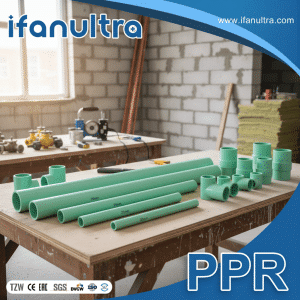
I recall visiting a construction site where traditional metal pipes had corroded after just five years. This frustrating experience made me appreciate why PPR pipes have become the modern standard for plumbing systems worldwide.
PPR stands for Polypropylene Random Copolymer, a type of plastic pipe used for hot and cold water supply systems. These pipes are known for their durability, corrosion resistance, and easy installation through heat fusion welding. They are widely used in residential, commercial, and industrial plumbing applications for transporting potable water.
Now, let’s explore what makes PPR pipes so special and where you can use them in different applications.
What Does PPR Stand for in Plastic Piping Systems and Materials?
Many clients ask me about the technical meaning behind PPR. Understanding the material composition helps explain why it performs so well.
PPR stands for Polypropylene Random Copolymer, which refers to a specific type of plastic polymer with a random molecular structure that gives the material exceptional thermal resistance and durability. This molecular structure makes PPR pipes capable of handling high-temperature water while maintaining their shape and strength over decades of use.

Understanding the Material Science
PPR belongs to the polypropylene family of plastics, but it has a unique molecular arrangement that sets it apart. The “Random Copolymer” designation means that the polymer chains have ethylene molecules randomly distributed throughout the polypropylene structure. This random arrangement creates a material that is more flexible and impact-resistant than standard polypropylene, especially at lower temperatures.
The material composition gives PPR pipes several important characteristics:
- Excellent heat resistance (can handle water up to 95°C)
- Good pressure resistance at high temperatures
- High chemical resistance to acids and alkalis
- Flexibility that prevents cracking under stress
Material Comparison Table
| Tipo de material | Maximum Temperature | Presión nominal | Flexibilidad |
|---|---|---|---|
| PPR | 95°C (203°F) | 20 bar at 20°C | Alta |
| Standard PP | 60°C (140°F) | 12 bar at 20°C | Medio |
| PVC | 45°C (113°F) | 16 bar at 20°C | Bajo |
| Copper | 120°C (248°F) | 25 bar at 20°C | Very Low |
Proceso de fabricación
PPR pipes are manufactured through an extrusion process where the raw polymer material is melted and formed into continuous pipe lengths. The quality control during manufacturing is crucial because it ensures consistent wall thickness and diameter. Reputable manufacturers like IFAN use advanced production equipment and strict quality checks to guarantee every pipe meets international standards.
What Are the Key Advantages of PPR Pipes in Plumbing Applications?
When clients switch from traditional materials to PPR, they often notice immediate improvements in system performance and maintenance costs.
The key advantages of PPR pipes include exceptional corrosion resistance, leak-proof jointing system, long service life exceeding 50 years, and minimal maintenance requirements. Unlike metal pipes, PPR doesn’t rust or corrode, and its smooth interior surface prevents scale buildup that can reduce water flow over time.
Corrosion and Chemical Resistance
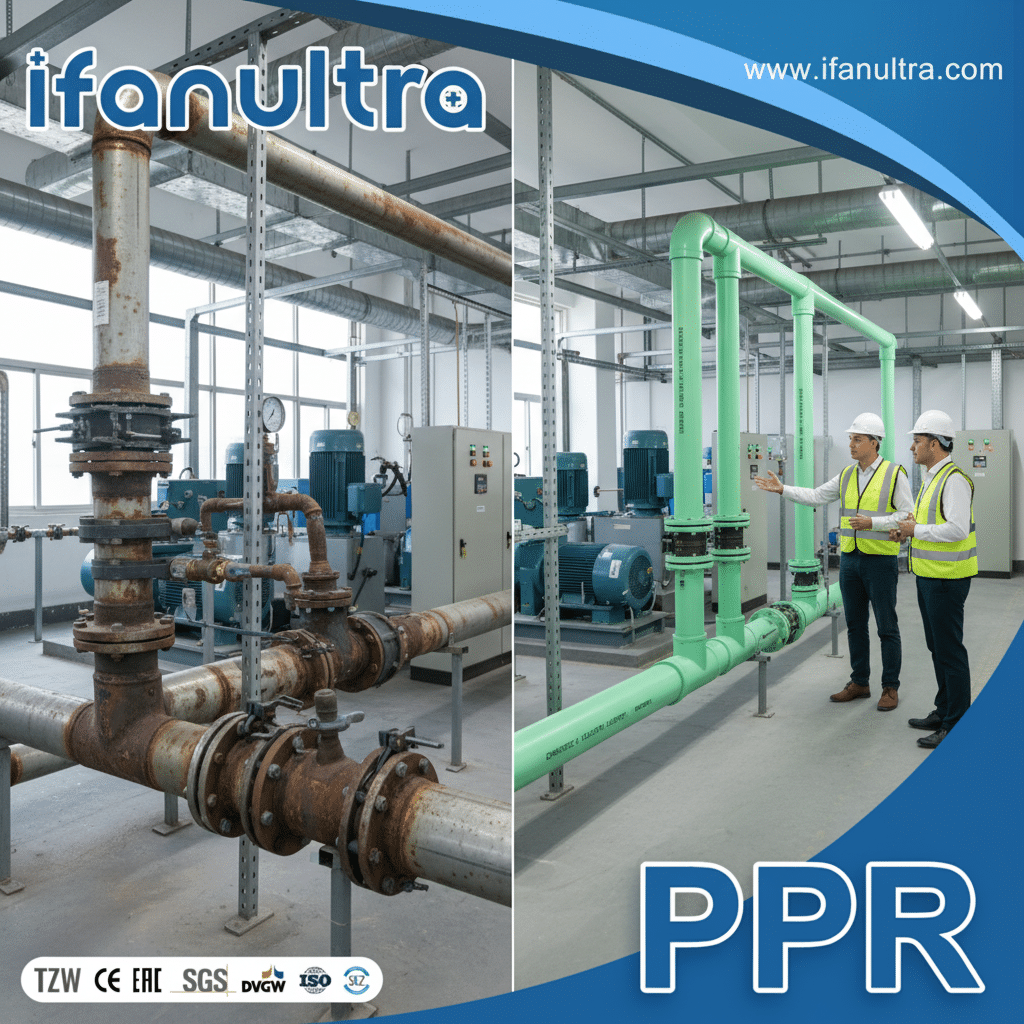
One of the biggest advantages I’ve observed with PPR pipes is their complete immunity to corrosion. Traditional metal pipes suffer from rust and scale accumulation that gradually reduces water flow and quality. PPR pipes maintain their smooth interior surface throughout their lifespan, ensuring consistent water pressure and quality.
The chemical resistance of PPR makes it suitable for various water conditions. Whether your water supply has high mineral content or uses chemical treatments, PPR pipes won’t degrade or contaminate the water. This is particularly important in areas with aggressive water conditions that can rapidly damage metal pipes.
Installation and Jointing Benefits
The heat fusion welding system used for joining PPR pipes creates monolithic connections that are actually stronger than the pipe itself. This eliminates the weak points that commonly cause leaks in threaded or compressed joint systems. The installation process is:
- Faster than soldering copper pipes
- Cleaner than working with solvent cement
- Safer than open flame soldering
- More reliable than mechanical connections
Long-Term Performance Factors
PPR pipes offer exceptional value over their entire lifecycle. While the initial material cost might be comparable to quality metal pipes, the long-term savings become significant due to:
- Zero corrosion-related replacements
- Minimal maintenance requirements
- Reduced energy costs (PPR has low thermal conductivity)
- No need for chemical treatments to prevent scale
Maintenance Cost Comparison
| Maintenance Aspect | Tuberías PPR | Metal Pipes |
|---|---|---|
| Corrosion Treatment | Not needed | Required regularly |
| Joint Repairs | Rarely needed | Common requirement |
| Descaling | Never needed | Periodically required |
| Replacement Cycle | Más de 50 años | 20-30 años |
Where Are PPR Pipes Commonly Installed in Residential Water Systems?
Based on my project experience, PPR pipes have become the first choice for modern residential plumbing systems due to their versatility and reliability.
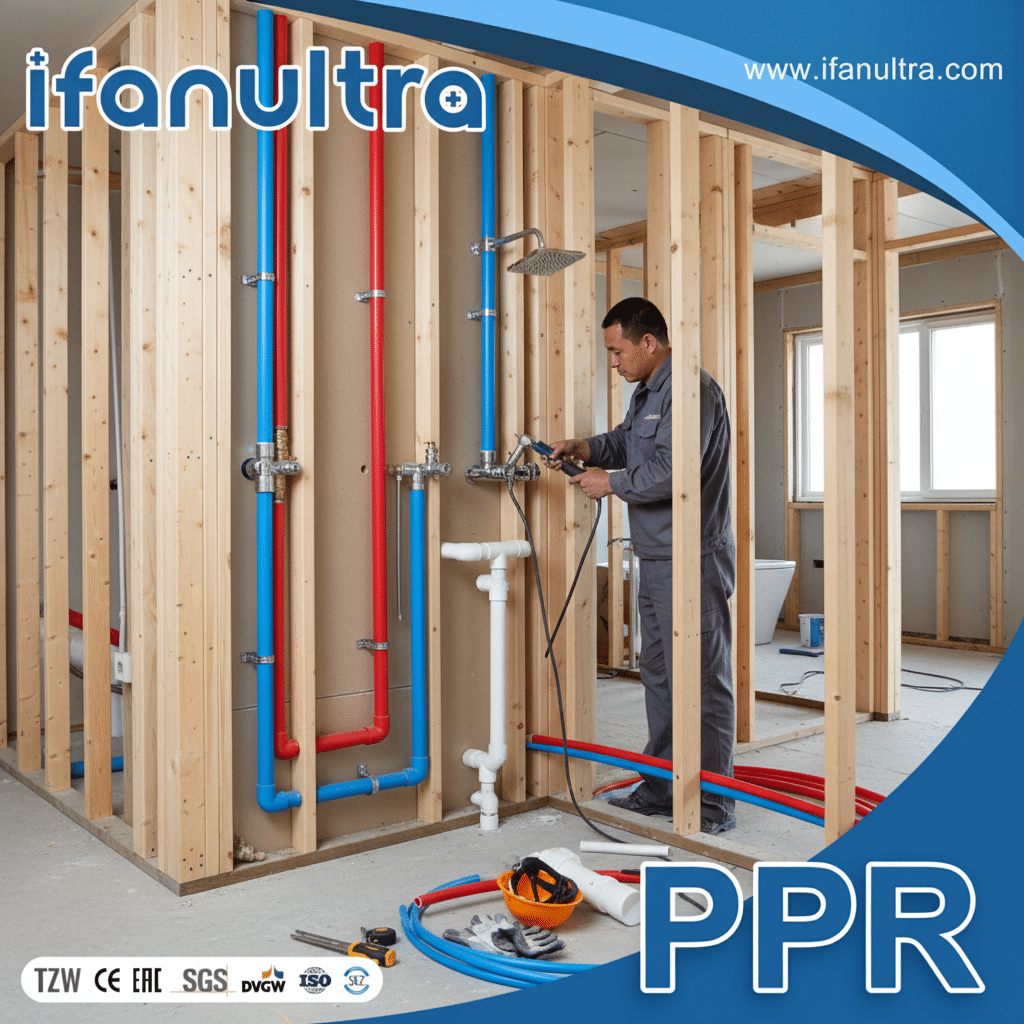
PPR pipes are commonly installed throughout residential water systems, including main water supply lines, hot water distribution, cold water distribution, radiator connections, and underfloor heating systems. They are suitable for both exposed and concealed installations in walls and floors, making them ideal for complete house plumbing networks.
Main Water Distribution System
In typical residential applications, PPR pipes form the backbone of the entire water distribution network. They transport water from the main entry point to all fixtures and appliances throughout the house. The consistent diameter and smooth interior ensure good water pressure at all outlets, even when multiple fixtures are used simultaneously.
The thermal stability of PPR makes it perfect for hot water lines. Unlike some plastic pipes that soften or deform with hot water, PPR maintains its structural integrity even with water temperatures approaching boiling point. This reliability has made PPR the preferred choice for connecting water heaters and distributing hot water to bathrooms and kitchens.
Specific Application Areas
Kitchen and Bathroom Installations
PPR pipes are extensively used in kitchens and bathrooms for:
- Sink water supply lines
- Shower and bathtub connections
- Toilet water supply
- Dishwasher and washing machine connections
- Water heater inlet and outlet pipes
The non-toxic nature of PPR ensures that drinking water remains safe, while the corrosion resistance guarantees that water quality isn’t compromised by rust or scale particles.
Heating System Applications
Many homeowners don’t realize that PPR pipes are excellent for heating applications. They work well with:
- Radiator connections
- Calefacción por suelo radiante
- Solar water heating systems
- Heat pump connections
The heat retention properties of PPR help maintain water temperature as it travels through the system, improving overall energy efficiency.
Installation Location Guide
| Location | Pipe Size | Application Type |
|---|---|---|
| Main Supply | 20-32mm | Cold water entry |
| Bathroom Lines | 16-20mm | Fixture connections |
| Kitchen Lines | 16-20mm | Appliance feeds |
| Heating System | 16-25mm | Radiator connections |
| Water Heater | 20-25mm | Hot water distribution |
How Do PPR Pipes Compare to Other Materials in Industrial Applications?
In my work with industrial clients, I’ve seen PPR pipes successfully replace traditional materials in various demanding applications.
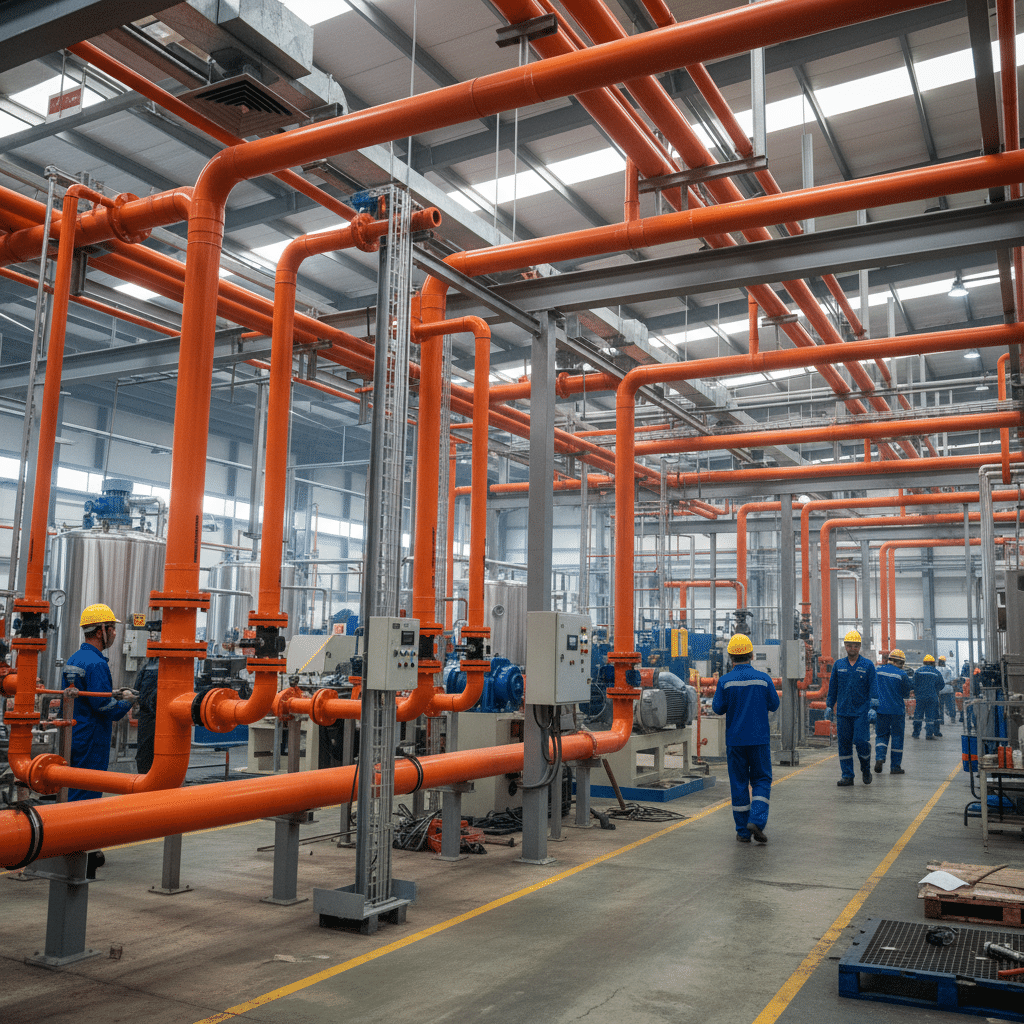
PPR pipes outperform many traditional materials in industrial applications due to their superior chemical resistance, minimal maintenance needs, and longer service life. While copper and steel may handle higher temperatures and pressures, PPR offers better corrosion resistance, easier installation, and lower lifetime costs for many industrial water applications.
Performance in Industrial Environments
Industrial settings present unique challenges for plumbing materials. Chemical exposure, constant use, and maintenance accessibility all factor into material selection. PPR pipes excel in these environments because they resist most chemicals found in industrial water systems, including:
- Chlorinated water
- Mild acids and alkalis
- Oxygenated water
- Industrial cleaning solutions
The non-conductive nature of PPR also eliminates electrolytic corrosion issues that can plague metal pipe systems in industrial plants with electrical equipment.
Comparison with Traditional Industrial Materials
Chemical Resistance Comparison
Different industrial applications require different material properties. Here’s how PPR compares to traditional options:
| Material | Chemical Resistance | Temperature Limit | Presión nominal |
|---|---|---|---|
| PPR | Excellent for most chemicals | 95°C | 20 bar |
| Copper | Poor for acidic water | 120°C | 25 bar |
| Steel | Poor without lining | 120°C | 30 bar |
| PVC | Good but temperature limited | 45°C | 16 bar |
Installation and Maintenance Factors
In industrial settings, installation speed and maintenance requirements significantly impact overall project costs and operational downtime. PPR offers substantial advantages:
- Faster installation than threaded or welded metal systems
- No need for special coatings or linings
- Visual inspection can detect potential issues
- Repairs can be made quickly using the same fusion method
Cost Analysis for Industrial Projects
When evaluating pipes for industrial use, the initial material cost is only part of the equation. The total cost of ownership includes:
- Installation labor and equipment
- Maintenance and repair costs
- System downtime for repairs
- Replacement frequency
PPR systems typically show significant savings in maintenance and replacement categories, though they may have higher initial costs than some basic materials.
Industrial Application Suitability
| Aplicación | PPR Suitability | Recommended For |
|---|---|---|
| Chemical Transport | Excelente | Most chemicals at moderate temperatures |
| Compressed Air | Bien | Low-pressure systems |
| Hot Water Lines | Excelente | Up to 95°C applications |
| High-Pressure Steam | Not suitable | Use metal pipes instead |
| Fire Sprinklers | Limited | Check local regulations first |
Conclusión
Tubos PPR offer an outstanding balance of durability, safety, and cost-effectiveness for both residential and industrial applications. For your next project, consider IFAN’s PPR pipe solutions for reliable performance and comprehensive technical support.









 English
 Español
 Français
 Português do Brasil