
PVC connectors are essential components in plumbing, irrigation, electrical conduit systems, and industrial pipelines. Choosing the right type can impact not only installation efficiency but also long-term system durability. In this guide, we’ll break down the main types of PVC connectors, compare their uses, and help you decide which is best for your specific application.
1. PVC Coupling: Simple and Effective
PVC couplings are straight connectors used to join two pieces of pipe with the same diameter.
Best for: Extending pipelines or repairing broken segments.
Pros:
- Easy to install
- Budget-friendly
- Available in slip and threaded variants
Limitations: Not suitable for changes in direction.
2. PVC Elbow: Changing Direction with Ease
Elbow connectors are designed to alter the direction of flow, commonly at 45° or 90° angles.
Best for: Turning corners or routing pipes in confined spaces.
Pros:
- Reduces pipe stress at angles
- Available in a range of angles and sizes
Limitations: Improper use can reduce flow efficiency.
3. PVC Tee: Split the Flow
Tee connectors allow you to split one flow path into two, or merge two into one.
Best for: Irrigation systems, manifolds, and branch lines.
Pros:
- Multiple flow management
- Slip or threaded options
Limitations: Not suitable where high pressure is involved without reinforcement.
4. PVC Cross: Four-Way Flow
Cross fittings enable four pipe connections in one junction.
Best for: Centralized fluid distribution.
Pros:
- Symmetrical layout
- Good for sprinkler systems
Limitations: Complex installation and pressure balancing required.
5. PVC Adapter: Bridging Systems
Adapters convert between different pipe types or connection methods (e.g., male to female, slip to thread).
Best for: Connecting PVC to metal pipes or valves.
Pros:
- Versatile compatibility
- Flexible connection options
Limitations: Must be chosen carefully to avoid leaks.
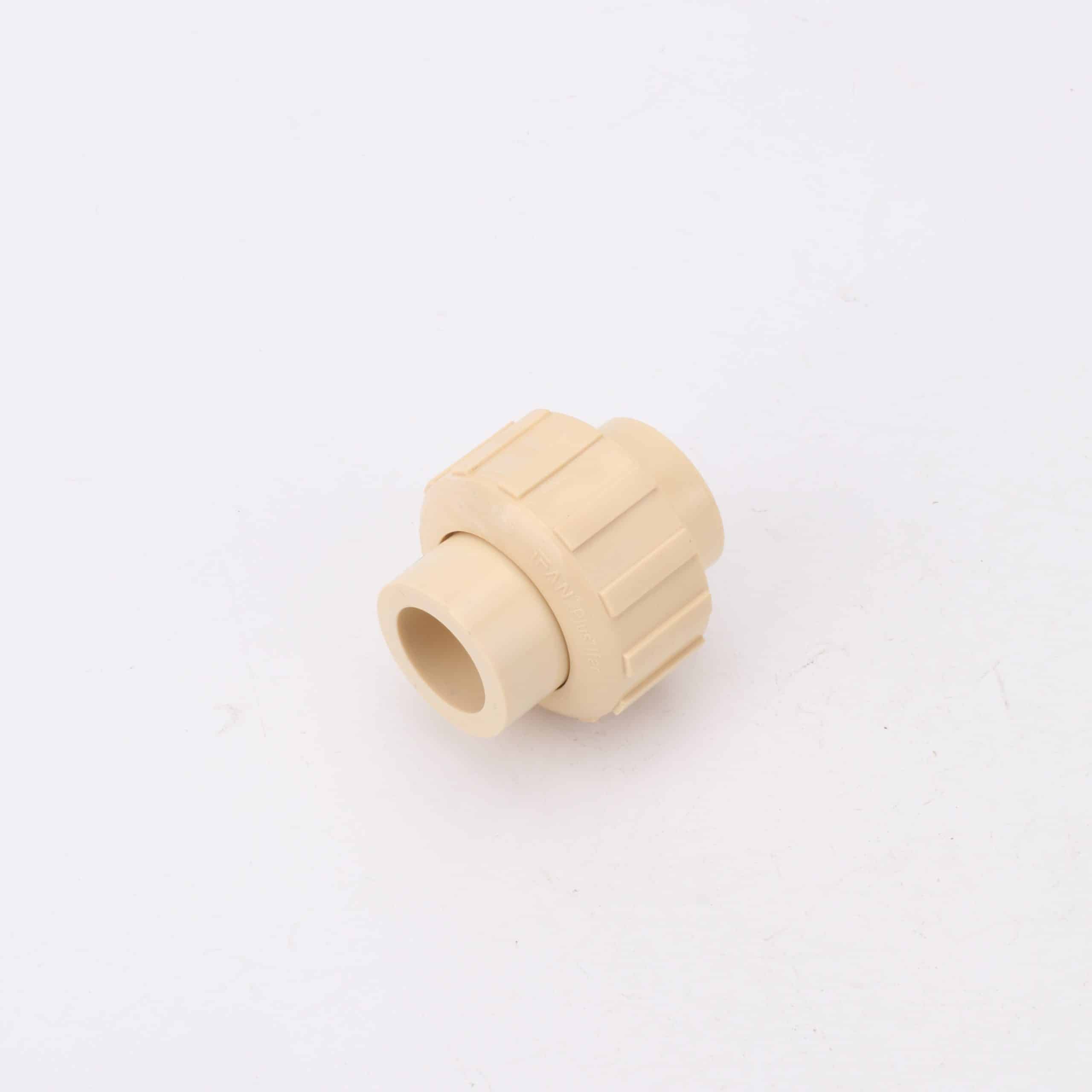
6. PVC Union: Easy Disassembly
Unions allow sections of pipe to be easily detached and reassembled.
Best for: Systems that require maintenance or future disassembly.
Pros:
- Tool-free removal
- Great for testing lines or filter setups
Limitations: More expensive than couplings.
7. PVC Cap & Plug: End It Cleanly
Caps seal the end of a pipe; plugs fit into the end to block flow.
Best for: Temporarily or permanently stopping flow.
Pros:
- Leak prevention
- Available in threaded and slip types
Limitations: Must match pipe type for a secure fit.
How to Choose the Right PVC Connector?
Ask yourself:
- Do I need to change direction? → Use an elbow
- Do I need to split flow? → Try a tee o cross
- Will I need to disassemble this later? → Choose a union
- Am I joining different materials? → Use an adapter
Always consider pipe diameter, pressure rating, and environment before selecting.
Reflexiones finales
With so many types of PVC connectors available, the right choice depends on your system’s layout and demands. Using the correct connector improves flow control, system reliability, and installation speed.
If you’re sourcing PVC connectors or need custom solutions, ifanultra.com offers a full range of fittings tailored for plumbing, electrical, and industrial applications. Our team can help you match the exact connector to your system needs.
Explore high-performance, factory-direct PVC connector solutions from one of China’s leading pipe manufacturers.









 English
 Español
 Français
 Português do Brasil