
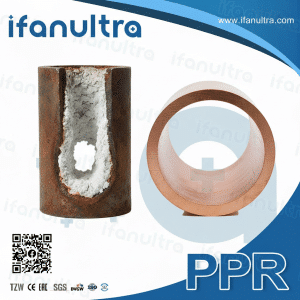
I once visited a client whose water pressure had dropped to a trickle. When we cut open his old steel pipes, we found them almost completely blocked by rock-hard mineral deposits. That image stayed with me.
You remove mineral deposits and scale from pipe interiors by using either chemical descaling agents that dissolve the buildup or mechanical methods like scraping or hydro-jetting that physically break it apart. The right approach depends on your pipe material, the severity of the scale, and whether you can access the entire system. After cleaning, you must take steps to prevent rapid re-scaling.
Scale buildup happens slowly, but it causes serious problems. Let’s walk through the most effective ways to clear your pipes and keep them clean.
What Chemical Descalers Are Effective and Safe for Your Specific Pipe Material?
A client once used a strong acid descaler on his copper pipes, not realizing it would eat through the walls. He learned the hard way that chemical safety comes first.
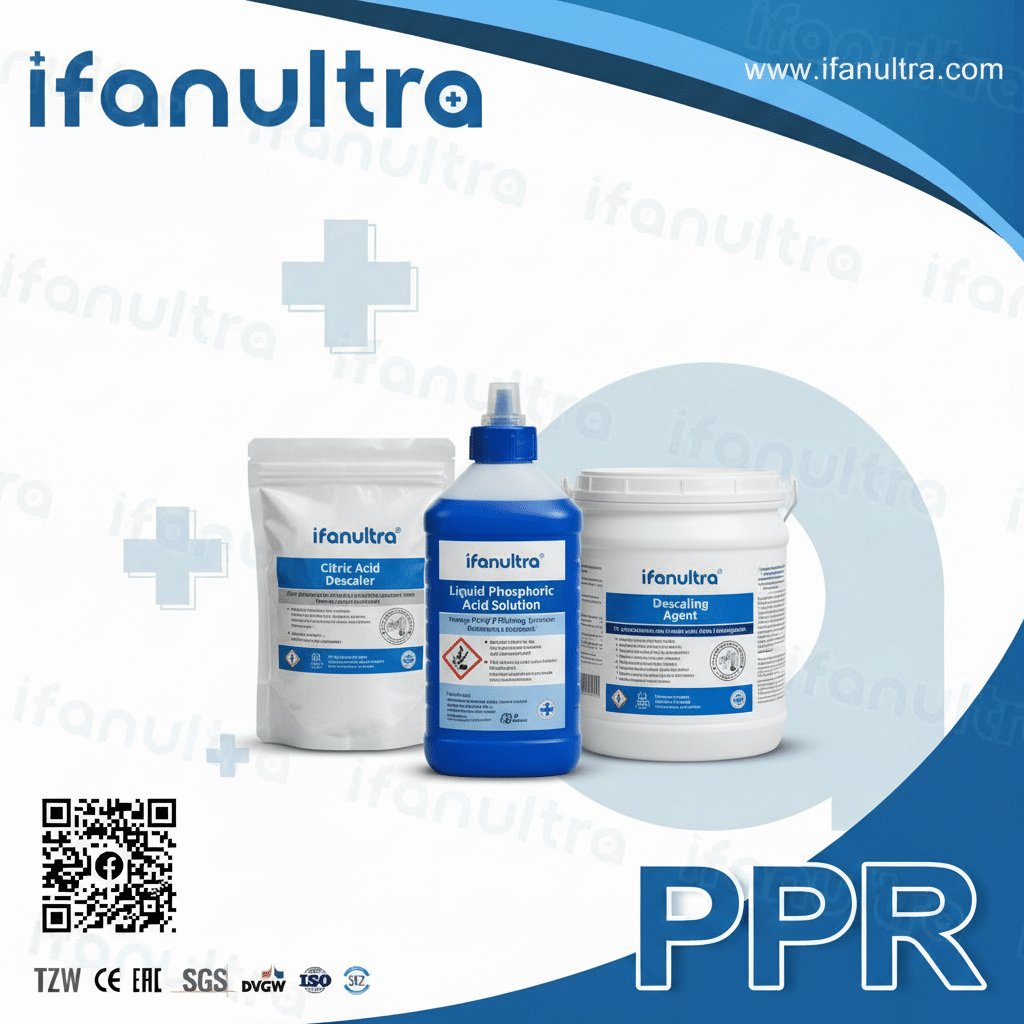
For plastic pipes like PP-R and PVC, mild acids like citric or sulfamic acid work safely. For metal pipes, you need more care: copper tolerates mild phosphoric acid well, but galvanized steel requires special inhibitors to prevent damage. Always check your pipe material compatibility before choosing any chemical descaler.
Understanding Scale Composition
Before picking a chemical, you need to know what you are dissolving. Most household scale is calcium carbonate, the white stuff left behind by hard water. It forms when water containing calcium and magnesium heats up or sits still.
This type of scale responds well to acids. The acid reacts with the calcium carbonate, turning it into a soluble salt that water can rinse away. However, different pipe materials react differently to various acids.
Chemical Options by Pipe Material
1. For PP-R, PVC, and Other Plastic Pipes
Plastic pipes offer a big advantage here. They resist chemical corrosion completely. You can use stronger descaling solutions without worrying about damaging the pipe walls.
- Citric Acid: This is a safe, food-grade option. It works slowly but effectively. Mix it with hot water for best results.
- Sulfamic Acid: This comes as a dry crystal that you mix with water. It works faster than citric acid and is gentle on most materials.
- Phosphoric Acid: This works well and also leaves behind a protective layer that resists future rust on metal components.
2. For Copper Pipes
Copper is durable but reacts to strong acids. You need to be careful.
- Mild Phosphoric Acid: This is often the best choice. It dissolves scale without aggressively attacking the copper.
- Diluted Acetic Acid (Vinegar): For light scale, white vinegar works. It is slow but safe.
- Avoid: Hydrochloric acid (muriatic acid). It will rapidly corrode copper.
3. For Galvanized Steel Pipes
These are the trickiest. The zinc coating protects the steel, but strong acids strip it away.
- Inhibited Acid Descalers: These products contain special chemicals that slow down acid attack on the metal. They are designed specifically for steel.
- Mild Organic Acids: Citric or sulfamic acid, used at lower concentrations, can work if you monitor the process closely.
The table below summarizes safe chemical choices:
| Pipe Material | Safe Descaler Options | Descalers to Avoid |
|---|---|---|
| PP-R / PVC | Citric acid, Sulfamic acid, Phosphoric acid | None (chemically resistant) |
| Copper | Mild phosphoric acid, White vinegar | Hydrochloric acid, Strong sulfuric acid |
| Galvanized Steel | Inhibited industrial descalers, Dilute citric acid | Uninhibited hydrochloric acid |
| PEX | Any mild acid (check fitting compatibility) | Solvents that can soften plastic |
Step-by-Step Chemical Descaling Process
- Identify the Scale: Confirm it is calcium carbonate (it fizzes when you drop acid on a sample).
- Choose the Right Chemical: Match it to your pipe material.
- Dilute Properly: Follow manufacturer instructions. Stronger is not always better.
- Apply the Solution: You can pour it in and let it sit, or use a circulating pump for better coverage.
- Neutralize and Flush: After soaking, flush the system thoroughly with clean water to remove all chemical residues.
How Does a Circulating Pump System Help in Chemical Descaling of Pipes?
I remember a job where we poured descaler into a pipe and let it sit. It cleaned the bottom section but left the top half covered in scale. That is when we switched to circulation.
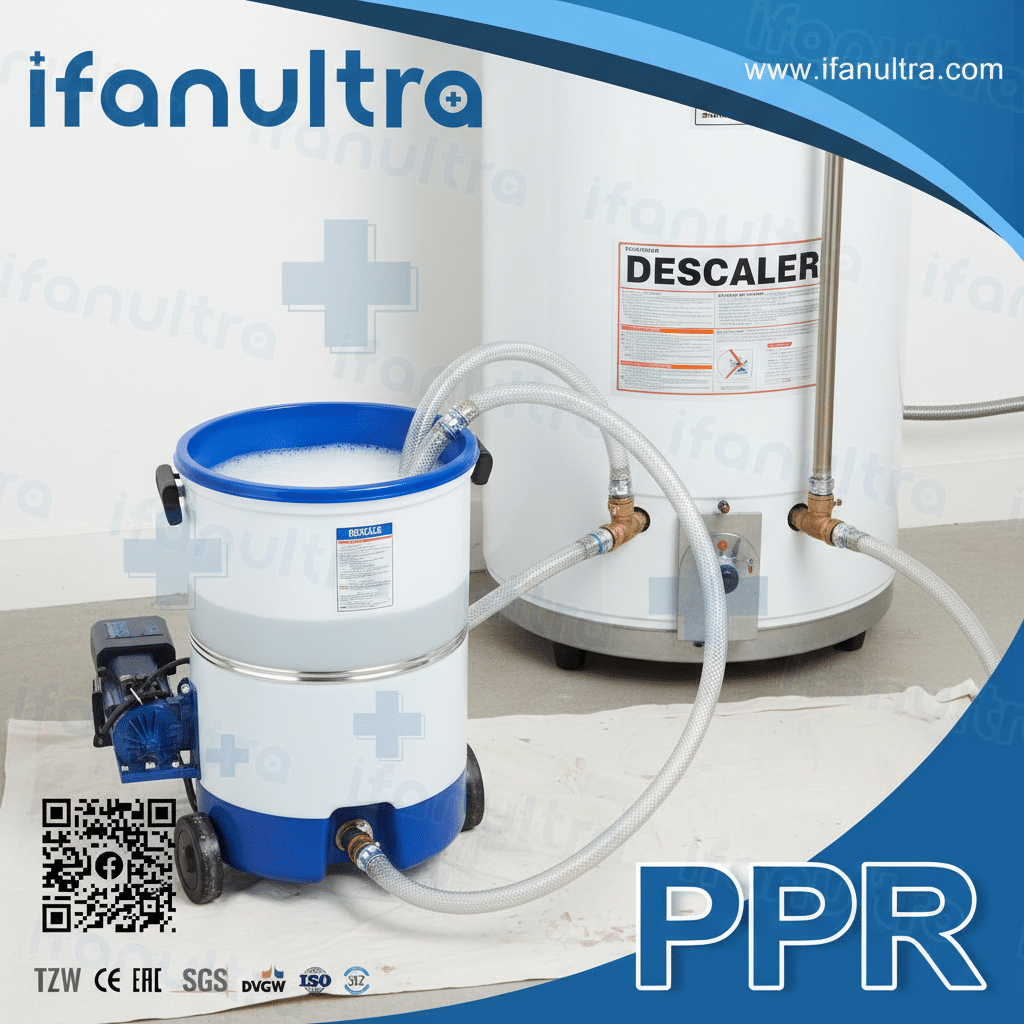
A circulating pump system helps by continuously moving the descaling solution through the entire pipe network. This ensures all interior surfaces contact fresh chemical, removes dissolved scale particles, and maintains even temperature for optimal chemical reaction. It turns a slow, partial cleaning into a fast, thorough one.
Why Circulation Beats Soaking
When you simply fill a pipe with descaler and let it sit, two problems occur:
- Stratification: The chemical near the scale gets used up. Fresh chemical cannot reach the surface because there is no movement.
- Gas Bubbles: The chemical reaction releases carbon dioxide bubbles. These bubbles stick to the scale surface and block further contact.
A circulating pump solves both problems. It keeps fresh chemical flowing over the scale and sweeps away gas bubbles and dissolved solids.
Setting Up a Circulation System
You do not need expensive equipment. A basic setup includes:
- A Pump: A small chemical-resistant pump, like a sump pump or a dedicated descaling pump.
- Containers: Buckets or tanks to hold the descaling solution.
- Hoses: Chemical-resistant hoses to connect the pump to the pipe system.
- Connections: You need to create a closed loop. Connect the pump outlet to one end of the pipe and return the other end to the solution tank.
The Circulation Process
- Isolate the Section: Close valves to isolate the pipes you want to clean.
- Drain the System: Remove standing water.
- Connect the Loop: Attach hoses to create a circuit from the tank, through the pump, into the pipes, and back to the tank.
- Fill and Start: Fill the tank with diluted descaling solution. Start the pump.
- Monitor and Maintain: Check the solution strength and temperature. For tough scale, you may need to refresh the chemical.
- Test for Completion: When the solution stops fizzing and scale samples show no reaction, cleaning is done.
- Flush Thoroughly: Drain the chemical and flush with clean water until the pH returns to neutral.
Benefits of Circulation
| Método | Coverage | Speed | Effectiveness on Thick Scale |
|---|---|---|---|
| Soaking (Static) | Incomplete, uneven | Slow | Poor |
| Circulating | Complete, even | Fast | Excelente |
For severe scale in long pipe runs, circulation is the only practical method. It saves time and chemical while delivering better results.
What Are the Mechanical Methods, Like Power Scraping, for Severe Scale Buildup?
Some scale is too thick for chemicals alone. I once dealt with a pipe where the opening had shrunk to the size of a pencil. Chemicals would have taken days. We brought in the mechanical tools.
Mechanical methods for severe scale include power scraping with flexible shafts and cutting heads, hydro-jetting with high-pressure water, and even pneumatic tools that hammer the scale loose. These methods physically break and remove hard, stubborn deposits that chemicals cannot dissolve quickly or completely.
Understanding Mechanical Descaling Options
When scale becomes rock-hard or has built up over decades, mechanical force is the answer. Here are the main methods professionals use:
1. Power Scraping (Mechanical Augering)
This uses a flexible metal cable with a cutting head. An electric motor spins the cable, and the head scrapes or chips away the scale as you push it through the pipe.
- Lo mejor para: Straight pipe runs or pipes with gentle bends. Works on steel, copper, and even plastic pipes if you use the right heads.
- Tools: Electric pipe cleaning machines with various heads (boring heads, scrapers, chain knockers).
- Pros: Very effective on thick, hard scale. Removes debris as you go.
- Contras: Can damage soft pipe materials if used aggressively. Requires access to the pipe ends.
2. Hydro-Jetting
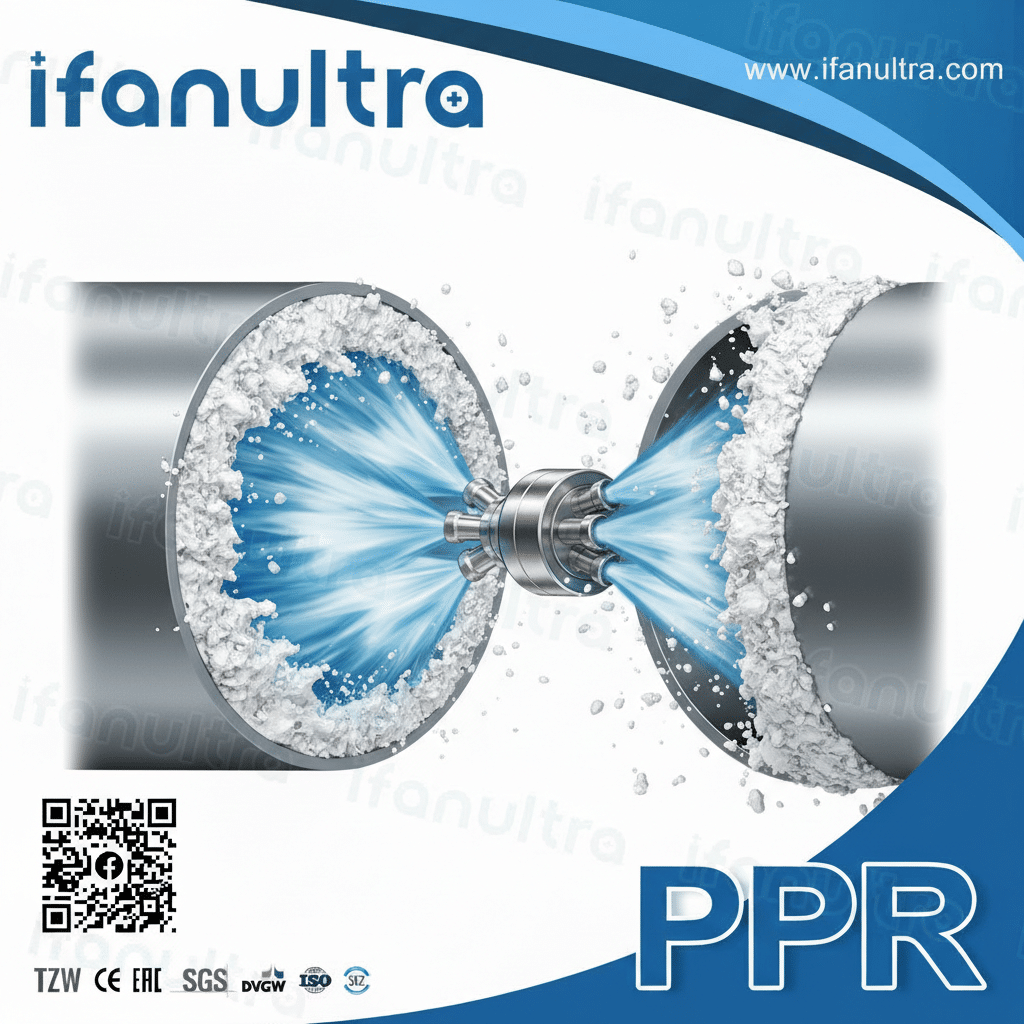
This uses a specialized nozzle that sprays water at extremely high pressure (up to 4000 PSI or more). The nozzle has jets pointing backward to propel itself forward and jets pointing sideways to blast scale off the walls.
- Lo mejor para: All pipe materials, including plastic, because water does not damage the pipe. Excellent for cleaning the full circumference evenly.
- Tools: Hydro-jetter with appropriate nozzles for descaling.
- Pros: Non-abrasive, flushes debris away as it cleans, reaches bends well.
- Contras: Requires powerful equipment. Less effective on extremely hard, brittle scale that needs chipping.
3. Pneumatic or Hydraulic Tools
For the toughest jobs, tools like “scale breakers” use air pressure to hammer a tool through the pipe, cracking the scale.
- Lo mejor para: Large diameter pipes, industrial applications.
- Tools: Pneumatic hammers with specially designed bits.
- Pros: Breaks the hardest scale.
- Contras: Expensive, risky for pipe damage, usually a last resort.
Comparing Mechanical Methods
| Método | How It Works | Best Application | Risk to Pipe |
|---|---|---|---|
| Power Scraping | Rotating cable with cutting head | Thick scale in straight or gently curved pipes | Medium (can scratch or gouge) |
| Hydro-Jetting | High-pressure water jets | General descaling, all pipe types | Low (water only) |
| Pneumatic Hammering | Impact tools break scale | Extreme scale in industrial pipes | High (requires skill) |
Step-by-Step Mechanical Cleaning
- Inspect First: Use a camera if possible to see the scale type and thickness.
- Choose the Method: Match the tool to the pipe material and scale severity.
- Prepare Access: Open cleanouts or remove fixtures to access the pipe.
- Clean Systematically: Work from one end, pushing the tool through slowly. Repeat passes as needed.
- Flush Debris: After mechanical cleaning, flush the pipe with water to remove loose particles.
- Verify Results: Inspect again with a camera or check flow rates.
How Can You Prevent Rapid Re-Scaling After a Cleaning Procedure?
Cleaning feels great, but scale comes back fast if you do nothing. A client once called me six months after a cleaning, frustrated that his pressure had dropped again. We had forgotten the prevention step.
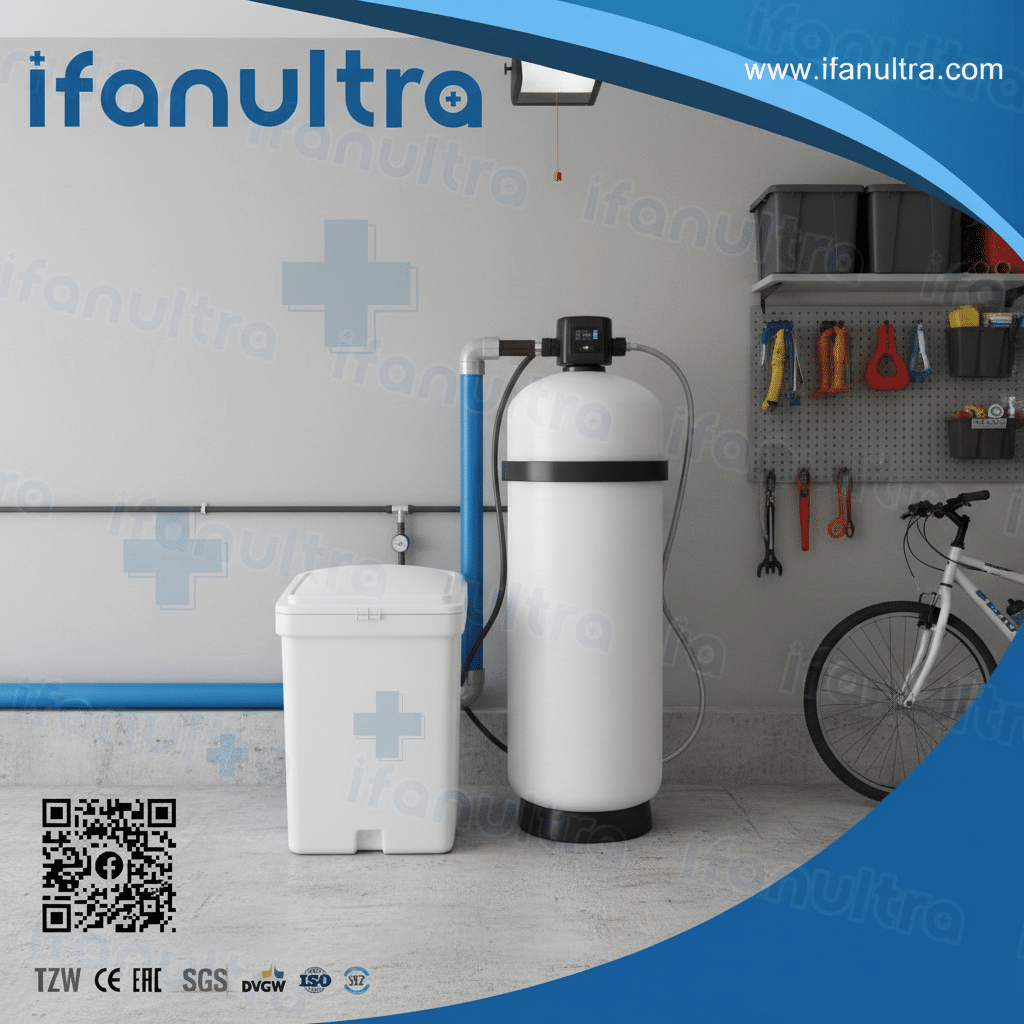
You prevent rapid re-scaling by addressing the root cause: hard water. Install a water softener to remove calcium and magnesium before they enter your pipes. For systems where softeners are not possible, use chemical inhibitors that coat pipe surfaces and prevent crystal formation. Regular maintenance flushing also helps.
Understanding Why Scale Returns
Scale forms when dissolved minerals in water come out of solution. This happens when:
- Water heats up (hot water lines scale faster).
- Water pressure changes.
- Water sits still for long periods.
After cleaning, the pipe surface is fresh and clean. Unfortunately, this means crystals have a perfect surface to grab onto again. Without intervention, scale will reform quickly.
Prevention Methods That Work
1. Water Softeners
This is the most effective solution for homes and buildings. A water softener uses ion exchange resin to swap calcium and magnesium ions for sodium ions. The result is “soft” water that does not form scale.
- How It Works: Hard water passes through resin beads. The beads grab calcium and magnesium and release sodium.
- Maintenance: You need to periodically recharge the resin with salt.
- Effectiveness: Near 100% prevention of new scale.
2. Chemical Inhibitors
For systems where a whole-house softener is impractical, you can inject chemicals into the water.
- Polyphosphates: These chemicals coat scale crystals and prevent them from sticking to pipe walls. They are often used in commercial buildings.
- Silicates: These form a thin protective layer on pipe interiors that scale cannot attach to.
- Application: You need a chemical feed pump and a tank of inhibitor solution.
3. Magnetic and Electronic Descalers
These devices claim to change the behavior of minerals using magnetic fields or electric currents.
- Claim: They make crystals form in the water instead of sticking to pipes.
- Reality: Results are mixed. Some users report success; others see no difference. These are not a replacement for proven methods but can help in some cases.
4. Regular Maintenance Flushing
Even with prevention, some minerals will still pass through. A simple maintenance plan helps:
- Monthly Flush: Run hot water at full flow for a few minutes to scour pipes.
- Annual Descaling: For high-hardness areas, perform a light chemical descaling once a year to catch any early buildup.
Prevention Method Comparison
| Método | Initial Cost | Ongoing Cost | Effectiveness | Best For |
|---|---|---|---|---|
| Water Softener | Medium-High | Medium (salt) | Excelente | Homes, whole buildings |
| Chemical Inhibitors | Medio | Low (chemicals) | Bien | Commercial systems |
| Magnetic Devices | Bajo | None | Variable | Budget-conscious users |
| Regular Flushing | None | Bajo | Fair | All systems as supplement |
Practical Advice from Experience
From working with countless clients, I have learned that the best prevention combines methods. Install a water softener for the main supply. Add a maintenance schedule for annual inspection and light cleaning. For existing PP-R systems, the smooth interior already resists scale better than metal, but prevention still matters.
Conclusión
Removing scale requires matching the method to your pipe material and scale severity. For long-term protection against buildup, choose IFAN’s PP-R pipes with their naturally smooth, scale-resistant interiors and complete compatibility with all descaling methods.









 English
 Español
 Français
 Português do Brasil