
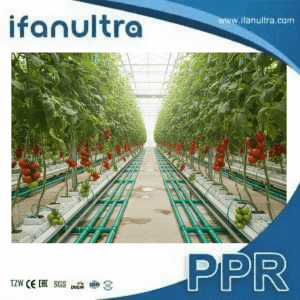
We once helped a tomato farm replace their failing PVC pipes. The crop yield improvement was dramatic, and it showed me why the right pipe material is a foundational investment for any hydroponic operation.
PP-R is preferred in hydroponic systems because it is chemically inert, preventing toxin leaching into nutrient solutions; highly resistant to fertilizers and acids; has a smooth interior that discourages harmful biofilm; and offers long-term durability and cost-effectiveness, making it ideal for the demanding environment of modern agriculture.
Given the high stakes of crop health, let’s examine why more growers are switching to PP-R for their critical irrigation lines.
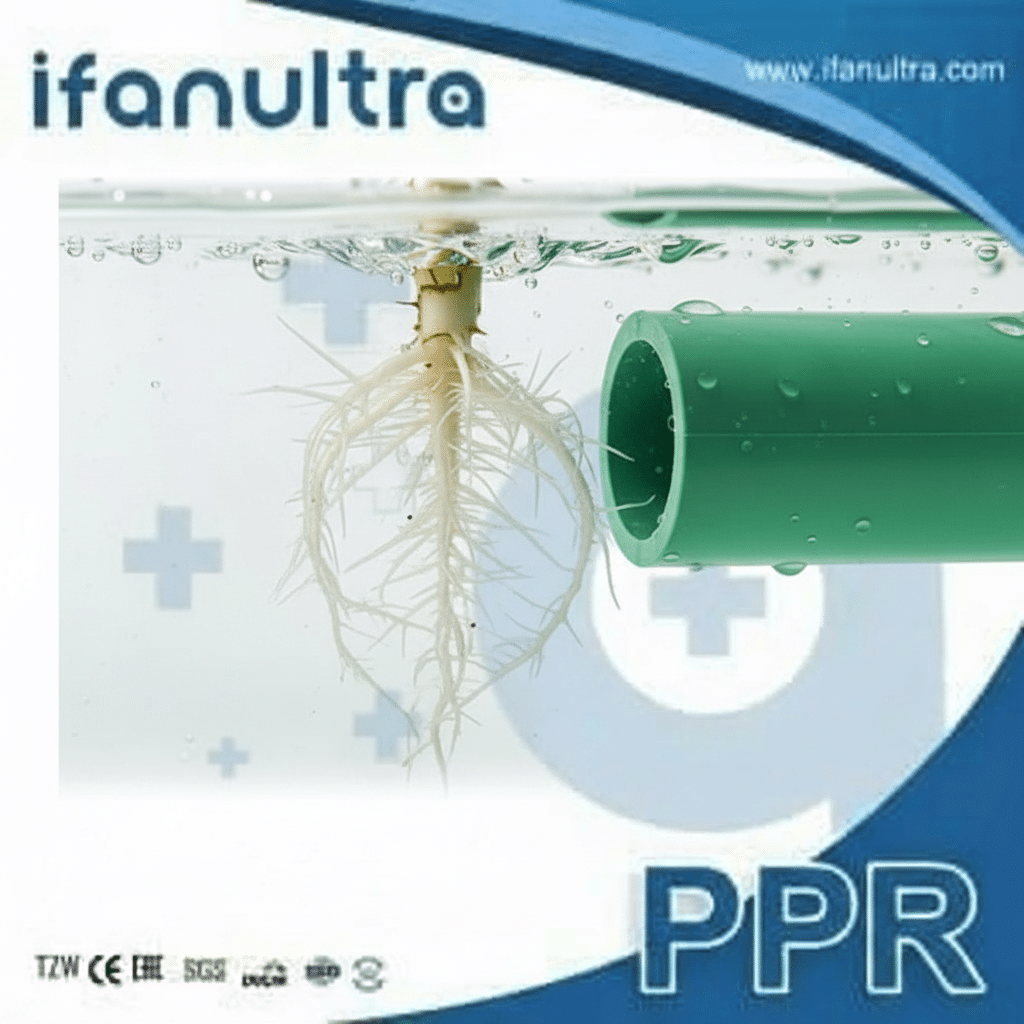
How Does PP-R Ensure No Leaching of Toxins into Nutrient Solutions?
Crop failure from contaminated water is a farmer’s worst fear. I’ve seen metal ions from unsuitable pipes accumulate and stunt plant growth.
PP-R ensures no leaching because it is made from a stable, food-grade polypropylene copolymer. This inert material does not react with or dissolve into nutrient solutions, and it contains no plasticizers, heavy metals, or stabilizers that can wash out over time and poison the delicate root zone of plants.
The Critical Need for Material Purity
In hydroponics, the nutrient solution is the plant’s direct food source. Any contamination from the delivery system directly affects plant health and food safety. Unlike some plastics, PP-R is inherently non-toxic.
The polymer structure of PP-R is very stable. This means the molecules that make up the pipe do not easily break free. Many other plastics use chemical additives to make them flexible or UV-resistant. These additives can gradually seep, or “leach,” into the water flowing through them. PP-R for plumbing does not require these kinds of additives. Therefore, the solution stays pure, containing only the nutrients the grower intentionally adds.
Certification and Safety Standards
Trustworthy PP-R pipes come with certifications that prove their safety for potable water, which is an even higher standard than for agriculture. These include:
- NSF/ANSI 51 & 61: Certification for food equipment and drinking water system components, ensuring no harmful chemical contamination.
- FDA Compliance: Assurance that the material is safe for contact with food.
- REACH (EU): Regulation ensuring no use of hazardous substances.
When you see these marks on PP-R pipes, you can be confident they will not introduce toxins like lead, cadmium, or BPA into your nutrient reservoir.
Comparing Pipe Material Leaching Risks
| Pipe Material | Risk of Leaching | Common Contaminants |
|---|---|---|
| PP-R | Extremely Low | None. Inert and food-grade. |
| PVC (Flexible) | Moderate | Phthalates (plasticizers) used to make it flexible. |
| Recycled Plastic | Alta | Unknown chemical mix from previous uses. |
| Metal (Copper) | Moderate to High | Copper ions, which can be toxic to plants in high concentration. |
Using PP-R eliminates this variable, giving growers complete control over the nutrient profile. This purity is the first and most important reason for its preference in professional hydroponic setups.
Why is Its Resistance to Fertilizers and Mild Acids Crucial for Hydroponics?
Hydroponic nutrient solutions are chemically active. A pipe that degrades can ruin an entire crop cycle.
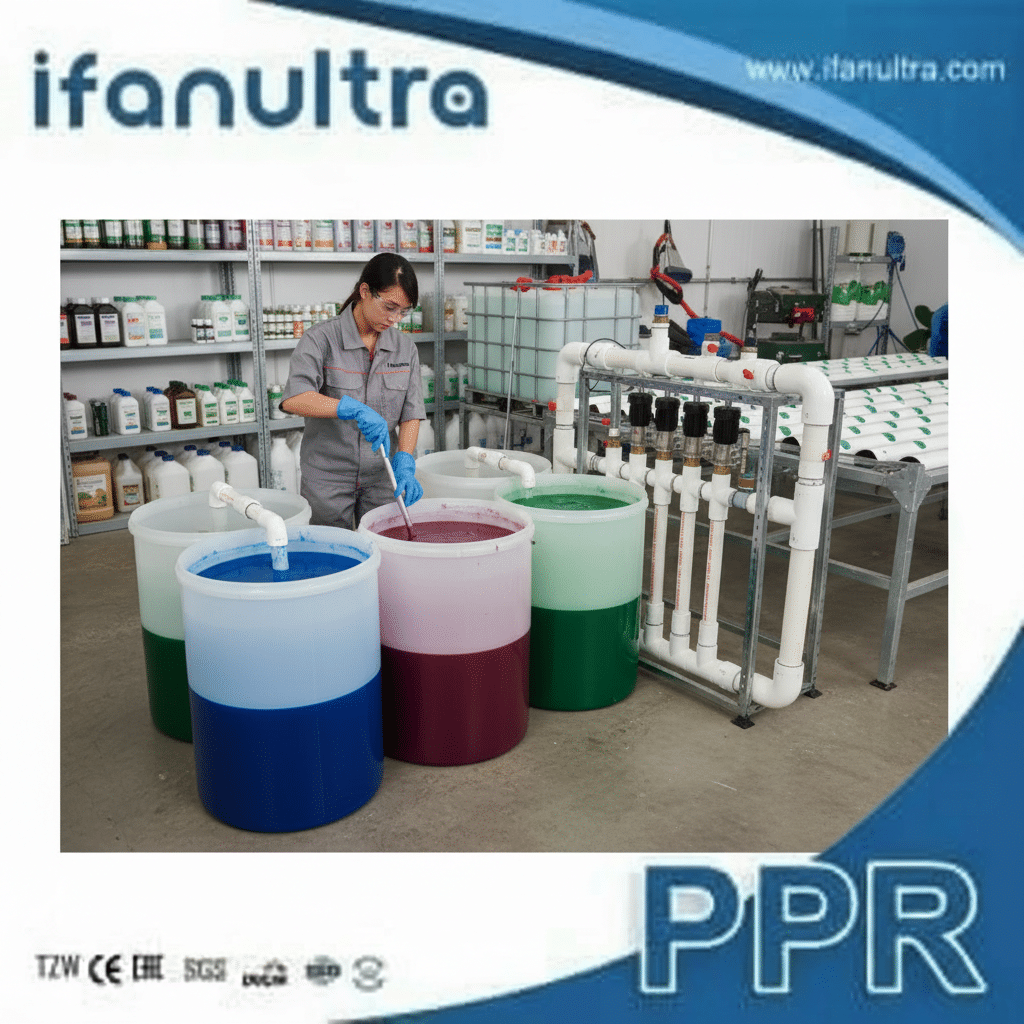
This resistance is crucial because hydroponic nutrient solutions are mild acids containing dissolved salts and chemicals that can corrode or degrade many plastics. PP-R’s chemical inertia ensures the pipe wall does not break down, swell, or become brittle, maintaining system integrity and preventing leaks or blockages for many years.
Understanding the Chemical Challenge
A typical hydroponic nutrient solution has a slightly acidic pH (usually between 5.5 and 6.5) to keep nutrients available to plants. It contains salts like potassium nitrate, calcium nitrate, and magnesium sulfate. Over time, these chemicals can attack the inner wall of pipes.
Some plastics, like standard PVC or polyethylene, can become brittle or soft when exposed to certain fertilizers. This degradation leads to two major problems:
- Micro-cracks and Leaks: The pipe material weakens and can develop small cracks, causing leaks that waste water and nutrients.
- Contamination: As the pipe degrades, it can add its own breakdown products to the water, altering the solution’s chemistry.
PP-R’s Proven Chemical Inertia
PP-R is renowned for its broad chemical resistance. It is non-polar, meaning it does not readily interact with ionic compounds like the salts in fertilizers. Laboratory tests and decades of field use show that PP-R maintains its structural integrity when exposed to common agricultural chemicals.
This resistance is vital for:
- System Longevity: The pipes won’t need replacement every few seasons.
- Consistent Flow: The internal diameter remains constant, ensuring even water and nutrient delivery to every plant.
- Cleaning and Sterilization: Growers can safely use mild acids (like citric acid) or disinfectants (like hydrogen peroxide) to clean the system between cycles without damaging the pipes.
Chemical Compatibility Guide for Common Hydroponic Inputs
| Chemical Agent | Effect on PP-R | Recommendation |
|---|---|---|
| Nitric Acid (Diluted, for pH Down) | Excellent Resistance | Safe for regular use. |
| Phosphoric Acid (Diluted, for pH Down) | Excellent Resistance | Safe for regular use. |
| Hydrogen Peroxide (H2O2, for sterilization) | Good to Excellent Resistance | Safe at standard dilution rates. |
| Chlorine (for sanitation) | Good Resistance | Safe at low concentrations; flush after use. |
| Seaweed/Fulvic Acid Additives | Excellent Resistance | No expected interaction. |
This resilience makes PP-R a “set-and-forget” component, allowing growers to focus on plant health, not plumbing problems.
How Does the Smooth Interior Prevent Biofilm and Algae Buildup?
Algae clogs and biofilms are constant battles in hydroponics. Slime in the pipes is a sign your system is at risk.
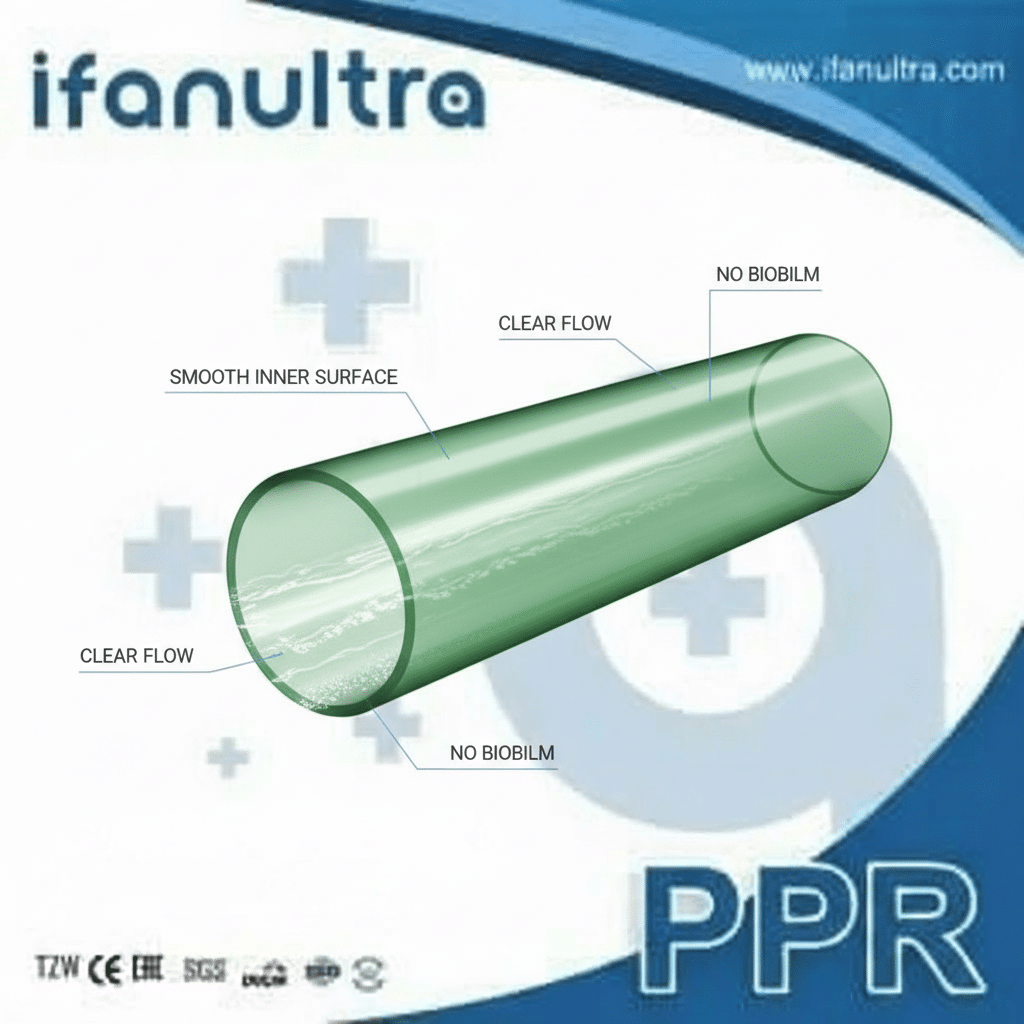
The smooth interior prevents buildup by offering no rough edges or pores for algae spores or bacteria to anchor to. This minimizes the initial attachment, and the inert surface does not provide organic nutrients for growth. Combined with light-blocking properties, it creates an environment where biofilm struggles to establish, keeping irrigation lines clear.
The Problem of Biofilm in Irrigation Lines
Biofilm is a slimy layer of microorganisms that sticks to wet surfaces. In hydroponics, it can contain bacteria, fungi, and algae. This buildup is a major problem because:
- It Clogs Emitters and Drippers: Reducing or blocking water flow to plants.
- It Harbors Pathogens: Like Pythium (root rot), which can spread through the entire system.
- It Competes for Nutrients: Robbing your plants of essential food.
The PP-R Advantage: Surface Smoothness and Inertness
The inside of a PP-R pipe is exceptionally smooth at a microscopic level. Imagine two surfaces: one like sandpaper, the other like glass. Algae and bacteria find it much easier to stick to the rough sandpaper. PP-R is like glass.
Furthermore, because PP-R is inert and does not leach plasticizers, it does not provide any food source for microorganisms. Some plastics slowly release compounds that bacteria can feed on, encouraging biofilm formation right on the pipe wall. PP-R does not do this.
PP-R vs. Other Materials: A Biofilm Comparison
| Pipe Material | Interior Surface | Light Transmission | Biofilm Risk |
|---|---|---|---|
| PP-R (Opaque) | Very Smooth | Blocks 100% of Light | Very Low |
| PVC (White) | Moderately Smooth | Blocks Most Light | Low to Moderate |
| Polyethylene | Can Be Slightly Porous | Often Translucent | Alta |
| Transparent Tubing | Smooth | Transmits 100% of Light | Very High |
A Critical Feature: Light Blocking
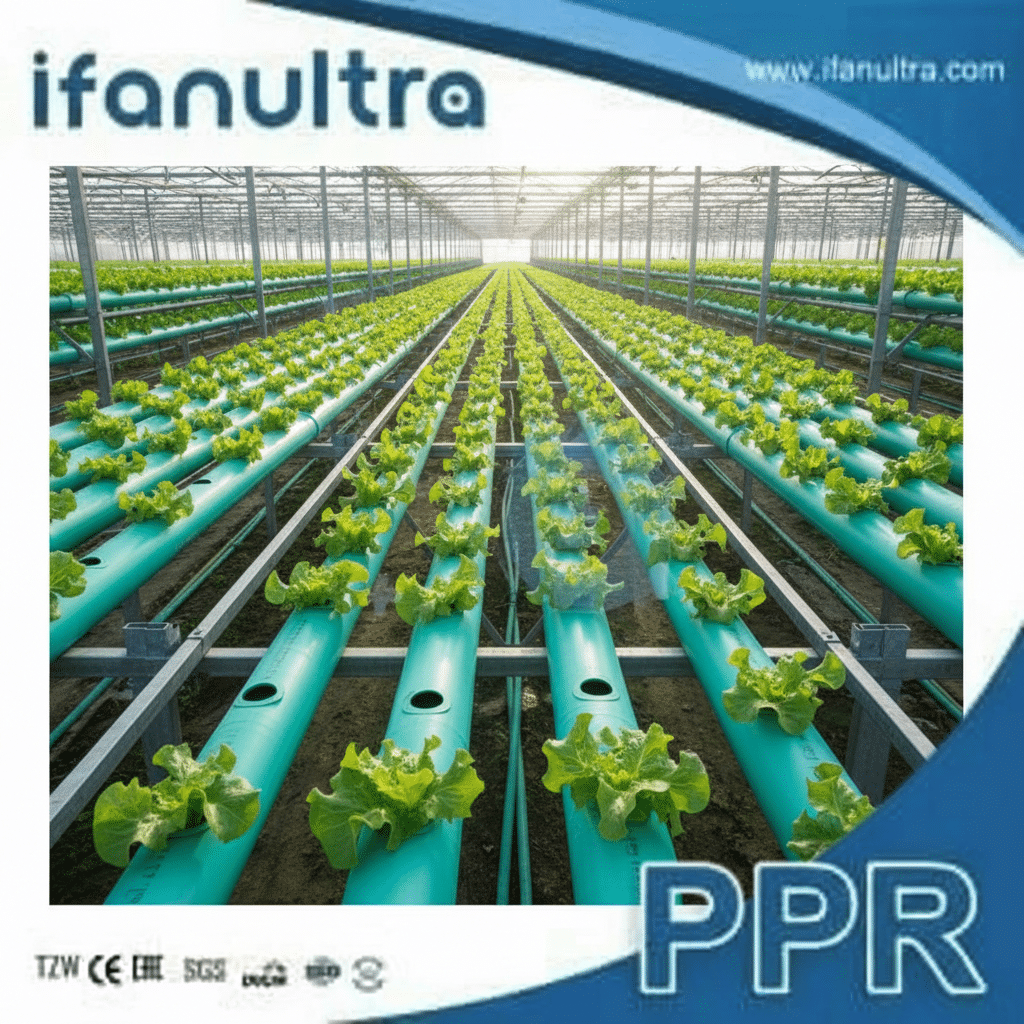
Many PP-R pipes are opaque and colored (often green or white). This is a crucial feature. Algae needs light to grow. By completely blocking light, opaque PP-R pipes eliminate the energy source for algae anywhere in the main irrigation lines. This is a simple but extremely effective preventative measure.
While no system can be 100% biofilm-free without sanitation, PP-R’s combination of smoothness, inertness, and light-blocking design makes it the easiest material to keep clean, reducing the frequency and intensity of necessary system flushes and chemical cleanings.
What Makes PP-R a Cost-Effective and Durable Choice for Greenhouse Layouts?
Greenhouse investments are long-term. Choosing cheap pipes that fail in 3 years is a false economy that disrupts production.
PP-R is cost-effective and durable because its initial cost is competitive, its fusion-welded joints are leak-proof for decades, and it requires almost no maintenance. It withstands UV exposure in greenhouses, handles temperature swings, and its long lifespan ensures the plumbing system outlasts multiple crop cycles without failure or costly replacement.
Evaluating Total Cost of Ownership
The true cost of a greenhouse plumbing system isn’t just the price of the pipes. It’s the total cost over 10 or 20 years, including installation, maintenance, repairs, and replacement.
1. Installation Cost and Speed: PP-R systems install quickly with socket fusion welding. The joints are simple, clean, and require no glues or solvents that can be toxic to plants. This speed reduces labor costs. The ability to pre-fabricate racks of piping off-site further speeds up large greenhouse projects.
2. Zero-Maintenance Durability: Once installed, a PP-R system doesn’t need tightening, doesn’t corrode, and resists scaling. You won’t have a team constantly fixing leaks or replacing rusted sections. This reliability protects your crops from water stress due to irrigation failure.
3. Longevity and UV Stability: High-quality PP-R is compounded with carbon black or other UV stabilizers. This allows it to withstand years of direct greenhouse sunlight without becoming brittle—a common failure point for unstabilized plastics.
Durability in the Greenhouse Environment
Greenhouses present a tough environment: constant humidity, chemical vapors from fertilizers, and temperature fluctuations from day to night. PP-R is uniquely suited for this:
- Thermal Stability: It handles the temperature of typical nutrient solutions (often around 20°C/68°F) and ambient greenhouse heat without deforming.
- Pressure Handling: It easily withstands the low pressures used in hydroponic drip or NFT systems.
- Impact Resistance: It is less brittle than PVC at colder temperatures, reducing breakage risk during installation or accidental impact.
Total Cost Comparison Over 10 Years
| Cost Factor | PP-R System | Standard PVC System | Flexible Hose System |
|---|---|---|---|
| Initial Material & Install | $$ (Moderate) | $ (Lower) | $ (Lowest) |
| Annual Maintenance/Repairs | Very Low ($) | Moderate ($$) | High ($$$) |
| Risk of Major Failure/Replacement | Very Low | Moderate (UV Brittleness) | High (Clogs, Kinks) |
| Estimated Total 10-Year Cost | $$ | $$$ | $$$$ |
The table shows that while PP-R may have a slightly higher initial cost than some alternatives, its lack of maintenance and extremely long life make it the most economical choice for a serious, permanent greenhouse operation. It transforms plumbing from a recurring problem into a permanent asset.
Conclusión
PP-R provides the safe, chemically resistant, and durable foundation that modern hydroponic systems require. For a reliable supply, choose IFAN’s hydroponic-grade PP-R pipes and fittings for your next greenhouse project.









 English
 Español
 Français
 Português do Brasil