
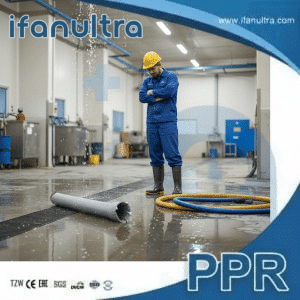
I once saw a burst PVC pipe in a factory washdown area. The problem was simple: someone used it for hot water. This common mistake highlights why knowing the temperature limits of your materials is crucial.
The maximum operating temperature for standard PVC (uPVC) fittings is typically 140°F (60°C) for continuous service. Exposing standard PVC to temperatures beyond this limit significantly weakens the material, increases the risk of sudden failure, and is not recommended for pressurized hot water distribution systems.
However, this number is not a simple on/off switch. To use PVC safely and effectively, you need to understand what happens as the temperature rises and what your alternatives are.
What is the Typical Continuous Service Temperature Limit for Schedule 40/80 PVC?
Many installers see the sturdy walls of Schedule 80 PVC and assume it can handle more heat. This is a dangerous assumption that leads to system failures.
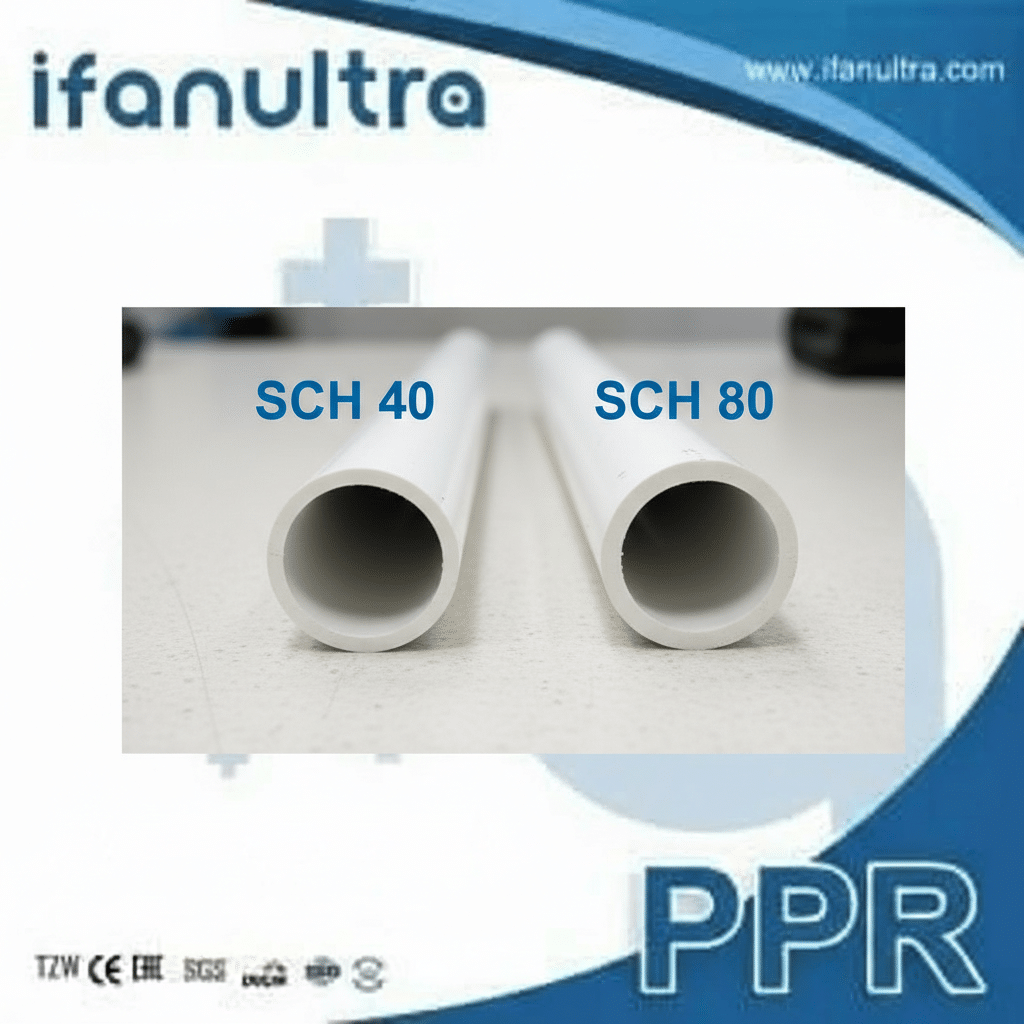
Both Schedule 40 and Schedule 80 PVC share the same typical continuous service temperature limit of 140°F (60°C). The “schedule” refers to the wall thickness and pressure rating, not the temperature resistance. Thicker Schedule 80 pipe handles higher pressure at a given temperature, but its maximum temperature ceiling remains the same as Schedule 40.
Understanding the Rating: A Safety Ceiling
The 140°F (60°C) rating is a critical safety guideline set by industry standards like ASTM D1784. Think of it as the highest safe, long-term operating temperature. You can compare it to the redline on your car’s tachometer. You can occasionally approach it, but running continuously at or above it will cause damage.
It’s important to distinguish between continuous y intermittent exposure. A system might see occasional spikes to 150°F (66°C) for short durations without immediate failure. However, designing a system to continuously operate at or above 140°F is asking for trouble. The material’s strength drops, and its lifespan shortens dramatically.
Why Pressure and Temperature Are Linked
Pressure rating and temperature rating are directly connected for thermoplastics like PVC. As temperature increases, the material softens and its pressure-bearing capacity plummets. A fitting rated for 150 PSI at 73°F (23°C) may only be safe for 50 PSI or less at 140°F.
The table below shows how temperature critically affects the pressure capacity of a typical Schedule 80 PVC system:
| Temperatura del agua | Maximum Suggested Operating Pressure (Approx.) | Effect on Material |
|---|---|---|
| 73°F (23°C) | 150 PSI (as rated) | Full design strength. |
| 100°F (38°C) | ~100 PSI | Strength reduced by about 30%. |
| 140°F (60°C) | ~50 PSI | Strength reduced by about 60-70%. At maximum limit. |
| 160°F (71°C) | NOT RECOMMENDED | Material begins to soften; risk of sudden failure. |
So, while Schedule 80 is stronger than Schedule 40 at room temperature, both hit the same thermal wall at 140°F. Choosing a thicker schedule does not buy you a higher temperature rating.
How Does High Temperature Affect PVC’s Strength and Risk of Failure?
Heat doesn’t just make PVC weak; it changes its very nature, turning a rigid pipe into a potential hazard.
High temperature permanently weakens PVC by breaking down the polymer chains and promoting creep (slow deformation under stress). This leads to a severe drop in tensile strength and pressure rating, dramatically increasing the risk of two types of failure: gradual sagging/distortion or sudden, violent rupture under pressure.
The Science of Softening and Creep
PVC is a thermoplastic. This means it gets softer when heated. Unlike metals, which can handle high heat well, PVC’s molecular structure starts to relax. Two key processes happen:
- Loss of Tensile Strength: The material’s ability to resist stretching or pulling apart decreases. At 140°F, PVC has already lost about two-thirds of its room-temperature strength. This means a normal water pressure surge at a high temperature can cause a rupture that would be harmless at a cooler temperature.
- Creep: This is the slow, continuous deformation of a material under constant stress (like water pressure). At high temperatures, creep accelerates. A hot PVC pipe under pressure can slowly begin to sag, bulge, or distort at fittings over time, even if the pressure never changes. This deformation itself creates weak points.
Common Modes of High-Temperature Failure
You won’t always see a failure coming. Here’s what typically happens:
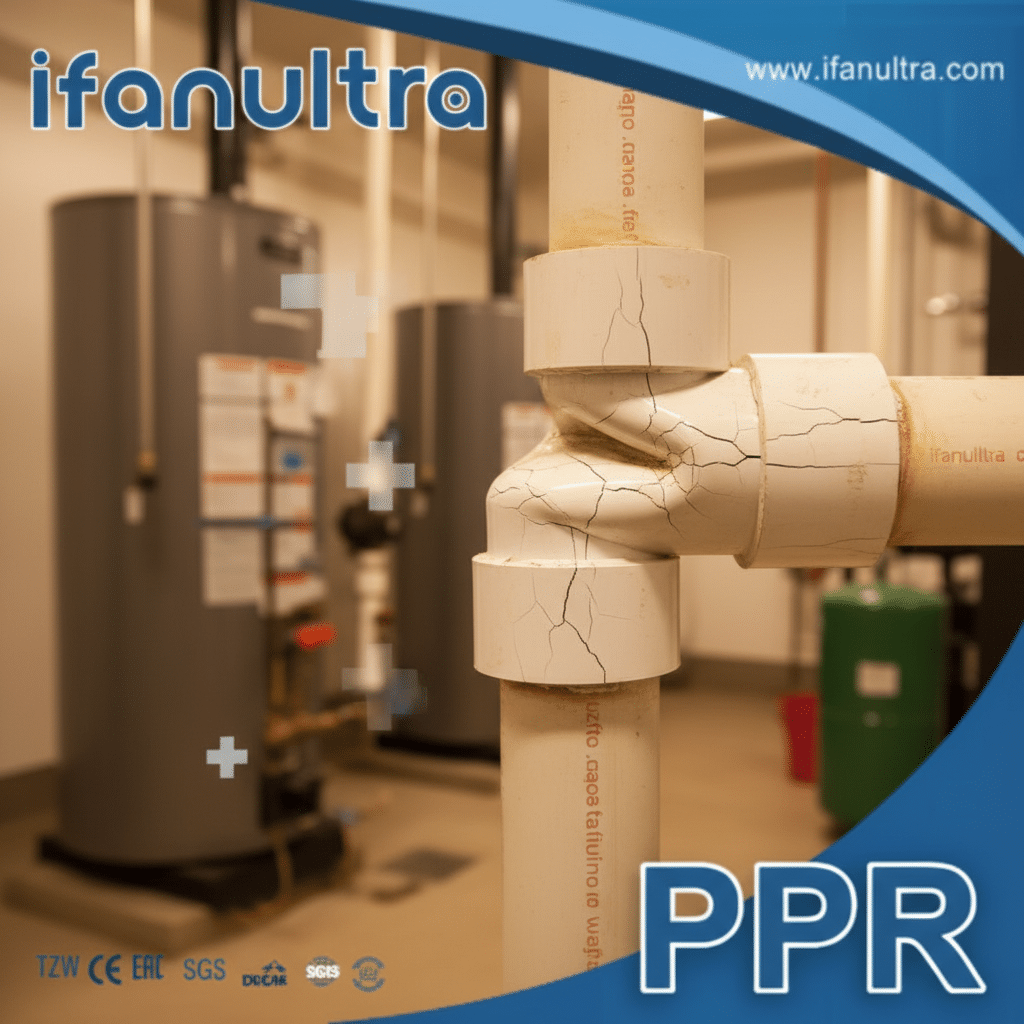
- Sudden Brittle Fracture: This is the most dangerous. Stressed, heat-weakened PVC can crack violently without warning, spraying hot water and shrapnel. It often happens at thread points or glued joints, which are stress concentrators.
- Joint Failure: The solvent cement used for PVC joints can also be affected by heat. The glued bond can soften and fail before the pipe itself, leading to leaks at every connection.
- Sagging and Deformation: In non-pressure applications (like drain lines for hot fluids), pipes can sag between supports, breaking their slope and causing drainage issues.
The Role of Thermal Cycling
Repeated heating and cooling (thermal cycling) is especially harsh. It causes the PVC to expand and contract constantly. This fatigue can lead to cracks at support points or fittings long before a simple over-temperature event would. A pipe that carries 160°F water for an hour a day may fail faster than one at a constant 150°F.
Why is PVC Not Recommended for Hot Water Distribution Above a Certain Point?
People choose PVC for hot water because it’s cheap and easy to install. This is a classic case of a good material being used in the wrong job, leading to costly repairs and safety risks.
PVC is not recommended for hot water distribution above 140°F (60°C) because its structural integrity declines rapidly, creating an unacceptable risk of rupture. Additionally, building codes and plumbing standards explicitly prohibit its use for pressurized hot water distribution within buildings due to this safety hazard.
Code Restrictions and Safety Standards
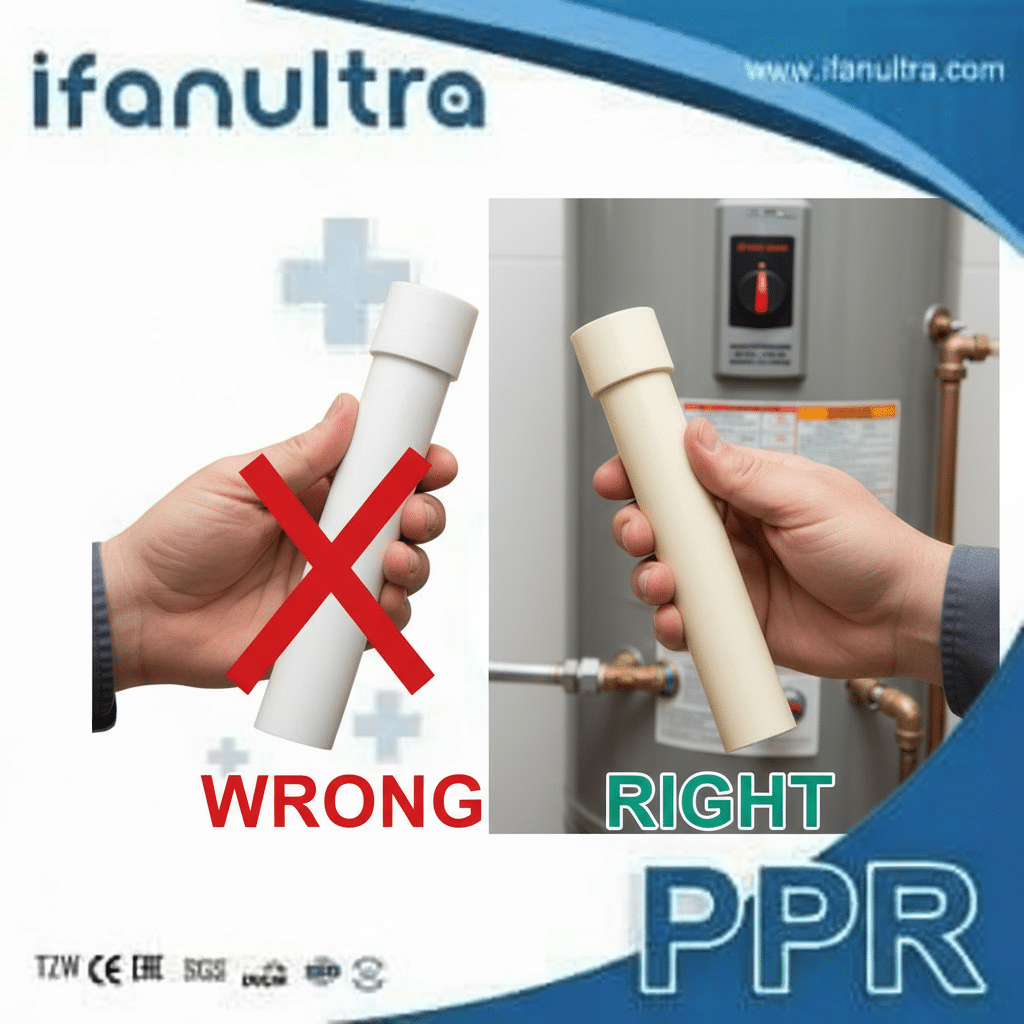
This isn’t just a manufacturer’s suggestion; it’s a rule. Major plumbing codes, such as the International Plumbing Code (IPC) and UPC, strictly limit or outright ban the use of standard PVC for potable hot water distribution inside a structure. These codes allow PVC for cold water and drainage, but specify other materials like CPVC, copper, or PEX for hot water lines.
The reason is liability and proven risk. Code committees have decades of data showing PVC’s failure mode in hot water applications is unpredictable and dangerous. A pipe that fails with cold water causes a flood. A pipe that fails with 160°F water causes a flood y severe scalding injuries.
The Practical Risks in a System
Even if a system seems to work initially, the risks accumulate:
- Unpredictable Pressure Spikes: Water hammer or pump surges are common. A heat-weakened PVC pipe is far more likely to burst during such an event.
- Hot Water Heater Defaults: Many residential water heaters have a default setting of 140°F, right at PVC’s absolute limit. If the thermostat malfunctions or is turned up, the temperature can easily exceed the limit.
- Lack of Safety Margin: Good engineering always includes a safety factor. Operating PVC at its maximum rated temperature leaves zero margin for error. Any unexpected condition leads directly to failure.
For these reasons, using standard PVC for any pressurized hot water line is considered poor practice and is against code in most jurisdictions. It substitutes short-term savings for long-term risk.
What Material Should You Use for Applications Beyond PVC’s Temperature Limit?
When your project involves hot water or high-temperature fluids, you must switch materials. The good news is there are excellent, cost-effective alternatives designed for this exact purpose.
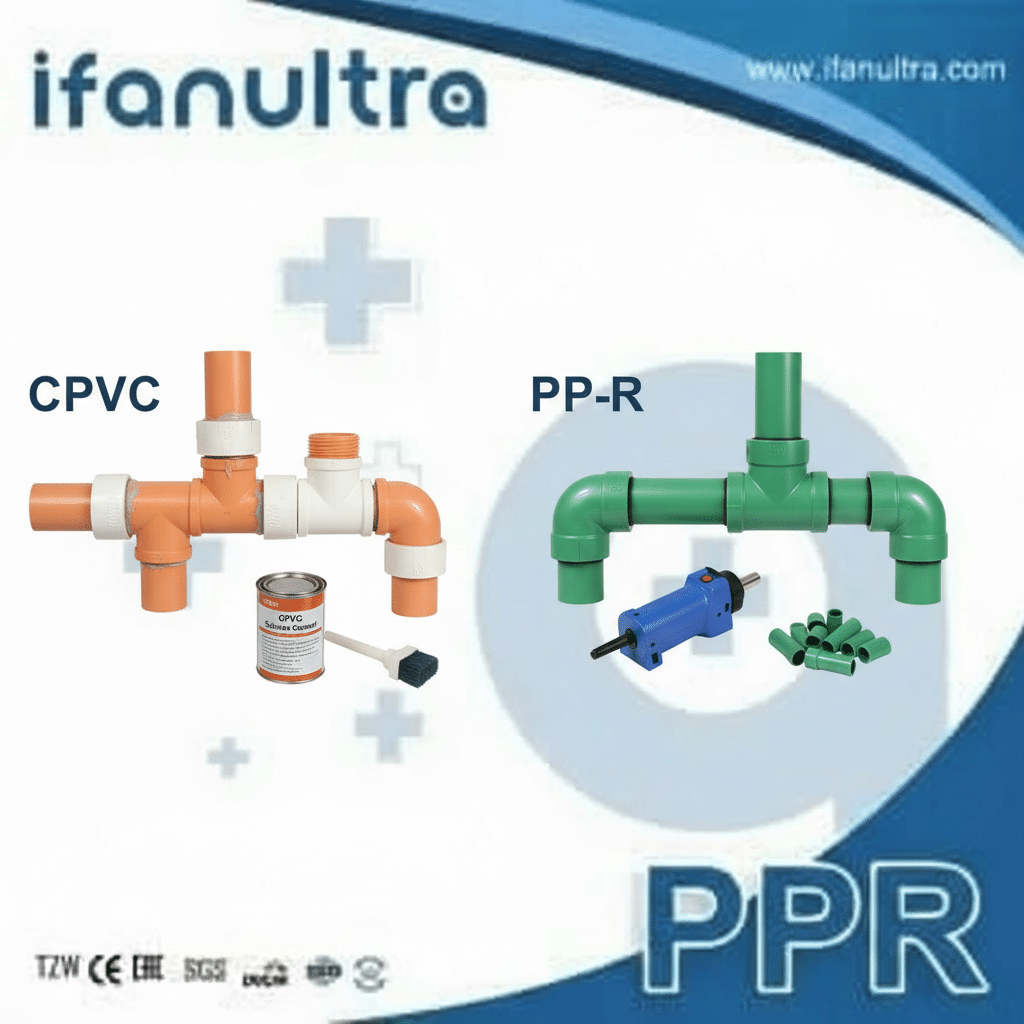
For applications beyond PVC’s 140°F limit, you should use CPVC (Chlorinated Polyvinyl Chloride) or PP-R (Polypropylene Random Copolymer). CPVC can handle temperatures up to 200°F (93°C) and is a direct upgrade for hot water systems. PP-R is another excellent option, with a continuous service temperature of up to 180°F (82°C) and superior performance in hot/cold cycling.
Direct Comparison: CPVC vs. PP-R for Hot Water
Both materials solve the heat problem, but in slightly different ways. Your choice depends on the specific application, local codes, and installation preferences.
| Característica | CPVC | PP-R |
|---|---|---|
| Max Continuous Temp | 200°F (93°C) | 180°F (82°C) |
| Primary Advantage | Higher temperature ceiling; familiar solvent-cement installation similar to PVC. | Superior resistance to scale and corrosion; heat-fused joints are leak-proof. |
| Pressure Rating at High Temp | Maintains good pressure rating near its max temp. | Maintains excellent pressure rating; very resilient. |
| Installation | Solvent welding (requires ventilation). | Socket fusion welding (clean, no fumes). |
| Best For | Domestic hot water lines, industrial hot process lines up to 200°F. | Residential/commercial hot & cold water, radiant heating, aggressive fluids. |
How to Choose the Right High-Temp Material
Follow this simple decision guide for your next project:
- For residential/commercial potable hot water (below 180°F): Both CPVC and PP-R are excellent. PP-R is often preferred for its fused joint reliability and corrosion resistance. CPVC is a great choice if installers are already familiar with solvent welding.
- For industrial process lines or high-temp fluids (up to 200°F): CPVC is the standard choice due to its higher temperature ceiling.
- For systems with aggressive water or chemicals: PP-R has superior chemical resistance across a wider range.
- For ease of installation and leak-proof confidence: PP-R’s fusion welding creates a monolithic system that is incredibly reliable.
Critical Installation Note
Switching materials isn’t just about buying different pipe. The joining methods are completely different and require specific tools and training. You cannot glue CPVC to PVC with standard cement, and you cannot fuse PP-R with solvent. Plan for the correct installation system from the start.
Conclusión
Standard PVC has a firm temperature limit of 140°F (60°C). For reliable, safe hot water systems, upgrade to IFAN’s high-quality CPVC or PP-R piping solutions, designed specifically for high-temperature performance.









 English
 Español
 Français
 Português do Brasil