
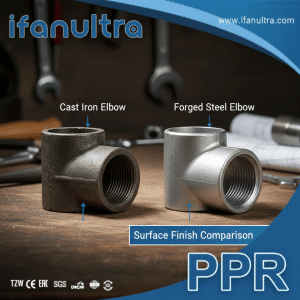
I once saw a project delayed because the wrong type of fitting failed under pressure. That moment taught me that knowing the difference between forged and cast isn’t just technical—it’s essential for project success.
The core difference lies in how they are made. Forged fittings are formed by hammering or pressing solid metal into shape, creating a dense, strong grain structure. Cast fittings are made by pouring molten metal into a mold, which is better for creating complex shapes but can introduce internal weaknesses. Forged fittings are stronger and used for high-pressure services, while cast fittings are more economical for standard or intricate shapes.
This choice impacts cost, strength, and safety. Let’s break down the details so you can always make the right selection.
How Does the Forging Process Create a Stronger, Denser Grain Structure?
Choosing a fitting based only on price can be a costly mistake. The forging process is why some fittings handle extreme stress without a second thought.
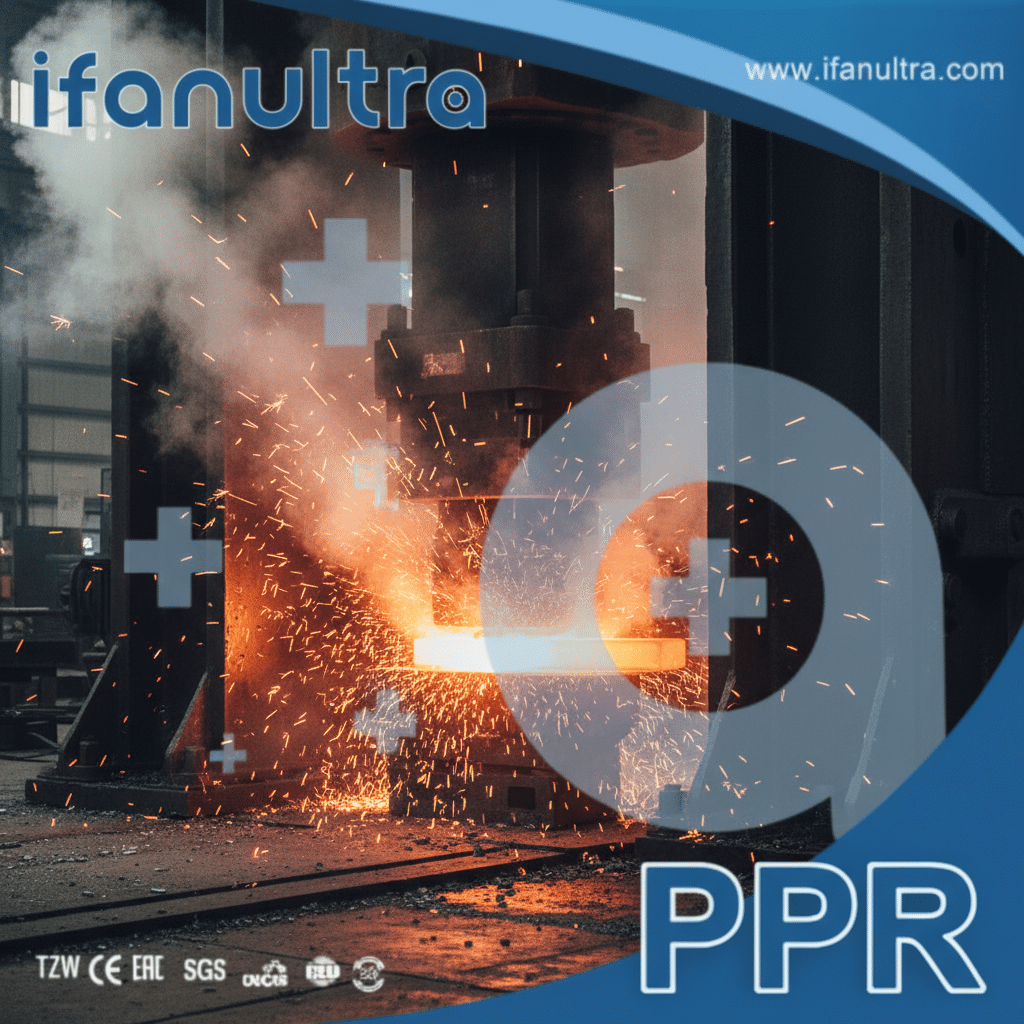
The forging process creates a stronger, denser grain structure by physically deforming and compressing solid metal under immense pressure at high temperatures. This action breaks up imperfections, closes empty spaces (porosity), and aligns the metal’s grain flow continuously with the shape of the fitting, resulting in superior mechanical strength and impact resistance.
The Science of Strength: Grain Flow
To understand forging, picture the metal’s internal structure like the grain in a piece of wood. In a raw metal block, this “grain” is random and can have weak spots.
The forging process takes this block and applies tremendous force—through a hammer or press—while it’s hot and malleable. This force does two critical things:
- It compresses the metal, squeezing out gaps and pores that exist in the original material. This makes the metal denser.
- It elongates and refines the grain structure, causing it to follow the contour of the fitting’s shape. It’s like smoothing and straightening the wood grain to follow the curve of a bow, making it naturally stronger along that line.
This continuous grain flow is the key. It creates a part with uniform strength throughout, with no weak planes where cracks can easily start.
Forging Methods and Their Results
There are two main types of forging, both enhancing strength:
- Open-Die Forging: The metal is compressed between flat or simple dies. This is great for large, simple shapes and creates excellent overall strength.
- Closed-Die Forging: The metal is forced into a die cavity that matches the final shape closely. This produces near-net-shape parts with very precise dimensions and the most favorable grain flow.
The result of these processes is a fitting with outstanding properties:
- Higher Strength-to-Weight Ratio: It can handle more load for its size.
- Greater Impact Toughness: It resists shock and sudden loads without cracking—a vital property in systems with pressure surges.
- Improved Fatigue Resistance: It withstands repeated stress cycles much better than a cast part.
Visualizing the Advantage
The table below summarizes how forging transforms the metal internally compared to its original state:
| Property | In Raw Metal / Casting | After Forging | Por qué es importante |
|---|---|---|---|
| Grain Structure | Random, coarse, or dendritic | Aligned, refined, continuous | Prefers crack propagation; uniform strength. |
| Density | May contain porosity (tiny holes) | Very high, porosity is eliminated | No internal leak paths; handles high pressure. |
| Mechanical Strength | Lower, anisotropic (varies by direction) | Higher, more isotropic (uniform in all directions) | Reliable performance under multi-directional stress. |
In short, forging doesn’t just shape metal; it transforms and improves its very structure, making it the go-to choice where failure is not an option.
Why Are Cast Fittings More Economical for Complex, Non-Standard Shapes?
While forging is king for strength, casting rules for complexity. I recommend casting when the design is intricate and the pressure is moderate.
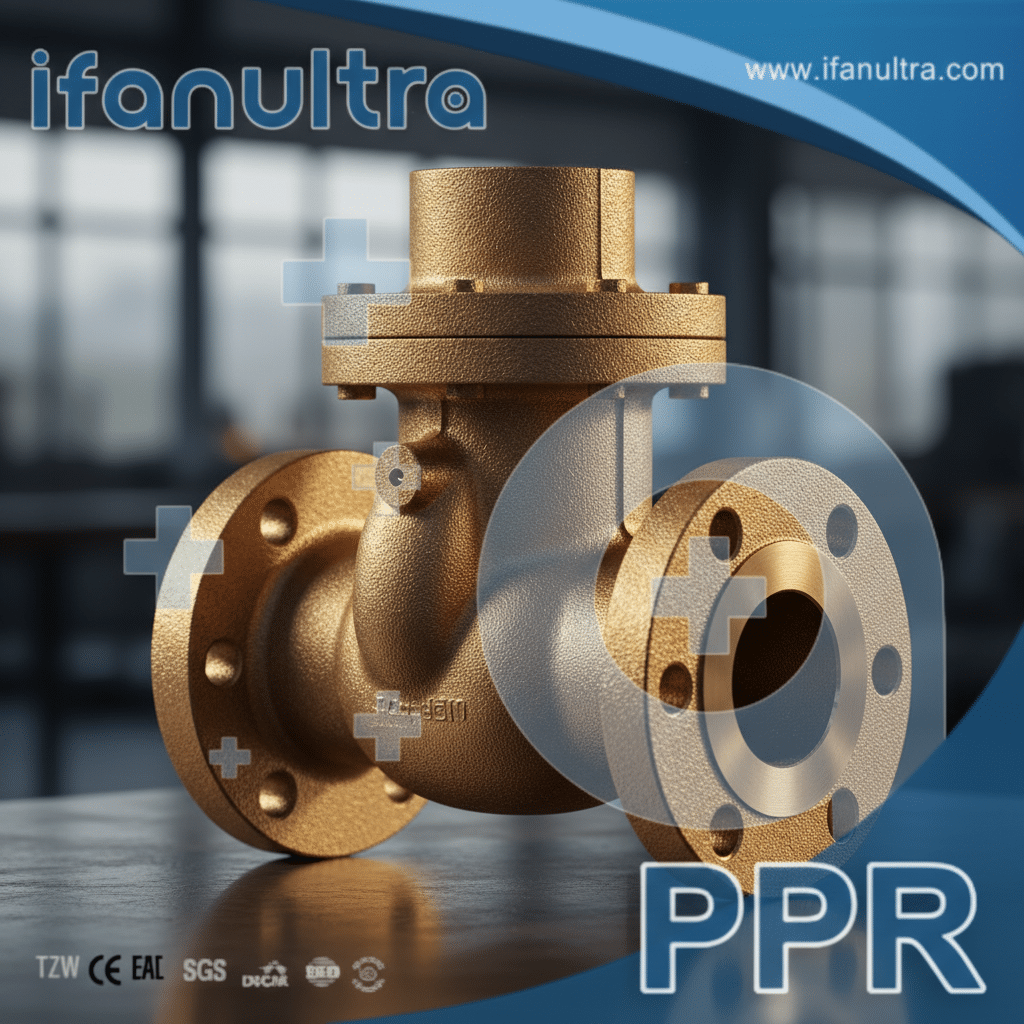
Cast fittings are more economical for complex shapes because the molten metal flows easily into intricate mold cavities, capturing detailed geometries in a single step. This eliminates the multiple, costly machining or forging steps needed to create the same shape from solid metal, making it ideal for large, ornate, or non-standard fittings.
The Economics of Liquid Metal
The principle is simple: it’s easier to pour a liquid into a complex mold than to carve or pound a solid block into the same shape.
The casting process starts with a master pattern. From this pattern, a mold is created. Once you have the mold, you can produce the fitting by pouring molten metal. This method offers major cost advantages:
- Low Cost per Part for Intricate Designs: For shapes with internal passages, odd flanges, or decorative elements, casting is often the only practical method. Machining these features would be prohibitively expensive and time-consuming.
- Minimal Material Waste: The process uses only the metal needed to fill the mold cavity, plus a small overflow system. Forging often starts with a larger block and then machines away significant material.
- Ability to Use Special Alloys: Some metals are too hard or brittle to forge but can be cast. This allows for the use of specialized corrosion-resistant alloys in complex forms.
Understanding the Trade-offs: When to Choose Casting
Casting is fantastic for specific applications, but you must understand its limitations. The molten metal solidifies in the mold, which can lead to a less uniform internal structure than forging.
Potential issues include:
- Porosity: Gas can become trapped or shrinkage can create small voids as the metal cools.
- Less Favorable Grain Structure: The grains grow as the metal cools, often in a random or dendritic (tree-like) pattern, which doesn’t provide the same directional strength as forged grain flow.
- Surface Finish: Cast surfaces are generally rougher and may require more finishing work.
Therefore, the economic advantage comes with a strength trade-off. Cast fittings are perfectly suitable for many applications but require careful engineering.
Application Cost Comparison
The table below illustrates when casting becomes the clear economic winner:
| Fitting Characteristic | Forging Approach & Cost | Casting Approach & Cost | Economic Verdict |
|---|---|---|---|
| Simple Shape (e.g., Hex Nipple) | Direct forging. Low cost. | Possible, but no advantage. | Forging wins. |
| Moderately Complex (e.g., 3-Way Elbow) | May require multi-step forging + machining. Moderate cost. | Single casting step. Low cost. | Casting wins. |
| Highly Complex (e.g., Large Valve Body with internal chambers) | Extremely difficult or impossible to forge. Very high cost if attempted. | Standard casting process. Relatively low cost. | Casting is the only choice. |
For standard, high-volume shapes, forging might compete on price. But as complexity increases, casting’s single-step process gives it an unbeatable economic edge.
In Which High-Pressure or Critical Services Are Forged Fittings Mandatory?
Using a cast fitting in the wrong place isn’t a cost-saving; it’s a major risk. Industry codes and painful lessons dictate where forged fittings are non-negotiable.
Forged fittings are mandatory in high-pressure, high-temperature, cyclic load, and critical safety services. This includes power plant steam lines, refinery hydrocarbon processing, offshore oil & gas platforms, high-pressure instrumentation lines, and any system where fitting failure could cause fire, explosion, toxic release, or catastrophic equipment damage.

The Rules: Codes and Standards
This isn’t just a recommendation—it’s often written into law through engineering codes. Standards like ASME B16.11 (Socket-Weld and Threaded Fittings) and B31.1/B31.3 (Power Piping & Process Piping) explicitly govern the use of forged vs. cast fittings.
These codes mandate forged fittings in services above specific pressure-temperature ratings. The exact threshold depends on the material and size, but as a rule of thumb, forged fittings are required for:
- All high-pressure services (typically above Class 300 or ~750 PSI).
- High-temperature services where creep (slow deformation under stress) is a concern.
- Services with toxic, flammable, or lethal fluids.
Why Forged is the Only Safe Choice Here
The operational demands of these services exploit the weaknesses of cast fittings and demand the strengths of forged ones.
- Pressure Integrity: High-pressure systems create immense stress on pipe walls and connections. The porosity potential in castings is a severe liability, as a tiny void can become the start of a crack under constant high stress. Forged fittings’ dense, non-porous structure is essential.
- Thermal and Mechanical Fatigue: Systems that cycle between hot/cold or start/stop experience expanding and contracting forces. Forged fittings’ superior fatigue resistance handles these cycles without developing cracks. A cast fitting might fail from fatigue over time.
- Impact and Shock Loads: Sudden valve closures (water hammer) or turbine trips create pressure waves. The high impact toughness of forged fittings absorbs these shocks safely.
Critical Service Examples Table
Here are specific scenarios where specifying forged fittings is a must:
| Service/Industry | Example Application | Why Forged is Mandatory |
|---|---|---|
| Power Generation | Main steam lines, boiler feed water. | Extreme temperature & pressure; failure causes plant shutdown and severe safety hazards. |
| Oil & Gas Refining | Hydrocracker, reformer, and reactor loop piping. | High pressure, flammable/explosive fluids, and hydrogen embrittlement risks. |
| Offshore Platforms | Wellhead components, Christmas trees, production manifolds. | Severe service, safety-critical, and inaccessible locations make reliability paramount. |
| Shipbuilding (Naval) | High-pressure hydraulic systems, steam lines. | Must withstand vibration, shock (e.g., from waves or combat), and corrosive seawater environment. |
| Chemical Processing | Lines carrying lethal or toxic chemicals (e.g., H2S, chlorine). | Any leak is unacceptable; fitting integrity is the last line of defense. |
In these environments, the higher initial cost of a forged fitting is insignificant compared to the cost of failure: which includes downtime, environmental damage, and most importantly, human safety.
Can You Visually or Physically Distinguish Between Forged and Cast Fittings?
You can’t always trust a supplier’s label. Knowing how to spot the difference yourself is a valuable skill for quality checks and audits.
Yes, you can often distinguish them. Visually, cast fittings usually have a rough, sandy texture, visible parting lines, and may have mold gates (extra metal bumps). Forged fittings have a smoother, scaled surface, sharp edges, and often a trim line from the forging flash. Physically, a forged fitting of the same size will feel noticeably heavier and denser than a cast one.

A Guide to Visual Inspection
Start by looking closely. Each manufacturing process leaves its own fingerprint.
Signs it’s a CAST Fitting:
- Surface Texture: Rough, gritty, or sandy appearance (like coarse sandpaper). This is the impression from the sand mold.
- Parting Line: A faint, raised line around the fitting where the two halves of the mold met. It’s usually not sharp.
- Mold Gates or Riser Marks: Small, irregular bumps of excess metal. These are where the molten metal was poured in (gate) or where a “riser” fed extra metal to prevent shrinkage. They are often ground off but can leave a tell-tale mark.
- Rounding: Edges and corners tend to be more rounded.
Signs it’s a FORGED Fitting:
- Surface Texture: Smoother than cast, but often covered in a dark, flaky “scale” (oxidized metal from heating). Underneath, the metal is smooth.
- Flash or Trim Line: A thin, sharp ridge of metal along the seam where the two forging dies met. This “flash” is usually trimmed off, leaving a distinct, clean line.
- Sharp Edges: Features like hex flats have very sharp, clean corners and edges.
- Lack of Mold Marks: No signs of sand texture or gate marks.
The Physical Weight and Sound Test
If visual clues are unclear, try these physical checks:
- The Weight Test: Pick up two fittings of the same nominal size and material. The forged fitting will almost always feel substantially heavier. This is due to its higher density and the fact that it’s often made from a solid billet with little to no machining, leaving more mass.
- The Sound Test (Tap Test): Gently tap the fitting with a small metal object. A forged fitting will produce a clear, high-pitched “ping” or ring that lasts a moment. A cast fitting will produce a duller, shorter “thud” or “clunk.” This is because the denser, more homogeneous structure of forged metal transmits sound vibrations better. The internal porosity in a casting dampens the sound.
Quick Identification Reference Table
Use this table as a field guide:
| Characteristic | Cast Fitting | Forged Fitting |
|---|---|---|
| Surface Feel | Rough, sandy, gritty. | Smooth (under scale), may have sharp flash line. |
| Common Marks | Parting lines, gate/riser marks (often ground flat). | Sharp trim line from removed forging flash. |
| Edges & Corners | More rounded. | Very sharp and defined. |
| Relative Weight | Lighter for its size. | Heavier, more solid feel. |
| Sound when Tapped | Dull, low-pitched “clunk”. | Clear, high-pitched “ping”. |
Important Note: Some high-quality castings are finely finished, and some forgings are heavily machined, which can blur these signs. When in doubt for a critical application, always rely on the manufacturer’s certification (MTC/COC) which states the production process.
Conclusión
Choose forged fittings for unmatched strength in critical, high-pressure systems, and cast fittings for cost-effective, complex shapes in less demanding services. For reliable performance in both categories, consult IFAN for certified forged and cast pipe fittings tailored to your project’s specific needs.









 English
 Español
 Français
 Português do Brasil