
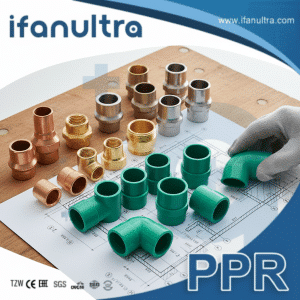
I once visited a site where the wrong pipe fitting material caused a complete system failure in under a year. That costly mistake made the importance of material science painfully clear to everyone involved.
Material choice dictates fitting longevity and safety because it determines how well the component resists corrosion, handles pressure and temperature, and survives in its specific environment. The wrong material can degrade quickly, leak, or even rupture, leading to system failure, water damage, and safety hazards, while the right material ensures reliable performance for decades.
This isn’t just theory; it’s the foundation of every successful plumbing project. Let’s examine how the right material protects your investment.
How Does Chemical Compatibility Prevent Corrosion and Material Degradation?
Corrosion is a silent killer of plumbing systems. We’ve seen pipes fail not from pressure, but from the slow, chemical attack of the very water they carry.
Chemical compatibility prevents corrosion and degradation by ensuring the fitting material does not react with the fluids it carries (like water, acids, or chlorine) or the external environment (like soil or air). A compatible material remains inert, preserving its structural strength and preventing leaks, contamination, and premature failure.
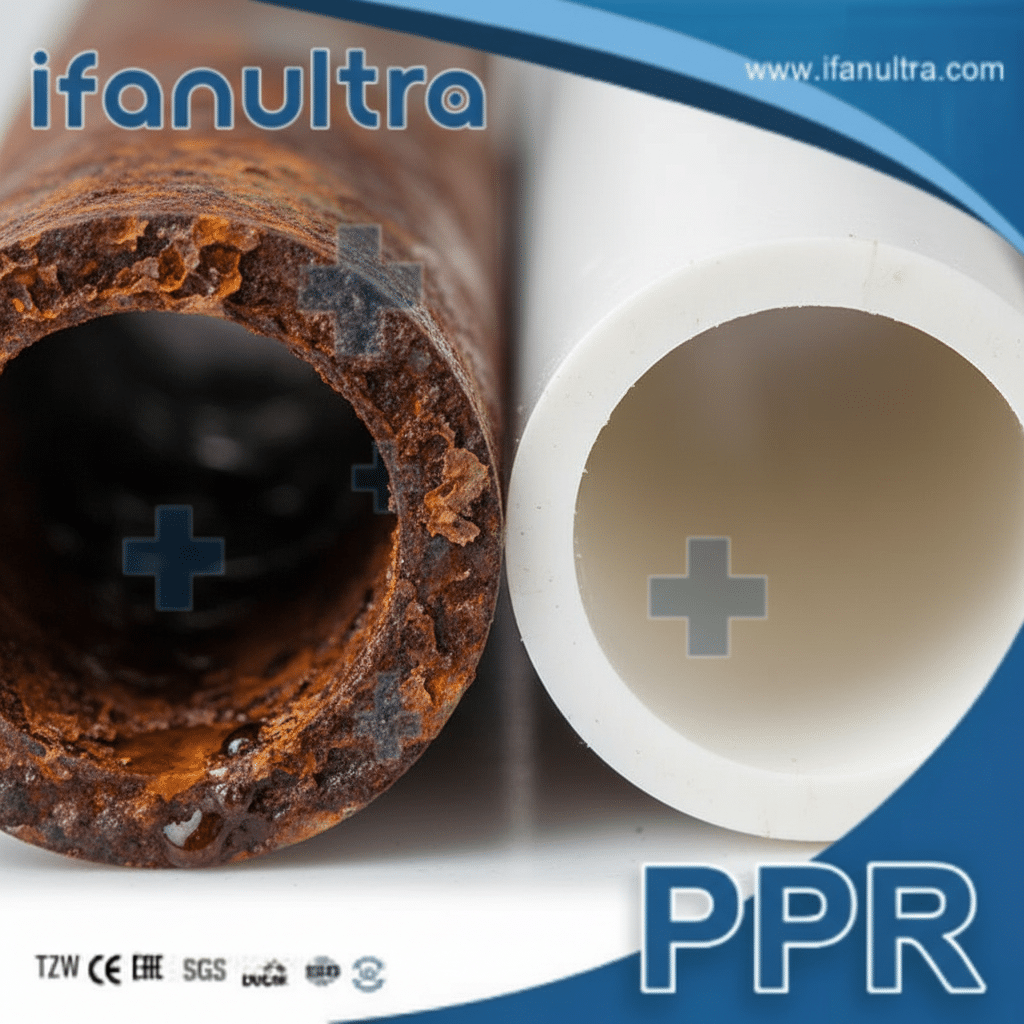
The Science of Material Interaction
Every fluid has a chemical personality. Water is not just H2O; it contains dissolved minerals, oxygen, and often disinfectants like chlorine. These elements constantly interact with the inner surface of your pipes and fittings.
Corrosion is an electrochemical reaction where the material (like metal) loses electrons and deteriorates. Degradation in plastics refers to the breakdown of polymer chains, making the material brittle. Both processes start when the material is chemically incompatible with its environment.
For example, acidic water can aggressively leach metals from brass fittings, weakening them and contaminating the water. Conversely, highly chlorinated water can cause stress cracking in certain types of incompatible plastics over time.
Common Failure Modes from Incompatibility
Choosing the wrong material leads to predictable problems. Here are a few common scenarios:
- Galvanic Corrosion: This occurs when two dissimilar metals (like copper and steel) connect in the presence of an electrolyte (water). One metal corrodes faster than it would alone, leading to rapid pinhole leaks at the connection.
- Oxidation (Rust): This is the familiar red rust on iron or steel. It happens when the metal reacts with oxygen in water and air, eventually consuming the pipe wall.
- UV Degradation: Many standard plastics, like standard PVC, become brittle and crack when exposed to sunlight. This makes them unsuitable for outdoor use unless specifically formulated.
- Chemical Attack: Some industrial fluids or even highly aggressive soils can dissolve or swell certain plastics, destroying their shape and sealing ability.
The Advantage of Modern Plastics
This is where materials like PP-R (Polypropylene Random) excel. PP-R is highly inert. It does not react with water, resists chlorine attack, and is immune to electrolytic corrosion. This inherent chemical compatibility is a primary reason for its 50+ year lifespan in potable water systems. The table below shows how different materials handle common water constituents.
| Material | Resistance to Chlorine | Resistance to Acids/Bases | Risk of Galvanic Corrosion | Notes |
|---|---|---|---|---|
| PP-R | Excelente | Excelente | None (Non-Metallic) | Inert material; ideal for potable water. |
| Copper | Good (but can oxidize) | Poor in acidic water | Alta | Can corrode with low-pH water. |
| Brass | Fair | Poor | Medio | Zinc leaching can occur. |
| Carbon Steel | Poor | Poor | Very High | Prone to rapid rust and scale. |
In short, chemical compatibility isn’t an extra feature; it’s the first line of defense. You must match the material to the fluid’s chemistry to ensure the system ages gracefully instead of decaying rapidly.
Why Do Pressure and Temperature Ratings Depend Directly on Material Properties?
A fitting doesn’t “know” its pressure rating; the material defines it. We specify ratings based on rigorous testing of the material’s physical limits.
Pressure and temperature ratings depend directly on material properties because they are measures of the material’s intrinsic strength and thermal stability. Properties like tensile strength, yield point, and thermal expansion coefficient determine how much mechanical stress and heat a fitting can withstand before deforming, cracking, or failing.
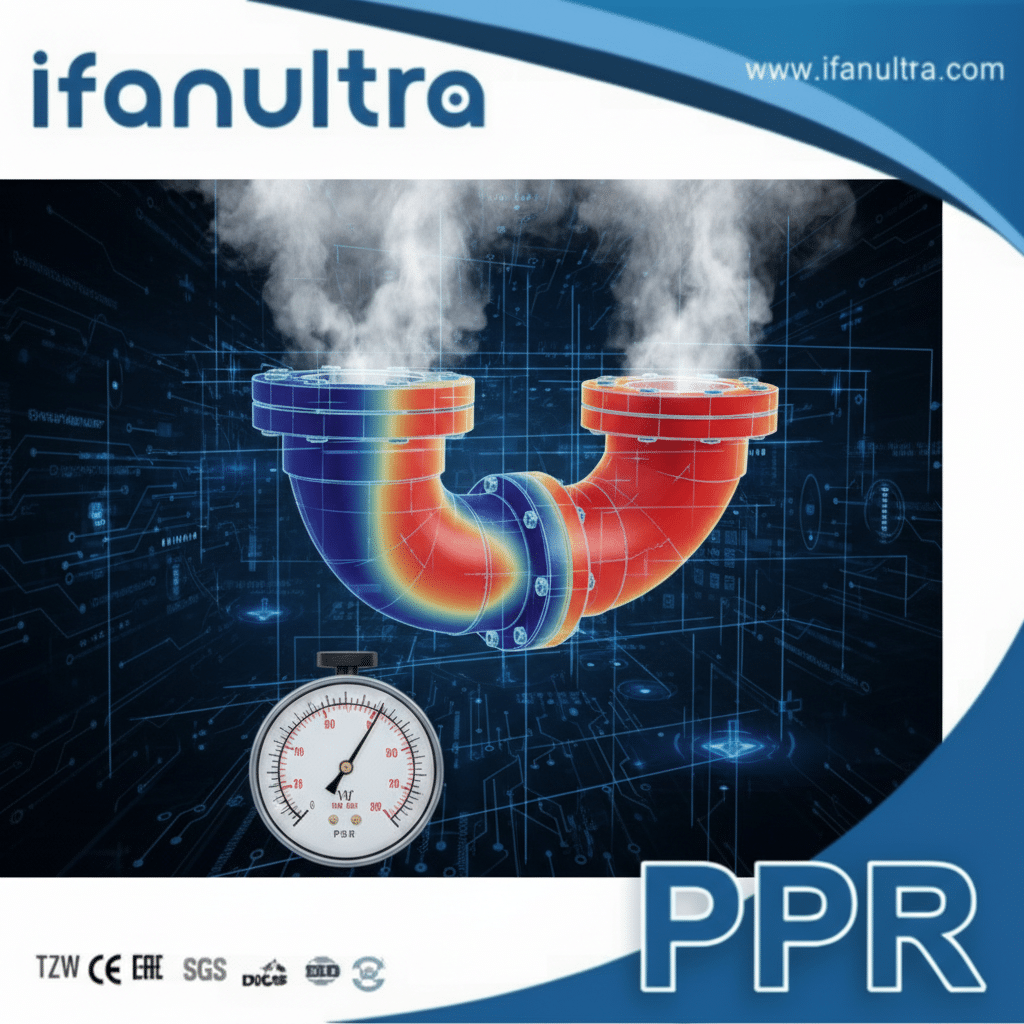
Understanding the Key Material Properties
Think of a material like a team of athletes. Some are strong but stiff; others are flexible but weaker. The ratings tell you what “sport” the material is suited for.
For Pressure (Strength):
- Tensile Strength: This is the maximum stress the material can handle while being stretched before it breaks. A higher tensile strength means a higher possible pressure rating.
- Yield Strength: More importantly, this is the stress level where the material permanently deforms. A fitting must operate well below this point to maintain its shape and seal.
- Creep Resistance: This is the material’s ability to resist slowly deforming under constant pressure over long periods (like 50 years). Good creep resistance is vital for long-term reliability.
For Temperature (Stability):
- Heat Deflection Temperature (HDT): This indicates the temperature at which the material softens and begins to deform under a light load.
- Thermal Expansion Coefficient: This measures how much the material expands when heated and contracts when cooled. A lower coefficient means less stress on the system as water temperature changes.
- Glass Transition Temperature (for plastics): Below this temperature, the plastic is hard and glassy; above it, it becomes softer and more rubbery. Operating too close to this point weakens the material.
How Ratings Are Determined and Applied
Manufacturers test materials under controlled conditions. They subject fittings to increasing pressure and temperature until they find the failure point. Then, they apply a large safety factor (often 2:1 or more) to establish the working pressure and temperature rating.
For instance, a PP-R fitting might burst at 60 bars of pressure at 20°C. Its rated working pressure would then be set at a much safer 10 or 16 bars. This safety factor accounts for variables like water hammer, installation stress, and long-term aging.
Crucially, temperature and pressure ratings are linked. As the temperature of the water increases, the strength of most materials decreases. Therefore, the maximum allowable pressure drops. The following table illustrates this relationship for common materials.
| Material | Typical Max Working Pressure (at 20°C) | Max Continuous Operating Temperature | Key Limiting Factor at High Temp |
|---|---|---|---|
| PP-R (Type 3) | 10-16 bar | 70°C (95°C for short periods) | Decrease in long-term strength (creep). |
| Copper (Type L) | High (system dependent) | ~200°C | Oxidation and scaling over time. |
| PVC-U | 10-16 bar | 60°C | Becomes brittle; strength drops sharply. |
| CPVC | 10-16 bar | 95°C | Higher HDT than PVC, but can become brittle if mis-handled. |
Selecting a fitting with ratings that exceed your system’s maximum operating conditions, not just its normal conditions, is non-negotiable for safety and longevity. Always consider the highest temperature and pressure spike the system might see.
How Can Wrong Material Lead to Catastrophic Failures in Specific Environments?
A fitting that works perfectly in a home may fail explosively in a factory. The environment is everything.
The wrong material can lead to catastrophic failures because extreme environmental factors—like freezing temperatures, UV exposure, chemical spills, or continuous vibration—can push a material beyond its design limits, causing sudden brittle fractures, major leaks, or total joint separation that standard systems are not designed to handle.
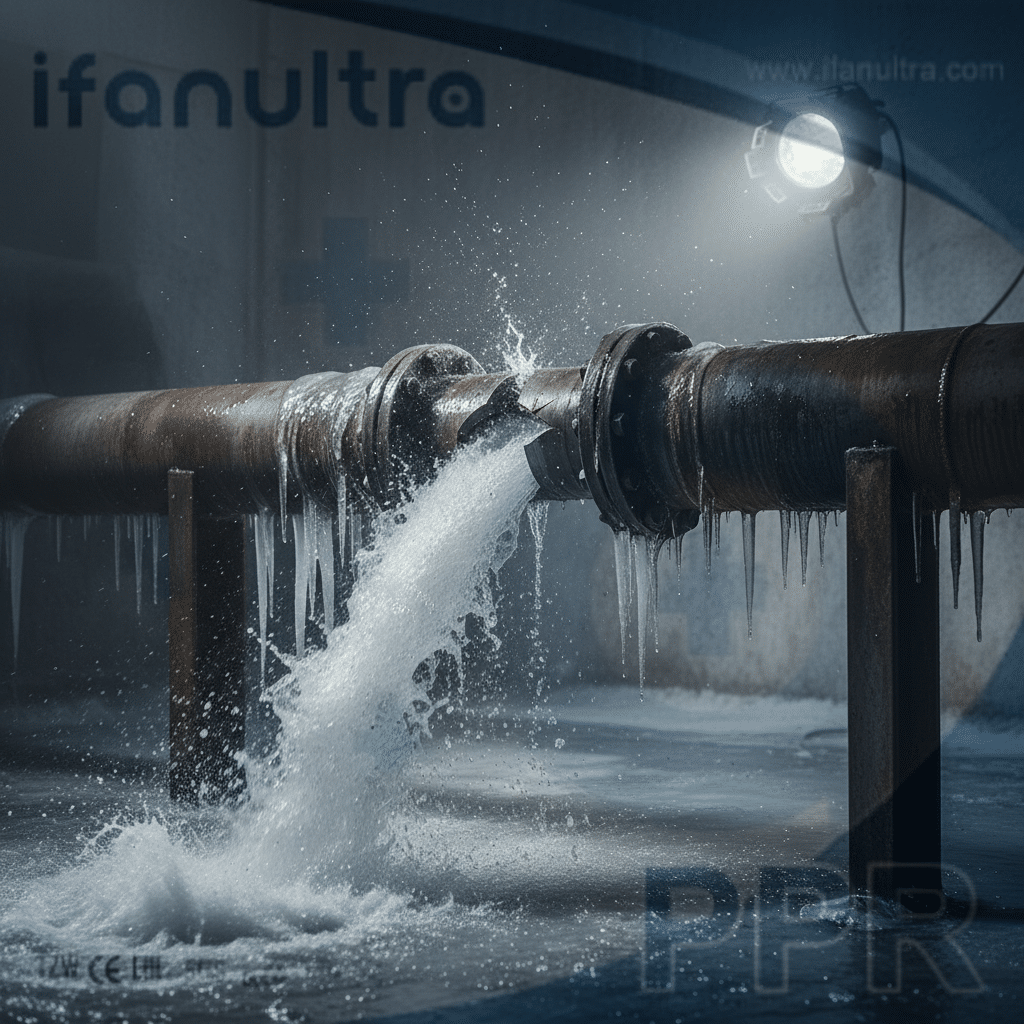
Real-World Failure Scenarios
Catastrophic failure means sudden, unexpected, and often destructive breakdown. It’s not a slow leak; it’s a burst pipe flooding a building or a fitting shattering and causing downtime.
Here are specific examples of how environment dictates material choice:
1. The Freezing Outdoor Line:
- Wrong Material: Standard PVC. PVC becomes increasingly brittle as temperatures drop. If water inside freezes and expands, the pipe doesn’t just crack; it can shatter like glass.
- Right Material: PP-R or specifically rated polyethylene (PE). These materials retain more impact resistance at low temperatures, allowing them to stretch slightly and better accommodate the expansion of ice without fragmenting.
2. The Rooftop Solar Hot Water Loop:
- Wrong Material: Standard PP-R. While good for indoor use, standard PP-R degrades under constant ultraviolet (UV) radiation from the sun, becoming brittle and weak over a few years.
- Right Material: PP-R with UV stabilizers (often colored black or with a protective coating). This material is compounded to resist solar radiation, or it must be properly insulated from sunlight.
3. The Industrial Chemical Transfer Line:
- Wrong Material: A standard fitting not rated for the specific chemical. Many plastics can swell, soften, or dissolve upon contact with certain solvents, acids, or oils, leading to rapid loss of pressure containment.
- Right Material: A fitting made from a specialty polymer like PVDF (for high purity and chemical resistance) or a specific metal alloy, chosen after thorough chemical compatibility testing.
4. The High-Vibration Machinery Connection:
- Wrong Material: A rigid, brittle material. Constant shaking can fatigue the material at stress points (like threads), leading to cracks.
- Right Material: A more flexible material or a design that includes vibration-damping features, like a braided stainless steel hose with appropriate end fittings.
The Cost of Getting It Wrong
The consequences extend far beyond replacing a cheap fitting. They include:
- Major Property Damage: From water, chemicals, or fire.
- Production Downtime: Halting an entire factory or building operation.
- Safety Hazards: Exposure to hot water, steam, or hazardous chemicals.
- Environmental Contamination: From spilled fluids.
The lesson is clear: you must audit the full environment—indoor/outdoor, temperature range, chemical exposure, and physical stresses—before specifying a material. There is no universal “best” material, only the best material for the specific job.
What Makes Material Traceability a Non-Negotiable Safety Requirement?
When a fitting fails, you need to know its entire history. Relying on an uncertified, untraceable part is a major risk.
Material traceability is a non-negotiable safety requirement because it provides verifiable proof that the fitting is made from the correct, certified raw material—not recycled or inferior substitutes—and was manufactured to the proper standard. This documentation is essential for validating performance claims, ensuring compliance with regulations, and investigating any failures.
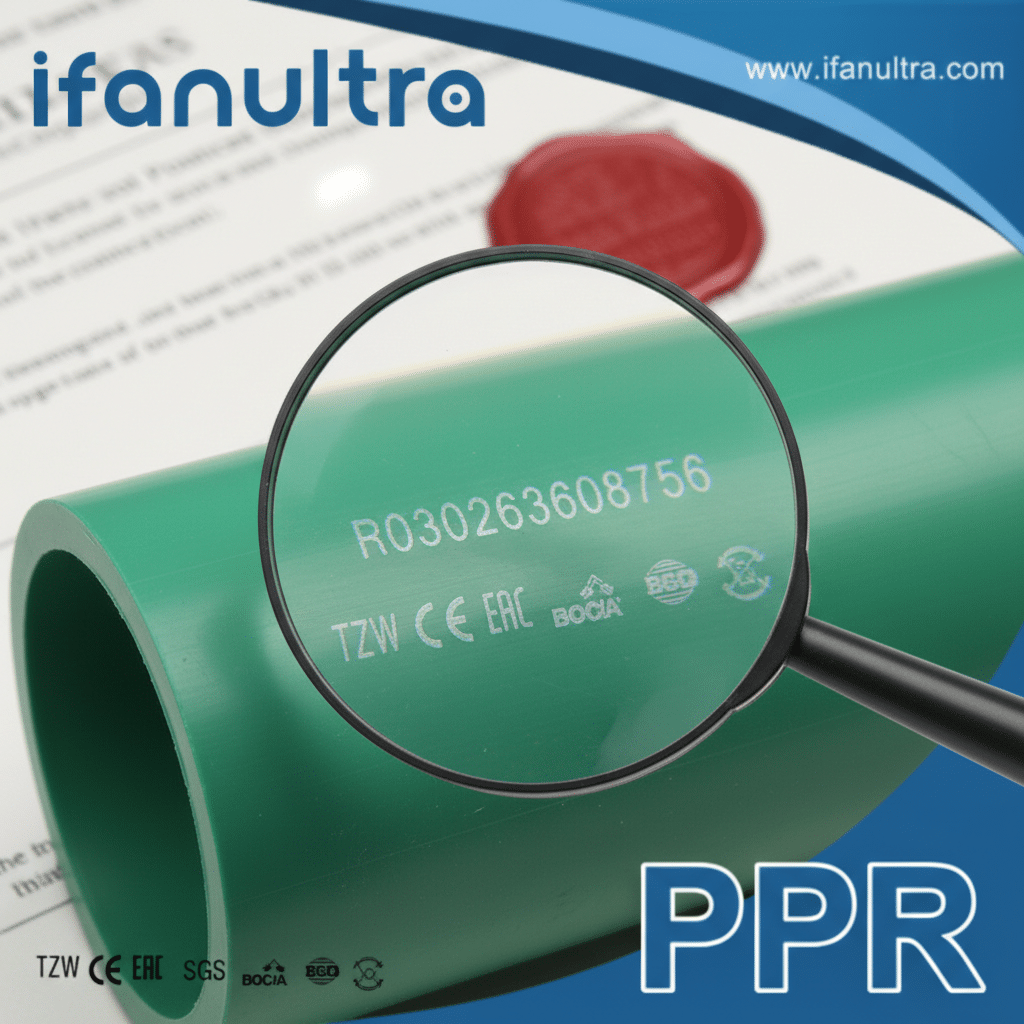
What Traceability Really Means
Traceability is more than a batch number. It’s a documented chain of custody that follows the material from its origin to the final product in your hand.
A fully traceable fitting from a reputable manufacturer like IFAN means:
- Raw Material Source: The manufacturer knows which polymer plant produced the virgin PP-R compound.
- Material Certificate: Each batch of raw material comes with a certificate of analysis (CoA) confirming its properties (melt flow rate, density, stabilizer package) meet the required specification (e.g., ISO 15874 for PP-R).
- Production Batch Record: The fitting’s production data (time, temperature, machine) is linked to the specific raw material batch used.
- Final Product Marking: The fitting itself is marked with the material type (e.g., PP-R), pressure rating, manufacturer’s name, and often a production code.
- Test Records: Samples from the production batch undergo quality control tests (pressure, dimensions), and records are kept.
The Dangers of Non-Traceable Materials
The market is flooded with cheap, uncertified fittings. Without traceability, you cannot verify what you are buying. Common risks include:
- Use of Recycled Material: Manufacturers may blend recycled plastic (regrind) with virgin material to cut costs. Recycled plastic has degraded polymer chains, leading to poor long-term strength, low creep resistance, and unpredictable failure.
- Incorrect Material Substitution: A fitting marked “PP-R” might actually be made from cheaper, weaker polypropylene (PP-H) or other plastics that cannot handle hot water pressure.
- Inconsistent Quality: Without batch control, properties can vary wildly from one fitting to the next, making system performance unreliable.
How Traceability Protects You
For engineers, project managers, and building owners, traceability provides critical protection:
- Regulatory Compliance: Building codes and plumbing standards (like those in Europe, North America, and the Middle East) require certified materials. Traceability is your proof of compliance.
- Liability and Warranty: In case of a failure, traceable documentation proves you installed a certified product. This protects you from liability and validates the manufacturer’s warranty.
- Garantía de calidad: It is the only objective way to ensure the product matches the specification you paid for and designed your system around.
The table below shows what you should be able to request and receive for critical projects.
| Document/Feature | What It Proves | Por qué es importante |
|---|---|---|
| Material Certificate (CoA) | Raw material meets the international standard (e.g., ISO 15874). | Ensures the base plastic has the correct properties for long-term performance. |
| Third-Party Certification Mark | Product passed independent tests (e.g., NSF, KIWA, WRAS). | Provides objective validation of safety and performance claims. |
| Batch Number on Product & Packaging | Links the physical fitting to production and test records. | Enables precise tracking and recall if needed. |
| Manufacturer’s Test Report | Shows the specific batch passed the factory’s pressure and dimension checks. | Confirms manufacturing quality control. |
Never accept “trust me” for critical components. Always insist on traceable, certified materials. It is the ultimate guarantee of safety and value.
Conclusión
Material choice is the most critical decision for a safe, long-lasting plumbing system. For guaranteed material quality, certification, and full traceability, choose IFAN’s range of certified PP-R pipe fittings for your next project.









 English
 Español
 Français
 Português do Brasil