
I once managed a hotel plumbing project where an incorrect tee fitting caused major delays. This experience taught me how important the right fitting is, especially a PPR double tee.
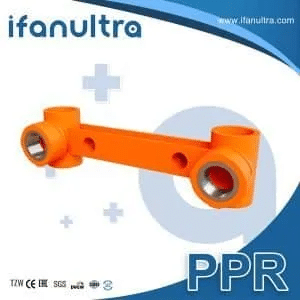
A PPR double tee is one fitting that splits one pipe into two branches at the same spot. It is mainly used to send water from a main pipe to two different lines. For example, it can supply a sink and a toilet from one pipe in the wall. This saves space and uses fewer connections.
This simple part is key for a strong plumbing system. Next, we will look at where it is used, how to install it, its benefits, and how to pick the best one.
What Are the Primary Applications of PPR Double Tee Fittings in Piping Systems?
Trying to split one water line to supply two rooms with separate pipes can be messy. The double tee makes this task neat and strong.
PPR double tee fittings are mostly used in home and building water systems to make two branches from one main line. You often see them send water to two sinks from one pipe. They are also used in floor heating systems to create two loops, and in apartments to send water from a central pipe to two different homes.
Common Uses in Homes and Buildings
The double tee is useful because it splits flow in one compact piece. For instance, in a bathroom, a main pipe runs in the wall. If you need to give water to both the sink and the toilet from that one pipe, a double tee is the best choice. It makes two outlets from one inlet, all inside the wall.
Another important use is in floor heating. These systems use many loops of pipe. A double tee can connect two of these loops to the same supply at the same time. This approach helps water flow evenly and uses fewer parts than making two separate branches.
Where to Use a Double Tee
The table below shows specific jobs for this fitting:
| Caso práctico | Specific Job | Main Benefit |
|---|---|---|
| Home Bathroom | Giving water to a sink and a toilet from one supply pipe. | Saves space inside walls, needs fewer joints. |
| Apartment Blocks | Taking water from a building’s main pipe to two nearby apartments. | Makes central water distribution simpler. |
| Floor Heating | Linking two heating loops to one supply point. | Keeps water flow even in both loops. |
| Restaurant Kitchens | Supplying two sink stations from one water line. | Works well for fixtures that are close together. |
Also, double tees are great for repairs. For example, if a piece of pipe with two branches needs fixing, using a double tee lets you keep the same layout. Therefore, you won’t need extra connectors. This saves time and parts during maintenance work.
How Do You Properly Install and Connect PPR Double Tee Fittings to Pipes?
I have seen leaks happen when installation is rushed. The method is simple but must be done with care.
To install a PPR double tee, use heat fusion welding. First, cut the pipes cleanly. Next, heat the tee’s sockets and the pipe ends at the same time with a welding tool. Then, quickly join them and hold them straight without moving until the melted plastic cools. This makes one solid, leak-free piece.
Step-by-Step Installation Guide
A good installation ensures the fitting will last for years. Follow these detailed steps.
Step 1: Plan and Measure
Start by planning the layout. Specifically, mark the exact spot on the main pipe where you need the branches. Also, make sure there is enough pipe on all sides. Then, cut the main pipe at your mark using a cutter made for PP-R pipe. This gives a clean, square cut. After that, cut the two branch pipes to the length you need.
Step 2: Set Up the Welding Tool
Choose the right heating heads for your welding tool. Typically, you need one size for the main pipe and another for the branch pipes if they are different. Set the tool to the right temperature, usually between 260°C and 270°C (500°F-518°F). Then, let the tool heat up fully.
Step 3: Heat and Join the Parts
This step is very important. First, put the end of the main pipe into one side of the hot double tee. At the same time, heat the ends of the two branch pipes on the other side of the tool. Note that the heating time depends on the pipe size. For example, a 20mm pipe needs about 5 seconds. However, do not heat it too long. Once the plastic looks soft and melted, quickly take all the parts off the heater.
Step 4: Connect and Align
Right away, push the hot branch pipes into the two outlets of the tee. At the same moment, push the other main pipe piece into the tee’s third socket. Importantly, push straight in and do not twist the parts. Then, hold everything perfectly still for the cooling time shown in the manual. Remember, if you move the parts while they cool, the joint will be weak.
Mistakes to Avoid During Installation
Here are common errors and how to prevent them:
| Mistake | Resultado | How to Avoid It |
|---|---|---|
| Uneven Heating | Heating the pipe and fitting for different times. | Use a tool that heats both sides at once, or heat them together carefully. |
| Twisting When Joining | Makes a weak seam that might leak. | Practice the straight pushing motion before you heat the parts. |
| Not Heating Enough | The plastic doesn’t melt fully, making a cold, weak joint. | Always follow the heating time guide from the maker. |
| Too Much Heat | The plastic burns and can block the inside of the pipe. | Use a timer and never go over the suggested time. |
Step 5: Check Your Work
After cooling, look at the joint. Typically, a good weld will have a small, even ring of melted plastic around each connection. This ring shows the weld is solid.
What Are the Key Advantages of Using PPR Double Tee Fittings Over Other Types?
When clients ask why to use one double tee instead of two single tees, I explain how it saves money and makes the system more reliable.
The main benefits of a PPR double tee are strength from fewer joints, big space savings in tight walls, faster and cheaper installation with just one welding step, and smoother water flow compared to using two separate tees close together.
Benefit 1: A Stronger System
Every welded joint could possibly fail. However, using one double tee means you don’t need two single tees and extra pipe connectors. As a result, this cuts the total number of welds by at least three. Ultimately, fewer welds mean less chance of a mistake during installation. It also makes the branch point simpler and stronger.
Benefit 2: Saves Space and Money
Inside tight spaces like wall cavities, fitting two separate tees is often impossible. Fortunately, a double tee solves this problem. Regarding cost, the double tee might cost a little more than one single tee. However, you save on labor because you do one welding step instead of three. This cuts the job time by more than half.
Comparing a Double Tee to Two Single Tees
See the clear benefits in this table:
| Característica | Using One Double Tee | Using Two Single Tees + a Connector |
|---|---|---|
| Number of Welds | 3 | 6 |
| Installation Time | About 3 minutes (one step) | About 9 minutes (three steps) |
| Space Needed | Very little, just the fitting’s size. | Needs room for two fittings plus a pipe piece. |
| Cost of Parts | Price of 1 fitting. | Price of 2 fittings + 1 connector + extra pipe. |
| Water Flow | Smoother split of water. | Can cause turbulence at two close splits. |
| Possible Leak Points | 3 | 6 |
Benefit 3: Better Water Flow
Good water flow matters. Specifically, two single tees placed close together can disrupt the water flow twice, which can lower water pressure. In contrast, a double tee splits the water in one smooth action. This causes less disruption and helps keep good pressure in both branch lines. This is very useful in systems with low water pressure.
For the installer, project manager, and user, these benefits mean a more reliable system that costs less to put in and works better. Therefore, it’s a smart choice that adds value.
How Do You Select the Correct Specifications for PPR Double Tee Fittings?
Choosing the wrong specs is a common and expensive mistake. For example, a client once ordered many tees with the wrong pressure rating, which set back their project for weeks.
To pick the right PPR double tee, check four things: the Pressure Rating (PN), the Diameter of all three openings, the Material Type (PP-R or PP-RCT), and the needed Certifications for your area. Always match the tee’s pressure rating and size exactly to your pipes.
The Four Most Important Things to Check
Picking the right fitting is simple but very important. Missing any of these points can make the system fail.
1. Pressure Rating (PN): This is the most important spec. PPR parts have ratings like PN10, PN16, PN20, and PN25. PN means “Pressure Nominal.” It tells you the highest water pressure (in bars) the part can handle at 20°C. You must choose a double tee with a PN rating that is the same as or higher than your pipes. Otherwise, using a PN10 tee on PN20 pipes will cause it to burst.
2. Diameter Sizes: Double tees are described by their opening sizes. For instance, you might see “20mm x 20mm x 20mm” (all openings are the same) or “25mm x 20mm x 20mm” (one main opening is 25mm, branches are 20mm). You must know two things:
- The size of the main pipe you are cutting.
- The sizes of the two branch pipes you are adding.
Checklist for Choosing the Right Fitting
Use this table when you order:
| Specification | En qué fijarse | Why It’s Important |
|---|---|---|
| Pressure (PN) | Match it to your pipe’s PN rating (like PN20). | A lower-rated fitting will break under pressure. |
| Diameter (e.g., 25x20x20) | Check the main pipe size and both branch sizes. | Makes sure the parts fit together well. |
| Tipo de material | PP-R (standard) or PP-RCT (for higher heat/pressure). | PP-RCT is stronger for tough jobs like heating systems. |
| Certificación | NSF, WRAS, KIWA, GOST-R for your country. | Required by law for drinking water in most places. |
| Brand / Quality | Pick a trusted maker like IFAN. | Ensures good size, pure material, and reliability. |
3. Material Type: PP-R vs. PP-RCT: Standard PP-R is fine for most home hot and cold water. However, for heating systems with higher temperatures or for high-pressure jobs in buildings, choose PP-RCT. This material handles heat and pressure better. So, if you are unsure for a tough job, pick PP-RCT.
4. Required Certifications: This is a must for drinking water systems. Specifically, your fittings need certificates to prove they are safe. In the US, look for NSF/ANSI 61. In the UK, you need WRAS approval. In Europe, look for KIWA or DVGW. For Russia and nearby countries, GOST-R is key. A professional supplier like IFAN will have products with the right certificates.
Finally, always buy from a supplier you trust. This is because poor quality materials or bad molding can lead to weak spots or sockets that are the wrong size. Consequently, this makes welding hard and joints unreliable.
Conclusión
PPR double tee fittings are key for efficient and reliable plumbing when chosen and installed right. For top quality and all the right certificates, choose IFAN for your PPR and PP-RCT double tees.









 English
 Español
 Français
 Português do Brasil