

The main types of valves in plumbing and piping are gate, globe, ball, check, butterfly, needle, diaphragm and plug valves — and every one of them exists to do one of three jobs: shut flow on or off (isolation), throttle or regulate how much fluid passes, or stop fluid from running backward (backflow prevention). Pick the wrong type and you pay for it: a gate valve cracked half-open to “control” flow will vibrate, erode its seat, and eventually fail to seal. So the first question is never “which brand” — it is “which of the three jobs am I buying this valve to do?”
This guide walks through each valve type with its function and best use, classifies them by job in a table, then covers the materials and connection methods that decide reliability in a real line — including plastic (PPR) valves that fuse straight into the pipe. If you are building a hot- and cold-water plumbing system, valve choice sits inside a bigger material decision, which we cover in the PPR pipe guide. Read on to match the valve to the fluid, the pressure, and the pipe you are actually running.
Key Takeaways
- Valves do three jobs: on/off isolation, flow throttling, and backflow prevention. Match the valve to the job first.
- Gate and ball valves isolate (fully open or fully closed); globe and needle valves throttle; check valves stop reverse flow.
- Never throttle a gate valve — a partly open gate vibrates, erodes the seat, and loses its tight shut-off.
- A ball valve needs only a 90 degree quarter-turn to go from full open to full closed, which makes it fast and leak-tight.
- PPR ball and stop valves fuse into the line by socket heat fusion at about 260 degrees C, leaving no bolted or threaded joint to loosen or leak.
- Choose by material for the fluid: brass or bronze for potable water, stainless for corrosives, PPR for hot and cold plumbing rated to about 70 degrees C continuous.
What a valve does: the three jobs
A valve is a device that controls the flow of a fluid inside a pipe. Strip away the shapes and materials and the entire catalog reduces to three jobs. Isolation valves either stop flow completely or open fully to let it pass with almost no restriction — they have two useful positions and no in-between. Throttling or regulating valves hold a middle position to set the flow rate, so they are built to survive the turbulence of a partly open gap. Backflow-prevention valves let fluid move one direction and slam shut when it tries to reverse.
Knowing which job you need saves money and heartbreak. A gate valve is a superb isolator and a terrible throttle. A globe valve throttles beautifully but wastes pressure when you only ever want it fully open. Buy for the job, not the price tag.
The main valve types and their best uses
Here are the eight valve types you meet most often in plumbing and piping, each with what it does and where it belongs.
Gate valve
A wedge (the “gate”) lifts clear of the bore to open and drops to seal. Full open means a straight, unobstructed path with almost no pressure drop. Best use: main-line isolation on water, steam, fuel gas, slurries and viscous liquids where you want the valve either fully open or fully shut. Never use it to throttle.
Globe valve (stop valve)
Flow follows an S-shaped path past a disc that seats against a ring, which spreads pressure evenly and gives smooth, linear control. Best use: throttling and flow regulation — cooling-water loops, chemical feed, and any point where you want to dial the flow and hold it. It also makes a good on/off stop valve.
Ball valve
A bored ball turns a quarter-turn (90 degrees) between full open and full closed. Fast, tight-sealing and low-maintenance. Best use: quick isolation on water and gas lines, appliance shut-offs, and manifold work where a fast, leak-tight on/off is worth more than fine control.
Check valve
A one-way valve with no handle — flow pushes it open, and reverse flow shuts it. Best use: pump discharge, water-heater lines, and anywhere backflow would contaminate supply or spin a pump backward. This is the backflow-prevention job in its purest form.
Butterfly valve
A disc pivots on a central shaft inside the pipe; a quarter-turn swings it from open to closed. Compact and light, so it wins on large diameters. Best use: big water and air lines, HVAC, and low-pressure isolation or coarse throttling where space and weight matter.
Needle valve
A slender tapered stem meters flow through a small orifice with very fine resolution. Best use: small-bore instrument, gauge, sampling and calibration lines where you need precise, repeatable flow at low volume.
Diaphragm valve
A flexible diaphragm presses down onto a seat to close, keeping the working parts out of the fluid. Best use: hygienic, corrosive, or slurry service — food, pharma and dosing lines — where clean shut-off and easy cleaning matter. It can start, regulate and stop flow.
Plug valve
A tapered or cylindrical plug turns inside the body; multi-port versions route flow between several outlets. Best use: quick shut-off and flow diversion, common in gas distribution and where you need to switch flow paths with one valve.
Valve types classified by function
The fastest way to specify a valve is to sort by the job it does. This table maps each type to its primary function and where it belongs.
| Valve type | Primary function | Best use |
|---|---|---|
| Gate | Isolate (on/off) | Main-line shut-off with minimal pressure drop |
| Ball | Isolate (on/off) | Fast, leak-tight shut-off on water and gas |
| Globe (stop) | Throttle / regulate | Precise flow control on water and chemical loops |
| Needle | Throttle (fine) | Precise low-volume metering on instrument lines |
| Diaphragm | Isolate / throttle | Hygienic, corrosive or slurry service |
| Butterfly | Isolate / coarse throttle | Large-diameter water and air, tight spaces |
| Plug | Isolate / divert | Quick shut-off and multi-port flow switching |
| Check | Prevent backflow | Pump discharge and water-heater lines |
One rule carries most of the weight: an isolation valve should live at the ends of its travel, and a throttling valve is built to hold the middle. Force a gate valve to sit half-open and the jet of fluid past the partly raised wedge sets up vibration and erosion that chews the seat until it can no longer shut tight. That is a warranty-void mistake, not a quirk.
Materials and connections
A valve type tells you what the valve does; the body material tells you what fluid and temperature it survives, and the connection tells you how it joins the line.
Body materials
- Brass — the workhorse for potable hot and cold water; corrosion-resistant, easy to machine, and used for most residential ball and stop valves.
- Bronze — similar to brass with better resistance in marine and higher-temperature service.
- Stainless steel — for corrosive media, chemicals, steam and high pressure where brass would attack or fail.
- Plastic (PPR) — polypropylene random copolymer valves that fuse into a PPR line; corrosion-proof, scale-resistant, and rated to about 70 degrees C continuous with a short-term peak near 95 degrees C.
How a valve connects
Threaded ends screw onto matching pipe threads — quick and serviceable at small sizes. Flanged ends bolt two mating faces together with a gasket — standard on large industrial lines that must be broken down for service. Heat-fused ends are the PPR method: the valve socket and the pipe are melted and pressed together into one continuous piece with no gasket, thread or bolt. Each joint style has a failure mode. Threads can weep if under-torqued, flanges loosen as gaskets relax, and a fused joint has no separable interface to leak at all — which is exactly why PPR appeals to plumbers who never want to revisit a hidden joint.
On/off versus throttling — a quick comparison
| Attribute | On/off (isolation) valves | Throttling (control) valves |
|---|---|---|
| Typical types | Gate, ball | Globe, needle |
| Working position | Fully open or fully closed | Any partial position, held steady |
| Pressure drop when open | Very low (clear bore) | Higher (deliberate restriction) |
| Flow precision | None — it is a switch | Fine, linear control |
| Risk if misused | Seat erosion if throttled | Wasted pressure if only ever full-open |
Valves in a PPR plumbing system
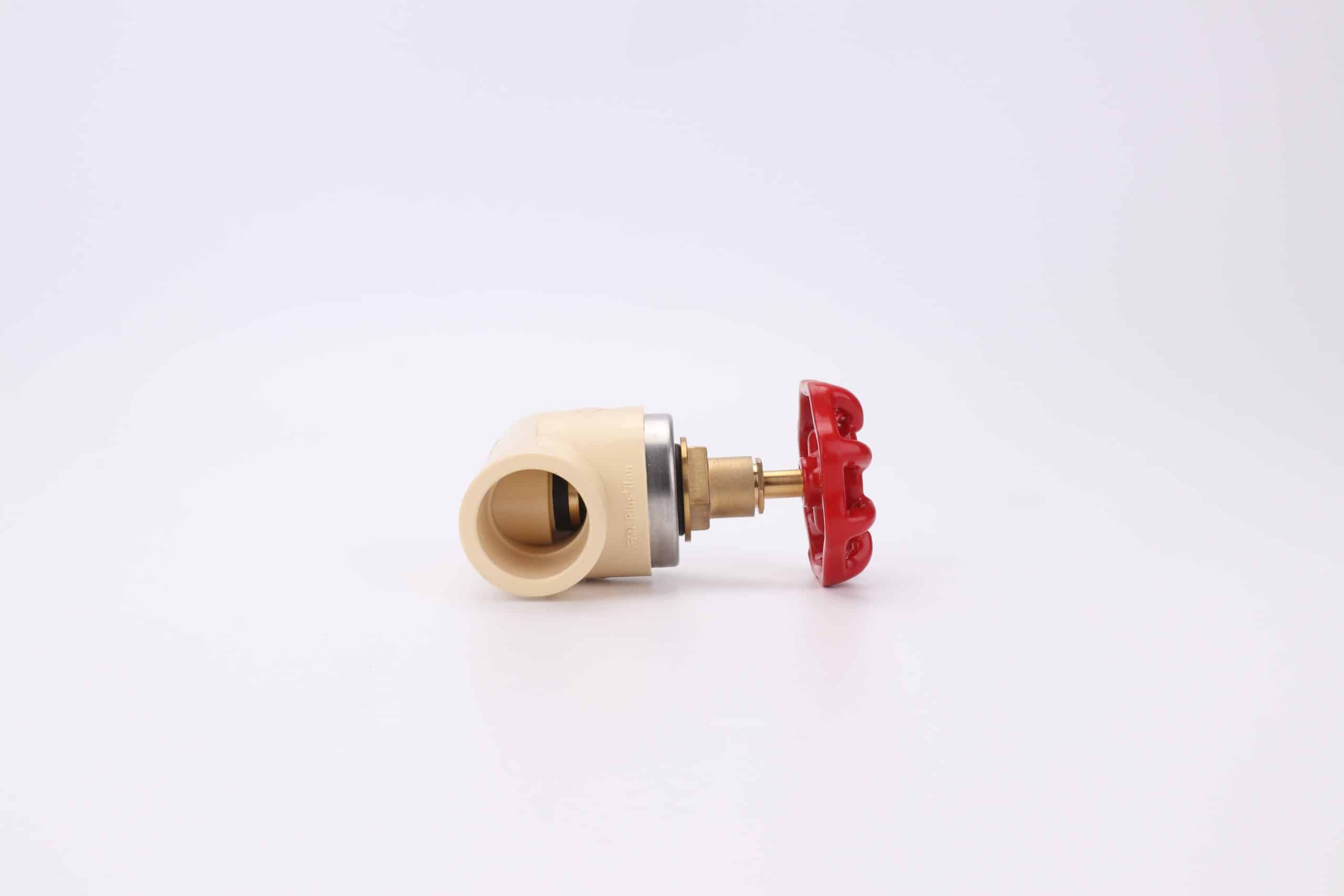
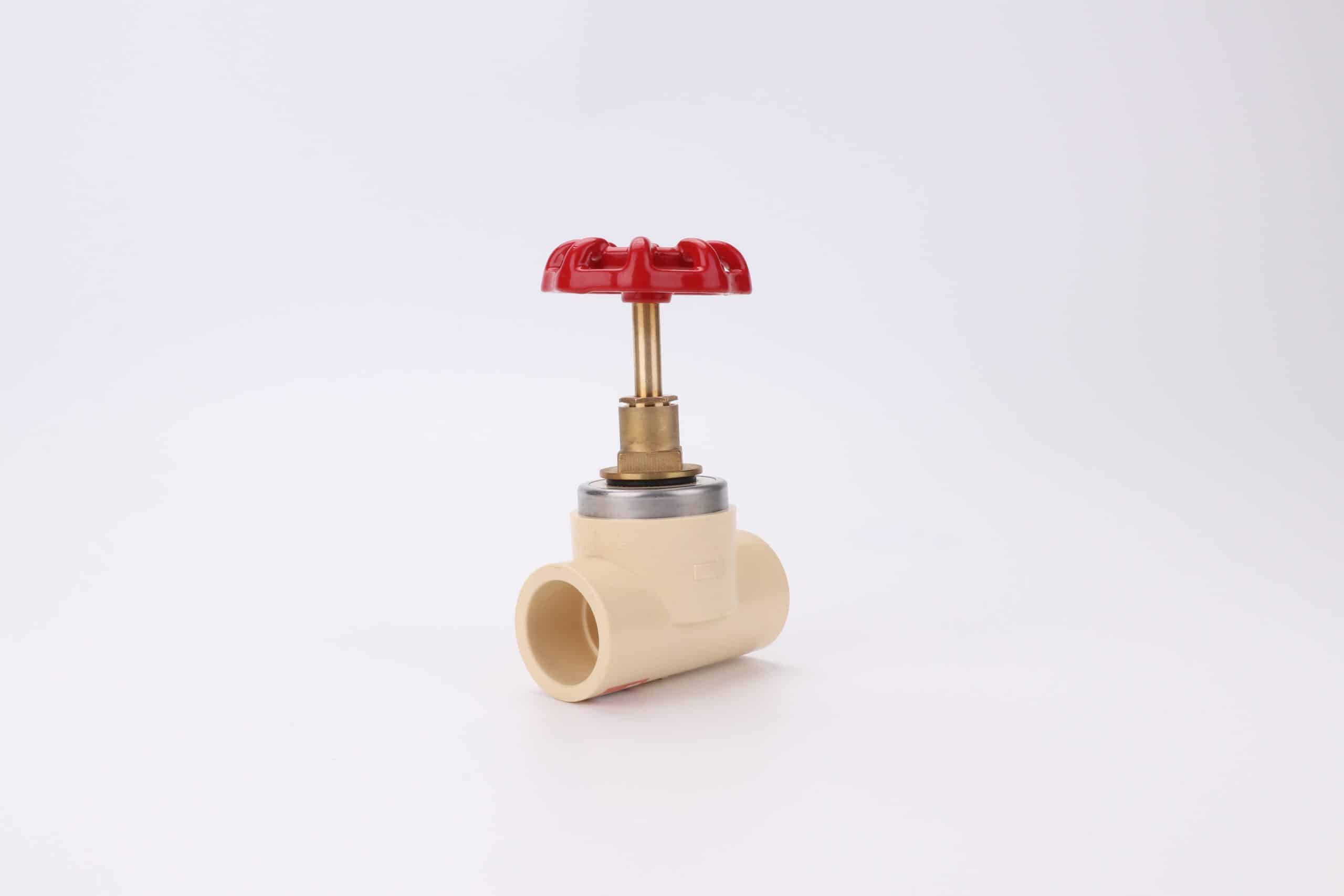
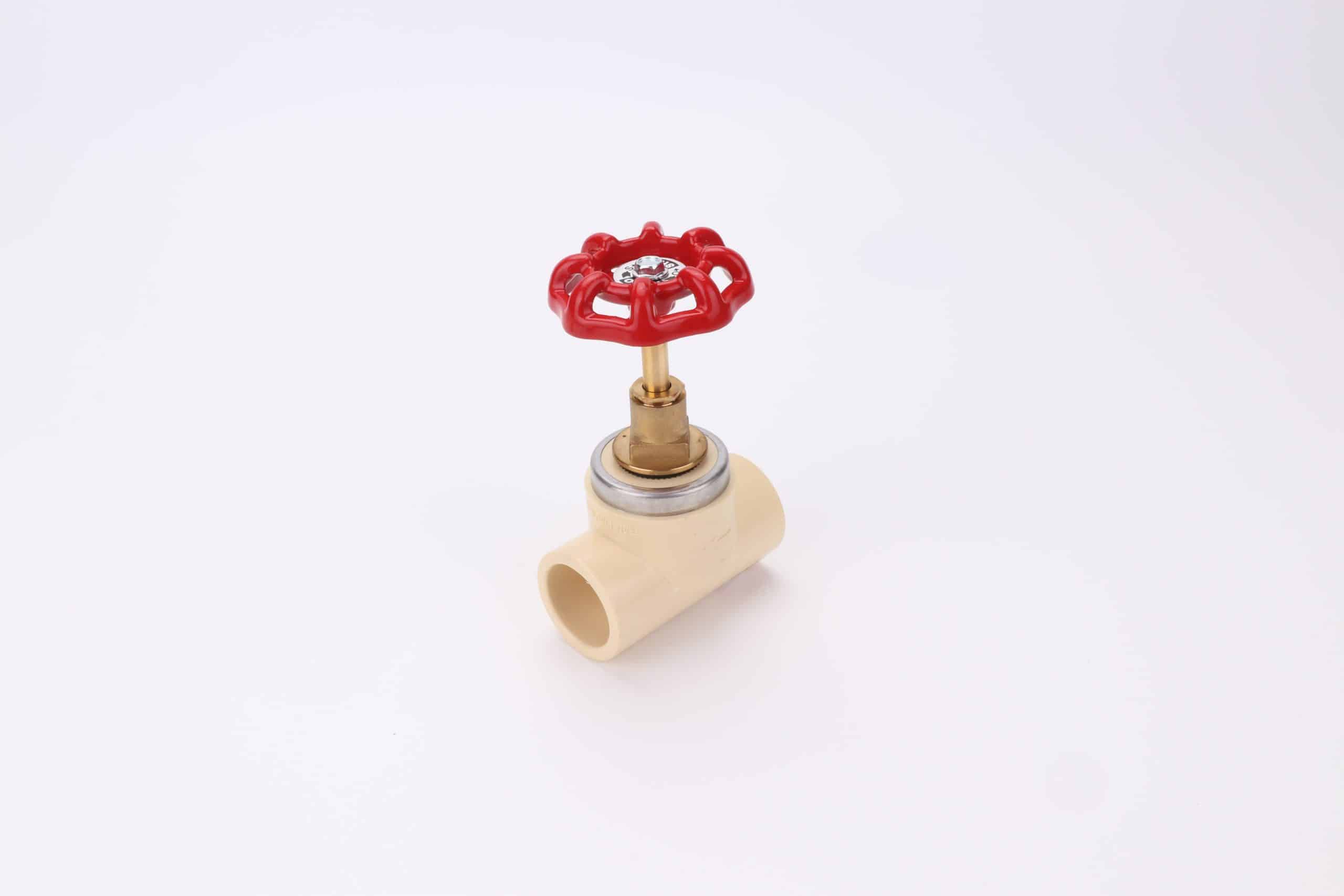
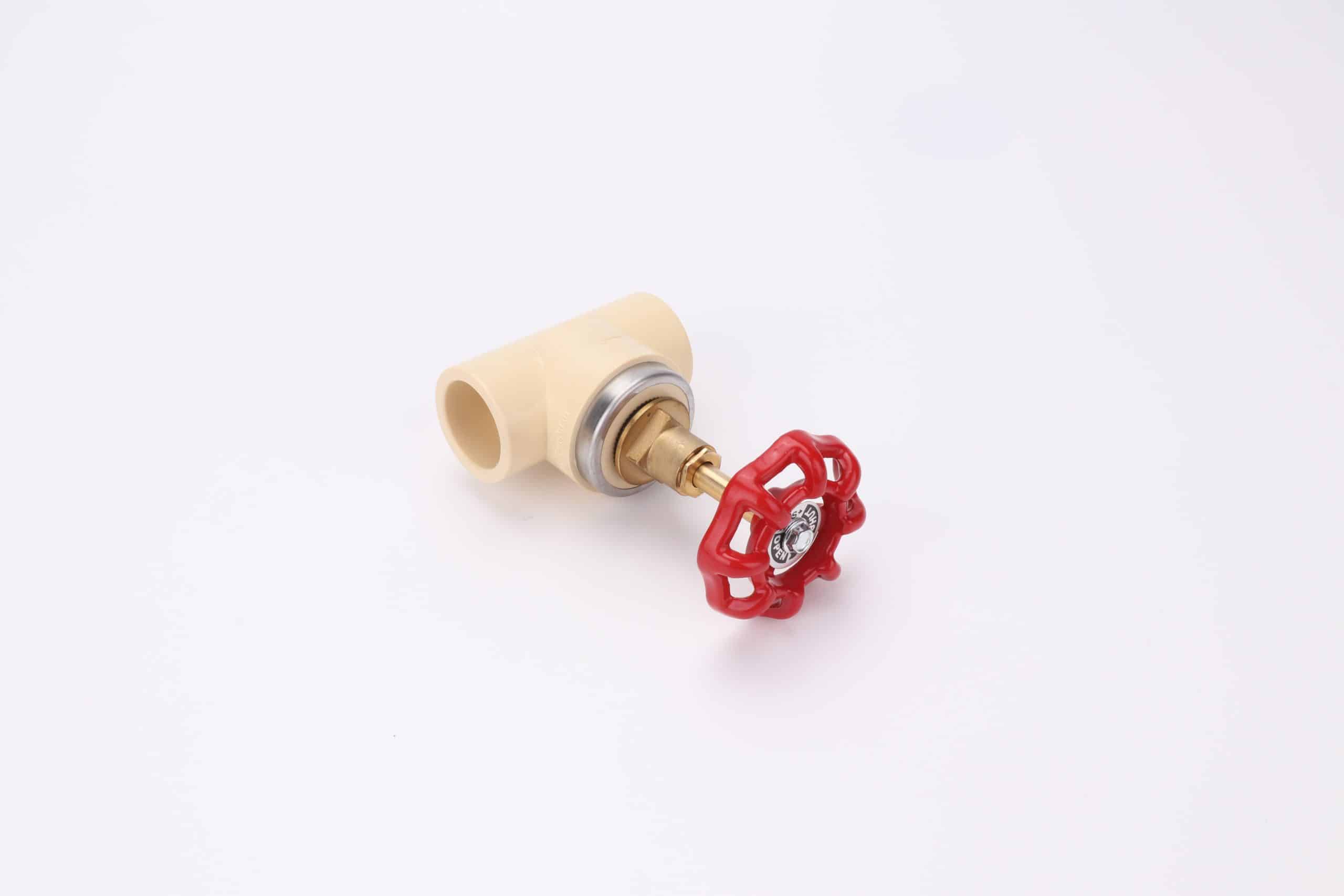
In a PPR (polypropylene random copolymer) plumbing system, the valves are not bolt-on afterthoughts — they become part of the pipe. A PPR ball valve or stop valve has fusion sockets on both ends, so an installer heats the valve socket and the pipe together at about 260 degrees C and presses them into a single continuous joint. There is no bolted flange to loosen, no threaded seat to weep, and no gasket to age. For a system meant to run 50 years at its rated pressure and temperature, removing the leak-prone interfaces is the whole point.
Two valve styles cover most PPR work. Fusion ball valves give fast, quarter-turn isolation for branches, risers and appliance drops. Fusion stop (globe-style) valves handle throttling where you want to set and hold a flow rate. Where a PPR line has to meet a metal fixture, a brass-bodied valve with a threaded transition bridges the two — plastic fused on the pipe side, a brass thread on the fixture side. IFANULTRA builds both: PPR fusion valves and brass transition valves made from virgin Nordic polypropylene on German automated lines, so the wall thickness and fusion behavior stay consistent batch to batch. For distributors, that batch consistency is what keeps a shipment from failing inspection.
The advantage compounds behind a wall. A fused PPR valve buried in a chase has no joint that can back off over thermal cycles, which is exactly the joint that turns into a callback in threaded or compression systems. Match the valve body to the pipe material and the whole line ages as one piece.
How to choose the right valve
Work through four questions in order and the valve almost picks itself.
- What job? Isolation, throttling, or backflow. This alone rules out most of the catalog — gate or ball for on/off, globe or needle for control, check for backflow.
- What size? Match the valve bore to the pipe (DN, the outside diameter in mm). On large diameters, a butterfly valve saves weight and space over a gate; on small instrument lines, a needle valve gives the resolution you need.
- What pressure and temperature? Confirm the valve’s rating covers the line. PPR carries a PN class (PN20 is the common hot-water class) and runs to about 70 degrees C continuous; push past a component’s rating and you trade the 50-year design life for early failure.
- What fluid, and what material suits it? Potable water favors brass, bronze or PPR; aggressive chemicals favor stainless or diaphragm valves; hot and cold domestic water favors PPR fused to a PPR line. Match material to fluid before you match brand to budget.
Standards close the loop. PPR valves and pipe are made to ISO 15874 (EN ISO 15874), and potable-water components should carry the relevant potable certification such as NSF for the US market. Requirements vary by market and by the importer’s role, so confirm current requirements with a customs broker or the relevant authority before you commit a container.
Conclusión
Every valve in plumbing and piping does one of three jobs, and the whole selection problem collapses once you name the job first, then the size, pressure, temperature and fluid. Gate and ball valves isolate, globe and needle valves throttle, check valves stop backflow, and the rest fill in around the edges. Match the body material and connection to the pipe, and the joint stops being the weak point.
If your line is PPR, keep the valves in the same family so the system ages as one fused piece. The IFANULTRA team can share PPR and brass valve specs and a full catalog if you are sizing a build or a container.
Frequently Asked Questions
What are the main types of valves in plumbing?
The main types are gate, globe, ball, check, butterfly, needle, diaphragm and plug valves. Each does one of three jobs: on/off isolation, flow throttling, or backflow prevention.
What is the difference between a gate, globe and ball valve?
Gate and ball valves isolate — fully open or fully closed. A ball valve needs only a 90 degree quarter-turn. A globe valve throttles, giving precise flow control that a gate valve cannot.
What is the difference between an isolation valve and a control valve?
An isolation valve has two positions, fully open or fully closed, and passes flow with almost no restriction. A control valve holds any partial position to regulate the flow rate precisely.
Can you use a gate valve to throttle flow?
No. A partly open gate valve vibrates and lets fluid erode the seat, so it soon fails to shut tight. Use a globe or needle valve for throttling instead.
What valve is used in a PPR plumbing system?
PPR systems use fusion ball valves for isolation and fusion stop valves for throttling. Both fuse into the pipe at about 260 degrees C, leaving no bolted or threaded joint to loosen.
Written by the IFANULTRA team — a PPR pipe and fittings brand of IFAN Group, drawing on 30+ years of manufacturing experience, German automated production lines, and ISO 9001, SKZ and NSF certified PPR product lines.









 English
 Español
 Français
 Português do Brasil