

I once watched a promising export deal fall apart because our PPR pipes met European standards but failed Russian GOST certification. That costly lesson taught me that navigating plumbing codes is not optional—it’s survival.
Navigating different national plumbing codes requires a systematic approach: identify the exact standards for your target market, verify product certifications, and engage local experts or sourcing partners who understand the regulatory landscape. Success hinges on early research and proactive compliance planning, not last-minute fixes.
The global plumbing market is fragmented, and each country has its own technical requirements. Let’s explore how to master this complexity and avoid expensive mistakes.
How Do You Identify the Specific Codes and Standards for Your Target Country?
When a client from Southeast Asia asked if our products met their local standards, I realized many buyers don’t know how to find that information. The answer lies in a structured research process.
You identify specific codes and standards by first determining the regulatory body in your target country (e.g., ASTM in the US, DIN in Germany, GOST in Russia), then consulting official publications, trade associations, and accredited testing labs. Government websites and import regulations often list mandatory certifications, making them your primary sources.
Step 1: Understand the Regulatory Landscape
Every country has its own way of regulating plumbing products. Some adopt international standards (like ISO) as national ones, while others maintain unique codes. The first step is to know who sets the rules.
For example:
- United States: ASTM International, ASSE, IAPMO (Uniform Plumbing Code)
- European Union: EN standards (e.g., EN 15874 for PPR pipes), with CE marking required
- Russia and CIS countries: GOST standards (often mandatory for import)
- Middle East: Many countries accept ISO or EN, but some have local adaptations (e.g., SASO in Saudi Arabia)
- Southeast Asia: Often mix of ISO, JIS (Japanese), or local standards like SNI in Indonesia
Your starting point should be the national standards body or the ministry of trade website. Look for “technical regulations” or “import requirements” sections. Trade associations and chambers of commerce also publish helpful guides.
Step 2: Use Official Databases and Trade Portals
Many countries maintain online databases where you can search for applicable standards. For instance:
- The EU’s “Access2Markets” portal provides detailed product requirements.
- The US’s “Standards.gov” links to various standards developing organizations.
- Russia’s “Eurasian Economic Commission” website lists unified technical regulations.
Additionally, large testing and certification companies like SGS, TÜV, or Bureau Veritas often publish country-specific compliance summaries. These are practical shortcuts for busy exporters.
Step 3: Consult with Local Experts and Partners
No amount of online research replaces local knowledge. Engaging a local agent, distributor, or legal advisor who deals with these codes daily can save weeks of guesswork. They know which standards are strictly enforced and which are rubber-stamped.
Step 4: Verify with Accredited Testing Labs
Once you know the required standard, contact a lab accredited to test against it. They can confirm whether your product already meets the criteria or needs adjustments. Sometimes, a standard may have specific clauses that differ from others, requiring minor design tweaks.
The table below summarizes common standards for PPR pipes in major markets:
| Market | Key Standards | Certifying Body / Mark |
|---|---|---|
| United States | ASTM F2389 (PP-R), NSF/ANSI 14, NSF/ANSI 61 | NSF International, IAPMO |
| European Union | EN 15874, EN 806, CE marking | Notified bodies for CE |
| Russia / EAEU | GOST 32415-2013, Technical Regulation TR CU 010/2011 | GOST certification bodies |
| Middle East (GCC) | Usually EN or ISO with local adaptations | SASO, GSO marks |
| China | GB/T 18742 series (PPR) | China Compulsory Certification (CCC) for some products |
Remember, codes evolve. What was accepted last year may change. Regular monitoring of regulatory updates is essential.
What Are the Common Pitfalls When Products Meet One Code but Not Another?
I’ve seen clients proudly show certificates from one country, only to discover their product fails another’s test. The gap between standards can be subtle but devastating.
Common pitfalls include assuming one certification guarantees acceptance elsewhere, overlooking specific material or performance requirements (like chlorine resistance or pressure ratings), and neglecting to account for labeling or documentation differences. Even if the product itself is similar, the paperwork and testing methods may vary significantly.
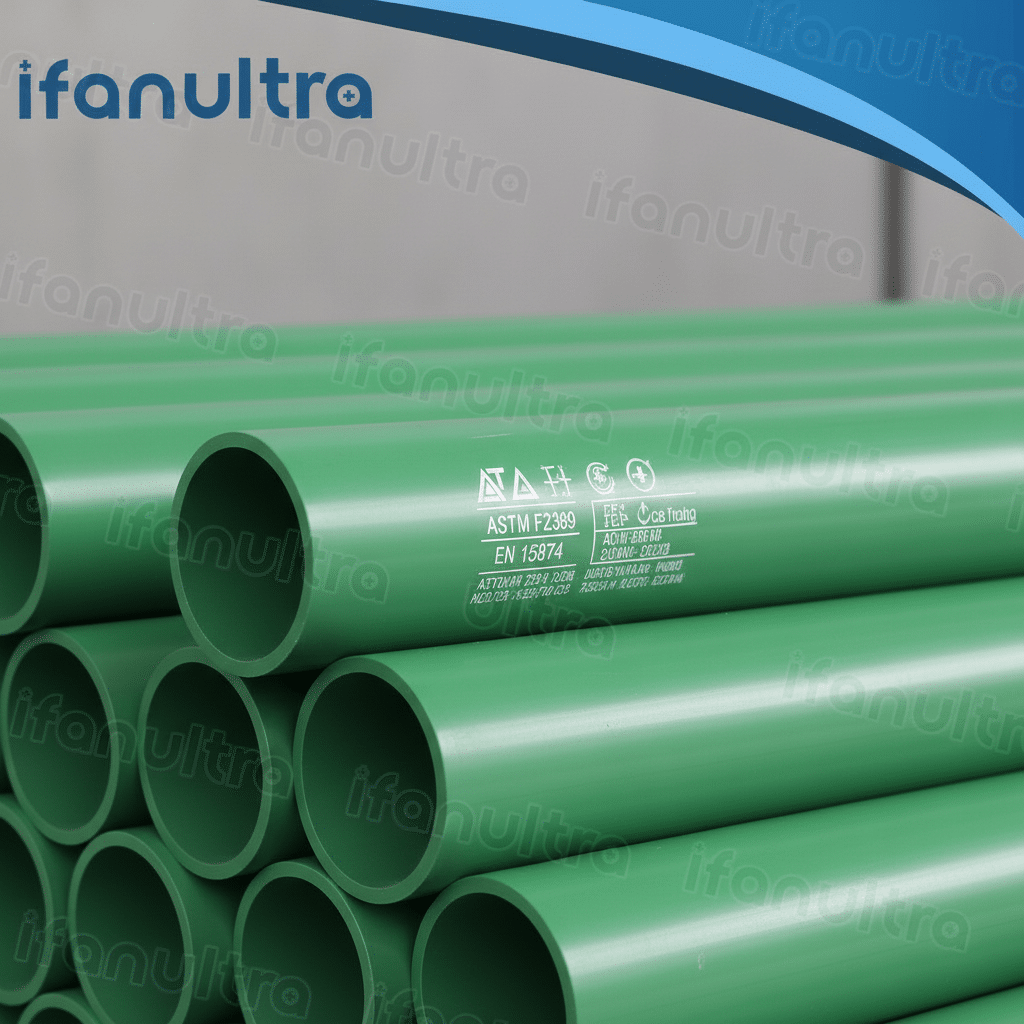
Pitfall 1: Assuming Equivalence
Many exporters think, “If it meets ASTM, it must be fine for Europe.” This is dangerous. While many standards align at a high level, they can diverge in testing conditions, safety margins, and specific parameters. For example:
- Pressure testing: One standard might test at 20°C, another at 95°C. A pipe that passes the former might fail the latter.
- Material composition: Some countries ban certain additives that are allowed elsewhere. Even if the pipe looks the same, the chemical formulation could violate regulations.
Pitfall 2: Overlooking Supplementary Requirements
A product might meet the core standard but miss an additional local requirement. For instance:
- In the US, drinking water pipes must have NSF/ANSI 61 certification for material safety. Without it, even an ASTM-compliant pipe cannot be sold for potable water.
- In Germany, the DVGW certification is often mandatory beyond the basic EN standard.
- In Saudi Arabia, the SASO conformity mark requires both product testing and factory inspection.
Pitfall 3: Differences in Testing Methods and Sampling
Even when the technical parameters are similar, the test procedure might differ. A standard might require a different sample size, conditioning period, or failure criterion. If you test only to one method, you might not be prepared for the other.
Pitfall 4: Ignoring Documentation and Labeling Rules
Compliance is not just about the product; it’s also about the paper trail. Many countries require specific markings, instruction languages, or technical files to be kept. For example:
- The EU requires a Declaration of Performance (DoP) and CE marking affixed.
- Russia mandates a GOST certificate and often a permit for each shipment.
- Some markets require notarized translations of certificates.
Pitfall 5: Underestimating the Cost of Re-Certification
If your product is approved in one market and you assume it will pass in another without testing, you risk rework. However, many certification bodies require new tests, even for similar standards. Budgeting for multiple certifications is essential.
The following table illustrates potential gaps between two common standards:
| Aspect | ASTM F2389 (EE.UU.) | EN 15874 (EU) |
|---|---|---|
| Hydrostatic strength test | 1000h at 20°C, 165h at 95°C | 1000h at 20°C, 1000h at 95°C (different durations) |
| Material classification | PP-R defined by density and melt flow | PP-R defined by MRS (minimum required strength) |
| Marking requirements | Manufacturer name, size, pressure rating, NSF mark if applicable | CE mark, DoP number, pressure class, standard reference |
| Fitness for contact with drinking water | NSF/ANSI 61 required | National regulations (e.g., ACS in France, W270 in Germany) |
To avoid these pitfalls, always:
- Get a gap analysis from a certification body.
- Test specifically for the target market.
- Build compliance into the product design phase.
How Can a Sourcing Partner Help Manage Multi-Country Compliance Requirements?
When a client juggles exports to Russia, the EU, and Southeast Asia, they often ask if we can handle compliance. The answer is yes—because that’s exactly what IFAN does.
A sourcing partner with local knowledge and global experience can manage multi-country compliance by maintaining a database of requirements, coordinating with accredited testing labs, ensuring products are designed for multiple certifications, and handling the documentation for each market. This reduces your risk and frees you to focus on sales.
How We at IFAN Simplify Compliance
At IFAN, we’ve built our business around helping clients navigate the complexity of Chinese manufacturing and global exports. Here’s how we approach multi-country compliance:
1. Regulatory Intelligence
We continuously monitor plumbing codes and certification updates in our key markets: Russia, Southeast Asia, the Middle East, Africa, Europe, and the Americas. When a client expresses interest in a new country, we can immediately outline the required standards, testing protocols, and approximate costs.
2. Factory and Product Pre-Qualification
We work with a network of factories that are accustomed to producing for various standards. We audit them not just for quality, but also for their familiarity with export certifications. If a factory has experience making pipes for the EU, they likely understand ISO and EN norms. This baseline reduces the learning curve.
3. Coordinating Testing and Certification
We have relationships with internationally accredited labs (like SGS, TÜV, Intertek) and local certification bodies. We manage the entire process—from sending samples to reviewing test reports—so you don’t have to deal with language barriers or bureaucratic delays.
4. Design for Compliance
Sometimes a product needs minor modifications to satisfy multiple codes. Our engineering team can advise on adjustments that maintain performance while meeting diverse requirements. For example, a universal PPR pipe formulation that works for both ASTM and EN standards.
5. Documentation Management
Different markets require different paperwork: certificates, test reports, declarations, invoices with specific wording, etc. We compile and maintain these documents per country, ensuring each shipment has the correct package. This prevents customs holdups.
Benefits of Using a Sourcing Partner
The table below outlines typical compliance activities and how a sourcing partner like IFAN handles them:
| Compliance Activity | DIY Approach | With IFAN Sourcing Partner |
|---|---|---|
| Identifying applicable standards | Research multiple websites, possibly miss updates | Immediate access to our country-specific database |
| Finding a certified lab | Search, vet, and negotiate with labs | Pre-vetted labs with negotiated rates |
| Communicating technical specs | Risk of misinterpretation | Engineers who speak both languages and standards |
| Managing multiple certifications | Track deadlines and renewals for each | We maintain a compliance calendar |
| Handling customs documentation | May cause delays due to errors | Our documentation is checked for accuracy |
Ultimately, a sourcing partner acts as your compliance department, reducing risk and speeding time to market.
Why Is Early Code Research Essential to Avoid Costly Redesigns Later?
A client once brought us a product designed for the US market, then wanted to sell in Europe. The redesign cost them months and thousands of dollars. Had they researched earlier, they could have designed a dual-certification product from the start.
Early code research is essential because it allows you to incorporate compliance into the initial design, rather than retrofitting later. Retrofitting often requires material changes, tooling modifications, or even complete product redesigns—each adding significant time and expense. Starting with a clear understanding of target markets’ codes ensures your product is “born compliant.”
The Cost of Late Compliance
When you discover a compliance issue after production has begun, the consequences cascade:
- Material waste: If the pipe formulation doesn’t meet a chemical resistance requirement, you might have to scrap existing inventory.
- Tooling modifications: Molds for fittings might need changes to meet dimensional tolerances, which can cost thousands and take weeks.
- Retesting fees: Each redesign triggers new testing, often at full cost.
- Delayed market entry: While you rework, competitors capture market share.
- Lost reputation: If non-compliant products slip through, you risk recalls and damaged trust.
How Early Research Prevents These Problems
Imagine you plan to export to both Russia and the EU. If you research early, you learn:
- Both accept EN 15874, but Russia also requires GOST certification with some additional tests.
- The material must be resistant to higher temperatures (tested at 95°C for longer in EN).
- The pipe dimensions must meet both metric (EU) and possibly inch-based (Russia) standards, but PPR is typically metric.
With this knowledge, you can design a product that:
- Uses a virgin PPR compound that passes both EN and GOST hydrostatic tests.
- Has markings that accommodate both sets of requirements.
- Is produced with tolerances that satisfy both.
This “design once, sell many” approach is far cheaper than designing separate products for each market.
The 80/20 Rule in Compliance
Often, 80% of compliance requirements are common across markets. The remaining 20% are specific quirks. Early research helps you identify that 20% early, so you can build in flexibility. For example, you might produce a standard pipe that is certified to EN, and then for Russia you add a specific GOST label and supplementary test report—without changing the pipe itself.
Real-World Example from IFAN
We had a client who wanted to sell PPR fittings in both the Middle East and Africa. Early research showed that while most African countries accept ISO standards, some former French colonies required ACS certification for potable water. We recommended designing a fitting that could be tested for both ISO 15874 and ACS simultaneously. The cost of dual testing at the prototype stage was minimal compared to the cost of redesigning and retesting later. The client successfully entered both markets with one product line.
Checklist for Early Code Research
- At product concept stage:
- List all target markets.
- Identify applicable standards.
- Check if there are overlapping requirements.
- Engage a certification body for a preliminary gap analysis.
- During design:
- Specify materials that meet the strictest requirements.
- Design dimensions and tolerances to accommodate all targeted standards.
- Plan for multi-language labeling if needed.
- Before production:
- Conduct tests for the most demanding market first.
- Use the same test reports to apply for certifications in other markets (mutual recognition may apply).
- Build a compliance file with all certificates and test data.
Cost Comparison: Early vs Late Compliance
| Activity | Early Research & Design | Late Retrofit |
|---|---|---|
| Material selection | One optimized material chosen upfront | May need to reformulate and retest |
| Tooling | Designed for all target markets | May require new molds |
| Testing | Combined tests, often single samples | Multiple tests on different versions |
| Time to market | 3-6 months | 6-12 months |
| Additional cost | Low (5-10% of development) | High (30-50% or more) |
The message is clear: spend time on research before you cut metal.
Conclusión
Navigating international plumbing codes demands early research, understanding of pitfalls, and expert support. IFAN’s comprehensive sourcing services include regulatory guidance and multi-certification product options—contact us to ensure your exports flow smoothly.









 English
 Español
 Français
 Português do Brasil