
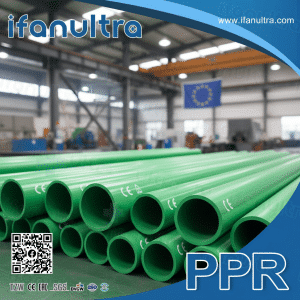
I once lost a shipment because our documentation didn’t meet EU standards. That costly mistake taught me the importance of understanding CE marking inside out.
CE marking for piping sold in the EU requires products to meet relevant harmonized standards, have a Declaration of Performance (DoP), and display the CE mark visibly. This is mandatory for construction products under the Construction Products Regulation (CPR). It proves the product meets essential safety, health, and environmental requirements for free movement within the European market.
However, CE marking involves more than just slapping a label on a pipe. Many suppliers misunderstand the paperwork, the standards, and the legal risks. Let’s break down the key requirements step by step.
Which EU Harmonized Standards Apply to Different Piping Products?
I remember the confusion we faced when a client asked which standard applied to our PPR pipes. We had to research fast, and we learned a valuable lesson.
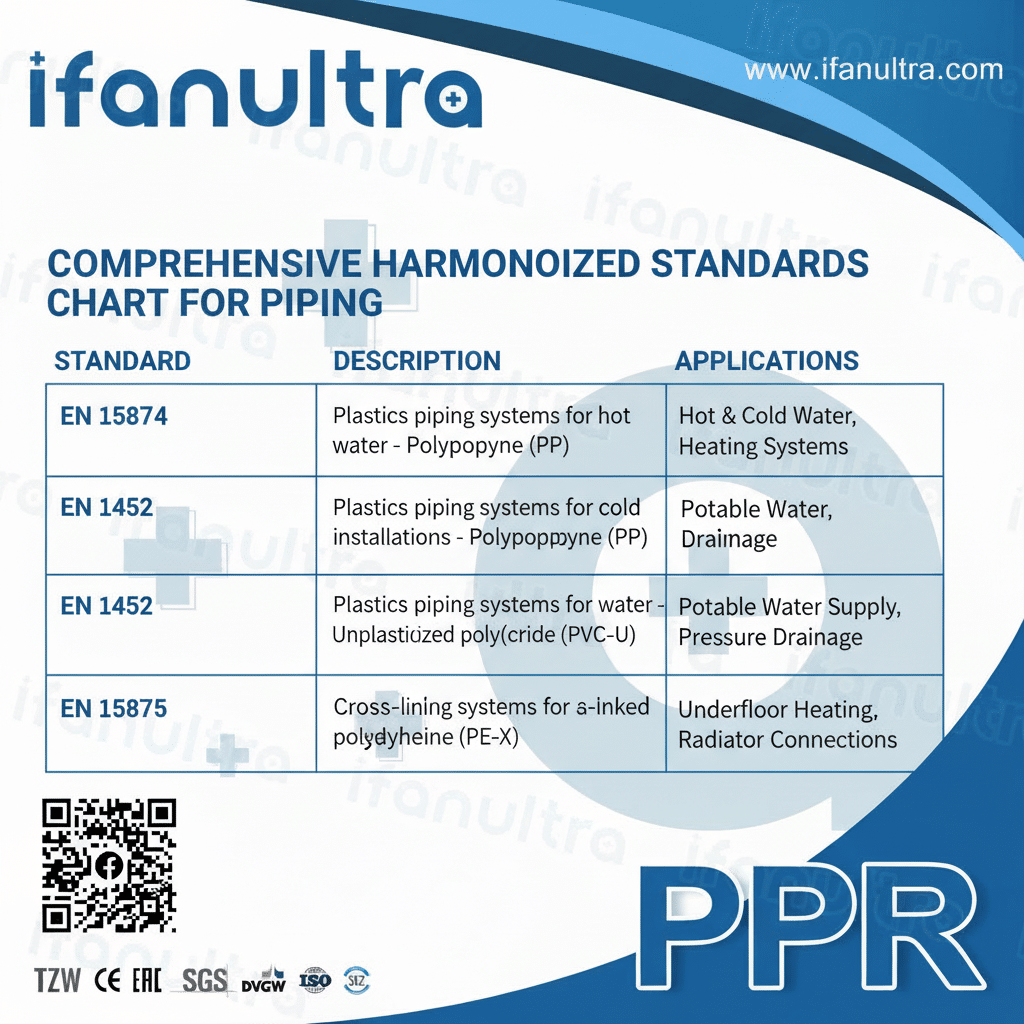
The correct harmonized standard for a piping product depends on its material and intended use. For example, PP-R pipes fall under EN 15874, PVC-U pipes under EN 1452, and cross‑linked polyethylene (PEX) under EN 15875. Metal pipes like copper have their own standards (e.g., EN 1057). You must identify the right standard to comply with CE marking.
Understanding Harmonized Standards
Harmonized standards are European standards developed by CEN (European Committee for Standardization) that support EU legislation. For construction products, they are listed in the Official Journal of the EU. When you apply a harmonized standard, you can presume conformity with the Essential Characteristics required by the CPR.
For piping systems, each material family has its own standard. These standards define test methods, performance classes, and requirements for things like pressure resistance, temperature behavior, and durability.
Common Harmonized Standards for Piping
The table below lists some key harmonized standards for common piping materials used in water supply, drainage, and heating.
| Material | Typical Application | Harmonized Standard |
|---|---|---|
| PP‑R (Polypropylene Random Copolymer) | Hot/cold water inside buildings | EN 15874 |
| PVC‑U (Unplasticized Polyvinyl Chloride) | Drainage, sewer, rainwater | EN 1452 (pressure pipes) / EN 1329 (soil and waste) |
| PEX (Cross‑linked Polyethylene) | Underfloor heating, radiator connections | EN 15875 |
| PE (Polyethylene) | Gas and water mains | EN 1555 (gas) / EN 12201 (water) |
| Copper | Water and gas pipes | EN 1057 |
| Multilayer (PEX‑AL‑PEX) | Heating and plumbing | EN 15632 (for pre‑insulated) or EN 12116 (for fittings) |
It is crucial to check the latest version of the standard, as they get updated. Also, some products may need to meet multiple standards if they combine functions.
How to Find the Correct Standard
Start by identifying your product’s material and its intended use (e.g., hot water inside buildings). Then search the European Commission’s website or consult a notified body. Many manufacturers also list the applicable standards in their technical literature.
If you use the wrong standard, your DoP will be invalid, and customs can reject your goods. In my experience, working with a test lab or a certification body early on saves time and money.
What Technical Documentation Must Be Compiled for the Declaration of Performance?
Without proper documentation, customs can reject your shipment. We have faced this more than once, and it is a nightmare.
The Declaration of Performance (DoP) requires technical documentation that includes test reports from a notified body (if applicable), results of factory production control, and the product’s intended use. The DoP must list the essential characteristics and their declared performance values. All documents must be kept for 10 years after the product is placed on the market.
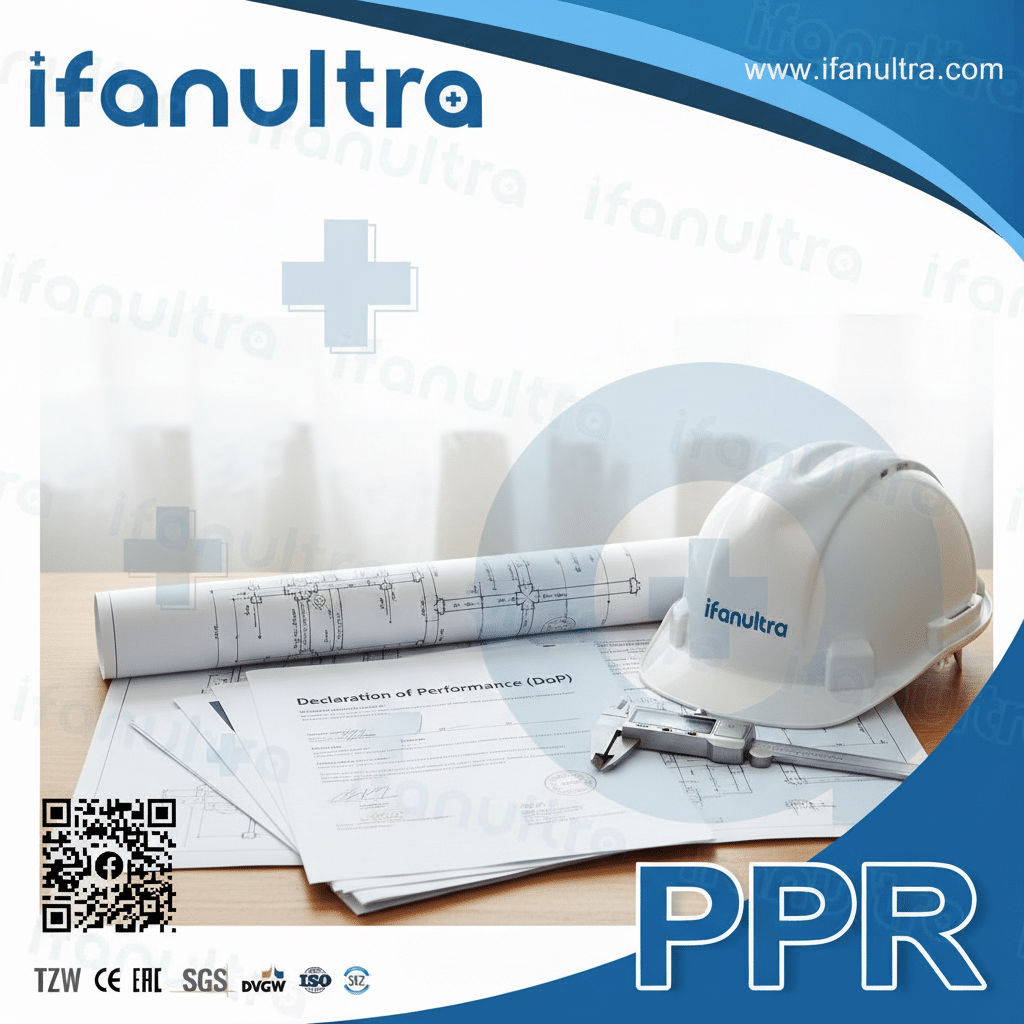
What is the Declaration of Performance?
The DoP is a key document under the CPR. The manufacturer must draw it up before placing a construction product on the EU market. It states the performance of the product in relation to its essential characteristics, such as reaction to fire, thermal conductivity, or mechanical strength.
The DoP must be provided either in paper form or via a website address. It must be in the language required by the member state where the product is sold.
Essential Contents of a DoP
A compliant DoP must include the following information:
- The product type and its unique identification code.
- The intended use or uses.
- The manufacturer’s name and address.
- The system of assessment and verification of constancy of performance (AVCP) applied.
- The notified body involved (if applicable).
- The declared performance for each essential characteristic listed in the relevant harmonized standard.
- The signature of the authorized representative.
Supporting Technical Documentation
To create the DoP, you need a technical file that contains:
- Test Reports: These come from testing the product according to the harmonized standard. For some performance levels (e.g., reaction to fire), tests must be done by a notified body.
- Factory Production Control (FPC) Documentation: You must show that your manufacturing process consistently produces products that meet the declared performance. This includes quality manuals, process records, and internal test results.
- Design Calculations and Drawings: For some products, you may need to provide evidence that the design meets the standard.
- Raw Material Certificates: Proof that the materials used comply with the standard’s requirements.
Keeping Records
All technical documentation must be kept for at least 10 years after the product is placed on the market. This is a legal requirement. If an authority questions your CE marking, you must be able to produce these documents quickly.
I recommend organizing your files digitally and backing them up. We use a cloud system with access controls to ensure nothing gets lost.
How Does the CE Mark Differ from Voluntary Quality Marks?
Many clients ask us, “If we have CE, do we need other marks?” The answer often surprises them.
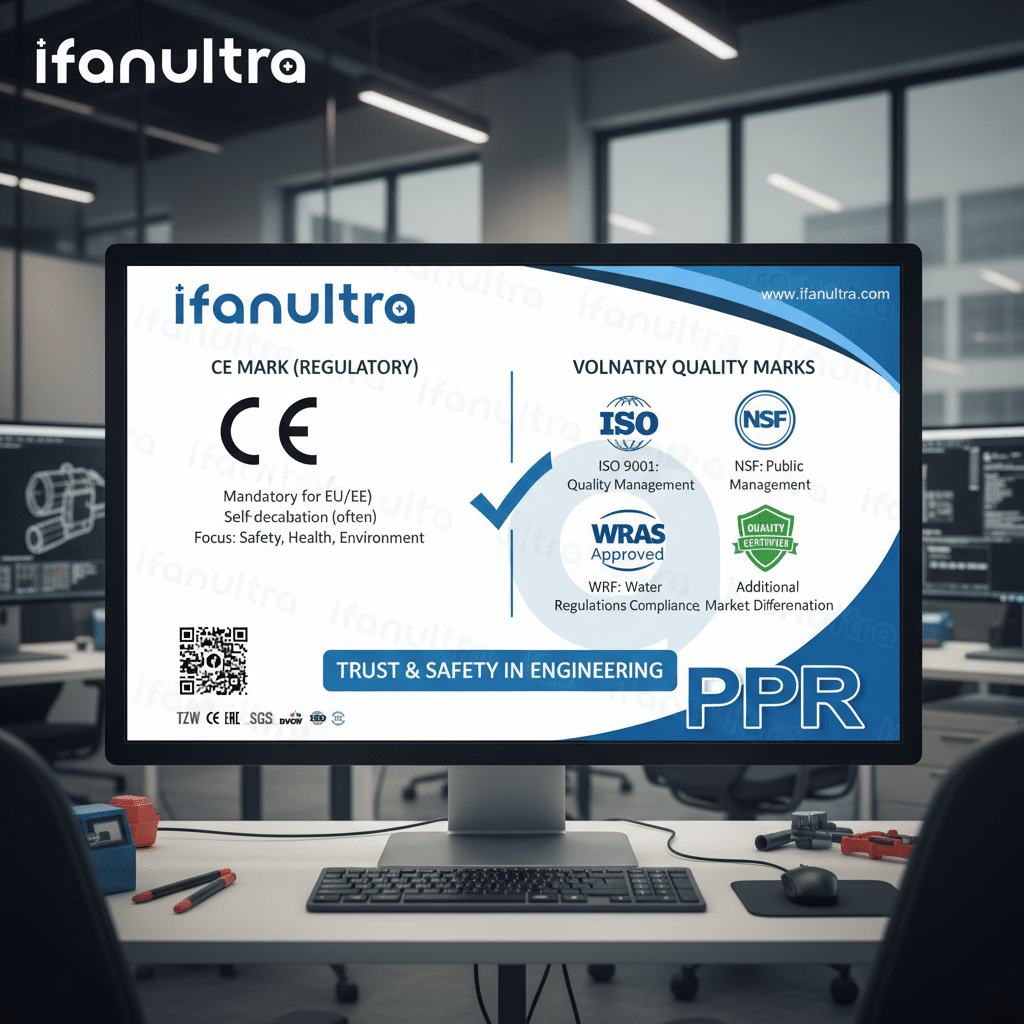
The CE mark is a legal requirement for selling in the EU; it is not a quality mark. Voluntary quality marks, such as ISO 9001, NSF, or KIWA, show that the product meets additional industry standards or that the manufacturer follows specific quality management practices. These marks can build trust and open doors, but they are not mandatory for market access.
Legal vs. Voluntary: What’s the Difference?
The CE marking is a self‑declaration by the manufacturer that the product meets all applicable EU regulations. For construction products, this means complying with the CPR and relevant harmonized standards. It is essentially a passport that allows the product to be sold anywhere in the European Economic Area.
Voluntary quality marks are issued by independent third‑party organizations. They demonstrate that the product has passed additional tests or that the production process meets specific criteria. These marks are often recognized by specifiers and can differentiate your product in a crowded market.
Examples of Common Voluntary Marks
| Mark | Alcance | What It Shows |
|---|---|---|
| ISO 9001 | Quality management | Manufacturer has a certified quality management system. |
| NSF / ANSI 61 | Drinking water safety | Product does not leach harmful substances into drinking water. |
| KIWA / KOMO | Dutch certification for construction products | Product meets Dutch building regulations and quality requirements. |
| WRAS (UK) | Water fittings | Product complies with UK water supply regulations. |
| TÜV / GS | Product safety | Product tested for safety by a German notified body. |
Why Both Matter
While CE is mandatory, voluntary marks can give you a competitive edge. For example, many European contractors specifically request NSF certification for pipes that carry drinking water. If you only have CE, you might lose that tender.
In our experience, customers in different regions value different marks. For the Russian market, GOST certification is often required. For the Middle East, they may ask for SASO or GSO. We always check with our clients what voluntary certifications they need.
A Word of Caution
Never confuse voluntary marks with the CE mark. CE is not a sign of quality; it is a sign of legal compliance. If you market your product as “CE certified” in a way that suggests it is superior quality, you may mislead customers and violate advertising laws. Be clear: CE means it can be sold legally; other marks mean it meets extra criteria.
What Are the Legal Consequences of Incorrect or Missing CE Marking?
The penalties are severe. I have seen companies fined heavily and even banned from the EU market for non‑compliance.
The legal consequences of incorrect or missing CE marking can include product recalls, fines, imprisonment of responsible individuals, and exclusion from the EU market. National market surveillance authorities have the power to seize non‑compliant products and impose penalties based on their national laws. In some countries, the fines can reach hundreds of thousands of euros.
Potential Penalties Across the EU
Each EU member state has its own enforcement regime, but all are required to have effective, proportionate, and dissuasive penalties. Here is what can happen:
- Product Recall and Withdrawal: Authorities can order you to recall all non‑compliant products from the market at your own expense. This can bankrupt a small company.
- Fines: Fines vary widely. In Germany, fines can be up to €50,000 per offense; in France, up to €75,000; in Italy, administrative fines can be significant.
- Imprisonment: In serious cases of fraud or repeated violations, individuals (e.g., company directors) can face imprisonment. For example, under UK law (even post‑Brexit, similar rules apply in the EU), knowingly placing non‑compliant products can lead to prison terms.
- Criminal Record: A conviction can harm your company’s reputation and ability to do business.
- Exclusion from Public Tenders: Many public contracts require compliance with CE marking. A violation can disqualify you from bidding.
Real‑World Cases
In 2019, a Chinese manufacturer of plastic pipes was fined €200,000 by Dutch authorities for selling products without proper CE marking and falsifying test reports. The company had to recall thousands of meters of pipe, and its European distributor went bankrupt.
Another case: A German supplier of fittings was prosecuted after a pipe failure caused water damage. Investigators found the CE mark was applied without the required DoP. The responsible manager received a suspended prison sentence and a €50,000 fine.
How to Avoid Trouble
Based on our experience at IFAN, here are practical steps to stay compliant:
- Identify the correct harmonized standard for your product. Do not guess; consult a notified body if unsure.
- Conduct all required tests by an accredited laboratory. Keep reports for at least 10 years.
- Set up a robust Factory Production Control system and document it thoroughly.
- Draft the Declaration of Performance correctly, listing all essential characteristics.
- Affix the CE mark visibly, legibly, and permanently, following the rules (height at least 5mm).
- Monitor regulatory updates. Standards and laws change. Subscribe to updates from the European Commission.
- Work with a local representative in the EU who understands the market and can help with documentation.
Remember, ignorance is not an excuse. Authorities will hold you responsible even if you hired a consultant who made mistakes.
Conclusión
CE marking is a complex but essential requirement for selling piping in the EU. For reliable, fully certified piping solutions that meet all EU standards, choose IFAN’s PP‑R pipes and fittings—they come with complete technical documentation and the CE mark you can trust.









 English
 Español
 Français
 Português do Brasil