
I once visited a refinery where a piping failure caused a costly shutdown. That incident taught me why standards like ASME B31.3 exist and why we must follow them strictly.
ASME B31.3, also known as the Process Piping Code, is the essential standard for designing, building, and inspecting piping systems in chemical plants, refineries, and industrial facilities. It sets minimum requirements for materials, design, fabrication, testing, and inspection to ensure safe and reliable operation under various pressures and temperatures.
This code serves as the foundation for safe industrial piping worldwide. Let’s examine its key components and applications.
What Types of Industrial Piping Systems Does ASME B31.3 Cover?
Engineers often ask us which piping systems fall under this code. The answer covers a wide range of industrial applications.
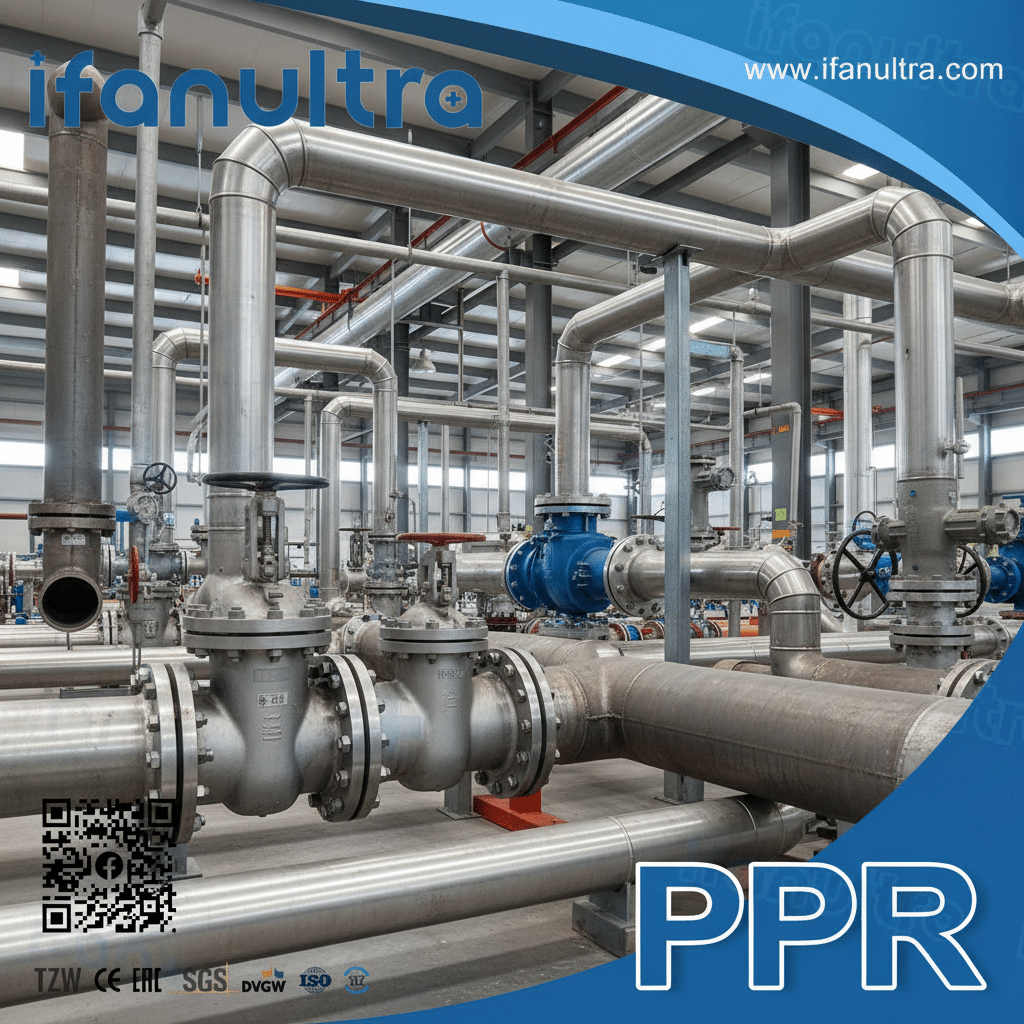
ASME B31.3 covers piping systems that transport fluids, chemicals, gases, and other materials in facilities like oil refineries, chemical plants, pharmaceutical factories, and paper mills. It applies to all piping within these facilities, including connecting pipes, flanges, valves, fittings, and pressure-containing components, regardless of fluid type or operating conditions.
Understanding the Scope of the Code
The scope of B31.3 is intentionally broad because process piping varies greatly across industries. The code covers piping from the point where it connects to equipment, like pumps or vessels, up to the battery limits of the facility. This includes:
- Raw Material Lines: Pipes carrying incoming materials for processing.
- Intermediate Transfer Lines: Pipes moving partially processed fluids between equipment.
- Finished Product Lines: Pipes transporting final products to storage tanks or loading areas.
- Utility Piping: Steam, air, water, and other support systems within the plant.
Specific Exclusions from B31.3
It’s equally important to know what B31.3 does not cover. The code explicitly excludes:
| System Type | Covered By | Ejemplos |
|---|---|---|
| Power Boiler Piping | ASME B31.1 | High-pressure steam lines directly from boilers. |
| Building Services Piping | Local plumbing codes | Water supply and drainage in offices or homes. |
| Hydraulic Fluid Systems | Other standards | Systems using flammable or non-flammable fluids. |
| Tubing within Equipment | Manufacturer’s design | Internal tubing inside heat exchangers. |
Category M and High-Pressure Fluid Services
Within B31.3, the code further categorizes fluid services based on hazard level. For example:
- Category M Fluid Service: For extremely hazardous fluids where a single leak could cause serious harm. These require stricter design and inspection rules.
- High-Pressure Fluid Service: For systems operating at pressures above standard limits. These require additional analysis and thicker pipe walls.
When IFAN supplies fittings for industrial clients, we always confirm which fluid service category applies. This ensures we recommend products with appropriate pressure ratings and material certifications.
How Does the Code Define Material Selection, Design, and Fabrication Requirements?
Specifying the right material is only half the battle. The code provides a complete framework from material choice to final fabrication.
ASME B31.3 defines material selection by listing approved materials with specific stress values for different temperatures. It establishes design requirements through formulas for pressure design, minimum wall thickness, and allowable stresses. For fabrication, it specifies rules for welding, heat treatment, bending, and assembly to ensure consistent quality throughout construction.

Material Selection Criteria
The code provides tables of acceptable materials, including carbon steel, stainless steel, alloys, and non-metals like PP-R for certain applications. For each material, it specifies:
- Maximum Allowable Stress: The stress level the material can safely handle at various temperatures.
- Temperature Limits: The range where the material maintains its mechanical properties.
- Corrosion Allowance: Extra thickness to account for expected material loss over time.
- Impact Test Requirements: Whether the material needs testing for low-temperature toughness.
Engineers must select materials compatible with the fluid, pressure, and temperature. For example, a hydrochloric acid line requires different materials than a high-pressure steam line.
Design Requirements in Detail
The design section of B31.3 provides formulas for calculating:
- Minimum Wall Thickness: Based on internal pressure, pipe diameter, and allowable stress.
- Pressure Design of Components: Rules for flanges, fittings, and branch connections.
- Sustained and Occasional Loads: How to account for weight, thermal expansion, wind, and earthquakes.
- Flexibility Analysis: When to perform detailed stress analysis for thermal movements.
Fabrication and Assembly Rules
The code also governs how workers assemble the piping system:
| Fabrication Aspect | Key Requirements | Por qué es importante |
|---|---|---|
| Welding Procedures | Must be qualified and documented (WPS/PQR). | Ensures consistent, strong welds every time. |
| Welder Qualification | Welders must pass performance tests. | Verifies skill and competence. |
| Heat Treatment | Specifies preheat and post-weld heat treatment needs. | Relieves residual stress and prevents cracking. |
| Bending | Limits on bending radius and wall thinning. | Prevents weak points in formed pipes. |
Quality Control During Fabrication
Throughout fabrication, the code requires inspection and testing. This includes visual inspection of welds, dimensional checks, and non-destructive examination (NDE) like radiography or ultrasonic testing for critical services.
At IFAN, we apply similar principles when manufacturing fittings. Our quality control includes material certification, dimensional verification, and pressure testing to ensure every product meets the demands of industrial applications.
Why is ASME B31.3 Compliance Critical for Safety in Chemical and Refinery Plants?
Safety is not optional in a refinery. I’ve seen the consequences of non-compliance firsthand, and they are severe.
ASME B31.3 compliance is critical because it provides a systematic framework to prevent catastrophic failures. It ensures piping systems can withstand expected pressures, temperatures, and environmental conditions throughout their service life. Without this standard, plants risk leaks, fires, explosions, and toxic releases that endanger workers, the public, and the environment.
The Cost of Non-Compliance
When plants ignore code requirements, the results can be devastating. Consider these real-world scenarios:
- Material Mismatch: Using carbon steel instead of stainless steel in a corrosive environment leads to rapid thinning and sudden rupture.
- Inadequate Support: Improper pipe supports cause excessive stress at fittings, leading to fatigue cracks and leaks.
- Poor Welding: Unqualified welding procedures produce weak joints that fail under pressure.
- No Stress Analysis: Thermal expansion without flexibility causes pipes to buckle or pull apart at connections.
How the Code Prevents Failures
B31.3 addresses each of these risks through specific requirements:
1. Material Traceability
The code requires documented material test reports for critical services. This ensures the pipe installed matches the specified grade and properties. Without traceability, a contractor might substitute inferior material unknowingly.
2. Design Margin
The code builds in safety margins. Allowable stresses are set well below the material’s actual yield strength. This accounts for uncertainties in loads, minor defects, and normal wear over time.
3. Quality Assurance
Fabrication rules ensure consistent quality. For example:
| Code Requirement | Safety Benefit |
|---|---|
| Qualified welding procedures | Consistent weld strength and integrity. |
| Visual inspection of all welds | Catches surface defects early. |
| Hydrostatic testing | Proves system integrity before startup. |
| NDE for critical welds | Finds internal flaws invisible to the eye. |
Protecting People and Assets
Ultimately, B31.3 compliance protects three things:
- Human Life: Workers and nearby communities stay safe from toxic releases or explosions.
- Environment: Preventing leaks avoids soil and water contamination.
- Financial Investment: A single major incident can cost millions in repairs, fines, and lost production.
A Practical Example
Imagine a chemical plant handling hydrogen at high pressure. Hydrogen can cause embrittlement in some steels, making them crack unexpectedly. B31.3 specifies materials resistant to hydrogen attack and requires specific heat treatment to remove residual stresses. Following these rules prevents a sudden rupture that could release flammable gas.
For IFAN clients in industrial sectors, we always verify that our PP-R and other fittings meet the relevant material standards for their specific application. While PP-R suits many chemical and water applications, we help clients identify when metallic materials might be required under B31.3.
How Do Engineers Apply B31.3 Stress Analysis to Piping System Design?
Stress analysis sounds complicated, but it follows logical steps defined clearly in the code.
Engineers apply B31.3 stress analysis by first calculating the required pipe wall thickness for internal pressure. Then they evaluate the system for sustained loads (weight, pressure), occasional loads (wind, earthquake), and expansion loads (thermal movement). When thermal stresses exceed allowable limits, they modify the layout by adding loops, expansion joints, or changing support locations to reduce stress.

The Three Stress Categories
B31.3 divides stress analysis into three main categories, each with different allowable limits:
1. Primary Stresses (Sustained)
These come from pressure and weight. They are non-self-limiting, meaning if they exceed yield strength, failure occurs immediately. Engineers check that:
- Hoop stress from pressure stays below allowable stress.
- Bending stress from pipe weight and fittings remains within limits.
2. Primary Stresses (Occasional)
These come from short-term events like wind, earthquakes, or relief valve discharge. The code allows higher stresses for these rare events, typically 1.33 times the normal allowable.
3. Secondary Stresses (Expansion)
These come from thermal expansion and contraction. Unlike primary stresses, they are self-limiting. If the pipe yields slightly, it relieves some stress. However, repeated cycling can cause fatigue failure. Engineers check that the displacement stress range stays below allowable limits for the expected number of cycles.
The Stress Analysis Process
Here’s how engineers typically apply B31.3 requirements:
Step 1: Determine Design Conditions
- Design pressure and temperature
- Fluid properties
- Expected cycles (for fatigue analysis)
Step 2: Calculate Minimum Wall Thickness
Using the B31.3 formula: t = (P × D) / (2 × (S × E + P × Y))
Where P is pressure, D is diameter, S is allowable stress, E is joint efficiency, and Y is a temperature coefficient.
Step 3: Model the System
Engineers use software like Caesar II or AutoPIPE to create a 3D model of the piping system, including:
- Pipe sizes and materials
- Fittings, valves, and flanges
- Supports and restraints
- Temperature and pressure profiles
Step 4: Analyze Load Cases
The software calculates stresses for various load combinations:
| Load Case | What It Includes | Allowable Stress |
|---|---|---|
| Sustained (SUS) | Pressure + Weight | Basic allowable stress (Sh) |
| Expansion (EXP) | Thermal displacement | Allowable expansion stress range (SA) |
| Occasional (OCC) | Sustained + Wind/Earthquake | 1.33 × Sh |
Step 5: Check Supports and Nozzle Loads
Engineers verify that supports can handle calculated loads and that forces on equipment nozzles stay within manufacturer limits.
Step 6: Modify Design as Needed
If stresses exceed limits, engineers modify the design by:
- Adding expansion loops to absorb thermal movement
- Changing support types (guides, anchors, springs)
- Adjusting pipe routing for more flexibility
- Increasing wall thickness in high-stress areas
Practical Application Example
Consider a hot oil line running from a heater to a storage tank, a distance of 100 meters with a temperature change of 150°C. Without flexibility, thermal expansion would create enormous stress at the tank connection. The engineer might:
- Calculate the expected expansion (roughly 1.7 mm per meter of pipe, or 170 mm total).
- Model the pipe with several 90-degree turns to create natural flexibility.
- Place guides to direct movement toward an expansion loop.
- Verify that stresses at the tank nozzle stay within acceptable limits.
When Stress Analysis is Mandatory
B31.3 does not require detailed analysis for every system. It provides criteria to determine when analysis is needed:
| System Characteristic | Analysis Requirement |
|---|---|
| Duplicate or successful existing installations | May not require formal analysis |
| Small, low-temperature systems | Can use simplified methods |
| Large, high-temperature, or critical systems | Formal stress analysis required |
| Cyclic conditions (frequent temperature changes) | Fatigue analysis required |
IFAN’s Role in Code-Compliant Systems
For IFAN clients, understanding B31.3 helps specify the right fittings. While PP-R systems typically operate at lower temperatures than refinery piping, the same stress principles apply. Thermal expansion in plastic pipes is actually higher than in steel, so proper support and allowance for movement remain critical.
We help clients by providing:
- Material properties for stress calculations
- Dimensional data for modeling
- Pressure-temperature ratings for our fittings
- Installation guidelines that support code compliance
Conclusión
ASME B31.3 provides the essential framework for safe, reliable process piping design. For industrial applications requiring certified components, IFAN offers a range of fittings tested to relevant standards, helping engineers build systems that meet code requirements.









 English
 Español
 Français
 Português do Brasil