
We once had a client whose entire project was delayed because their 6-meter pipes couldn’t fit into a standard container. That costly mistake taught me the critical importance of planning long-pipe logistics from day one.
Shipping long-length pipes requires careful planning around transport modes, securing methods, cost implications, and early coordination with freight experts to avoid delays and damage. Pipes longer than standard container dimensions need special handling that affects every stage of the journey.
Let’s break down the key logistics factors you must consider when moving long pipes internationally.
How do you choose between container loading, flat racks, and break-bulk shipping?
Choosing the wrong shipping method can double your costs overnight. I’ve seen clients pay far more than necessary simply because they didn’t understand their options.
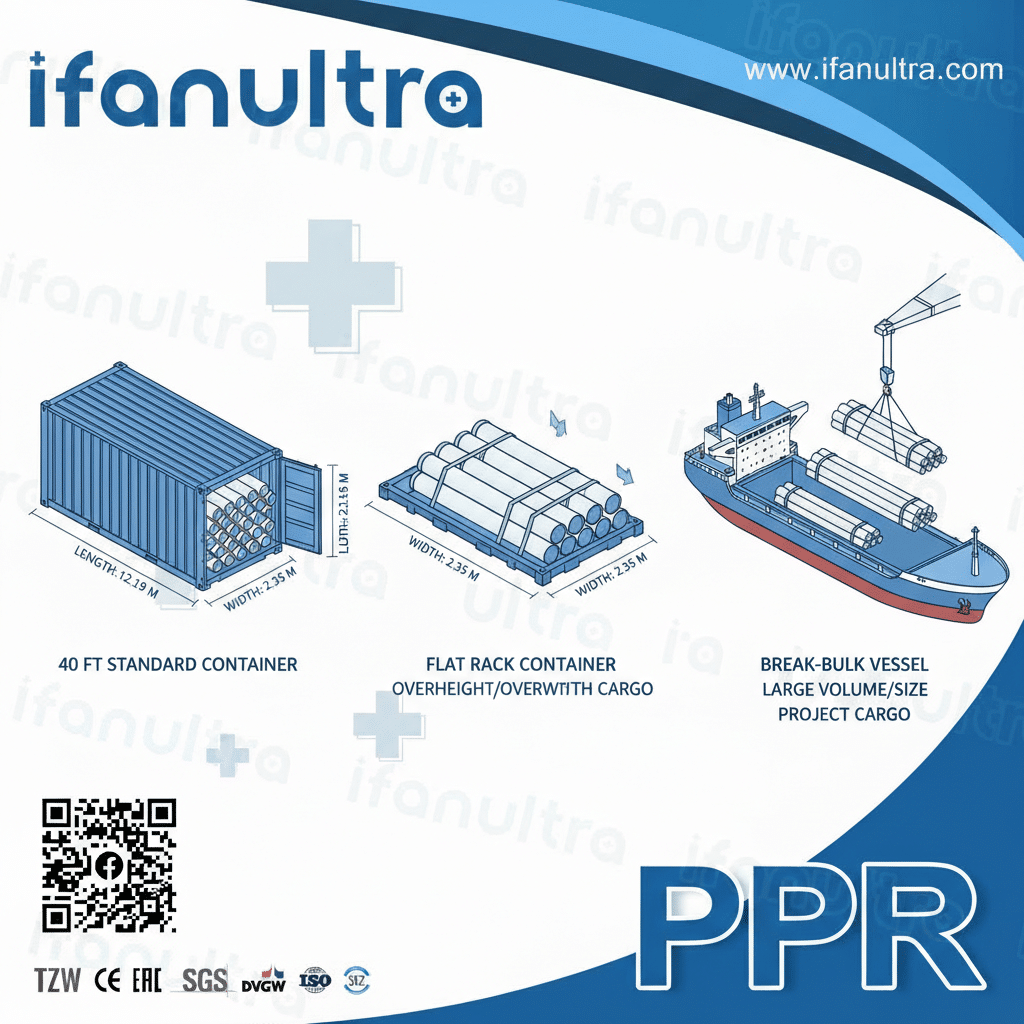
The choice depends on pipe length, volume, and destination. Standard containers work for pipes under 5.8m; flat racks suit longer pipes; break-bulk is for massive volumes or extreme lengths where neither container nor rack is feasible. Each method has distinct cost and handling implications.
Understanding Your Shipping Options
When you ship pipes longer than standard container lengths, you have three main options. Each comes with its own set of advantages and trade-offs. Let’s look at them in detail.
Standard Containers (20ft or 40ft)
Standard dry containers have an internal length of about 5.89m for a 20ft and 12.03m for a 40ft. However, the door opening is smaller, so you cannot load pipes longer than the container’s internal length unless you use multiple containers and join them, which is rarely practical. Therefore, pipes up to 5.8m can fit in a 20ft container. Pipes up to 11.8m can fit in a 40ft container, but you must load them through the doors carefully. For pipes longer than that, containers are not an option.
Flat Racks
Flat racks are open-sided containers with collapsible ends. They are designed for oversized cargo. You can load pipes that extend beyond the rack’s length, as long as the total length does not exceed the vessel’s allowable overhang limits. Flat racks are ideal for pipes up to 12m or even longer, depending on the shipping line’s rules. They provide a sturdy base for securing pipes with lashings.
Break-Bulk Shipping
Break-bulk means cargo is shipped loose, not in a container. Pipes are loaded individually into the ship’s hold or on deck using cranes. This method is suitable for very long pipes (e.g., 18m+) or very heavy pipes that cannot be handled by container cranes. Break-bulk requires specialized vessels or multipurpose ships and often involves port labor for loading and securing.
Cost Comparison
The table below summarizes typical cost factors for each method. Note that actual costs vary by route and market conditions.
| Shipping Method | Suitable Pipe Length | Typical Cost Level | Key Cost Drivers |
|---|---|---|---|
| Standard Container | Up to 5.8m (20ft) or 11.8m (40ft) | Low to Medium | Container freight rates; easy to book |
| Flat Rack | Up to 12m+ (depends on line) | Medium to High | Equipment availability; surcharges for out-of-gauge |
| Break-Bulk | Unlimited (very long) | Alta | Stevedoring; port dues; slower transit |
How to Decide
To choose the right method, ask yourself these questions:
- What is the exact length of your pipes?
- What is the total volume (number of pipes)?
- What are the discharge port’s capabilities? Can they handle flat racks or break-bulk?
- What is your timeline? Break-bulk ships sail less frequently.
From our experience at IFAN, flat racks are the most common solution for pipes in the 6m to 12m range. They offer a good balance between cost and availability. For pipes under 6m, standard containers are almost always cheaper. Break-bulk is usually a last resort for extreme lengths or when no container option exists.
What are the best practices for securing and protecting long pipes during transit?
Improperly secured pipes can shift during ocean transit, causing damage or even puncturing the vessel. I’ve witnessed the aftermath of such failures.
Best practices include using dunnage to prevent movement, applying protective coatings or wrapping to prevent corrosion, and using proper lashing techniques with tension bands. For flat racks, pipes must be securely lashed to the rack’s lashing points, and for containers, internal blocking prevents shifting.
Securing Pipes on Flat Racks
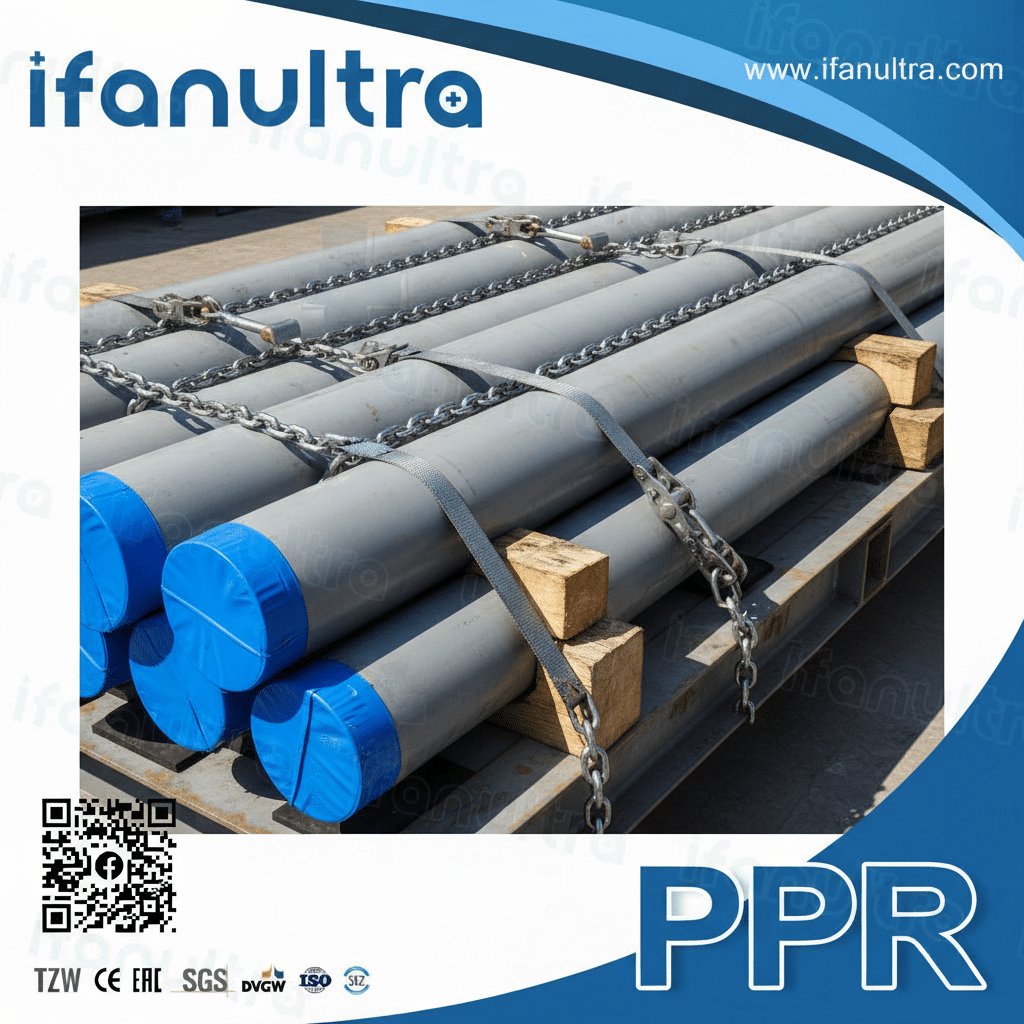
Flat racks are open, so pipes are exposed. Proper lashing is essential to keep them from moving during the voyage. The general steps are:
- Place dunnage (wooden blocks) between layers of pipes to distribute weight and prevent metal-to-metal contact.
- Use steel straps or wire ropes to lash the pipes to the flat rack’s lashing rings. Lashings should be tensioned and placed at regular intervals along the length.
- Add friction mats if needed to increase grip between pipes and the rack.
- Protect edges with padding to prevent the lashings from cutting into the pipe surface.
Shipping lines have specific lashing guidelines. You must follow them to avoid rejection at port.
Protecting Pipes from Corrosion
Long transit times, especially by sea, expose pipes to saltwater and humidity. Without protection, steel pipes can rust quickly. Best practices include:
- Applying a rust-preventive coating (like oil or primer) before shipment.
- Wrapping pipes in VCI (Vapor Corrosion Inhibitor) paper or plastic film.
- Using desiccant bags inside containers to absorb moisture.
- Ensuring pipes are dry before packing to avoid trapped moisture.
Container Loading Techniques
For pipes loaded in standard containers, you must block and brace them to prevent movement. Use wood blocking at the ends and sides, and fill empty spaces with airbags or dunnage. Pipes should be packed tightly so they cannot shift.
Checklist for Securing Long Pipes
The table below summarizes key actions for each cargo type.
| Cargo Type | Securing Method | Protection Method |
|---|---|---|
| Pipes in Container | Wood blocking, airbags, dunnage between layers | VCI wrapping, desiccant bags |
| Pipes on Flat Rack | Steel lashings, dunnage, friction mats | Protective coating, edge protectors |
| Break-Bulk Pipes | Chocking in ship’s hold, wire lashings | Heavy-duty wrapping, cathodic protection if needed |
How does pipe length impact port handling, inland transportation, and delivery costs?
Many buyers only think about ocean freight, but the real cost surprises often come from inland trucking and port charges for oversized cargo.
Longer pipes require special permits, escort vehicles, and specialized trailers for inland transport, significantly increasing costs. Ports may also charge extra for handling out-of-gauge cargo. The longer the pipe, the more complex and expensive the entire logistics chain becomes.
Port Handling for Oversized Cargo
When pipes arrive on a flat rack or as break-bulk, port handling is different from standard containers. Ports may need to use specialized cranes or spreaders to lift the cargo off the vessel. This often incurs additional “heavy lift” or “out-of-gauge” surcharges. Moreover, if the port is not equipped to handle such cargo, it might need to be discharged at a different port, adding transshipment costs.
Inland Transportation Challenges
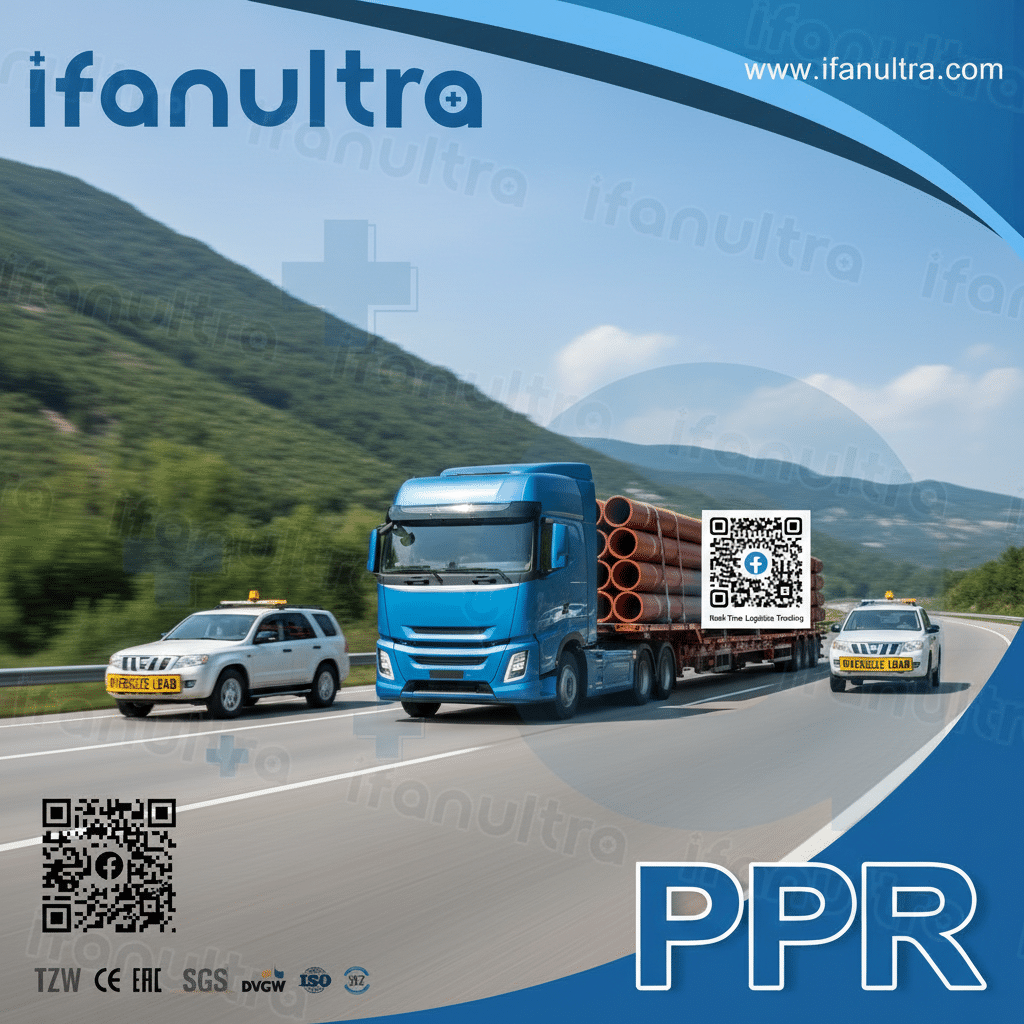
Once the cargo leaves the port, moving it to your warehouse or site involves trucks. Standard flatbed trucks can carry pipes up to about 12m without special permits. For longer lengths, you need:
- Extendable trailers that can be stretched to accommodate longer loads.
- Pilot/escort vehicles to warn other traffic, required by law in many countries for loads over a certain length.
- Special route permits that restrict travel times and routes.
- Police escorts for extremely long or wide loads.
These requirements add significant cost. For example, a permit might cost a few hundred dollars, but an escort vehicle can cost $50–$100 per hour. If the route requires night travel or weekend restrictions, delays pile up.
Cost Breakdown Example
The table below illustrates how costs escalate with pipe length for a typical delivery from a port to a site 100 km away.
| Pipe Length | Transport Mode | Permit Required? | Escort Needed? | Estimated Inland Cost |
|---|---|---|---|---|
| 6m | Standard flatbed | No | No | $500 |
| 12m | Standard flatbed | Yes (often) | Maybe (depends on local laws) | $800 |
| 18m | Extendable trailer | Yes | Yes | $1,500 |
| 24m | Special low-loader | Yes | Yes + police possibly | $2,500+ |
Delivery Coordination
Long pipes also affect delivery scheduling. You cannot simply park a 20m truck in a residential street. You must coordinate with the receiver to ensure there is adequate space for unloading and that no overhead obstructions (power lines, bridges) block the route. This requires advance planning and communication.
Why is early coordination with freight forwarders critical for oversized cargo?
Waiting until the goods are ready to book shipment for long pipes is a recipe for disaster. I’ve seen projects grind to a halt because no vessel had space for flat racks.
Early coordination allows forwarders to secure vessel space for out-of-gauge cargo, arrange necessary permits, and advise on packaging to meet shipping line requirements, avoiding costly delays. For oversized cargo, space is limited and bookings must be made weeks or even months in advance.

Vessel Space Constraints
Not every vessel can carry flat racks or break-bulk cargo. Container ships have limited slots for flat racks, often only on deck. If you book late, those slots may already be taken. Your cargo could be rolled to the next vessel, causing delays of weeks. In peak seasons, space fills up fast.
Equipment Availability
Flat racks themselves are not always available at the loading port. The shipping line may need to reposition empty racks from another port, which takes time. Early booking gives them time to arrange equipment.
Documentation and Approvals
Shipping oversized cargo requires special documentation: dimension drawings, weight certificates, and sometimes engineering approvals for lashing plans. Port authorities may need to approve the cargo for loading. Starting early ensures all paperwork is in order.
Planning Inland Moves
As discussed, inland transport for long pipes requires permits and escorts. Applying for permits can take days or weeks depending on the jurisdiction. Starting early allows you to get permits in time and avoid demurrage charges at the port.
Timeline Recommendations
The table below shows suggested lead times for different stages when shipping long pipes.
| Action | Recommended Lead Time Before Shipment |
|---|---|
| Initial inquiry to forwarder | 8-12 weeks |
| Confirm vessel space booking | 4-6 weeks |
| Submit cargo details (dimensions, weight) | 3-4 weeks |
| Arrange inland transport permits | 2-4 weeks |
| Deliver cargo to port | 1 week before vessel arrival |
Lessons from IFAN’s Experience
At IFAN, we handle long-pipe shipments for clients worldwide. We always involve our logistics partners at the quotation stage. This allows us to give accurate delivery dates and cost estimates. We have seen too many cases where clients underestimated the complexity and ended up with project delays and budget overruns. Early coordination is the single most important factor for success.
Conclusão
Shipping long pipes successfully demands early planning, the right shipping method, proper securing, and awareness of inland costs. Let IFAN’s supply chain team handle the complexity, from factory to site, ensuring your pipes arrive on time and in perfect condition.









 English
 Español
 Français
 Português do Brasil