
In the PPR vs copper debate for water plumbing, PPR wins for most modern buildings: it costs a fraction of copper, never corrodes or scales, and has no scrap value for thieves. Copper still earns its place on very high-temperature lines and wherever local codes or fire ratings mandate metal. For everything else — domestic hot and cold water, risers, distribution, hydronic runs inside their rated limits — PPR gives you the same 50-year design life with fewer failure modes and a lower total bill.
This is a head-to-head comparison, not a sales page. Below you get a spine table comparing max temperature, corrosion, cost, lifespan, joining method and theft risk, then a section on each row so you can judge which fits your project. If you want the full material background first, our PPR pipe guide covers properties and installation in depth, and if you are weighing plastics against each other, the PPR vs PVC comparison handles that pairing.
Key Takeaways
- PPR pipe carries roughly 70°C continuous and short peaks near 95°C — enough for domestic hot water. Copper handles higher peaks, so it wins on very hot industrial or steam-adjacent lines.
- PPR is chemically inert: it does not corrode, scale, or leach metal into water. Copper can pit and leach in acidic or aggressive water, causing pinhole leaks and blue-green staining.
- Copper material typically costs several times more per equivalent run than PPR, and its price swings with the metals market, making budgets unpredictable.
- Copper has scrap value, so it gets stolen from job sites and empty buildings. PPR has almost no resale value and is left alone.
- Both reach a 50-year design life when installed correctly. PPR joins by heat fusion at ~260°C with no glue or flame; copper joins by soldering, which needs an open flame and skilled labor.
PPR vs copper pipe: the head-to-head table
Start here. This table is the spine of the whole comparison — every row gets a full section below. Both materials are legitimate for potable water, so the decision comes down to where each one is strong and where it fails.
| Factor | PPR (polypropylene random copolymer) | Copper |
|---|---|---|
| Max temperature | ~70°C continuous, short peaks ~95°C, melt ~150°C | Handles far higher sustained temperatures; suited to steam-adjacent and high-heat lines |
| Corrosion & scaling | Inert — does not corrode, scale, or leach; smooth bore stays clear for decades | Can pit and leach in acidic/aggressive water; scale build-up narrows bore over time |
| Relative material cost | Lower and comparatively stable | Several times higher; swings with the global metals market |
| Design lifespan | 50 years at rated PN and temperature | 50+ years in benign water; shorter where water chemistry drives pitting |
| Joining method | Socket heat fusion at ~260°C — no glue, thread, gasket or flame | Soldering/brazing with open flame, or press fittings; needs skilled labor |
| Theft risk on site | Negligible — almost no scrap value | High — a known scrap target on job sites and vacant buildings |
Read the table as a scorecard: copper takes the top temperature row, PPR takes corrosion, cost and theft, and lifespan is a tie that depends on water. That pattern is why PPR has been displacing copper in residential and commercial water plumbing while copper holds on in high-heat niches.

Corrosion and water quality: PPR is inert, copper is not
This is the row where PPR wins hardest, and it decides most projects. PPR is a plastic — polypropylene random copolymer — so it has no metal to give up. It does not corrode, it does not scale, and it does not leach ions into the water. The bore stays as smooth at year 40 as it was at commissioning, which keeps flow rates and pressure stable over the life of the system.
Copper is a metal, and metals react with the water flowing through them. In benign, well-buffered water copper can last decades. But copper is sensitive to water chemistry, and aggressive water attacks it from the inside. Acidic water with a pH below 7, high dissolved oxygen, or high chlorine strips copper ions off the pipe wall and thins it. The classic failure is pitting corrosion: a small area corrodes faster than the rest and eats through the wall, producing a pinhole leak. Those leaks often show up years into service and are a documented, industry-wide problem, not a rare defect.
What “leaching” means at the tap
Leaching is copper dissolving into the drinking water itself. In acidic water — roughly pH below 5.5 — dissolved copper can climb past the level regulators watch for, and it shows up as blue-green staining on fixtures and a metallic taste. Utilities manage this by treating water to raise pH, but the pipe is still the thing being attacked. PPR removes the variable entirely: there is nothing in the pipe to dissolve, so water chemistry that would pit copper simply flows through PPR without touching it. If you are plumbing in an area with soft, acidic, or aggressive water, that inertness is worth more than any spec-sheet number.
Cost: copper is the expensive, unstable option
Copper is a traded commodity, so its price rises and falls with the global metals market. For a plumbing contractor or a distributor pricing a job months ahead, that is a real problem: the material cost you quote may not be the cost you pay. Copper tube typically runs several times the material cost of an equivalent PPR run, and when metal prices spike, copper budgets get worse fast. We are not quoting fixed prices here — they move too much to be useful — but the ratio and the direction hold: copper costs more, and its cost is harder to plan around.
PPR flips both problems. The raw material is polypropylene, widely available, and manufacturing is well established, so the price is lower and far steadier. A container of PPR you order today prices close to what it will price next quarter. For importers and distributors, that predictability is as valuable as the lower headline cost, because it lets you commit to resale prices without the metals market moving under you.
The theft problem copper carries
Cost is not only what you pay the supplier — it is also what walks off the site. Copper has scrap value, which makes it a theft target. Construction sites in the rough-in phase, vacant buildings, and unoccupied units are stripped of copper plumbing and wiring overnight, and the problem tracks copper’s price: when metal prices spike, theft rises with them. Industry surveys of specifiers and contractors report that a large majority have been hit by copper theft at some point. PPR carries almost none of this risk. It has no meaningful scrap value, so it stays where you installed it. On an unsecured or long-schedule site, that alone can justify the switch.
Temperature: copper’s real advantage
Give copper its due. This is the one row where it clearly beats PPR. Copper keeps its strength at temperatures well above where any plastic softens, so it stays the right choice for very hot lines — steam-adjacent runs, certain industrial process piping, and anything running consistently hotter than plastic is rated for. If your service temperature lives near or above the boiling point for sustained periods, choose metal.
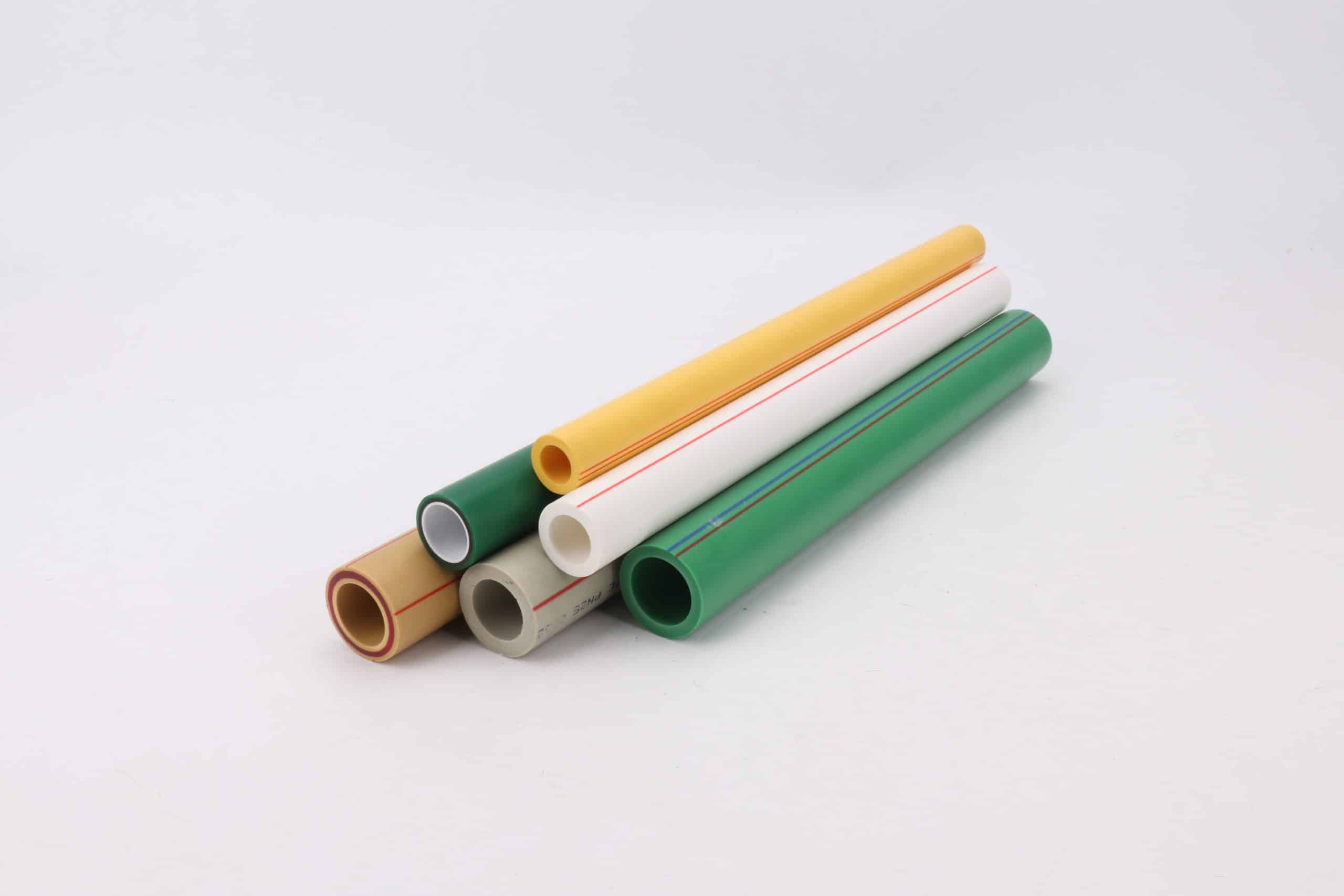
For ordinary buildings, though, PPR’s ceiling is high enough. PPR carries roughly 70°C continuously with short-term peaks near 95°C, and it does not soften until around 150°C. Domestic and commercial hot water systems run well inside that band, so PPR handles hot-water distribution without drama. The rule is simple: match the pipe to the actual service temperature. Domestic hot water is PPR territory; genuinely high-temperature process lines are copper’s.
Installation: heat fusion vs soldering
The two materials join in completely different ways, and it changes who can install them and how fast. PPR uses socket heat fusion: the pipe end and the fitting socket are heated to about 260°C on a fusion tool, pushed together, and held for a few seconds. As they cool, the two pieces become one continuous piece of plastic. There is no glue, no thread, no rubber gasket, and no flame. A correctly fused joint has no separate part that can leak — the failure surface simply is not there.
Copper is joined by soldering or brazing, which means an open flame, flux, solder, and a clean, dry joint every time. It is a genuine trade skill: a cold or under-heated solder joint leaks, and the open flame is a fire risk in occupied buildings and on sites with combustible material nearby. Press-fit copper systems remove the flame but add tooling and per-fitting cost. Either way, copper installation leans harder on skilled labor and slows down when that labor is scarce.
- PPR fusion: no flame, no glue, fast once the crew is trained, joints homogeneous with the pipe.
- Copper soldering: open flame and fire watch, flux and solder, skilled labor, slower per joint.
- Both need clean joints and correct technique — a bad PPR fusion or a cold solder joint fails the same way: at the connection.
Lifespan: both reach 50 years, but they fail differently
On paper this row is a tie. PPR carries a 50-year design life at its rated pressure class and temperature. Copper in benign water reaches 50 years or more. The honest difference is not the headline number — it is how each one dies when it does.
PPR’s failure modes are installation-driven: a poorly fused joint, a pipe run beyond its rated temperature or pressure, or UV exposure on unprotected outdoor pipe. Get the fusion right and keep it inside its ratings and PPR runs quietly for its full life, because nothing about the water attacks it. Copper’s failure mode is chemistry-driven: even a perfectly soldered system can develop pitting and pinhole leaks years later if the water is aggressive, and that is outside the installer’s control. So both hit 50 years, but PPR’s risks are in your hands at install time while copper’s biggest risk is dissolved in the water for the pipe’s whole service life.
Where copper still genuinely wins
A comparison that only praised PPR would be dishonest. Copper is the right call in real cases, and you should reach for it when they apply:
- Very high-temperature lines — sustained heat above what plastic is rated for, including steam-adjacent and certain industrial process piping.
- Code and fire-rating mandates — some jurisdictions or building types require metal pipe in specific applications. Confirm current requirements with your local authority or a qualified engineer before you finalize the material.
- Exposed aesthetic work where polished copper is a deliberate design choice, and outdoor runs where a metal’s UV tolerance is wanted without extra protection.
- Situations needing a naturally antimicrobial pipe surface, which copper offers and plastic does not.
Notice that none of these is “everyday hot and cold water in a normal building.” That is exactly the space PPR has taken over, and for good reason.
Which fits whom
Here is the plain decision. Match the pipe to the job rather than to a habit.
PPR is best for
- Residential and commercial hot and cold water distribution within its temperature ratings.
- Projects in areas with soft, acidic, or aggressive water where copper would pit and leach.
- Cost-sensitive and large jobs that need a stable, predictable material price.
- Sites exposed to theft, or long-schedule builds where installed copper would be a target.
Copper is the better fit for
- Very high-temperature or steam-adjacent lines beyond plastic’s rating.
- Any application where code or fire rating requires metal pipe.
- Exposed decorative runs where the look of copper is the point.
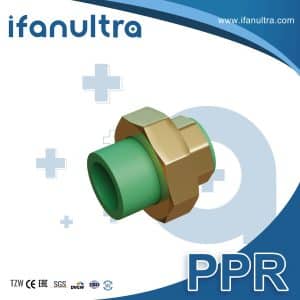
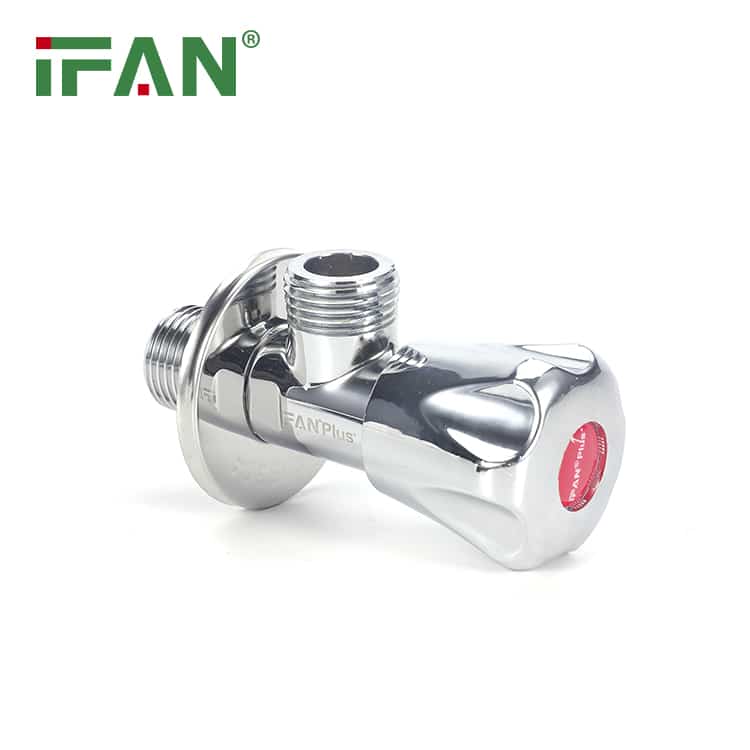
One practical note for either choice: PPR systems still use brass transition fittings and valves — like the union and angle valve shown above — wherever the plastic run meets a metal appliance, meter, or threaded component. A good PPR system is not “no metal anywhere”; it is plastic for the pipe body and quality brass exactly where a metal connection is needed.
Conclusion
For the water plumbing most projects actually build, PPR is the stronger default. It matches copper’s 50-year design life, beats it decisively on corrosion, cost stability and theft resistance, and carries hot water comfortably within its ratings. Copper keeps a real role on very high-temperature lines and wherever codes demand metal — but those are specific cases, not the general one.
If you import or distribute PPR and want to know what separates a premium pipe from thin-wall stock — wall thickness, virgin resin, and certificates that hold up at customs — the IFANULTRA team is happy to share specs and a catalog. Send us your project and we will point you to the right series.
Frequently Asked Questions
Is PPR better than copper for plumbing?
For most water systems, yes. PPR costs less, resists corrosion, and is not a theft target, while matching copper’s 50-year design life. Copper stays better only for very high-temperature lines or where codes require metal.
Does PPR or copper cost more?
Copper costs several times more per equivalent run, and its price swings with the global metals market. PPR is cheaper and far more stable, which makes it easier to budget on large or long-lead jobs.
Can PPR handle hot water like copper?
PPR carries about 70°C continuously with short peaks near 95°C, which covers domestic and commercial hot water. Copper handles higher sustained temperatures, so it wins only on steam-adjacent or industrial high-heat lines.
Which lasts longer, PPR or copper?
Both reach a 50-year design life when installed correctly. They fail differently: PPR fails from bad joints or over-temperature use, while copper can develop pitting and pinhole leaks in aggressive water regardless of workmanship.
Why does copper get stolen but PPR does not?
Copper has scrap value, so it is stripped from job sites and vacant buildings, especially when metal prices are high. PPR is plastic with almost no resale value, so thieves leave it in place.
Written by the IFANULTRA team — a PPR pipe and fittings brand of IFAN Group, drawing on 30+ years of manufacturing experience, German automated production lines, and ISO 9001, SKZ and NSF certified PPR product lines.









 English
 Español
 Français
 Português do Brasil