
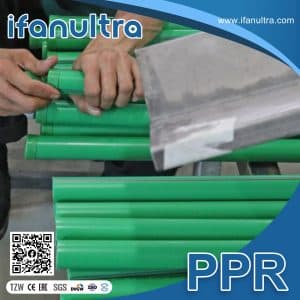
The short answer to the PPR vs PVC question is this: PPR wins for hot and pressurized water supply, while PVC wins for cold-only lines, open drainage, and the lowest upfront price. PPR (polypropylene random copolymer) handles roughly 70°C continuously and joins by heat fusion into one homogeneous part, so hot supply lines have nothing to loosen. Standard PVC softens near 60°C and relies on solvent-cemented joints, which is why it stays in cold and non-pressure roles. If you are choosing between the two for a real project, the deciding factor is almost always temperature and whether the line is pressurized.
This comparison puts PPR vs PVC head to head on the six things that actually change a decision: maximum temperature, joining method, lifespan, corrosion, relative cost, and best use. It also brings in CPVC and PEX where they matter, because a good spec sometimes uses more than one material. For the full material background, dimensions and pressure classes, see our PPR pipe guide. Below, we take clear positions rather than sitting on the fence.
Key Takeaways
- PPR handles about 70°C continuous with a short-term peak near 95°C; standard PVC starts softening around 60°C, so PVC is not rated for hot water supply.
- PPR joints are made by socket heat fusion at ~260°C, creating one homogeneous part; PVC joints rely on solvent cement, where installer error causes most leaks.
- Quality PPR carries a 50-year design life at rated pressure and temperature; uPVC typically lasts 30–50 years and drops sharply if used hot.
- Neither material corrodes or scales like metal, so both keep clean bore over time.
- PVC is usually the cheaper material per meter; PPR often wins over 10 years because heat-fused hot lines fail far less often.
- Use PPR for hot and pressurized supply; use PVC for cold-only lines and open drainage; consider CPVC (~93°C) or PEX (~95°C, flexible) for specific cases.
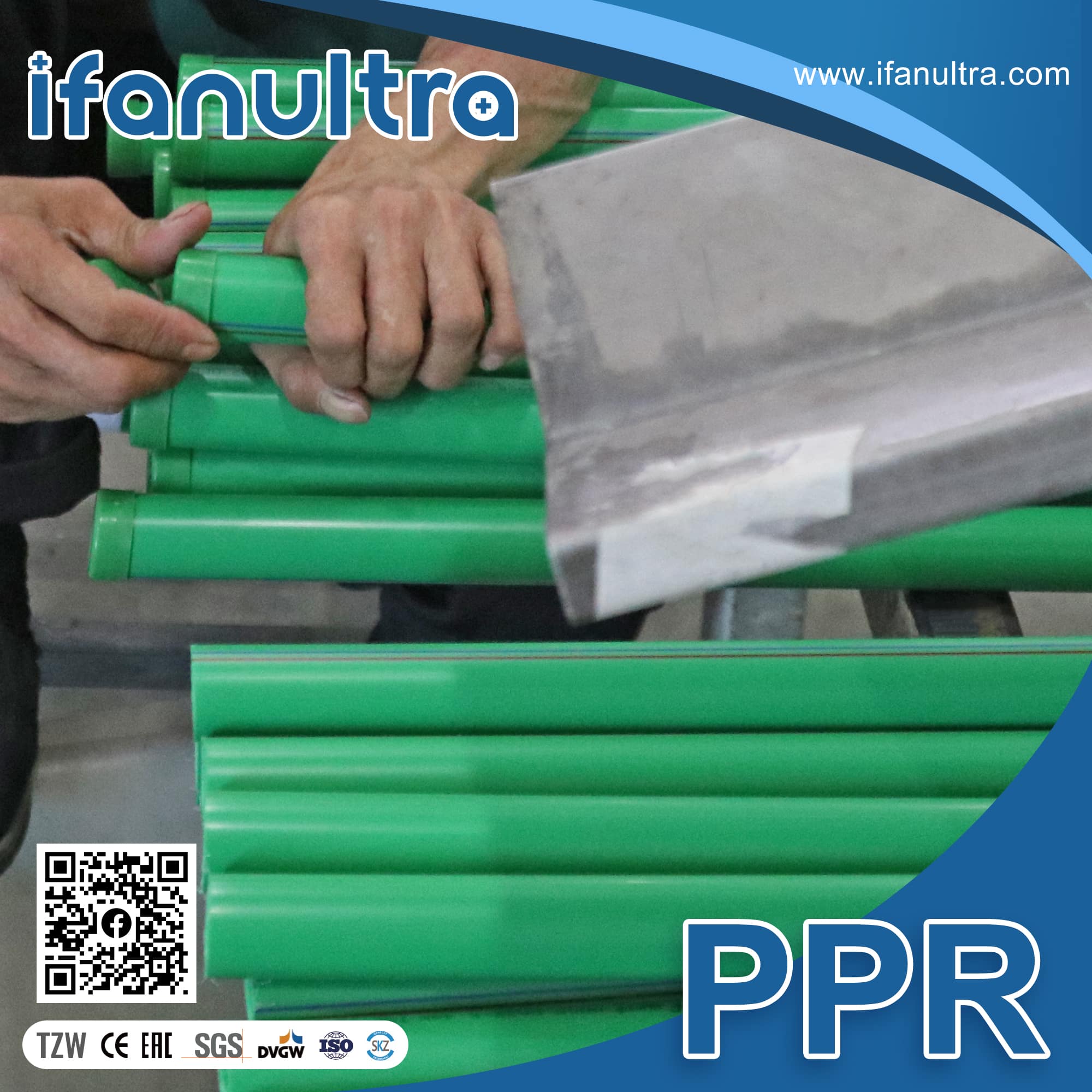
PPR vs PVC: Head-to-Head Comparison Table
Start here. This table is the spine of the whole PPR vs PVC difference. It also shows where CPVC and PEX fit, because on a real building they often share the job: PPR or PEX for hot supply, PVC for the cold and drainage runs. Read the temperature and joining rows first, then price.
| Property | PPR | PVC (uPVC) | CPVC | PEX |
|---|---|---|---|---|
| Max temperature | ~70°C continuous, ~95°C peak | ~60°C (softens; cold-rated) | ~93°C | ~95°C |
| Joining method | Socket heat fusion (~260°C), no glue | Solvent cement (glue) | Solvent cement (special) | Crimp / push-fit |
| Lifespan | 50-year design life at rated PN/temp | ~30–50 years (cold use) | ~50 years | ~50 years |
| Corrosion / scaling | None; clean bore | None; clean bore | None | None |
| Relative cost (material) | Medium | Lowest | Higher | Medium–high |
| Best use | Hot & cold pressurized supply | Cold supply, drainage, conduit | Hot supply where glue is preferred | Flexible retrofit / hot & cold |
One line summarizes the table: if a pipe will ever carry hot water under pressure, PVC is the wrong tool and PPR is the safe default. Everything after this section explains why, row by row.
Temperature & Hot Water: Where PVC Gives Up
Temperature is the first thing that separates these materials, and it settles most PPR vs PVC arguments on its own. Standard PVC has a maximum continuous operating temperature around 60°C for pressurized service. Push hot water through it and the material softens; at those temperatures PVC also loses most of its pressure rating, so a line that was fine cold becomes weak and prone to sag or burst. That is the core reason plumbers do not run standard PVC to a water heater.
PPR sits in a different class. It runs at roughly 70°C continuously and tolerates a short-term peak near 95°C, with a melt point around 150°C. For domestic and commercial hot water at typical delivery temperatures, PPR operates well inside its comfort zone rather than at its limit. So when the question is PPR or PVC for hot water, PPR is the answer nearly every time.
What about CPVC and PEX on heat?
CPVC is chlorinated PVC and handles about 93°C, which is why it appears in hot-water systems where crews prefer solvent-cement work over fusion. PEX handles about 95°C and bends around corners, so it shines in retrofits and short flexible runs. Both are valid for hot water. The trade-off: CPVC still needs glued joints, and PEX needs crimp rings or push-fittings plus a manifold layout. PPR keeps the heat rating while giving you a fused, single-piece joint.
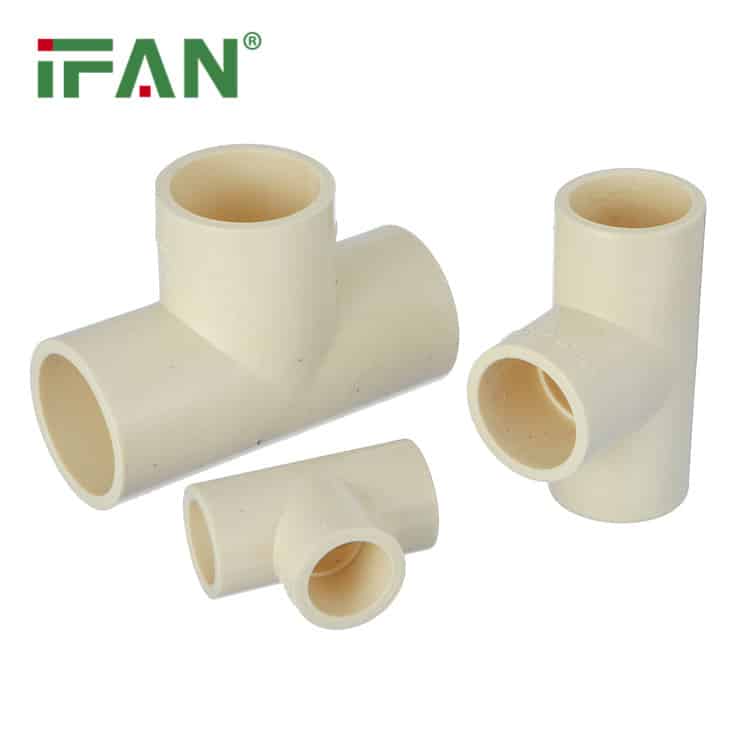
Joints: Heat Fusion vs Solvent Cement
Joints are where most pipe systems actually fail, so this row deserves real attention. PPR uses socket heat fusion: a tool heats the pipe end and the fitting socket to about 260°C, they are pushed together, and the polymer molecules fuse. Once cooled, the joint is one continuous piece of PP-R with no glue line, no gasket, and no thread. There is nothing to loosen, dry out, or back off under thermal cycling.
PVC joins with solvent cement. The cement softens both surfaces so they weld chemically as they cure. Done correctly it is strong. The problem is technique-sensitivity: skipping primer, using the wrong cement, poor alignment, or moving the joint before cure are common mistakes, and many PVC leaks trace back to a glued joint that was rushed. On a large network with hundreds of joints, that variability adds up.
- PPR fusion: homogeneous joint, no consumable glue, forgiving of hot cycling, ideal for concealed and pressurized lines.
- PVC solvent cement: cheap and fast, needs correct primer/cement, cure time, and clean dry surfaces to be reliable.
- Practical read: for hidden hot-water runs in walls and slabs, a fused joint you never have to revisit is worth a lot.
The 10-Year Cost View: Cheaper Now vs Cheaper Later
On the shelf, PVC almost always costs less per meter than PPR, and its fittings and cement are inexpensive. If your only line item is material price for a cold-only job, PVC wins on PPR vs PVC cost. That is real and worth respecting.
Stretch the view to ten years and the picture shifts for hot and pressurized systems. The expensive event in plumbing is not the pipe; it is a failure inside a wall or slab: water damage, tear-out, rework, and downtime. PPR’s fused joints and 50-year design life at rated pressure and temperature mean fewer of those events on hot supply lines. PVC used within its cold, non-pressure lane is durable and lasts decades; PVC pushed into hot or high-pressure duty ages fast and its glued joints become the weak point. We are not attaching a fabricated percentage here, but the logic is direct: choosing the cheaper material for the wrong duty trades a small upfront saving for a large repair risk.
- Lowest upfront: PVC for cold and drainage — the value pick when duty is easy.
- Lowest 10-year cost on hot supply: PPR, because heat-fused hot lines fail far less than glued hot lines.
- The false economy: specifying PVC for hot water to save on material, then paying for leaks and tear-out.
Where PVC Still Genuinely Wins
This is not a takedown of PVC. For the right jobs PVC is the correct, economical answer, and specifying PPR there would be overkill. Knowing when to use PVC is part of speccing well.
- Open drainage, waste and vent: gravity, non-pressure, ambient temperature — PVC’s home turf, with wide fitting availability.
- Cold-only water supply: where water never runs hot, PVC delivers good service life at the lowest cost.
- Electrical conduit and irrigation: light, cheap, easy to cut and glue on site.
- Tight budgets on easy duty: when the temperature and pressure are low, paying more for PPR buys little.
A common misread is treating PPR vs uPVC as one being universally “better.” uPVC (unplasticized PVC) is stiff, strong and cheap for cold and drainage; PPR is heat-tolerant and fused for hot pressurized supply. They are built for different lanes. On PPR vs PVC strength, PPR is more forgiving under heat and thermal cycling, while rigid uPVC is dimensionally stable and stiff at ambient temperature. The right question is never which is stronger overall, but which suits the duty.
Which Fits Whom: A Quick Decision Guide
Match the material to the duty, not to a habit. Here is the best-for / not-for read that captures most projects.
Choose PPR when
- The line carries hot water, or hot and cold supply under pressure.
- Joints will be concealed in walls or slabs and must not leak for decades.
- You want a fused, glue-free system and can heat-fuse on site.
- Not for: gravity drainage or where the cheapest cold-only pipe is all that is needed.
Choose PVC (uPVC) when
- The application is cold-only supply, drainage, waste, vent, or conduit.
- Budget is tight and the duty is genuinely low-temperature and low-pressure.
- Not for: hot water or any line that sees sustained heat — that is where PVC softens and fails.
Consider CPVC or PEX when
- CPVC: you need hot-water capability (~93°C) but your crew prefers solvent-cement work over heat fusion.
- PEX: the job is a retrofit or has many bends, and flexible tubing with crimp or push-fittings speeds installation.
PPR itself is rated by pressure class rather than a single number, so the same DN size is offered in PN10, PN16, PN20 and PN25 with rising wall thickness. Standard hot water usually uses PN20. Both PPR and PVC are commonly certified for potable use; verify certification against your market. PPR systems can be produced to ISO 15874, and potable materials to NSF requirements, with the ISO standard detailed at iso.org. Confirm current requirements with a customs broker or the relevant authority before committing a spec for import.
Conclusion
The PPR vs PVC decision comes down to duty. If the line will carry hot water or run under pressure, PPR is the right call: it holds ~70°C continuously, fuses into one leak-resistant piece, and carries a 50-year design life at rated conditions. If the line is cold-only or open drainage, PVC does the job at the lowest cost, and PPR would be overspecifying.
Spec each run for what it actually carries, and you get the best of both. If you are sourcing PPR to resell or install, the IFANULTRA team can share specs, certifications and a catalog so you can match the right class to each project.
Frequently Asked Questions
Is PPR better than PVC?
Neither is better overall. PPR is better for hot and pressurized water supply because it handles ~70°C and fuses into one piece. PVC is better for cold-only lines and drainage at the lowest cost.
Should I use PPR or PVC for hot water?
Use PPR for hot water. Standard PVC softens near 60°C and loses most of its pressure rating when hot, so it is not rated for hot supply. PPR runs at ~70°C continuous with a ~95°C peak.
What is the main difference between PPR and uPVC?
PPR joins by heat fusion and tolerates hot pressurized water; uPVC joins by solvent cement and suits cold supply and drainage. PPR handles heat; uPVC is stiff, cheap and cold-rated.
Is PVC cheaper than PPR?
PVC is usually cheaper per meter upfront. Over ten years on hot or pressurized lines, PPR often costs less because its heat-fused joints and 50-year design life mean fewer leaks and repairs.
When should I use PVC instead of PPR?
Use PVC for cold-only water supply, open drainage, waste, vent, irrigation and electrical conduit. In those low-temperature, low-pressure roles PVC is durable and the cheapest good option.
Written by the IFANULTRA team — a PPR pipe and fittings brand of IFAN Group, drawing on 30+ years of manufacturing experience, German automated production lines, and ISO 9001, SKZ and NSF certified PPR product lines.









 English
 Español
 Français
 Português do Brasil