
Most PP-R purchase orders cannot support a rejection, and the reason sits in the document rather than the container. Under Article 35(1) of the CISG, goods conform when they match what the contract required. An order naming no standard, no measurement method and no notice period leaves all three open to argument.
PP-R pipe purchase order acceptance terms that hold up do five things. The first names the specification down to its amendments. The second names the tolerance rule and the method used to measure it. Third comes the lot and the sampling plan, fixed inside the order. The fourth sets an examination window and a notice deadline in days rather than adjectives. The last names the referee who decides a dispute and the party who pays for the retest. Two of the standards those clauses habitually cite were superseded during 2026, which makes the edition string carry more weight this year than it has in two decades.
Key Takeaways
- ISO 2859-1:1999 was withdrawn and replaced by ISO 2859-1:2026, edition 3, published 22 January 2026. An AQL clause citing the 1999 edition cites a withdrawn document.
- ISO/IEC 17020:2012 was withdrawn on 27 March 2026 and replaced by ISO/IEC 17020:2026. Third-party inspection clauses carry the old number almost everywhere.
- ISO 2859-1 grades pass or fail characteristics. Wall thickness and outside diameter are measured values and belong to ISO 3951-1:2022 instead.
- Naming ISO 15874-2:2013 alone leaves out Amd 1:2018 and Amd 2:2022, and leaves fittings unspecified because they sit in Part 3.
- CISG Article 39(2) gives a two-year long stop from handover, but Article 38(1) fixes no inspection deadline at all. Article 6 lets the order set both.
On this page
From our own channel: how the five-layer co-extrusion that builds the pipe wall runs, which is the wall Clause Two makes measurable.

Why Most PP-R Rejections Fail Before Anyone Opens a Caliper
A rejection is a legal act dressed up as a technical one. A caliper reading is evidence, and evidence matters only once the contract has said what the pipe was supposed to be. Article 35(1) of the CISG puts conformity inside the contract: the seller must deliver goods of the kind, quantity and quality the contract required. Where the contract is silent, Article 35(2) supplies the fallback, and its first test is whether the goods are fit for the purposes goods of the same description would ordinarily serve.
That fallback is where dimensional rejections go to die. Pipe 0.2 mm under on wall still carries water, still welds, still passes a site pressure test. Against ordinary use it looks conforming; against a named clause in a named edition it does not, and the difference is a sentence somebody either wrote into the order or did not.

Four elements turn a measurement into an enforceable rejection, and omitting any one hands the argument back to the supplier. Article 38(1) is why the timing element matters, requiring examination within as short a period as is practicable and putting no number on it.
None of this replaces the physical checks; our batch consistency and incoming inspection guide covers what to open and what to measure. The clauses below make that procedure’s result worth something when the supplier disagrees. Treat this as drafting guidance tied to named standards, not legal advice; your counsel settles the final text.
Clause One: Name the Specification Down to the Amendment
A specification clause reading pipe shall comply with ISO 15874 looks complete and is not. ISO 15874 is multi-part: Part 1 carries the general requirements and Part 2 the pipes, both published in 2013 and confirmed by ISO in 2023, so both remain current. Both have since been amended. ISO 15874-2:2013 carries Amd 1:2018 and Amd 2:2022, the second adding an impact test. A clause citing the base edition alone has excluded two amendments, one of which creates a characteristic the buyer might later want to reject against.
Fittings are the second omission. They sit in ISO 15874-3:2013, so an order naming only Part 2 has bought pipe to a standard and fittings to nothing. Name both parts. ISO/TS 15874-7:2018 guides conformity assessment, but it is a Technical Specification rather than a full International Standard, so treat it as a route map rather than a source of rejectable limits.
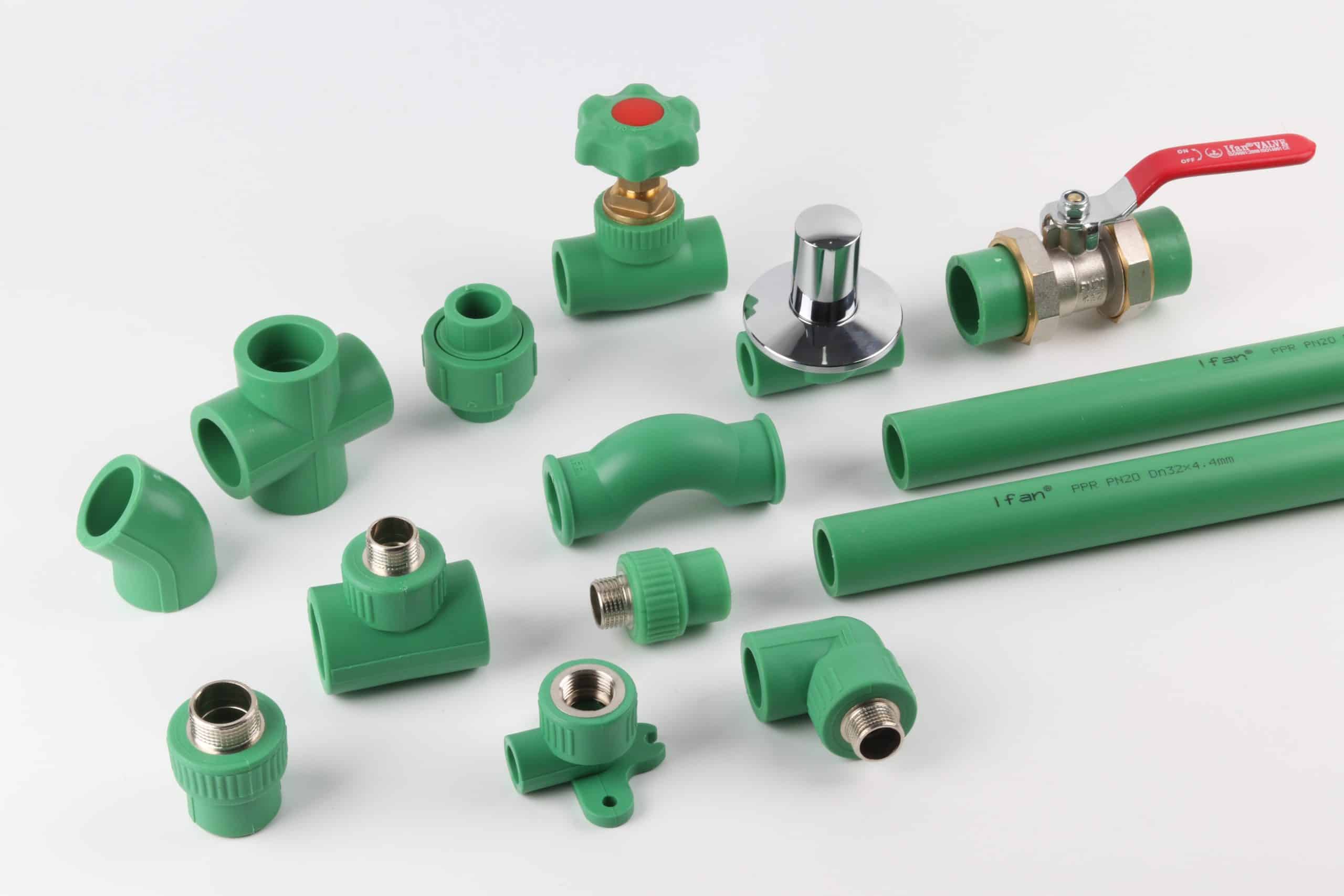
Then pin the product. Name the diameter range and the pressure class with its SDR, because PN20 alone is a marketing line until the order says PN20 (SDR6). Our range runs DN20 to DN160 in PN10 (SDR11), PN16 (SDR7.4), PN20 (SDR6) and PN25 (SDR5). The PPR Global Series page carries the SKU list a line schedule is written against, and the pressure class guide explains each class.
One habit to avoid: the open reference. The latest edition in force sounds prudent and moves the target. A revision of Part 2 is in development at ISO/TC 138/SC 2 and Part 1 was flagged for revision on 5 May 2025. Fix the edition you inspected against, then agree when to move.
| Standard | Cite this edition (year) | Catalogue status, 22 Sep 2026 | What the clause uses it for |
|---|---|---|---|
| ISO 15874-2 | 2013, plus Amd 1:2018 and Amd 2:2022 | Published, confirmed 2023; revision in development | The pipe specification itself |
| ISO 11922-1 | 2018 | Published | Dimensional tolerance grades |
| ISO 2859-1 | 2026 (edition 3, 22 Jan 2026) | 1999 edition withdrawn, with Amd 1:2011 and Cor 1:2001 | AQL sampling for pass or fail characteristics |
| ISO 3951-1 | 2022 | Published | AQL sampling for measured values |
| ISO/IEC 17020 | 2026 (edition 3, March 2026) | 2012 edition withdrawn 27 Mar 2026 | Competence of the inspection body |
| ISO/IEC 17025 | 2017 | Published, confirmed 2023 | Competence of the referee laboratory |
Clause Two: Say Which Tolerance Rule Applies and How It Gets Measured
Two honest people with two good calipers can read the same pipe differently, and both can be right. Wall thickness varies around a circumference and along a length, so whether a reading counts depends on where it was taken, how many were averaged and at what temperature. A tolerance clause naming a limit without a method has specified half an argument.

The tolerance framework for metric thermoplastics pipe is ISO 11922-1:2018, which sets out dimensions and tolerance grades. A grade is not one universal number, and which grade applies to a characteristic is what the specification invokes. Write the clause so the supplier declares it: the dimensional report shall state the tolerance grade, the table applied and the standard edition they came from. A supplier who cannot name the grade they measured against has not measured against one.
Name the measurement method separately. ISO 3126:2005 covers determination of dimensions for plastics piping components, and citing it turns a caliper disagreement into a procedural question anyone can re-run. Do the same for pressure: shall pass a pressure test is unenforceable, while ISO 1167-1:2006 gives the general method and ISO 1167-2:2006 covers preparation of the test pieces, where contested results usually originate.
Protect wall thickness first, because that is where the money is. Resin runs roughly US$780 to US$1,150 per tonne and carries 70 to 85 percent of manufacturing cost, so shaving wall is the cheapest margin a factory can take. Our dimensions and tolerance chart gives the nominal values; the clause makes a departure actionable.
What We Check Before a Container Ships
This is the mirror image of the clause a buyer should write. Resin is verified by source and grade, and caliper wall readings are sampled across multiple pallets rather than the top layer. Outside diameter and wall are checked against ISO 15874-2:2013 with its Amd 1:2018 and Amd 2:2022, and against DIN 8077:2008-09. Pressure and thermal testing run to the rated class, and markings are reconciled against certificate numbers. Those editions sit on our own check sheet for the reason given here: an undated citation binds nobody.
Our DN63 PN20 wall is 10.5 mm, and a dispute is always about tenths of that figure. Each check produces a document, and the acceptance clause obliges the supplier to hand it over.
Clause Three: Fix the Lot and the Sampling Plan Inside the Purchase Order
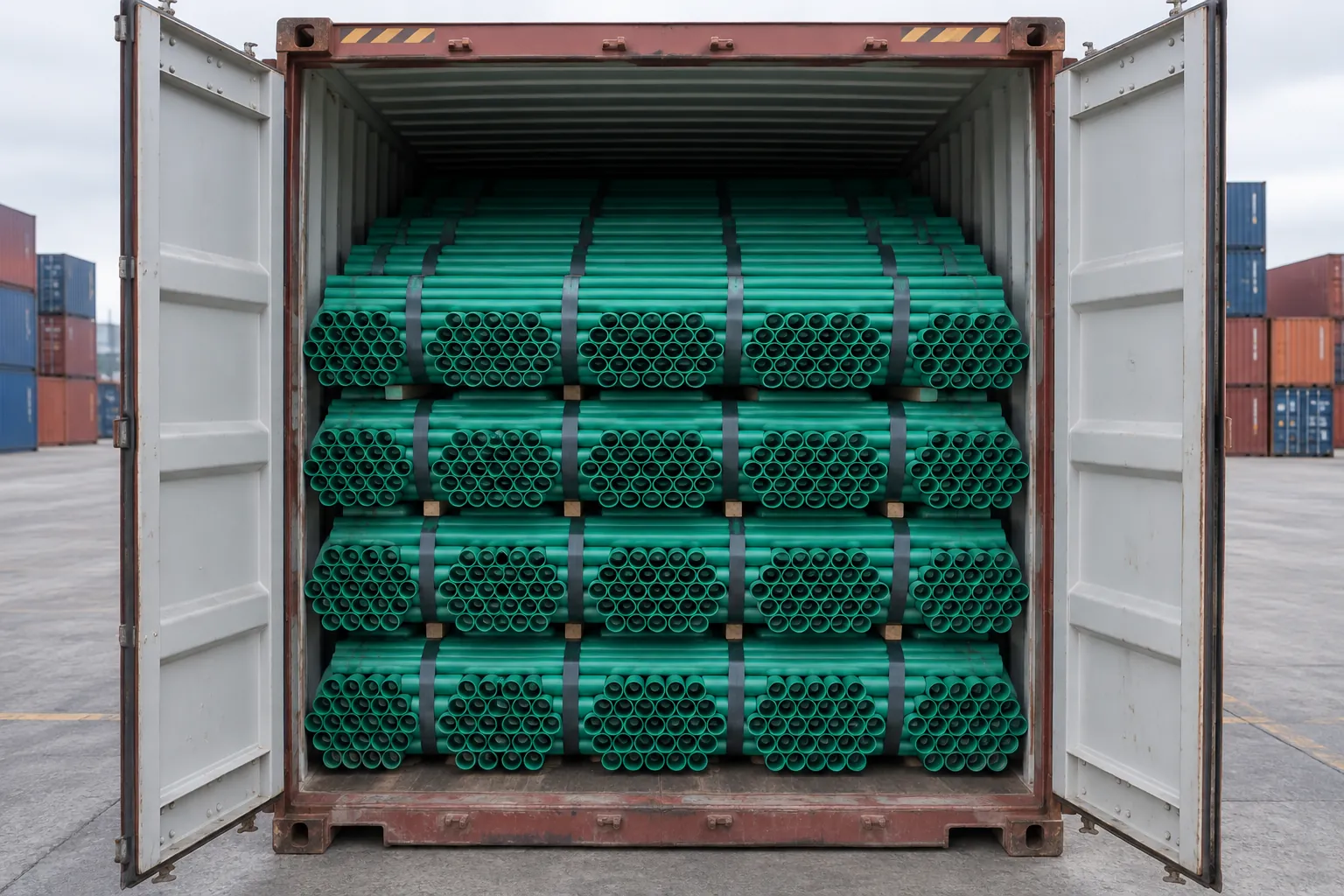
Define the lot before the plan. A sampling scheme accepts or rejects a lot, so if the order never says what a lot is, a failed sample rejects an undefined quantity and the supplier will define it as narrowly as possible: this pallet, this run, this diameter. For PP-R the natural boundary is the container. Our minimum order is one full container load, with LCL possible at a higher per-metre cost. A 20-foot box takes roughly 33 cubic metres against roughly 76 for a 40-foot high cube, and about 26 tonnes is the practical ceiling because PP-R cubes out before it weighs out. Say that one FCL constitutes one inspection lot, or say what else does.
Then get the sampling standard right, and check the edition. ISO 2859-1:2026, edition 3, was published on 22 January 2026 and supersedes ISO 2859-1:1999 with its Amd 1:2011 and Cor 1:2001. The ISO catalogue now shows the 1999 edition as withdrawn. Nearly every clause register in circulation still cites 1999, because nobody revisits a citation that has always worked.
| Standard cited in the clause | Age of current edition (years) |
|---|---|
| ISO 3126 | 21 |
| ISO 1167-1 | 20 |
| ISO 15874-2 | 13 |
| ISO/IEC 17025 | 9 |
| ISO 11922-1 | 8 |
| ISO 3951-1 | 4 |
| ISO 2859-1 | 0 |
| ISO/IEC 17020 | 0 |
The deeper error is which standard to cite. ISO 2859-1 is sampling for inspection by attributes, meaning characteristics that are conforming or not: marking present, visible defect, gauge passes. Wall thickness and outside diameter are measured values, and AQL sampling for measured values is ISO 3951-1:2022. An order applying an AQL under ISO 2859-1 to wall thickness has written a clause the standard does not support, which is the kind of defect a supplier’s lawyer finds first. Note also that ISO 3951-1 covers a single quality characteristic and a single AQL, so one plan cannot quietly govern both diameter and wall.
A workable clause fixes four things: lot definition, inspection level, the AQL for each characteristic with its governing standard, and the consequence of a failed lot. Omit the last and a failed sample produces a conversation rather than a remedy.
Clause Four: Buy Yourself a Window for Examination and Notice
The CISG applies by default between parties whose states are contracting states, and the UNCITRAL register lists 97. Its timing rules are elastic. Article 38(1) says the buyer must examine the goods, or cause them to be examined, within as short a period as is practicable in the circumstances. No days, no weeks. What is practicable gets settled only after the dispute starts.
Article 39 is stricter and is where most claims are lost. Under 39(1) the buyer loses the right to rely on a lack of conformity if notice is not given within a reasonable time, and that notice must specify the nature of the defect. An email saying the pipe is unacceptable does not qualify. Under 39(2) a two-year long stop runs from the date the goods were actually handed over, unless a contractual guarantee period says otherwise. Handover is not installation, so a defect surfacing in year three of a building is already outside it.
Article 6 is the fix. The parties may derogate from or vary any provision, so the order can replace every elastic phrase with a number: working days from discharge to complete examination, and days to serve written notice. Fix the content of that notice too, being the characteristic, the measured value, the clause breached and the lot identification. Put replacement timing in the same clause; our production runs 15 to 25 days for one container before ocean transit.
One more trap: a delivery term is not an acceptance term. The ICC describes the Incoterms rules as clarifying the tasks, costs and risks in delivery. The US International Trade Administration states they do not address liability for goods failing to conform to the contract of sale, when title passes, or dispute resolution. FOB decides who pays freight and where risk shifts, and says nothing about whether you may reject. That matters most when 70 percent of the money has already moved, as on our 30/70 terms: a destination rejection becomes a claim to recover funds already sent, which argues for moving the inspection point upstream. Our first container plan shows where that point usually sits.
Clause Five: Name the Referee and Say Who Pays for the Retest
Every dispute reduces to two reports and no tiebreak. Name it in advance. For laboratory testing the competence standard is ISO/IEC 17025:2017, confirmed by ISO in 2023 and still current. For container-side inspection the standard changed this year: ISO/IEC 17020:2026 was published in March 2026 and the 2012 edition was withdrawn on 27 March 2026. The title changed too, so a clause quoting the old wording will not match the new document.
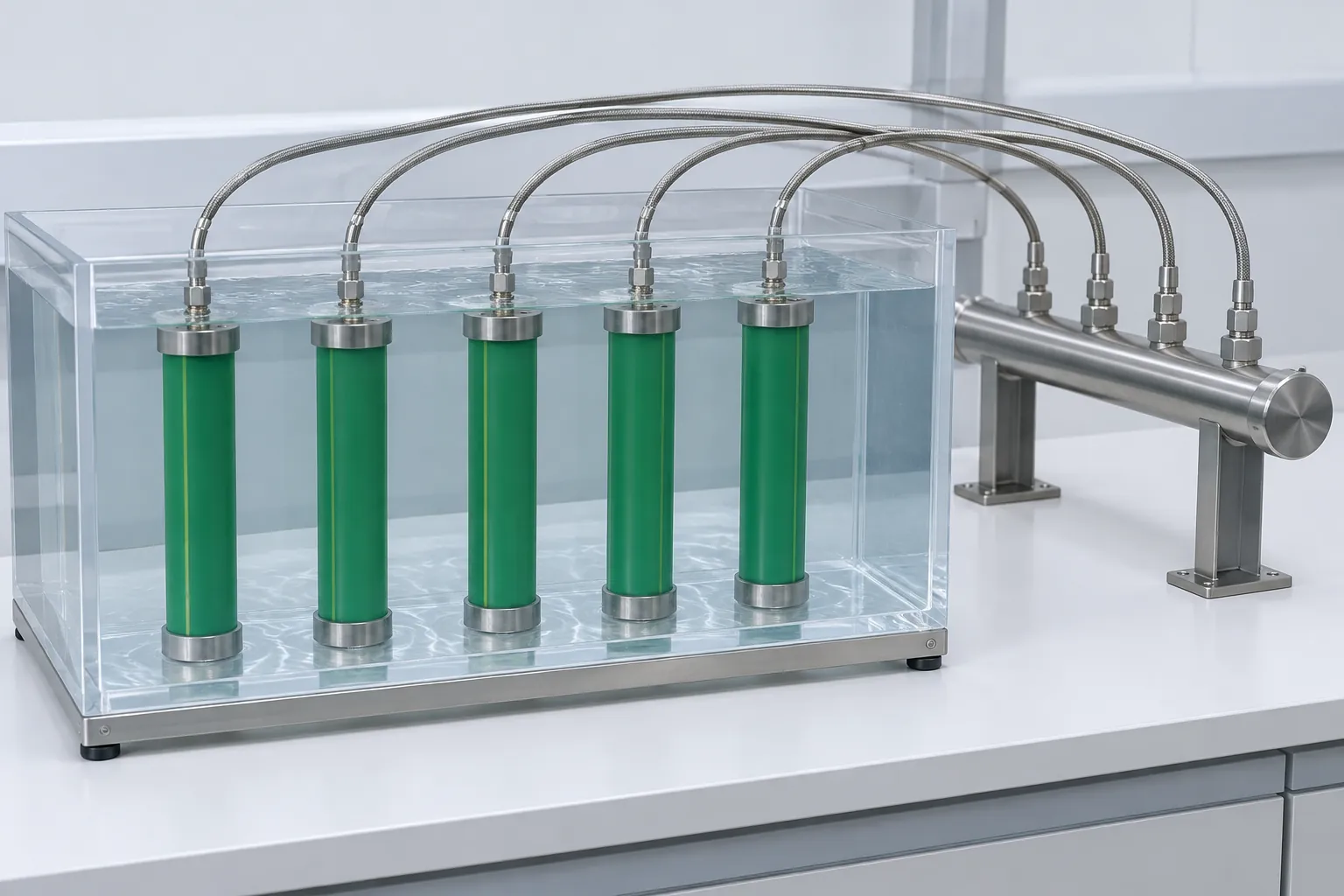
Accreditation alone settles nothing. The clause also has to name who appoints the referee, within how many days, what happens if the supplier declines to attend, and which laboratory both sides accept beforehand.
Cost allocation is the clause buyers most often skip, and it decides whether a rejection right is usable at all. We do not publish reinspection fees, so write the rule and collect the numbers before you sign.
The rule is loser pays: whoever the referee rules against carries the referee cost, the resampling cost and any storage or demurrage accrued while the lot was held. Ask any supplier in writing for four figures: the inspection body’s day rate at the port of discharge, the referee laboratory’s fee per characteristic, and the daily storage and demurrage rate there. The fourth is replacement lead time for a rejected lot, which for one container runs 15 to 25 days.
Define severity in advance. Article 49(1) allows avoidance only for fundamental breach under Article 25 or a missed additional period, so arguing after a container lands about whether a wall shortfall is fundamental wastes a clause you could have written. List which characteristics, at which departure from limit, make a lot rejectable rather than repairable. Our certificate verification guide covers what to reconcile against each shipment.
| Clause | What it must name | What it blocks | Verdict if the clause is missing |
|---|---|---|---|
| Specification | Standard, part, edition year, amendments, PN class with SDR | A supplier arguing a different edition or an unamended base text | Conformity falls back to ordinary use under CISG Art. 35(2) |
| Tolerance and method | Tolerance grade and table, plus ISO 3126 and ISO 1167-1 as methods | Two valid readings that disagree with no way to reconcile them | The measurement becomes opinion and the limit becomes unenforceable |
| Lot and sampling | Lot definition, inspection level, AQL per characteristic, governing standard | A failed sample being confined to one pallet instead of the lot | Rejection scope is set by the supplier after the failure |
| Examination and notice | Days to examine, days to notify, required content of the notice | A late or vague notice forfeiting the claim under CISG Art. 39(1) | Timeliness is judged after the fact against Art. 38(1) |
| Referee and cost | Accredited body and laboratory, appointment window, loser-pays rule | A stalemate of two opposed reports with no tiebreak | The cheaper party wins by outlasting the other |
Conclusion
A rejection holds when the order already answered four questions: what the pipe had to be, how that gets measured, how long the buyer had, and who decides. Check the edition strings before reissuing a template, because ISO 2859-1:1999 and ISO/IEC 17020:2012 were both withdrawn during 2026 and both still appear in clause registers.
If you are preparing a PP-R order now, the fastest test is to send the acceptance clauses to the supplier before the deposit and ask them to confirm the lot, the sampling standard and the referee in writing.
Frequently Asked Questions
Can I still cite ISO 2859-1:1999 in a purchase order?
You can, but you would be citing a withdrawn document. ISO 2859-1:2026 replaced it on 22 January 2026, and the 1999 edition together with Amd 1:2011 and Cor 1:2001 now shows as withdrawn in the ISO catalogue. Update the edition and re-check the plan your clause depends on.
Does an AQL clause cover wall thickness?
Not under ISO 2859-1, which handles pass or fail characteristics. Wall thickness is a measured value, so the applicable standard is ISO 3951-1:2022. That part covers a single characteristic and a single AQL, so outside diameter needs its own plan rather than sharing one.
How long do I have to reject goods under the CISG?
Article 38(1) requires examination within as short a period as is practicable, with no fixed number of days, and Article 39(2) sets a two-year long stop from handover. Because Article 6 allows the parties to vary those provisions, fix both periods in the order in days.
Does my Incoterm decide whether I can reject a container?
No. The Incoterms rules allocate tasks, costs and risks in delivery. The US International Trade Administration states they do not address liability for goods failing to conform to the contract of sale, when title passes, or dispute resolution. Acceptance is governed by your contract terms instead.
What should a rejection notice actually say?
Article 39(1) requires the notice to specify the nature of the lack of conformity. In practice that means the characteristic, the measured value against the named limit, the clause and standard edition breached, the lot identification and the sampling result. A general complaint risks losing the claim.









 English
 Español
 Français
 Português do Brasil