
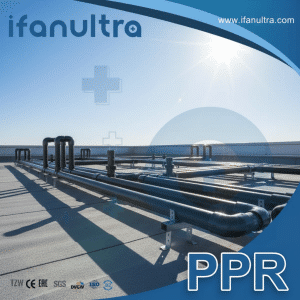
I once received a batch of PPR tubes that turned brittle and cracked after just one summer outdoors. That costly mistake taught me that not all “UV-resistant” claims are equal, and real certifications are your only shield.
True UV resistance in PPR tubes is best ensured by certifications that prove the material has been compounded with specific UV stabilizers and has passed accelerated weathering tests. Key certifications include ISO 4892-3 (Xenon-arc exposure), ASTM D4329 (fluorescent UV exposure), and marks from independent institutes like KIWA (AT2 Outdoor) or DVGW, which verify long-term performance for outdoor use.
Let’s break down these certifications and standards, so you can confidently choose tubes that will last under the sun.
Which International Standards Test and Rate UV Resistance for Plastics?
Many suppliers talk about UV resistance, but few point to the specific test standards that prove it. You need to know which tests matter.
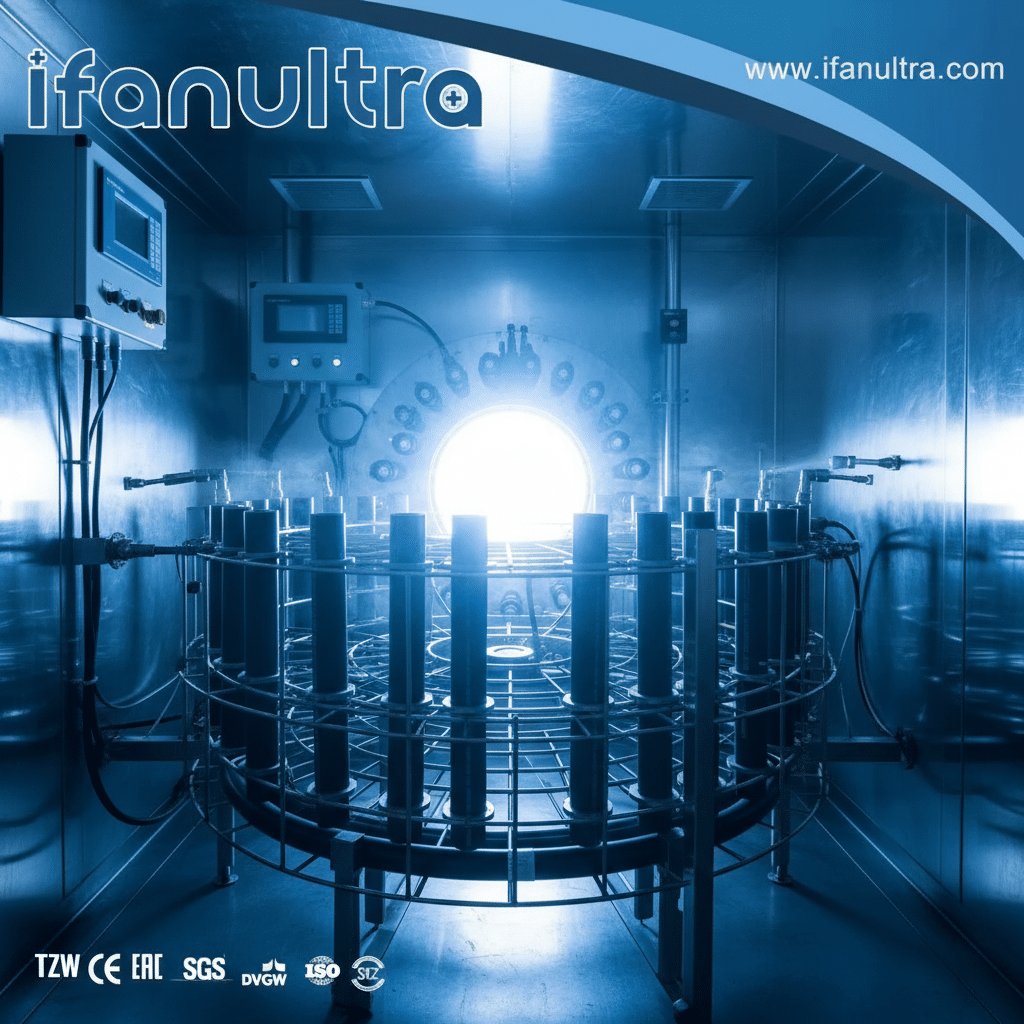
International standards like ISO 4892-2 (Xenon-arc), ISO 4892-3 (Fluorescent UV), and ASTM G154/G155 test UV resistance by exposing plastic samples to intense, simulated sunlight for hundreds or thousands of hours. They then measure changes in key properties like impact strength, color, and elongation to rate the material’s durability.
Understanding the Test Methods
These standards are the rulebook. They don’t give a simple “pass or fail” but provide a controlled way to compare materials. Manufacturers test their UV-stabilized PPR compound according to these rules.
The two most common test families are:
- Xenon-Arc Testing (e.g., ISO 4892-2, ASTM G155): This method uses a xenon lamp to simulate full sunlight spectrum, including visible light and infrared heat. It is very comprehensive and considered close to real outdoor conditions.
- Fluorescent UV Testing (e.g., ISO 4892-3, ASTM G154): This method uses special fluorescent UV lamps (often UVA-340). It focuses specifically on the damaging ultraviolet part of sunlight. It is a faster, more severe test.
What the Tests Measure
The tubes sit in these weathering chambers for a set number of hours—common test durations are 500, 1000, or 2000 hours. Afterward, labs don’t just look at them; they perform mechanical tests.
The most critical test for PPR is the Charpy Impact Strength Test (ISO 179). UV radiation breaks down polymer chains, making plastic brittle. This test measures how much energy the material can absorb before it fractures. A true UV-resistant PPR will retain a high percentage of its original impact strength after weathering.
Other measurements include:
- Color Change (Delta E): Measures how much the color fades or yellows.
- Tensile Property Retention: Checks if the material has lost its flexibility and strength.
Key Standards Reference Table
This table outlines the primary standards you should ask suppliers about:
| Standard Number | Test Method | What it Simulates | Key Measurement for PPR |
|---|---|---|---|
| ISO 4892-2 | Xenon-arc exposure | Full spectrum sunlight + heat & rain cycles | Retention of impact strength after exposure. |
| ASTM G155 | Xenon-arc exposure | Full spectrum sunlight + heat & rain cycles | Retention of impact strength after exposure. |
| ISO 4892-3 | Fluorescent UV exposure | Intense ultraviolet light + condensation cycles | Resistance to UV-induced brittleness. |
| ASTM G154 | Fluorescent UV exposure | Intense ultraviolet light + condensation cycles | Resistance to UV-induced brittleness. |
Remember, a responsible manufacturer will design their UV-stabilized PPR formula to pass a specific duration under one of these standards. You must ask, “Tested to which standard, and for how many hours?”
What Do Ratings Like “UV-STAB” or Specific Hour Ratings Mean?
Suppliers often use terms like “UV-STAB” or “2000-hour rating.” These are marketing terms unless they are clearly linked to a test standard.
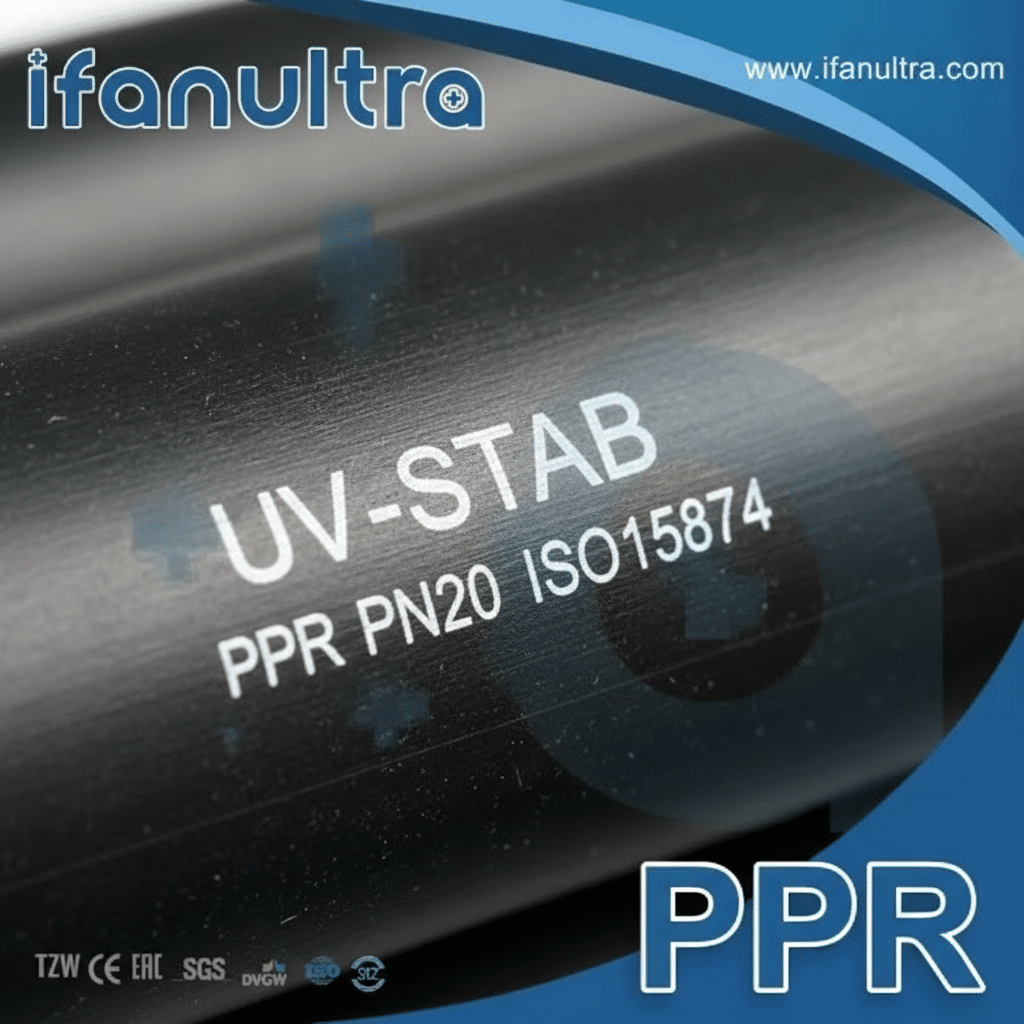
“UV-STAB” simply means the material contains UV stabilizers, but it does not define performance. A specific “hour rating” (e.g., 1000 hrs) is meaningful only if it refers to a passed weathering test (like ISO 4892-3) with defined performance criteria, such as retaining over 80% of impact strength.
Decoding “UV-STAB”
This is the most basic claim. It is an abbreviation for “UV Stabilized.” All it tells you is that the manufacturer added some UV-stabilizing additives (like carbon black or specific hindered amine light stabilizers – HALS) to the raw PP-R compound. However, it says nothing about:
- The type or quality of the stabilizer used.
- The concentration of the stabilizer in the material.
- The actual performance of the final product.
Think of it like saying a car has “brakes.” All cars have brakes, but performance varies drastically. “UV-STAB” is a necessary feature, but it is not a performance guarantee.
Understanding “Hour Ratings”
A “2000-hour UV resistance rating” sounds impressive. The key question is: “2000 hours of what?”
- If it refers to a standard lab test: This is valuable data. For example, “This PPR compound retains >80% Charpy impact strength after 2000 hours of ISO 4892-3 (UVA-340) exposure.” This is a specific, verifiable technical claim.
- If it is an estimated outdoor service life: Be very careful. Some suppliers might claim “2000 hours equals 5 years outdoors.” This conversion is highly unreliable. Lab weathering uses intense, constant UV, while real weather involves changing angles, seasons, temperatures, and pollution. There is no universal conversion factor.
How to Interpret the Numbers
Here is a practical guide to interpreting these ratings when reviewing supplier data:
| Claim You See | What It Likely Means | What You Must Ask |
|---|---|---|
| “UV-Stabilized” or “UV-STAB” | Basic level of UV protection added. | “Can you provide the test report showing performance after accelerated weathering?” |
| “500-hour UV rating” | May indicate a lower level of stabilization, suitable for limited exposure. | “Is this per ISO 4892-3? What was the retained impact strength percentage?” |
| “1000+ hour rating” | Common claim for general outdoor-grade PPR. | “What is the exact test standard? What are the pass/fail criteria for mechanical properties?” |
| “2000+ hour rating” | Suggests a high level of stabilization for long-term outdoor use. | “Can I see the third-party test certificate supporting this claim?” |
In short, treat vague ratings as a starting point for inquiry, not as proof. The specific test report is the proof.
How Can You Verify a Manufacturer’s UV Resistance Claims with Test Reports?
Anyone can write “UV resistant” on a website. Smart buyers ask for the documentary evidence.
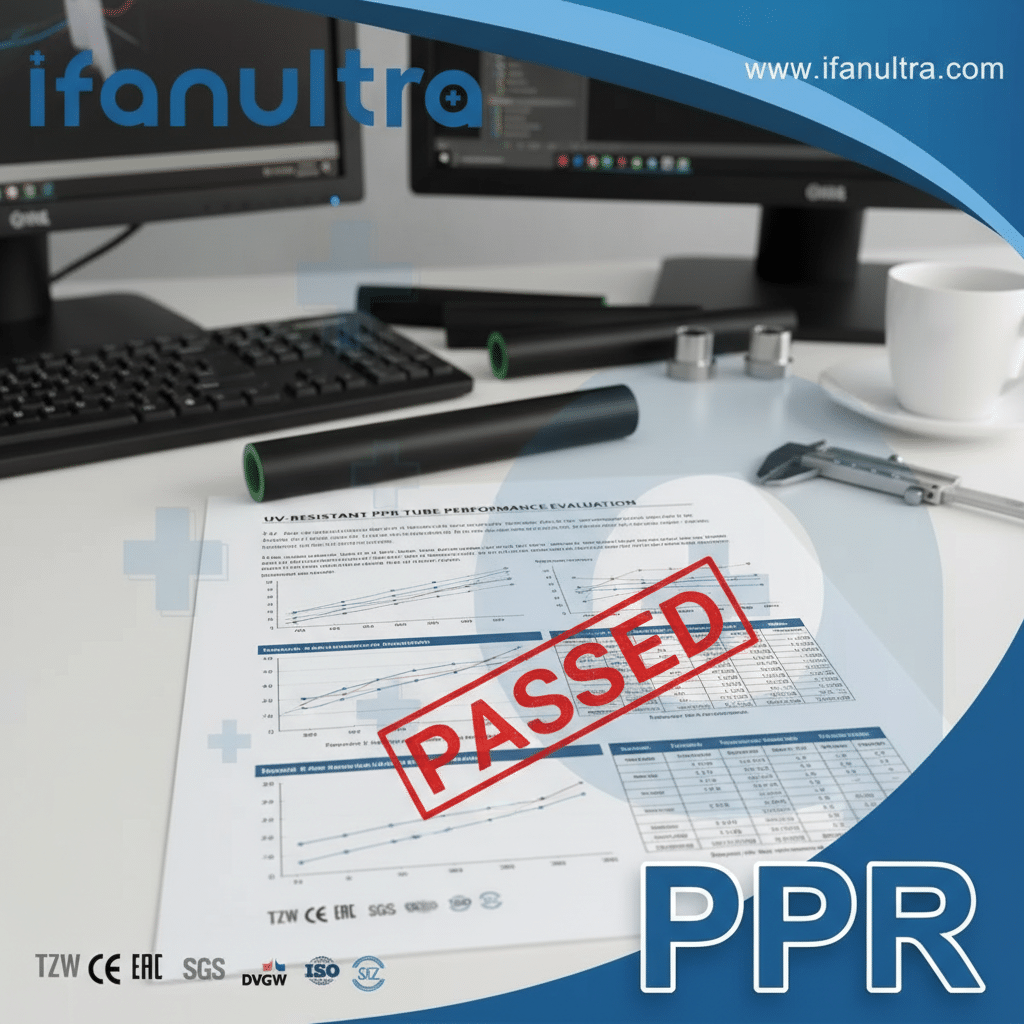
You verify claims by formally requesting the manufacturer’s test report for accelerated weathering (e.g., ISO 4892-3). A genuine report from an accredited lab will show the test standard, duration, sample details, and—most critically—the measured mechanical properties (like impact strength) before and after exposure, proving performance retention.
The Anatomy of a Valid Test Report
When you receive a test report, don’t just check for a pass/fail stamp. Examine these key sections:
- Testing Laboratory Information: Is it a reputable, independent third-party lab (like SGS, TÜV, or a known national institute)? An “in-house” lab report has less credibility.
- Test Standard and Method: It must clearly state the standard used (e.g., ISO 4892-3:2016) and the test conditions (e.g., Cycle 1, UVA-340 lamps, 8h UV at 60°C / 4h condensation at 50°C).
- Sample Description: It should describe the sample accurately, linking it to a specific product code or material batch. Ensure it matches the PPR grade you are buying.
- Test Duration: The total exposure time in hours must be stated (e.g., 1000 hours, 2000 hours).
- Results Data – The Most Important Part: Look for a table comparing initial and final properties. For PPR, Charpy Impact Strength is the most critical.
What to Look for in the Results
A good report will have data similar to this example:
- Initial Charpy Impact Strength (Notched): 25 kJ/m²
- Charpy Impact Strength after 2000h UV: 20 kJ/m²
- Retention Rate: 80%
A credible manufacturer will have a clear internal specification, such as “Retained impact strength must be ≥ 70% after the test.” The report proves they meet their own specification. If the report only shows “Passed” without numerical data, request the full data. Numerical data is truth.
Step-by-Step Verification Guide
Follow this process to protect your project:
| Your Action | The Supplier’s Valid Response | A Red Flag Response |
|---|---|---|
| 1. Ask: “Do you have a UV resistance test report for this PPR tube?” | Provides a recent PDF test report from a known lab. | Says “Yes, all our products are UV resistant,” but provides no document. |
| 2. Check: Is the report from a third-party lab? | The report header shows a lab logo like SGS, TÜV, or a national testing center. | The report is from the supplier’s own “Quality Control Center.” |
| 3. Examine: What standard and duration does it cite? | Clearly states ISO 4892-3 or ASTM G154 and a duration (e.g., 1500 hours). | Says “tested per international standards” without naming one. |
| 4. Analyze: What are the before/after impact strength values? | Shows numerical data for impact strength with a high retention rate (>70%). | Only has a “Pass” stamp. No numerical data is provided. |
| 5. Confirm: Does the report’s sample match your product? | The sample description includes the exact product code/grade you are inquiring about. | The report is for a generic “PP-R” or a different product line. |
At IFAN, we provide these detailed test reports for our outdoor-grade PPR as a standard part of our technical documentation. It is the only way to build trust for serious applications.
Are There Marks from Independent Institutes for Outdoor-Use Plastics?
Yes, and these marks are your strongest guarantee. They mean an institute has audited the factory and the product’s long-term performance.
Yes, independent certification institutes offer specific marks for outdoor plastic pipes. The most respected include the KIWA “AT2 Outdoor” mark (Netherlands/Europe) and the DVGW “K” mark (Germany). These are not just test reports; they are certifications of conformity to a rigorous set of standards that include long-term UV and weathering performance.
Beyond a Test: Understanding Type Approval
A test report is a snapshot of one batch. An independent certification mark represents type approval. This means the institute has:
- Audited the manufacturer’s quality management system.
- Assessed the full material formulation and production process.
- Witnessed long-term performance testing (including UV resistance).
- Committed to ongoing factory audits and sample testing.
It is a comprehensive seal of approval for the product type, offering much higher assurance.
Key Institutes and Their Marks
Here are two of the most influential certifications for outdoor PPR in the international market:
1. KIWA AT2 (Outdoor) Certificate (Netherlands/Europe)
- What it is: KIWA is a leading European certification body for building products. Their “AT2” standard is specifically for plastic pipe systems for outdoor use.
- What it requires: The standard includes stringent requirements for resistance to weathering (UV, heat, frost) and mechanical impact. Products must demonstrate performance through long-term tests.
- The Mark: Products that pass carry the KIWA mark along with the “AT2” designation.
2. DVGW “K” Mark (Germany)
- What it is: DVGW is the German Technical and Scientific Association for Gas and Water. Their certification is highly respected, especially for potable water.
- What it requires: DVGW standards (like W 270) include requirements for hygiene and also for material durability, including behavior under outdoor conditions. The “K” mark signifies compliance.
- The Mark: The DVGW triangle with a “K” inside is a key indicator of quality for the German and European markets.
Why These Marks are the Gold Standard
Choosing a product with these marks offers clear advantages:
- Risk Reduction: The certification body shares the liability. They have staked their reputation on the product’s performance.
- Market Access: These marks are often required or highly preferred for public projects and high-quality construction in Europe and the Middle East.
- Simplified Verification: Instead of analyzing complex test reports yourself, you can rely on the institute’s authority. The mark is the verification.
For projects where failure is not an option—such as exterior building risers, rooftop installations, or solar thermal systems—specifying PPR tubes with these independent certifications is the most professional choice.
Conclusion
True UV resistance requires proof, not just promises. Look for specific test reports against ISO/ASTM standards and demand independent certification marks like KIWA AT2. For reliably certified outdoor PPR tubes, choose IFAN’s UV-stabilized PPR system.









 English
 Español
 Français
 Português do Brasil