
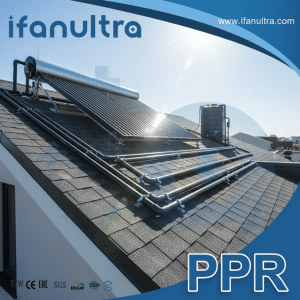
After inspecting a failed solar loop pipe that cracked from sun exposure, we realized not all PPR is equal. This pushed us to specialize in truly solar-ready solutions.
Yes, specially formulated UV-resistant PPR tubes are highly suitable for solar heating systems. They combine essential heat resistance for high stagnation temperatures with superior polymer stabilization to withstand constant rooftop sun exposure, offering a durable and cost-effective alternative to traditional metal piping.
The suitability depends on the material’s grade and specific properties. Let’s examine the key factors that make or break PPR’s performance in demanding solar applications.
Can They Withstand High Stagnation Temperatures from Solar Collectors?
A client’s system failed when standard pipes softened during a pump failure. Stagnation temperature is the ultimate test for solar piping.
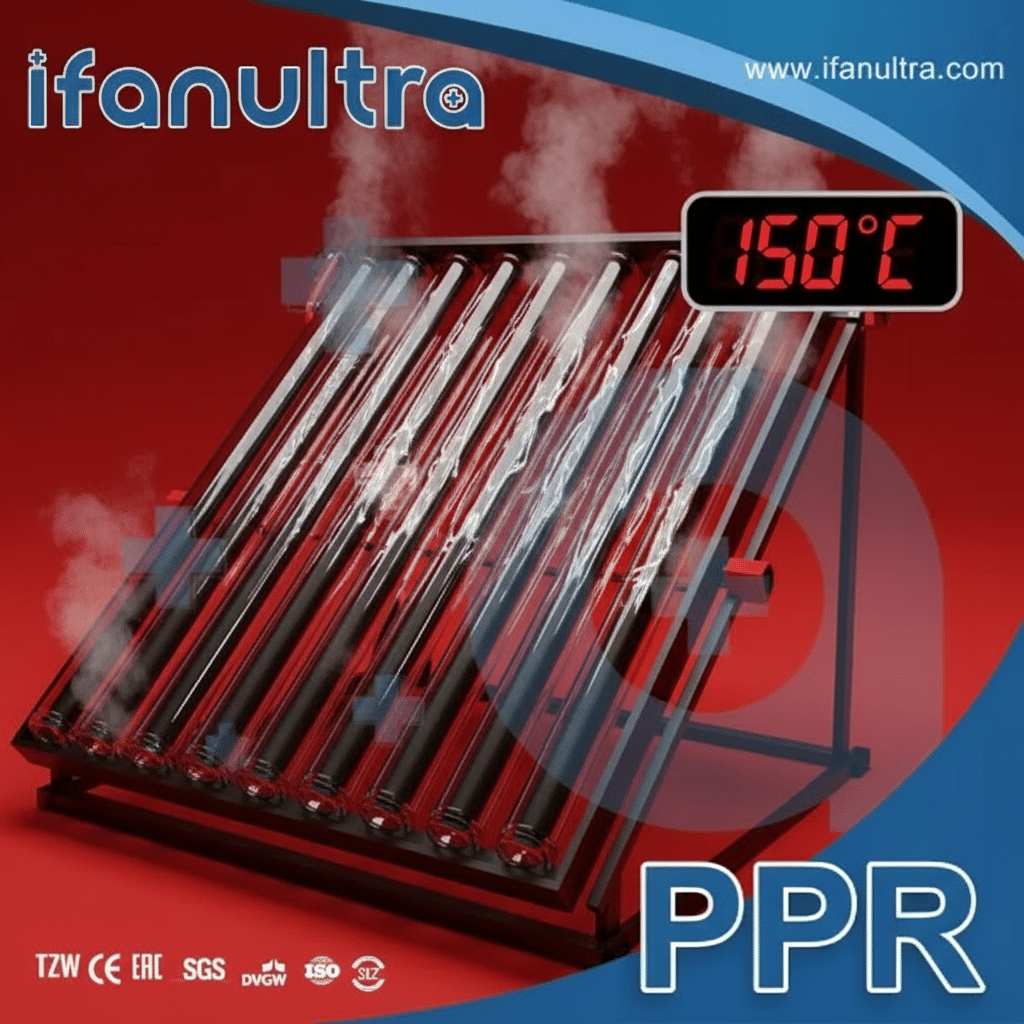
Yes, high-temperature grade PPR (typically Type III, PN 20 or PN 25) can withstand the high stagnation temperatures of solar collectors, which can reach 150°C (302°F) or more. This is because it is copolymerized with additional modifiers that raise its thermal deflection temperature and improve long-term strength under continuous heat stress.
Understanding Stagnation Temperature and Material Limits
Stagnation happens when the solar loop stops circulating—maybe the pump fails or the storage tank is already full. The collector keeps absorbing heat, and the fluid inside can rapidly exceed normal operating temperatures. The piping must survive this extreme scenario without deforming, weakening, or leaking.
Standard PPR for domestic hot water (Type II) has a maximum continuous operating temperature around 70°C. This is not enough for solar. Solar-grade PPR (Type III) is engineered differently. Manufacturers use a different copolymerization process that creates a polymer matrix with a higher glass transition temperature. This means the material stays rigid and maintains its pressure-bearing capability at much higher temperatures.
Key Performance Data and Comparison
The critical metric is the Thermal Stability Temperature under pressure. A quality solar-grade PPR should maintain its rated pressure for at least 1,000 hours at 110°C and survive short-term peaks matching stagnation events.
The following table compares material capabilities:
| Material Type | Max Continuous Operating Temp | Short-Term Stagnation Survival (Peak) | Pressure Rating at High Temp (Typical) |
|---|---|---|---|
| Solar-Grade PPR (Type III) | 95°C | Up to 150°C+ | PN 20/25 (2.0-2.5 MPa at 20°C) |
| Standard PPR (Type II) | 70°C | Up to 95°C | PN 20 (2.0 MPa at 20°C) |
| Cross-linked Polyethylene (PEX) | 90°C | Up to 110°C | Varies |
| Copper | >150°C | >150°C | Haut |
Practical Implications for System Safety
Using the correct grade is non-negotiable. Solar-grade PPR’s ability to handle stagnation protects the entire system investment. It prevents pipe sagging or ballooning that can stress joints. More importantly, it avoids a catastrophic rupture that would drain the system and cause damage. When specifying pipes, always request the manufacturer’s test certificates for long-term hydrostatic strength at elevated temperatures (e.g., according to ISO 15874). This data, not just marketing claims, proves the pipe’s suitability.
Why is UV Resistance Critical for Rooftop Piping in Solar Thermal Loops?
We see many failed pipes that became brittle and yellowed after just a few summers. UV attack is a slow, silent killer for rooftop installations.
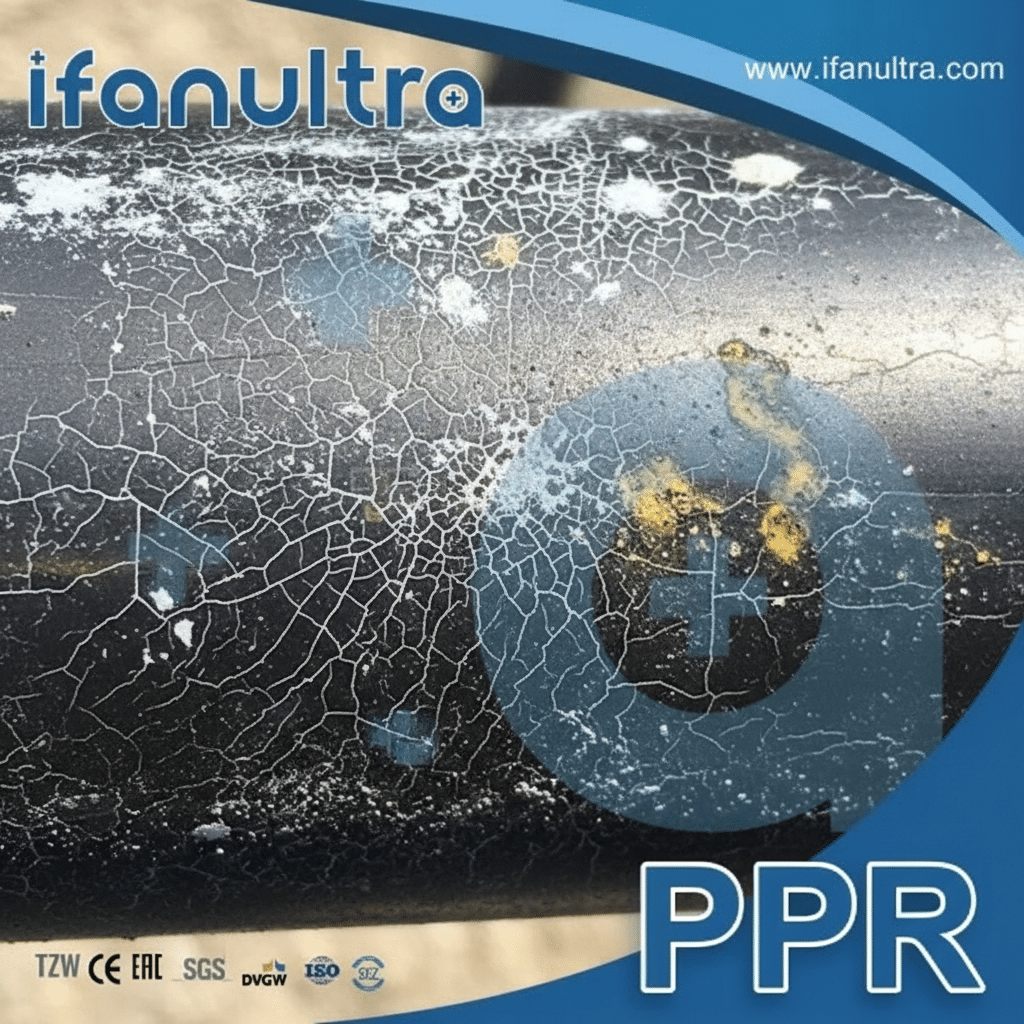
UV resistance is critical because constant sunlight breaks down standard plastic polymers, making them brittle, causing surface cracks (crazing), and significantly reducing their impact strength and pressure-bearing lifespan. UV-resistant PPR contains special additives and stabilizers that absorb or block UV radiation, protecting the polymer chain and maintaining mechanical integrity for decades on the roof.
The Science of UV Degradation
Sunlight contains ultraviolet radiation. This high-energy light attacks the chemical bonds in polypropylene. It causes chain scission, where the long polymer molecules break into shorter pieces. This process, called photo-oxidation, leads to:
- Loss of Flexibility: The material becomes brittle.
- Surface Damage: It leads to micro-cracks that can deepen.
- Color Change: The pipe turns yellow or chalky.
- Ultimate Failure: The pipe can crack under thermal expansion, pressure spikes, or even light impact.
How UV-Resistant PPR Fights Back
Manufacturers combat this by compounding the base polymer with specific additives:
- UV Stabilizers (HALS): Hindered Amine Light Stabilizers act as radical scavengers. They neutralize the free radicals generated by UV exposure before they can break the polymer chains.
- Carbon Black or Titanium Dioxide: These pigments act as physical barriers. They reflect or absorb UV radiation before it can penetrate the pipe wall. Pipes with a co-extruded outer layer containing these pigments offer the best protection.
The Cost of Ignoring UV Protection
A non-UV-resistant pipe on a rooftop might look fine for a year or two. However, by year 3-5, degradation sets in. The risk of a sudden, weather-induced failure skyrockets. Replacing rooftop piping involves significant labor costs and system downtime—far exceeding the minor initial price difference for UV-stabilized pipe.
Rule of thumb: Any PPR pipe exposed to direct or indirect sunlight outdoors must be rated as UV-resistant. Do not use standard indoor PPR, even if it’s painted or insulated, as degradation will still occur.
Are They Compatible with Common Heat Transfer Fluids in Solar Systems?
Chemical compatibility is a hidden risk. We’ve seen pipes swell and weaken from fluid mismatch, leading to slow system contamination.
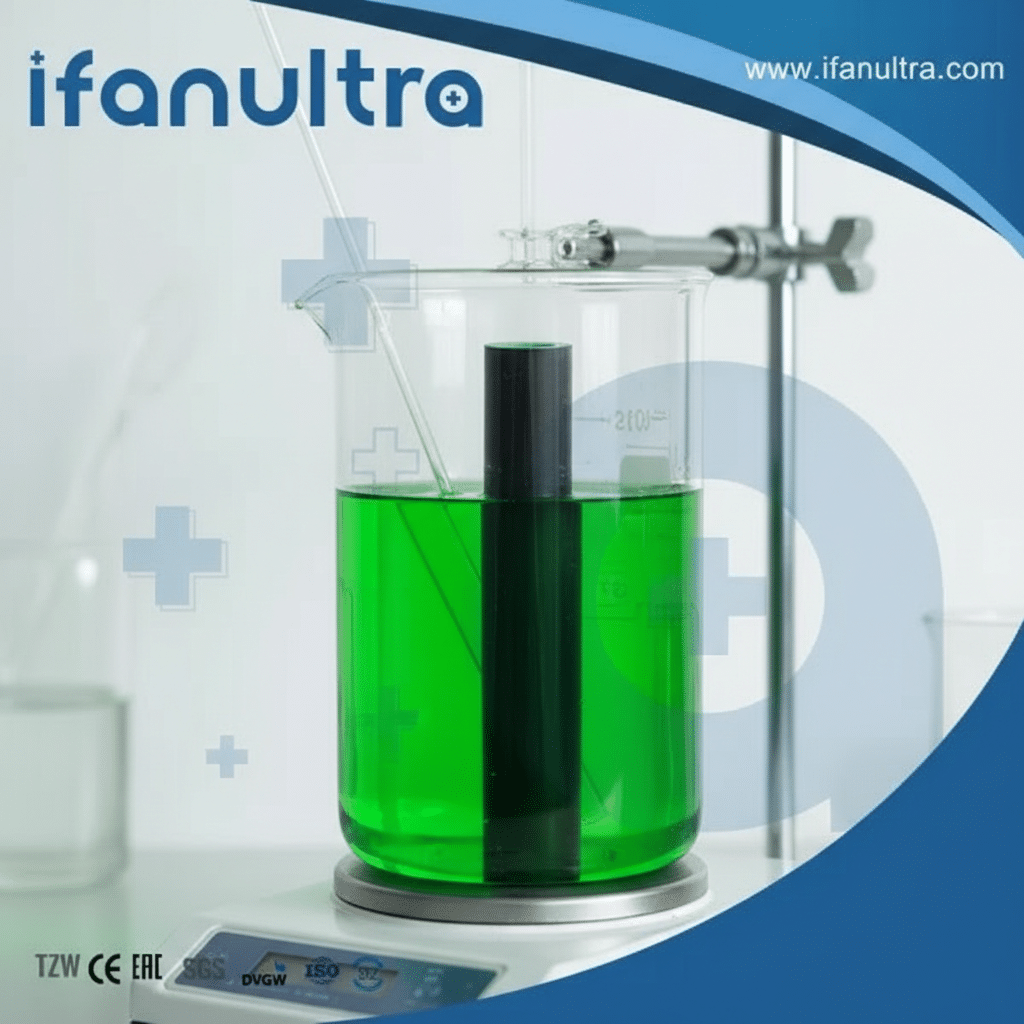
UV-resistant PPR is generally compatible with common water-glycol-based heat transfer fluids used in solar systems, such as propylene glycol solutions. However, compatibility is not universal. The pipe material must be specifically tested and certified for use with the exact fluid type and concentration, as some additives or alternative fluids can cause chemical stress cracking or plasticizer extraction.
The Importance of Chemical Compatibility Testing
A heat transfer fluid is more than just water. It contains glycol (antifreeze), corrosion inhibitors, biocides, and pH stabilizers. These chemicals can interact with the plastic over time at elevated temperatures. The wrong combination can cause:
- Environmental Stress Cracking (ESC): The fluid weakens the polymer, causing cracks under stress.
- Swelling and Softening: The pipe absorbs fluid, leading to wall thickening, softening, and reduced pressure capacity.
- Extraction of Stabilizers: Fluid can leach out the very UV and heat stabilizers that protect the pipe.
How to Ensure Safe Compatibility
You cannot assume compatibility. You must verify it. Here is a practical checklist:
- Identify Your Fluid: Know the exact brand, type (e.g., Propylene Glycol-based), and concentration (usually 30-50%) specified for your solar system.
- Request Certificates: Ask the pipe manufacturer for a chemical resistance test report or a statement of compatibility for that specific fluid. Reputable manufacturers conduct long-term immersion tests.
- Check for Limitations: Be aware of incompatibilities. Solar-grade PPR is typically not compatible with:
- Some synthetic hydrocarbon-based oils.
- High-concentration brines.
- Fluids with strong oxidizing agents.
A Proactive Compatibility Strategy
To eliminate risk, follow this best-practice flow:
- Step 1: Choose System Fluid First. Select a high-quality, solar-specific glycol fluid.
- Step 2: Select Pipe with Matching Certification. Source PPR pipe with proven compatibility for that fluid.
- Step 3: Document Everything. Keep the fluid MSDS and the pipe compatibility certificate together for future reference.
This proactive approach prevents a major failure mode that often appears only after several heating cycles.
What Installation Practices Optimize Their Performance in Solar Applications?
Even the best pipe can fail if installed poorly. Proper technique accounts for solar-specific challenges like high thermal expansion.
Key installation practices include: allowing for significant linear thermal expansion with guided loops or offsets, using full insulation with UV-resistant jackets, protecting pipe from physical abrasion on roof mounts, and performing a rigorous high-temperature pressure test before system commissioning.
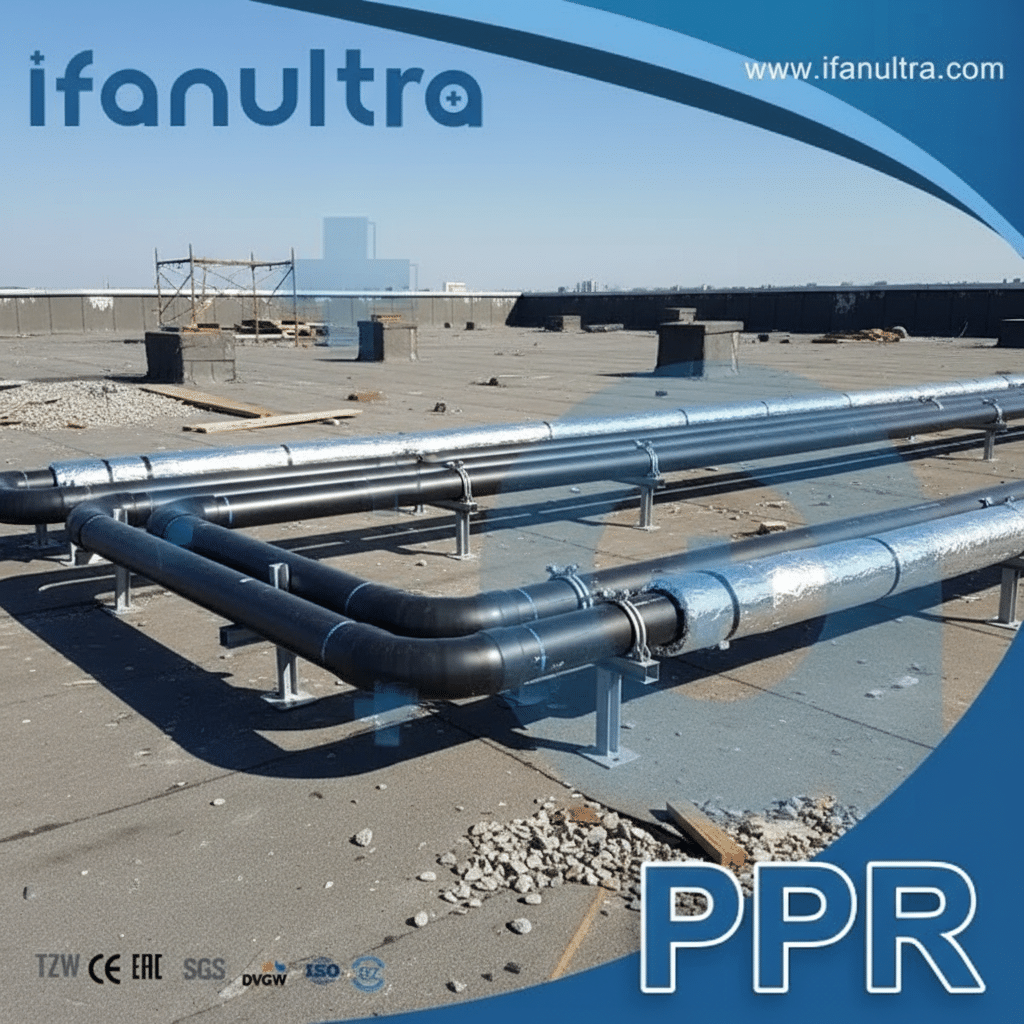
Managing Thermal Expansion: The #1 Priority
PPR expands more than metal when heated. In a solar loop that can cycle from freezing at night to over 100°C during stagnation, this movement is substantial. If constrained, it creates enormous stress, leading to pipe bowing, fitting strain, and joint failure.
Solutions:
- Expansion Loops: Design U-shaped or circular loops into long straight runs.
- Expansion Offsets: Use Z-shaped bends to absorb movement.
- Proper Clamping: Use sliding clamps or clamps with rubber cushions. Never use rigid clamps that lock the pipe in place; they must allow longitudinal movement.
Installation Best Practices Checklist
Follow this guide to ensure a robust, long-lasting installation:
| Pratique | Why It’s Important | How to Do It Right |
|---|---|---|
| 1. Support & Clamping | Prevents sagging, guides expansion, reduces stress. | Space supports every 50-70 cm. Use loose-fit, smooth-lined clamps. Anchor points before and after expansion loops. |
| 2. Insulation | Maintains efficiency, protects pipe from UV and temperature extremes. | Use closed-cell foam insulation rated for high temp. Always add a UV-resistant protective jacket over it. |
| 3. Roof Penetration | Prevents abrasion and water ingress. | Use proper roof flashings. Sleeve the pipe where it passes through structures. Seal for weatherproofing, but allow pipe movement inside the sleeve. |
| 4. Fusion Welding | Creates the only leak-proof, permanent joint. | Use a properly calibrated welding machine. Follow time/temperature charts for the specific pipe grade. In rooftop heat, adjust welding parameters slightly. |
| 5. Pre-Commissioning Test | Catches leaks before heat and stress are applied. | Perform a pressure test at 1.5x system working pressure for at least 2 hours. Check every joint during and after the test. |
Avoiding Common Rooftop Pitfalls
- Do Not strap pipes tightly to hot collector frames.
- Do Not leave pipe or insulation exposed to sunlight without a protective jacket.
- Always plan the routing to minimize exposure to physical damage (e.g., from maintenance foot traffic).
A well-planned installation turns the inherent properties of PPR—like flexibility and ease of fusion—into major advantages, creating a system that is both efficient and exceptionally durable.
Conclusion
UV-resistant, solar-grade PPR tubes are a robust, economical choice for thermal solar systems when selected and installed correctly. For a system you can trust, explore IFAN’s range of high-temperature, UV-stabilized PPR pipes and fittings, engineered specifically for solar applications.









 English
 Español
 Français
 Português do Brasil