
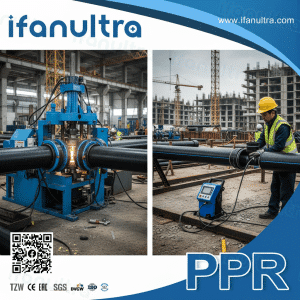
I once witnessed a massive irrigation project fail because of poorly made joints. That costly mistake taught me that fusion reliability isn’t just about the method—it’s about execution.
Both butt fusion and electrofusion are reliable when performed correctly, but they excel in different scenarios. Butt fusion creates joints as strong as the pipe itself through a heated plate, while electrofusion uses embedded heating coils for simpler, more controlled connections. The more reliable method depends entirely on your specific application, working conditions, and available expertise.
Let’s examine the key differences to help you choose the right method for your next HDPE project.
What Are the Fundamental Differences in the Heating Mechanism of Each Method?
Understanding how each method melts the pipe is crucial. I’ve seen confusion about this lead to improper joint preparation and eventual failure.
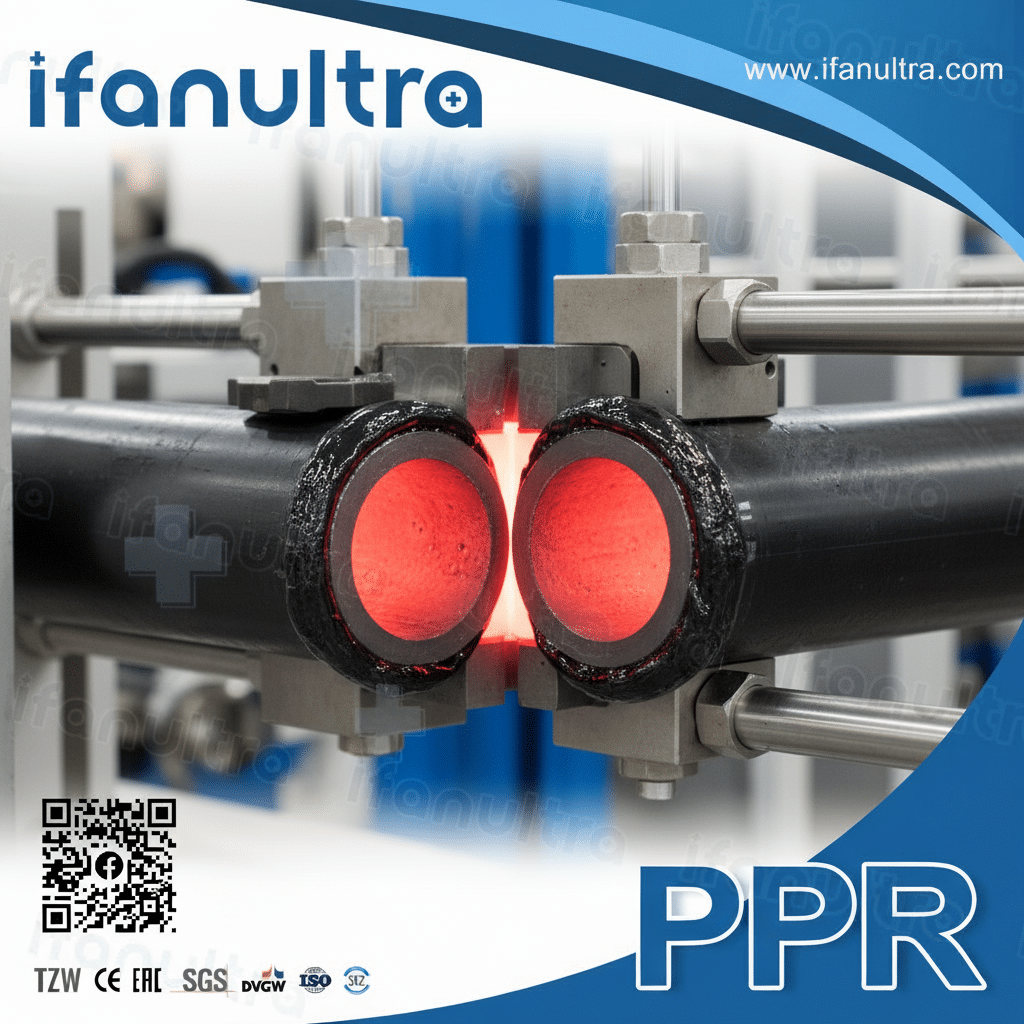
Butt fusion uses a heated plate that simultaneously melts the squared ends of two pipes, which are then pressed together under controlled force. Electrofusion uses a fitting with embedded resistance wires that generate heat when electricity passes through them, melting both the fitting’s inner surface and the pipe’s outer surface to create a bond.
Butt Fusion: External Heat Application
Butt fusion relies on direct heat transfer from an external source. The process follows a specific sequence:
- Facing: A facer shaves the pipe ends to ensure they are perfectly square and clean.
- Alignment: The pipes clamp into the fusion machine, aligning them precisely.
- Heating: A heating plate inserts between the pipe ends, melting both surfaces simultaneously.
- Changeover: The operator quickly removes the heating plate.
- Fusion: The operator brings the molten ends together under specified pressure.
- Cooling: The joint cools under controlled pressure.
The heating plate temperature typically ranges from 200°C to 230°C for HDPE. Importantly, the heat affects only the pipe ends, creating a melt zone approximately 10-20mm deep depending on pipe size and wall thickness.
This method essentially recreates the pipe’s original material at the joint. When done correctly, the fusion zone becomes indistinguishable from the pipe wall itself.
Electrofusion: Internal Heat Generation
Electrofusion takes a completely different approach. Instead of heating the pipe directly, it uses specially manufactured fittings containing copper resistance wires embedded in the inner surface.
The process works like this:
- Preparation: The operator scrapes the pipe’s outer surface to remove the oxide layer.
- Insertion: The pipe inserts into the electrofusion fitting.
- Clamping: The fitting holds the pipe in position, often using built-in stops.
- Power Connection: Leads from an electrofusion processor connect to the fitting terminals.
- Heating: The processor sends controlled current through the coils for a specified time.
- Cooling: The joint cools naturally without external pressure.
The resistance wires heat the surrounding material precisely. The heat radiates outward into the fitting and inward into the pipe wall. This creates a controlled melt zone where both materials blend together.
Key Mechanism Differences
| Aspect | Butt Fusion | Electrofusion |
|---|---|---|
| Heat Source | External heating plate | Internal resistance wires in fitting |
| Heat Direction | From pipe ends inward | From fitting center outward |
| Temperature Control | Operator monitors plate temp | Processor automatically controls |
| Pressure Application | Hydraulic or manual force | Thermal expansion creates pressure |
| Joint Formation | Pipe-to-pipe directly | Pipe-to-fitting-to-pipe |
Implications for Reliability
These fundamental differences affect reliability in practical ways. Butt fusion requires precise timing during the changeover phase. If the operator takes too long removing the heating plate, the molten ends begin cooling, potentially creating a cold joint.
Electfusion eliminates this timing risk entirely. Once the operator starts the cycle, the processor handles everything. This makes electrofusion generally more forgiving for less experienced operators.
However, butt fusion creates joints without additional fittings. This means no extra material interfaces and potentially lower long-term failure points. The joint truly becomes part of the continuous pipe.
How Does Operator Skill Affect the Consistency of Butt Versus Electrofusion Joints?
I’ve trained dozens of technicians over the years. The skill gap between these two methods is substantial and directly impacts reliability.
Operator skill dramatically affects butt fusion consistency because the process requires precise timing, pressure control, and environmental judgment. Electrofusion reduces this dependency through automated cycles and visual indicators, making it more consistent across different skill levels. However, both methods still demand proper preparation and understanding.
The Skill Demands of Butt Fusion
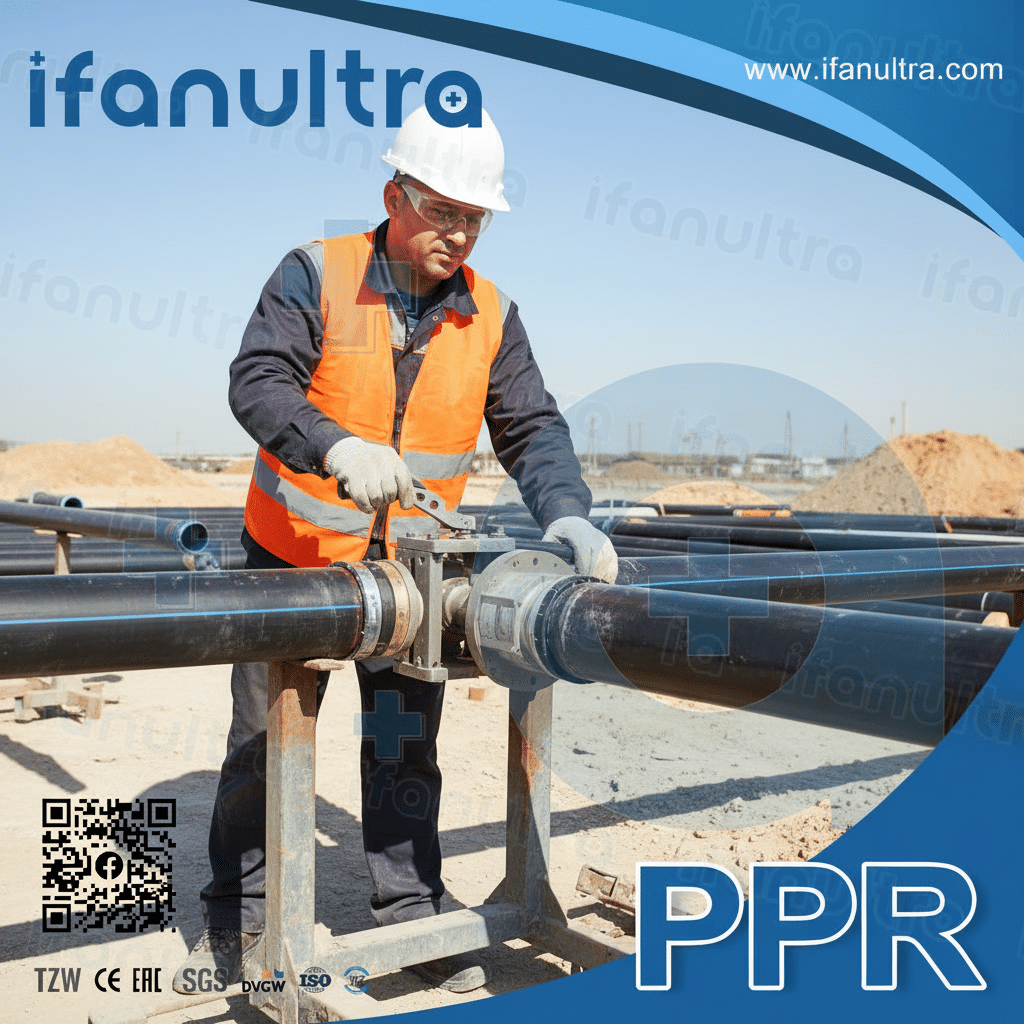
Butt fusion is as much art as science. A skilled operator develops intuition for factors that machines cannot measure.
Critical Skill Areas in Butt Fusion:
- Alignment Judgment: The operator must ensure pipes align perfectly before fusion. Misalignment creates stress points that can fail under pressure.
- Timing Precision: The changeover time—removing the heating plate and bringing pipes together—must happen within seconds. Delays cause temperature loss and weak bonds.
- Pressure Calibration: Different pipe sizes require different fusion pressures. The operator must calculate and set these correctly.
- Environmental Adaptation: Wind, cold temperatures, and humidity all affect cooling rates. Experienced operators adjust timing accordingly.
- Visual Inspection: After fusion, the operator examines the bead for consistency. Uneven beads indicate problems requiring rework.
A novice butt fusion operator might achieve 70-80% joint strength. An experienced master can consistently achieve 100% joint strength matching the pipe’s specifications. This variability introduces significant reliability concerns for critical applications.
The Simplified Skill Requirements of Electrofusion
Electrofusion dramatically reduces the skill burden. The automation handles most variables that plague butt fusion.
Remaining Skill Requirements for Electrofusion:
- Surface Preparation: Scraping the pipe’s outer layer removes oxidation. This step remains critical and operator-dependent.
- Proper Insertion: The pipe must insert fully to the fitting’s depth mark. Shallow insertion prevents proper fusion.
- Cleanliness: Contamination between pipe and fitting can cause failure. Operators must keep surfaces clean.
- Cycle Selection: Choosing the correct fusion cycle on the processor requires basic matching to the fitting specifications.
- Cooling Time Respect: Operators must wait the full cooling period before moving or pressuring the joint.
Once the operator completes these preparation steps, the electrofusion processor takes over. It delivers exactly the right current for exactly the right time. This automation means a properly trained novice can achieve 95%+ joint consistency compared to an expert.
Skill Impact Comparison Table
| Factor | Butt Fusion Skill Dependency | Electrofusion Skill Dependency |
|---|---|---|
| Joint Strength Consistency | Highly dependent on operator | Low dependency; processor controlled |
| Preparation Quality | Medium; facing is automated | High; scraping is manual |
| Environmental Adaptation | High; operator must adjust | Low; fittings designed for range |
| Inspection Reliability | High; bead interpretation requires experience | Medium; visual indicators simple |
| Training Time for Proficiency | Weeks to months | Days to weeks |
Practical Reliability Implications
For projects with consistent, experienced crews, butt fusion delivers excellent reliability at lower fitting costs. The joint quality matches the operator’s skill level.
For projects with varying crew experience or remote locations, electrofusion provides more predictable results. The automation ensures consistent quality regardless of who performs the work.
IFAN recommends electrofusion for critical joints where failure risks are high. For mainline runs with experienced crews, butt fusion remains cost-effective and reliable.
Which Method Performs Better in Field Conditions with Limited Space or Power?
Field conditions rarely match the training facility. I’ve watched excellent crews struggle in tight trenches and remote locations.
Electrofusion generally performs better in confined spaces because the equipment is compact and requires only electrical power. Butt fusion demands significant space for the machine, pipe alignment, and operator movement, plus hydraulic power for larger diameters. However, in remote areas without electricity, generator-powered butt fusion may be more practical than specialized electrofusion generators.
Space Requirements Comparison
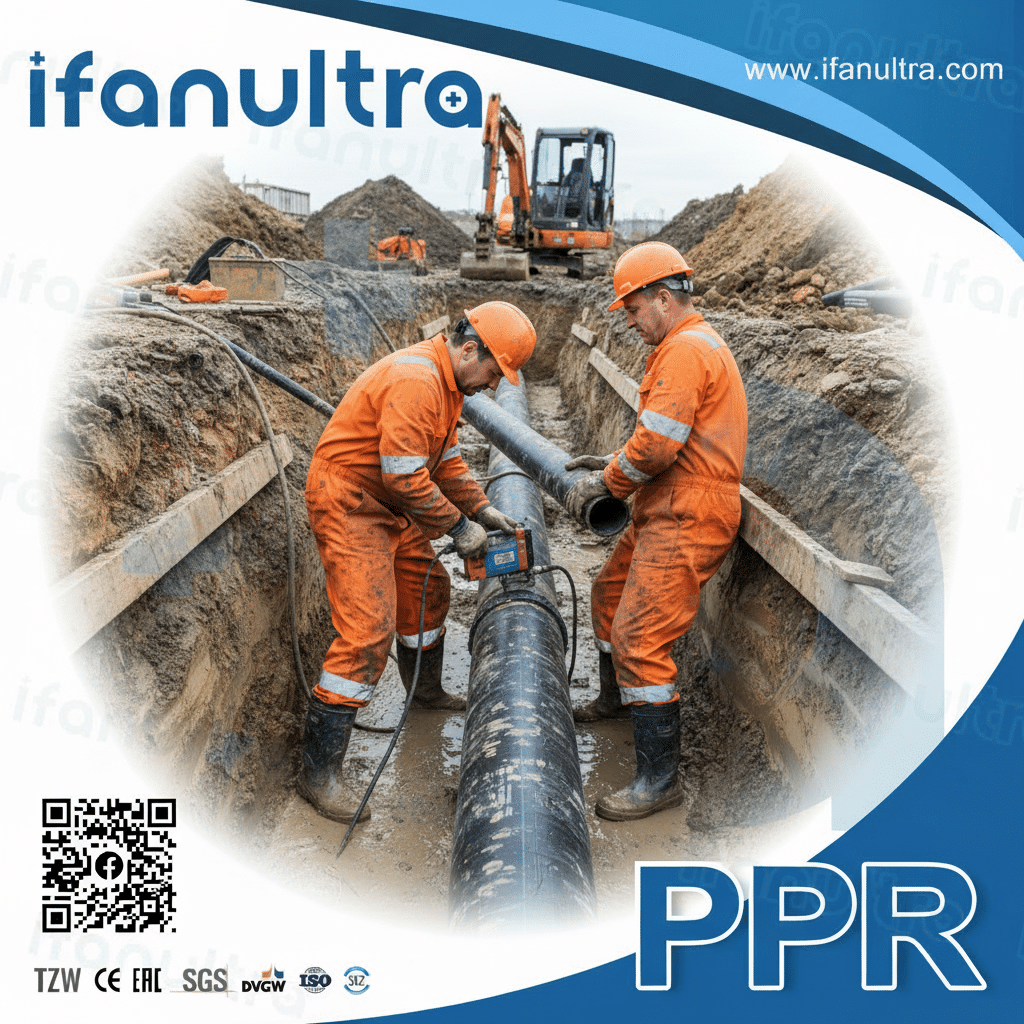
The physical footprint of each method differs dramatically, especially for larger pipe diameters.
Butt Fusion Space Needs:
A butt fusion machine requires linear space along the pipe axis. The machine clamps onto both pipe ends, which must extend straight from the joint area. For large diameters (over 200mm), this can require 3-5 meters of clear workspace.
Additional space requirements include:
- Room for the operator to access controls
- Space to move the heating plate in and out
- Area to store and operate the hydraulic unit
- Clearance for pipe movement during alignment
In deep trenches or cramped mechanical rooms, achieving this space becomes impossible. Contractors sometimes excavate larger pits specifically for butt fusion access.
Electrofusion Space Needs:
Electrofusion fittings require minimal axial space. The fitting itself adds only 10-20cm to the pipe length. Operators can work in narrow trenches with minimal excavation.
Advantages in confined spaces:
- No need for pipe movement during fusion
- Fitting works in any orientation (vertical, horizontal, overhead)
- Small generator can sit outside the trench
- Single operator can work in tight quarters
Power Requirements and Availability
Power access significantly influences method choice, particularly in remote pipeline projects.
Butt Fusion Power:
Smaller butt fusion machines (up to 160mm) often use manual hydraulic pumps requiring no electricity. For larger diameters, electric hydraulic pumps need reliable power. Typical requirements range from 1.5kW to 5kW depending on machine size.
Heating plates draw significant current. A 250mm machine might require 3-4kW just for the heating plate. Combined with hydraulic power, total demand can exceed 7kW.
Electrofusion Power:
Electrofusion processors typically require 2-3kW for most fittings. However, the power draw is sustained for the entire fusion cycle (typically 30-200 seconds depending on fitting size).
The critical difference: electrofusion requires stable voltage and current control. Standard generators must produce clean power; otherwise, fusion quality suffers. Specialized electrofusion generators with inverter technology are recommended for remote work.
Field Performance Comparison Table
| Condition | Butt Fusion | Electrofusion |
|---|---|---|
| Tight Trenches | Difficult; needs space | Excellent; compact fittings |
| Vertical Installations | Challenging; pipe alignment hard | Easy; works in any orientation |
| Remote Areas No Power | Possible with manual machines | Requires generator |
| Wet Conditions | Heating plate sensitive to water | Fittings sealed; works fine |
| Cold Weather | Requires shelters, wind protection | Fittings self-regulate heat |
| Underwater Repairs | Not possible | Special wet/dry fittings available |
Practical Recommendations
Based on field experience, IFAN suggests:
- For trenchless installations or confined spaces: Choose electrofusion. The space savings outweigh the higher fitting costs.
- For long remote pipelines: Consider butt fusion with manual hydraulic machines. Eliminating generator dependence simplifies logistics.
- For repair situations: Electrofusion wins overwhelmingly. Cutting out a damaged section and installing an electrofusion coupler takes minimal space and time.
- For large diameters (over 400mm): Butt fusion is often the only practical option. Electrofusion fittings for very large pipes become prohibitively expensive and heavy.
How Do the Costs and Equipment Requirements Compare for Both Fusion Techniques?
Budget constraints drive many decisions. However, initial costs don’t tell the whole story of which method saves money long-term.
Butt fusion has higher equipment costs but lower per-joint fitting costs, making it economical for many joints. Electrofusion has lower entry equipment costs but significantly higher fitting prices, favoring projects with fewer joints or where portability matters. Total project cost depends on joint count, pipe diameter, and labor rates.
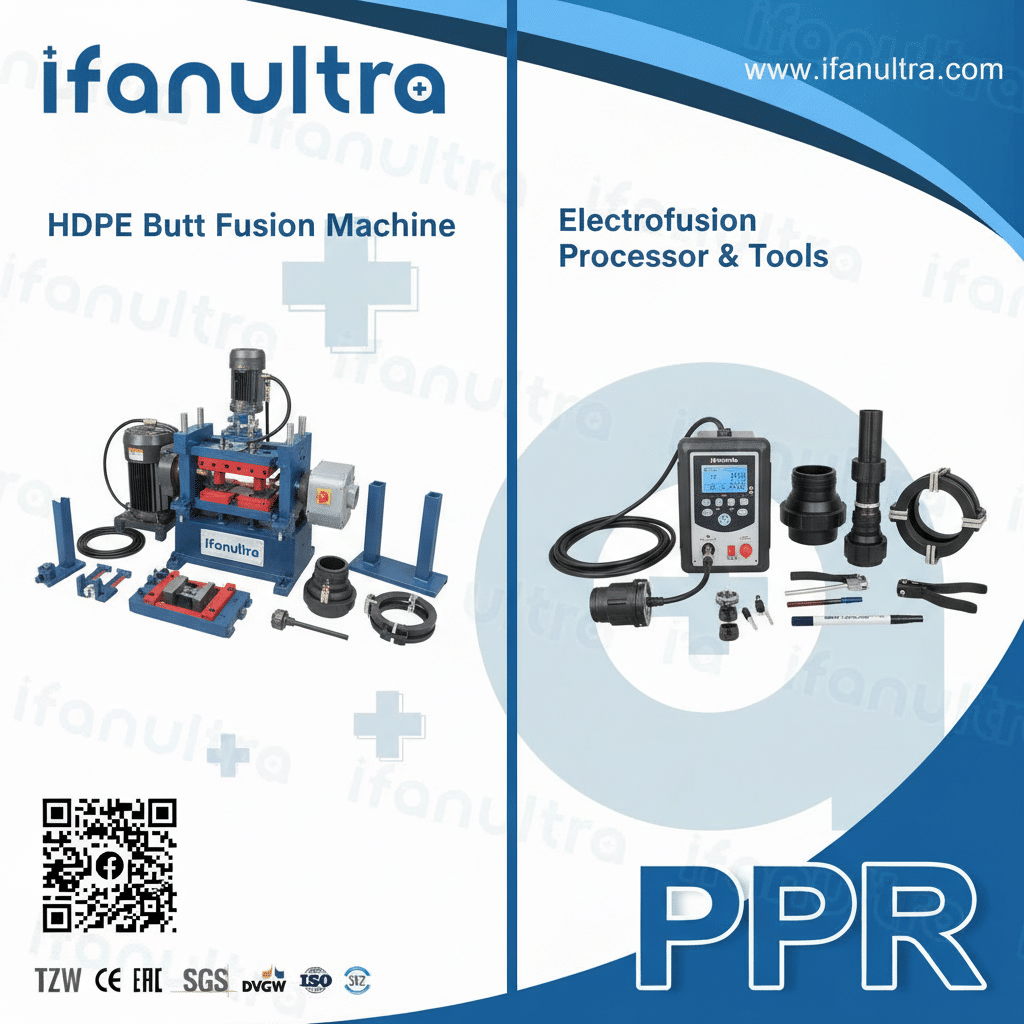
Equipment Investment Breakdown
The machinery required for each method represents different investment levels.
Butt Fusion Equipment Costs:
- Small machines (up to 160mm): $2,000 – $5,000 for manual hydraulic units
- Medium machines (up to 250mm): $5,000 – $12,000 with basic hydraulics
- Large machines (up to 630mm): $15,000 – $40,000 with full hydraulic systems
- Specialized large diameter: $50,000+ for 800mm+ capabilities
Additional butt fusion equipment includes:
- Facers (replaceable blades cost $100-300 per set)
- Heating plates (require occasional re-coating)
- Alignment clamps for different diameters
- Generators for remote work
- Training for operators
Electrofusion Equipment Costs:
- Basic processor: $2,000 – $4,000 for small diameters
- Universal processor: $4,000 – $8,000 handling all fitting sizes
- Advanced processor with data logging: $8,000 – $15,000
Additional electrofusion equipment:
- Scrapers ($50-200 for quality tools)
- Fitting clamps for larger diameters
- Cleaning supplies
- Generator (must be inverter-type for best results)
Per-Joint Cost Comparison
The fitting costs create the most significant difference between methods.
Butt Fusion Per-Joint Costs:
- Only the pipe itself (no separate fitting required)
- Consumables: negligible (facer blade wear, cleaning supplies)
- Labor: 30-60 minutes per joint for preparation, fusion, cooling
For a 200mm pipe, a butt fusion joint costs essentially nothing in materials beyond the pipe already in the project.
Electrofusion Per-Joint Costs:
- Fitting purchase: significant expense
- Electrofusion coupler for 200mm pipe: $50 – $150 depending on brand and specifications
- Consumables: negligible (scraper blades, cleaning supplies)
- Labor: 15-30 minutes per joint (less preparation than butt fusion)
The fitting cost adds up quickly. For a project with 1,000 joints, electrofusion could add $50,000-$150,000 in material costs alone.
Total Cost Analysis by Project Type
| Project Scenario | Butt Fusion Total Cost | Electrofusion Total Cost | Better Value |
|---|---|---|---|
| Long Pipeline (1000+ joints) | Low equipment + low per-joint | Low equipment + high per-joint | Butt Fusion |
| Short Repair Job (1-10 joints) | High equipment + low per-joint | Low equipment + high per-joint | Electrofusion |
| Mixed Small Jobs (varied locations) | High equipment + transport costs | Low equipment + portable | Electrofusion |
| Large Diameter (400mm+) | Required equipment investment | Fittings extremely expensive | Butt Fusion |
| Contractor Daily Rental | Rental cost + labor | Rental cost + labor | Comparable |
Hidden Cost Factors
Beyond obvious equipment and fitting costs, several factors affect total project expense:
Butt Fusion Hidden Costs:
- Training investment: Weeks of practice before operators achieve consistency
- Failed joint rework: Material waste and time when joints fail testing
- Equipment transport: Large machines require trucks, increasing logistics
- Site preparation: Additional excavation for workspace adds civil costs
Electrofusion Hidden Costs:
- Fitting availability: Special orders may delay projects
- Multiple fitting sizes: Inventory costs for different diameter fittings
- Processor calibration: Annual certification requirements in some regions
- Battery/charging: Portable operation requires reliable power sources
IFAN’s Practical Cost Guidance
Based on serving clients across Russia, Southeast Asia, and beyond, IFAN recommends:
- For pipeline contractors with steady work: Invest in quality butt fusion equipment. The per-joint savings justify the machine cost within months.
- For maintenance crews and plumbers: Choose electrofusion. The portability and simplicity match the job profile perfectly.
- For project managers: Calculate both methods before bidding. Sometimes electrofusion’s higher fitting cost is offset by reduced labor and site preparation.
- For critical joints: Consider electrofusion regardless of cost. The automated process eliminates human error in high-stakes connections.
Conclusion
Both butt fusion and electrofusion deliver reliable HDPE joints when matched to the right application. For quality fittings and expert guidance, IFAN offers comprehensive electrofusion and butt fusion solutions with full technical support for your specific project needs.









 English
 Español
 Français
 Português do Brasil