
I once watched a client replace an entire plumbing system because they chose the wrong material. That expensive lesson taught me that “better value” means more than just the price tag.
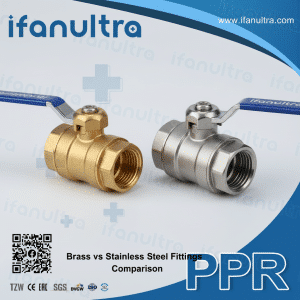
Brass and stainless steel fittings both offer excellent value, but for different applications. Brass provides better value for standard residential and commercial water systems due to its lower cost, easy machinability, and good corrosion resistance. Stainless steel offers better value for high-pressure, high-temperature, or corrosive environments where its superior strength and extreme durability justify the higher initial investment.
Let’s compare these two materials across the factors that matter most to your bottom line.
How Do Brass and Stainless Steel Compare in Corrosion Resistance for Water?
Corrosion is the silent killer of plumbing systems. I’ve seen both materials fail when used in the wrong environment.
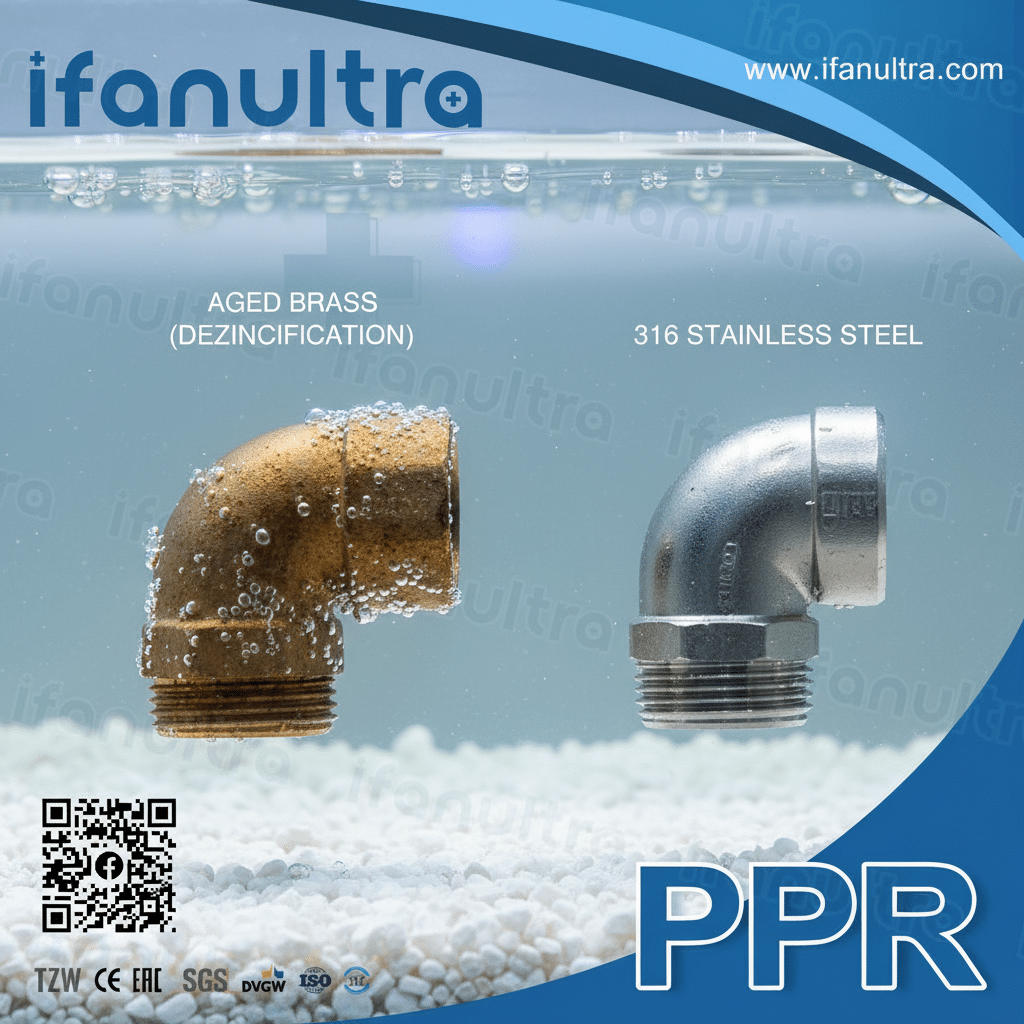
Stainless steel offers superior corrosion resistance overall, especially against aggressive chemicals, saltwater, and high-chlorine environments. Brass resists corrosion well in fresh water but can suffer from dezincification in water with high chlorine, soft water, or acidic conditions, which weakens the fitting over time.
Understanding the Corrosion Mechanisms
Both materials resist rust, but they do so in different ways. Let’s look at how each one handles corrosive environments.
Stainless Steel: This material contains chromium, which forms a thin, invisible layer on the surface called a passive film. If you scratch the surface, this film instantly reforms in the presence of oxygen. This self-healing property makes stainless steel extremely resistant to most forms of corrosion. However, not all stainless steel is the same. The most common grade for fittings is 304, which works well for fresh water. For more aggressive environments like saltwater or high-chloride conditions, you need 316 stainless steel, which contains molybdenum for added protection.
Brass: Brass is an alloy of copper and zinc. It resists corrosion well in most fresh water applications. However, brass faces a specific problem called dezincification. In certain water conditions—particularly high chlorine, low hardness (soft water), or high temperature—the zinc leaches out of the alloy. This leaves behind a porous, weak copper structure. The fitting may look fine on the outside but becomes brittle and can crack or leak. Manufacturers can add arsenic or tin to create “dezincification-resistant” (DZR or CR) brass, which performs better in aggressive water.
Material Performance in Different Water Types
The table below shows how each material performs in common water conditions:
| Water Condition | Standard Brass | DZR Brass | Stainless Steel 304 | Stainless Steel 316 |
|---|---|---|---|---|
| Fresh Potable Water | Excellent | Excellent | Excellent | Excellent |
| High Chlorine Water | Poor (dezincifies) | Good | Good | Excellent |
| Soft/Acidic Water | Poor (dezincifies) | Good | Good | Excellent |
| Saltwater/Brackish | Poor | Poor | Fair | Excellent |
| Hot Water (>140°F) | Good (with lead-free) | Excellent | Excellent | Excellent |
Practical Selection Guide
For most residential plumbing with treated municipal water, standard brass works perfectly well. However, if you work with well water, softened water, or water with high chlorine, DZR brass or stainless steel is the safer choice.
For coastal installations or industrial applications with chemical exposure, stainless steel is the only reliable option.
What Are the Initial Cost Differences Versus Long-Term Maintenance Savings?
The price tag on the fitting tells only part of the story. I’ve learned to calculate the 20-year cost, not just the invoice total.
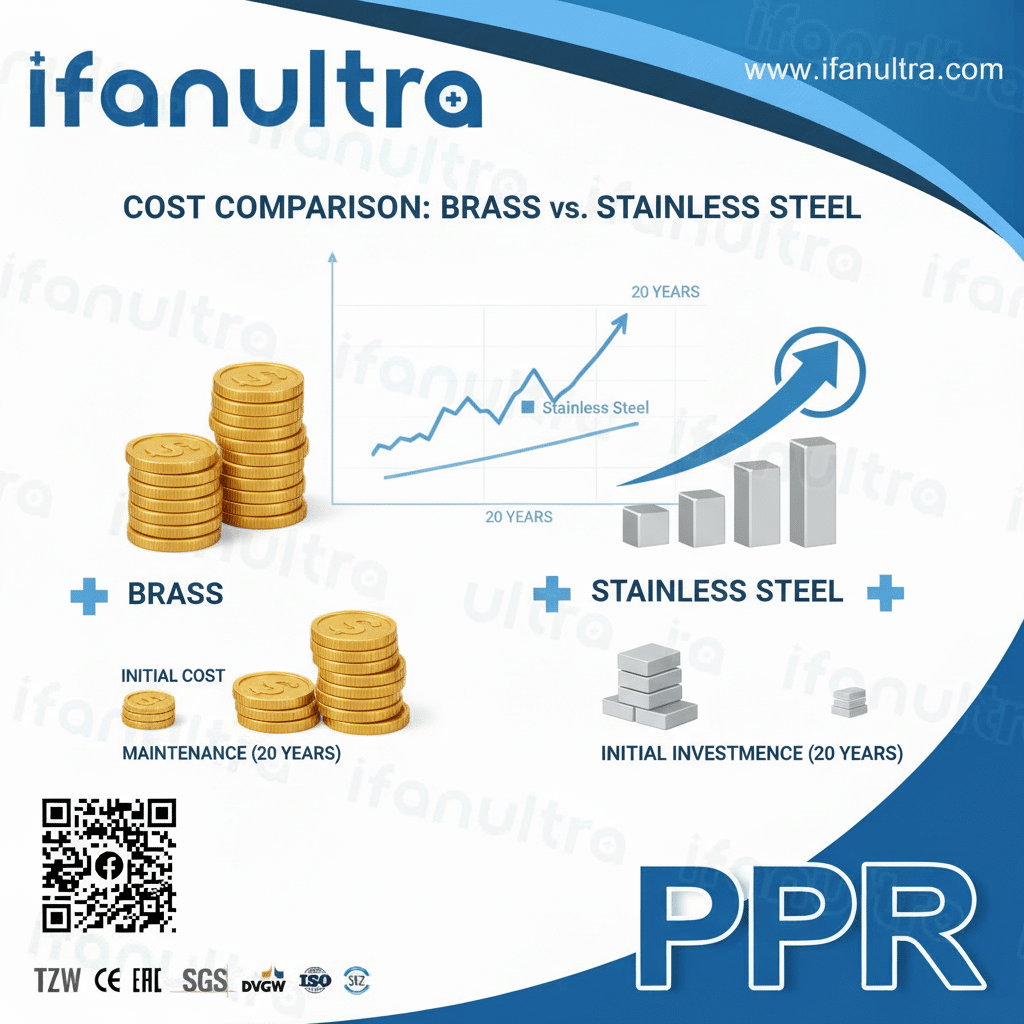
Brass fittings typically cost 30-50% less than stainless steel upfront. However, stainless steel offers lower long-term maintenance costs in aggressive environments where brass might require replacement. In standard water conditions, brass provides excellent long-term value with minimal maintenance, making it the more cost-effective choice for most applications.
Breaking Down the Initial Investment
Let’s look at real numbers. For a typical 1/2-inch fitting:
- Brass fitting: $2.50 – $5.00
- Stainless steel fitting (304): $5.00 – $10.00
- Stainless steel fitting (316): $8.00 – $15.00
For a whole house or small commercial project with 50-100 fittings, the cost difference adds up quickly. A brass system might cost $250-$500 for fittings, while stainless steel could run $500-$1,500.
The Long-Term Cost Factors
Several factors affect the total cost over the system’s life:
Installation Costs: Brass is easier to machine and thread. Plumbers can cut and thread brass pipe on-site with standard tools. Stainless steel is much harder. It requires specialized cutting tools, more labor time, and often pre-threaded fittings. This increases installation labor costs by 20-40%.
Maintenance and Repairs: In the right application, both materials need little maintenance. However, if you install brass in corrosive water, you face replacement costs every 5-10 years. Stainless steel in the same environment lasts 50+ years with no issues.
System Downtime: Replacing failed fittings means shutting down water systems. For a home, this is inconvenient. For a factory or commercial building, downtime costs can dwarf the material savings.
Total Cost Comparison by Application
| Application Scenario | Material | Initial Cost | 20-Year Maintenance | Total 20-Year Cost |
|---|---|---|---|---|
| Standard Home (Good Water) | Brass | Low | Minimal (cleaning only) | Low |
| Standard Home (Good Water) | Stainless | Medium-High | Minimal | Medium-High |
| Home with Aggressive Water | Standard Brass | Low | High (replace at 10 years) | Medium |
| Home with Aggressive Water | DZR Brass | Medium | Minimal | Medium |
| Home with Aggressive Water | Stainless | High | Minimal | High |
| Industrial/Coastal | Standard Brass | Low | Very High (frequent failure) | Very High |
| Industrial/Coastal | Stainless 316 | High | Minimal | Medium-High |
The Smart Money Decision
For 80% of residential and light commercial applications with normal municipal water, brass fittings offer the best value. You get 50+ years of reliable service at half the upfront cost.
However, if your water chemistry is aggressive, or if the system serves a critical function where failure is unacceptable, pay the premium for stainless steel. The insurance against failure is worth the extra cost.
Which Material Provides Superior Strength for High-Pressure Applications?
Pressure ratings matter. I’ve seen fittings burst when engineers underestimated the demands of a system.
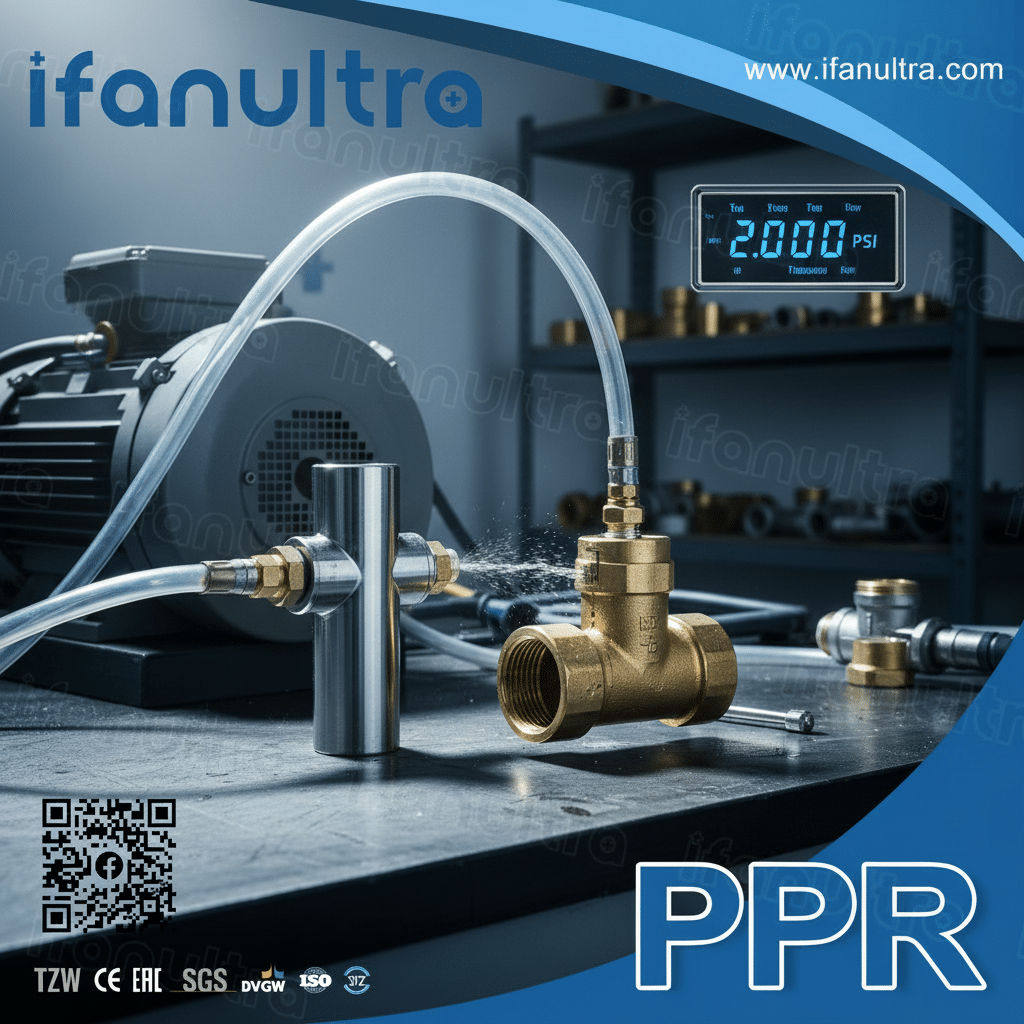
Stainless steel provides superior strength for high-pressure applications, with tensile strength roughly double that of brass. Stainless steel fittings typically handle pressures up to 1000-3000 PSI, while brass fittings max out around 500-1500 PSI depending on the alloy and wall thickness. For extreme pressures or safety-critical systems, stainless steel is the clear choice.
Understanding Material Strength Properties
Strength isn’t just about not breaking. It includes resistance to deformation, fatigue, and creep over time.
Tensile Strength: This measures how much pulling force the material can take before breaking. Stainless steel (70,000-90,000 PSI tensile strength) is much stronger than brass (40,000-50,000 PSI). This means stainless steel fittings can handle higher pressures with thinner walls.
Yield Strength: This is the point where the material permanently deforms. Stainless steel (30,000-50,000 PSI yield) outperforms brass (15,000-30,000 PSI). A brass fitting under high pressure might slowly expand and deform, leading to leaks, even if it doesn’t burst.
Fatigue Resistance: Systems with pressure fluctuations stress fittings repeatedly. Stainless steel handles this cyclic loading much better than brass, which can develop cracks over time.
Pressure Ratings by Material and Grade
| Material Grade | Typical Working Pressure (1/2″ fitting) | Burst Pressure | Best Applications |
|---|---|---|---|
| Standard Brass | 400-800 PSI | 1200-2000 PSI | Residential water, low-pressure air |
| Forged Brass | 800-1200 PSI | 2000-3000 PSI | Commercial water, hydronic systems |
| Stainless 304 | 1000-2000 PSI | 3000-5000 PSI | Industrial water, moderate pressure |
| Stainless 316 | 1200-2500 PSI | 3500-6000 PSI | High-pressure, chemical, marine |
| Stainless (Schedule 80) | 2000-3000 PSI | 5000-8000 PSI | Extreme pressure, hydraulic systems |
Temperature Effects on Strength
Both materials weaken as temperature rises, but they behave differently:
Brass: Loses strength gradually up to about 400°F, then drops sharply. For hot water systems (140-180°F), brass works fine with appropriate pressure de-rating.
Stainless Steel: Maintains strength better at high temperatures. For steam systems or high-temperature industrial processes, stainless steel is essential.
Making the Right Choice for Your Pressure Needs
For standard residential water pressure (40-80 PSI), brass offers more than enough strength. You could hang a car from a 1/2″ brass fitting at these pressures.
For commercial systems up to 300 PSI, quality brass fittings still work well, especially forged brass.
For industrial hydraulics, steam, or any system above 500 PSI, choose stainless steel. The safety margin matters more than the cost difference.
How Do Installation Requirements and Compatibility With Other Metals Differ?
Installation mistakes cause most field failures. I’ve watched crews struggle with materials they didn’t understand.
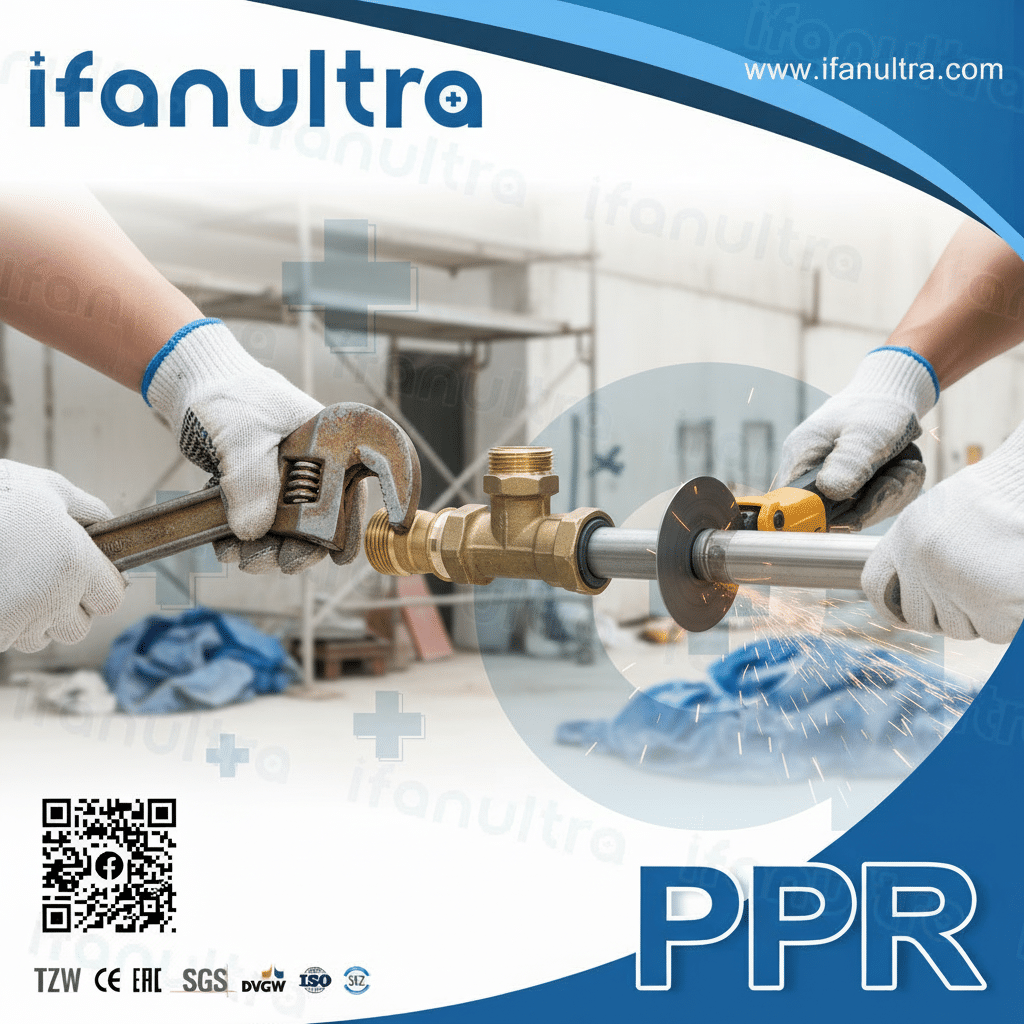
Brass installs easily with standard tools and threads smoothly, making it faster and cheaper to work with. However, brass requires careful attention when connecting to other metals to prevent galvanic corrosion. Stainless steel needs specialized cutting tools and more labor to install, but it pairs safely with most other metals without galvanic issues.
Installation Requirements Compared
Working with Brass:
Brass is soft and machinable. You can:
- Cut it with a standard tubing cutter or hacksaw
- Thread it on-site with manual or electric threaders
- Solder it easily with standard plumbing techniques
- Connect it to copper, PEX, and CPVC with standard adapters
The softness that makes brass easy to work with also means you must avoid over-tightening. Brass fittings can crack or deform if you apply too much torque.
Working with Stainless Steel:
Stainless steel is hard and tough. You need:
- Special abrasive blades or carbide-tipped cutters
- Pre-threaded fittings (on-site threading is difficult and requires heavy machinery)
- Higher torque for tightening
- Anti-seize compound on threads to prevent galling (where the threads weld together under pressure)
The hardness makes installation slower and requires more skill. Each fitting takes 2-3 times longer to install than brass.
Galvanic Corrosion Risks
When you connect different metals in the presence of water, they create a battery. One metal corrodes to protect the other. This is galvanic corrosion.
Brass and Other Metals:
Brass sits in the middle of the galvanic series. When connected to:
- Copper: Minimal risk (they are close in the series)
- Galvanized steel: Moderate risk (brass protects the steel)
- Stainless steel: Moderate risk (stainless steel protects the brass)
- Aluminum: High risk (aluminum corrodes rapidly)
Stainless Steel and Other Metals:
Stainless steel sits at the “noble” end of the series. It tends to be protected and causes other metals to corrode. When connected to:
- Brass/Copper: Moderate risk (brass/copper corrode)
- Galvanized steel: High risk (steel corrodes rapidly)
- Carbon steel: High risk (steel corrodes rapidly)
- Aluminum: Very high risk (aluminum corrodes quickly)
Compatibility Guidelines
| Connection Type | Brass Fitting | Stainless Fitting | Recommended Practice |
|---|---|---|---|
| Copper to Copper | Safe | Safe | Both work well |
| Copper to Brass | Safe | Risk to copper | Use dielectric unions |
| Copper to Stainless | Risk to brass | Risk to copper | Use dielectric unions |
| Steel to Brass | Risk to steel | Risk to steel | Use dielectric unions |
| Steel to Stainless | Not recommended | Very high risk to steel | Avoid entirely |
The Dielectric Union Solution
Whenever you connect dissimilar metals, use a dielectric union. These fittings have a plastic or rubber spacer that breaks the electrical connection while maintaining the water seal. They cost a few dollars but prevent expensive corrosion damage.
Practical Installation Tips
For Brass:
- Use pipe dope or PTFE tape on threads
- Tighten to manufacturer specifications—don’t overdo it
- Support pipes properly to prevent stress on fittings
For Stainless:
- Use anti-seize compound on all threaded connections
- Cut with abrasive wheels, not standard cutters
- Expect longer installation time and budget accordingly
- Consider pre-fabrication to reduce on-site work
Conclusion
Choose brass for most residential and commercial applications—it offers excellent value with lower costs. Choose stainless steel for aggressive environments or high-pressure systems where its superior strength and corrosion resistance justify the premium. IFAN offers both high-quality brass and stainless steel fittings with certified materials and precision manufacturing for reliable performance.









 English
 Español
 Français
 Português do Brasil