
I once had a client who installed single-layer PEX throughout a luxury home, only to find the water tasted stale within a year. That experience taught me the critical role of pipe construction in long-term system performance.
Single-layer pipes are simple, affordable, and easy to install, making them suitable for basic plumbing needs. Multi-layer composite pipes incorporate an aluminum or barrier layer that significantly enhances dimensional stability, reduces thermal expansion, and blocks oxygen diffusion, offering superior performance for demanding applications like radiant heating and hot water systems.
Understanding these differences helps you make the right choice for your specific project requirements.
How Does an Aluminum or Barrier Layer Improve Pipe Performance and Stability?
I’ve watched single-layer pipes snake and bend under hot water pressure. The difference a barrier layer makes is immediately visible.
An aluminum or barrier layer improves pipe performance by creating a rigid structural core that dramatically reduces thermal expansion—by up to 75% compared to single-layer plastic pipes. This metal layer also acts as a complete barrier to oxygen and gas permeation, prevents pipe deformation under high temperatures, and helps the pipe retain its shape after bending, which simplifies installation.
The Problem with Single-Layer Plastic Pipes
To appreciate what a barrier layer does, we must first understand the limitations of single-layer plastic pipes.
Standard plastic pipes like PEX, PPR, or PE-RT are made from pure polymer materials. While these materials work well for many applications, they have inherent physical limitations. First, plastics expand and contract significantly with temperature changes. A 100-meter run of PPR pipe can expand up to 10-15 centimeters when carrying hot water at 70°C. This expansion creates stress on fittings, supports, and wall penetrations.
Second, all plastic pipes are slightly permeable to gases. Oxygen molecules can slowly pass through the pipe wall and enter the water. This might not matter for cold drinking water, but it causes serious problems in closed heating systems. Oxygen in the water leads to corrosion of metal components like radiators, boilers, and pumps.
How the Aluminum Layer Solves These Problems
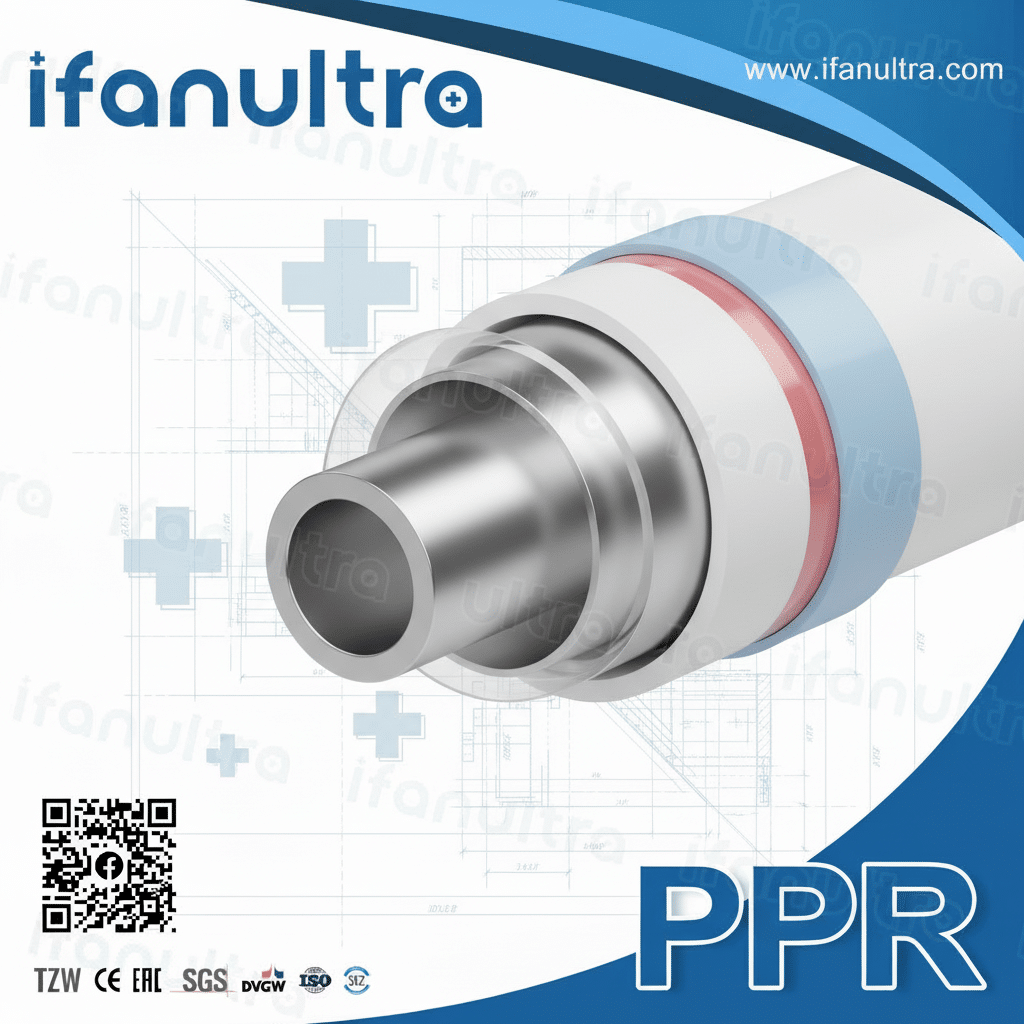
Multi-layer composite pipes sandwich a thin aluminum tube between inner and outer layers of plastic. This construction creates a hybrid product with the best properties of both materials.
Thermal Expansion Control: Aluminum has a very low coefficient of thermal expansion—about 10 times lower than plastic. When bonded between plastic layers, the aluminum restricts the plastic’s natural tendency to expand. The result is a pipe that behaves almost like metal, with expansion rates comparable to copper. This means fewer expansion loops, less stress on fittings, and cleaner installations.
Shape Retention: Single-layer plastic pipes are flexible but spring back when bent. You must hold them in place until secured. Multi-layer pipes with aluminum can be bent and will hold their shape permanently. This “memory-free” characteristic makes installation faster and more precise.
Oxygen Barrier: Aluminum is impermeable to gases. A continuous welded aluminum layer stops 100% of oxygen diffusion. This protects heating system components from corrosion and extends equipment life significantly.
Barrier Layer Options and Effectiveness
| Barrier Type | Oxygen Permeability | Thermal Expansion Reduction | Shape Retention |
|---|---|---|---|
| No Barrier (Single-Layer) | High | None | Poor (springs back) |
| EVOH Coating (on PEX) | Low (but not zero) | None | Poor |
| Aluminum Layer (Welded) | Zero | 70-80% reduction | Excellent (holds shape) |
| Aluminum Layer (Overlap) | Very Low | 50-60% reduction | Good |
The table clearly shows why fully welded aluminum layer pipes offer the best overall performance package.
What Are the Cost Differences Between Single-Layer and Multi-Layer Constructions?
Budget always matters in construction. I’ve helped clients weigh upfront costs against long-term value many times.
Single-layer pipes typically cost 30-50% less in material costs compared to multi-layer composite pipes. However, multi-layer pipes often reduce total installed system cost through faster installation, fewer fittings needed for expansion compensation, and longer system life with lower maintenance requirements. For heating systems, the oxygen barrier alone can pay for itself by preventing boiler corrosion.
Breaking Down the Material Cost Difference
The price gap between pipe types comes from several factors.
Single-layer pipes use only one material—plastic resin—extruded through a simple die. Manufacturing is straightforward and fast. A single extruder can produce hundreds of meters per hour with minimal waste.
Multi-layer pipes require a much more complex manufacturing process. The aluminum strip must be formed into a tube and welded longitudinally. Then, adhesive layers and plastic layers must be extruded onto both the inside and outside of the aluminum tube. This requires multiple extruders working in perfect coordination. The aluminum itself adds significant material cost. Finally, quality control must verify the bond between layers and the weld integrity.
Typical Material Cost Comparison:
| Pipe Type | Relative Material Cost | Reasons |
|---|---|---|
| Single-Layer PPR | 1.0x (Baseline) | Simple extrusion, low-cost material |
| Single-Layer PEX | 1.1x – 1.3x | More complex cross-linking process |
| PEX-Al-PEX (Multi-layer) | 1.8x – 2.2x | Aluminum, adhesives, complex process |
| PPR-Al-PPR (Multi-layer) | 2.0x – 2.5x | Same factors plus thicker walls |
Installation Cost Factors
Here’s where the equation gets interesting. Material cost tells only part of the story.
Multi-layer pipes can actually reduce total project cost in several ways:
Fewer Expansion Compensators: Single-layer plastic pipes in hot water applications require expansion loops, offsets, or compensators at regular intervals. These fittings add material and labor costs. Multi-layer pipes with aluminum need far fewer—sometimes none—because thermal movement is minimal.
Simpler Supports: Because multi-layer pipes hold their shape and resist sagging when hot, they require fewer pipe supports. This saves installation time and material.
No Oxygen Barrier Add-ons: For heating systems using single-layer pipes, you must either add expensive deaerators and corrosion inhibitors or accept shorter equipment life. Multi-layer pipes with integral oxygen barriers eliminate this need.
Long-Term Value Calculation:
| Cost Factor | Single-Layer System | Multi-Layer System |
|---|---|---|
| Pipe Material | Lower | Higher |
| Fittings (expansion) | More needed | Fewer needed |
| Installation Labor | Higher (shaping/support) | Lower (holds shape) |
| System Life (Heating) | Shorter (corrosion risk) | Longer (protected) |
| Maintenance Cost | Higher | Lower |
Project Type Recommendations
Based on cost analysis, here are practical guidelines:
- Cold water only, budget project: Single-layer works fine.
- Hot water distribution: Multi-layer offers better value through stability.
- Radiant floor heating: Multi-layer with oxygen barrier is essential.
- Commercial systems: Multi-layer’s reliability justifies the cost.
Which Design Offers Better Resistance to Oxygen Diffusion and Corrosion?
Corrosion destroys plumbing systems from the inside out. I’ve seen boilers fail in under five years due to oxygen ingress through plastic pipes.
Multi-layer pipes with a continuous aluminum layer offer complete resistance to oxygen diffusion, achieving zero oxygen permeability. Single-layer plastic pipes, even those with EVOH coatings, allow some oxygen ingress over time. For corrosion protection of metal system components like boilers, pumps, and radiators, the aluminum barrier layer provides the only true long-term solution.
Understanding Oxygen Diffusion in Plastics
Many people assume plastic is plastic—solid and impermeable. This is incorrect.
All plastic materials are permeable to gases at a molecular level. The polymer chains that make up plastic have spaces between them. Small gas molecules like oxygen can slowly work their way through these spaces, a process called permeation. The rate depends on:
- Pipe wall thickness
- Temperature (higher temperature = faster diffusion)
- Pressure differential
- Type of plastic
For drinking water, small amounts of oxygen entering are harmless. But in closed heating systems, oxygen is destructive. Even tiny amounts—measured in parts per million—can cause corrosion of steel radiators, cast iron boilers, and copper heat exchangers.
Comparing Oxygen Barrier Technologies
Single-Layer with EVOH Coating: Some single-layer PEX pipes address oxygen diffusion by adding a thin coating of EVOH (ethylene vinyl alcohol) on the outside. EVOH is an excellent oxygen barrier material. However, this approach has limitations:
- The coating is thin and can be damaged during installation
- Oxygen can enter at pipe ends and fittings
- Diffusion still occurs through the plastic layer beneath
- Standards allow some permeability (not zero)
Multi-Layer with Aluminum: A continuous welded aluminum tube eliminates oxygen diffusion completely. Aluminum has zero gas permeability. Oxygen cannot pass through metal. The plastic layers protect the aluminum from corrosion and provide flexibility, but the barrier function is absolute.
DIN Standards for Oxygen Permeability:
| Pipe Type | Maximum Oxygen Permeability (mg/m·day) | Typical Actual Performance |
|---|---|---|
| Single-Layer PEX (No Barrier) | No standard | 10-20 (high) |
| PEX with EVOH | <0.1 (per DIN 4726) | 0.05 – 0.1 |
| Multi-Layer with Aluminum | 0 | 0 (verified by testing) |
Corrosion Protection in Real Systems
The practical impact of oxygen barrier choice shows up in system longevity.
A heating system with standard single-layer pipes will introduce oxygen continuously. Even with corrosion inhibitors, the water will need regular treatment and monitoring. Over 10-15 years, boiler and pump components will show signs of oxygen corrosion.
A system with multi-layer aluminum barrier pipes introduces no oxygen after the initial fill. Corrosion inhibitors remain effective indefinitely. Metal components can last the full life of the building. For radiant floor systems where pipes are embedded in concrete, this reliability is absolutely critical—repairing a failed pipe in a concrete slab costs thousands.
Beyond Oxygen: Chemical Resistance
Multi-layer pipes also offer advantages against other corrosive agents:
- Aluminum layer protects against UV degradation (important during storage)
- Bonded construction prevents delamination and stress cracking
- Smooth inner surface prevents erosion corrosion
How Do Installation Methods and Fitting Requirements Differ Between the Two?
Installation differences between pipe types can make or break a project timeline. I’ve trained plumbers on both systems and seen the learning curve firsthand.
Single-layer pipes typically use simpler connection methods like socket fusion for PPR or crimp rings for PEX, requiring fewer specialized tools. Multi-layer pipes require specific preparation tools for stripping the layers and exposing the aluminum for fitting connections. However, once installed, multi-layer systems often have fewer total fittings due to the pipe’s ability to hold bends, and the connections are mechanically stronger.
Single-Layer Installation Methods
Different single-layer pipe materials use different joining techniques.
PPR (Polypropylene Random Copolymer): This material uses heat fusion welding. A heating tool melts the pipe end and fitting simultaneously. When pushed together, they fuse into a single piece. The process takes 20-30 seconds per joint. It’s simple and reliable but requires electricity and a heating tool. The joint cools quickly but must be held steady during cooling.
PEX (Cross-linked Polyethylene): PEX typically uses mechanical fittings with crimp rings or clamp systems. A special tool compresses a metal ring around the pipe over a fitting barb. This creates a mechanical seal. No heat or electricity needed. Tools are relatively inexpensive. However, the joint relies on the ring maintaining compression forever.
PVC/CPVC: These use solvent cement welding. A chemical solvent softens the plastic surfaces, which then fuse as the solvent evaporates. This is the simplest method but requires proper ventilation and drying time.
Multi-Layer Installation Requirements
Multi-layer pipes demand additional steps but offer benefits.
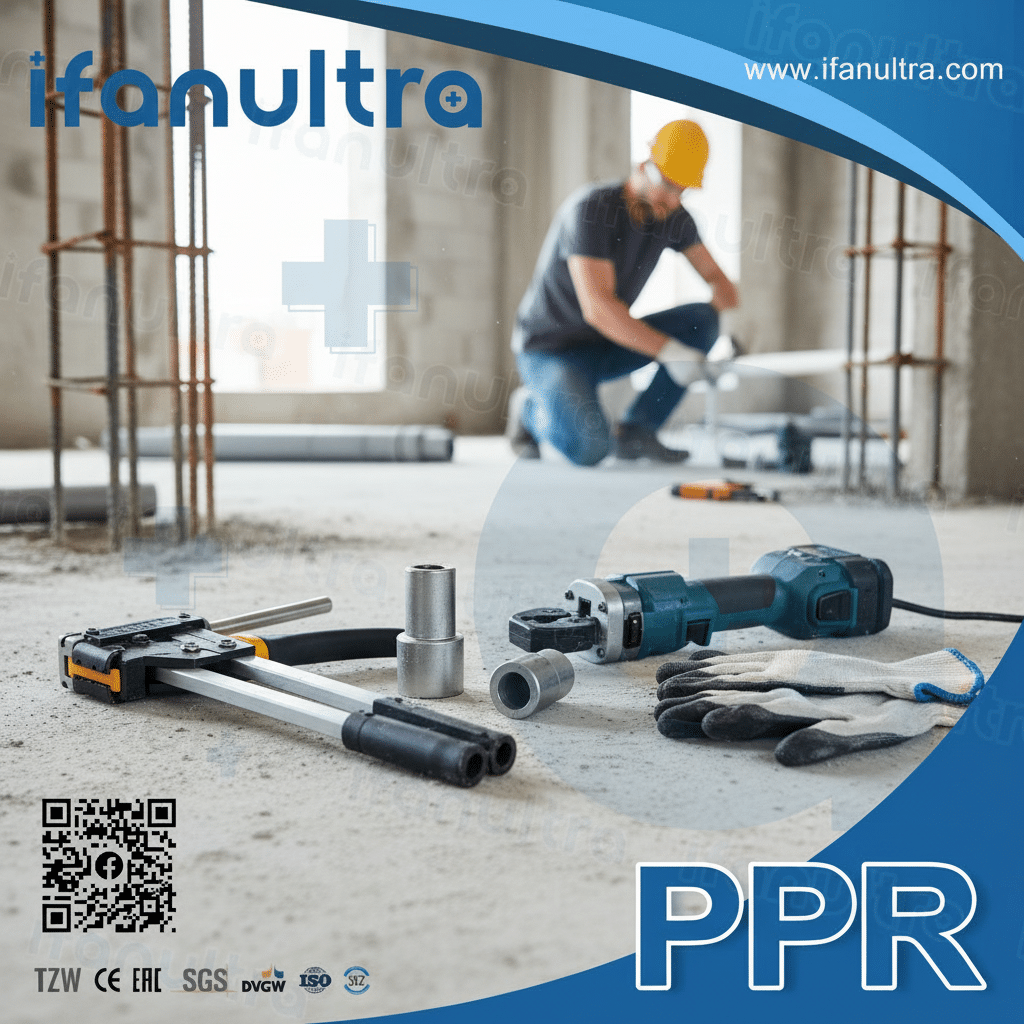
Preparation Tools: Before joining a multi-layer pipe, you must strip the outer plastic layer to expose the aluminum. This requires a specialized stripping tool that removes exactly the right thickness without damaging the aluminum. For different fitting systems, you may also need a calibration tool to round the pipe end after cutting.
Fitting Types: Multi-layer pipes use two main connection methods:
1. Compression Fittings:
- The prepared pipe end inserts into the fitting
- A compression ring or nut tightens to create the seal
- Can be disassembled if needed
- Requires proper torque for reliable seal
2. Press Fittings:
- The prepared pipe inserts into the fitting
- An electric press tool crimps a stainless steel sleeve
- Creates a permanent, strong connection
- Fastest method for large projects
- Requires expensive press tool investment
Installation Comparison Table
| Aspect | Single-Layer PPR | Single-Layer PEX | Multi-Layer (Press) |
|---|---|---|---|
| Tool Investment | Medium ($200-500) | Low ($50-200) | High ($1000-3000) |
| Joints per Hour | 20-30 | 30-40 | 40-60 |
| Skill Required | Medium | Low | Medium |
| Bending Ability | Poor (needs fittings) | Good (springs back) | Excellent (holds shape) |
| Joint Reliability | Excellent (fused) | Good (mechanical) | Excellent (press) |
| Can Disassemble | No (cut only) | No (cut only) | Some systems yes |
Practical Installation Tips
Based on field experience, here are recommendations:
For Multi-Layer Systems:
- Always calibrate the pipe end after cutting to ensure roundness
- Check stripping depth carefully—too deep weakens the joint
- Insert pipe fully into fitting before pressing
- Mark insertion depth on pipe as a visual check
- Test all joints before concealing in walls
For Single-Layer Systems:
- Allow for thermal expansion with proper loops
- Support pipes adequately, especially for hot water
- Clean fusion surfaces thoroughly before welding
- Follow heating time charts precisely
Which System Wins?
For simple installations where pipe runs are straight and short, single-layer works fine. For complex layouts with many direction changes, multi-layer’s shape-holding ability reduces fitting count and installation time. The higher tool cost for multi-layer pays off on larger projects.
Conclusion
Single-layer pipes offer simplicity and lower material cost for basic applications, while multi-layer composite pipes provide superior stability, oxygen barrier protection, and installation flexibility for demanding systems. For projects requiring long-term reliability, choose IFAN’s multi-layer composite pipes with welded aluminum barriers and certified connections.









 English
 Español
 Français
 Português do Brasil