
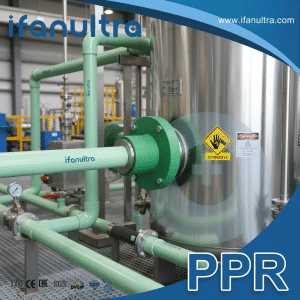
A client once faced a costly shutdown because a metal flange corroded and leaked acid. Switching to the right PPR adapter solved it for good, showing me its real value in harsh environments.
A PPR flange adapter is ideal for chemical transfer lines because it combines the superior, broad chemical resistance of Polypropylene Random Copolymer with a secure, leak-proof flanged connection. This design ensures safe containment of aggressive fluids, accommodates pipeline thermal expansion, and meets strict industrial certifications, providing a reliable and maintenance-free solution.
For engineers managing chemical processes, the connection point is often the weakest link. Let’s examine why the PPR flange adapter specifically strengthens this link.
How Does PPR’s Broad Chemical Resistance Suit Various Aggressive Fluids?
Chemical compatibility charts are our first reference for any project. I’ve seen pipes fail simply because the material couldn’t handle a pH shift.
PPR’s broad chemical resistance suits various aggressive fluids because its high-purity polypropylene polymer is inert to a wide range of acids, alkalis, and salts. Unlike metals that corrode or some plastics that swell or degrade, PPR maintains its structural integrity when exposed to many common industrial chemicals, ensuring long-term service without contamination or failure.
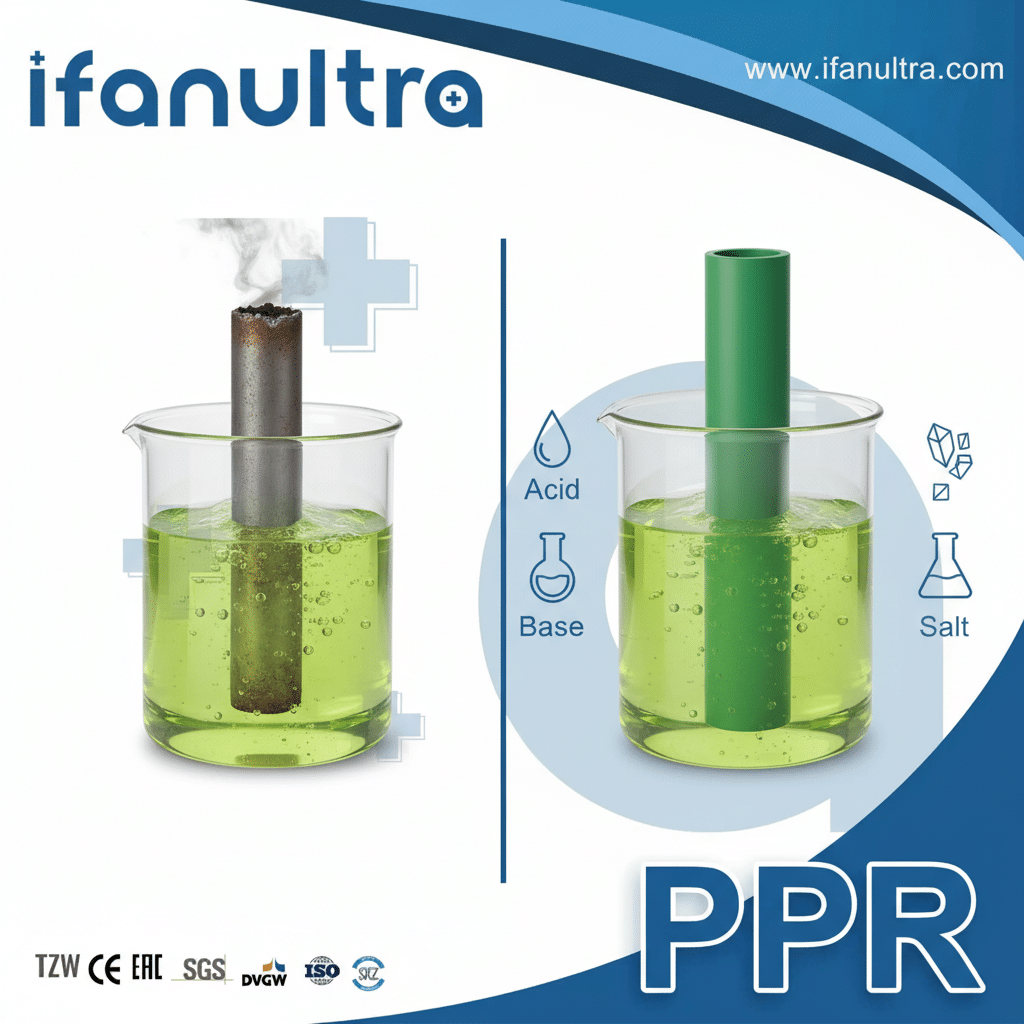
The Science Behind the Resistance
PPR is a thermoplastic made from propylene monomers. Its molecular structure gives it a passive nature, meaning it does not easily react with other substances. This makes it an excellent barrier material.
When an aggressive fluid flows through a pipe, it can attack the material in several ways: through chemical reaction (corrosion), absorption (causing swelling), or environmental stress cracking. PPR performs well against these threats for many chemicals because its polymer chains are stable and non-polar.
Comparing Materials for Chemical Service
This table shows a general comparison of how common piping materials handle chemical exposure. Remember, you must always check a detailed chemical resistance chart for your specific fluid.
| Material | Resistance to Acids | Resistance to Alkalis | Key Weaknesses |
|---|---|---|---|
| PPR (Polypropylene) | Excellent against most dilute and concentrated acids. | Excellent against strong alkalis. | Vulnerable to strong oxidizing acids and some chlorinated solvents. |
| PVC (cloreto de polivinila) | Good against many acids. | Good resistance. | Can become brittle with UV exposure; weaker with very hot chemicals. |
| Stainless Steel (304/316) | Good for mild acids. Poor for hydrochloric, sulfuric. | Generally good. | Prone to pitting corrosion from chlorides. Expensive. |
| Carbon Steel | Poor resistance; corrodes quickly. | Fair resistance. | Requires internal linings or coatings for most chemical services. |
Practical Implications for Plant Managers
This resistance translates directly into operational benefits. First, it extends system lifetime. A pipe that doesn’t corrode from the inside won’t thin out and burst. Second, it prevents product contamination. Flakes of rust or corrosion products won’t peel off into your process stream. Finally, it reduces maintenance costs. You avoid the cycle of inspecting for corrosion, repairing, and replacing sections of line.
For example, PPR flange adapters are excellent for handling:
- Acidic Solutions: Such as diluted sulfuric acid for pH adjustment or pickling baths.
- Alkaline Solutions: Like sodium hydroxide (caustic soda) used in cleaning or processing.
- Salt Solutions: Including brine or fertiliser solutions where metal corrosion is a major issue.
Why is a Leak-Proof Flange Connection Safer for Hazardous Chemicals?
In chemical transfer, a leak is not a nuisance; it’s a safety incident. The flange connection is the critical point we focus on for total containment.
A leak-proof PPR flange connection is safer because it creates a robust, bolted, and gasketed seal that is far more secure and maintainable than threaded or solvent-welded joints. This metal-to-metal bolting provides mechanical strength, while the captive gasket ensures a perfect seal, containing hazardous vapours and liquids effectively and allowing for safe disassembly if needed.
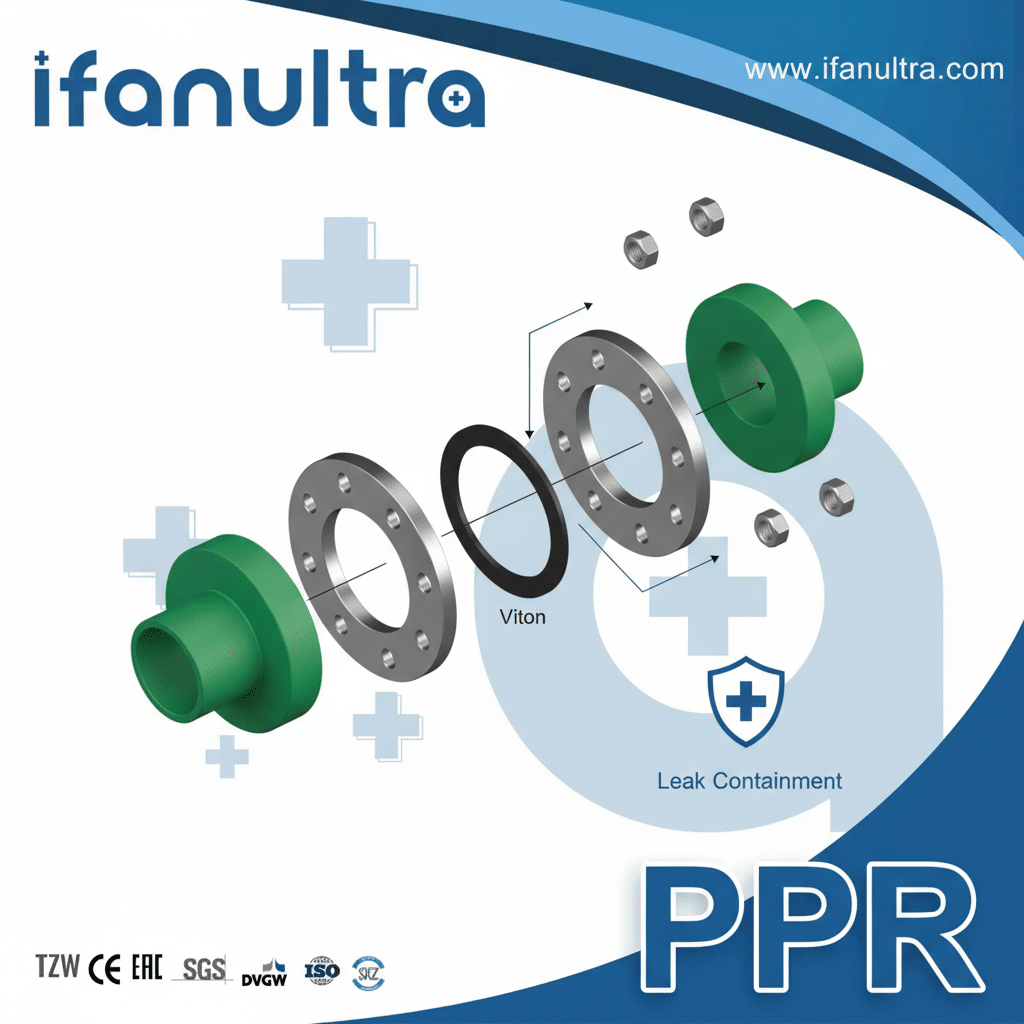
The Anatomy of a Safer Connection
A PPR flange adapter consists of a PPR socket for fusion welding to the pipe, a polypropylene flange face, and a stainless steel or galvanized steel backing ring. The connection is completed with a matching metal flange, bolts, nuts, and a gasket.
This design is inherently safer for three main reasons:
1. Superior Sealing Force: Threaded connections rely on precise machining and thread sealants, which can fail under vibration or thermal cycling. A flanged connection uses multiple bolts to apply massive, even pressure across the entire gasket, creating a seal that can handle high pressure and stress.
2. Gasket Containment: The gasket is captured in a recessed groove, preventing it from blowing out under pressure. For chemical service, you can choose gasket materials—like EPDM, Viton®, or PTFE—that are specifically resistant to the fluid being carried.
3. Safe Maintenance and Inspection: If a valve needs replacement or a line needs inspection, you can simply unbolt the flange. You don’t need to cut the pipe. This makes maintenance faster, safer, and reduces downtime significantly compared to permanent joints.
Addressing Common Failure Points
Chemical plants often face these issues with poor connections:
- Vibration Failure: Pump vibrations can loosen threaded joints. Bolted flanges, when properly torqued, are highly resistant to this.
- Thermal Cycling Failure: Lines that heat up and cool down expand and contract. Flanged joints, especially with PPR’s flexibility, can accommodate this movement better than rigid threaded systems.
- Human Error in Assembly: A threaded joint might be under-tightened or over-tightened. Flange assembly follows a standard bolt-torquing sequence, making a reliable seal more repeatable.
For hazardous chemicals, this robust sealing translates directly to improved workplace safety, environmental protection, and regulatory compliance. It minimizes the risk of exposure to toxic or flammable materials.
How Does it Handle the Thermal Expansion of Lines Carrying Hot Chemicals?
Hot process fluids are a reality in industry. A rigid system will fight thermal movement, leading to stress and failure. I’ve seen pipes buckle because this wasn’t planned for.
The PPR flange adapter system handles thermal expansion through the inherent flexibility of the PPR pipe itself and the design of the flanged connection. PPR has a high coefficient of thermal expansion but low modulus of elasticity, meaning it expands significantly with heat but does so flexibly without generating high stress, especially when installed with proper guides and supports.
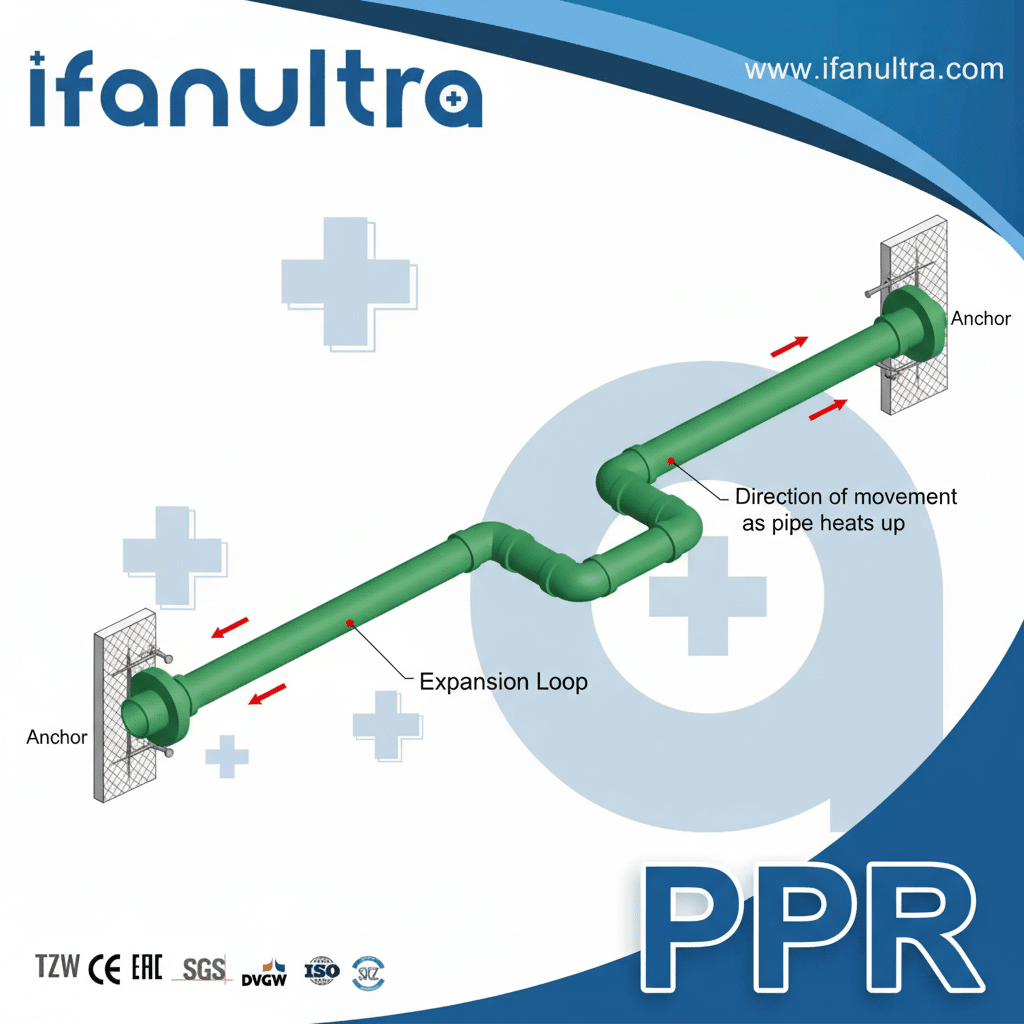
Understanding PPR’s Movement
All materials expand when heated. PPR expands more than metal—about 0.15 mm/m·°C. This sounds like a disadvantage, but its plastic nature is the key. Unlike metal, which is stiff and generates huge forces when constrained, PPR is flexible. It prefers to bend and absorb the movement rather than push against anchors with tremendous force.
The flanged connection supports this behavior. When pipes expand, the flanged joints can accommodate slight angular deflections without leaking, provided the pipe is supported correctly. The gasket can handle this minor movement.
Key Installation Strategies for Success
You cannot ignore thermal expansion. You must design for it. Here are the best practices we recommend:
1. Use Proper Support and Guidance: Pipes must be supported with clamps that allow linear sliding. Avoid rigid clamps that lock the pipe in place. Use guides to control the direction of expansion, typically toward a free end or a loop.
2. Incorporate Expansion Loops or Offsets: For long, straight runs, you must include U-shaped expansion loops or Z-shaped offsets. These allow the pipe to flex safely within its stress limits. The flanged adapters are used at the connection points to equipment or other pipe sections.
3. Allow for Movement at Anchors: The system must have fixed anchors and directional guides. The pipe expands away from a fixed anchor. Flanges should not be the rigid anchor point; they should be located in sections where movement is controlled.
Comparison with Metal Systems
This table highlights the different approach needed for PPR versus steel:
| Consideration | PPR Piping System | Carbon Steel Piping System |
|---|---|---|
| Expansion Coefficient | High (~0.15 mm/m·°C) | Low (~0.012 mm/m·°C) |
| Force Generated if Restricted | Low (Flexible) | Very High (Rigid) |
| Primary Handling Method | Absorption via flexibility, loops, and proper support. | Absorption via expansion joints, loops, or calculated stress flexibility. |
| Role of Flanged Joint | Must allow for slight angular deflection; gasket must be compatible. | Can be more rigid; but stress on bolts must be calculated. |
In practice, this means a well-designed PPR system with flange adapters will “swallow” the expansion movement smoothly. You won’t see leaks at the flanges because the system is designed to move, not to resist movement until it breaks.
What Certifications Ensure its Suitability for Industrial Chemical Service?
In industry, trust is verified by certificates. We don’t just claim suitability; we prove it with third-party stamps that engineers and safety managers require.
Certifications that ensure suitability include ISO standards for quality management, NSF/ANSI 61 for material safety, and specific chemical resistance reports from independent labs. For pressurized systems, pressure rating certifications (like PN rating) and fire performance ratings (such as UL 94) are critical to ensure the adapter meets the mechanical and safety demands of industrial service.
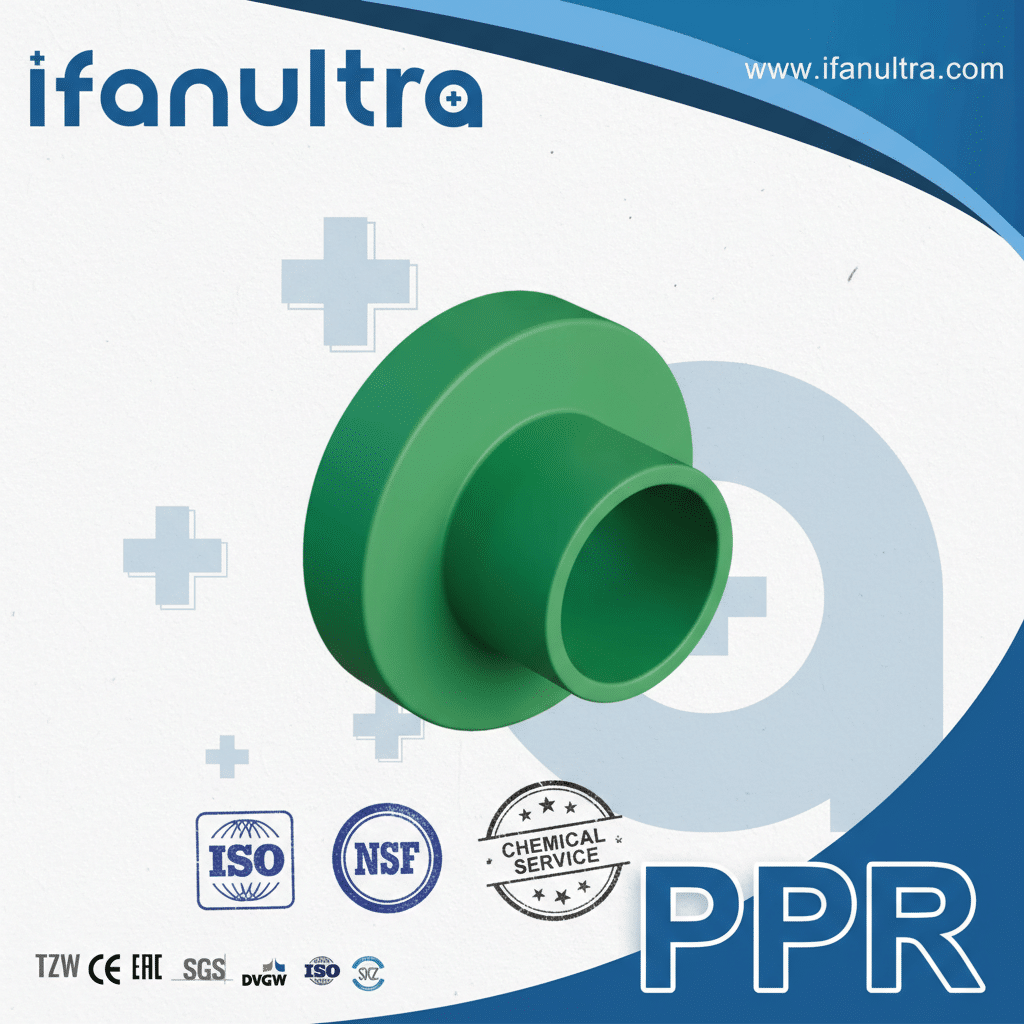
The Hierarchy of Important Certifications
Certifications are not all equal. They serve different purposes in establishing trust and compliance.
1. Material Safety and Quality Certifications:
- ISO 9001: This certifies the manufacturer’s quality management system. It means the company follows documented processes to ensure product consistency and traceability.
- NSF/ANSI 61: While often associated with potable water, this standard is a rigorous baseline for material safety. It proves the product does not leach harmful amounts of contaminants into water, which is crucial for any process where fluid purity matters.
2. Performance and Dimensional Standards:
- ISO 15874: This is the international standard for PP-R piping systems. It defines everything from dimensions and tolerances to pressure ratings at different temperatures. A flange adapter meeting ISO 15874 guarantees it will fit and perform as expected.
- PN Rating: The Pressure Nominale (e.g., PN20, PN25) indicates the maximum allowable operating pressure at 20°C. This is a fundamental engineering specification.
3. Chemical and Fire Resistance Evidence:
- Chemical Resistance Test Reports: Reputable manufacturers test their PPR material against a battery of chemicals (acids, alkalis, solvents) and provide reports detailing weight change, dimensional change, and retention of properties. This is your engineering data for compatibility.
- UL 94 Flammability Rating: This tests the material’s ability to extinguish a flame. A rating of V-0 or V-2 indicates some level of flame retardancy, which is important for safety audits.
A Certification Checklist for Buyers
When sourcing PPR flange adapters for chemical service, request this documentation:
| Certificate Type | What It Verifies | Por que é importante |
|---|---|---|
| Material Test Report (MTR) | The specific batch of raw material meets grade specifications. | Ensures you are getting true, virgin PPR, not recycled material of unknown origin. |
| ISO 15874 Compliance | Product conforms to international dimensional and performance standards. | Guarantees interoperability, correct pressure ratings, and reliable performance. |
| Chemical Resistance Report | Details performance when exposed to specific chemicals. | Provides the engineering data needed for your process safety review. |
| Fire Performance Rating (e.g., UL 94) | Evaluates burning behavior and self-extinguishing time. | Often required to meet plant-wide fire safety regulations. |
Having these certifications does more than satisfy a checklist. They provide objective proof that the PPR flange adapter is not just a generic plumbing part, but a properly engineered industrial component fit for demanding chemical service.
Conclusão
PPR flange adapters provide a safe, durable, and certified solution for demanding chemical transfer lines. For reliable performance, specify IFAN’s certified PPR flange adapters for your next industrial project.









 English
 Español
 Français
 Português do Brasil