
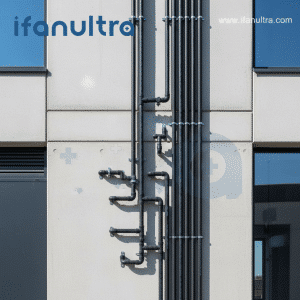
We once replaced an entire outdoor piping network that failed in under two years. The culprit? Standard PPR pipes turned brittle and cracked under the relentless sun. That costly lesson made us true advocates for UV-resistant solutions.
You should choose UV-resistant PPR tube for outdoor plumbing because it is specially formulated to withstand sunlight degradation. Unlike standard PPR, it contains additives that protect the polymer, preventing it from becoming brittle, cracking, and failing prematurely. This ensures long-term reliability, maintains water quality, and eliminates the recurring cost and labor of installing protective covers.
Sunlight might seem harmless, but for plastics, it’s a powerful destructive force. Therefore, let’s explore how UV-resistant PPR works and why it’s a non-negotiable choice for any exposed installation.
How Do UV Stabilizers Prevent Polymer Breakdown in Sunlight Exposure?
Most clients don’t know that sunlight breaks down plastic at a chemical level. I often explain it by comparing it to how our skin needs sunscreen.
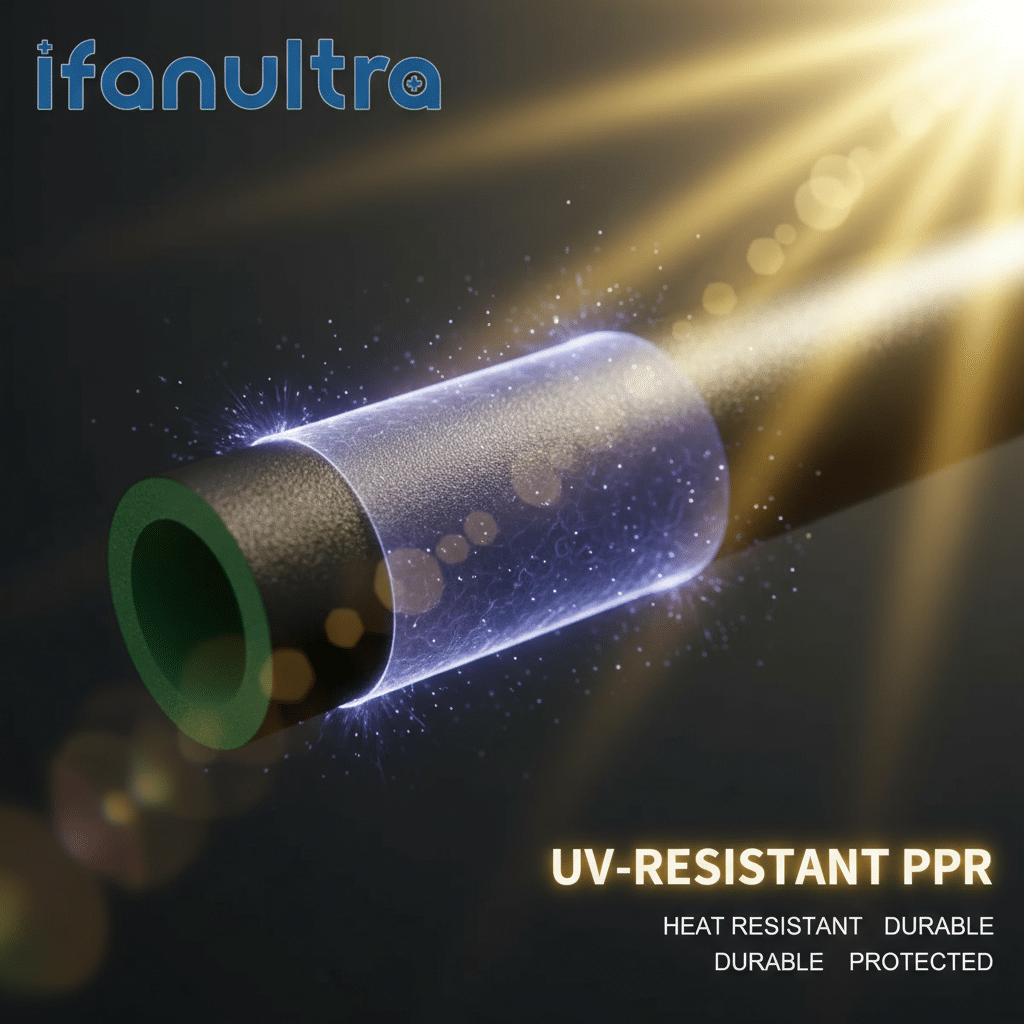
UV stabilizers in PPR pipes work by absorbing or blocking the sun’s harmful ultraviolet (UV) radiation before it can break the long-chain polymer molecules. They act as a protective shield, either converting the UV energy into harmless heat or preventing the chemical reaction that causes the plastic to lose strength, become discolored, and ultimately crack.
The Science of Sunlight Damage
To understand the solution, you first need to understand the problem. Specifically, sunlight contains ultraviolet (UV) rays. These rays carry enough energy to break the chemical bonds in polypropylene, the “PP” in PPR.
This process is called photo-oxidation. The UV radiation excites the molecules, making them react with oxygen in the air. Consequently, this reaction severs the long, strong polymer chains that give the pipe its flexibility and strength. Over time, the surface layer of the pipe erodes, the material loses its plasticizers (the components that keep it flexible), and it starts to chalk, fade, and become brittle.
How Different Stabilizers Work as a “Sunscreen”
UV stabilizers are special additives mixed into the raw PPR material before extrusion. Typically, they function in two main ways:
- UV Absorbers (UVAs): These are like the sunscreen you apply to your skin. Molecules such as carbon black or specific organic compounds absorb the high-energy UV photons. Then, they convert this harmful energy into low-level, harmless heat, which dissipates. For instance, carbon black is exceptionally effective, which is why many outdoor-grade pipes are black.
- Hindered Amine Light Stabilizers (HALS): These act like a repair crew and shield combined. Interestingly, they don’t absorb UV light directly. Instead, they interrupt the destructive chemical chain reaction of photo-oxidation. They neutralize the free radicals (highly reactive broken molecules) created by UV exposure, thereby preventing them from attacking and breaking more polymer chains.
A Simple Analogy for Your Supply Chain
Think of a PPR pipe as a long, sturdy rope (the polymer chains). In this analogy, UV rays are like a pair of sharp scissors. Standard PPR left outside is like leaving the rope in the sun where the scissors slowly snip it, strand by strand, until it frays and breaks.
In contrast, a UV-resistant PPR pipe has a protective coating mixed right into the rope fibers. This coating either dulls the scissors’ blades (absorbers) or actively repairs the small nicks before they become big cuts (HALS). As a result, the rope stays strong for years, even in direct sunlight.
What Are the Risks of Using Standard PPR Pipes in Outdoor Installations?
Many installers use standard pipes outdoors to save a small amount upfront. However, I’ve seen this false economy lead to massive repair bills and angry clients.
The primary risks of using standard PPR pipes outdoors are catastrophic failure due to brittleness and cracking, contamination of water with degraded plastic particles, and significant loss of pressure rating and impact strength. This leads to unexpected leaks, system shutdowns, costly emergency repairs, and potential health concerns from compromised water quality.
Direct Failure Modes: From Discoloration to Collapse
The degradation process isn’t just cosmetic; it directly undermines the pipe’s core function. Here’s what typically happens, stage by stage:
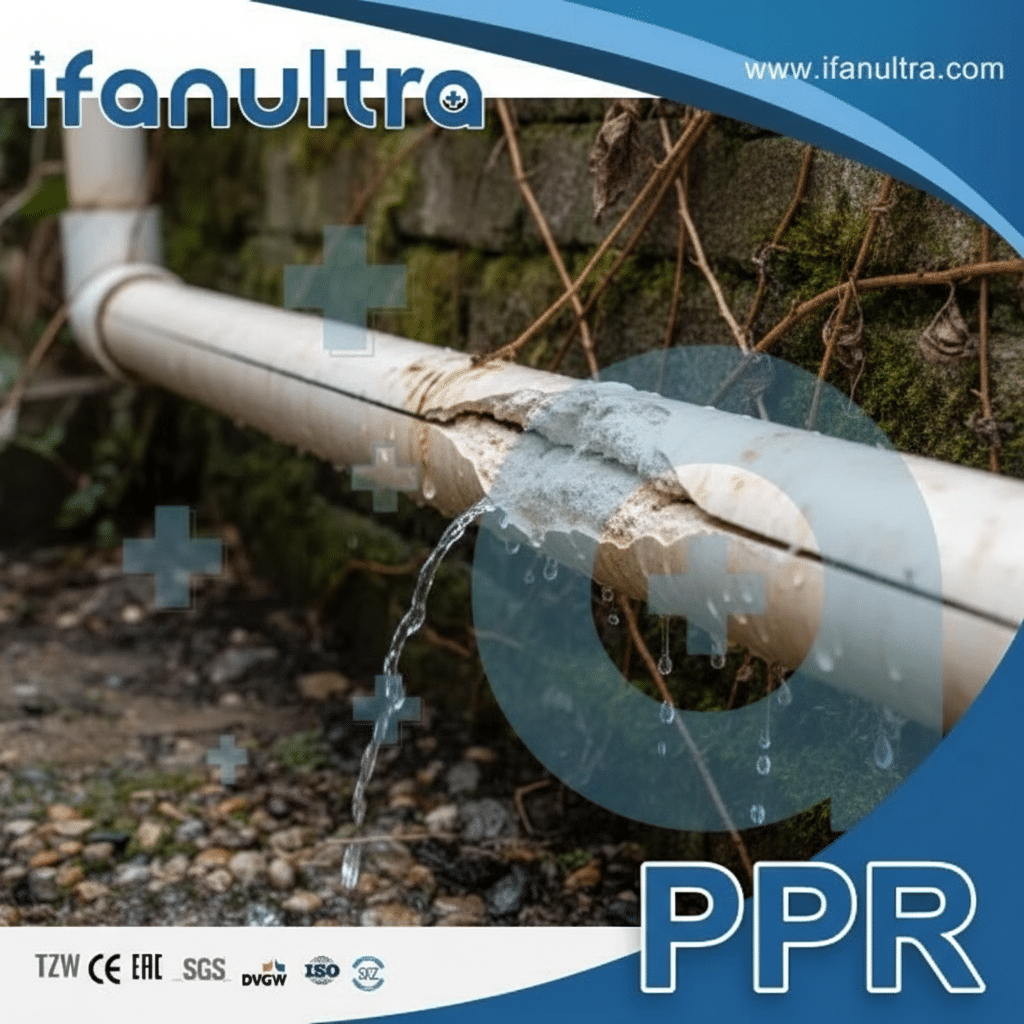
Stage 1: Surface Degradation (3-12 Months): First, the pipe surface loses its gloss, becomes chalky, and may fade in color. While it might still hold water, the material is already weakening at the molecular level.
Stage 2: Embrittlement and Micro-Cracking (1-3 Years): Next, the pipe loses all flexibility. Consequently, it can no longer handle thermal expansion/contraction or minor ground movement. At this point, tiny micro-cracks develop on the surface, providing a pathway for water under pressure.
Stage 3: Macro-Cracking and Failure (3-5 Years): Finally, the micro-cracks deepen and connect. Eventually, a stress point—like a fitting, a mounting clip, or even just water pressure—causes a sudden, brittle fracture. As a result, the pipe can split open lengthwise, leading to flooding and water damage.
Secondary Risks and Hidden Costs
Beyond the obvious leak, other serious risks emerge:
- Water Contamination: As the pipe surface erodes, microscopic particles of plastic can flake off into the water supply. This is especially critical for drinking water lines.
- Loss of Pressure Integrity: The wall of the pipe thins as it degrades, reducing its ability to withstand normal operating pressures. For example, a pipe rated for 10 bar might effectively become a 6-bar pipe after a few years of sun exposure.
- Failed Inspections and Liability: In commercial or municipal projects, using the wrong material for the environment can lead to failed compliance inspections, voided warranties, and significant liability for the installer or project owner.
Comparative Risk Assessment Table
| Risk Factor | Standard PPR Outdoors | UV-Resistant PPR Outdoors | Consequence |
|---|---|---|---|
| Brittle Fracture | Very High Risk | Very Low Risk | Sudden pipe burst, flooding, system downtime. |
| Water Contamination | High Risk | Negligible Risk | Compromised water safety, potential health issues. |
| Reduced Pressure Rating | High Risk | Negligible Risk | Unexpected pressure drops, system underperformance. |
| Aesthetic Degradation | Certain | Very Slow/Minor | Unprofessional appearance, client dissatisfaction. |
| Total Lifecycle Cost | Extremely High | Low & Predictable | High repair/replacement costs vs. stable initial investment. |
How Does UV-Resistant PPR Maintain Mechanical Strength Over Time Outdoors?
Clients need to know their investment is protected. That’s why we prove strength with long-term performance data, not just promises.
UV-resistant PPR maintains mechanical strength by preventing the scission (breaking) of its polymer chains. The stabilizers ensure the material retains its original flexibility, impact resistance, and tensile strength. This means it can still handle water hammer, freezing/thawing cycles, and physical stress years after installation, just like a pipe installed indoors.
The Key Mechanical Properties Preserved
A pipe’s job is to contain pressure and resist physical damage. Importantly, UV-resistant PPR is designed to keep these key properties intact:
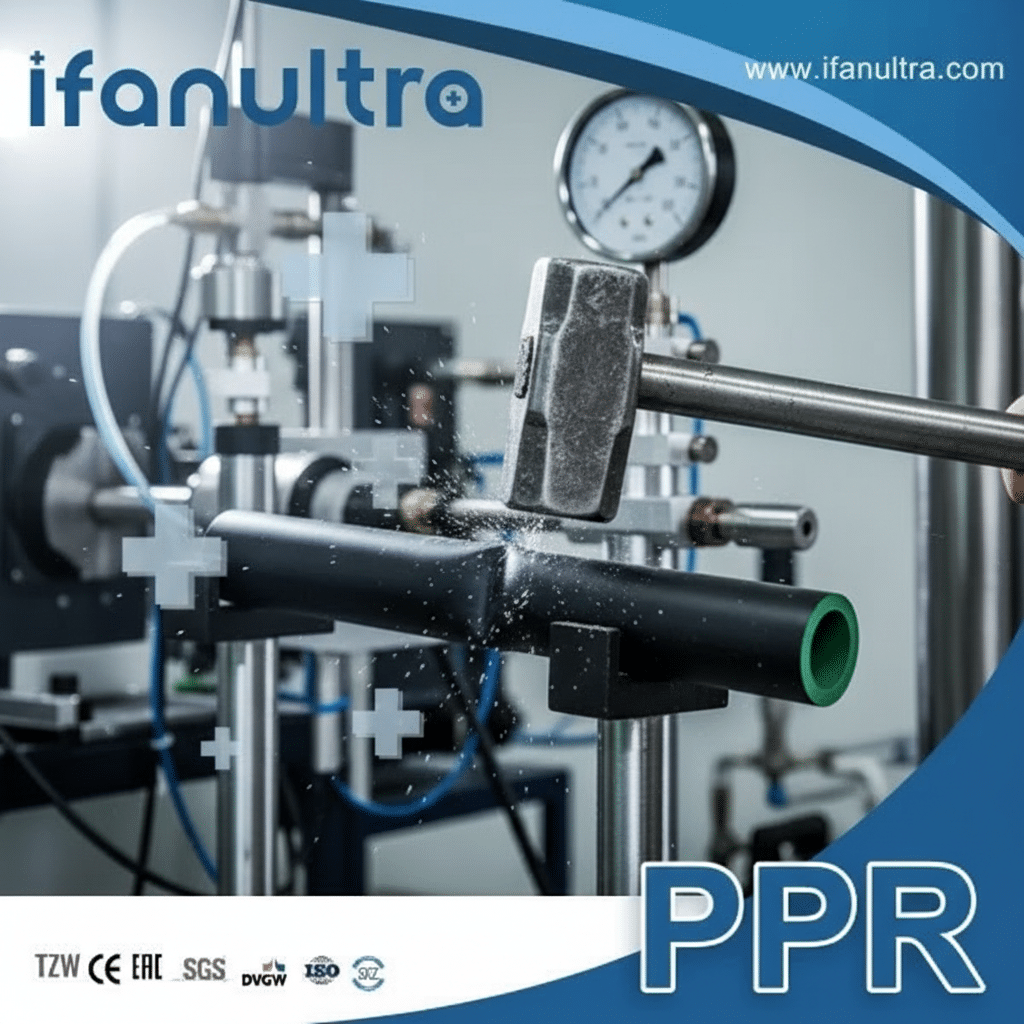
- Impact Strength: This is the pipe’s ability to resist a sudden blow or shock. For instance, brittle standard PPR will shatter if hit after sun exposure. In contrast, UV-resistant PPR remains ductile, allowing it to deform slightly and absorb the energy without cracking. This is crucial for pipes in gardens or areas where accidental impacts might occur.
- Tensile Strength and Pressure Rating: This is the pipe’s ability to withstand internal pressure without bursting. Since photo-oxidation thins the pipe wall and creates stress concentration points at micro-cracks, it’s a major concern. However, UV stabilizers prevent this wall thinning and cracking, so the pipe’s pressure rating (e.g., PN20, PN25) remains valid for its entire service life outdoors.
- Flexibility and Thermal Expansion: PPR naturally expands and contracts with temperature changes. A brittle pipe cannot flex; instead, it develops high stress at fixed points and fails. Conversely, UV-resistant PPR retains its elasticity, allowing it to safely absorb these dimensional changes without building up destructive stress.
Evidence from Accelerated Aging Tests
How can we be sure it lasts? Typically, the industry uses accelerated weathering tests. In these tests, pipes are placed in special chambers that simulate years of sunlight, rain, and heat in a matter of months. We then test the mechanical properties of these aged samples.
The results are clear. Standard PPR shows a dramatic drop in impact strength and elongation at break after simulated aging. On the other hand, UV-resistant PPR formulations, like those used by IFAN, show property retention of over 80-90% after the same harsh treatment. Ultimately, this data directly translates to reliable performance in the real world for decades.
Real-World Performance Comparison
| Mechanical Property | Standard PPR (After 2 Years Outdoors) | UV-Resistant PPR (After 10+ Years Outdoors) |
|---|---|---|
| Resistência ao impacto | Very Low. Shatters easily. | High. Remains ductile and tough. |
| Pressure Withstanding | Degraded. Risk of burst at rated pressure. | Maintained. Safely operates at full rated pressure. |
| Appearance | Chalky, faded, visibly degraded. | Color stable, minimal surface chalking. |
| Condition at Joints | High risk of cracking near heat-fused joints. | Joints remain intact and leak-free. |
What Cost Savings Does It Offer by Avoiding Protective Covers or Paints?
The initial price difference often causes hesitation. Therefore, I show clients the real math, and the choice becomes obvious.
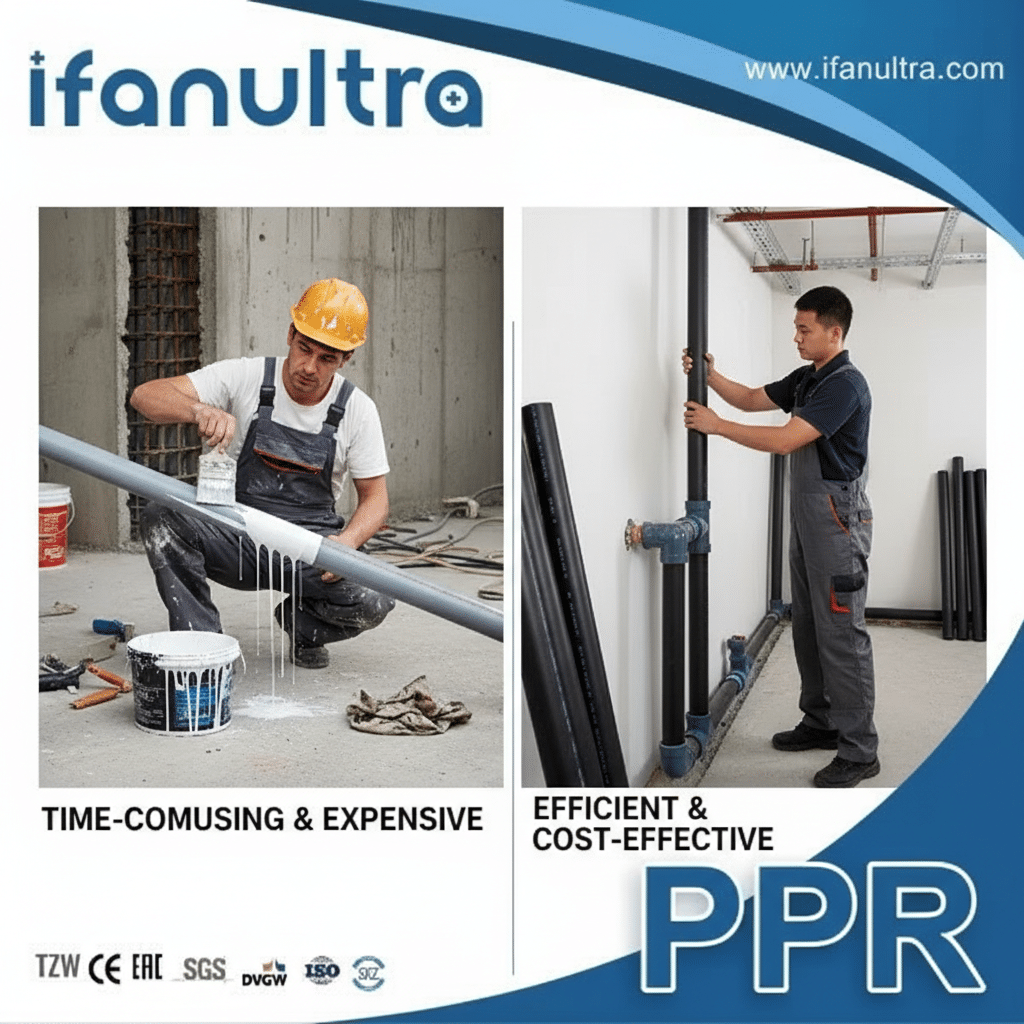
Choosing UV-resistant PPR offers significant cost savings by completely eliminating the recurring material, labor, and maintenance expenses associated with painting pipes or building protective covers/conduits. It provides a permanent, maintenance-free solution, reducing the total installed cost and lifetime cost of ownership for the outdoor plumbing system.
The Hidden Costs of “Protecting” Standard Pipes
Many project managers think they can save money by using cheaper standard pipe and then painting it or boxing it in. However, this approach is flawed and expensive from the start.
Let’s break down the costs of “retrofit protection”:
Option A: Painting the Pipes
- Material Cost: Specialized UV-resistant pipe paint is not cheap.
- Labor Cost: Preparing the pipe surface (sanding, cleaning) and applying multiple coats is time-consuming and labor-intensive.
- Maintenance Cost: The paint will eventually chip, flake, and degrade. As a result, it requires regular inspection and repainting every 3-5 years to remain effective. This creates a perpetual cost cycle.
Option B: Building Protective Covers or Conduits
- Material Cost: Wood, metal, or PVC chase materials add up quickly.
- Labor Cost: Designing, cutting, assembling, and installing the cover is a major additional construction task.
- Aesthetic & Access Cost: Furthermore, covers are often bulky and unattractive. They also make accessing the pipe for maintenance or inspection difficult and time-consuming.
Total Cost of Ownership Analysis
The true savings of UV-resistant PPR become clear when you calculate the Total Cost of Ownership (TCO) over a 15-year period.
| Cost Category | Standard PPR + Protection | UV-Resistant PPR (No Extra Protection) | Notes |
|---|---|---|---|
| Initial Pipe Material | $1,000 | $1,300 | UV-resistant pipe has a modest premium. |
| Initial Protection Cost | $800 (Paint or Conduit) | $0 | Savings at installation. |
| Installation Labor | $1,500 (Pipe + Protection) | $1,200 (Pipe only) | Simpler, faster installation. |
| Year 5 Maintenance | $400 (Repaint/Repair Cover) | $0 | Recurring savings. |
| Year 10 Maintenance | $400 (Repaint/Repair Cover) | $0 | Recurring savings. |
| Potential Failure Repair | $2,000 (High Risk) | $200 (Very Low Risk) | Major risk avoidance. |
| Total 15-Year Cost | $6,100 | $2,700 | UV-PPR saves over 55%. |
The Value of Predictability and Peace of Mind
Beyond direct costs, UV-resistant PPR offers intangible savings. For example, it eliminates the scheduling headache of future maintenance. Additionally, it removes the risk of hidden pipe failure inside a cover. Most importantly, it provides peace of mind to the building owner. For a project manager, specifying the right material from the start is ultimately the most professional, cost-effective, and low-risk decision.
Conclusão
For any exposed pipe, UV-resistant PPR is the only reliable choice. It prevents failure, ensures safety, and saves money long-term. For a guaranteed supply, choose IFAN’s premium UV-Stabilized PPR Pipes for durable, worry-free outdoor plumbing.









 English
 Español
 Français
 Português do Brasil