
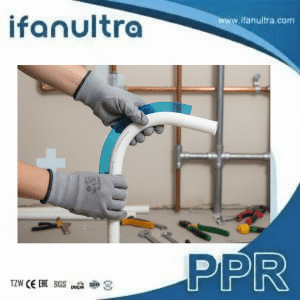
I once saw an installer force a pipe into a tight corner, only for it to kink months later and flood a ceiling. That costly mistake taught me a critical rule: every flexible pipe has its limit.
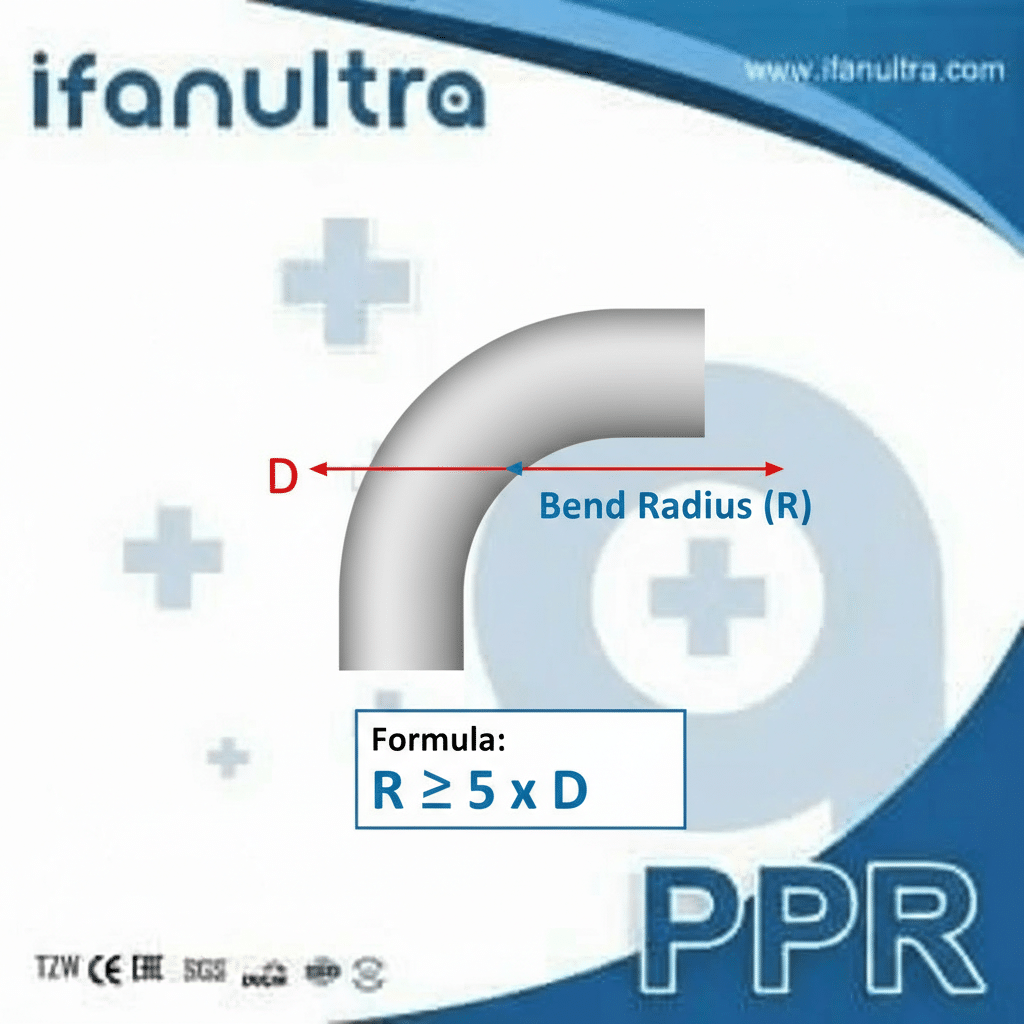
The minimum bending radius for PEX-AL-PEX pipes is typically 5 times the pipe’s outer diameter (5 x D). For example, a common 16mm pipe requires a bending radius of at least 80mm. This rule protects the pipe’s structure from damage and ensures long-term, reliable performance in your plumbing system.
Sticking to this simple rule separates a professional installation from a future problem. Let me explain why this number matters so much and how to work with it correctly.
Why is Respecting the Minimum Bend Radius Crucial for PEX-AL-PEX Pipes?
Ignoring the bend radius is the fastest way to create a weak point. I’ve diagnosed too many leaks that started at a sharp, unsupported bend.
Respecting the minimum bend radius is crucial because it prevents the aluminum core from buckling or creasing, avoids over-stressing the inner PEX layer, and ensures a smooth inner bore for consistent water flow. A proper bend maintains the pipe’s pressure rating and prevents premature failure at the curve.
Preventing Structural Damage to the Aluminum Core
PEX-AL-PEX is a composite pipe. Its strength and shape-holding ability come from the middle aluminum layer. When you bend the pipe, this metal layer stretches on the outside of the curve and compresses on the inside. If you bend it too sharply, the aluminum can permanently deform. On the outside, it might thin and weaken. On the inside, it can buckle or form a small crease.
This damage is often invisible from the outside but creates a critical failure point. The aluminum layer can no longer properly contain the expanding plastic layers under pressure and heat, leading to a bulge or a leak over time.
Maintaining a Smooth Flow Path and Pressure Integrity
A second major reason is flow. Plumbing systems need smooth internal walls to maintain pressure and efficiency. A bend tighter than the minimum radius can cause the inner PEX layer to pinch or fold inward, creating a partial blockage. This restriction causes turbulence, reduces water pressure downstream, and can lead to annoying noises in your pipes.
Furthermore, such a sharp bend creates a point of high, constant stress. Every time the water pressure surges or the pipe heats up and expands, this over-stressed point flexes more than it was designed to. This accelerates material fatigue, making the pipe much more likely to fail at that exact spot years later. A proper, gentle curve distributes this stress evenly along a longer section of the pipe, which is perfectly safe.
The Real-World Cost of Ignoring the Rule
In practice, ignoring the bend radius leads directly to the most common client complaints: unexpected leaks inside walls, reduced water pressure from specific fixtures, and the dreaded “water hammer” knocking sound caused by turbulent flow. Repairing a kinked pipe inside a finished wall often costs ten times more than taking an extra minute to bend it correctly during installation. The 5xD rule is not a suggestion; it’s a guarantee of the pipe’s performance.
How Do You Calculate the Minimum Bending Radius for Different Pipe Diameters?
You don’t need complex math, just a simple multiplier. This is one of the easiest yet most important calculations in plumbing.
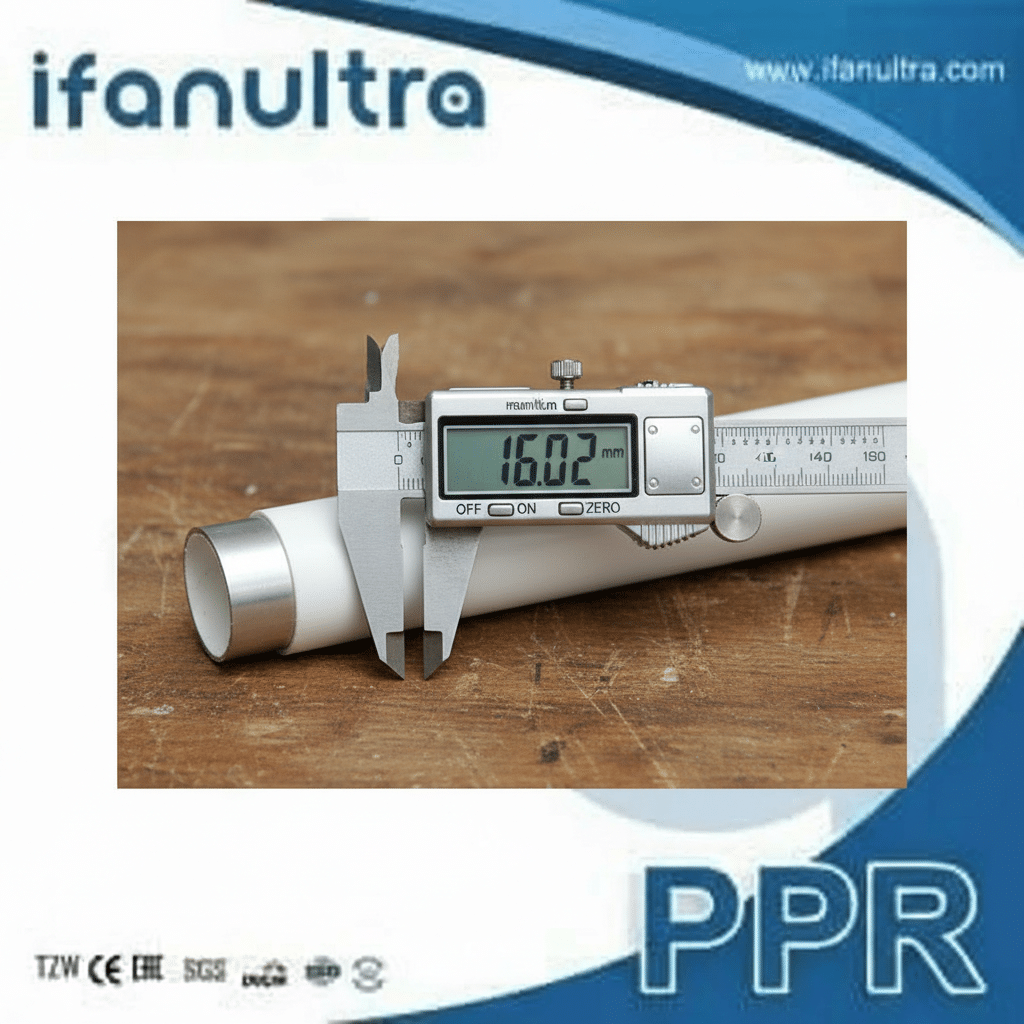
You calculate the minimum bending radius by multiplying the pipe’s outer diameter (D) by 5. Simply measure the pipe’s width and multiply by 5. For a standard 20mm pipe, the minimum radius is 100mm. Always use the outer diameter for this calculation to ensure accuracy and safety.
The Simple 5x Diameter Formula
The calculation is straightforward: Minimum Bend Radius = Pipe Outer Diameter x 5.
This industry-standard rule works for all common sizes of PEX-AL-PEX pipe. The “radius” is measured from the imaginary center point of the curve to the centerline of the pipe itself. In simpler terms, it defines how tight you can make the curve.
Let’s break it down with an example. You have a coil of PEX-AL-PEX with an outer diameter (O.D.) of 16 millimeters.
- Your calculation is: 16 mm x 5 = 80 mm.
- This means the centerline of the pipe must follow a curve with a radius no smaller than 80mm. Visually, if you drew the curve’s inner edge, it would be an even wider arc.
Practical Reference Table for Common Sizes
To make it even easier, here is a table for the most frequently used pipe sizes:
| Pipe Size (Outer Diameter – O.D.) | Minimum Bending Radius (5 x D) | What It Looks Like (Approx.) |
|---|---|---|
| 12 mm | 60 mm | About the size of a large lemon. |
| 16 mm | 80 mm | Slightly larger than a tennis ball. |
| 20 mm | 100 mm | About the size of a grapefruit. |
| 25 mm | 125 mm | Roughly the size of a small dinner plate. |
| 32 mm | 160 mm | Larger than a standard dinner plate. |
A Key Tool: The Pipe Bending Spring
For DIYers or pros doing many bends, a bending spring is a wise investment. You insert a flexible metal spring inside the pipe at the point where you want to make the bend. The spring supports the aluminum layer from the inside, preventing it from kinking as you gently form the curve by hand around your knee or a curved template. The spring itself has a recommended radius, making it foolproof. For pipes 20mm and larger, using a bending spring is highly recommended to achieve perfect, consistent curves every single time.
What Happens if You Bend PEX-AL-PEX Tighter Than Its Specified Radius?
Bending past the limit doesn’t always cause immediate failure, but it always creates a problem. Think of it like bending a paperclip back and forth until it snaps.
If you bend PEX-AL-PEX tighter than its specified radius, you risk kinking the pipe, which permanently crushes the inner bore and restricts flow. You also overstress and weaken the aluminum layer, creating a future leak point. The pipe may also lose its ability to hold the bent shape, springing back and putting stress on fittings.
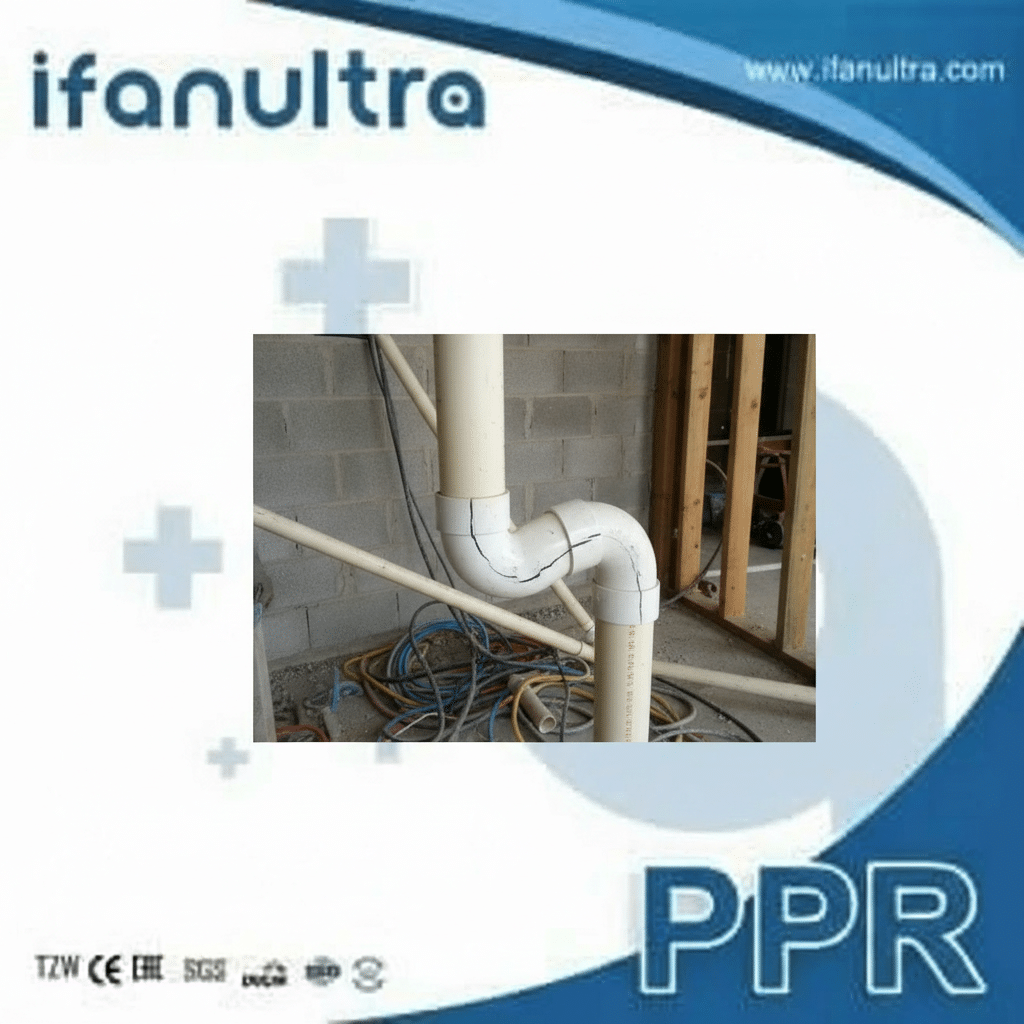
Immediate Visible Damage: The Kink
The most obvious and severe result is a kink. This is a sharp, localized collapse of the pipe. A kink severely reduces or even blocks the water flow, much like stepping on a garden hose. The inner PEX layer is pinched shut, and the aluminum layer is permanently creased. A kinked pipe has zero pressure rating at that point and must be cut out and replaced. There is no way to repair a kink.
Invisible Structural Weakening
Even if the pipe doesn’t show a visible kink, a too-tight bend causes hidden harm. The aluminum core undergoes plastic deformation—it is bent past its ability to spring back. This creates a zone of microscopic cracks and fatigue in the metal. The bond between the aluminum and the inner PEX layer can also be compromised.
This weakened section becomes the Achilles’ heel of your entire plumbing system. It may hold under normal pressure for months or even years. However, during a pressure surge (like when a valve closes quickly) or under repeated cycles of heating and cooling, this weak spot is the most likely place for a failure to occur. It could develop a slow pinhole leak or, in a worse case, burst.
Consequences for System Performance and Installation
The problems extend beyond just leaks:
- Reduced Water Flow: A slightly collapsed bore increases friction, lowering water pressure to your faucets and showers.
- Noise: Turbulent water flow through a restricted bend can cause whistling or knocking sounds in your pipes.
- Fitting Stress: An improperly bent pipe often springs back slightly, pushing or pulling on the brass fittings it’s connected to. This constant strain can loosen fittings over time or cause them to leak.
- Failed Inspections: Any professional inspection will flag an improper bend, requiring rework before the system can be approved.
Summary of Risks from Over-Bending
| Type of Problem | Immediate Effect | Long-Term Risk |
|---|---|---|
| Kinking | Total or severe flow blockage. | Pipe must be replaced immediately. |
| Aluminum Fatigue | May be none. | High risk of pinhole leak or burst at bend. |
| Flow Restriction | Lower water pressure, possible noise. | Decreased system efficiency. |
| Fitting Stress | None, or slight misalignment. | Fittings may work loose and leak over time. |
How Does the Aluminum Layer Influence the Pipe’s Bending and Memory Properties?
The aluminum layer is what makes PEX-AL-PEX unique. It’s the reason for its great properties and its specific bending rules.
The aluminum layer gives PEX-AL-PEX its “memory” – the ability to hold a bent shape without springing back. It also provides rigidity, allowing for neat, straight runs. However, this same metal layer makes the pipe less forgiving than pure PEX; it cannot be bent as tightly and will permanently kink if forced beyond its limit.
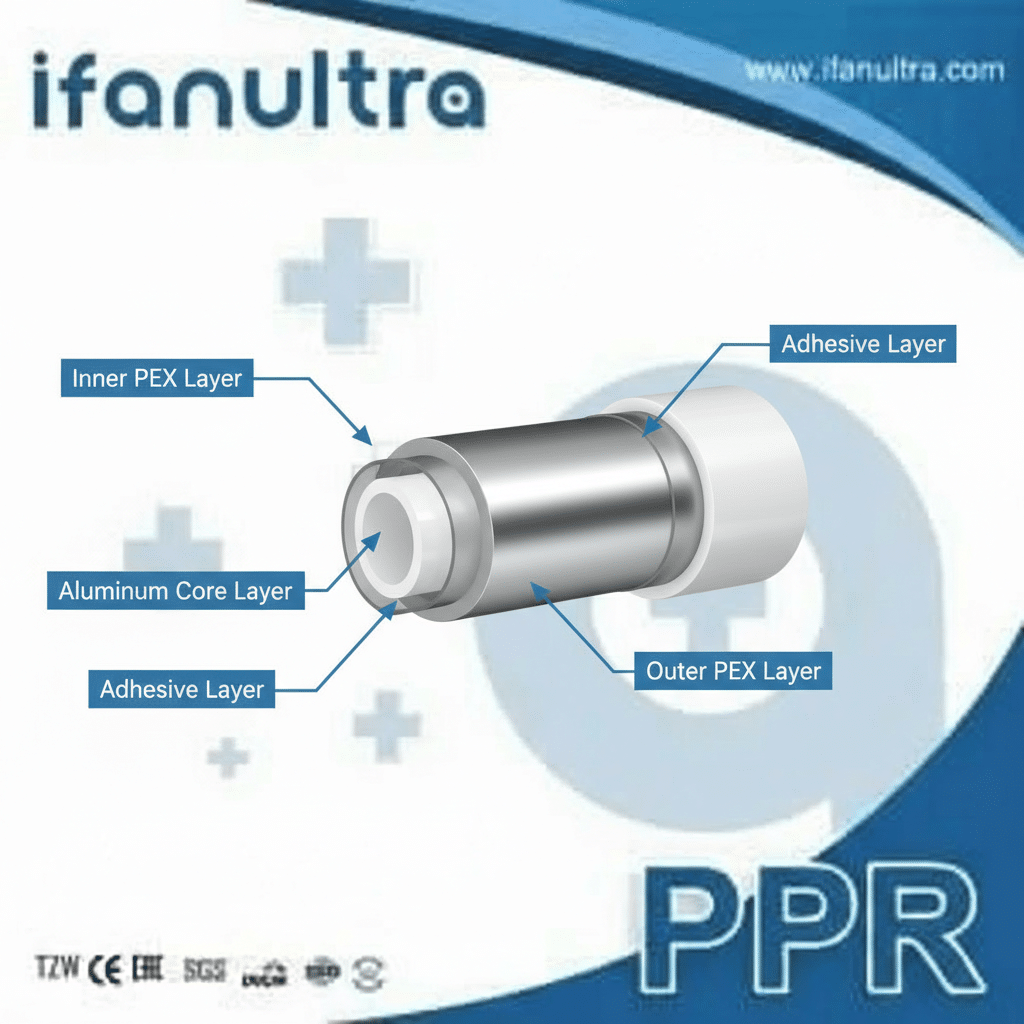
The Role of Each Layer in Bending
To understand the bending behavior, you need to know what each layer does:
- Inner PEX Layer: Provides a smooth, corrosion-resistant water channel. It is flexible but would not hold a shape on its own.
- Aluminum Core (Middle Layer): This is the structural skeleton. It gives the pipe its strength and defines its minimum bend radius. When bent properly, it deforms elastically and holds the new shape.
- Outer PEX Layer: Protects the aluminum from external corrosion and provides insulation.
During a bend, the aluminum layer is the critical player. On the outside of the curve, it stretches. On the inside, it compresses. Its tensile strength prevents it from over-stretching and snapping, while its ductility allows it to compress without immediately buckling—but only within its design limits (the 5xD rule).
“Memory” vs. “Rigidity”
The aluminum core creates two key handling characteristics:
- Shape Memory (Holds a Bend): Unlike all-plastic PEX, which often tries to straighten out, PEX-AL-PEX will stay in the gentle curve you form. This makes installation cleaner, as the pipe stays where you route it without needing many clips.
- Inherent Rigidity: The pipe is semi-rigid. It comes in straight lengths or large coils, not small coils like pure PEX. This makes it easier to run long, straight sections without sagging. However, this rigidity also means you cannot make sharp, on-the-spot bends. You must plan your route to allow for the gentler curves.
Comparing Bending Properties: PEX vs. PEX-AL-PEX
The difference is significant and influences installation choice:
| Property | Pure PEX Pipe | PEX-AL-PEX Pipe |
|---|---|---|
| Bending Flexibility | Very high. Can be bent in very tight radii (e.g., 3 x D). | Moderate. Requires a gentler bend (5 x D). |
| Shape Memory | Low. Tends to spring back; requires clips to hold bends. | High. Holds its bent shape firmly. |
| Rigidity for Straight Runs | Low. Can sag over long distances. | High. Remains straight and neat with fewer supports. |
| Risk of Kinking | High if bent carelessly, but can sometimes be straightened. | High if bent past 5xD, and the kink is permanent. |
In short, the aluminum layer trades some flexibility for superior stability and neatness. It demands respect during bending but rewards you with a robust, permanent installation. This is why professional installers often prefer PEX-AL-PEX for exposed runs and complex layouts where a tidy, fixed appearance is important.
Conclusão
Respecting the 5x diameter bending rule is essential for a reliable PEX-AL-PEX installation. For pipes that bend right and last long, choose IFAN’s certified PEX-AL-PEX pipes and professional support tools.









 English
 Español
 Français
 Português do Brasil