
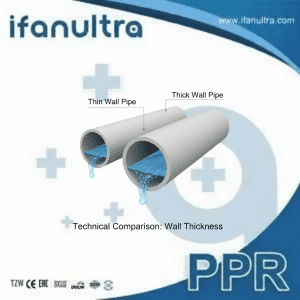
At a project site, a client once asked me to explain why their thinner-walled pipes failed while a thicker-walled system nearby lasted years longer. This practical problem is where theory meets reality.
Pipe wall thickness directly creates a trade-off between flow capacity and durability. A thicker wall reduces the internal diameter, increasing flow resistance and lowering potential water volume. However, that same extra material dramatically enhances the pipe’s strength, allowing it to withstand higher internal pressure, external impacts, and long-term stress for greater longevity.
Choosing the right thickness is therefore a critical balancing act. Let’s explore the science behind this trade-off to make an informed decision.
How Does a Thicker Wall Reduce the Internal Diameter and Increase Flow Resistance?
Imagine drinking a thick milkshake through a thin straw versus a regular straw. The experience is slower and requires more effort. A similar principle applies to water flow in pipes.
A thicker pipe wall reduces the internal diameter because the outer diameter often remains fixed to fit standard fittings. This smaller internal hole increases the surface area that water touches, creating more friction (flow resistance). This friction reduces water pressure and volume at the point of use, meaning less water flow from your faucet or shower.
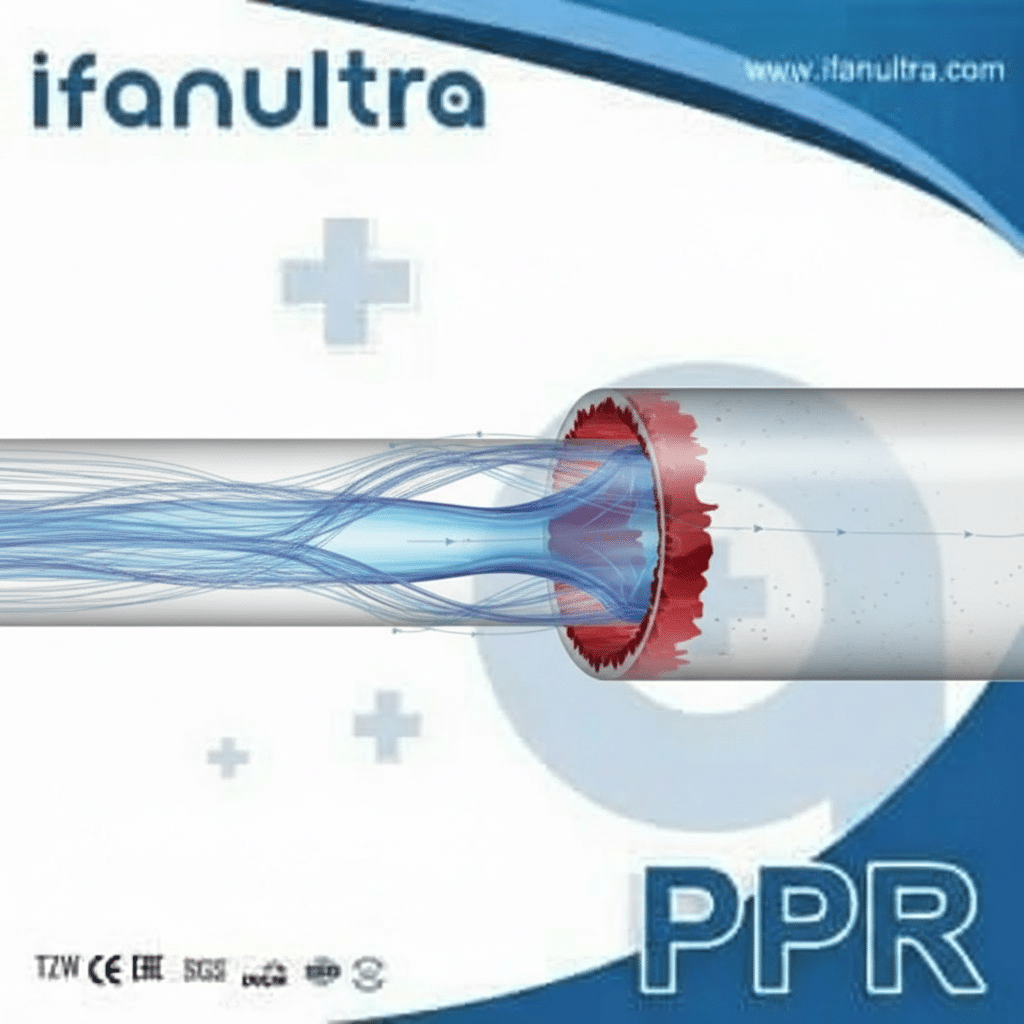
The Fixed Outer Diameter Constraint
To understand this, you must know that pipes are usually categorized by a Nominal Diameter (like DN20). However, this name refers roughly to the inner diameter. The key point is that the outer diameter is standardized to connect with fittings, valves, and other pipes.
So, for a pipe labeled with the same nominal size, a thicker wall must mean a smaller inside space. Think of a standard soda can. If you make the aluminum walls thicker, the inside space for liquid gets smaller, even though the outside looks the same.
The Science of Flow Resistance
Water flowing through a pipe rubs against the inner wall. This rubbing creates friction, which slows the water down. This friction is called “flow resistance” or “pressure drop.”
Two main factors increase this friction in a thicker-walled pipe:
- Smaller Cross-Sectional Area: With a smaller inner diameter, there is physically less room for water to pass through. This is like reducing a four-lane highway to two lanes—traffic (water flow) slows down.
- Higher Velocity at the Walls: In a narrower pipe, the water molecules are forced closer to the pipe walls. Since friction is highest at the wall, a greater proportion of the water experiences this slowing effect.
The Real-World Impact on Your System
The result is a drop in taxa de fluxo (measured in liters per minute or gallons per minute). For example, if your water pump delivers a certain pressure, a longer run of thin-walled pipe might give you a strong shower. If you switch to a thicker-walled pipe of the same nominal size, the same pump might only deliver a weak trickle at the showerhead because so much pressure is lost to friction inside the pipe.
This is why for long-distance water supply lines or systems requiring high flow, engineers often specify pipes with larger nominal sizes or specific wall thickness series (like SDR) designed to minimize pressure loss.
Why Does Increased Wall Thickness Directly Enhance Pressure Rating and Impact Strength?
The extra material in a thick-walled pipe acts like a fortress wall, providing robust defense against both internal and external forces.
Increased wall thickness directly enhances pressure rating and impact strength because the added material provides more structural mass to contain internal pressure (hoop stress) and absorb external physical shocks. A thicker wall distributes force over more material, preventing deformation, cracking, or bursting under stress.
Containing Internal Pressure: Hoop Stress
When water under pressure fills a pipe, it pushes outward against the walls in all directions. This force is called “hoop stress.” The pipe must resist this force to avoid bursting.
The relationship is simple physics: For a given material, a thicker wall can withstand a higher internal pressure. It’s like comparing a balloon to a bicycle tire. The balloon’s thin wall bursts easily with pressure, while the tire’s thick, reinforced wall can contain very high pressure safely.
The pressure rating (PN rating) of a pipe—such as PN10, PN16, or PN20—is directly determined by its wall thickness. A PN20 pipe has a thicker wall than a PN10 pipe of the same outer diameter, allowing it to safely handle double the operating pressure.
Resisting External Impacts and Loads
Durability isn’t just about pressure from the inside. Pipes face threats from the outside:
- Impact: Accidental hits from tools during installation or maintenance.
- Point Loads: Pressure from rocks in backfill soil.
- Static Loads: Weight of soil above buried pipes.
A thicker wall provides a stronger “armor.” It takes more force to dent, crack, or crush it. This is crucial for pipes buried underground, run in trenches, or installed in areas with potential physical abuse.
The Role of Material Memory
Plastic pipes like PP-R have a degree of elasticity. When deformed by a temporary impact, they try to return to their original shape. A thicker wall provides more material to absorb and distribute the impact energy, making permanent deformation or brittle fracture much less likely.
Table: How Wall Thickness Affects Key Durability Factors
| Durability Factor | Thin-Walled Pipe Performance | Thick-Walled Pipe Performance | Why? |
|---|---|---|---|
| Classificação de pressão | Lower (e.g., PN10) | Higher (e.g., PN20) | More material to resist internal bursting force. |
| Resistência ao impacto | Poor. May crack or dent easily. | Excellent. Can withstand significant blows. | Force is spread over a larger volume of material. |
| Long-Term Creep Resistance | Lower. May sag or deform over decades under pressure. | Higher. Maintains shape and integrity long-term. | Greater structural rigidity reduces slow deformation. |
In short, if your priority is a system that can handle high pressure, survive rough handling, and last for decades without failure, a thicker-walled pipe is the clear choice for durability.
How Do You Balance the Need for Flow Efficiency with the Need for Durability?
This is the core challenge in system design. You cannot maximize both at the same time, so you must find the optimal compromise.
You balance flow efficiency with durability by selecting a pipe with a Standard Dimension Ratio (SDR) that meets the system’s minimum pressure requirement while providing the largest possible internal diameter. The goal is to choose the thinnest wall that is safe and durable for your specific pressure and environmental conditions, thereby maximizing flow without sacrificing necessary strength.
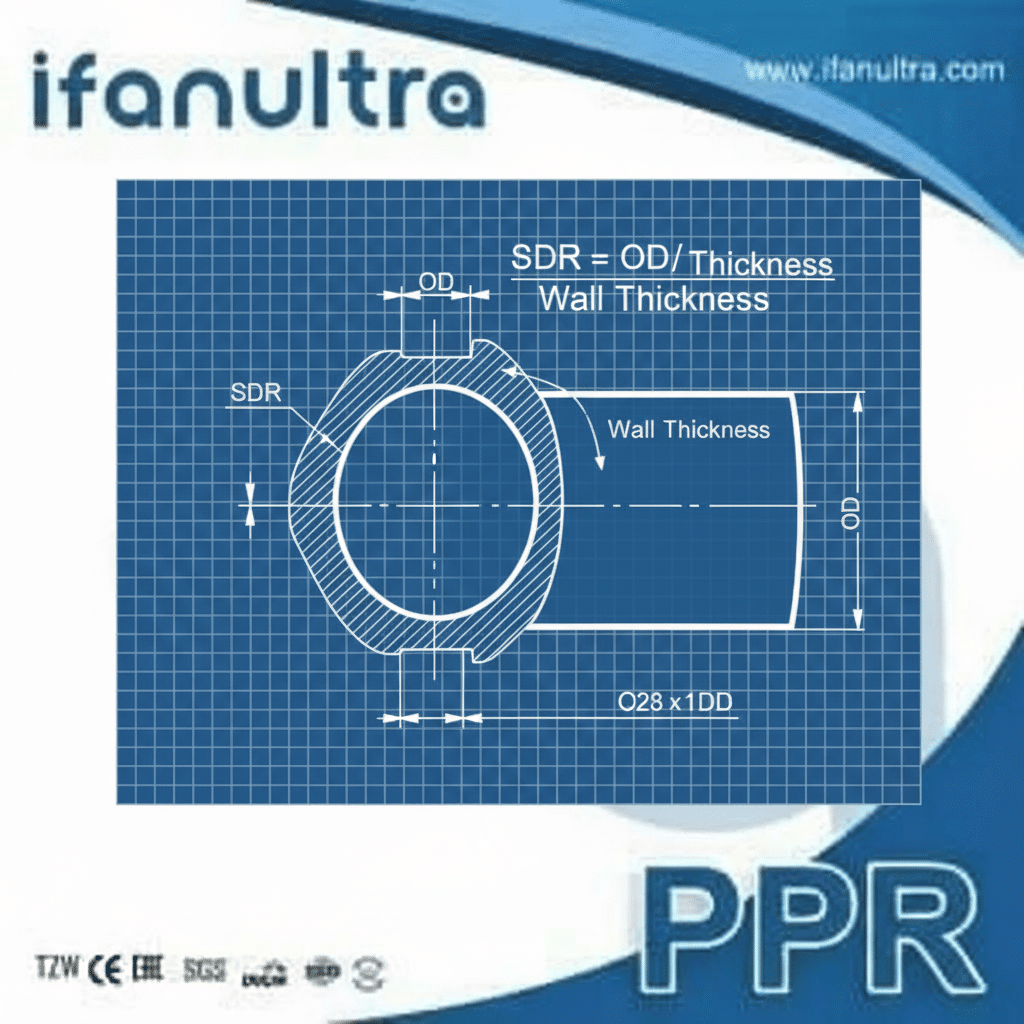
The Guiding Principle: The Standard Dimension Ratio (SDR)
The SDR is the key tool for balancing this trade-off. It is a standardized number calculated as:
SDR = Outer Diameter / Minimum Wall Thickness
A lower SDR number means a thicker wall relative to its size (e.g., SDR11 is thicker than SDR17). Conversely, a higher SDR number means a thinner wall (e.g., SDR26 is thinner than SDR17).
This system allows you to compare pipes of different sizes. An SDR11 pipe, whether it’s 50mm or 110mm in diameter, has the same proportional wall thickness and similar pressure-bearing capacity.
Step-by-Step Balancing Process
Here is a practical method to find the right balance:
- Determine Your System’s Maximum Operating Pressure: This includes both static water pressure and any surge pressures (water hammer). Add a safety factor (often 1.5x).
- Identify the Required Pressure Rating (PN): Select a pipe with a PN rating equal to or greater than your calculated maximum pressure. This step defines your minimum wall thickness for safety.
- Choose the Pipe Size (Diameter): Based on your required flow rate, use plumbing engineering tables or software to select a pipe nominal size. Often, increasing the pipe diameter is better than using a thinner wall to improve flow. A larger-diameter pipe with a thick wall (low SDR) can often carry more water with less pressure loss than a smaller-diameter pipe with a thin wall.
- Consider the Installation Environment: For pipes that will be buried, driven over, or exposed to UV light, you may need to select a thicker wall (lower SDR) than the pressure rating alone requires, to account for these external durability factors.
- Consult Standards and Codes: Always ensure your final choice complies with local building codes and the manufacturer’s recommendations for the intended use (e.g., hot vs. cold water).
Table: Decision Guide for Common Residential Applications
| Cenário do aplicativo | Primary Need | Recommended Priority | Typical SDR/PN Example |
|---|---|---|---|
| Main Cold Water Supply (Buried) | Durability vs. external soil loads & corrosion. | Prioritize durability. Choose lower SDR (thicker wall). | SDR11 (PN16) |
| Long-Run Hot/Cold Water Distribution Inside Walls | Flow efficiency to multiple fixtures. | Balance. Use standard SDR for pressure, but consider upsizing diameter for flow. | SDR7.4 or SDR6 (PN20 or PN25) for heat resistance; possibly larger diameter. |
| Low-Pressure Drainage or Irrigation | Maximum flow at low cost. | Prioritize flow efficiency. Use higher SDR (thinner wall) if pressure allows. | SDR26 or SDR33 (PN6 or lower) |
| Hydronic Radiant Floor Heating | Durability at high temperature & pressure. | Prioritize durability for hot, pressurized systems. | SDR7.4 (PN20) |
The perfect balance is the one that safely meets system requirements at the lowest lifetime cost, considering both installation and long-term performance.
What Standards Define the Wall Thickness Series for Different Plastic Pipe Materials?
You don’t have to guess at wall thickness. International standards provide clear, consistent classification systems for safe and reliable pipe selection.
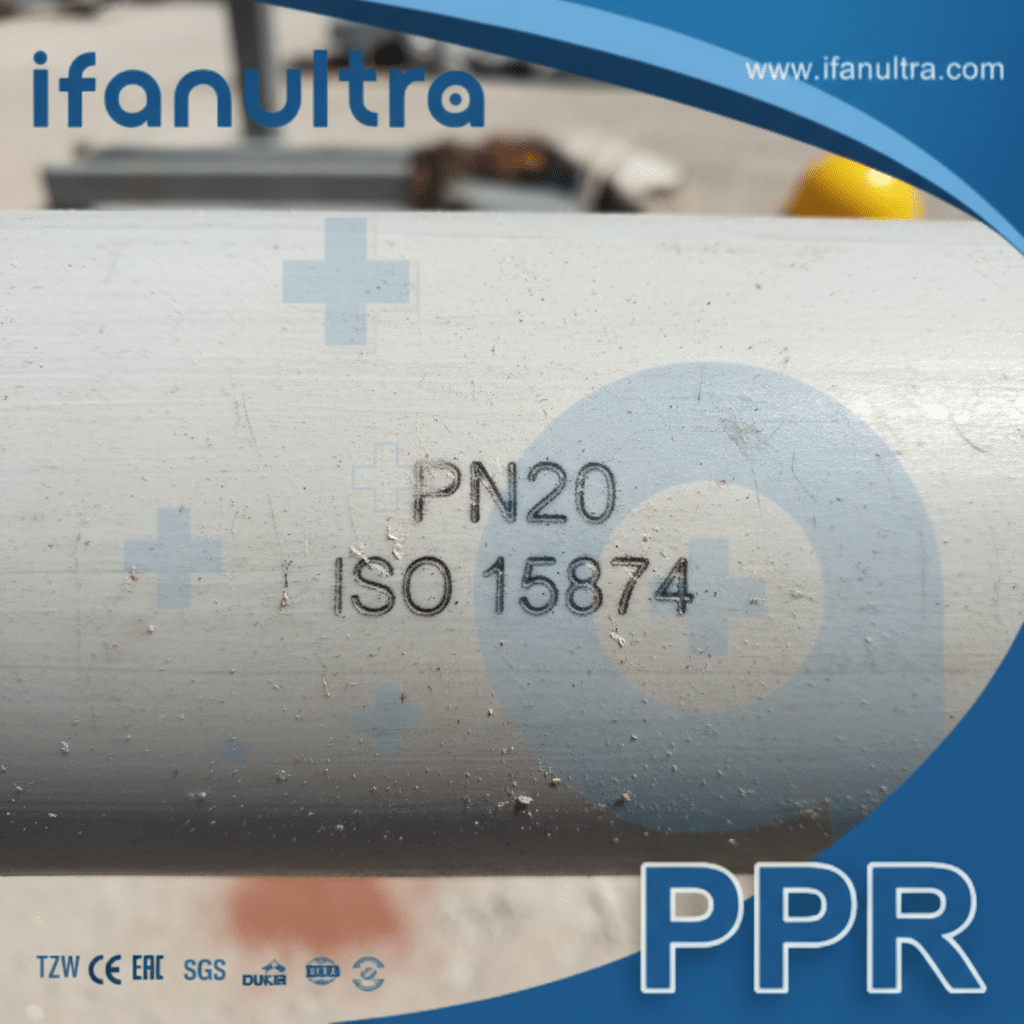
Key international standards that define wall thickness series are ISO 4065 and the EN/ISO 15874 series (for PP-R). These standards establish the Standard Dimension Ratio (SDR) and Pressure Nominal (PN) systems, which create consistent thickness-to-diameter ratios across different pipe materials and sizes, ensuring predictable performance.
The Two Main Classification Systems
- Standard Dimension Ratio (SDR) System: This is the fundamental engineering standard. As defined earlier (SDR = OD/Wall Thickness), it ensures geometric similarity. A given SDR rating provides a known pressure capacity for a specific plastic material, regardless of the pipe’s absolute size.
- Pressure Nominal (PN) System: This is a more user-friendly designation derived from SDR. It indicates the approximate maximum operating pressure in bars at 20°C water. Common ratings are PN6, PN10, PN16, PN20, and PN25. Each PN rating corresponds to a specific SDR for a given material.
Material-Specific Standards
Different plastics have their own dedicated standards that reference these SDR/PN systems:
- PP-R (Polypropylene Random): Governed by EN/ISO 15874. This is the key standard for the hot and cold water pipes we’ve discussed.
- PE (Polyethylene): Governed by ISO 4427 for water and ISO 4437 for gas. PE pipes often use SDR codes like SDR11, SDR17, etc.
- PVC (Polyvinyl Chloride): Governed by ISO 1452 for pressure applications.
The Importance of Color Coding and Marking
Reputable manufacturers print crucial information along the length of the pipe. This marking, required by standards, includes:
- Material (e.g., PP-R)
- Standard (e.g., ISO 15874)
- SDR (e.g., SDR6) or PN (e.g., PN20)
- Size (e.g., 20mm x 3.4mm, meaning 20mm outer diameter and 3.4mm minimum wall thickness)
Table: Common PP-R Standard Series (EN/ISO 15874)
| SDR Series | Corresponding PN Rating (for PP-R) | Typical Wall Thickness Example (for 25mm OD pipe) | Primary Application |
|---|---|---|---|
| SDR6 | PN25 | ~ 4.2 mm | High-pressure, high-temperature central heating mains. |
| SDR7.4 | PN20 | ~ 3.4 mm | Standard for hot and cold water distribution in buildings. |
| SDR9 | PN16 | ~ 2.8 mm | General cold water supply, lower-pressure hot water. |
| SDR11 | PN10 | ~ 2.3 mm | Low-pressure cold water, non-potable applications. |
Always ensure the pipes and fittings you purchase carry these standard markings. Using products from a certified manufacturer like IFAN guarantees that the wall thickness and material properties consistently meet these international standards, ensuring system safety and performance.
Conclusão
Choosing the right pipe wall thickness is a calculated balance between flow and strength. For a system optimized for both, trust IFAN’s range of SDR-classified PP-R pipes, engineered to exacting ISO standards.









 English
 Español
 Français
 Português do Brasil