

A flange is a bolted, removable joint — the flat, ringed collar you see where two sections of pipe, a valve, or a pump meet and clamp together with bolts and a gasket. It is the point in a line where you can disconnect, inspect, or swap a component without cutting anything. The main flange types — weld neck, slip-on, socket weld, threaded, lap joint, blind, and orifice — differ in how they attach to the pipe and what pressure and service each one suits.
This guide walks through every common flange, the three sealing faces, the standards that govern sizing, and where each choice fits. It also covers something most flange articles skip: how a plastic system like PPR bolts to metal valves and pumps. If you are also specifying the pipe itself, our PPR pipe guide covers properties, installation, and selection in one place.
Key Takeaways
- A flange is a bolted, removable pipe joint — the point where a line can be taken apart for service.
- The seven common flange types are weld neck, slip-on, socket weld, threaded, lap joint, blind, and orifice.
- Weld neck flanges give the highest joint integrity for high pressure and temperature; slip-on flanges are cheaper and easier to align but carry roughly two-thirds the strength.
- The three main faces are raised face (RF), flat face (FF), and ring-type joint (RTJ) — the face decides how the gasket seals.
- The required standard varies by market — ASME B16.5 (150#, 300#…) in North America, EN 1092 / DIN with PN classes (PN16, PN10…) in Europe.
- A PPR system connects to metal valves and pumps through a PPR flange adapter plus a loose backing ring — no threads or glue at the plastic side.
What a flange is and why it matters
A flange turns a permanent pipe run into something you can take apart. Weld or fuse a joint and it stays joined; bolt a flanged joint and you can unbolt it later to clean a strainer, replace a control valve, or blank off a branch during a shutdown. Two flanges face each other, a gasket sits between them, and a ring of bolts pulls the pair together until the gasket seals.
That removability is the whole point. A pump, a meter, a control valve — anything you expect to service — lands on a flanged connection so a crew can drop it out without touching the surrounding pipe. The trade-off is cost and a leak path: every flanged joint is a gasketed seam under bolt tension, so you use them where access matters and weld or fuse the rest.
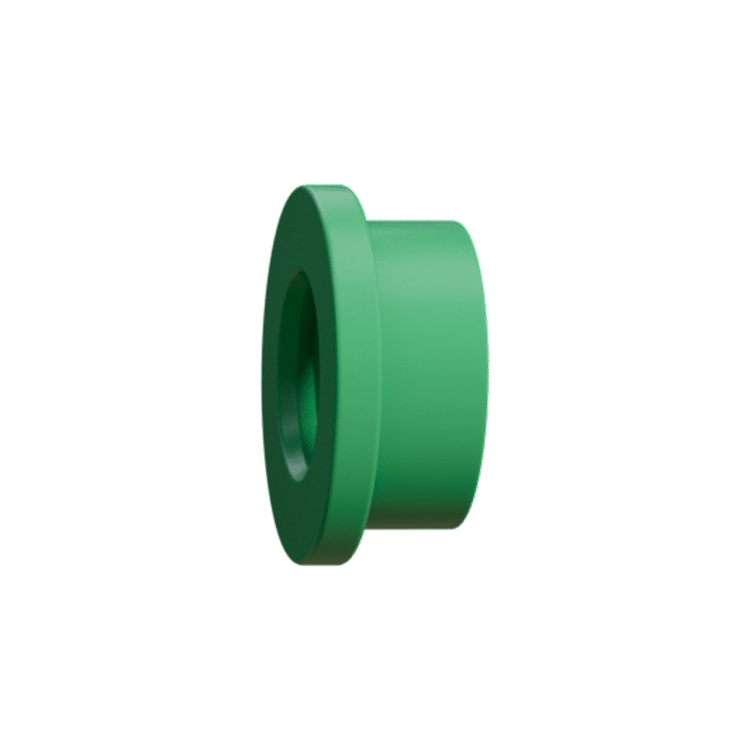
The main flange types and where each is used
Seven flange types cover the vast majority of piping work. They differ mainly in how the flange attaches to the pipe — butt weld, fillet weld, thread, or a loose ring over a stub — and that attachment sets the pressure rating and the service each one handles well.
Weld neck flange
The workhorse of high-pressure process piping. Its long tapered hub is butt-welded to the pipe, so the flange and pipe become one continuous piece with a smooth bore. That gives the highest joint integrity of any flange and handles high pressure, cyclic loading, and sub-zero or elevated temperatures. Best for critical lines where a leak is expensive.
Slip-on flange
The flange slips over the pipe end and is fixed with two fillet welds, inside and out. Easier to align and cheaper than a weld neck, which is why it is common on lower-pressure utility lines. The catch: its calculated strength under internal pressure is on the order of two-thirds that of a weld neck, so it is not the pick for severe service.
Socket weld flange
The pipe drops into a counterbored socket and is held with a single external fillet weld. It was developed for small-bore high-pressure lines and suits tight spaces well. Not used on large diameters, and the internal crevice makes it a poor fit for services where trapped fluid or corrosion is a concern.
Threaded (screwed) flange
Screwed onto a matching male pipe thread — no welding. That makes it useful for small-bore lines, flammable-area work where hot-work permits are a hassle, and materials hard to weld. It is limited to lower pressures and is a poor choice where the joint sees thermal cycling or vibration, which can loosen threads over time.
Lap joint flange
A two-piece setup: a loose flange ring rides over a stub end that is welded to the pipe. The ring spins freely, so bolt holes line up fast, and only the stub touches the fluid. That lets you use a cheap carbon-steel ring on an expensive stainless or titanium line, and it shines where frequent dismantling is needed.
Blind flange
A solid disc with no bore, used to cap the end of a line, a valve, or a vessel opening. It lets you close off a branch for future tie-in or isolate a section for pressure testing. In larger sizes, blind flanges are among the most highly stressed flange types under internal pressure.
Orifice flange
A specialized pair machined to hold an orifice plate between them, with tapped pressure connections on each side. They measure the flow rate of liquids and gases by reading the pressure drop across the plate. You see them wherever a line needs inline metering.
Reducing flanges
Worth a note: a reducing flange carries the bolt pattern of a larger size but a smaller bore, letting you step pipe diameter down at the flanged joint itself. It saves a separate reducer where the pressure drop from an abrupt change is acceptable.

Flange faces and why the face matters for sealing
The face is the mating surface where the gasket sits. Two flanges must share the same face type to seal, and the face determines both the gasket you use and how much pressure the joint can hold. Three faces cover most work.
- Raised face (RF) — a small raised ring around the bore concentrates bolt load onto a narrow band, so the gasket seals harder. The raise is typically about 1/16 in for Class 150 and 300 and 1/4 in for Class 400 and up. RF is the ASME B16.5 default and the most common face you will meet.
- Flat face (FF) — the whole face is flat and the gasket covers it fully. Used with a full-face gasket and often specified when bolting to a brittle mating flange, such as cast iron, where a raised face could crack it. Common on low-pressure and plastic-to-metal joints.
- Ring-type joint (RTJ) — a machined groove holds a solid metal ring that deforms as the bolts pull down, giving a metal-to-metal seal. This is the choice for high-pressure and high-temperature severe service, typically on the heavier pressure classes.
Get the face wrong and the gasket cannot do its job — an RF gasket in an RTJ groove will not seal. Face finish matters too: RF and FF faces are usually machined with a serrated finish so the gasket grips. Confirm the exact face and finish against your project spec, since the required detail varies by service and market.
Flange standards and sizing
A flange only bolts up if both sides share the same standard, size, and pressure class. Two families dominate, and which one a project uses depends on the market and the client’s spec.
- ASME/ANSI B16.5 — the North American standard, sizing flanges by NPS and by pressure class in pounds: 150#, 300#, 600#, 900#, 1500#, and 2500#. The class number is a rating reference, not a literal pressure — actual working pressure falls as temperature rises.
- EN 1092 / DIN — the European standards, sizing by DN (nominal diameter in mm) and by PN class, where PN is the nominal pressure in bar: PN6, PN10, PN16, PN25, and up. A PN16 flange is nominally rated to 16 bar at reference conditions.
Bolt hole count, bolt circle diameter, and outside diameter all change with size and class, and an ASME flange will not line up with an EN flange of the same nominal bore. Because the two systems do not interchange, confirm the required standard and class with the project spec or the buyer before ordering — the correct choice varies by project and market, and mixing them is a common and costly mistake.
Flange types compared: how each connects and where it fits
This table lines up the common flanges by how they attach and the service each one suits — a quick reference for matching a flange to a job.
| Flange type | How it connects | Best-fit use |
|---|---|---|
| Weld neck | Butt-welded to pipe via a tapered hub | High pressure, high or sub-zero temperature, critical lines |
| Slip-on | Slides over pipe, two fillet welds | Lower-pressure utility lines where cost and easy alignment matter |
| Socket weld | Pipe seats in a counterbore, one external fillet weld | Small-bore high-pressure lines in tight spaces |
| Rosqueado | Screws onto a male pipe thread, no welding | Small-bore, low-pressure, no-hot-work areas |
| Lap joint | Loose ring over a welded stub end | Lines needing frequent dismantling or costly alloy pipe |
| Blind | Solid disc, no bore, bolts to a mating flange | Capping line ends, valves, vessel openings; pressure testing |
| Orifice | Machined pair holding an orifice plate with pressure taps | Inline flow measurement |
| PPR flange adapter | Heat-fused stub with a loose backing ring for bolts | Joining a PPR line to a metal valve, pump, or meter |
Flanges in plastic piping: how PPR connects to metal
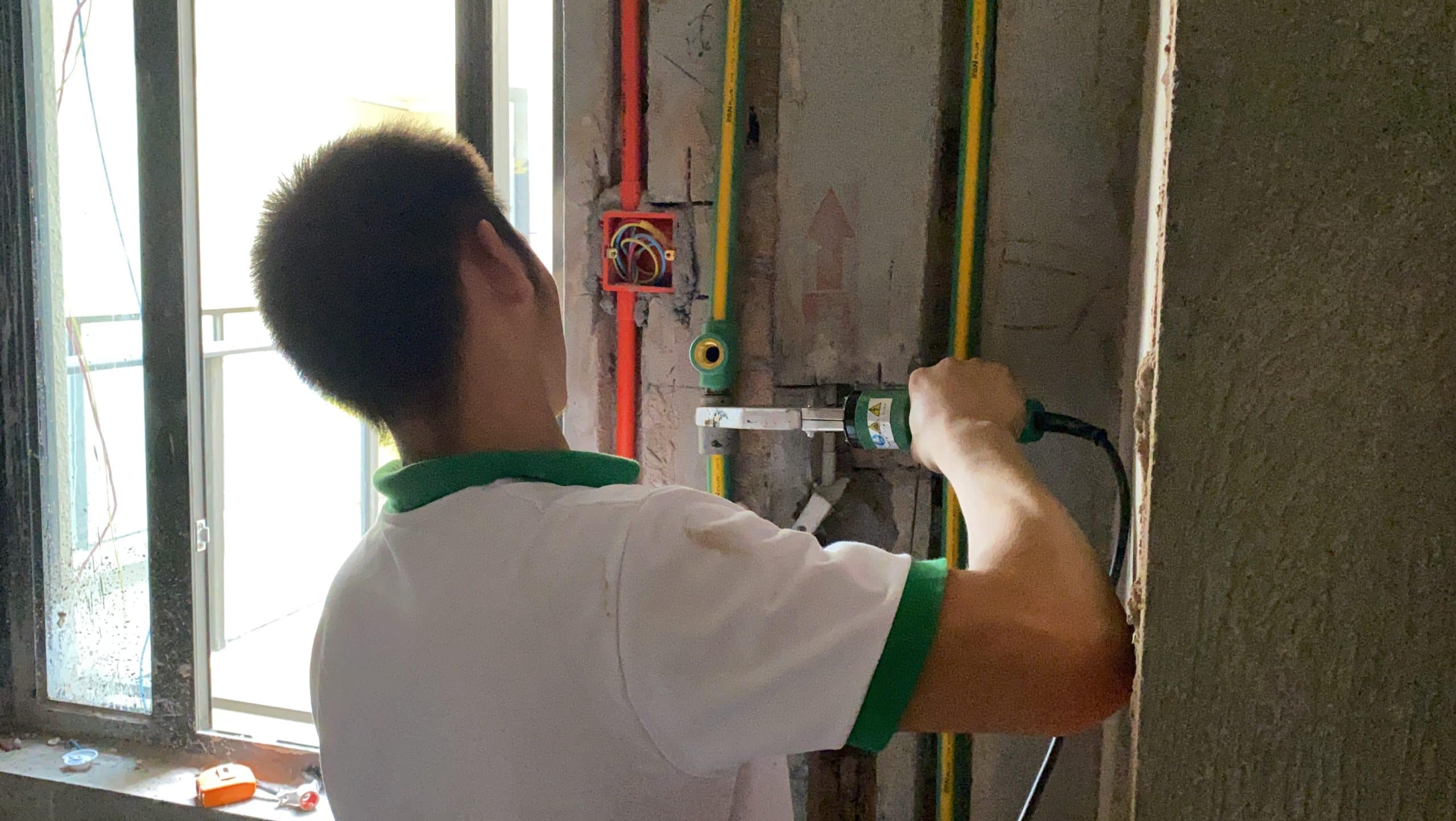
Plastic piping needs flanges too — just not welded ones. A PPR line is joined by socket heat fusion at about 260°C, with no threads or gaskets at the plastic joints. But that line still has to bolt onto metal valves, pumps, meters, and manifolds. The bridge is a PPR flange adapter, and it works much like a lap joint flange.

The adapter is a PPR stub with a flat collar that fuses straight onto the pipe like any other PPR fitting. Over that stub slides a loose backing ring — often a two-piece split flange ring — that carries the bolt holes and matches a metal flange pattern such as EN 1092 or ASME B16.5. Bolt the ring to the metal flange, seat a gasket against the flat collar, and the plastic line is now a serviceable flanged joint. Because the ring is separate, it rotates freely for fast bolt-hole alignment, and only the PPR collar contacts the fluid.
This is where a plastic system earns its keep in a metal-heavy plant room. IFANULTRA’s PPR flange adapters and split backing rings are part of the wider PPR product series, sized to standard metal flange patterns so a PPR riser lands cleanly on a metal pump or valve. The adapters are made from virgin Nordic polypropylene on German automated lines, and the face is typically flat-faced to suit a full-face gasket against the metal side. Match the adapter’s ring drilling to the metal flange standard the project calls for.
How to choose the right flange
Work down four questions and the choice usually falls out:
- Pressure and temperature — severe or cyclic service points to a weld neck with an RF or RTJ face; utility service allows a slip-on.
- Pipe material — steel welds; a costly alloy or a plastic like PPR does not, so lean toward lap joint or a PPR flange adapter with a loose ring.
- Access needs — anything you will service or dismantle often argues for a rotatable ring style and a blind flange to cap it during work.
- Standard and face — match ASME or EN, the pressure class, and the face type to the mating component and the project spec before ordering.
Both mating flanges must agree on standard, size, class, and face. When a spec is unclear, confirm the required standard and class with the project engineer or buyer rather than guessing, since requirements vary by market and application.
Conclusão
Flanges give a piping system its service points — the bolted joints where a line comes apart for inspection, replacement, or isolation. Pick the type by how it attaches and the service it sees, match the face and the standard on both sides, and the joint seals and holds.
If your work runs plastic pipe into metal equipment, a PPR flange adapter and backing ring make that connection clean and serviceable. If you source PPR systems for resale or projects, the IFANULTRA team can share adapter specs, flange drilling options, and a full catalog.
Frequently Asked Questions
What are the main types of flanges?
The seven common flange types are weld neck, slip-on, socket weld, threaded, lap joint, blind, and orifice. They differ in how they attach to the pipe, which sets each one’s pressure rating and best-fit service.
What is the difference between a weld neck and a slip-on flange?
A weld neck is butt-welded via a tapered hub for the highest joint integrity in high-pressure service. A slip-on slides over the pipe with two fillet welds — cheaper and easier to align, but about two-thirds the strength.
What are the three main flange face types?
Raised face (RF), flat face (FF), and ring-type joint (RTJ). RF concentrates bolt load for a stronger seal and is the ASME default. FF suits brittle mating flanges. RTJ gives a metal-to-metal seal for severe service.
How does PPR pipe connect to a metal valve or pump?
Through a PPR flange adapter and a loose backing ring. The adapter heat-fuses to the PPR pipe; the split ring carries the bolt holes and matches the metal flange pattern, giving a serviceable bolted joint with a gasket against the flat collar.
Which flange standard should I use, ASME or PN?
It depends on the market. ASME B16.5 with pound classes (150#, 300#) is typical in North America; EN 1092 / DIN with PN classes (PN16, PN10) in Europe. The two do not interchange — confirm the required standard with the project spec.
Written by the IFANULTRA team — a PPR pipe and fittings brand of IFAN Group, drawing on 30+ years of manufacturing experience, German automated production lines, and ISO 9001, SKZ and NSF certified PPR product lines.









 English
 Español
 Français
 Português do Brasil