
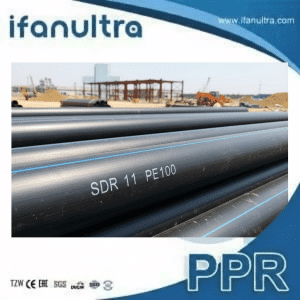
On a recent site audit, I found mismatched SDR pipes causing a major pressure test failure. This common yet costly mistake highlights why you must understand this simple number.
The SDR (Standard Dimension Ratio) rating is a critical standard for HDPE pipes that defines the pipe’s wall thickness relative to its outside diameter. It directly determines the pipe’s strength and pressure capacity. Choosing the correct SDR is essential for ensuring the system’s safety, performance, and long-term reliability under its intended operating pressure.
Let’s break down what SDR means and why it’s a non-negotiable factor in your HDPE piping projetos.
How is the SDR Number Defined by the Pipe Diameter and Wall Thickness?
Many people think pipe strength comes from its diameter alone. In reality, the relationship between diameter and wall thickness tells the real story.
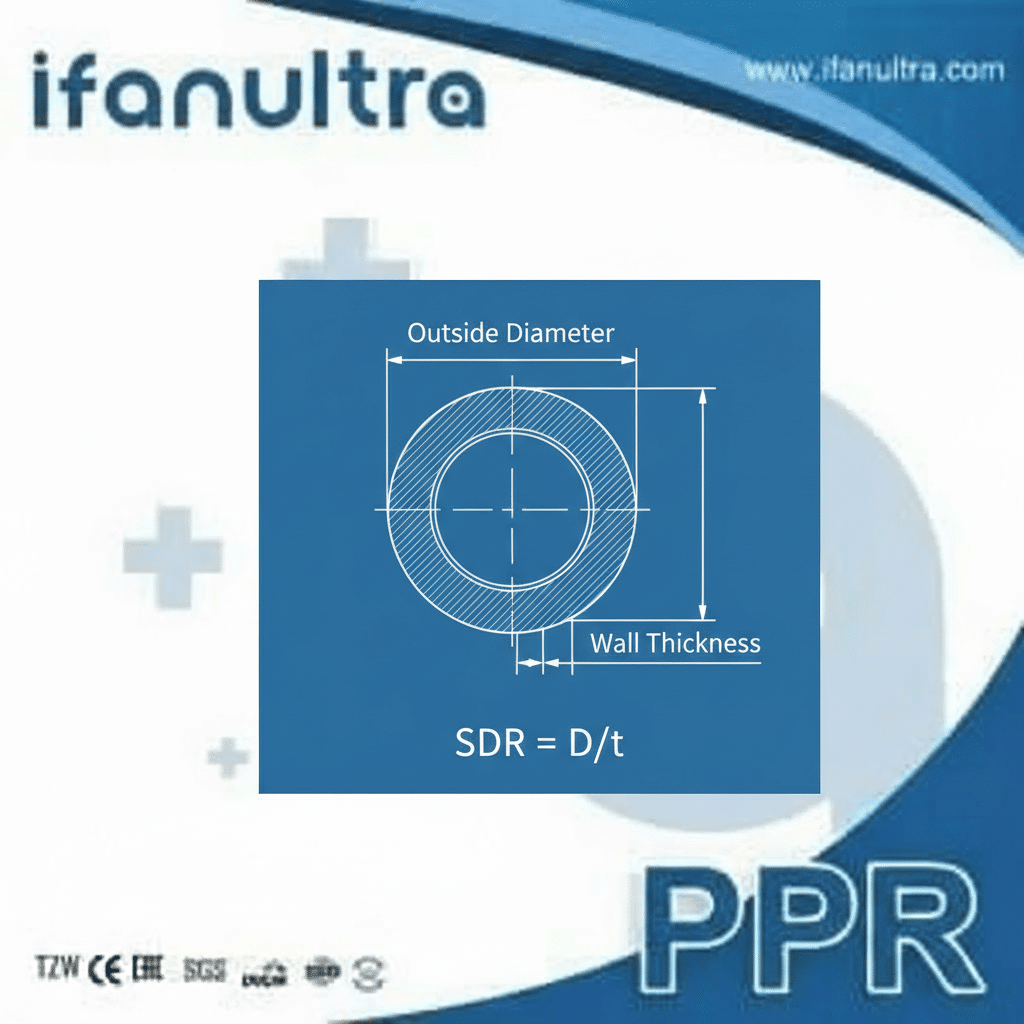
The SDR number is defined by a simple formula: SDR = (Outside Diameter of the Pipe) / (Minimum Wall Thickness). It is a standardized ratio, not a direct measurement. For example, an SDR 11 pipe means its outside diameter is 11 times the size of its minimum wall thickness.
The Meaning Behind the Ratio
Think of SDR as a shape profile for the pipe. It gives you a quick way to understand how “chunky” or “thin-walled” a pipe is, no matter its actual size.
The formula is straightforward. If you have a pipe with a 110 mm outside diameter and a 10 mm minimum wall thickness, the SDR is 110 / 10 = 11. So, it’s an SDR 11 pipe. This ratio stays the same for the same “series” of pipes. Another pipe from the same SDR 11 series might have a 50 mm diameter and a 4.55 mm wall (50 / 4.55 ≈ 11). The actual dimensions change, but the proportion remains constant.
This standardization is very helpful. It means engineers and installers can select pipes based on a known performance characteristic (the SDR) without needing to calculate the wall thickness for every single pipe diameter they consider.
A Practical Example
Let’s look at two common pipes with the same diameter but different SDRs:
- Pipe A: 250 mm diameter, SDR 17. Its wall thickness is approximately 250 / 17 = 14.7 mm.
- Pipe B: 250 mm diameter, SDR 11. Its wall thickness is approximately 250 / 11 = 22.7 mm.
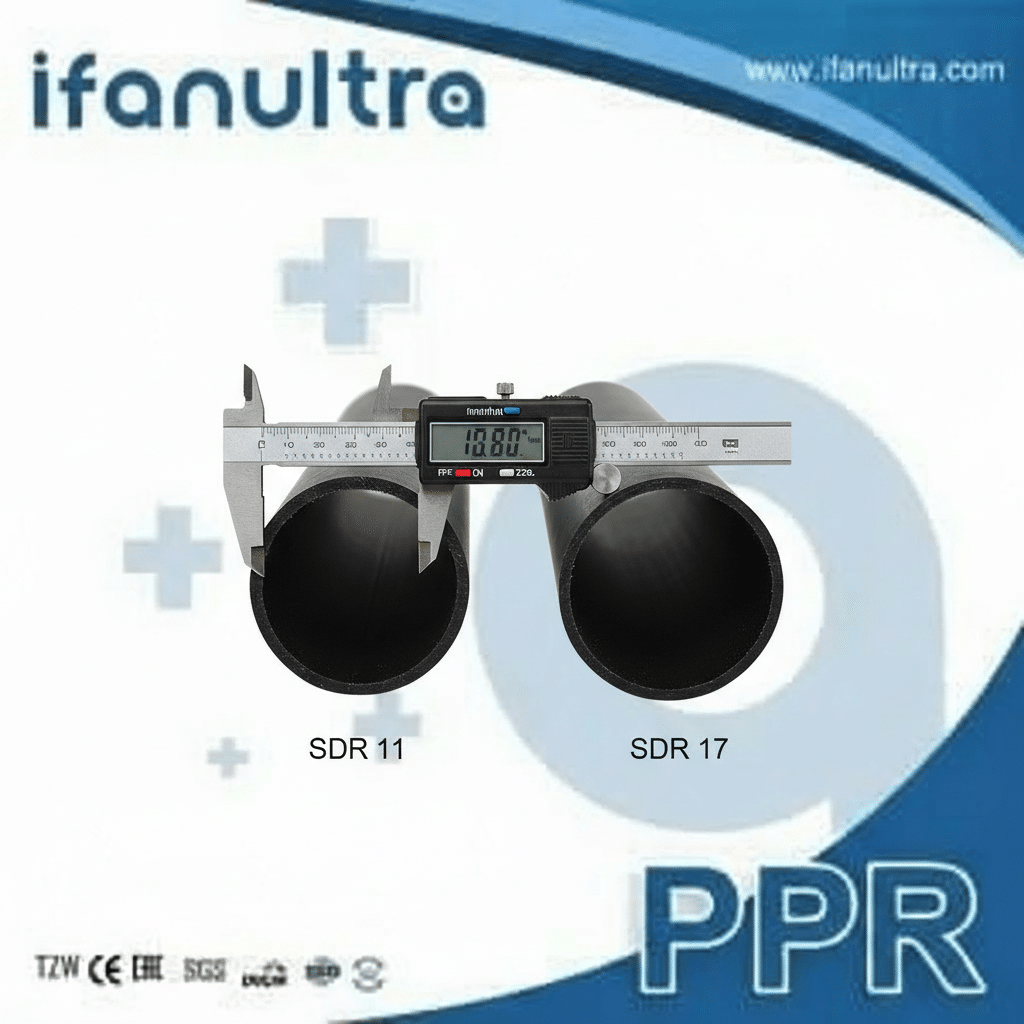
Both pipes have the same outside diameter and can use the same fittings. However, Pipe B (SDR 11) has a much thicker wall. This difference in thickness, defined by the SDR, leads to major differences in strength, which we will explore next.
Why Does a Lower SDR Number Indicate a Thicker, Stronger Pipe Wall?
It seems backwards at first glance. A lower number usually means less, but with SDR, it means more—more material, more strength.
A lower SDR number indicates a thicker, stronger pipe wall because the SDR is a ratio where the diameter is divided by the wall thickness (SDR = D/t). A smaller SDR number means the “t” (wall thickness) value in the fraction is larger relative to the fixed diameter, resulting in a thicker wall.
Understanding the Inverse Relationship
The key is to remember the formula: SDR = Diameter / Thickness. If the diameter stays the same, the only way to get a smaller SDR number is to have a bigger wall thickness.
Let’s use simple numbers. Imagine two pipes, both with a 100 mm outside diameter.
- For an SDR 10 pipe: 100 / Thickness = 10. So, Thickness = 10 mm.
- For an SDR 20 pipe: 100 / Thickness = 20. So, Thickness = 5 mm.
The SDR 10 pipe has double the wall thickness of the SDR 20 pipe. Therefore, the pipe with the lower SDR (10) has a much thicker, stronger wall.
Why Wall Thickness Equals Strength
The thickness of the pipe wall is its primary defense against internal and external forces.
- Internal Pressure: A thicker wall can contain higher water pressure without stretching or bursting.
- External Loads: A thicker wall is better at resisting crushing from soil weight, traffic loads above ground, or construction activity.
- Impact Resistance: A thicker wall is less likely to get damaged during handling, shipping, or installation.
So, when you see SDR 11 versus SDR 17, you instantly know that SDR 11 is the heavier-duty, pressure-rated option, while SDR 17 is a lighter-weight, lower-pressure option. This leads directly to the most important practical application of SDR: determining classificação de pressão.
How Does SDR Determine the Pressure Rating of an HDPE Pipe?
Choosing the wrong SDR for your pressure needs is the fastest path to system failure. The SDR is your direct guide to safe operating limits.
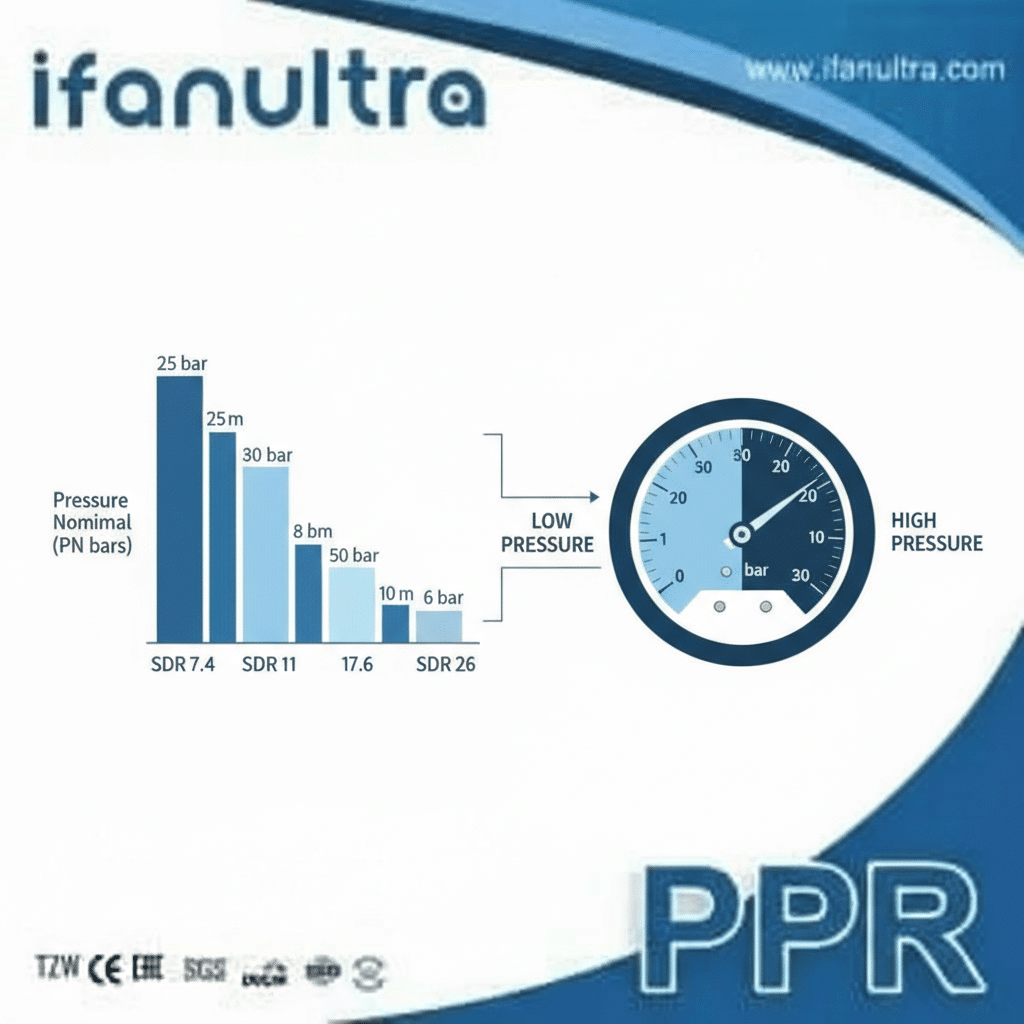
The SDR directly determines the pressure rating (PN) of an HDPE pipe because the thickness-to-diameter ratio defines how much hoop stress the pipe wall can withstand. A standard formula (ISO 12162) links the material’s strength (MRS) and the SDR to calculate the maximum allowable operating pressure. Simply put, a lower SDR (thicker wall) always gives a higher pressure rating.
The Science Behind the Pressure Rating
Engineers use a specific formula to assign a Pressure Nominal (PN) value to a pipe, such as PN10 or PN16. The core formula is based on hoop stress:
Classificação de pressão (PN) = (2 * MRS) / (SDR – 1)
- MRS (Minimum Required Strength): This is a property of the HDPE material grade (e.g., PE80, PE100). PE100 has a higher MRS than PE80.
- SDR: The Standard Dimension Ratio.
Let’s see how this works in practice with PE100 material.
Pressure Rating Comparison for PE100 Pipes
This table shows how classificação de pressão drops as SDR increases (wall gets thinner).
| SDR | Approx. Pressure Rating (PN) for PE100 | Typical Application |
|---|---|---|
| SDR 7.4 | Very High (e.g., PN25) | Industrial high-pressure mains. |
| SDR 9 | High (e.g., PN20) | Major água potável transmission lines. |
| SDR 11 | PN16 | Most common for municipal water, gas, and pressurized sewer force mains. |
| SDR 13.6 | Medium (e.g., PN12.5) | Lower-pressure water distribution. |
| SDR 17 | PN10 | Common for drainage, low-pressure irrigation, and non-pressure sewer applications. |
| SDR 21 | Lower (e.g., PN8) | Gravity-flow drainage and conduit. |
| SDR 26 | Low (e.g., PN6) | Very low-pressure applications. |
Key Takeaway: For the same material (e.g., PE100), an SDR 11 pipe is rated for 16 bar of pressure, while an SDR 17 pipe is only rated for 10 bar. If you install an SDR 17 pipe where the system pressure reaches 16 bar, the pipe will likely fail.
Common Client Pitfall: Ignoring Surge Pressure
A major mistake is selecting an SDR based only on static working pressure. Plumbing systems experience pressure surges (water hammer). A good rule is to choose a pipe with a pressure rating (PN) at least 1.5 times your maximum expected system pressure. This safety margin is where consulting with an expert supplier like IFAN is crucial.
Why Must You Match the SDR When Joining HDPE Pipes and Fittings?
In the field, I’ve seen crews try to fuse different SDR pipes. The result is always a weak, unreliable joint that is prone to leaks and failure.
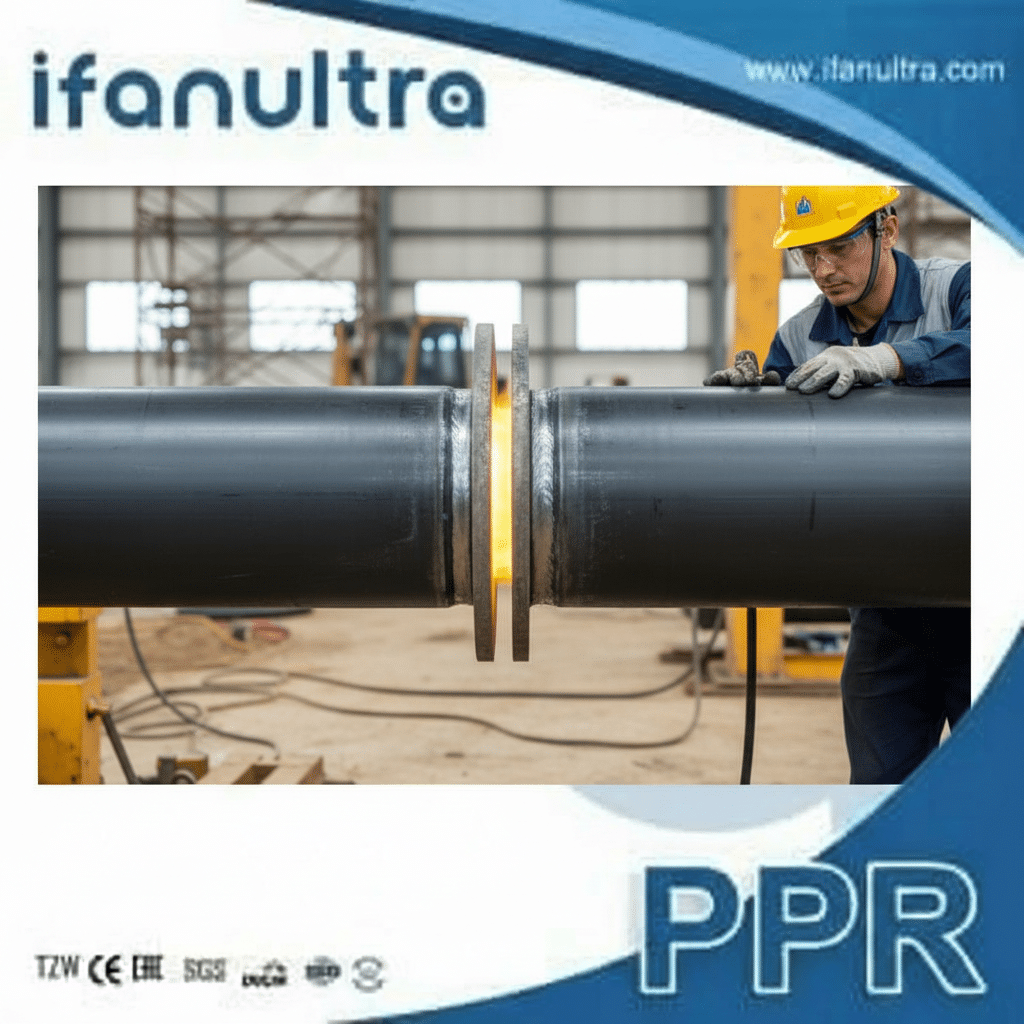
You must match the SDR when joining HDPE pipes and fittings to ensure a proper, full-strength fusion weld. Matching SDR guarantees that the outside diameters and wall thicknesses are compatible, allowing the heated surfaces to melt and fuse together evenly across the entire contact area. Mismatched SDRs create uneven fusion, stress points, and a severe weak link in the system.
The Mechanics of a Proper Fusion Joint
HDPE systems rely on heat fusion—melting the ends of two components and pressing them together to form a seamless, monolithic joint. For this to work perfectly, the two parts must be identical in composition and geometry at the joint interface.
When you try to fuse an SDR 11 pipe to an SDR 17 fitting, you face two main problems:
- Outside Diameter Mismatch: Although the nominal tamanho do tubo (e.g., 110mm) is the same, the actual outside diameters might differ slightly due to the different wall thickness standards. The fusion machine clamps cannot hold them perfectly aligned.
- Wall Thickness Mismatch: This is the critical issue. When you heat and push the ends together, the thicker SDR 11 wall and the thinner SDR 17 wall will melt at different rates. You cannot apply equal pressure across the mating faces. The result is an incomplete fusion, often with a visible cold ring or a severe bead mismatch inside the pipe, which causes turbulence and weakens the joint.
Consequences of Mismatching SDR
Using mismatched SDR components compromises the entire system’s integrity:
- Leaks: The imperfect fusion joint is the most likely point for a leak to develop.
- Reduced Pressure Capacity: The joint becomes the weakest point, lowering the entire line’s pressure rating to that of the lower SDR component.
- Structural Failure: Under ground movement or stress, the mismatched joint is prone to cracking or pulling apart.
- Failed Inspections: Any professional pressure test or quality audit will fail a system with mismatched SDRs.
How to Ensure Correct Matching
Follow this simple site guide to avoid mistakes:
| Step | Action | Why It’s Important |
|---|---|---|
| 1. Specification | Specify the exact SDR (e.g., PE100, SDR 11) on all purchase orders for pipes AND fittings. | Ensures your supplier provides a complete, compatible system. |
| 2. Receiving Check | When materials arrive, check the printed line on every pipe and fitting. Verify the SDR and material (e.g., “PE100 SDR11”). | Catches shipping or supplier errors before installation. |
| 3. Staging | Store and stage pipes/fittings for each SDR value separately. Clearly label bundles. | Prevents installers from accidentally grabbing the wrong component. |
| 4. Pre-Fusion Check | The fusion operator must visually confirm SDR match immediately before welding. | The final, critical safety check. |
Always source pipes and fittings as a matched system from your supplier. Reputable manufacturers like IFAN supply complete, SDR-matched kits to eliminate this risk on your project site.
Conclusão
Understanding SDR is essential for selecting the right HDPE pipe for pressure, strength, and longevity. Always use SDR-matched components. For reliable, certified HDPE pipe systems in all standard SDRs, partner with IFAN.









 English
 Español
 Français
 Português do Brasil