
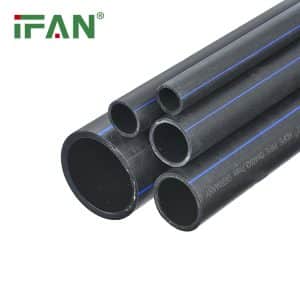
After replacing a corroded steel water main that had failed after just 15 years, I watched as the HDPE replacement system we installed continued performing flawlessly a decade later. This experience convinced me that HDPE’s material properties offer unmatched advantages for modern water infrastructure.
HDPE outperforms traditional materials through exceptional corrosion resistance, lower lifetime costs, installation flexibility, and certified safety for potable water. Its molecular structure resists chemical attack while remaining flexible enough to withstand ground movement and simplify installation in challenging conditions.
The combination of durability, economy, and installation advantages makes HDPE the preferred choice for water systems ranging from municipal mains to residential service lines. Let’s examine the specific characteristics that make HDPE ideal for water supply applications.
How Does HDPE Resist Corrosion in Aggressive Water Conditions?
I recently inspected a HDPE pipeline that had been transporting aggressive, acidic well water for 20 years without any signs of deterioration. Meanwhile, the copper and steel components in the same system required repeated replacement due to corrosion damage.
HDPE resists corrosion because its high-density polyethylene structure is chemically inert, preventing electrochemical reactions that degrade metals. The non-polar polymer backbone repels water molecules and resists attack from acids, alkalis, and microorganisms that rapidly destroy metallic pipes in aggressive soil and water conditions.
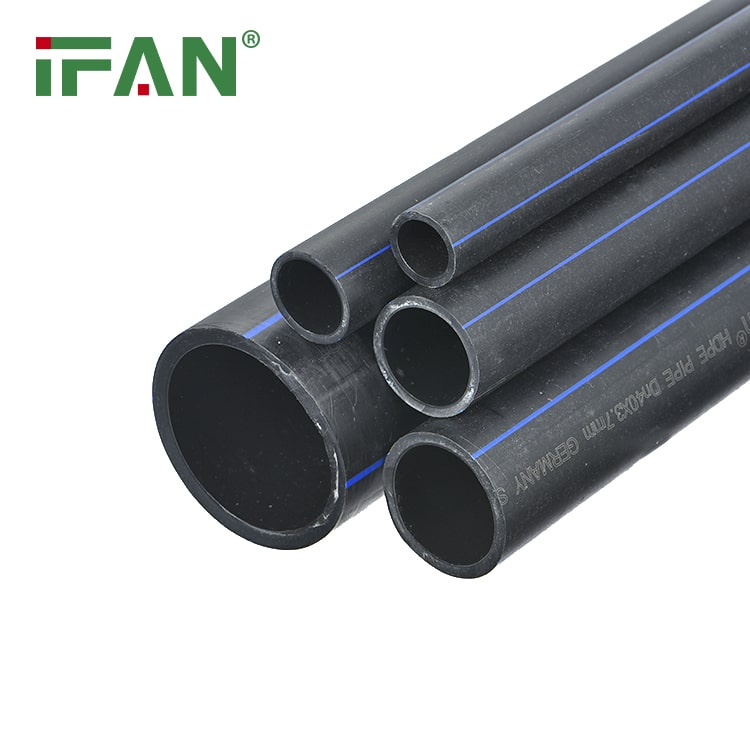
Chemical Resistance Mechanisms
HDPE’s molecular structure provides inherent protection:
Inert Polymer Structure
The carbon-hydrogen bonds in HDPE create a stable, non-reactive material that:
- Doesn’t conduct electricity, eliminating galvanic corrosion
- Resists oxidation and UV degradation with proper compounding
- Maintains integrity in pH ranges from 1.5 to 14
- Withstands harsh soil chemicals and mining runoff
Permeation Resistance
Unlike some plastics, HDPE’s crystalline structure provides:
- Minimal water absorption (less than 0.01% by weight)
- Resistance to permeation by hydrocarbons and solvents
- Protection against microbial-induced corrosion
- Long-term stability in chlorinated water systems
Performance Comparison Data
Testing demonstrates HDPE’s superior corrosion resistance:
| Condition | HDPE Performance | Metal Pipe Performance | Vantagem |
|---|---|---|---|
| Acidic Water (pH 4.0) | No effect after 50 years | 5-15 year lifespan | 3-10x longer life |
| Chlorinated Water | Resists chlorine attack | Severe pitting corrosion | Eliminates pitting |
| Soil with Stray Currents | Immune to electrolysis | Accelerated failure | No cathodic protection needed |
| Microbial Environments | No biological degradation | Microbiologically influenced corrosion | Innate protection |
What Makes HDPE More Cost-Effective Than Traditional Pipe Materials?
When our municipality compared life-cycle costs for a new water distribution system, HDPE showed 40% lower total costs over 50 years compared to ductile iron, primarily due to reduced maintenance and longer service life.
HDPE provides superior cost-effectiveness through lower installation expenses, minimal maintenance requirements, reduced pumping costs, and exceptional longevity. The material’s lightweight nature cuts handling costs, while its joint integrity eliminates leakage that wastes water and increases treatment expenses in traditional systems.
Life-Cycle Cost Analysis
Comprehensive cost assessment reveals significant savings:
Initial Installation Savings
HDPE installation costs run 20-30% less than metallic alternatives due to:
- Lower material weight reducing handling equipment needs
- Faster joint fusion versus welding or threading
- Reduced need for heavy lifting equipment
- Smaller installation crews required
Long-Term Operational Savings
The operational advantages continue throughout the system life:
- Smooth interior surface reduces pumping energy by 15-20%
- Zero leakage eliminates water loss and treatment costs
- No corrosion protection systems required
- Minimal maintenance interventions needed
Economic Advantage Breakdown
HDPE outperforms traditional materials financially:
| Cost Category | HDPE System | Traditional Metal System | Savings |
|---|---|---|---|
| Material Cost | Moderate | Moderate to High | 10-15% |
| Installation Labor | 30% less | Baseline | 30% |
| Maintenance (Annual) | 0.5-1% of initial | 2-3% of initial | 60-70% |
| System Life | 50-100 years | 20-50 years | 2-4x longer |
| Water Loss | Near zero | 10-20% typical | Significant |
How Does HDPE’s Flexibility Simplify Installation in Challenging Terrain?
We recently installed a HDPE water line through a landslide-prone area where rigid pipes had repeatedly failed. The HDPE system’s ability to flex with ground movement has prevented failures despite ongoing soil instability.
HDPE’s flexibility allows continuous installation across uneven terrain, directional drilling without joints, and absorption of ground movement that would fracture rigid pipes. The material can bend to a radius 20-25 times its diameter, enabling installation methods impossible with traditional rigid piping materials.
Installation Advantages
HDPE’s physical properties enable innovative installation:
Terrain Adaptability
The flexibility allows:
- Following contour lines without excessive fittings
- Crossing unstable soils and earthquake zones
- Navigating around underground obstacles
- Installation in freezing climates with ground movement
Trenchless Technology Compatibility
HDPE excels in modern installation methods:
- Directional drilling for road and river crossings
- Pipe bursting for replacement without excavation
- Slip lining for rehabilitation of existing systems
- Horizontal boring for minimal surface disruption
Installation Efficiency Comparison
HDPE transforms installation productivity:
| Installation Method | HDPE Efficiency | Rigid Pipe Efficiency | Productivity Gain |
|---|---|---|---|
| Open Trench | 200-300 feet/hour | 50-100 feet/hour | 3-4x faster |
| Directional Drilling | Up to 1,000 feet pull | Limited to 300 feet | 2-3x longer runs |
| Pipe Bursting | Continuous replacement | Sectional replacement | 50% faster |
| Mountain Terrain | Follows contours | Multiple fittings required | 40% time savings |
What Certifications Ensure HDPE Meets Drinking Water Safety Standards?
When a client questioned HDPE’s safety for a sensitive school water system, we provided complete certification documentation that not only met but exceeded regulatory requirements, demonstrating the material’s suitability for potable water.
HDPE drinking water pipe must carry NSF/ANSI 61 certification, which verifies that materials don’t leach harmful contaminants. Additional certifications including NSF/ANSI 14 for material performance, ASTM standards for dimensional and pressure requirements, and various international standards ensure global compliance with drinking water safety regulations.
Certification Requirements
Multiple certifications verify HDPE safety:
NSF/ANSI 61: Health Effects
This crucial certification involves:
- Extraction testing using various water conditions
- Analysis for metals, organics, and additives
- Evaluation of taste and odor contribution
- Ongoing monitoring of manufacturing processes
NSF/ANSI 14: Material Performance
This standard ensures:
- Pressure rating verification
- Long-term hydrostatic strength testing
- Sustained pressure performance
- Burst pressure compliance
Global Certification Landscape
HDPE meets international safety standards:
| Region | Primary Certification | Key Requirements | Testing Frequency |
|---|---|---|---|
| North America | NSF/ANSI 61 & 14 | Leaching limits, pressure ratings | Quarterly |
| European Union | EN 12201 | Material performance, migration | Annual |
| Australia/New Zealand | AS/NZS 4130 | Quality standards, safety | Batch testing |
| Middle East | SASO | NSF or EN equivalent | Project specific |
Quality Assurance Protocols
Manufacturers implement rigorous testing:
Rastreabilidade de materiais
- Raw material batch documentation
- Manufacturing process records
- Certification maintenance audits
- Quarterly testing requirements
Performance Validation
- 10,000-hour hydrostatic strength testing
- Rapid crack propagation resistance
- Chemical compatibility verification
- Joint integrity validation
Conclusão
HDPE delivers exceptional value for water supply projects through innate corrosion resistance, proven cost-effectiveness across the system lifecycle, installation flexibility that simplifies challenging projects, and comprehensive safety certifications that ensure compliance with global drinking water standards.









 English
 Español
 Français
 Português do Brasil