

A PPR pipe certification is documented proof, issued by an accredited third party, that a pipe or its factory meets a defined standard for quality, safety or potable-water contact. For an importer, the certificate is not paperwork you file and forget. It is the difference between a container that clears customs and one that sits in a bonded warehouse racking up demurrage while a broker asks for a document your supplier cannot produce. Two questions decide most deals: which certificates does this market require, and can you verify the ones your supplier claims are real.
This guide decodes the certifications you will actually see on PPR quotes — ISO 9001, SKZ, NSF, SAI Global and the ISO 15874 product standard — and separates factory certificates from product certificates, because buyers confuse the two constantly. You will get a repeatable way to verify any certificate before wiring a deposit, and a hard list of red flags that signal a fake. For the wider material context, this sits under our PPR pipe guide; certificate checks are also one line item in the broader manufacturer vetting checklist.
Key Takeaways
- A PPR pipe certification proves a pipe or factory meets a named standard; a cert that fails at customs can stall an entire container.
- ISO 9001 certifies the factory’s quality management system, not the pipe’s pressure or potable-water performance — the two are commonly confused.
- ISO 15874 is the PPR product standard for hot and cold water; NSF/ANSI 61 covers drinking-water contact in the US market.
- SKZ certificates (Germany) are typically valid for five years with roughly semi-annual factory audits of the certified products.
- Verify any certificate by its number and issuing body, confirm it is current, and check it names the actual manufacturer — not a trading company.
- Which certificates a shipment needs varies by destination country, product and the importer’s role; confirm current requirements with a customs broker or the relevant authority.
Why PPR pipe certification matters at customs and to your buyers
Certificates do two jobs. At the border, they satisfy the paperwork a customs authority or building-code regime demands before goods can be sold for a regulated use — potable water being the obvious one. Downstream, they signal to your own buyers, contractors and project engineers that the product will pass inspection and perform for its rated life. A missing or wrong certificate hurts you at both ends.
Picture a full container of PN20 PPR arriving at port. The commercial invoice and packing list are fine, but the market requires proof of potable-water compliance and the supplier sent a certificate that names a trading company rather than the factory that molded the pipe. Customs or the certifying scheme cannot tie the document to the goods. The container waits. Demurrage and storage accrue by the day, your project timeline slips, and the fix — re-issuing or re-testing a certificate — can take weeks. The certificate cost you nothing to request up front and a great deal to sort out after the goods have shipped.
Requirements vary a lot by destination. Some markets mandate a specific product certification for drinking-water systems, others accept a recognized international standard, and a few gate entry on a national mark entirely. What clears one port may be insufficient two borders away. Treat the certificate list as market-specific and confirm current requirements with a customs broker or the relevant authority before you commit to an order.

The main PPR pipe certifications decoded
These are the names that appear most often on PPR quotes and supplier documents. Read the table by column: what the certificate actually covers, and who issues it. Notice that some certify a factory or its quality system while others certify the product — a distinction the next section pulls apart.
| Certificate | What it covers | Who issues it |
|---|---|---|
| ISO 9001 | The factory’s quality management system — how it controls processes, documents, and consistency. It does not test the pipe. | Accredited certification bodies (for IFANULTRA, SAI Global among others) |
| SKZ (Germany) | Product and process certification against European plastic-piping standards, with periodic factory audits; typically valid five years. | SKZ, a German testing and certification body |
| NSF (NSF/ANSI 61) | Health effects of materials in contact with drinking water — the US potable-water benchmark for pipe, fittings and components. | NSF (product-based certification, database-listed) |
| SAI Global | Offers both management-system certification (ISO 9001) and StandardsMark product certification, each searchable in its public register. | SAI Global (Intertek group) |
| ISO 15874 (product standard) | The plastics-piping standard for PP (including PP-R) hot and cold water systems — dimensions, pressure classes and performance. This is the standard products are tested against, not a body’s mark. | Published by ISO; conformity assessed by testing labs and cert bodies |
ISO 15874 is the one to fix in your mind, because it is the reference the others point back to. When a European scheme tests a PP-R pipe, it checks conformity against ISO 15874 (published as EN ISO 15874 in Europe), alongside the DIN 8077 dimensional and DIN 8078 quality standards. For US drinking-water contact, the reference is NSF/ANSI 61. A supplier who quotes a certificate should be able to name the standard it certifies against.
Product certification vs factory certification — the confusion that costs money
Here is the single most useful thing an importer can understand about PPR certificates: ISO 9001 certifies the factory’s quality management system, not the pipe’s performance. It says the plant has documented procedures, controls its processes and audits itself. It says nothing about whether a given batch of pipe holds its rated PN20 pressure or is safe against drinking water. Those are separate, product-level questions answered by different certificates.
Buyers confuse the two all the time. A supplier sends a crisp ISO 9001 certificate, the buyer treats it as proof the pipe is potable-water compliant, and the container is turned away at a border that wanted NSF/ANSI 61 or a national potable mark. ISO 9001 is genuine and worth having — a factory without a controlled quality system is a batch-consistency risk — but it is a system certificate, not a product certificate. Never let it stand in for one.
- Factory / system certification — ISO 9001. Answers “does this plant run a controlled quality system?” Does not test the pipe.
- Product certification — SKZ, NSF/ANSI 61, SAI Global StandardsMark, conformity to ISO 15874. Answers “does this specific product meet the standard for pressure, dimensions or potable-water safety?”
- What customs usually cares about — for regulated uses like drinking water, the product certificate. The system certificate rarely satisfies a potable-water requirement on its own.
A well-documented factory holds both, and can hand you the system certificate and the relevant product certificates as separate documents. If a supplier only ever produces ISO 9001 and waves off requests for a product-level certificate, that gap is your answer.
How to verify a PPR certificate before you wire a deposit
A certificate PDF is only as good as your ability to trace it back to the issuing body. Anyone can produce a convincing-looking scan. The verification is not the document — it is the number behind it. Work through four checks on every certificate a supplier sends.
1. Get the certificate number and the issuing body
Ask for the certificate number and the exact name of the body that issued it. A real certificate carries a unique reference tied to a scheme — an NSF listing, an SKZ certificate number, a SAI Global register entry. If a supplier cannot give you a number and a body, treat the document as decorative. A PDF with no traceable number is worthless.
2. Confirm it is current, not expired
Certificates have validity dates and get suspended or withdrawn. SKZ certificates, for example, are typically issued for five years with roughly semi-annual audits of the certified products — meaning a certificate can lapse or be pulled between the date printed on the scan and the day your container ships. Check the expiry, and where the body publishes a live database, confirm the entry still shows as active.
3. Check it names the actual manufacturer
This is where deals quietly go wrong. Read the certificate holder’s name and confirm it is the factory that will mold your pipe — not a trading company, agent or a sister brand. A certificate held by a trading intermediary does not certify the plant your goods come from, and a customs regime that ties the document to the goods will spot the mismatch. Match the holder name against the manufacturer named on your contract and invoice.
4. Cross-check against the issuing body’s own records
The strongest bodies maintain public listings you can search independently. NSF publishes certified products in its database; SAI Global runs a certification register at register.saiglobal.com; SKZ publishes its certificates. Look up the number yourself rather than trusting the scan the supplier emailed. If the number does not resolve to a live, matching entry, stop and ask questions before you pay.
Which certifications does your market actually need?
There is no universal answer, and any supplier who gives you one is guessing. The certificates a shipment needs depend on the destination country, the product’s intended use, and your role in the chain. A distributor selling into private plumbing supply houses faces a different bar than a contractor supplying a government project or a public water utility.
- Destination country — some markets mandate a specific potable-water certification, others accept conformity to a recognized international standard such as ISO 15874, and a few require a national mark before goods can be sold.
- Intended use — drinking-water systems are the most heavily gated. Non-potable or industrial applications may face a lighter requirement.
- Your role — importer of record, distributor and project supplier can each carry different obligations for the documents you must hold and present.
Because the stakes are a held container and a stalled project, do not rely on a forum post or a supplier’s word for what your market demands. Confirm current requirements with a customs broker or the relevant authority for your destination, and get it in writing before you place the order. Then buy from a factory that already holds the certificates your market names — retrofitting compliance after the fact is slow and expensive.
What IFANULTRA holds and how we evidence it
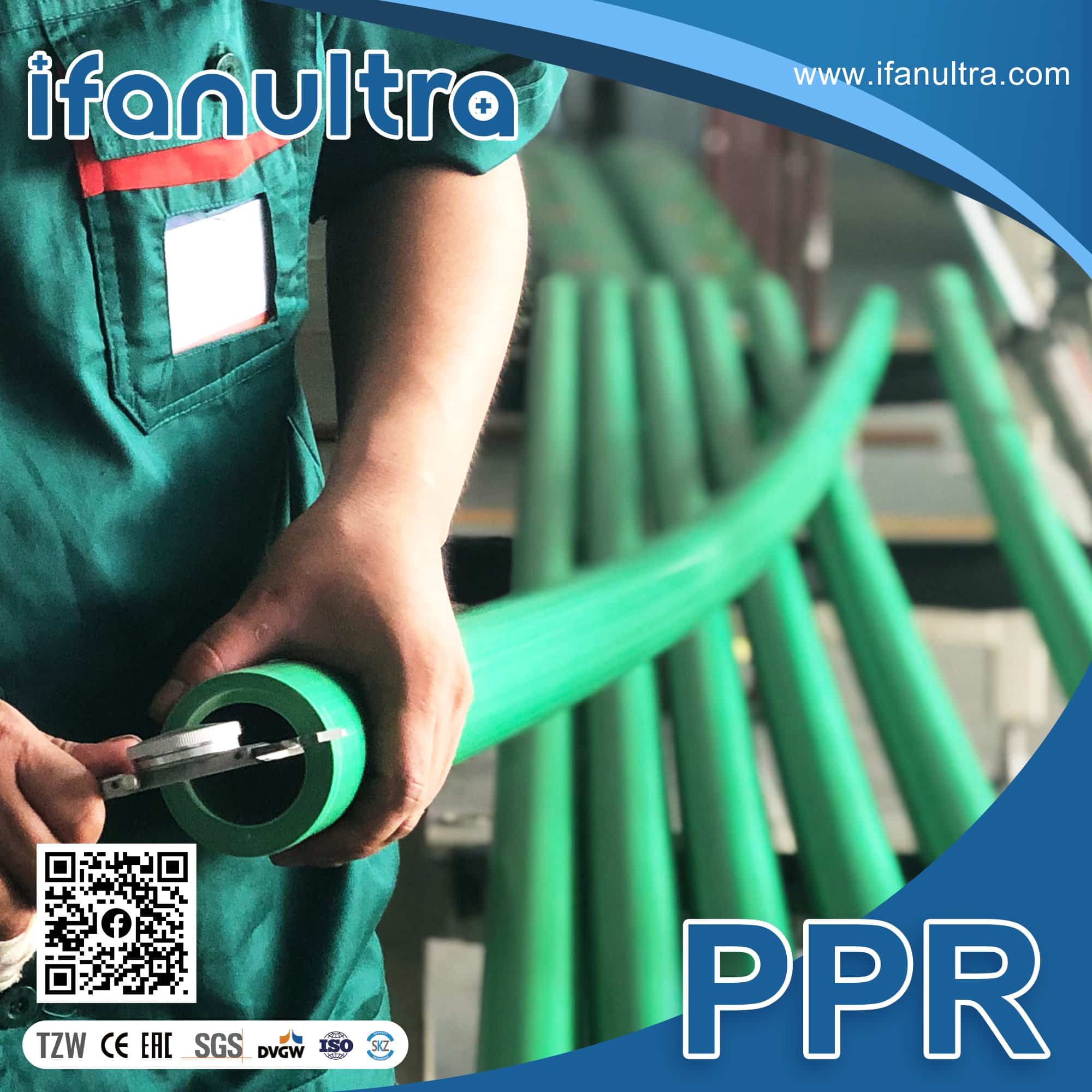
IFANULTRA is the PPR pipe and fittings brand of IFAN Group, drawing on 30-plus years of manufacturing on German automated production lines with virgin Nordic polypropylene — not recycled or filled resin. Across the PPR Global Series and PPR Quality Series we hold ISO 9001, SAI Global, SKZ, HY and NSF certifications, and we treat them as documents a buyer should be able to check, not badges on a homepage.
- ISO 9001 — our factory quality management system, the framework behind consistent wall thickness and batch-to-batch repeatability. It governs the plant; it is not a substitute for a product certificate.
- SAI Global — certification you can look up in the public register rather than take on faith.
- SKZ (Germany) — European product and process certification for our plastic piping, backed by the periodic factory audits that scheme requires.
- HY and NSF — additional and US potable-water evidence for products in contact with drinking water.
Because we are the manufacturer, our certificates name the plant that molds the pipe — not a trading company sitting between you and the factory. When you ask, we send the certificate number and issuing body so you can run the four checks above yourself. That is the point of a certificate: it should survive independent verification, and ours are built to.
Red flags that a PPR certificate is fake or worthless
A fake certificate rarely looks fake. It looks polished — the giveaways are in the details you can check. Any one of these should stop the deal until it is resolved.
- Mismatched names — the certificate holder is a trading company or a different entity than the factory on your contract and invoice.
- Expired or undated — no validity dates, or dates that have already lapsed. A certificate that was current when printed may be dead now.
- No traceable number — a scan with no certificate number and no named issuing body cannot be verified, which makes it worthless regardless of how it looks.
- Won’t resolve in the database — the number does not appear in the issuing body’s public listing, or resolves to a different product or company.
- ISO 9001 offered as product proof — a system certificate presented as if it certifies potable-water or pressure performance. It does not.
- Resistance to sharing details — a supplier who deflects when you ask for the number, the body, or a way to verify. Legitimate factories expect the question.
Conclusion
Certificates protect your container and your reputation, but only when you can trace them. Separate the factory’s ISO 9001 from the product certificates that customs and your buyers actually want, get the number and issuing body, confirm the certificate is current, and check it names the real manufacturer. A polished PDF that fails those checks is not evidence — it is a liability waiting at a border.
Requirements shift by market, so confirm current rules with a customs broker or the relevant authority before you order, then buy from a factory whose certificates already match. If you want traceable ISO 9001, SKZ and NSF documentation tied to the plant that molds your pipe, the IFANULTRA team can walk you through what we hold and how to verify it.
Frequently Asked Questions
Is PPR pipe certified, and what certification should I look for?
Quality PPR is certified against product standards like ISO 15874 and, for US drinking water, NSF/ANSI 61. Look for a product certificate, not just factory ISO 9001, and confirm the exact requirement for your destination market.
Does ISO 9001 mean the PPR pipe itself is compliant?
No. ISO 9001 certifies the factory’s quality management system, not the pipe’s pressure rating or potable-water safety. Those are covered by separate product certificates such as SKZ, NSF or conformity to ISO 15874.
How do I verify a PPR certificate is real?
Ask for the certificate number and issuing body, confirm the dates are current, check the holder is the actual manufacturer not a trading company, and look up the number in the body’s public database rather than trusting the scan.
What is ISO 15874 for PPR pipe?
ISO 15874 is the international standard for polypropylene (PP-R) hot and cold water piping systems, covering dimensions, pressure classes and performance. It is the product standard that European schemes and testing labs assess PPR pipe against.
Which PPR certifications do I need to import into my country?
It depends on the destination, the product’s use and your role in the chain. Drinking-water systems are the most regulated. Confirm current requirements with a customs broker or the relevant authority before ordering.
Written by the IFANULTRA team — a PPR pipe and fittings brand of IFAN Group, drawing on 30+ years of manufacturing experience, German automated production lines, and ISO 9001, SKZ and NSF certified PPR product lines.









 English
 Español
 Français
 Português do Brasil