
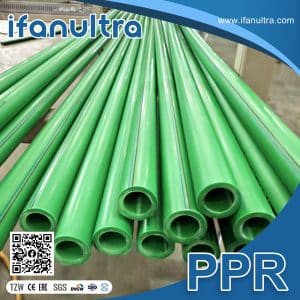
To cut PPR pipe you want a clean, square, burr-free end — that single detail decides whether the heat-fusion joint you make next holds for 50 years or weeps in its first season. A ratcheting pipe shear is the fastest tool for sizes up to about DN40; larger diameters take a rotary wheel cutter or a fine-tooth saw. The cut itself is quick; getting it square is the part that matters.
This guide covers the right tool for each diameter, the step-by-step method, and the mistakes that turn a bad cut into a leaking joint. Cutting is the prep step before fusion, so it pairs directly with the PPR installation guide; the material background is in the PPR pipe guide.
Key Takeaways
- A square, burr-free cut is what lets the pipe seat fully in the fusion socket — a skewed cut shortens the weld and starts a leak.
- Ratcheting PPR shears are fastest up to about DN40; use a rotary wheel cutter or fine-tooth saw above that.
- A dull blade ovalizes the pipe end — and an out-of-round end will not fuse evenly. Keep the blade sharp.
- After sawing, deburr the inside and outside edge and wipe away every shaving before fusion.
- Mark the socket insertion depth on the pipe right after cutting, so the fusion depth is set before the tool is even hot.
- Fiber-composite PPR cuts the same way; no separate peeling step is needed for standard socket fusion.
The Right Tool for the Diameter
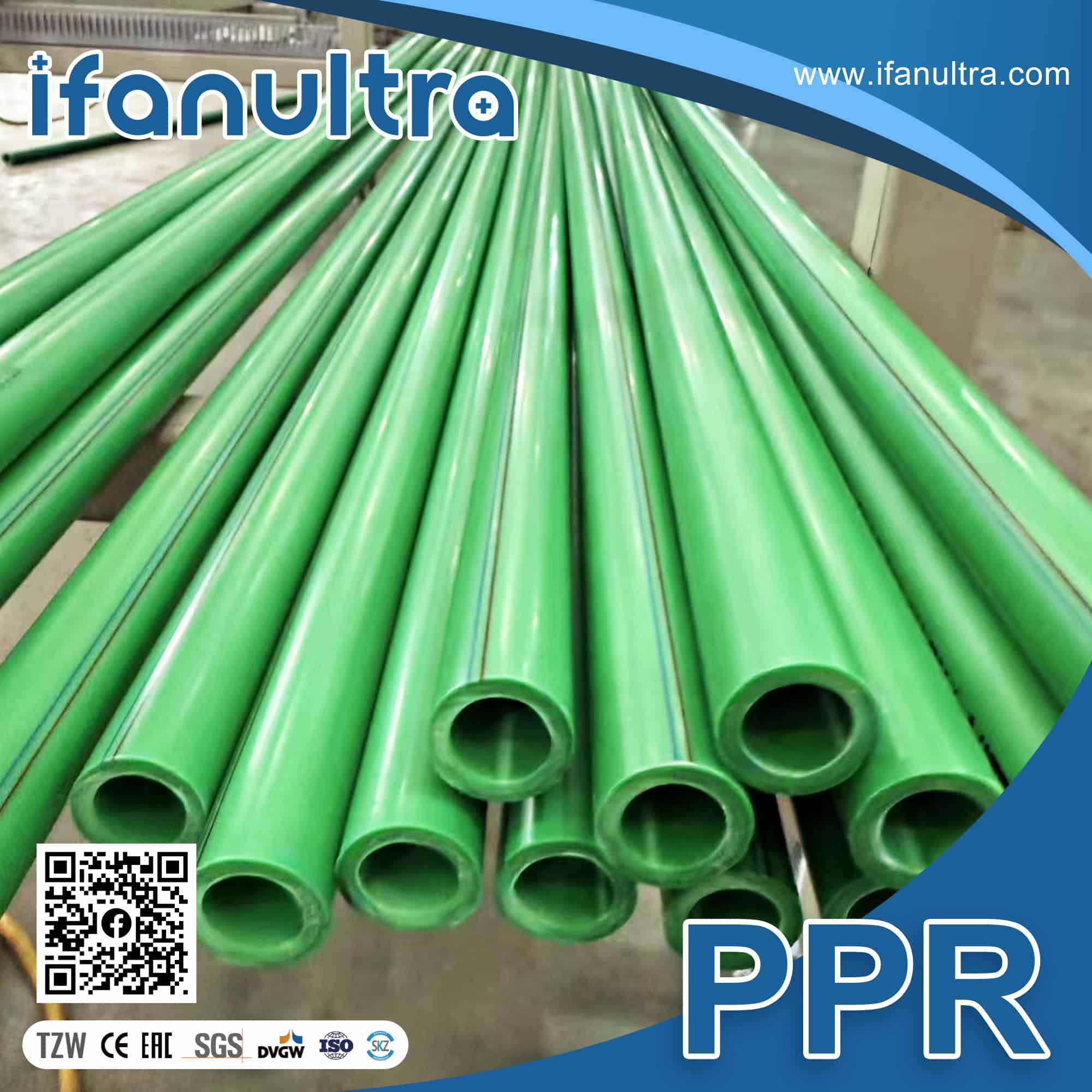
The tool choice follows the pipe size. On small and medium pipe a shear is faster and cleaner than a saw; on large pipe a shear cannot close, so you move to a wheel cutter or a saw and accept the extra deburring step.
| Tool | Best size | Cut quality |
|---|---|---|
| Ratcheting PPR shears | Up to ~DN40 | Clean, square, no swarf — the default |
| Rotary / wheel pipe cutter | DN20–DN63 | Square; slight inside lip to deburr |
| Fine-tooth hacksaw + mitre box | DN63 and up | Needs deburring; use the box to stay square |
| Powered chop / cold saw | Large diameter, high volume | Fast and square; deburr after |
Skip the utility knife and the angle grinder. A knife cannot cut square through wall thickness, and a grinder overheats the plastic and throws a ragged, melted edge that fuses badly.
How to Cut PPR Pipe: Step by Step
The sequence is short, and every step exists to protect the fusion joint that comes next.
- 1. Measure and add the socket depth: mark the run length, then add the fitting’s socket depth so the pipe reaches the bottom of the socket. Cutting to the visible length alone leaves the joint short.
- 2. Mark the cut line square: wrap a strip of paper around the pipe and line up the edges — the paper edge gives you a true 90° line to follow.
- 3. Cut in one steady action: with shears, ratchet straight down without twisting; with a wheel cutter, rotate evenly and tighten a little each turn; with a saw, let the mitre box keep it square.
- 4. Deburr and clean: take the inside and outside edge back to clean plastic and wipe off every shaving. A burr left inside restricts flow; a shaving on the surface contaminates the weld.
- 5. Mark the insertion depth: measure the fitting socket and mark that depth on the pipe, so during fusion you push to the line and no further.
Why a Square Cut Decides the Joint
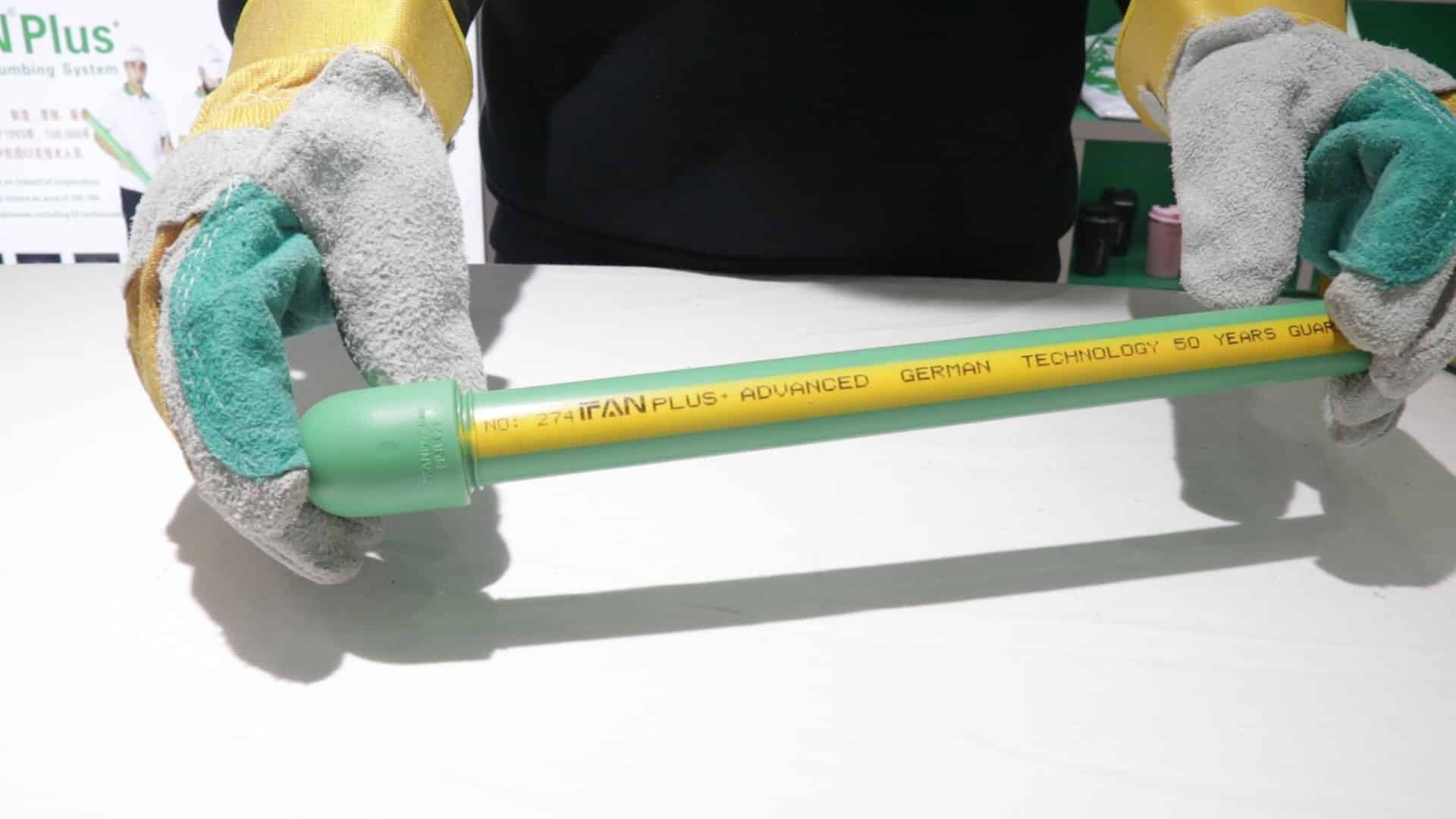
Socket fusion works by melting the outside of the pipe end and the inside of the fitting socket, then pushing them together so the two surfaces flow into one part. If the cut is angled, one side of the pipe seats deep while the other barely enters the melt zone — so half the joint has full weld depth and half has almost none. That half is where it leaks under pressure.
The same logic explains the dull-blade warning: a blunt shear crushes the end oval, and an oval pipe cannot make even contact all the way around the round socket. A sharp blade and a square line cost nothing and remove the two most common causes of a bad fusion weld.
Cutting Large-Diameter PPR
From DN63 upward, shears no longer close on the pipe, and the joint is usually made by butt fusion rather than a socket. The cut still has to be dead square, because butt fusion presses two flat faces together — any angle leaves a gap. Use a chop saw or a fine-tooth saw in a jig, then face the ends true before fusing. On a large hot-water main, remember the pipe also carries thermal-expansion load, so a clean square face at every joint is what keeps that load off the weld.
Common Cutting Mistakes
- Cutting to length, not to length plus socket depth: the run ends up short once the pipe bottoms in the fittings.
- Twisting the shears: a rotating cut tears rather than slices and leaves a ragged edge.
- Leaving swarf from a saw: a plastic shaving trapped in the melt zone becomes a leak path.
- Reusing a scored cutter wheel: it walks off the line and leaves a spiral rather than a clean circumferential cut.
What Happens After the Cut
A cut PPR end is not glued or threaded — it is heat-fused. Once the end is square, clean and marked to depth, it goes onto the fusion tool at about 260°C, then straight into the socket without twisting. That full sequence, with the heating and cooling times by diameter, is in the PPR installation guide, and the fittings that receive the cut end — sockets, elbows, tees — are covered in the pipe fittings guide. IFANULTRA supplies both the pipe and the matched fittings across the PPR product series, so cut ends meet sockets built to the same standard.
Conclusion
Cutting PPR is easy; cutting it square, clean and to the right length is what protects the fusion joint. Match the tool to the diameter, keep the blade sharp, deburr after sawing, and mark the insertion depth before the tool heats up.
With the end prepared this way, you can move straight to fusion knowing the joint will reach full weld depth all the way around. Review the installation guide for the fusion timings, and check the fitting range so every cut end has a matched socket to seat into.
Frequently Asked Questions
What is the best tool to cut PPR pipe?
Ratcheting PPR shears are best up to about DN40 — fast, square and no swarf. For DN63 and larger, use a rotary wheel cutter or a fine-tooth saw in a mitre box, then deburr the end.
Do you need to deburr PPR pipe after cutting?
Yes after sawing or wheel-cutting — take the inside and outside edge back to clean plastic and wipe off shavings. A clean shear cut usually needs no deburring, just a check that no swarf remains.
Can you cut PPR pipe with a hacksaw?
Yes, a fine-tooth hacksaw works, especially on larger diameters. Use a mitre box to keep the cut square, then deburr both edges and remove all swarf before heat fusion.
Why does a square cut matter on PPR pipe?
An angled cut seats deep on one side and shallow on the other, so half the fusion joint lacks full weld depth. That shallow side is where the joint leaks under pressure.
Written by the IFANULTRA team — a PPR pipe and fittings brand of IFAN Group, drawing on 30+ years of manufacturing experience, German automated production lines, and ISO 9001, SKZ and NSF certified PPR product lines.









 English
 Español
 Français
 Português do Brasil