
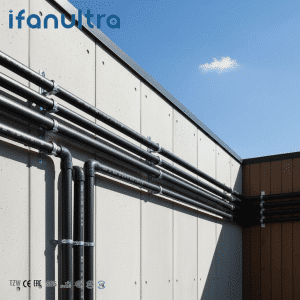
We received photos from a client in the Middle East showing their unprotected PPR pipes had become brittle and cracked after just two years. This costly failure perfectly illustrates why UV protection isn’t optional—it’s essential.
UV protection significantly extends the life of outdoor PPR pipes by blocking the sun’s high-energy ultraviolet rays from breaking down the polypropylene’s molecular chains. This protection prevents the material from becoming brittle, losing impact strength, and developing cracks, ensuring the pipe maintains its pressure rating and structural integrity for decades instead of just a few years.
Let’s examine the science and strategies behind effective UV stabilization to help you avoid expensive replacements.
What is the Chemical Mechanism of UV Absorbers in the PPR Matrix?
Many think pipes just “get old” in the sun. The real issue is a silent chemical attack that UV additives are designed to stop.
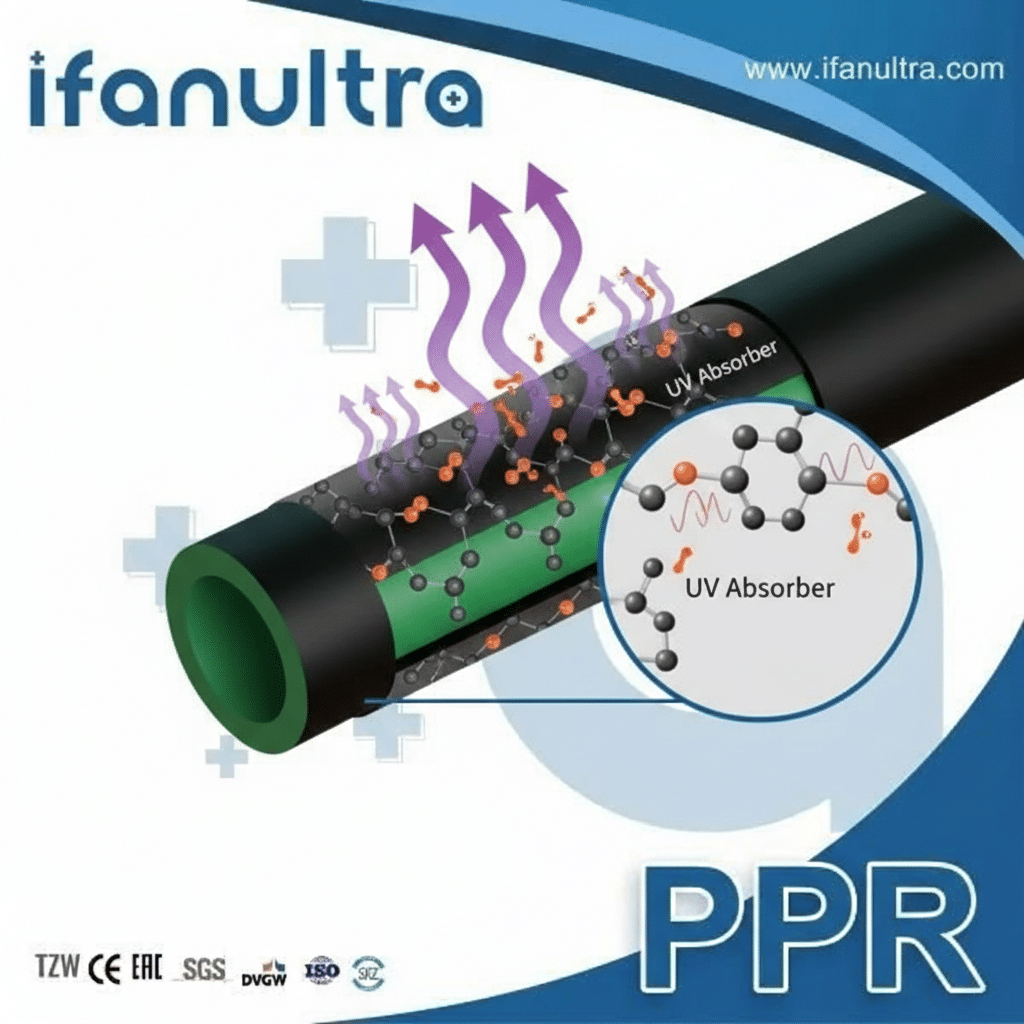
UV absorbers work by a chemical mechanism where they are added to the PPR compound and absorb harmful ultraviolet radiation. They then convert this damaging light energy into harmless, low-grade heat energy, which dissipates safely. This process sacrificially protects the polymer chains of the PPR from being broken apart by UV rays.
Understanding the Threat: UV Radiation
Sunlight contains ultraviolet (UV) radiation, which is high in energy. When these UV photons hit the molecules in standard PPR, they have enough energy to break the chemical bonds (carbon-hydrogen and carbon-carbon bonds) that hold the polymer chain together. This process is called photo-oxidative degradation.
Think of a PPR polymer chain like a long train. UV radiation acts like a wrecking ball that smashes the links between the cars. Once the chain breaks, it creates “free radicals”—highly reactive molecular fragments that then attack and break neighboring chains. This leads to a cascading failure, causing the material to lose its mechanical properties.
How Additives Intervene and Convert Energy
UV stabilizers are specially designed molecules mixed evenly throughout the PPR material during production. They act as a protective shield. Here is a simple step-by-step look at the mechanism:
- Absorption: The UV absorber molecule is structured to “soak up” the incoming UV photon’s energy far more efficiently than the PPR polymer itself.
- Transformation: The energized absorber molecule does not break apart. Instead, it undergoes a reversible internal change, converting the destructive UV energy into vibrational energy, which is essentially a tiny amount of heat.
- Release: The absorber molecule then releases this heat energy and returns to its stable state, ready to absorb another UV photon.
This cycle can repeat thousands of times, with one absorber molecule protecting a vast number of polymer chains around it. The key types of chemical absorbers used include:
- Hindered Amine Light Stabilizers (HALS): These are highly effective and work by a different, complementary mechanism to neutralize free radicals.
- Benzotriazoles and Benzophenones: These are traditional UV absorber chemicals that excel at converting UV light to heat.
The effectiveness depends on the type, concentration, and even distribution of these additives within the pipe wall. A low concentration or poor mixing will leave weak spots vulnerable to UV attack.
The Role of Material Formulation
You cannot simply coat a standard pipe; the protection must be integral. At IFAN, we compound the UV stabilizers directly into the raw PPR granules. This ensures a uniform protective network throughout the entire thickness of the pipe wall, not just on the surface. This integrated approach is crucial for long-term, reliable performance.
How Does Carbon Black or Other Pigments Enhance UV Protection?
A simple visual clue often indicates protection: black or dark-colored outdoor pipes. This color comes from a powerful, low-cost stabilizer.
Carbon black and other pigments enhance UV protection primarily by acting as a physical barrier. They absorb and scatter incoming UV radiation across a broad spectrum, preventing the light energy from penetrating and reaching the sensitive PPR polymer. This provides robust, long-lasting protection, especially when evenly dispersed at the correct concentration.
Carbon Black: The Classic Workhorse
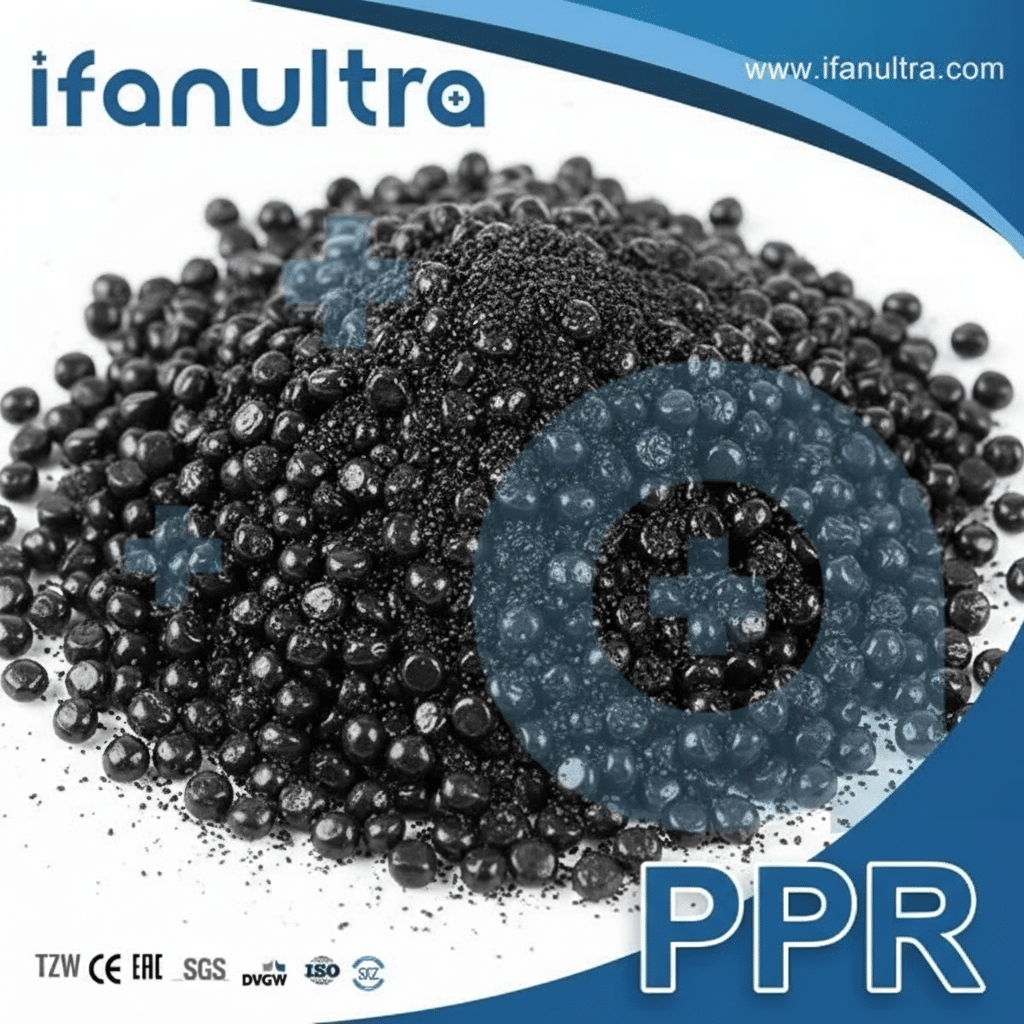
Carbon black is one of the most effective and economical UV stabilizers for polymers. It is essentially a very fine, highly pure form of soot. Its protection mechanism is straightforward but powerful:
- Absorption: Carbon black is an excellent broadband absorber. It takes in UV, visible, and even infrared light, converting it all to heat.
- Scattering: The tiny particles of carbon black also scatter incoming light, diffusing its energy.
- Free Radical Quenching: It can also help neutralize some of the damaging free radicals that may form.
The result is that UV radiation cannot penetrate more than a fraction of a millimeter into the pipe surface. The inner material remains completely shielded. For this reason, pipes containing a minimum of 2-3% well-dispersed carbon black are considered suitable for long-term outdoor use.
Other Protective Pigments and Colors
While carbon black is superior, other inorganic pigments also provide good UV protection by scattering and absorbing light. This allows for colored pipes that are still UV-resistant.
- Titanium Dioxide (White): This is a brilliant white pigment that strongly scatters light. It is very effective but can sometimes promote surface degradation if not of the right grade (rutile vs. anatase).
- Iron Oxides (Browns, Reds, Yellows): These earth pigments absorb specific wavelengths of light and provide moderate to good UV protection, often used in conjunction with other stabilizers.
It is critical to understand that not all colored pipes are UV-stable. Organic dyes and pigments used for bright colors (like blues or greens) often provide zero UV protection and may even degrade faster. Always verify the stabilization method.
Comparing UV Stabilization Methods
The table below summarizes the common approaches:
| Stabilization Method | How it Works | Advantages | Considerations |
|---|---|---|---|
| Carbon Black | Absorbs & scatters all light. | Very effective, low cost, permanent. | Only available in black. Can mask visual contamination in material. |
| Chemical UV Absorbers/HALS | Converts UV energy to heat. | Allows for natural or light-colored pipes. Integral protection. | Higher cost. Can migrate out over very long periods. |
| Protective Pigments (TiO2, FeOx) | Scatters and absorbs light. | Allows for colored pipes. Good stability. | May be less effective than carbon black; requires correct pigment grade. |
| Surface Coating | Forms a physical barrier layer. | Can be applied to finished pipes. | Can be scratched, abraded, or degrade, exposing raw material underneath. |
For maximum lifetime, many premium solutions, like those from IFAN, use a synergistic combination of carbon black or pigments plus chemical absorbers/HALS. This multi-layer defense provides the highest level of security against UV degradation.
Why Does Surface Protection Prevent Deep-Seated Material Degradation?
A common mistake is to think surface cracks are just cosmetic. In reality, they are the gateway to total failure.
Surface protection prevents deep-seated degradation because UV damage always starts at the exposed surface. By stabilizing this outer layer—either with integral additives or a robust coating—you stop the chain-breaking reaction at its origin. This prevents the formation of micro-cracks that would allow oxygen and water to penetrate, accelerating degradation deeper into the wall.
The Chain Reaction Starts at the Surface
Photo-oxidation is a surface-initiated process. The UV photons from sunlight can only penetrate a short distance into the PPR material—typically less than 0.5 mm in an unprotected pipe. However, the damage they cause there is catastrophic.
When the polymer chains on the surface break, they create two problems:
- Embrittlement: The surface loses its flexibility and becomes brittle. You will see it chalk and become pale.
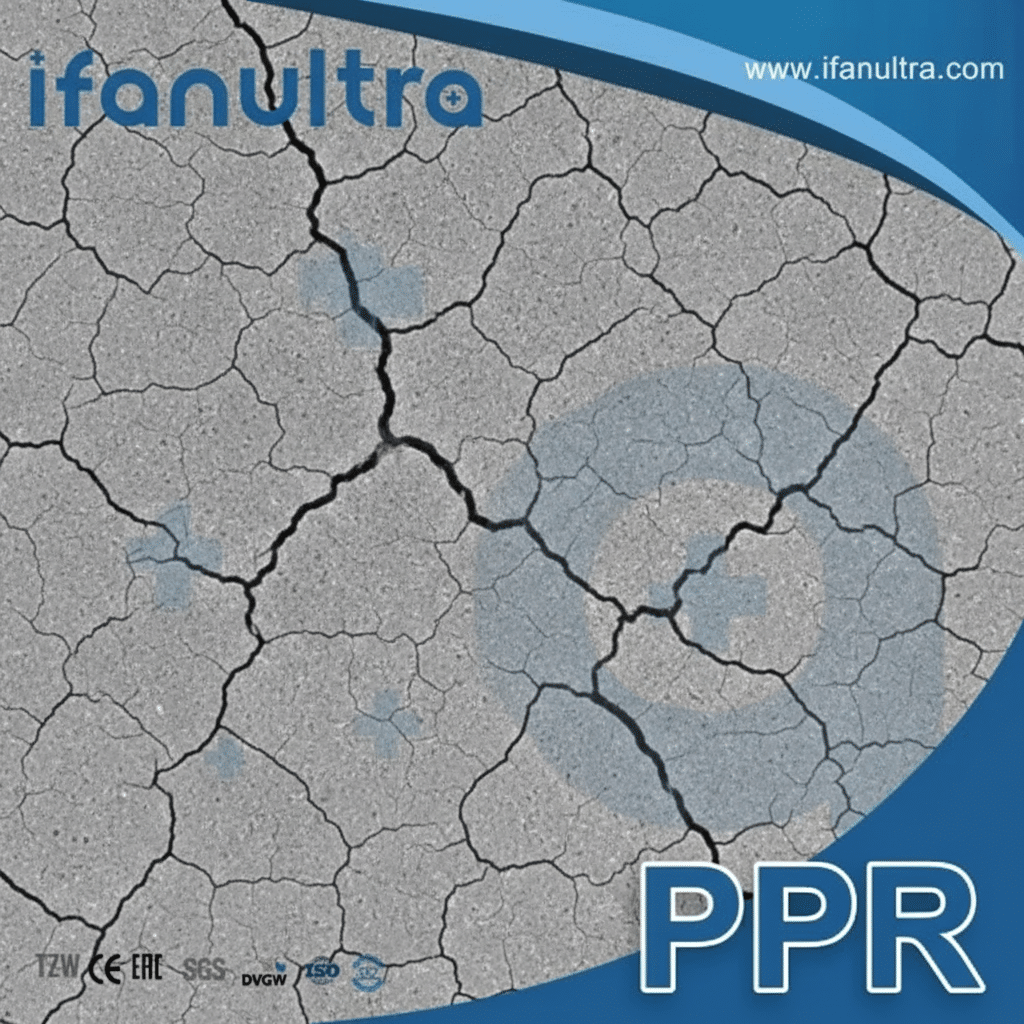
- Micro-Crack Formation: The brittle surface layer can no longer flex with the rest of the pipe. Temperature changes or minor impacts cause it to develop a network of microscopic cracks.
How Degradation Progresses Inwards
These micro-cracks are not just surface flaws. They act as channels for the real enemies: oxygen and water.
- Oxygen Ingress: The degradation process is called photo-oxidative degradation for a reason. Oxygen from the air is a key reactant that fuels the free radical chain reaction. Once micro-cracks form, oxygen can seep much deeper into the material than UV light alone could reach, spreading the degradation zone inward.
- Stress Concentration: The tips of these micro-cracks become points of high mechanical stress. When the pipe is under pressure or experiences thermal expansion, the cracks can propagate (grow) further into the wall, much like a small crack in a car windshield spreads.
This is why a pipe can appear superficially intact but suddenly fail under pressure—the structural integrity has been compromised from the outside in.
The Critical Role of Integral Stabilization
This progression explains why a simple paint or thin coating is often insufficient for long-term applications. If that coating chips, wears, or degrades, it exposes virgin, unstabilized PPR to direct UV attack. The degradation process begins immediately at that weak spot.
True protection requires integral stabilization. When UV absorbers and stabilizers are mixed throughout the entire wall thickness, the surface layer is inherently resistant. Even if the very outermost surface is slowly eroded by weathering over decades, the newly exposed material beneath it is also protected. This provides a deep reservoir of defense, ensuring the pipe’s core mechanical properties remain intact for its entire service life.
How Much Longer Can UV-Resistant PPR Last Compared to Unprotected Pipes?
Clients need a clear return on investment. The lifespan difference isn’t marginal; it’s the difference between a temporary fix and a permanent solution.
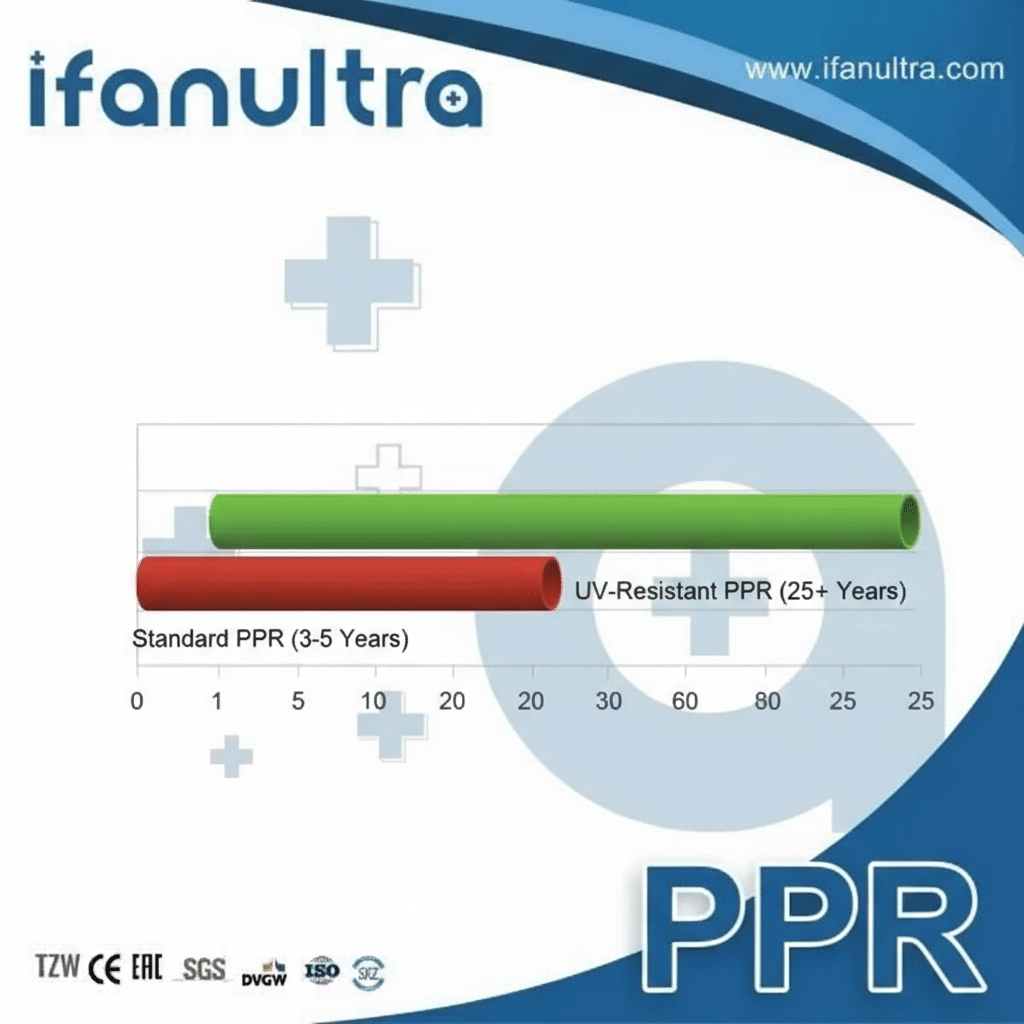
UV-resistant PPR pipes can last 5 to 10 times longer than unprotected pipes in direct sunlight. While standard PPR may become brittle and fail in 2-5 years, a properly stabilized UV-resistant PPR pipe can maintain its performance for 25 years or more, effectively matching its indoor lifespan.
Quantifying the Lifespan Gap
The difference is dramatic. Unprotected PPR is simply not designed for outdoor use. The intense, constant assault of UV radiation accelerates its aging process exponentially.
- Unprotected PPR Outdoors: Expect serious degradation to begin within 1-3 years in high-sunlight regions. The surface will chalk, lose gloss, and become brittle. Cracks and leaks can develop soon after, with a high likelihood of catastrophic failure before 5 years.
- UV-Resistant PPR Outdoors: A high-quality, integrally stabilized pipe is engineered for this environment. It will maintain its impact strength, pressure rating, and flexibility. Its service life is typically rated for 25+ years of continuous outdoor exposure.
Factors That Influence Exact Longevity
The exact multiplier depends on several environmental and product quality factors:
- Geographic Solar Intensity: Pipes in the Sahara Desert will degrade faster than those in Scandinavia.
- Stabilizer Type and Concentration: Pipes with only a minimal amount of carbon black may last 10-15 years, while those with a synergistic blend of carbon black and HALS can exceed 25 years.
- Installation Conditions: Pipes installed in direct, southern exposure versus partial shade will have different lifespans.
Cost-Benefit Analysis Over Time
The initial cost of UV-resistant pipe is higher than standard pipe. However, the total cost of ownership is vastly lower. Consider this comparison for a small outdoor project:
| Cost Factor | Unprotected PPR Pipe | UV-Resistant PPR Pipe |
|---|---|---|
| Initial Material Cost | $100 | $150 |
| Installation Labor (First Time) | $200 | $200 |
| Time to First Failure | 3 years | 25+ years |
| Replacement Material + Labor (Year 3) | $300 | $0 |
| Total 25-Year Cost | $600+ (Multiple replacements) | $350 (One installation) |
Beyond direct costs, consider the intangible costs of system failure: water damage, service interruption, and reputational harm for a contractor. Using UV-resistant pipe from the start eliminates these risks.
How to Verify and Ensure Longevity
To get the promised lifespan, you must:
- Specify Correctly: Demand pipes certified for outdoor use (look for standards mentioning UV resistance or “Class UV”).
- Choose a Reputable Supplier: Ensure the manufacturer uses consistent, high-quality stabilization. IFAN’s outdoor PPR pipes are compounded with premium stabilizers to guarantee performance.
- Follow Installation Guidelines: Even protected pipes benefit from some shielding where possible.
Conclusion
UV protection is a vital investment that extends outdoor PPR pipe life from just a few years to decades. For guaranteed, long-term performance, choose IFAN’s UV-stabilized PPR pipe systems for your outdoor projects.









 English
 Español
 Français
 Português do Brasil