
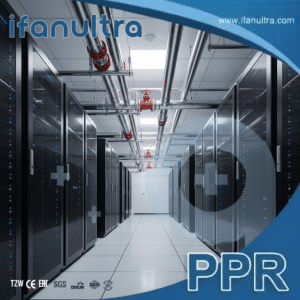
During a visit to a major data hub, I saw a single pipe leak trigger a costly shutdown. This moment cemented my view that in data centers, the cooling pipes are as critical as the servers they protect.
Modern data center cooling systems primarily use chilled water piping made from corrosion-resistant materials like CPVC, PP-R, or specialized steels. These are often installed as pre-insulated and modular systems to maximize energy efficiency, ensure leak-proof reliability, allow for rapid scaling, and maintain compatibility with water treatment chemicals essential for system longevity.
The choice of piping is a strategic engineering decision, not just a plumbing task. Let’s explore the key solutions and the reasoning behind them.
Why Are Leak-Proof Reliability and Thermal Properties Paramount for Critical Cooling?
A leak over a server rack is a disaster. I’ve analyzed failures where poor piping choices led to millions in damage and downtime.
Leak-proof reliability and superior thermal properties are paramount because water leakage directly risks catastrophic IT equipment failure and downtime, while poor thermal conductivity leads to energy waste and inadequate cooling capacity. The system must operate continuously for decades without failure, making material integrity and joint security non-negotiable.
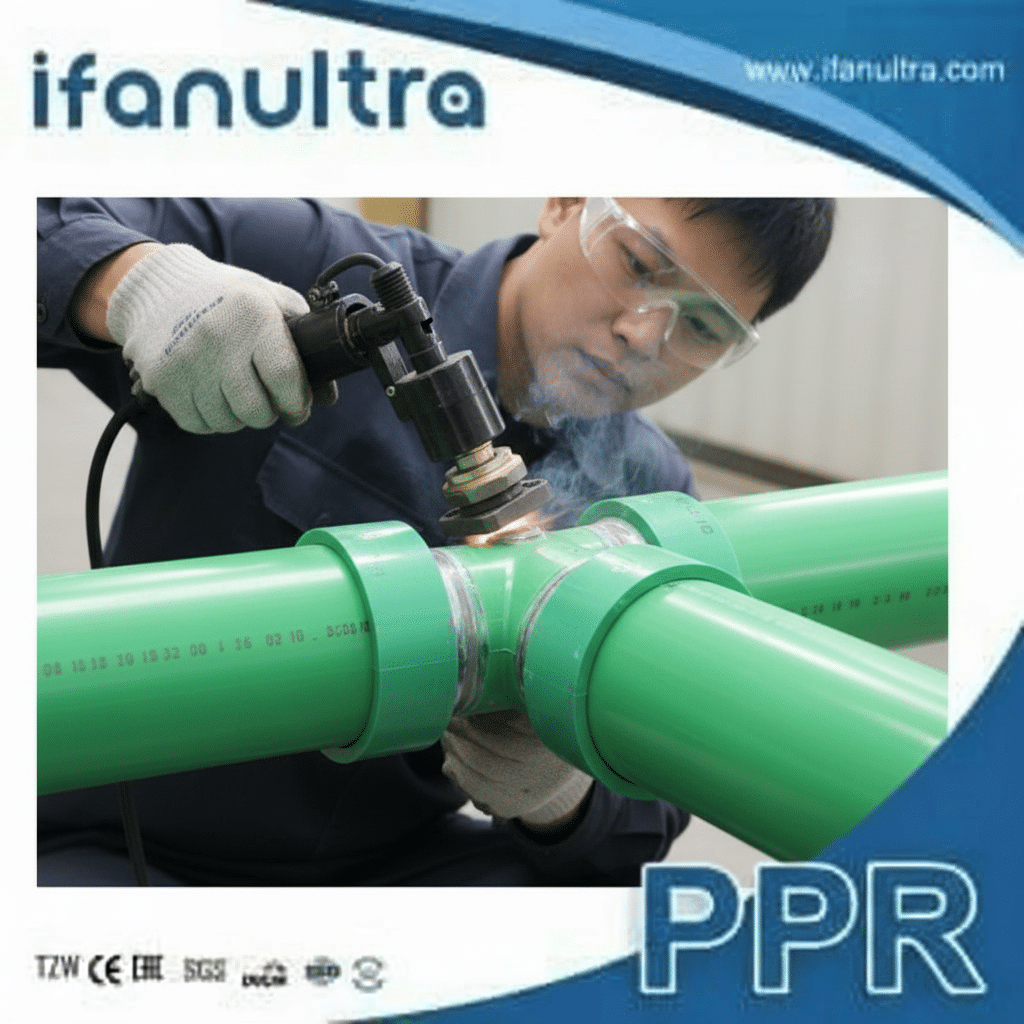
The High Cost of Failure
In a data center, cooling is not a comfort feature; it is a life-support system. The stakes for the piping are exceptionally high.
First, consider the consequence of a leak. Water and high-voltage electronics are a catastrophic mix. Even a small drip can short-circuit servers, destroy network hardware, and trigger facility-wide outages. The cost is not just repair; it’s per-minute downtime penalties, data loss, and permanent reputational damage. Therefore, every joint, valve, and fitting must be designed for zero failure over a 20-30 year lifespan.
Second, thermal properties dictate efficiency and capacity. The pipes must transport cold water with minimal heat gain from the environment. If the pipe material itself conducts heat easily (like standard steel), the chilled water warms up before reaching the servers. This forces the chillers to work harder and consume more electricity to maintain the required temperature. In a 24/7 operation, this inefficiency translates to massive, ongoing energy costs.
Key Requirements for Cooling Pipes
To meet these demands, cooling piping must fulfill several strict requirements:
- Perfect Joint Integrity: The method of joining pipes must be more reliable than traditional threading or flanging. Heat-fusion methods for plastics (like PP-R) create monolithic, leak-free joints that are as strong as the pipe itself.
- Material Durability: Pipes must resist internal corrosion from treated water and external corrosion from the environment. This eliminates the risk of pinhole leaks developing over time.
- Low Thermal Conductivity: The pipe material should act as a natural insulator. Plastics like CPVC and PP-R have inherently low thermal conductivity, reducing “coolth loss” as water travels long distances through the facility.
The table below contrasts the impact of different pipe attributes on data center operations:
| Pipe Attribute | Consequence of Failure | Ideal Characteristic |
|---|---|---|
| Joint Reliability | Leak causes equipment damage & downtime. | Heat-fused or welded joints with zero leakage risk. |
| Material Corrosion Resistance | Pinhole leaks develop, requiring shutdowns for repair. | Non-corrosive materials like CPVC, PP-R, or stainless steel. |
| Thermal Conductivity | High energy loss, increased operational costs, reduced cooling capacity. | Low conductivity material to preserve water temperature. |
| Long-Term Stability | Material degrades, leading to sudden system failure. | High-quality, virgin materials with 25+ year life expectancy. |
In short, the piping must be as reliable and efficient as the infrastructure it supports. There is no room for compromise.
How Do Pre-Insulated Piping Systems Minimize Thermal Loss and Condensation Risk?
Walking through a data center’s mechanical space, you see a maze of pipes. Uninsulated pipes there would be dripping with condensation and wasting huge amounts of energy.
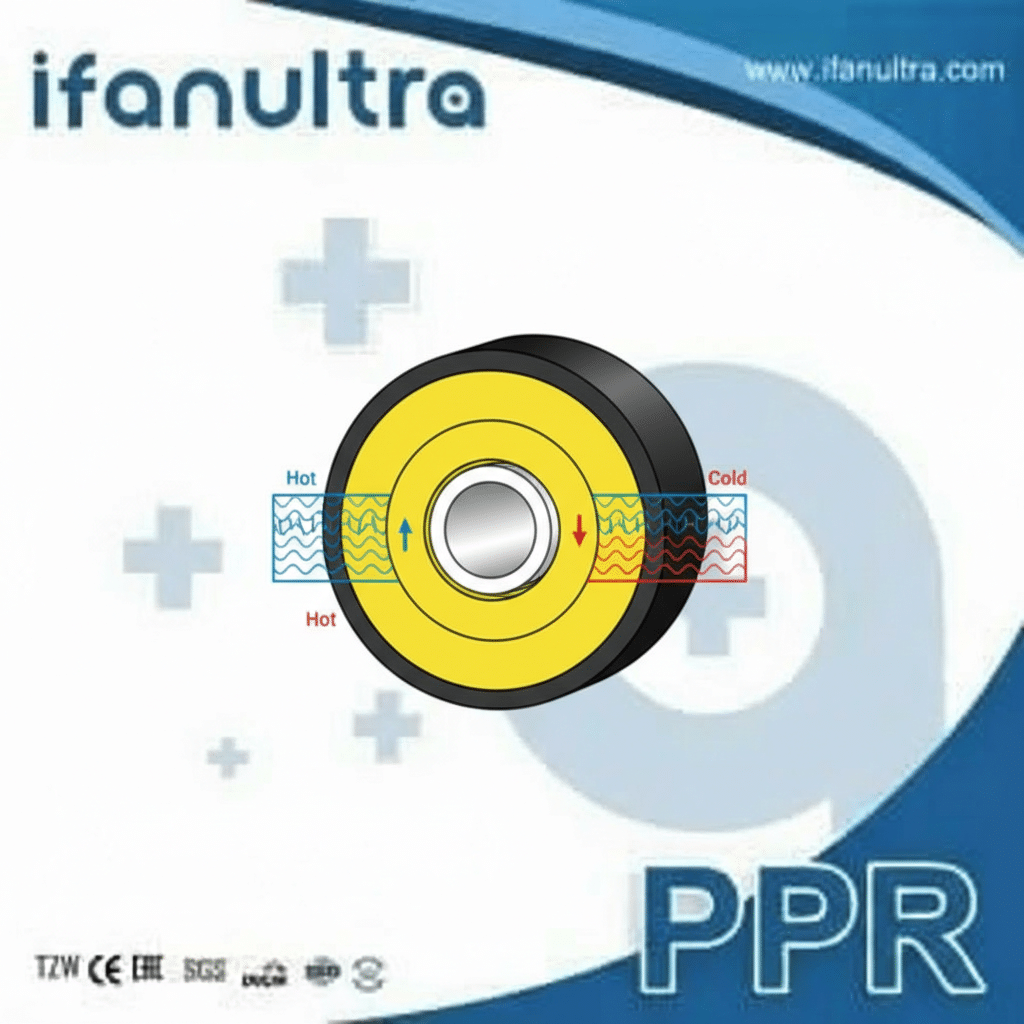
Pre-insulated piping systems minimize thermal loss by surrounding the carrier pipe with a uniform layer of rigid foam insulation inside a protective outer jacket. This continuous insulation maintains chilled water temperature, reduces chiller workload, and keeps the pipe surface above the dew point to prevent condensation drip, which is a major risk to electrical systems.
The Science of Preventing Condensation
Condensation occurs when a cold surface (like a chilled water pipe) cools the surrounding air below its dew point. When this happens, moisture in the air turns into liquid water on the pipe surface. In a data center, this dripping water is a severe threat.
Pre-insulated pipes solve this problem completely. The insulation layer acts as a barrier. It significantly slows the transfer of heat from the warmer room air to the cold pipe inside. As a result, the outer surface of the insulation jacket stays much closer to room temperature. Because it is not cold enough to drop the adjacent air below its dew point, condensation does not form.
Components and Benefits of a Pre-Insulated System
A typical pre-insulated system has three main parts:
- Carrier Pipe: The inner pipe (often CPVC or PP-R) that carries the chilled water.
- Insulation Layer: A thick sleeve of closed-cell foam (like polyurethane) bonded to the carrier pipe.
- Protective Jacket: A durable outer casing, usually made of PVC or HDPE, that protects the insulation from physical damage and moisture.
The benefits for data centers are direct and significant:
- Energy Savings: By minimizing heat gain, the chilled water arrives at the server cooling units (like CRACs) at the designed temperature. This allows the chillers to operate efficiently at their optimal set point, cutting electricity consumption.
- Eliminated Condensation Risk: No dripping water means no risk of short circuits or corrosion on nearby equipment and structures.
- Faster, Cleaner Installation: Pre-insulated pipes arrive on-site ready to install. Workers don’t need to handle messy fiberglass or foam insulation on-site, which improves installation quality and speed.
- Long-Term Performance: The factory-applied insulation is consistent and protected from damage, unlike field-applied insulation which can have gaps or deteriorate.
Choosing the Right Insulation Thickness
The required insulation thickness is not random. Engineers calculate it based on:
- Chilled water temperature
- Ambient temperature and humidity in the mechanical space
- Desired energy efficiency level
Using insufficient insulation can still lead to condensation and energy loss. Therefore, selecting a pre-insulated system with the correctly specified thickness for the local climate and operating conditions is crucial.
What Role Does Modular Piping Play in Facilitating Rapid Deployment and Scaling?
Data centers grow in phases. Waiting months for traditional pipe welding and insulation on-site is not an option in a fast-paced deployment schedule.
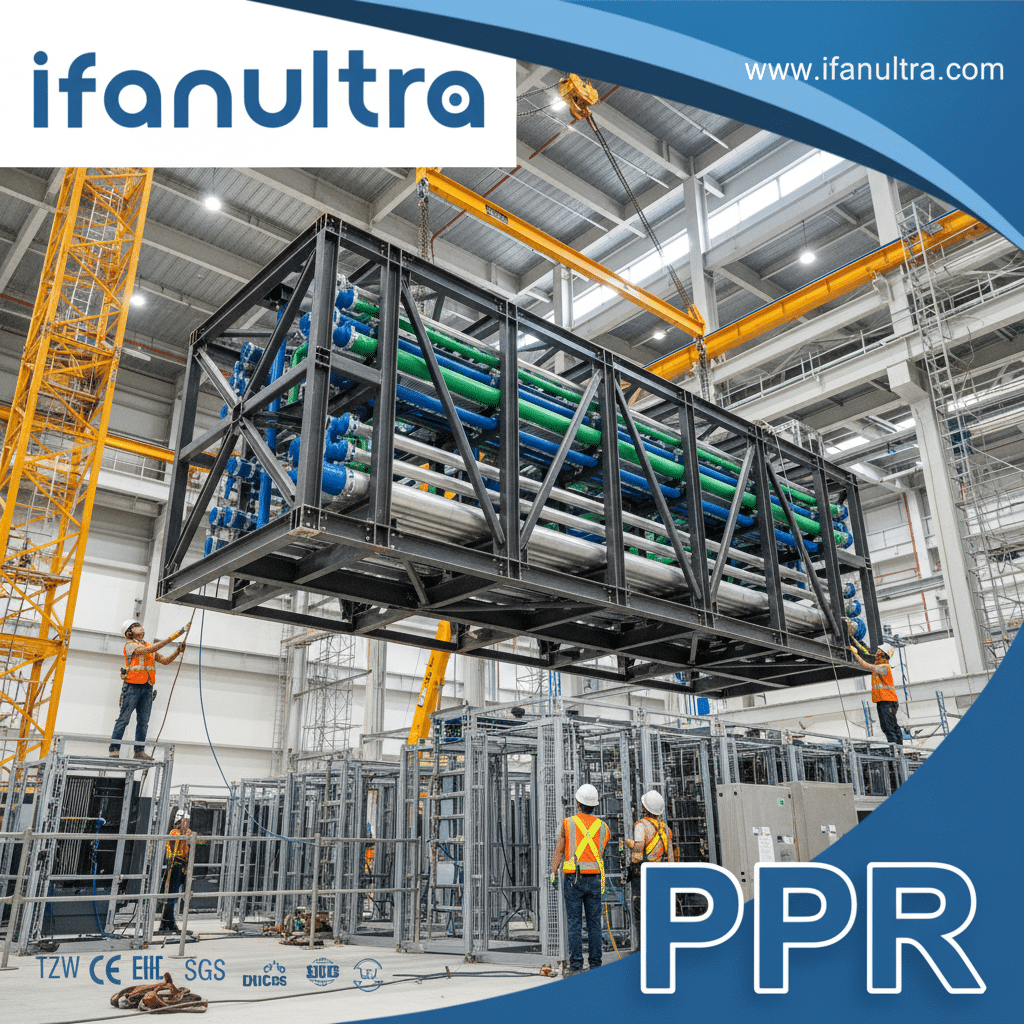
Modular piping, or prefabricated pre-insulated pipe racks (PFRs), facilitate rapid deployment and scaling by allowing entire piping sections—with supports, valves, and instruments—to be manufactured off-site in controlled factories. These modules are then quickly assembled on-site like Lego blocks, drastically cutting installation time, improving quality control, and enabling predictable, repeatable expansion.
The Traditional vs. Modular Approach
Traditional on-site piping is a linear, slow process: measure, cut, weld/join, support, insulate, test. It is subject to weather delays, site congestion, and quality variations depending on crew skill.
Modular piping turns this process on its head. The complex work shifts to a factory environment. Here, skilled technicians use digital designs (BIM models) to build complete pipe racks on frames. They perform all welding, assembly, and even preliminary testing in ideal conditions. The result is a series of numbered, ready-to-install modules.
Key Advantages for Data Center Projects
The benefits for data center construction and expansion are transformative:
1. Unmatched Speed: On-site work reduces to setting foundations, placing pre-built modules, and making a few final connections. This can reduce mechanical installation time by 50-70%, accelerating the overall project timeline and allowing the data center to become operational faster.
2. Superior Quality and Safety: Factory fabrication ensures perfect weld quality in a controlled setting. Precision machining leads to perfect alignment. This results in a more reliable system with fewer leaks. It also minimizes dangerous hot work (welding, cutting) on the congested construction site, improving safety.
3. Predictable Scaling and Future-Proofing: When it’s time to expand, engineers can design new modular skids that interface neatly with the existing system. This makes capacity planning and execution predictable and less disruptive to ongoing operations.
4. Reduced On-Site Waste and Cost: Prefabrication optimizes material use, minimizing scrap. It also reduces the need for large, skilled labor crews on-site for long periods, helping control project costs.
The following table summarizes the impact of modular piping on key project metrics:
| Project Metric | Traditional On-Site Piping | Modular Prefabricated Piping |
|---|---|---|
| Installation Time | Long, sequential, weather-dependent. | Very short, parallel assembly, predictable schedule. |
| Contrôle de la qualité | Varies with crew skill and site conditions. | Consistent, high-quality in a controlled factory. |
| Site Labor & Safety | Large crews, significant hot work, higher risk. | Smaller crews, minimal hot work, safer environment. |
| Scalability for Future Phases | Disruptive, requires new complex on-site work. | Planned, with new modules designed to plug in. |
For a data center operator, modular piping is not just a plumbing choice; it’s a strategic tool for business agility and risk reduction.
How Are Materials Selected to Ensure Compatibility with Water Treatment Chemicals?
The water inside cooling pipes is never just “plain water.” I’ve seen incompatible pipes soften and fail within a year because the chemical treatment was not considered.
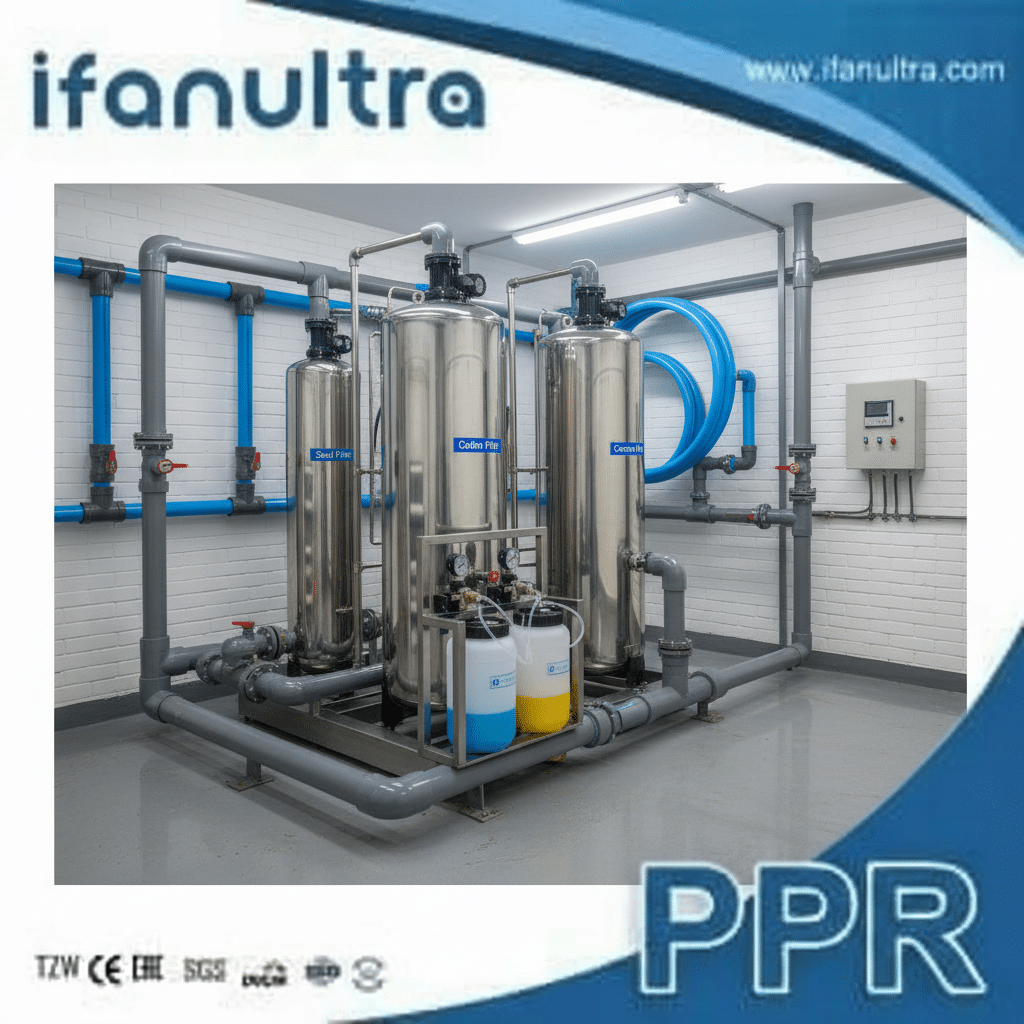
Materials are selected for chemical compatibility by testing pipe and seal materials against the specific water treatment regimen—including biocides, corrosion inhibitors, and scale preventatives—to ensure no degradation, swelling, or leaching occurs over decades. This selection process prevents pipe failure and maintains water treatment efficacy.
The Purpose of Water Treatment
Data center cooling water is a treated chemical solution for good reason. Stagnant, warm water is a breeding ground for microbes like Legionella. Untreated water also corrodes metal and deposits scale (mineral buildup) on heat exchangers, drastically reducing efficiency.
Therefore, facility managers add chemicals to:
- Inhibit Corrosion: Protect metal components in chillers, pumps, and valves.
- Prevent Scale: Keep minerals dissolved so they don’t coat heat transfer surfaces.
- Control Biological Growth: Kill bacteria, algae, and fungi (biofouling).
The Compatibility Challenge
These very chemicals that protect the system can attack the wrong pipe material. For example, some oxidizing biocides can degrade certain types of plastics over time, making them brittle. Other chemicals can cause elastomer seals (O-rings, gaskets) to swell, soften, or disintegrate, leading to leaks.
Material selection, therefore, is a balancing act. The pipe must be inert to the treatment chemicals while still possessing the necessary mechanical strength, thermal properties, and jointability.
Common Materials and Their Chemical Resilience
Here is how common piping materials perform:
- CPVC (Chlorinated Polyvinyl Chloride): Excellent chemical resistance to a wide range of acids, bases, salts, and halogens. It is a top choice for systems using oxidizing biocides. Its temperature limit is suitable for most chilled water applications.
- PP-R (Polypropylene Random Copolymer): Highly resistant to a broad spectrum of chemicals, including many aggressive solutions. It is generally inert and does not corrode. It is a robust all-rounder for treated water systems.
- Stainless Steel: Excellent for mechanical strength and high temperatures. However, it requires careful management of chloride levels in the water to avoid stress corrosion cracking. The water treatment program must be specifically designed for it.
- Carbon Steel (with Lining): Often used for large mains, but it must be lined with epoxy or cement-mortar to protect it from both corrosion and the chemicals themselves.
The Critical Role of Seals and Gaskets
The pipes themselves might be compatible, but the seals are often the weak link. EPDM rubber is a common, compatible seal material for many treatment programs. However, for specific aggressive chemistries, more resistant materials like Viton® may be required.
The only way to be certain is through compatibility testing. Reputable manufacturers like IFAN provide chemical resistance charts and can validate that their specific PP-R or CPVC compound, along with their EPDM seals, is compatible with your facility’s treatment chemicals. This step is a mandatory part of system design to ensure a 25-year service life without chemical-induced failure.
Conclusion
Choosing the right piping solutions—leak-proof, thermally efficient, modular, and chemically compatible—is fundamental to a data center’s reliability and efficiency. For solutions that meet all these demands, consider IFAN’s pre-insulated and modular PP-R piping systems engineered for critical cooling applications.









 English
 Español
 Français
 Português do Brasil