
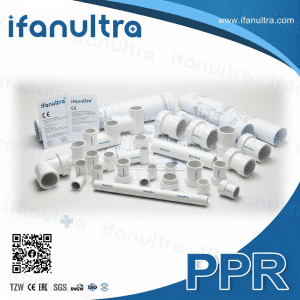
I once watched a container of perfectly good pipes get stuck at customs in Rotterdam. The reason? Missing PED certification. That costly lesson taught me the importance of understanding European regulations before shipping.
The Pressure Equipment Directive (PED) 2014/68/EU sets the legal requirements for designing, manufacturing, and placing pressure equipment on the European market. It applies to equipment with a maximum allowable pressure above 0.5 bar. To sell pressure pipes in Europe, manufacturers must comply with PED, which involves classification, conformity assessment, and ultimately affixing the CE mark.
Let’s break down exactly what this means for pipe fittings and how to navigate these requirements successfully.
Which Pressure Piping Products Fall Under the EU Pressure Equipment Directive?
Many suppliers assume their pipes are “just simple products” exempt from regulations. This assumption has caused countless shipments to be rejected at European borders.
Pressure piping products fall under PED if they are intended to contain fluids under pressure and have a maximum allowable pressure (PS) greater than 0.5 bar. This includes pipes, fittings, valves, and flanges used in systems like water supply, heating, industrial processes, and gas distribution. The directive covers both metallic and non-metallic (plastic) piping components.
Understanding the Scope of PED
The Pressure Equipment Directive has a broad scope. It covers a wide range of products that many manufacturers might not initially consider as “pressure equipment.” Let’s clarify what falls under its jurisdiction.
1. Pipes and Tubes: Any pipe that carries a fluid (liquid or gas) under pressure is included. This means water pipes in a heating system, gas pipes in a commercial kitchen, or process pipes in a factory all fall under PED if the pressure exceeds 0.5 bar.
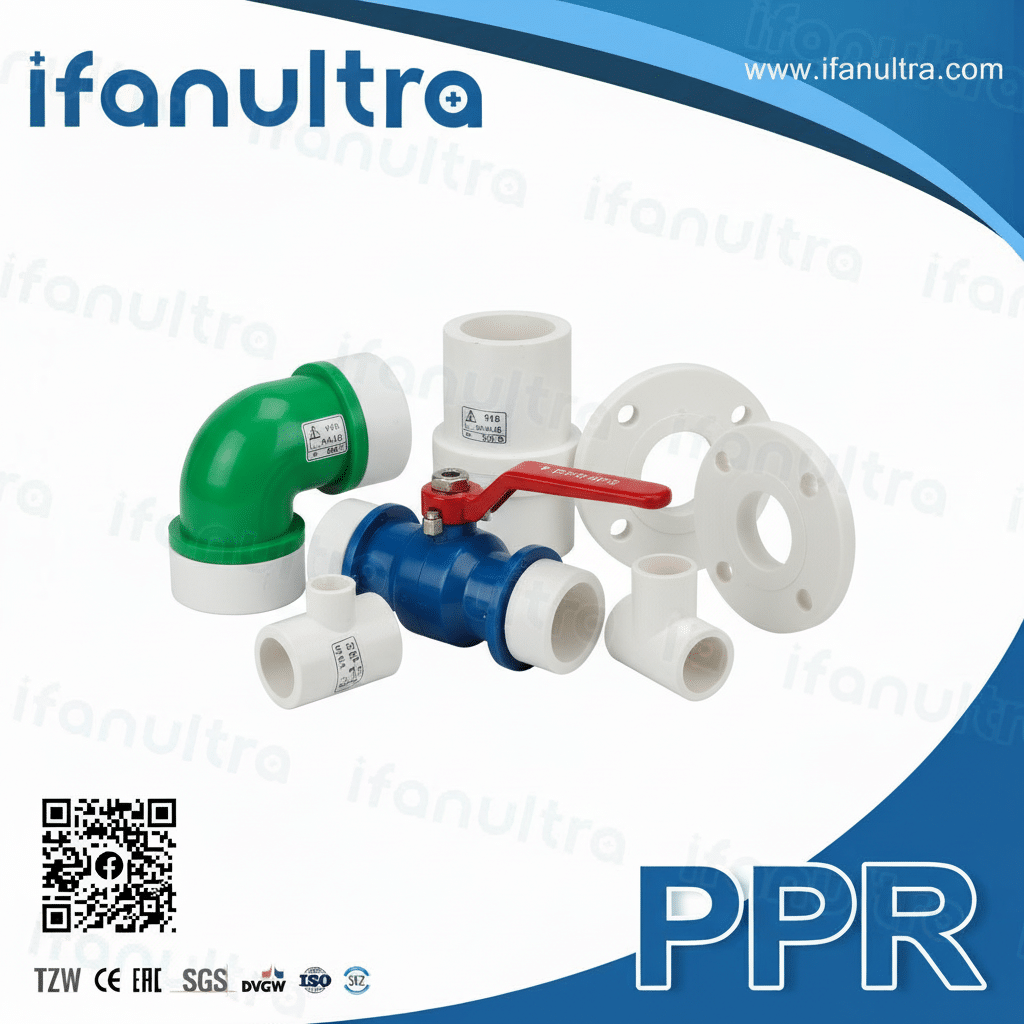
2. Fittings: Elbows, tees, reducers, couplings, and flanges are all considered pressure accessories. They form part of the pressure-containing envelope and must therefore meet the same safety standards as the pipes themselves.
3. Valves and Safety Accessories: Any device that controls flow or protects the system from overpressure is included. This category includes ball valves, safety valves, pressure relief devices, and control valves.
4. Assemblies: If you combine multiple pressure components into a single unit (like a skid-mounted pumping station), that entire assembly falls under PED requirements.
What About Plastic Pipes?
The table below shows which common plastic piping materials typically fall under PED:
| Matériau | Typical Applications | Falls Under PED? | Notes |
|---|---|---|---|
| PP-R (Polypropylene) | Hot/cold water, heating, industrial fluids | Yes, if PS > 0.5 bar | Most residential/commercial systems exceed 0.5 bar |
| PVC-U | Cold water, drainage, chemical transport | Yes, if pressurized | Non-pressurized drainage systems are exempt |
| PE (Polyethylene) | Gas distribution, water mains | Yes | Gas pipes have strict PED requirements |
| PVDF | High-purity industrial applications | Yes | Often used in chemical processing under PED |
Exemptions and Special Cases
Not every pipe needs PED certification. The directive specifically excludes:
- Equipment for transporting fluids through pipelines (covered by other regulations)
- Water supply and distribution networks for public use
- Simple pressure vessels (covered by separate directive)
- Equipment in military or nuclear applications
However, for most commercial and industrial piping used in buildings or facilities, PED applies.
How Are Piping Components Classified into PED Risk Categories?
Classification determines the level of scrutiny your product needs. Get this wrong, and you risk non-compliance or unnecessary testing costs.
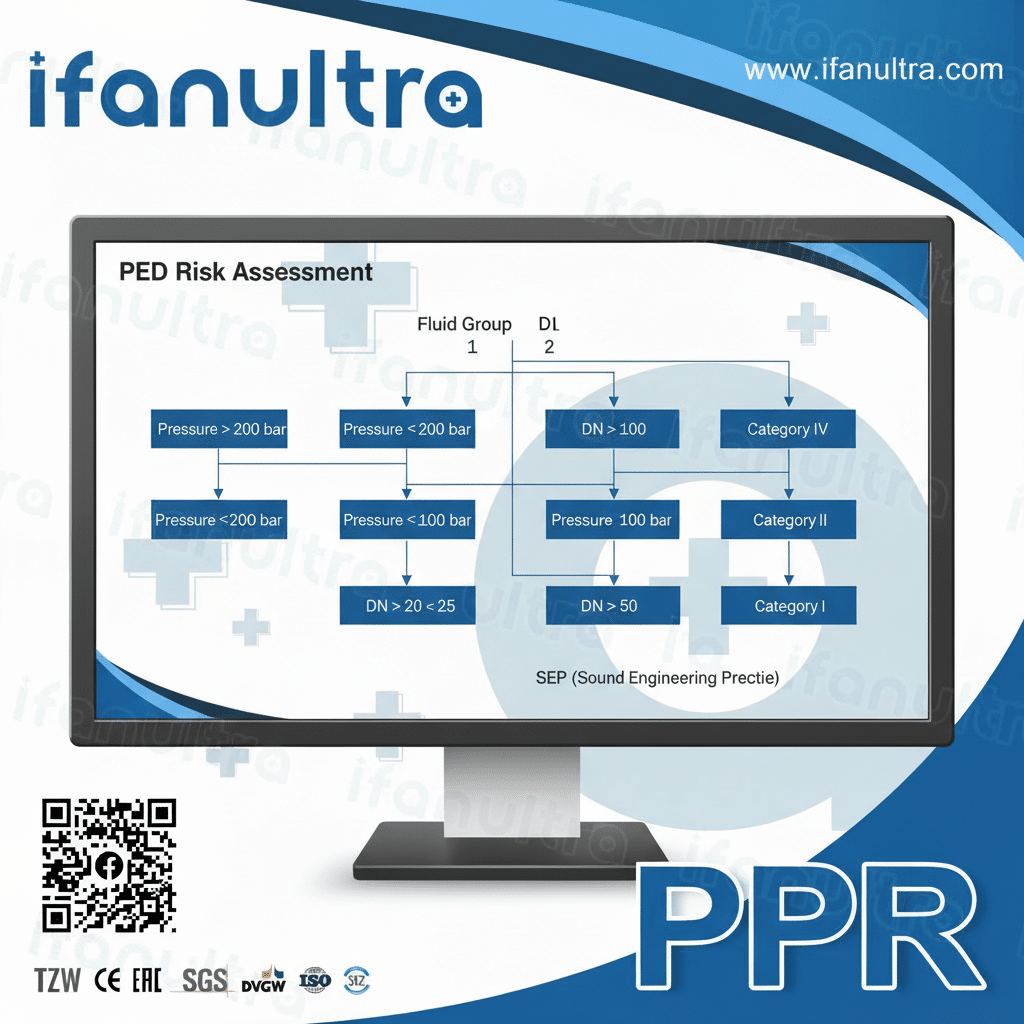
Piping components are classified into PED risk categories (SEP, I, II, III, and IV) based on three factors: the fluid group (1 or 2), the maximum allowable pressure (PS), and the nominal size (DN). Higher categories indicate greater risk and require more rigorous conformity assessment procedures, often involving a Notified Body.
The Three Classification Factors
Understanding how to classify your product is essential. Let’s look at each factor in detail.
1. Fluid Group: Fluids are divided into two groups under PED:
- Group 1: Dangerous fluids—explosive, extremely flammable, highly flammable, flammable (if maximum allowable temperature > flash point), toxic, or oxidizing.
- Group 2: All other fluids—including steam, hot water, compressed air, nitrogen, and non-toxic, non-flammable gases.
2. Maximum Allowable Pressure (PS): This is the highest pressure the equipment is designed to withstand. It’s measured in bar.
3. Nominal Size (DN): For pipes and fittings, DN represents the nominal diameter. Larger diameters generally mean higher potential energy release in case of failure, so they fall into higher risk categories.
PED provides specific charts (called “conformity assessment tables”) in Annex II. For pipes and fittings, you need to consult the relevant diagram based on fluid group.
For Group 2 Fluids (most common for water and air systems):
| Pressure (PS) x DN | Category |
|---|---|
| ≤ 1000 | SEP (Sound Engineering Practice) |
| > 1000 and ≤ 3500 | Category I |
| > 3500 and ≤ 50000 | Category II |
| > 50000 and ≤ 100000 | Category III |
| > 100000 | Category IV |
For Group 1 Fluids (dangerous substances), the thresholds are lower, meaning more products fall into higher categories.
Practical Example: PP-R Pipe Classification
Let’s walk through a real example using a typical PP-R pipe used in a commercial building:
- Product: 63mm PP-R pipe for hot water (80°C)
- Fluid: Water (Group 2)
- Maximum Pressure (PS): 16 bars
- Nominal Size (DN): 50 (approximately)
Calculation: PS x DN = 16 x 50 = 800
Since 800 is less than 1000, this pipe falls into Category SEP (Sound Engineering Practice). This means it must be designed and manufactured according to sound engineering practice but does not require involvement of a Notified Body for CE marking.
However, if the same pipe were larger:
- DN: 150
- Calculation: 16 x 150 = 2400
Now the product falls into Category I, requiring a specific conformity assessment module and Notified Body involvement.
Common Classification Mistakes
Based on IFAN’s experience helping clients, here are frequent errors:
| Mistake | Consequence |
|---|---|
| Ignoring fluid group classification | Using wrong category, potential safety risk |
| Using wrong DN value | Under-classification leads to non-compliance |
| Assuming all plastic pipes are low-risk | Some applications (gas, chemicals) require higher categories |
| Not updating classification after design changes | Modified products may fall into different categories |
Always verify your classification with technical documentation or consult a Notified Body if unsure.
What Conformity Assessment Procedures Are Required for Different PED Categories?
Once you know your category, the next question is: what do I actually need to do? The procedures vary significantly by category.
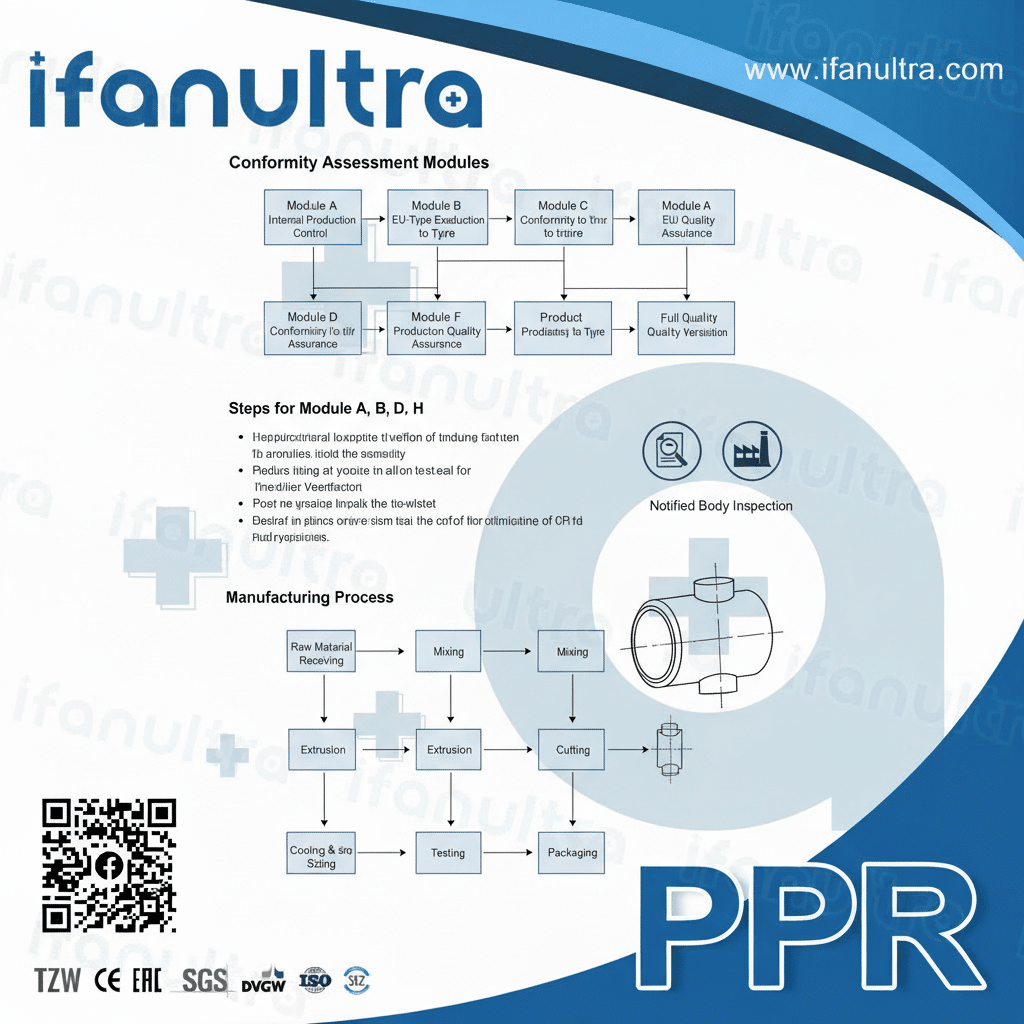
Conformity assessment procedures under PED range from internal production control (Category SEP) to full quality assurance with notified body involvement (Categories III and IV). For Categories I through IV, manufacturers must choose from specific “conformity assessment modules” that define the level of third-party inspection, testing, and documentation required.
Understanding Conformity Assessment Modules
PED uses a modular system for conformity assessment. Each module represents a different combination of manufacturer responsibilities and Notified Body involvement.
Common modules for piping products include:
| Module | Description | Typical Application |
|---|---|---|
| A | Internal production control | Category I (simple products) |
| A2 | Internal production control with supervised product checks | Category I (higher safety requirements) |
| B + C | EU-type examination + type conformity | Categories II, III |
| B + D | EU-type examination + production quality assurance | Categories II, III |
| B + F | EU-type examination + product verification | Categories III, IV |
| H | Full quality assurance | Categories III, IV |
Category-by-Category Requirements
Let’s break down what each category requires in practical terms.
Category SEP (Sound Engineering Practice):
- No Notified Body involvement required
- Must design and manufacture according to sound engineering practice
- Must prepare technical documentation
- Must affix CE marking (but cannot use Notified Body number)
- Declaration of conformity required
Category I:
- Choose Module A (internal production control) or A2
- Technical documentation must demonstrate compliance with Essential Safety Requirements
- For Module A2, product checks must be performed under certain conditions
- Notified Body may be involved for A2
Category II:
- Choose combination: Module B (EU-type examination) + appropriate production module (C, D, or E)
- Module B requires Notified Body to examine a representative sample
- Production modules determine ongoing surveillance level
Categories III and IV:
- Higher scrutiny required
- Module B + D, B + F, or Module H commonly used
- Notified Body involvement throughout design and production
- Regular audits and product testing required
The Technical Documentation Requirement
Regardless of category, all products require technical documentation. This file must include:
- General description of the product
- Design and manufacturing drawings and diagrams
- Material specifications and certificates
- Design calculations and stress analysis
- Test reports demonstrating compliance
- Risk assessment documentation
- Instructions for installation and use
A Practical Example: IFAN’s Approach
Based on our experience supplying PP-R fittings to European markets, here’s a typical pathway:
For a standard PP-R elbow (DN 50, 16 bar, water):
- Classification: Calculate PS x DN = 800 → Category SEP
- Actions Required:
- Maintain ISO 9001 quality system
- Prepare technical file with material certificates
- Perform routine production testing
- Issue Declaration of Conformity
- Affix CE mark (without Notified Body number)
For a larger industrial fitting (DN 200, 16 bar, water):
- Classification: 16 x 200 = 3200 → Category II
- Actions Required:
- Engage Notified Body for type examination (Module B)
- Implement production quality assurance (Module D)
- Submit to periodic Notified Body audits
- Maintain extensive technical documentation
- Affix CE mark with Notified Body identification number
Why Is CE Marking Under PED Essential for Selling Pressure Pipes in Europe?
Some suppliers try to avoid CE marking, hoping customs won’t check. This gamble almost always fails and costs more in the long run.
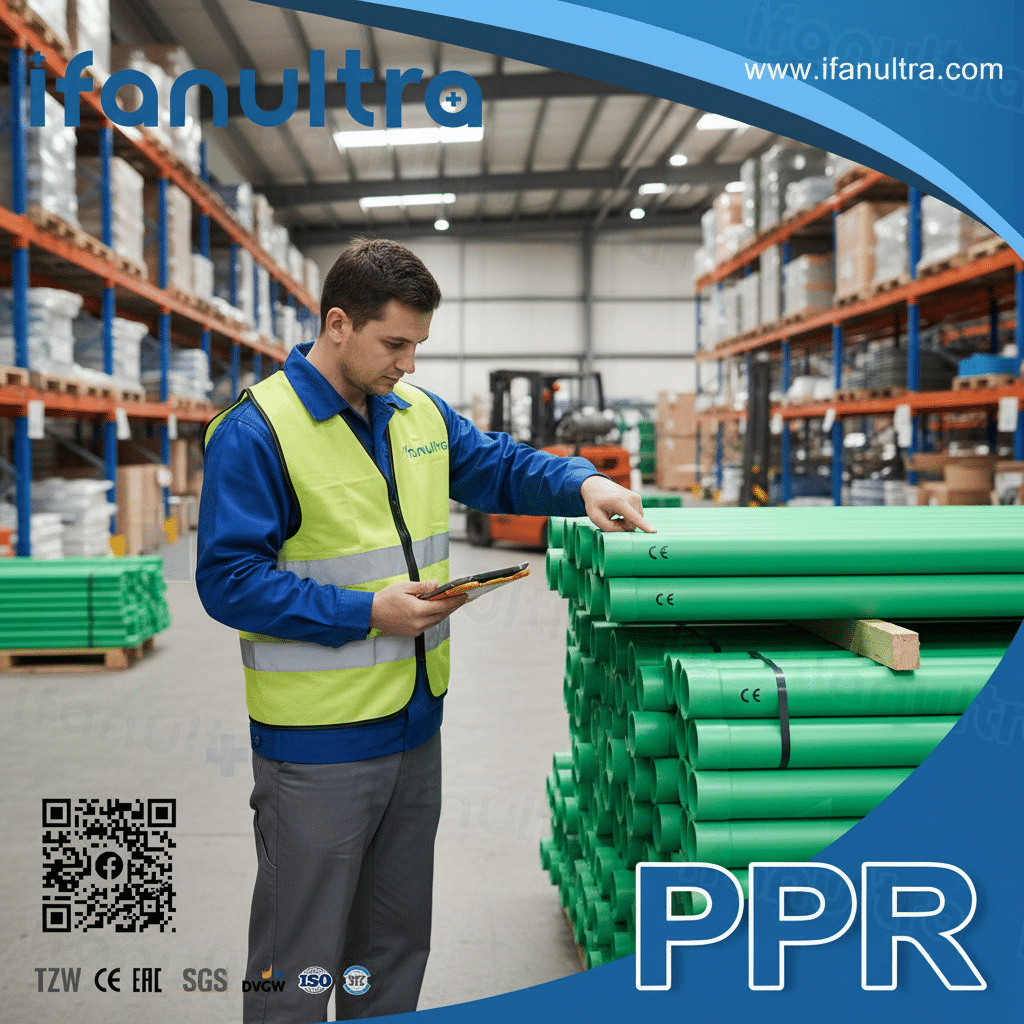
CE marking under PED is essential because it is a legal requirement for placing pressure equipment on the European market. Without CE marking, products cannot be legally sold or installed in EU member states. Beyond legality, CE marking demonstrates compliance with European safety standards, builds customer trust, and protects manufacturers from liability issues in case of failure.
The Legal Reality
CE marking is not optional. It functions as a “passport” that allows products to move freely within the European Economic Area. Here’s what happens without it:
- Customs will stop your shipment: Products without CE marking can be detained, seized, or returned at the importer’s expense.
- Installers won’t use them: Professional plumbers and contractors in Europe will not install non-CE marked pressure equipment due to liability concerns.
- Building inspectors reject installations: Final inspections will fail if non-compliant products are found.
- Liability exposure: If a non-CE marked product fails and causes damage, the manufacturer faces full liability without the protection of presumed conformity.
What CE Marking Actually Means
When you affix the CE mark to a PED-compliant product, you are making a legal declaration that the product meets all applicable Essential Safety Requirements of the directive. This includes:
- Safe design and construction
- Adequate strength and pressure resistance
- Suitable materials
- Proper joining methods
- Protection against exceeding allowable limits
- Clear and complete instructions
The CE Marking Process for PED
The steps to achieve CE marking vary by category, but the general process includes:
Step 1: Determine Applicability
Confirm the product falls under PED (PS > 0.5 bar).
Step 2: Classify the Product
Calculate PS x DN and determine fluid group to find the correct category.
Step 3: Identify Essential Safety Requirements
Review Annex I of the directive to understand all applicable requirements.
Step 4: Select Conformity Assessment Module
Choose the appropriate module(s) based on category and manufacturer preference.
Step 5: Demonstrate Compliance
Through testing, calculations, and documentation, prove the product meets requirements.
Step 6: Involve Notified Body (if required)
For Categories I (Module A2) through IV, work with a Notified Body for assessment.
Step 7: Prepare Technical Documentation
Compile the complete technical file.
Step 8: Issue Declaration of Conformity
Sign the legally binding EU Declaration of Conformity.
Step 9: Affix CE Marking
Apply the mark to the product, packaging, or accompanying documents.
Common Pitfalls in CE Marking
Based on helping clients navigate PED, here are frequent issues:
| Problème | Impact | Solution |
|---|---|---|
| Using wrong classification | Incorrect conformity path, potential non-compliance | Verify calculations with technical expert |
| Incomplete technical documentation | Unable to demonstrate compliance if questioned | Maintain comprehensive, organized files |
| Assuming “similar” products are covered | Each product line needs separate assessment | Assess each distinct product type |
| Not updating documentation for changes | Modifications may invalidate existing compliance | Review documentation after any design change |
| Forgetting to renew certificates | Notified Body certificates expire | Track renewal dates and plan ahead |
Beyond Compliance: Market Benefits
While CE marking is mandatory, it also brings commercial advantages:
- Customer confidence: Buyers know the product meets rigorous European standards
- Market access: One CE mark allows sales across all EU member states
- Competitive differentiation: Many non-European suppliers lack proper certification
- Reduced liability: CE marking provides “presumption of conformity” in legal proceedings
A Final Word on Responsibility
The manufacturer bears ultimate responsibility for CE marking. Importers and distributors must also ensure products they place on the market are compliant. This means if you sell through European distributors, they will require your CE documentation before purchasing.
Conclusion
Navigating PED requirements takes careful attention to classification, conformity procedures, and documentation. For certified, CE-marked PP-R pipes and fittings that meet European standards, choose IFAN—we handle the compliance so you can focus on your projects.









 English
 Español
 Français
 Português do Brasil