
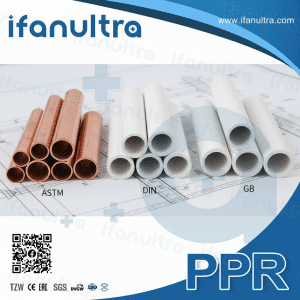
A client once mixed GB and ASTM pipes, and the whole project failed the pressure test. That costly mistake taught me the critical importance of understanding pipe standards.
The key differences lie in dimensional specifications (like diameter and wall thickness), pressure rating calculations, material formulations, and testing certifications. Standards like DIN (European), ASTM (American), and GB (Chinese) each have unique requirements that can affect compatibility and safety when not properly understood.
To help you avoid similar pitfalls, let’s explore these differences in detail across four critical areas.
How Do Dimensional Standards Like DIN, ASTM, and GB Differ for Pipes?
I’ve seen project teams struggle to connect pipes because they assumed all 32mm pipes were the same. They aren’t.
Dimensional standards differ primarily in nominal diameter definitions, wall thickness series, and tolerance ranges. For example, a DN32 pipe under DIN may have a different outer diameter or wall thickness compared to an ASTM or GB standard pipe of the same nominal size.
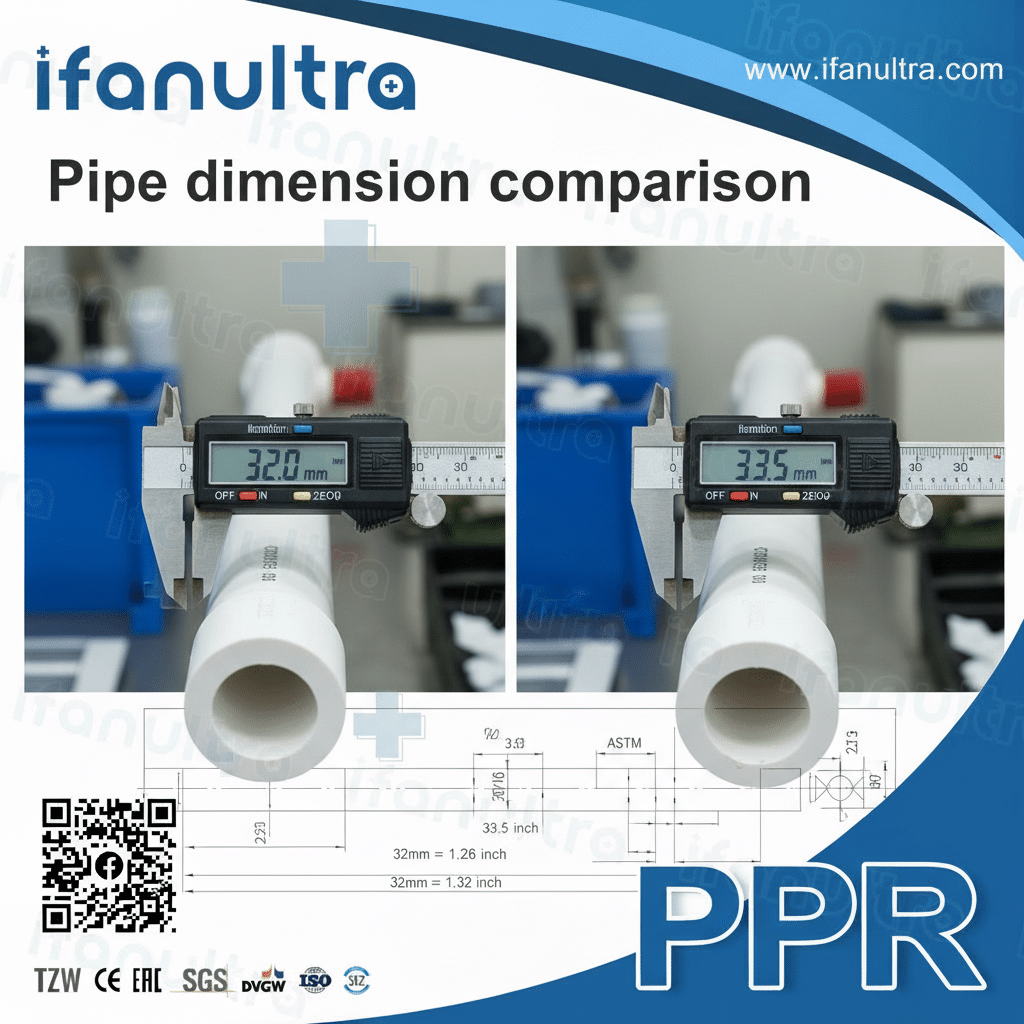
Nominal Diameter vs. Actual Dimensions
The first point of confusion is the term “nominal diameter.” It is a rough reference, not an exact measurement. Different standards interpret it differently.
DIN/EN Standards (European): These use the DN (Diamètre Nominal) system, which roughly relates to the internal diameter in millimeters. However, the actual outer diameter (OD) is fixed for each DN size. For example, a DN32 PP-R pipe under DIN has a specific OD of 40mm. The wall thickness depends on the pressure class (PN).
ASTM Standards (American): These often use Nominal Pipe Size (NPS) for larger pipes and Copper Tube Size (CTS) or Iron Pipe Size (IPS) for smaller ones. For plastics, ASTM D2846 uses CTS, where the OD matches copper tubing sizes. So a 1/2″ CTS pipe has an OD of 15.875mm, while a 1/2″ IPS pipe has an OD of 21.34mm. This can be confusing.
GB Standards (Chinese): GB/T 18742 for PP-R pipes generally aligns with ISO/DIN standards in terms of OD series. A DN32 GB pipe also has an OD of 40mm. However, wall thickness series and tolerances may vary slightly.
Wall Thickness and Pressure Class
The wall thickness is critical for pressure handling. Even if two pipes have the same OD, different wall thicknesses can make them incompatible for joining.
The table below illustrates dimensional differences for a nominal size often used in residential plumbing:
| Standard | Nominal Size | Diamètre extérieur (OD) | Typical Wall Thickness (for PN20) |
|---|---|---|---|
| DIN/ISO (PP-R) | DN32 | 40.0 mm | 5.5 mm |
| ASTM (PP-R, CTS) | 1-1/4″ CTS | 34.0 mm (approx) | 4.5 mm (typical) |
| GB (PP-R) | DN32 | 40.0 mm | 5.5 mm (may vary by series) |
| ASTM (Copper Tube) | 1-1/4″ Type L | 34.0 mm | 1.1 mm (different material) |
Notice that the ASTM CTS pipe has a smaller OD than the DIN/GB pipe. This means a fitting designed for a DIN pipe will not accept an ASTM pipe of the same nominal size.
Tolerance Variations
Tolerances—the allowable deviation from specified dimensions—also differ. DIN standards often have tighter tolerances than some older national standards. ASTM allows certain variations based on manufacturing method. Mixing pipes with different tolerances can lead to loose joints or difficult assembly.
For a reliable connection, the pipe and fitting must come from the same standard family, and ideally the same manufacturer who controls the entire production process.
Why Is Pressure Rating Interpretation Not Always Consistent Across Standards?
A client once ordered “PN20” pipes from different suppliers, only to find one burst at 16 bar. The confusion came from differing PN definitions.
Pressure rating inconsistency arises because standards use different design factors, safety margins, and test methods. A PN20 rating under ISO/DIN might not equate to the same pressure capability under ASTM’s schedule system or GB’s series. Factors like material grade, temperature, and service life also affect the real working pressure.
PN Rating vs. Schedule Systems
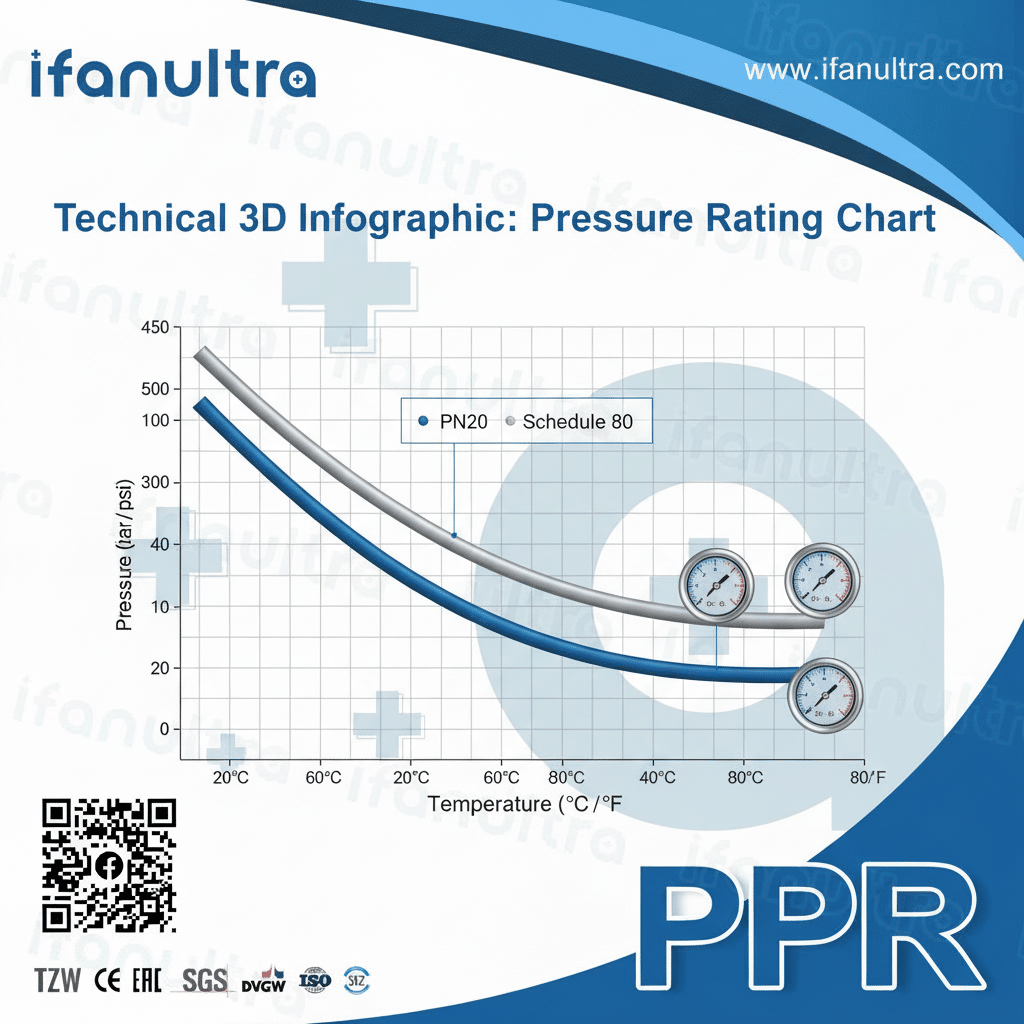
The term “PN” (Pressure Nominal) originates from European standards. It indicates the maximum working pressure in bars at a reference temperature (usually 20°C for water). For example, a PN20 pipe should handle 20 bar at 20°C. But at higher temperatures, the allowable pressure drops.
In contrast, ASTM standards often use “Schedule” (SCH) numbers for metal pipes, but for plastics they may specify pressure ratings directly in psi or use SDR (Standard Dimension Ratio). SDR is the ratio of OD to wall thickness; a lower SDR means a thicker wall and higher pressure capability.
Material Strength and Design Stress
Different standards use different material design stresses. These are derived from long-term hydrostatic strength tests. For PP-R, ISO 15874 specifies minimum required strength, but individual national standards may adopt different safety factors. For instance:
| Standard | Material Designation | Design Stress at 20°C | Safety Factor |
|---|---|---|---|
| ISO 15874 | PP-R 100 | 5.0 MPa | 1.25 (typical) |
| DIN 8077/8078 | PP-R 80 | 4.0 MPa | 1.5 |
| ASTM F2389 | PP-R | Varies by compound | 1.0 (based on 50-year strength) |
A pipe labeled PN20 under one standard might actually have a lower real-world pressure capacity than a PN20 pipe under another if the design stress or safety margin differs.
Temperature Derating
All standards require derating for elevated temperatures. However, the derating curves can vary. For example, a pipe rated for 20 bar at 20°C might only be suitable for 6 bar at 80°C. The specific derating factors are defined in each standard, so a pipe certified to DIN may have a different high-temperature performance than one certified to ASTM.
The following table compares derating factors for a typical PP-R pipe:
| Temperature | ISO/DIN Derating Factor | ASTM Derating Factor (typical) |
|---|---|---|
| 20°C | 1.00 | 1.00 |
| 40°C | 0.85 | 0.80 |
| 60°C | 0.60 | 0.55 |
| 80°C | 0.40 | 0.35 |
These differences mean a system designed using one standard may be overstressed if you substitute a pipe certified to another standard without adjusting the design.
What Compatibility Issues Arise When Mixing Pipes from Different Standards?
Nothing is more frustrating than watching a perfect joint fail because the pipe OD matched but the socket ID didn’t.
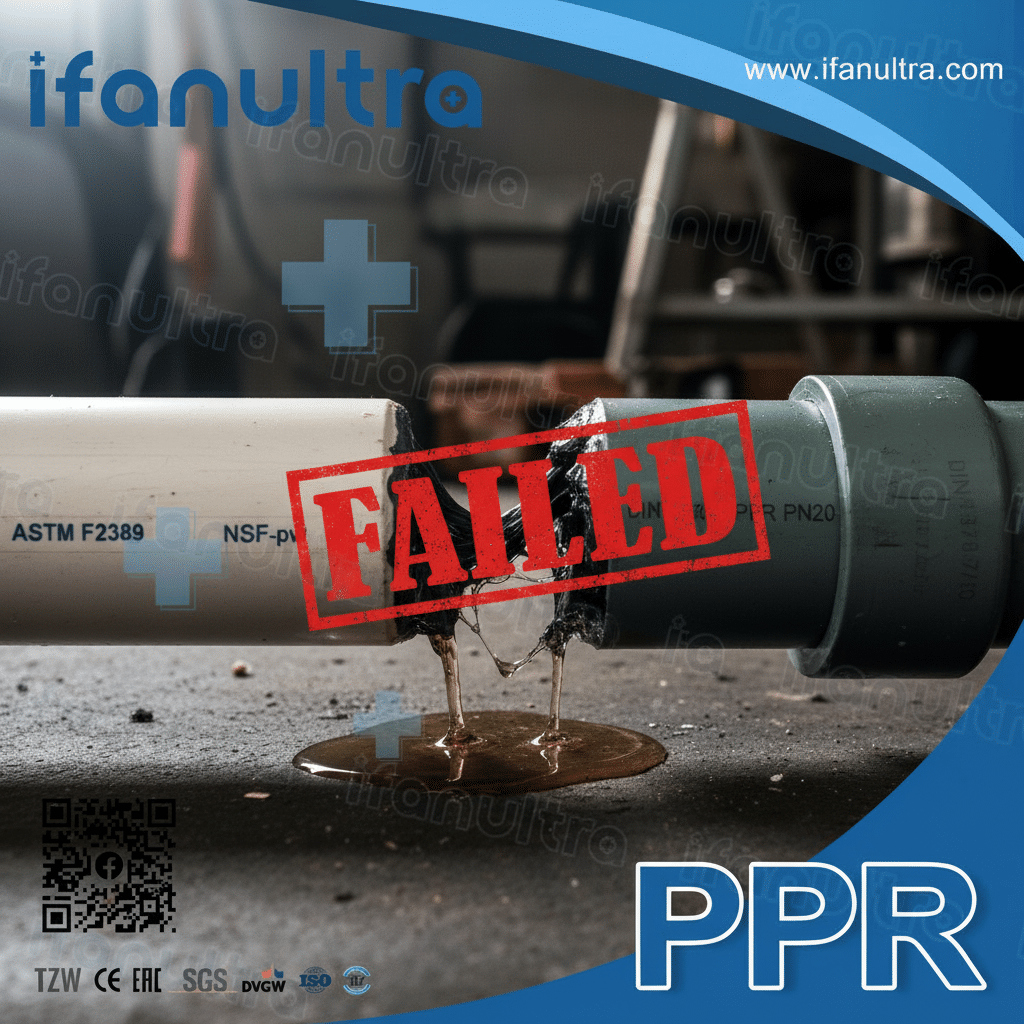
Mixing pipes from different standards can lead to loose connections, leaks, or even joint blow-offs due to mismatched outer diameters, ovality, and socket dimensions. Even if the nominal size matches, the actual measurements can differ significantly. Additionally, material formulations may vary, affecting fusion compatibility in heat-fused systems.
Dimensional Mismatch at Joints
The most immediate problem is physical fit. Consider a PP-R socket fitting made to DIN specifications. Its internal diameter is designed to accept a pipe with a specific OD range. If you insert a pipe made to ASTM CTS standards with a smaller OD, the gap may be too large for the molten material to fill properly during fusion. This results in a weak joint that can separate under pressure.
Even if the OD matches, the wall thickness may differ. For compression fittings, the gripping mechanism relies on a specific wall thickness range. Too thin, and the pipe may collapse; too thick, and the fitting may not seal.
Material Compatibility and Fusion Issues
PP-R pipes from different standards may use different grades of polypropylene random copolymer. While they are chemically similar, the melt flow index and additives can vary. When heat-fusing pipes from different sources, the fusion temperature and time may need adjustment. Using incompatible materials can result in cold welds or incomplete fusion.
For mechanical joints (threaded or compression), the problem is often the thread form. British Standard Pipe (BSP) threads are common in many regions, but National Pipe Thread (NPT) is used in North America. They have different pitch and angle, so they don’t seal properly when mixed.
Long-Term Performance Risks
Even if a mixed-standard joint appears to hold initially, long-term performance can be compromised. Different coefficients of thermal expansion may cause stress at the joint as temperature changes. Different creep resistance can lead to deformation over time. A system that mixes standards essentially becomes a non-standard system, and its reliability cannot be guaranteed by any single standard.
The table summarizes common compatibility issues:
| Component | DIN/ISO | ASTM | GB | Potential Issue |
|---|---|---|---|---|
| Pipe OD (DN32) | 40.0 mm | 34.0 mm (CTS) | 40.0 mm | ASTM pipe too small for DIN socket |
| Wall Thickness (PN20) | 5.5 mm | 4.5 mm (typical) | 5.5 mm | ASTM pipe weaker at same pressure |
| Type de fil | BSP | NPT | BSP or Metric | NPT and BSP do not seal together |
| Fusion Temperature | 260°C | 260°C | 260°C | Different melt flow may need adjustment |
To avoid these issues, always source pipes and fittings from the same manufacturer and specify the required standard clearly. If you must adapt, use transition fittings designed for that purpose.
How Do Certification Requirements Vary for Domestic Versus Export Markets?
We once shipped pipes with GB certifications to a market requiring ASTM, and the shipment was rejected at customs. A costly lesson.
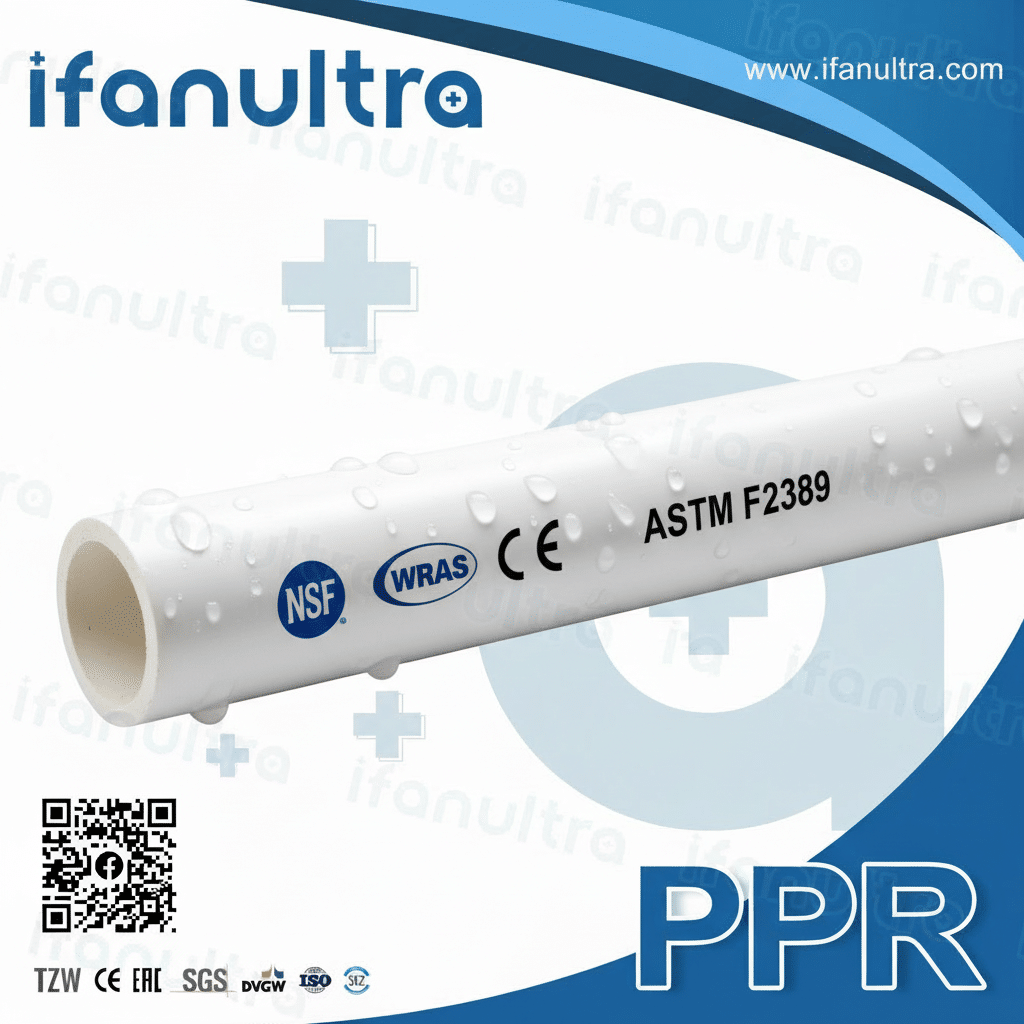
Certification requirements vary widely: domestic pipes often need local certifications (e.g., GB/T in China), while export markets demand international ones like ASTM, DIN, ISO, or regional marks like CE, WRAS, or NSF. These certifications involve different testing protocols, acceptance criteria, and often require third-party audits and documentation.
Key Certifications by Region
Each major market has its own set of recognized standards and certifications. Understanding these is essential for successful export.
China (Domestic): Pipes sold in China must comply with GB standards, such as GB/T 18742 for PP-R. The China Quality Certification Center (CQC) or local bodies issue certificates. These are mandatory for domestic sales.
European Union: The CE mark is mandatory for construction products under the Construction Products Regulation (CPR). It indicates conformity with harmonized European standards (EN). For PP-R, this is often EN 15874. Additionally, national marks like DVGW (Germany), WRAS (UK), or KIWA (Netherlands) may be required.
North America: ASTM standards (e.g., ASTM F2389 for PP-R) are widely used. Certification by third-party agencies like NSF International (for drinking water safety) or UL is often required by local codes. The NSF/ANSI 61 standard is critical for potable water applications.
Middle East and Africa: Many countries accept ISO, DIN, or ASTM standards, but may also require local approvals. For example, Saudi Arabia requires SASO certification.
Testing and Approval Processes
The testing protocols differ. For instance, ASTM F2389 requires a 1000-hour hydrostatic pressure test at elevated temperatures, while ISO 15874 specifies a longer-term test. Some certifications require factory audits, while others rely on type testing only.
The following table outlines common certifications and their requirements:
| Marché | Common Standards | Certifications clés | Typical Tests |
|---|---|---|---|
| China | GB/T 18742 | CQC, local | Hydrostatic, dimensional, material |
| Europe | EN 15874, ISO 15874 | CE, DVGW, WRAS, KIWA | Hydrostatic, thermal cycling, extraction |
| USA | ASTM F2389, NSF/ANSI 61 | NSF, UL | Hydrostatic, impact, chlorine resistance |
| Russia | GOST | EAC | Hydrostatic, low-temperature impact |
| Mondial | ISO 15874 | ISO 9001 (quality system) | Various |
Cost and Lead Time Implications
Obtaining multiple certifications adds cost and time. A manufacturer must invest in testing, documentation, and sometimes factory modifications. This is why certified products often cost more than non-certified ones. However, for export, it’s a necessary investment.
For buyers, it’s crucial to verify that the supplier’s certifications match your target market. Don’t assume a “CE” mark is enough for the USA, or that a “GB” certificate is accepted in Europe.
Conclusion
Understanding these differences is key to successful plumbing projects. IFAN offers pipes certified to multiple international standards, ensuring global compatibility and peace of mind.









 English
 Español
 Français
 Português do Brasil