

I once saw a client’s project stall for weeks because their supplier’s material certificates were forged. That costly lesson taught me that asking the right questions upfront is your best defense.
Before placing an order, you must ask your fitting supplier about material certification, their quality control process for defects, availability of engineering support, and their concrete plans for supply chain stability. Their answers will reveal their professionalism and reliability, separating true partners from mere commodity traders.
Choosing the wrong supplier risks your project’s quality, budget, and timeline. Let’s break down these four critical questions and why the answers matter.
Can You Provide Full Material Certification and Test Reports for This Batch?
A generic “yes” is not enough. I request and verify certificates for every order, as this is the foundation of product integrity.
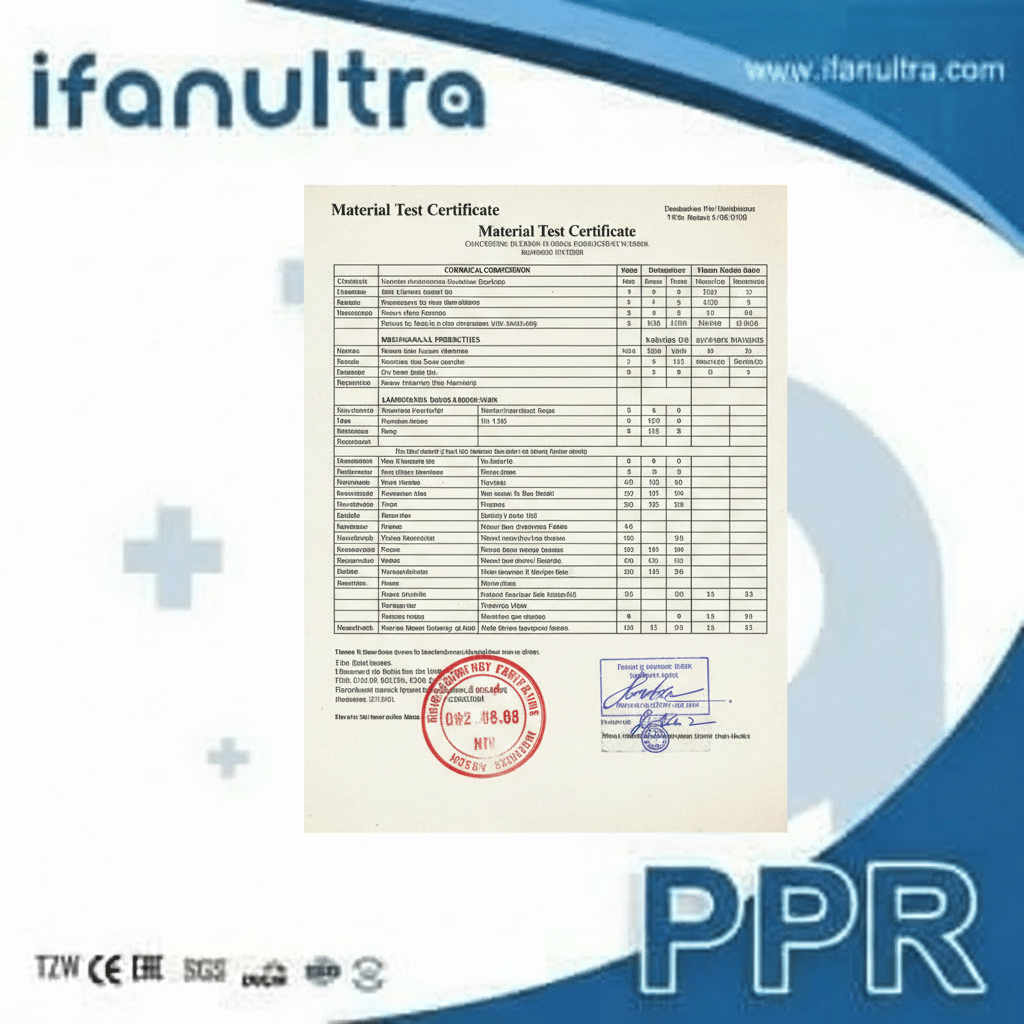
You must ask for full, batch-specific material certification and test reports, such as a Material Test Report (MTR) or Mill Test Certificate (MTC). This document, from the raw material producer, verifies the chemical composition and mechanical properties of the exact batch used to make your fittings, ensuring they meet the claimed specifications.
Why Batch-Specific Documentation is Non-Negotiable
Many suppliers will show you a general certificate. This is useless. A general certificate only proves that a material type can meet a standard. It does not prove that the plastic resin or metal alloy in your specific order does.
A true Material Test Report (MTR) is unique to a production batch. It is like a birth certificate for your raw materials. It lists the exact heat number or lot code and provides verified lab results for key properties. For PP-R fittings, this includes density, melt flow rate, and thermal stability. For metal fittings, it covers grade composition, tensile strength, and yield strength.
Without this, you are trusting a label. With it, you have proof.
How to Verify and Use These Reports
First, always ask for the certificate before production begins. A reputable supplier like IFAN can provide this immediately. Second, know what to look for. Check that:
- The supplier’s name and order number are on it.
- The standard (e.g., ISO 15874 for PP-R) matches your requirement.
- The test values fall within the acceptable range.
- The date is recent.
These reports are also your legal and quality safety net. If a failure occurs later, the MTR is the first document an investigator will request to see if the material was correct.
Common Red Flags in Supplier Responses
Be wary of these answers:
- “We have a standard certificate for that material.” (Ask for the batch-specific one.)
- “We can provide it after shipment.” (Too late for validation.)
- “There’s an extra charge for that.” (This is a basic requirement, not an extra.)
A transparent supplier considers this documentation a standard deliverable. Their willingness to provide it openly is the first test of a trustworthy partnership.
What Is Your Process for Handling Non-Conforming or Defective Products?
Every factory produces defects; the difference is how they handle them. A clear process separates proactive partners from reactive vendors.
You need to ask for their step-by-step procedure for handling defects, from your initial complaint to final resolution. A professional supplier will have a documented Non-Conforming Product (NCP) procedure that includes immediate containment, root cause analysis, corrective actions, and preventive measures to stop the issue from recurring.
The Hallmarks of a Robust Defect Management Process
A vague promise to “make it right” is insufficient. You need a predictable system. A strong process includes these stages:
1. Immediate Containment & Acknowledgment: Upon notification, their team should immediately quarantine any remaining inventory from the same batch and acknowledge your complaint within 24 hours.
2. Investigation & Root Cause Analysis (RCA): They should determine why it happened. Was it a raw material flaw, a machine calibration error, or a human operator mistake? They should share this analysis with you.
3. Corrective Action: This is the short-term fix for your order—replacement, repair, or credit.
4. Preventive Action: This is the critical long-term fix. It involves changing a process, retraining staff, or adjusting a machine setting to ensure the same defect never happens again.
Suppliers who skip the Root Cause and Preventive Action steps are likely to repeat the same mistakes.
Comparing Supplier Approaches to Defects
Your goal is to find a supplier in the “Proactive Partner” category.
| Supplier Type | Typical Response to Defects | Risk to You |
|---|---|---|
| Reactive Vendor | “Send them back, we’ll replace them.” Focuses only on the immediate swap. No investigation. | High risk of repeat issues, project delays, and hidden quality problems. |
| Compliant Manufacturer | Has a basic NCP log. Will replace and do a simple internal investigation. | Moderate risk. Problems are fixed but may recur in a different form. |
| Proactive Partner (e.g., IFAN) | Has a formal, documented 8D or similar process. Provides a full report with RCA and preventive actions. Communicates openly at each step. | Low risk. Each problem leads to a systemic improvement, making your supply chain more robust. |
The Practical Question to Ask
Instead of a general “What do you do about defects?”, ask: “Can you walk me through your last Non-Conforming Product report and show me the corrective and preventive actions you implemented?” A trustworthy supplier will be able to show you this record (with confidential details redacted), proving they have a living, working system.
Do You Have In-House Engineering Support for Application Specifications?
Sales reps often guess; engineers know. Technical miscommunication is a leading cause of project failure.
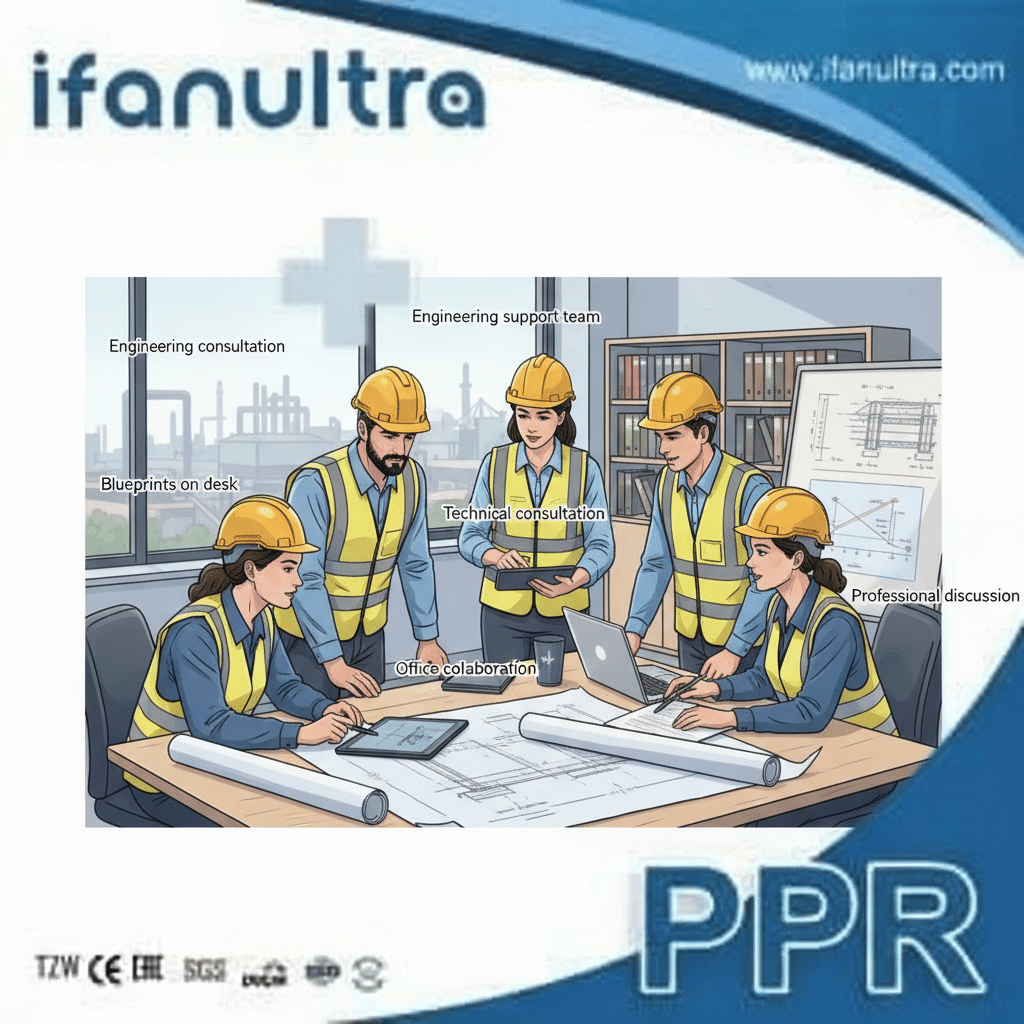
You must ask if they have qualified, in-house engineering staff who can review your application specifications and provide technical guidance. This support is crucial for selecting the right material grade, pressure rating, and design for your specific use case, ensuring the fittings will perform as expected in your system.
The Value of Direct Technical Access
When you describe a project involving high-temperature water, aggressive chemicals, or unusual pressure cycles, you need to speak with someone who understands stress calculations and material science. A salesperson can quote a price, but only an engineer can assess feasibility.
In-house engineering support provides several key benefits:
- Specification Validation: They can review your drawings or requirements and confirm if a standard product fits, or if a custom solution is needed.
- Troubleshooting: If you have a system failure, they can help diagnose whether it was a product fault, an installation error, or an application outside the product’s design limits.
- Value Engineering: They might suggest a more cost-effective fitting that meets the same performance criteria, saving you money without sacrificing quality.
What “Real” Engineering Support Looks Like
Be specific in your inquiry. Ask about:
- Team Qualifications: “Are your support engineers degreed in mechanical, chemical, or materials engineering?”
- Response Process: “What is your process for reviewing client specifications? What is the typical turnaround time for feedback?”
- Output: “Will you provide a written recommendation or approval for the selected product based on our specs?”
A supplier without this capability will outsource these questions to their factory, leading to delays and miscommunication. A supplier like IFAN embeds this expertise within the commercial team, ensuring fast, accurate, and accountable technical communication.
A Real-World Example
A client once asked for a PP-R fitting for a 95°C continuous water line. Our sales team connected them directly with our product engineer. The engineer explained that while standard PP-R could handle the temperature, long-term exposure at 95°C would reduce its lifespan. He recommended a different, heat-stabilized grade of PP-RCT. This consultation prevented a premature system failure two years later. This is the value of in-house engineering.
How Do You Ensure Supply Chain Continuity and Manage Lead Times?
Unexpected delays are the rule, not the exception. Your supplier’s planning determines your inventory headaches.
You need to ask about their specific strategies for ensuring supply chain continuity, such as dual-sourcing raw materials, maintaining strategic safety stock, and using advanced production planning. You should also ask for a detailed, historically accurate lead time breakdown, not just a standard estimate.
Deconstructing Lead Time Promises
A supplier who gives a single number like “30 days” is often guessing. You need to understand the components. Ask them to break it down:
- Raw Material Procurement Time: Do they keep resin/metal in stock, or do they order after receiving your order?
- Production Queue Time: How many orders are ahead of yours in their production schedule?
- Production & Curing Time: The actual manufacturing and cooling/molding time.
- Quality Control & Packaging Time: Time for inspection and preparation for shipping.
- Logistics Time: Transportation to port and freight availability.
A professional supplier can explain each segment and identify which are fixed and which are variable. For instance, IFAN maintains safety stock of key raw materials, which shaves 1-2 weeks off the typical lead time by eliminating procurement delays.
Key Strategies for Supply Chain Resilience
Ask them to detail their plans for handling disruptions. Look for concrete answers on these points:
1. Raw Material Strategy: Do they source from a single supplier or multiple approved suppliers? Multiple sources prevent a single factory fire or shortage from stopping your order.
2. Inventory Management: Do they hold strategic stock of finished goods for high-demand items? This buffers against sudden demand spikes.
3. Production Capacity & Flexibility: Do they have agreements with partner factories to overflow production during peak periods?
4. Communication Protocol: How will they notify you of a delay? Proactive, weekly updates are a sign of good management.
Questions to Gauge Their Transparency
Move beyond generic assurances by asking:
- “What was your on-time delivery rate over the last 12 months, and what were the top causes for delays?”
- “Can you share an example of how you managed a recent raw material shortage?”
- “What is your process for providing order status updates?”
Their comfort and transparency in answering these questions are strong indicators of a well-managed, reliable supply chain that can be a true partner, not just another risk.
Conclusion
Asking these four questions will help you find a reliable, professional partner. For a supplier that excels in all these areas, consider IFAN for your next fitting purchase.









 English
 Español
 Français
 Português do Brasil