
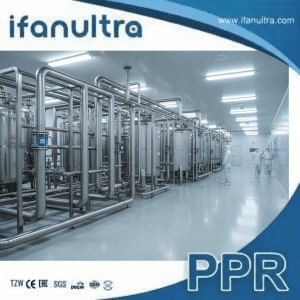
A single contamination incident in a pharmaceutical water loop can cost millions. I’ve seen it happen, and that’s why selecting the right fittings is not a purchase—it’s a critical quality decision.
You select fittings for high-purity water by prioritizing materials that do not leach contaminants, designs that prevent microbial growth, and suppliers who provide full documentation and traceability. The choice directly impacts product safety and regulatory compliance, making technical specifications, cleanability, and audit-proof paperwork as important as the fitting itself.
This process can feel complex, but breaking it down into key areas makes it manageable. Let’s explore the four pillars of selecting the right fitting for a pharmaceutical water system.
Why are Electropolished Stainless Steel and Specialty Plastics Like PVDF Preferred?
Using standard plumbing materials in a pharmaceutical plant is a guaranteed path to failure. The wrong material will introduce particles, ions, and biofilms into your ultra-pure water.
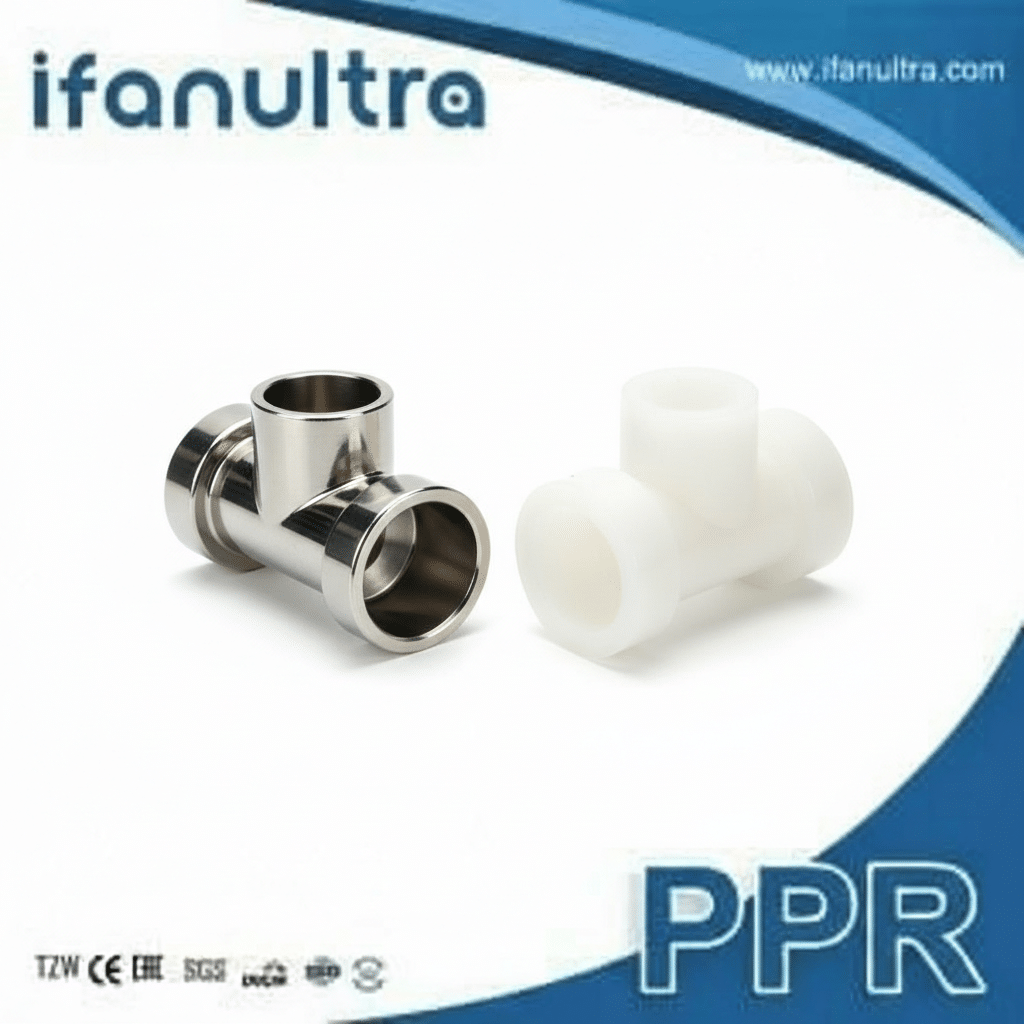
Electropolished 316L Stainless Steel and PVDF plastic are preferred because they are inert, non-leaching, and offer exceptionally smooth surfaces. Electropolishing removes microscopic peaks on stainless steel, reducing adhesion points for contaminants. PVDF is inherently resistant to chemicals and ultrapure water, preventing the extraction of plasticizers. Both materials meet the stringent purity demands of pharmacopeial standards like USP.
The Science Behind Material Inertness
In high-purity water, even tiny amounts of leached substances can be a major problem. These substances can come from the fittings themselves. Electropolished Stainless Steel 316L and PVDF (Polyvinylidene Fluoride) are the top choices because they act as neutral barriers.
Stainless Steel 316L is an austenitic steel with very low carbon content. The “L” stands for “Low carbon,” which prevents corrosion at the welds. But the raw metal surface is not smooth enough. Electropolishing is an electrochemical process that removes the outer layer of the metal. It dissolves microscopic peaks and impurities, leaving a smooth, chromium-rich, passive surface. This surface is less likely to corrode and much harder for bacteria or particles to stick to.
PVDF is a high-purity thermoplastic. Unlike some plastics, it does not need added plasticizers (which can leach out) to be flexible or durable. It is naturally resistant to the aggressive nature of ultra-pure water, which actually tends to extract substances from many other materials. PVDF systems are also fully weldable, creating smooth, crevice-free joints.
Material Selection Guide: When to Use Which?
The choice between metal and plastic often depends on the specific application within the water system. Here is a simple comparison:
| Matériau | Key Advantages | Best Used For | Considérations |
|---|---|---|---|
| Electropolished 316L Stainless Steel | Extreme mechanical strength, high-temperature tolerance (for SIP), excellent surface finish. | Pure Steam (SIP) lines, WFI (Water for Injection) distribution loops, high-pressure applications. | Higher cost, requires skilled orbital welding, must be passivated after installation. |
| PVDF (Polyvinylidene Fluoride) | Lower cost, excellent chemical resistance, naturally smooth bore, lighter weight. | RO/EDI feed and product water, purified water distribution at lower temperatures, chemical addition lines. | Lower temperature limit (~140°C), not suitable for pure steam, requires specialized thermal welding. |
Common Pitfall: A major pain point we see is clients choosing standard 304 stainless steel or unpolished surfaces to save money. This almost always leads to higher long-term costs due to increased sanitization cycles, potential for rouging (a form of corrosion), and failed quality audits. The initial investment in the correct, high-finish material always pays off.
How Do Fitting Designs Minimize Dead Legs and Promote Clean-in-Place (CIP)?
A fitting with a hidden pocket can become a breeding ground for microbes, ruining your entire water quality. Design is everything for cleanability.
Fitting designs minimize dead legs by using a “zero dead leg” or “diaphragm seal” concept, where the valve seat is flush with the pipe wall. They promote CIP by ensuring smooth, crevice-free internal surfaces and radii that match the pipe, allowing cleaning and sanitizing solutions to flow with full turbulence and contact all surfaces, leaving no areas untouched.
Understanding Dead Legs and Crevices
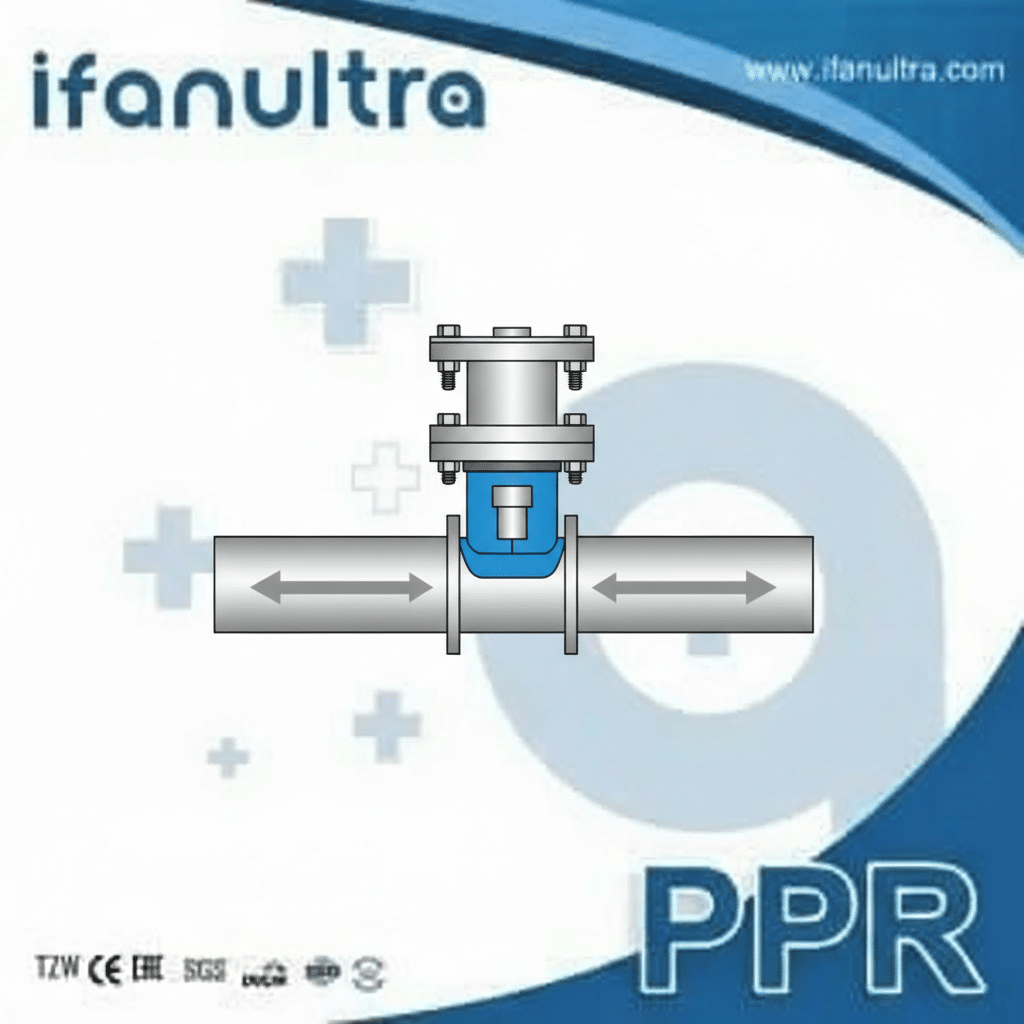
In sanitary systems, a “dead leg” is any area in the pipe where water can become stagnant and not be exchanged during flow or cleaning. The ASME BPE standard defines it mathematically (leg length / pipe diameter), but visually, it’s any pocket or recess. Crevices are tiny gaps, like those between poorly finished threads.
Bacteria love these quiet, untouched spots. They attach, form a protective biofilm, and continuously shed into your flowing water. No amount of sanitizing can kill a well-established biofilm in a dead leg.
Design Features for Optimal Flow and Cleaning
Modern sanitary fittings are designed with a single goal: to be perfectly cleanable without disassembly.
1. Zero Dead Leg (ZDL) Valves: This is the gold standard. In a diaphragm or pinch valve, the sealing mechanism (a diaphragm) sits flush with the pipe wall when open. When closed, it presses down, but there is no cavity behind it. This eliminates the stagnant zone found behind a traditional ball or globe valve.
2. Clamp-Style Connections (Tri-Clamp): These are the standard for a reason. They use a gasket compressed between two ferrules. When done correctly, the gasket’s inner diameter matches the pipe, creating a smooth, continuous flow path with no inward protrusions.
3. Smooth Internal Finishes: The inside of the fitting must have the same high-quality finish (e.g., Ra < 0.8 µm for ASME BPE) as the pipe. There should be no tool marks, pits, or grooves that can trap material.
4. Fully Penetrated Welds: For welded systems (both stainless and PVDF), the weld must go completely through the material. An incomplete weld leaves a tiny crevice at the root, which is a perfect spot for contamination to hide.
The Role of Design in CIP Efficacy
Clean-in-Place (CIP) relies on the mechanical action of flowing solutions. A well-designed system ensures these solutions scrub every square millimeter.
- Turbulent Flow: Fittings must not create areas where flow becomes laminar (smooth). Turbulent flow is needed to scrub the walls.
- Drainability: The system and its fittings should be self-draining. There should be no low points where water can pool after CIP or SIP. Installation slope is critical, but fitting design can help or hinder this.
Choosing fittings with these design features is non-negotiable. They are the physical foundation that makes your CIP/SIP protocols actually effective.
What Documentation Proves Compliance with FDA 21 CFR and ASME BPE?
In an audit, if it’s not documented, it didn’t happen. The fitting on your shelf is only as good as the paperwork that comes with it.
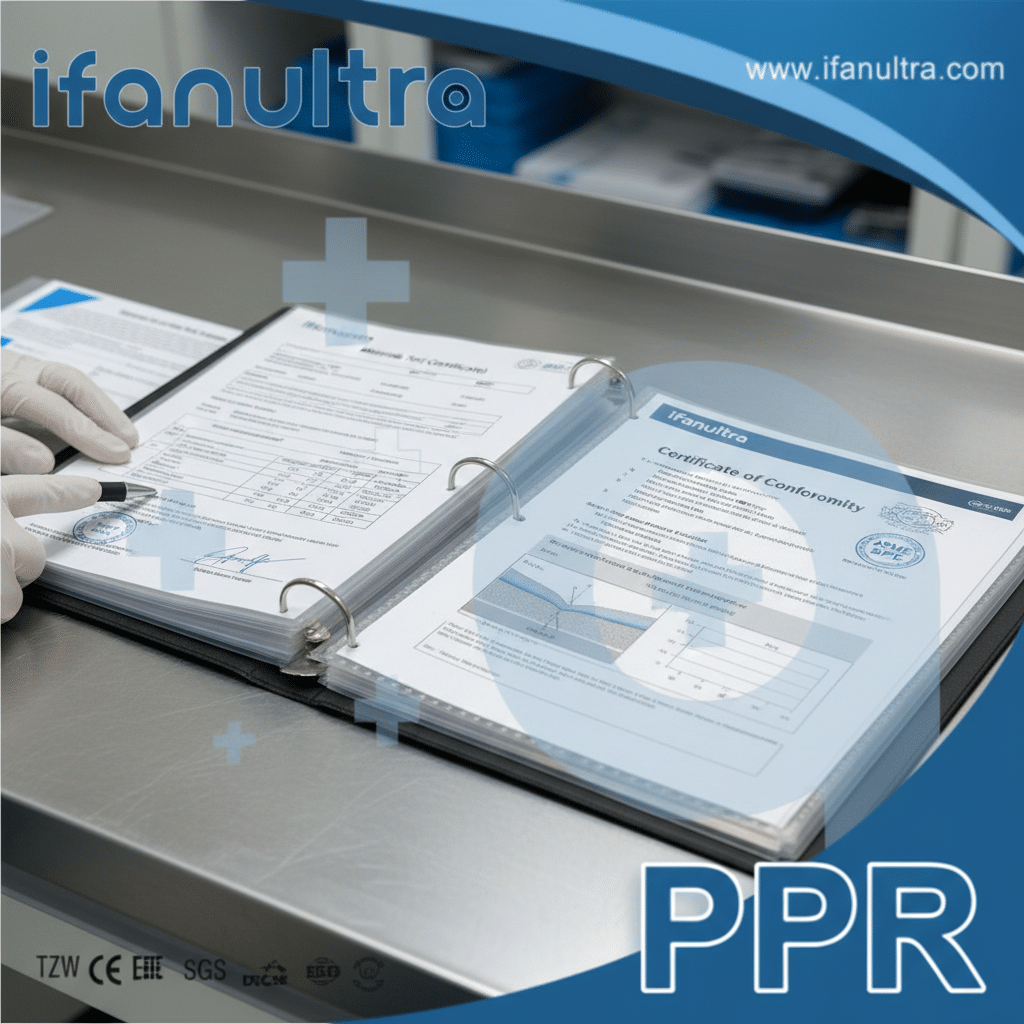
**Compliance is proven through a *Documentation Package (Dossier)* that includes: Material Certificates (MTC) proving alloy/composition, Certificates of Conformity (CoC), Surface Finish Reports (Ra values), and FDA 21 CFR Part 173/177 compliance statements for plastics. For ASME BPE, documentation shows adherence to dimensional, material, and surface finish standards outlined in the BPE specification.**
Decoding the Essential Certificates
You must request and archive specific documents from your supplier for every batch of fittings. Here’s what each one means:
1. Material Test Certificate (MTC) / Mill Certificate: This is the birth certificate for the raw material. For stainless steel 316L, it lists the exact chemical composition (e.g., Cr, Ni, Mo content) from the steel mill, proving it meets ASTM A270 or similar. For PVDF, it confirms the resin grade and that it’s a virgin, pharmaceutical-grade material.
2. Certificate of Conformity (CoC): This is a declaration from the fitting manufacturer. It states that the product was made according to the relevant standards (like ASME BPE) and meets the purchase order specifications.
3. Surface Roughness Report: This is critical. It provides actual measurements, usually using a profilometer, of the internal surface roughness (Ra value). It proves the electropolishing or molding process achieved the required finish (e.g., Ra ≤ 0.8 µm).
4. FDA Compliance Statement: For plastics, the supplier must state that the material complies with FDA regulations (21 CFR 177.2510 for PVDF) for repeated use with food and pharmaceuticals, meaning it is safe and non-toxic.
The ASME BPE Stamp and Traceability
For the highest assurance, fittings can be BPE Stamped. This means an independent inspector has verified the manufacturer’s quality system and product compliance. Even without the stamp, your documentation should reference ASME BPE dimensions (like face-to-face lengths) and tolerances.
Critical Link: Traceability. Every certificate should have heat numbers (for metal) or lot numbers (for plastic). This creates a “chain of custody” from the raw material mill to the finished fitting in your plant. During an audit, you must be able to trace a fitting installed in the system back to its original material batch.
Common Pitfall: Suppliers providing only a generic, one-page CoC. This is a red flag. Insist on full, batch-specific traceability. Without it, you cannot prove the quality of your system to an auditor.
Why is Supplier Audibility and Material Traceability Non-Negotiable?
A cheap fitting from an anonymous factory is the biggest risk to your validated system. The supplier is an extension of your quality unit.
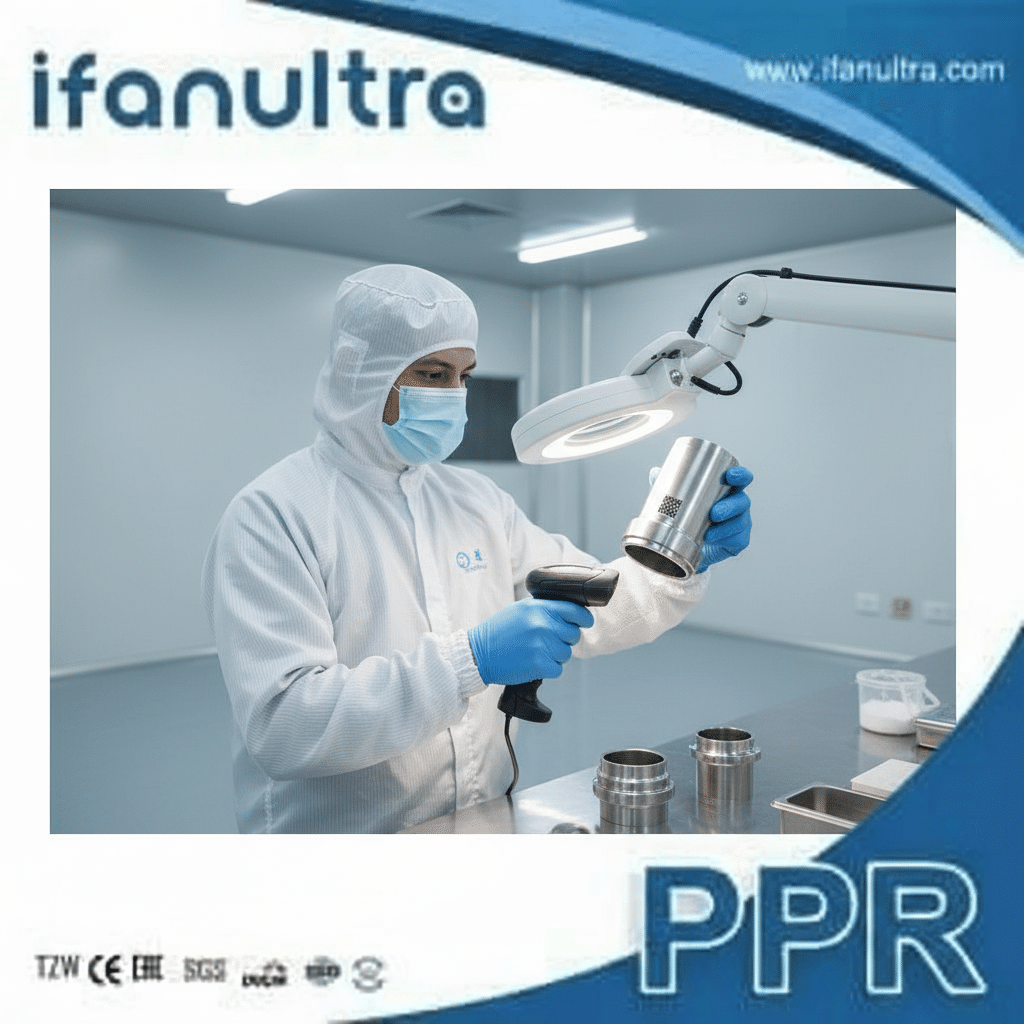
Supplier audibility and material traceability are non-negotiable because they are the only way to ensure consistent quality and prove regulatory compliance. An audit reveals the supplier’s real manufacturing and quality controls, while traceability links every fitting in your plant to its certified raw material source, providing proof for FDA or EMA inspectors.
The True Cost of an Unauditable Supplier
Choosing a supplier based only on price and catalog is a high-risk strategy. An unauditable “catalog house” often buys from multiple unknown factories with inconsistent quality. When a fitting fails, or an audit happens, they cannot answer critical questions:
- Where was this exactly made?
- What was the electropolishing process?
- Can you show me the quality checks for this batch?
Without answers, your entire water system’s validation is in question.
What a Good Audit Covers
Auditing a fitting supplier means checking their system, not just picking a sample. A credible supplier will allow and facilitate this. Key areas to examine:
1. Incoming Material Control: How do they check and document the raw material (plate, tube, resin) certificates?
2. Manufacturing Process: Do they have controlled, documented procedures for machining, welding, and polishing?
3. Quality Control & Testing: Do they have gauges to check dimensions? Do they have a profilometer to measure surface finish, or do they just claim it?
4. Documentation System: Can they produce a complete dossier for any batch number, linking the finished fitting back to the raw material heat/lot number?
Implementing Traceability in Your Project
Traceability must be part of your procurement process. Here is a practical table for your project checklist:
| Project Phase | Action for Traceability & Audit | Pourquoi c'est important |
|---|---|---|
| Supplier Qualification | Conduct an on-site or virtual audit before first purchase. | Ensures they have a fundamental quality system you can rely on. |
| Purchase Order (PO) | Specify full documentation requirements (MTC, CoC, Ra report, FDA statement) by batch. | Makes it a contractual obligation. |
| Goods Receipt | Check certificates against the physical goods and PO. Record batch numbers. | Prevents non-compliant materials from entering your warehouse. |
| Installation | Record the location (line, position) where each batch of fittings is installed. | Creates the final link for system traceability. |
| Audit Preparedness | File all dossiers digitally and physically for easy retrieval. | Allows you to prove compliance in minutes during an inspection. |
In short, the supplier becomes a critical partner. A company like IFAN, which manages its own manufacturing and quality processes, provides the transparency and control that pharmaceutical projects require. You are not just buying a product; you are buying certainty.
Conclusion
Selecting pharmaceutical water fittings requires a focus on inert materials, cleanable designs, complete documentation, and a verifiable supplier. For fittings that meet these stringent needs, consider IFAN’s range of BPE-style and PVDF fittings, backed by full material traceability.









 English
 Español
 Français
 Português do Brasil